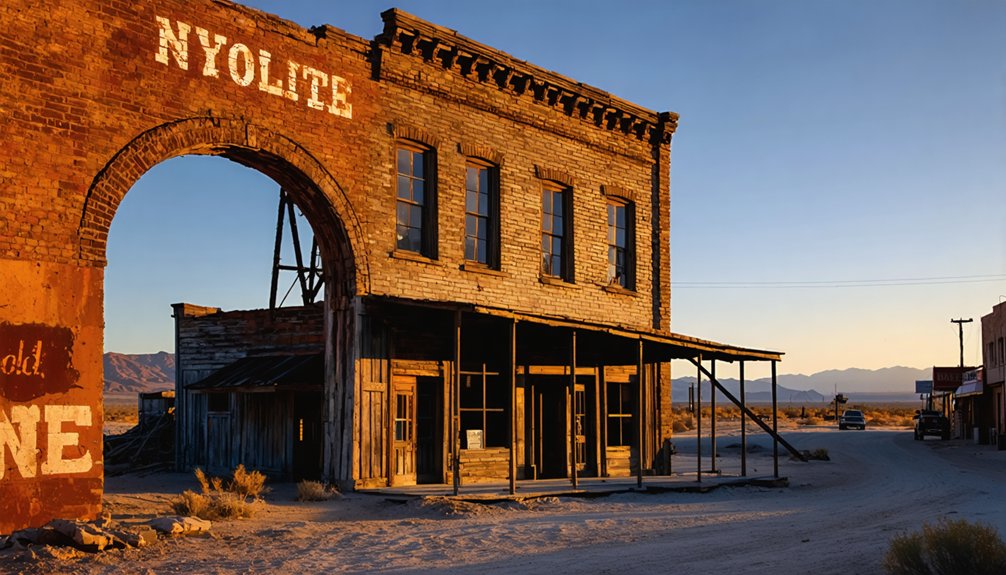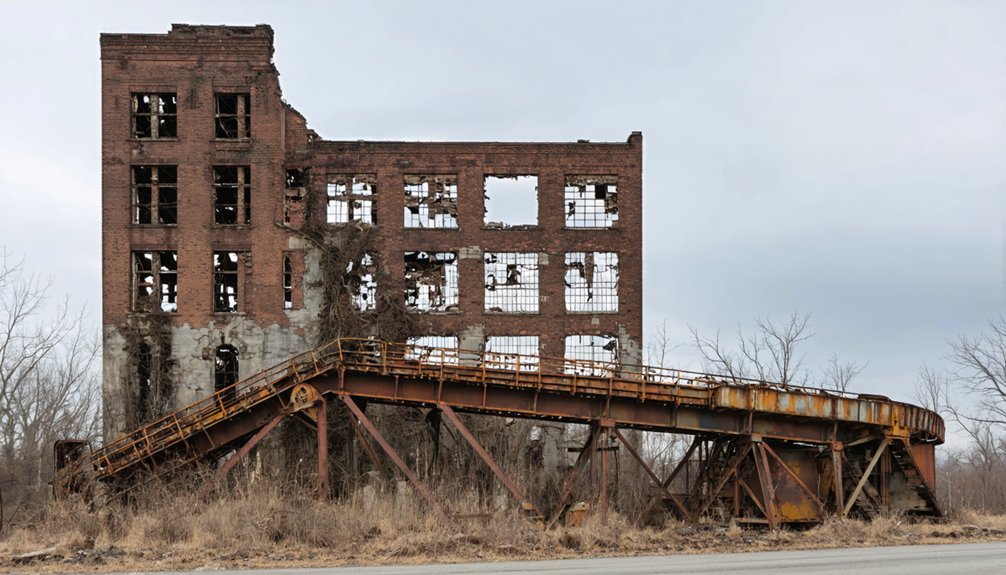
The Rust Belt’s most abandoned cities include Detroit, where over half of housing has vanished in Black neighborhoods; Gary, Indiana, with its virtually deserted downtown; Youngstown, Ohio, leading the nation in concentrated poverty; Johnstown, Pennsylvania, with 4,600 abandoned properties; and Flint, Michigan, which lost half its population as GM jobs disappeared. These urban landscapes reveal the devastating aftermath of American deindustrialization, with each city’s story illuminating broader economic and social transformations.
Key Takeaways
- Detroit has experienced severe abandonment with over half of housing units in primarily Black neighborhoods vanishing since 1970.
- Gary, Indiana contains tens of thousands of abandoned buildings and a virtually deserted downtown area.
- Youngstown, Ohio leads the nation in concentrated poverty following steel mill closures, resulting in widespread abandonment.
- Johnstown, Pennsylvania has approximately 4,600 abandoned properties reflecting its significant population exodus.
- Flint, Michigan lost 50% of its population as General Motors employment plummeted from 80,000 to 7,200 jobs.
The Rise and Fall of America’s Manufacturing Heartland
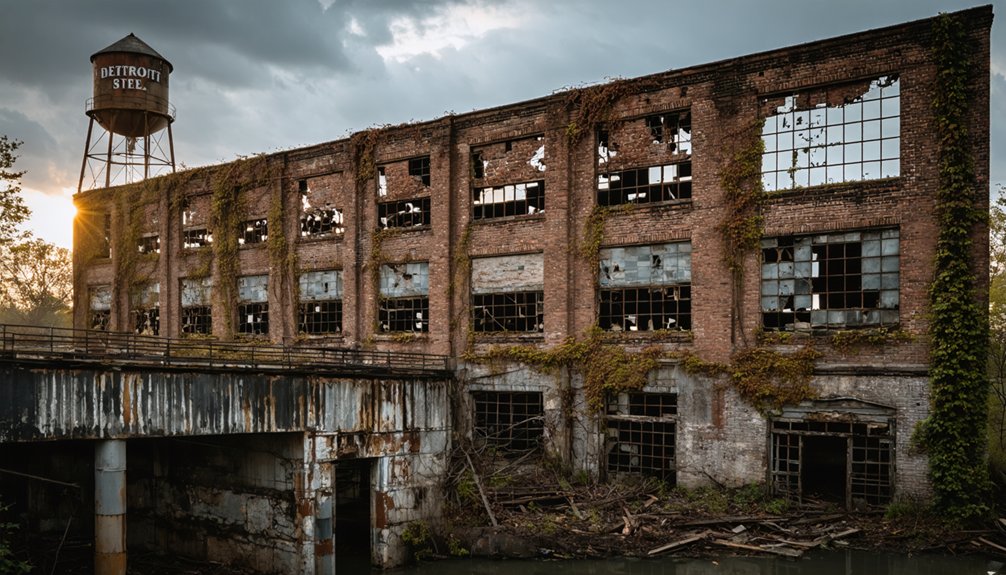
While the name “Rust Belt” now evokes images of decaying factories and abandoned neighborhoods, this region once represented the pinnacle of American industrial might and economic prosperity.
Stretching from New York to Wisconsin, this manufacturing heartland flourished through natural advantages—abundant coal, iron ore deposits, and extensive waterway access.
By 1950, you could witness an economic colossus that controlled over half of America’s manufacturing jobs and 43 percent of all U.S. employment.
The industrial evolution that began in the late 19th century created corporate giants with near-monopolistic market shares.
But economic shifts struck hard after 1970.
Foreign competition, technological change, and aging infrastructure initiated a dramatic reversal.
Cities like Cleveland experienced dramatic population declines, dropping from 876,000 residents in 1960 to just 505,000 by 1990.
In 1979, manufacturing employment reached its highest peak with 19.4 million Americans employed in the sector.
Cities that once symbolized prosperity became synonymous with population exodus and industrial collapse.
Ghost Towns: The Most Severely Abandoned Rust Belt Cities
Across the landscape of America’s former industrial heartland, entire cities have transformed into modern ghost towns, their abandoned streets and vacant buildings standing as stark monuments to economic devastation.
Detroit exemplifies this crisis, with over half the housing units in some neighborhoods vanishing since 1970, particularly in primarily Black areas experiencing extreme urban decay.
The most severe examples of abandonment include:
- Gary, Indiana, with tens of thousands of abandoned buildings and a virtually deserted downtown
- Youngstown, Ohio, which leads the nation in concentrated poverty following devastating steel mill closures
- Johnstown, Pennsylvania, where approximately 4,600 abandoned properties reflect the exodus of thousands of residents
These abandoned neighborhoods represent the human cost of deindustrialization—communities left to navigate the aftermath of economic collapse without adequate support. The McDougall-Hunt Neighborhood on Detroit’s east side illustrates this abandonment with its Heidelberg Project attracting visitors despite severe housing loss. Flint, Michigan has experienced a devastating 50% population decrease as GM employment dropped from 80,000 to just 7,200, leaving behind a severely weakened economic foundation.
Why These Cities Lost Their Population and Industry
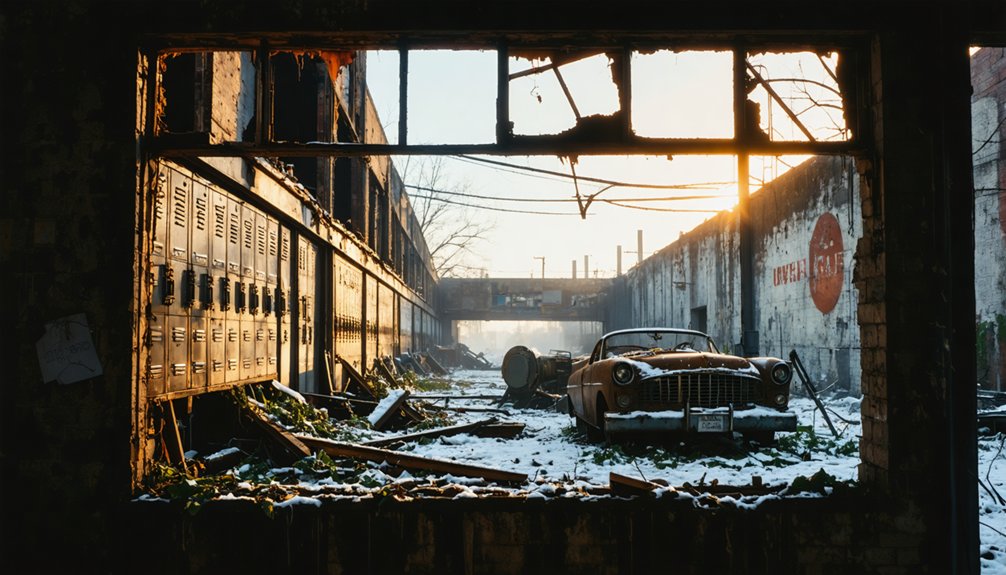
The dramatic collapse of once-thriving industrial centers throughout the American Rust Belt stems from a perfect storm of economic forces that converged in the post-WWII era.
Manufacturing began declining by 1960, with employment plummeting nearly 33% between 1969-1996. You’re witnessing the aftermath of multiple compounding factors: stricter pollution regulations, rising energy costs, and the brutal impact of globalization.
The industrial heartland’s decline: a 33% employment free-fall triggered by regulations, energy costs, and globalization’s relentless impact.
Foreign competition with considerably lower labor costs devastated domestic industries, particularly steel manufacturing. Companies either automated, relocated to the Southeast, or moved overseas entirely. The North American Free Trade Agreement further accelerated this decline, resulting in approximately 700,000 American jobs lost to Mexico.
This economic decline triggered massive population migration—cities like Detroit, Cleveland, and Pittsburgh lost approximately 45% of their residents between 1970-2006. Studies have documented substantial population decreases, with Detroit experiencing a staggering 32.81% decline between 2000 and 2020 alone.
As people fled, tax revenues collapsed, creating a downward spiral where remaining residents couldn’t maintain infrastructure built for much larger populations.
The Human Cost: Social and Economic Aftermath
Beneath the stark statistics of industrial decline lies a profound human tragedy unfolding across the Rust Belt landscape.
Among those affected are the families of miners and their communities, who once thrived in places now known as abandoned gold towns in Idaho. The remnants of their hopes and dreams can be seen in crumbling buildings and deserted streets, echoing the stories of resilience and loss. As these towns fade into obscurity, they serve as a stark reminder of the shifting fortunes that shaped the region.
The human impact extends far beyond economic metrics, tearing at the social fabric that once defined these communities. You’ll find unemployment reaching devastating heights—18% in towns like Bruceton, Pennsylvania—forcing families to make impossible choices. ZIP codes like 44112 in Cleveland reveal neighborhoods where 38.7% of residents live in poverty, highlighting the extreme economic devastation. Gary, Indiana exemplifies this devastation with 13,000 abandoned buildings standing as silent monuments to industrial collapse.
Economic disparity has manifested in three critical ways:
- Widespread housing abandonment, with Black communities suffering disproportionately
- Collapsing public services as tax bases shrink, deepening poverty cycles
- Dissolution of union strength, undermining both worker protections and community solidarity
What remains are communities caught in spiraling decline, where poverty concentrates, drug use escalates, and once-vibrant neighborhoods stand abandoned—victims of an economic transformation that valued profit over people’s livelihoods.
Revival Stories: Rust Belt Cities Making a Comeback
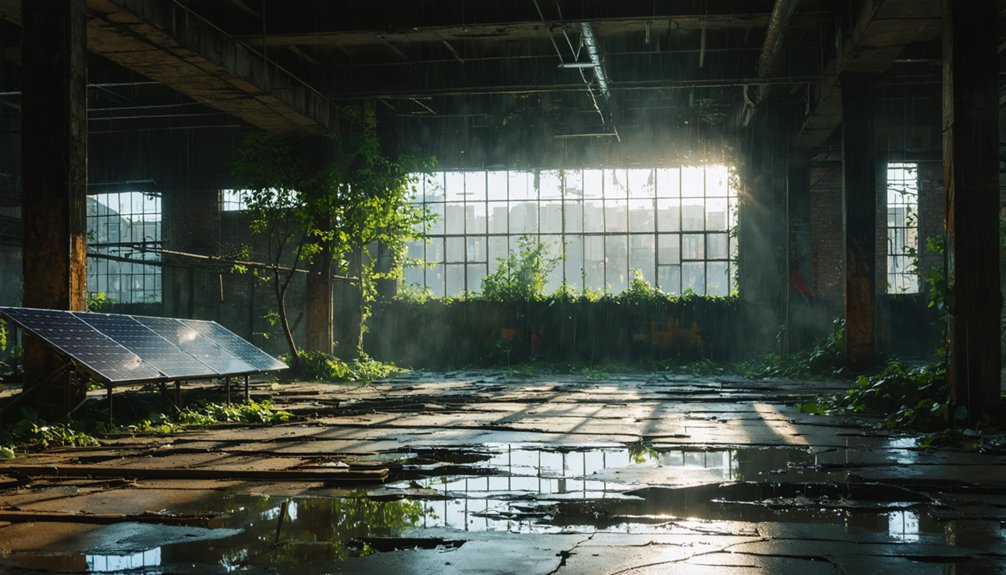
While many former industrial centers languish in economic stagnation, a handful of Rust Belt cities have defied expectations by orchestrating remarkable comebacks in recent years.
Columbus tops the revival charts with its balanced growth across housing, economics, and workforce development. Ohio cities demonstrate particular resilience with multiple urban centers appearing in the top rankings. Intel’s massive investment signals the region’s transition toward becoming a Silicon Heartland. Other success stories include Madison, Buffalo, and Pittsburgh, which transformed from steel manufacturing to healthcare, education, and technology.
You’ll find demographic shifts driving this renaissance, as younger populations migrate to these areas seeking affordable housing and emerging job markets.
Urban innovation manifests through adaptive reuse of historic structures and downtown revitalization efforts. Federal initiatives like “Build Back Better” and increased onshoring of manufacturing provide essential support.
Despite these bright spots, the contrast remains stark—cities like Gary still struggle with high vacancy rates while Columbus’s regional GDP has climbed 60% over a decade.
Frequently Asked Questions
How Do Local Governments Manage Abandoned Infrastructure Maintenance?
You’ll find cities prioritizing essential services over abandoned assets, leveraging limited infrastructure funding through municipal partnerships, implementing selective demolition, and engaging community organizations to mitigate maintenance costs in high-vacancy neighborhoods.
What Happens to School Systems in Severely Depopulated Areas?
You’ll see school funding collapse as property tax revenues decline, while student enrollment plummets, forcing closures, consolidation, and reduced educational programs that further accelerate the area’s economic and social deterioration.
How Has Organized Crime Changed in Abandoned Rust Belt Neighborhoods?
In urban challenging areas, you’ll find organized crime has fractured from hierarchical structures into smaller networks. They’ve diversified beyond traditional drug markets, embedding themselves within local social fabrics, fundamentally altering neighborhood safety dynamics throughout deindustrialized zones.
What Environmental Hazards Remain in Abandoned Industrial Zones?
You’ll find persistent toxic waste, heavy metals, and hazardous materials contaminating soil, water, and air in these zones. PFAS, asbestos, and industrial chemicals continue threatening your health and ecological recovery.
How Do Property Values Compare Between Abandoned and Revitalized Neighborhoods?
You’ll find abandoned neighborhoods’ values drastically lower than state averages, while areas with successful property rehabilitation and neighborhood revitalization efforts show increasing values, often tied to population growth and economic diversification.
References
- https://www.industryweek.com/talent/article/22028380/the-abandonment-of-small-cities-in-the-rust-belt
- https://schoolofcities.utoronto.ca/neighbourhood-abandonment-in-the-american-rust-belt/
- https://www.loveexploring.com/gallerylist/127789/then-and-now-us-rust-belt-cities-that-bounced-back
- https://allthatsinteresting.com/rust-belt
- https://en.wikipedia.org/wiki/Rust_Belt
- https://www.youtube.com/watch?v=orM7mOwy11k
- https://247wallst.com/housing/2024/04/11/americas-modern-ghost-towns-2/
- https://www.britannica.com/place/Rust-Belt
- https://rustbeltrecruiting.com/a-timeline-of-significant-moments-in-american-manufacturing/
- https://www.minneapolisfed.org/article/2014/competition-and-the-decline-of-the-rust-belt