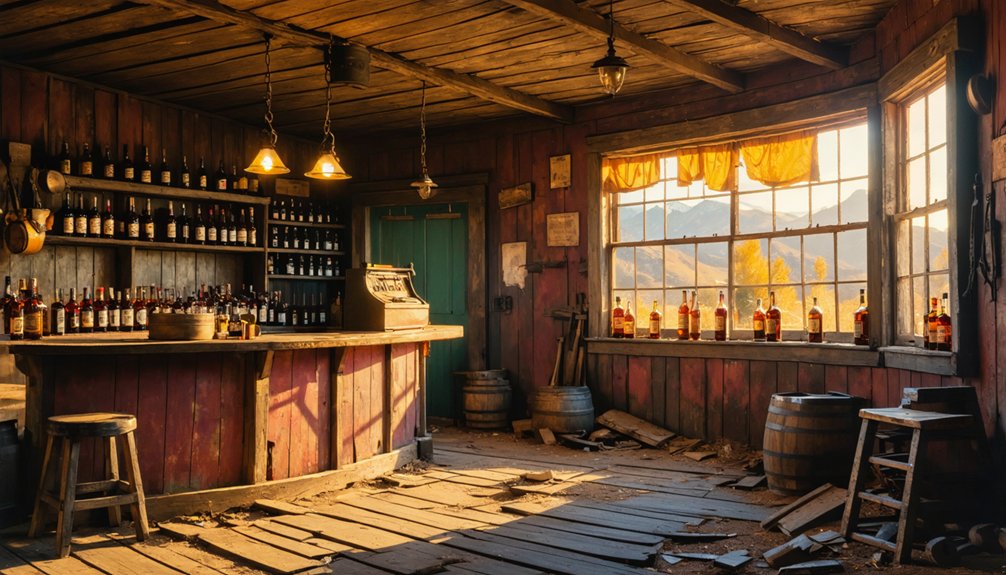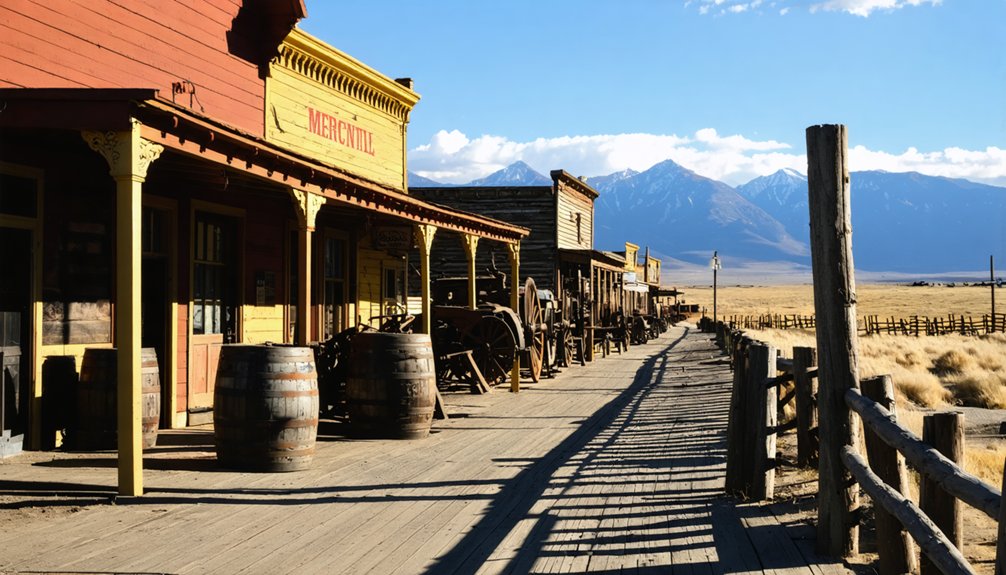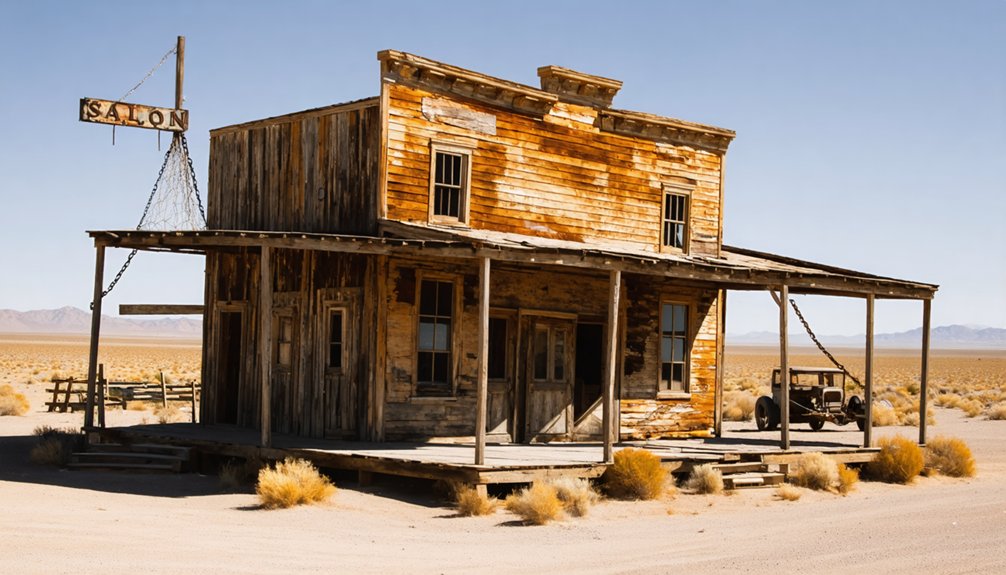
You’ll find over 300 abandoned ghost towns across California, each preserving unique stories from the state’s gold rush and mining heritage. Notable sites include Bodie State Historic Park, where 170+ structures stand in “arrested decay,” and Calico Ghost Town, featuring restored silver rush facades. From the Sierra Nevada to the Mojave Desert, these settlements showcase weathered buildings, mining artifacts, and cultural remnants that illuminate the dramatic cycles of frontier boom-and-bust communities. The rich tapestry of California’s ghost towns awaits your exploration.
Key Takeaways
- Bodie State Historic Park maintains over 170 original structures in “arrested decay,” preserving an authentic gold rush ghost town experience.
- Calico Ghost Town features restored silver mining structures and offers living history demonstrations of 1880s boomtown life.
- The Mojave Desert contains numerous abandoned mining settlements, including Kelso and Chloride City, showcasing the region’s boom-bust cycles.
- Ghost towns like Shasta and Ballarat contain original 19th-century buildings and artifacts from California’s mining era.
- North Bloomfield and Silver City preserve authentic mining equipment, relics, and structures that illustrate daily life in abandoned communities.
The Rise and Fall of California’s Mining Communities
When James Marshall discovered gold at Sutter’s Mill in 1848, he sparked one of history’s largest voluntary mass migrations, transforming California from a sparsely populated territory into a booming frontier state.
You’ll find that community dynamics shifted dramatically as the population of San Francisco exploded from 200 to 36,000 residents in just six years.
The economic impacts rippled across the Sierra foothills, where camps like Auburn, Placerville, and Nevada City emerged as crucial supply hubs.
These settlements experienced rapid growth as thousands of international miners pursued their dreams of striking it rich.
Early discoveries at Salt Springs in San Bernardino County marked the beginning of Southern California’s mining boom.
While placer mining initially drove the gold rush, the shift to hard-rock mining became necessary as surface gold depleted.
Miners eventually expanded their search into the Klamath Mountains region, where heavy freight traffic through the town of Shasta moved over $100,000 in gold dust weekly between 1852 and 1857.
Hidden Gems of the High Sierra
Deep within California’s High Sierra, a collection of remarkable ghost towns stands as evidence to the region’s rich mining heritage.
Abandoned settlements scattered through California’s mountains tell silent stories of the golden age of Western mining exploration.
You’ll discover hidden history in these remote locations, where each site tells a unique story of ambition and perseverance. Today, Bodie is carefully preserved in a state of arrested decay.
At Benton, visitors can stay at a charming 1940s B&B Inn while exploring the historic mining area.
- Bodie State Historic Park showcases the grandest example, where a $35 million gold rush created a bustling city of 10,000 residents.
- The intimate Mammoth Consolidated Mine offers a glimpse into daily life with its preserved bunkhouses and log cabin.
- Silver Mountain City’s remaining Chalmers Mansion and pioneer cemetery echo its brief reign as county seat.
- The remote Masonic District reveals forgotten settlements through interpretive trails.
- Silver City’s Apalatea/Burlando House stands as the oldest survivor, housing thousands of authentic mining-era relics.
Tales From the Mojave Desert
As you venture into California’s Mojave Desert, you’ll discover a remarkable collection of ghost towns that stand as weathered monuments to the region’s rich mining heritage.
These remote communities, from Calico’s silver-rich mountains to Kelso’s essential railroad depot, emerged rapidly during various mineral rushes but succumbed to the desert’s unforgiving climate and changing economic tides.
Today, their preserved buildings, abandoned mines, and scattered artifacts tell compelling stories of frontier determination, boom-and-bust cycles, and the fleeting nature of desert prosperity. Among these historic sites, visitors can explore Bodie State Park, where well-preserved structures offer an authentic glimpse into 19th-century gold mining life. The once-thriving Keane Spring settlement attracted miners and travelers with its reliable water source until a devastating flash flood in 1909 led to its abandonment.
Desert Mining Communities Emerge
Throughout the mid-1800s, the Mojave Desert‘s barren landscape transformed into a patchwork of bustling mining communities after prospectors discovered rich deposits of gold, silver, copper, and other valuable minerals.
The rapid establishment of these settlements showcased remarkable community dynamics, as mining techniques evolved from simple hand-stamped operations to industrial-scale extraction. The region included the thriving community of Ivanpah Valley, which became a significant mining center.
You’ll find these common patterns in desert mining communities:
- Initial tent camps and supply wagons emerged within months of mineral discoveries
- Wooden buildings, stamp mills, and water infrastructure followed if deposits proved profitable
- Peak production typically lasted years to decades before declining
- Towns often depended on a single mine’s success for survival
- When mines became uneconomic, communities quickly transformed into ghost towns
One notable example was Claraville, established in 1861 with twelve houses by 1867, demonstrating how quickly these desert communities could take shape.
Harsh Climate Claims Towns
Within the unforgiving Mojave Desert landscape, several once-thriving communities succumbed to harsh environmental conditions and economic pressures, leaving behind remarkable historical remnants you’ll find scattered across California’s southeastern reaches.
You’ll discover how climate challenges hastened town disappearances at sites like Chloride City, where only debris remains of structures that stood until the 1970s.
In Calico, fierce desert conditions contributed to fires that destroyed most original buildings, though five survived.
The brutal environment took its toll on Kelso’s railroad depot, while Goffs and Amboy fell victim to both weather and isolation. The Mojave Desert Heritage museum, housed in Goffs’ 1914 schoolhouse, preserves artifacts from this harsh era.
These settlements now stand as a reflection of humanity’s brief tenure against nature’s relentless force, with abandoned storefronts, rusted vehicles, and empty schoolhouses marking their former glory.
The once-bustling mining town of Nipton adapted to the desert’s challenges by implementing a renewable energy system to power its remaining structures.
Remnants Tell Silent Stories
The physical remnants scattered across California’s ghost towns speak volumes about the lives and aspirations of those who once called these places home.
exploring california’s ghost towns can reveal stories of perseverance and struggle that have long been forgotten. Each deserted street and crumbling structure invites travelers to imagine the bustling communities that once thrived there. By wandering through these haunting landscapes, one can connect with a rich history that continues to captivate the imagination.
As you explore these forgotten stories, you’ll discover silent witnesses to the American spirit – from Chloride City’s collapsed structures to Kelso Depot’s weathered buildings.
- Handmade grave markers in Calico tell tales of hardy mountaineers and prospectors who sought their fortunes.
- Goffs’ 1914 schoolhouse, now a museum, preserves the educational heritage of mining communities.
- Ludlow and Daggett’s ruins remind you of the silver and borax boom that drew ambitious settlers.
- Kelso’s vacant jail and post office stand as proof of law and order in the wild frontier.
- Mining equipment, rusty vehicles, and scattered artifacts paint a picture of daily life in these once-bustling communities.
Living History in Death Valley
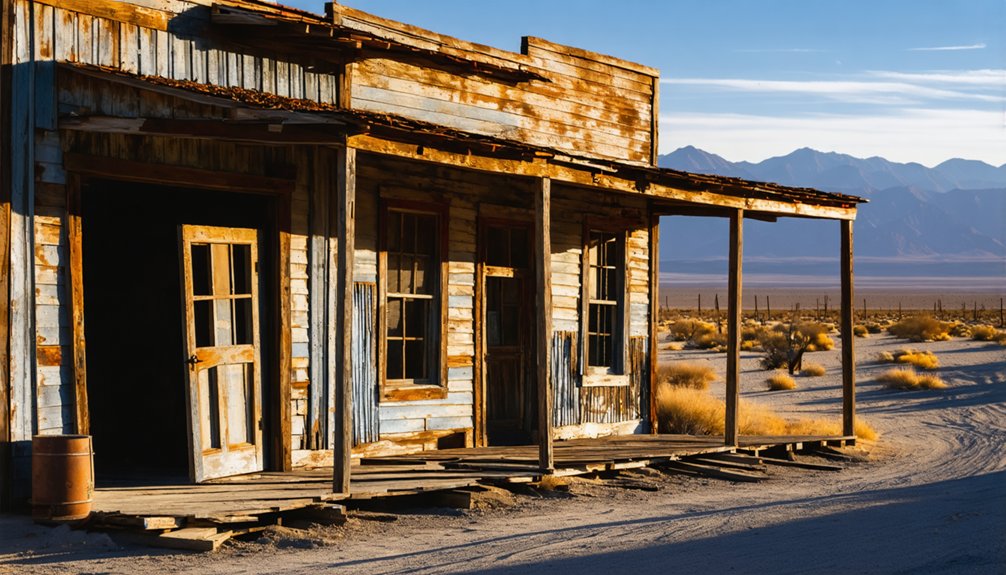
Death Valley’s rich history lives on through four remarkable heritage sites that transport visitors back to California’s mining and cultural golden age.
You’ll discover Ryan Mining Camp‘s well-preserved structures, complete with early modern amenities and ingenious architectural adaptations to the harsh desert terrain.
At Scotty’s Castle Complex, you’re immersed in 1920s grandeur, where Albert Johnson’s ambitious estate showcases period engineering and exotic landscaping.
Here Communist junoka
The Shoshone Historic Museum connects you to the region’s mining heritage through authentic artifacts and period establishments.
At Lower Ranch, you’ll explore Scotty’s personal domain, with its distinctive redwood buildings and Native American-built concrete fences.
These living history sites preserve Death Valley’s unique story of innovation, adaptation, and human perseverance in one of America’s most challenging landscapes.
Must-Visit Ghost Towns for History Buffs
You’ll discover California’s most fascinating ghost towns where the dramatic cycles of mining wealth and abandonment are frozen in time through careful preservation efforts.
In Bodie State Historic Park, weathered wooden buildings stand in “arrested decay,” while Calico’s restored silver rush facades offer glimpses into the Wild West’s merchant life through living history demonstrations.
These historic settlements, from Shasta’s brick ruins to Ballarat’s adobe remains, showcase the hidden treasures of 19th-century mining communities through their original structures, artifacts, and documented stories of boom-era daily life.
Mining Boom and Bust
California’s mining heritage comes alive through remarkably preserved ghost towns that stand as monuments to the dramatic boom-and-bust cycles of the 19th century.
These sites reveal fascinating patterns of ghost town economics and mining speculation that shaped the state’s development.
- Bodie exemplifies the rapid rise and fall, growing from a small camp to 10,000 residents after an 1877 strike, producing $38 million before decline.
- Cerro Gordo’s silver operations helped develop Los Angeles through extensive ore shipments in the 1860s-1870s.
- Bennettville demonstrates speculative fever at 10,000 feet, where investors built an entire town before confirming viable ore deposits.
- Ballarat shows how desert gold towns struggled with infrastructure limitations.
- Each site preserves unique aspects of mining technology, worker housing, and the harsh realities of frontier life.
Preserved Wild West Life
Today’s history enthusiasts can explore several remarkably preserved ghost towns that offer authentic glimpses into Wild West life.
You’ll step back in time at Bodie State Historic Park, where “arrested decay” preservation maintains buildings exactly as former residents left them.
At Calico Ghost Town, Walter Knott’s meticulous restoration lets you experience a silver boomtown’s 1880s heyday through cultural preservation efforts.
North Bloomfield transports you to the Gold Rush era, showcasing innovative hydraulic mining techniques that shaped California’s landscape.
For historical reenactments and movie history, visit Pioneertown‘s frontier-style streets.
Silver City’s open-air museum brings together salvaged structures from various mining settlements, creating an educational journey through authentic buildings and artifacts that tell the story of Western pioneers.
Hidden Historical Treasures
History buffs seeking authentic remnants of the American West will discover remarkable treasures among California’s lesser-known ghost towns.
These hidden treasures offer intimate glimpses into America’s pioneering spirit, from communist experiments to silver rush boomtowns. Each site holds profound historical significance waiting to be explored.
- Cerro Gordo’s preserved saloon and mine shafts tell tales of lawless frontier life
- Llano Del Rio’s ruins chronicle a bold socialist venture in the Mojave Desert
- Silver Mountain City’s relocated structures reveal Alpine County’s original seat of power
- Calico’s restored silverworks showcase Walter Knott’s preservation efforts
- Bodie’s untouched decay captures authentic 1880s mining life in stunning detail
These time capsules invite you to step beyond traditional tourist paths and uncover California’s multifaceted heritage firsthand.
Architectural Remnants of the Old West
розiyfilling contador другJi курса uit
Mining Towns Turned Tourist Destinations
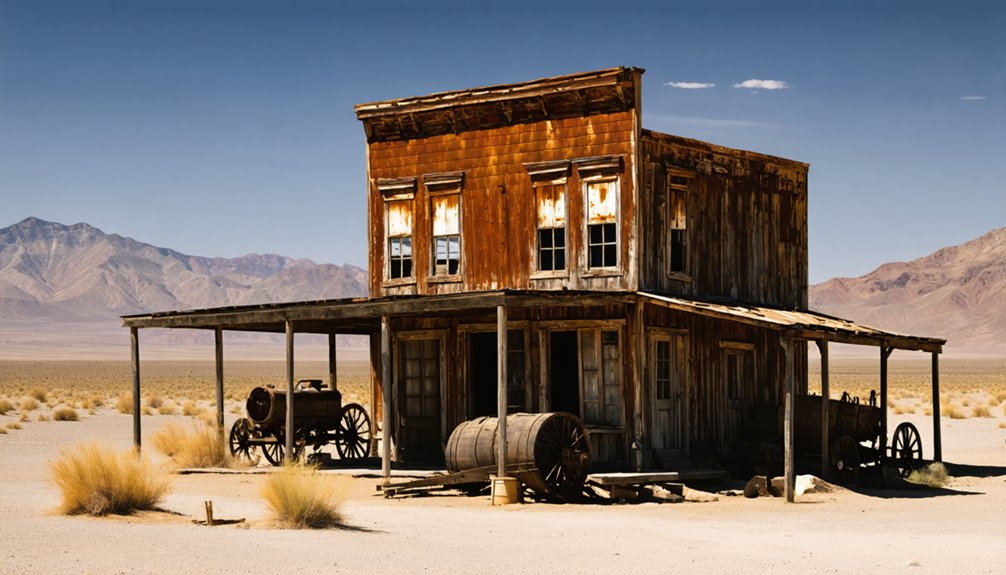
While many California ghost towns fell into complete ruin, several historic mining communities have found new life as popular tourist destinations, offering visitors an immersive glimpse into the state’s rich Gold and Silver Rush heritage.
You’ll discover carefully preserved sites of profound historical significance, each showcasing unique aspects of California’s mining era:
- Calico Ghost Town features authentic silver mining exhibits, including the Maggie Mine’s 1000-foot tunnel and interactive gold panning experiences.
- Bodie State Historic Park maintains 200 buildings in “arrested decay,” presenting an untouched Gold Rush townscape.
- Empire Mine State Historic Park displays a remarkable 367-mile underground network through scale models.
- Malakoff Diggins preserves dramatic evidence of hydraulic mining’s environmental impact.
- Each destination offers distinct tourist attractions, from restored saloons to museums, allowing you to step back into California’s frontier past.
Preserving California’s Ghost Town Heritage
California’s ongoing efforts to preserve its ghost town heritage exemplify a delicate balance between historical authenticity and structural stability. You’ll find this approach most evident in Bodie State Historic Park‘s “arrested decay” policy, where over 170 structures remain frozen in time since 1962.
Through careful historic site management, you’re able to experience these buildings exactly as they were left, with original furnishings untouched and deterioration carefully monitored.
Ghost town preservation organizations like the Bodie Foundation work tirelessly to protect these precious remnants of the past. You’ll discover similar efforts at North Bloomfield and Calico, though each site takes a unique approach.
While Bodie maintains strict authenticity with no modern amenities, other locations have adapted to include educational facilities and guided tours, ensuring these historical treasures remain accessible for future generations.
The Legacy of Boom and Bust Settlements
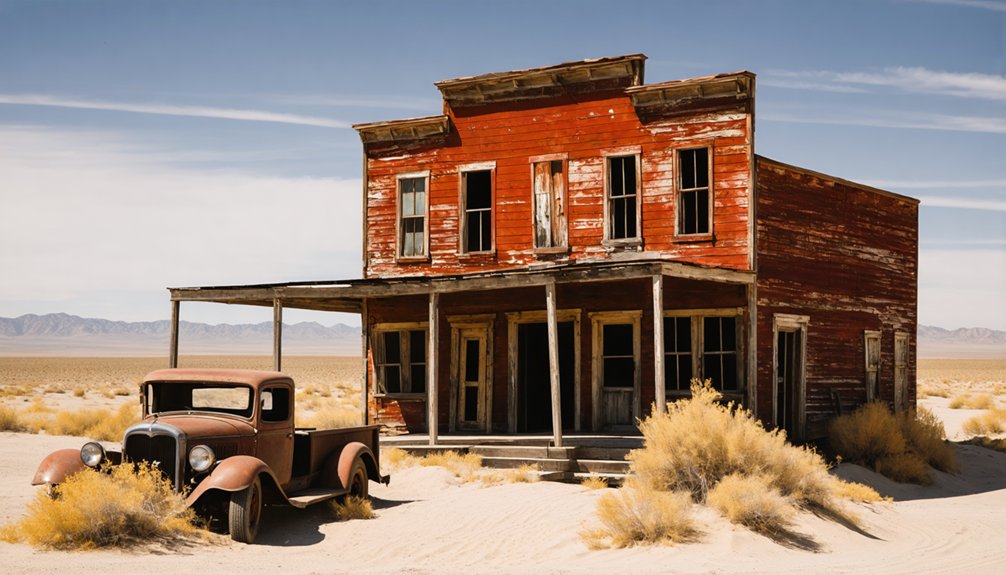
As the discovery of gold at Sutter’s Mill released an unprecedented wave of migration in 1848, you’d witness the birth of countless settlements that epitomized the dramatic cycle of boom and bust in American frontier history.
These towns’ rapid rise and fall offer profound legacy lessons about economic cycles and human ambition.
- Bodie’s transformation from a prosperous hub of 10,000 residents to abandonment illustrates how quickly fortunes can change.
- Rhyolite’s sophisticated infrastructure, including electricity and telephones, shows the scale of frontier investment and risk.
- Calico’s instant exodus following the silver price collapse demonstrates market dependencies.
- Boca’s diverse industries couldn’t survive multiple setbacks, revealing the fragility of mono-resource economies.
- Pioneertown’s ambitious plans versus reality highlight the gap between frontier dreams and sustainability.
Frequently Asked Questions
Are There Any Reported Paranormal Activities in These Ghost Towns?
You’ll encounter numerous ghost sightings across these historic sites, from spectral teachers at Calico’s schoolhouse to phantom miners at Black Diamond. Their haunted history includes apparitions, voices, and unexplained phenomena.
What Survival Supplies Should Visitors Bring When Exploring Remote Ghost Towns?
Pack survival gear including water, food, first-aid kit, navigation tools, and vehicle recovery equipment. You’ll need emergency supplies, sturdy boots, and communication devices for exploring these remote, isolated locations.
Can Visitors Legally Collect Artifacts or Materials From Abandoned Ghost Towns?
Like Bodie’s infamous curse, you shouldn’t take artifacts from ghost towns. Most sites prohibit removal for artifact preservation, though some private locations like Cerro Gordo allow controlled collecting under legal supervision.
Which Ghost Towns Are Accessible During Winter Months?
You’ll find winter accessibility at lower-elevation sites like Calico, Silver City, and Randsburg, while Bodie and high-Sierra towns require skis or snowmobiles as seasonal attractions during snowy months.
Do Any Ghost Towns Still Have Full-Time Residents Living There?
Yes, you’ll find current residents in several ghost towns, particularly where security staff, caretakers, or artists maintain properties. Eagle Mountain and Darwin showcase this unique blend of ghost town history and modern habitation.
References
- https://www.californist.com/articles/interesting-california-ghost-towns
- https://www.visitcalifornia.com/road-trips/ghost-towns/
- https://dornsife.usc.edu/magazine/echoes-in-the-dust/
- https://www.tripadvisor.com/Attractions-g28926-Activities-c47-t14-California.html
- https://www.youtube.com/watch?v=cr3jaq8nR3o
- https://californiahighsierra.com/trips/explore-ghost-towns-of-the-high-sierra/
- https://nvtami.com/ghost-towns-nevada-california/
- https://westernmininghistory.com/state/california/
- https://mojavedesert.net/mining-history/chronology.html
- https://railyards.com/news-and-blog/a-california-history-timeline-part-2-a-gold-rush-to-prosperity/