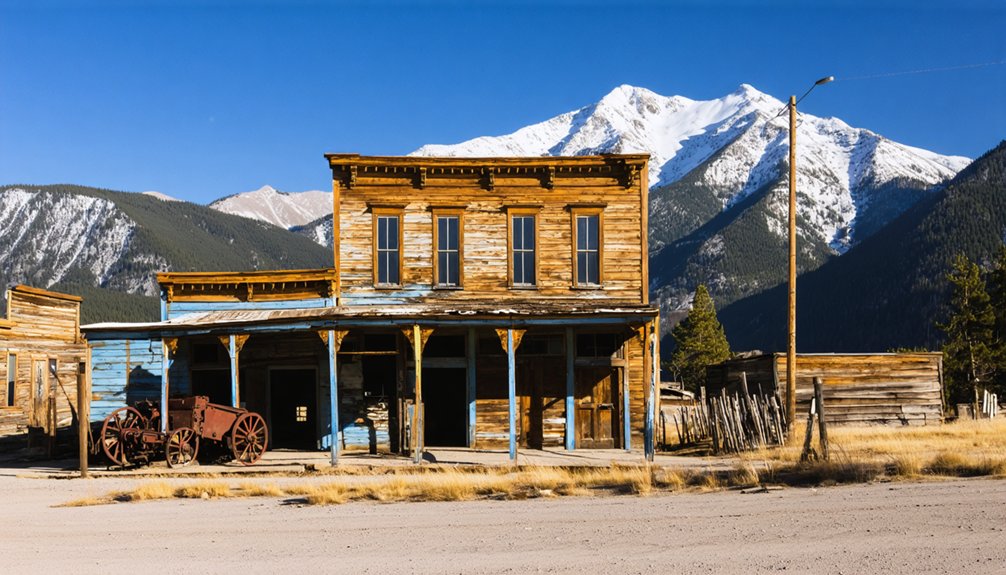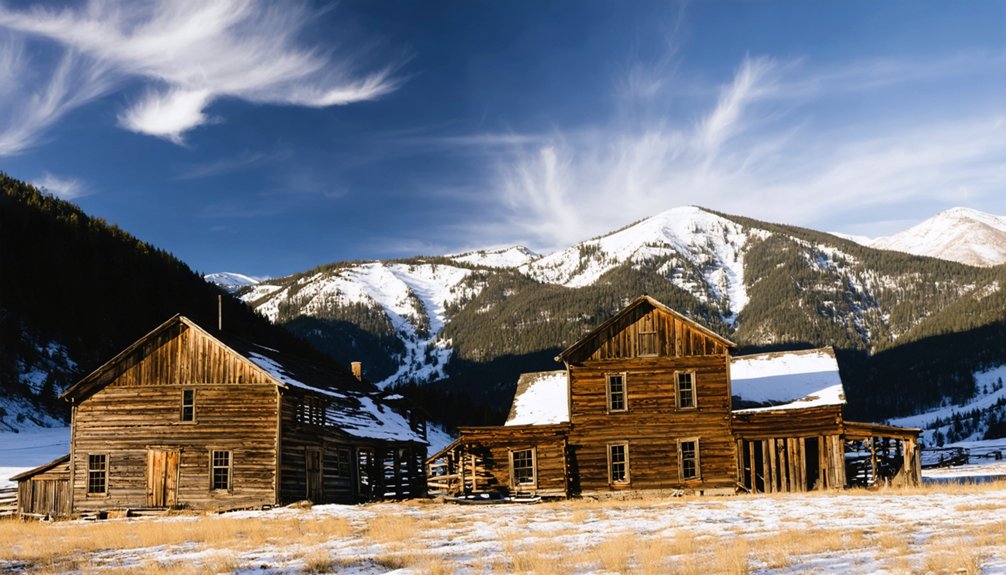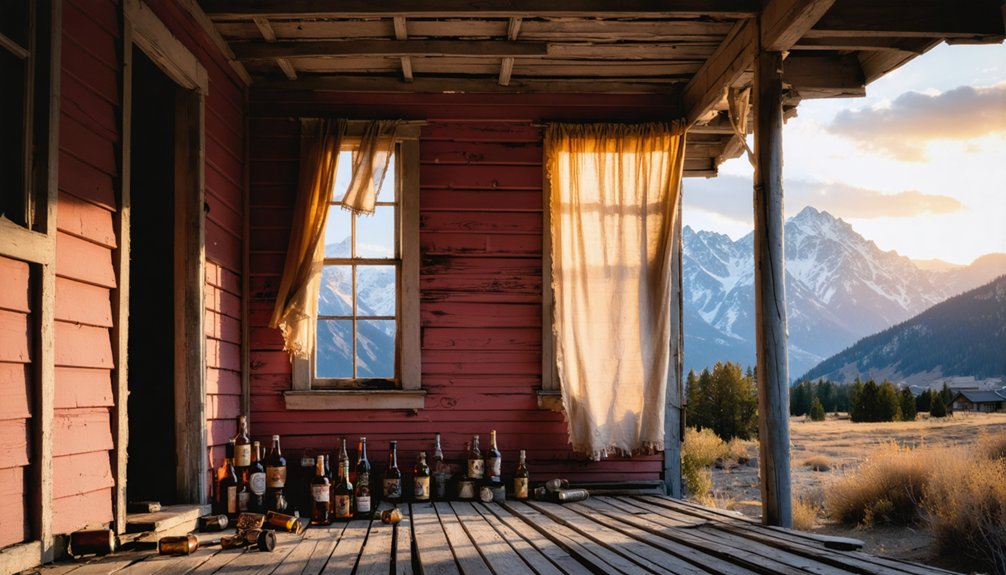
You’ll discover over 700 abandoned ghost towns across Colorado’s mountainous terrain, with St. Elmo standing as the state’s best-preserved mining settlement. These remnants of the 1859-1893 mining boom feature original wooden storefronts, rustic cabins, and grand hotels, from accessible sites like St. Elmo to remote high-altitude locations like Animas Forks at 11,200 feet. While some towns are reachable by car, others require 4×4 vehicles to explore their compelling historical secrets.
Key Takeaways
- Colorado has over 700 documented ghost towns, with St. Elmo being the best-preserved, featuring intact wooden storefronts and historical structures.
- Animas Forks, at 11,200 feet elevation, offers preserved cabins and seasonal activities like snowmobiling and hiking opportunities.
- Most ghost towns were abandoned after the 1893 silver price crash, leaving behind opera houses, hotels, and miners’ cabins.
- Ghost towns like Ironton showcase mining remnants against mountain backdrops, with rusted equipment visible from Highway 550.
- Access varies from paved roads to remote trails requiring 4×4 vehicles, with many sites subject to seasonal weather closures.
The Legacy of Colorado’s Mining Era
While Colorado’s mining era lasted less than a century, its profound impact transformed the territory into a state and left an indelible mark on the region’s development.
The brief but intense mining boom forever changed Colorado, turning a rugged frontier into an economic powerhouse.
You’ll find the mining impacts most evident in the boom-bust cycles that began with the 1859 Pikes Peak Gold Rush and later silver discoveries in places like Leadville. These rushes sparked explosive growth until the devastating silver price collapse of 1893.
The environmental consequences remain visible today through abandoned mine workings, tailings, and contaminated drainage that continue to affect mountain watersheds. The Yule marble discovery in 1873 left massive quarries that stand as testament to the intensive resource extraction of the era.
The Golden City capital established in 1862 became a crucial supply center supporting mining operations throughout the territory.
You can trace the era’s legacy in the landscape’s physical alterations, from scattered ghost towns to persistent waste dumps and tunnel networks.
While some districts, like Cripple Creek-Victor, evolved from numerous small operations to fewer large mines, many others simply faded into history when the ore ran out.
Best-Preserved Mining Towns to Visit
Although many mining settlements crumbled into obscurity, several Colorado ghost towns remain remarkably intact, offering visitors authentic glimpses into 19th-century frontier life.
Among these ghost towns in Colorado history, places like Cripple Creek and Leadville showcase beautifully preserved architecture and rich stories of the past. Visitors can explore historic buildings, museums, and even take guided tours to learn about the miners who once populated these now-quiet landscapes. Each town offers a unique window into the challenges and triumphs of life during the gold rush era.
For ghost town photography enthusiasts, St. Elmo presents pristine wooden storefronts and dusty streets, while Ironton’s rusted remnants and peeling white facades create haunting scenes against Red Mountain’s iron-stained slopes. Like the historic Victor Hotel’s elevator, many sites preserve unique Victorian-era mechanisms that tell stories of the mining days.
With over 700 ghost towns documented across Colorado, visitors can explore numerous well-preserved mining communities that showcase different aspects of frontier history.
You’ll find exceptional mining town architecture in Independence, whose homesteads earned National Register status, and Crystal, where the historic mill stands as proof of industrial ingenuity.
Vicksburg’s poplar-lined streets and four preserved buildings in neighboring Winfield provide immersive historical experiences, complete with an audio guide detailing mining camp life.
Each site showcases distinct features, from Crystal’s Gothic-area infrastructure to St. Elmo’s operating general store and original wooden sidewalks.
High-Altitude Ghost Town Adventures
Colorado’s most daring ghost town adventures take you above 11,000 feet, where abandoned mining camps perch precariously on mountainsides and alpine ridges.
From Carson’s remote Continental Divide location to Alta’s historic structures, these sites reward high altitude hiking enthusiasts with unmatched historical experiences.
High-altitude ghost towns beckon adventurous hikers to discover Colorado’s mining heritage along remote mountain trails and historic pathways.
- You’ll discover Animas Forks at 11,200 feet via the Alpine Loop 4×4 byway, where original cabins still stand despite devastating avalanches. The site once claimed to be the largest city in world at such high altitude.
- Explore Ghost Town Hollow’s mining remnants on Pikes Peak through a 1.4-mile trek, perfect for ghost town photography.
- Visit Alta at 11,800 feet to examine National Register-listed buildings near pristine alpine lakes.
- Challenge yourself to reach Carson at 12,000 feet, where well-preserved structures offer an authentic glimpse of mining camp life atop the divide. Like many sites, these towns were largely abandoned when silver prices crashed in 1893, leaving behind remarkable remnants of frontier life.
Year-Round Tourist Attractions and Activities
You’ll find diverse seasonal activities across Colorado’s ghost towns, from snowmobiling through St. Elmo’s snow-covered streets to hiking among summer wildflowers in Animas Forks.
Professional guides offer detailed historical tours explaining the mining operations, architectural features, and daily life in these preserved settlements. Red Mountain Pass attracts visitors with its rusted mining equipment visible from Highway 550. Visitors can safely explore the well-preserved Duncan House from 1879 and other remaining structures.
Whether you’re interested in winter photography at Carson City’s 12,000-foot elevation or exploring the Alpine Loop‘s interconnected towns during warmer months, these sites maintain their authentic character while accommodating modern adventurers.
Winter Adventure Sports
While abandoned mining settlements lie dormant beneath winter snows, Colorado’s ghost towns transform into gateways for thrilling cold-weather adventures.
From world-class ski resorts near Steamboat Springs to extreme skiing in Silverton’s San Juan Mountains, you’ll discover pristine powder and challenging terrain surrounding these historic sites. The region’s famous champagne powder draws winter sports enthusiasts to Steamboat’s legendary slopes.
- Tackle backcountry skiing at Hidden Valley’s powdery mountainsides or test your skills on Silverton’s alpine runs.
- Navigate 60 miles of cross-country trails in Roaring Fork Valley or explore groomed nordic paths through Ironton Park’s ruins.
- Scale ice climbing routes near Lake City’s ghost towns or venture to Ouray Ice Park’s renowned frozen walls.
- Access remote winter terrain via snowmobile on Lake City’s Alpine Loop or trek to Animas Forks’ snow-covered remains for solitary winter sports.
Near historic Hahns Peak, visitors can enjoy year-round recreation at the nearby Steamboat Lake State Park, perfect for winter activities and scenic exploration.
Guided History Tours
Whether exploring ancient mining hubs or delving into Wild West mysteries, guided tours offer compelling historical immersion across Colorado’s most significant ghost towns.
You’ll discover ghost stories at St. Elmo’s walking tours, where abandoned buildings connect to the Cripple Creek mining district. In Independence, you can walk the archaeological preserve where gold was first struck in 1879, gaining historical insights into the Roaring Fork Valley’s origins.
Breckenridge’s diverse tour options include ghost hunting equipment on the Ghostly Tales Tour and cemetery explorations at Valley Brook.
For remote adventures, venture to Ouray’s weathered mining sites via four-wheel drive, or join Timberline Tours’ jeep excursions to Fulford ghost town along historic stagecoach roads, combining Wild West history with mountain wildlife viewing.
Historical Significance and Cultural Impact
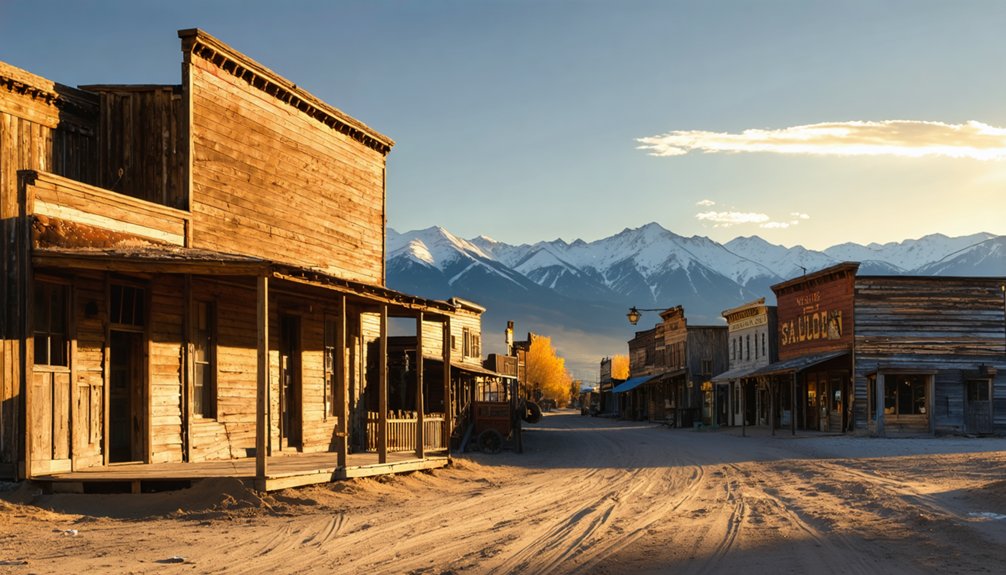
When you explore Colorado’s abandoned mining towns, you’ll discover the tangible remains of the state’s explosive 1880s silver and gold rush that transformed isolated mountain valleys into bustling communities of thousands.
These ghost towns showcase the pioneering spirit through their surviving structures – from grand hotels and opera houses to humble miners’ cabins and innovative engineering works – all testifying to the remarkable speed at which civilization took root in harsh alpine conditions.
The dramatic rise and fall of these communities, from places like Ashcroft with its 1,500 residents to mining powerhouses like the $2 million Tomboy operation, reflects broader patterns in Western American development and reminds you of the impermanent nature of resource-based prosperity.
Mining Boom Legacy
As the Colorado Gold Rush erupted in 1858, a transformative era of mining booms reshaped the Rocky Mountain landscape, establishing over 1,500 frontier settlements that would define the American West.
You’ll find the legacy of these mining ventures preserved in ghost towns scattered throughout Colorado’s rugged terrain, with about 640 still visible today.
- St. Elmo stands as the state’s best-preserved mining town, showcasing authentic wooden structures from the late 1800s.
- The San Juan Mountains region features numerous mining sites where you can explore firsthand.
- Historic mining techniques are documented in places like Idaho Springs and Silverplume.
- The Alta-Gold King area maintains its original cabins and boarding house, earning National Register status.
These preserved settlements offer you a glimpse into the ambitious spirit that built the American frontier.
Preserving Pioneer Stories
Through coordinated preservation efforts, Colorado’s ghost towns continue to share their pioneer stories with modern audiences.
You’ll find organizations like the National Trust for Historic Preservation and local nonprofits working to protect these important historical sites while collecting oral histories from descendants of original settlers. The Black American West Museum preserves community narratives at places like Dearfield, ensuring minority perspectives aren’t lost to time.
Technical preservation combines with educational outreach, as you’ll discover through interpretive trails, museum exhibits, and guided tours.
Professional conservators stabilize historic structures while archaeological surveys document artifacts and spatial relationships.
Through partnerships between federal agencies, local governments, and volunteer organizations, these sites receive the protection and funding needed to maintain their authentic character and historical significance for future generations.
Vanished Communities’ Cultural Heritage
These vanished communities represent far more than abandoned buildings – they embody the cultural mosaic of Colorado’s pioneering spirit.
From Dearfield’s Black homesteaders to Capitol City’s ambitious vision as a new state capital, you’ll discover stories of diverse cultural heritage preserved through historical preservation efforts.
- You can explore St. Elmo’s National Historic District, where the original general store still operates, maintaining the authentic layout of a mining camp turned settlement.
- You’ll find Animas Forks’ cultural significance preserved through $330,000 in restoration grants.
- You can witness Dearfield’s legacy as Colorado’s largest Black homesteading settlement, where 44 wooden cabins once stood.
- You’re able to experience the Mountain Top Mine boarding house standing above 12,000 feet, a reflection of mining communities’ resilience.
These sites now serve as powerful reminders of Colorado’s multicultural pioneering heritage.
Getting There: Access and Transportation Tips
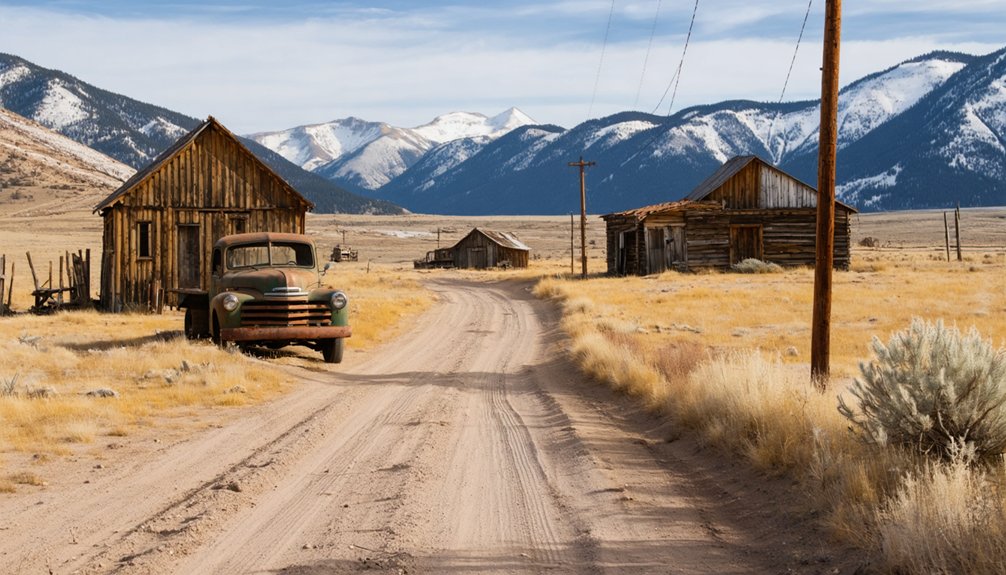
While reaching Colorado’s ghost towns requires careful planning, most sites offer multiple access options depending on your vehicle capabilities and the season.
You’ll find well-known locations like St. Elmo accessible via paved roads, while remote mining camps demand high-clearance 4×4 vehicles to navigate rocky terrain and stream crossings.
Road conditions vary dramatically above 9,000 feet, where seasonal closures and snowpack restrict access.
At high elevations above 9,000 feet, mountain weather and deep snow create unpredictable seasonal access limitations.
For reliable navigation tips, rely on current topographic maps and GPS coordinates from reputable sources like the BLM or USFS.
Build a detailed waypoint list and verify road status with local authorities before departure.
You’ll need to pack recovery gear for backcountry travel and emergency communication devices for areas without cell coverage.
Remember to respect private property boundaries and avoid entering unstable structures.
Essential Planning Guide for Ghost Town Explorers
Before starting any ghost town expedition in Colorado, you’ll need to address critical legal, safety, and logistical considerations that protect both visitors and historical sites.
Understanding safety precautions and historical preservation requirements will guarantee a responsible exploration while maintaining these invaluable historical treasures for future generations.
- Obtain necessary permissions and research site restrictions, as many locations are on private property or protected by preservation laws.
- Pack essential safety gear including sturdy boots, hard hat, first-aid kit, and emergency communication devices.
- Check weather forecasts and seasonal accessibility, particularly for high-elevation sites where conditions can change rapidly.
- Document your trip plan and share it with someone reliable, noting hazards like unstable structures, mine openings, and wildlife that you’ll need to avoid.
Frequently Asked Questions
Are There Any Reported Paranormal Activities in Colorado’s Ghost Towns?
You’ll find extensive paranormal activity at haunted locations like St. Elmo, Cripple Creek, Gothic, and Central City, with documented ghost sightings including Annabelle Stark, Maggie, hitchhiking spirits, and cemetery apparitions.
Can Visitors Take Artifacts or Souvenirs From Ghost Town Sites?
Don’t even think about crossing that line! You’re breaking federal and state laws if you remove artifacts or souvenirs. Artifact preservation ethics require leaving everything untouched for future generations to study.
What Safety Precautions Should Be Taken When Exploring Abandoned Mine Shafts?
Don’t enter abandoned mine shafts – they’re extremely dangerous. If you must explore nearby, wear protective gear, bring oxygen monitors, and notify others of your location. Stay back from unstable openings.
Do Any Ghost Towns Still Have Permanent Residents Living There?
Yes, you’ll find current residents in several ghost towns, like St. Elmo, which has about 10 year-round inhabitants who maintain the town’s historical significance and preserve its rustic structures.
Which Ghost Towns Offer Overnight Camping or Lodging Options Nearby?
You’ll find nearby lodging at Dunton Hot Springs’ luxury cabins, while St. Elmo offers camping options at Heart of Rockies and Collegiate Peaks campgrounds. Mount Princeton resort and Ghost House provide additional accommodations.
References
- https://en.wikipedia.org/wiki/List_of_ghost_towns_in_Colorado
- https://coloradoinfo.com/blog_post/explore-ghost-towns-in-colorado/
- https://www.uncovercolorado.com/ghost-towns/
- https://www.colorado.com/articles/colorado-ghost-towns
- https://www.longmontleader.com/colorado/explore/20-must-visit-ghost-towns-in-colorado-for-an-eerie-adventure-10192944
- https://alissapeterson.com/blog/discover-the-spookiest-colorado-ghost-towns
- https://www.atlasobscura.com/things-to-do/colorado/ghost-towns
- https://www.americansky.co.uk/colorado-holidays/exploring-colorados-ghost-towns
- https://dcl.bibliocommons.com/list/share/1187204657/1879396419
- https://www.denvergazette.com/2022/06/19/starting-in-1858-heres-a-look-at-the-timeline-of-colorados-mining-past-20bc26e4-e4d3-5eae-8520-8fa197554111/