You’ll find hundreds of ghost towns scattered across Kansas, each telling a unique story of America’s westward expansion. These abandoned settlements, from Densmore to Bridgeport, emerged during the late 1800s as railroad stops, mining camps, and military outposts. While most declined due to economic changes and natural disasters, some communities like Potwin Place have found new life through preservation. Kansas’s ghost towns hold fascinating tales of pioneer resilience and dramatic transformation.
Key Takeaways
- Densmore, founded in 1874, was a railroad town that peaked at 100 residents before declining after its high school closure.
- Bala began as a Welsh settlement in 1870 but became abandoned after being bypassed by the railroad during the Great Depression.
- Boyd-Maherville, established in 1873 as a railroad station, ceased operations when its post office closed in 1937.
- Bridgeport, founded in 1879 near the Smoky Hill River, served the community until 1976 before becoming completely extinct.
- Ghost towns in Kansas often resulted from railroad bypasses, economic changes, and natural disasters during westward expansion.
The Historical Significance of Kansas Ghost Towns
While Kansas’s early settlement patterns reflected the broader westward expansion of the United States, its ghost towns tell a particularly rich story of the state’s development through distinct historical phases.
You’ll find ghost town origins tied to diverse catalysts: trading posts along rivers, abolitionist havens like Quindaro, and mining boomtowns such as Empire City and Treece. Natural disasters and economic depressions often led to the rapid abandonment of once-thriving communities.
The state’s mining legacy created dramatic rises and falls, with some towns reaching thousands of residents before declining rapidly. The case of Cedar Point exemplifies this pattern, reaching a peak of 190 in 1920 before dwindling to just 28 residents by 2010.
Kansas mining towns surged to life and vanished just as swiftly, their populations swelling into thousands before fading into history.
Railroad development shaped communities like Vine Creek and Diamond Springs, while Civil War conflicts altered others’ trajectories.
Many towns that once bustled with commerce, from sawmills to cement plants, now exist only through their post office records and remaining structures like churches and cemeteries.
Densmore: A Testament to Pioneer Spirit
When John T. Densmore founded and laid out his namesake town in 1874, he established what would become a tribute to pioneer resilience on the Kansas prairie.
You’ll find Densmore’s origins rooted in the determination of Dutch, Irish, and Dunkard settlers who built a community around the Rock Island Railroad.
The town’s agricultural heritage flourished through its grain elevator, while local businesses like the bank, general store, and blacksmith shop served the growing population. The cream station helped establish Densmore as an agricultural shipping hub.
At its peak around 1910, you’d have found about 100 residents, with social life centered on the Methodist and Presbyterian churches, along with the essential school system. St. Mary’s Catholic Church became another cornerstone of religious life in the community.
Densmore’s decline began with the high school’s closure, followed by changing railroad dynamics and rural consolidation, leaving only scattered remnants of its once-thriving pioneer spirit.
Life Along the Railroad: The Story of Aulne
As a tribute to how railroads shaped Kansas settlements, Aulne emerged in 1886 along the Chicago, Kansas and Nebraska Railway line. Originally named Sherburn after a railroad worker, the town’s name changed when the St. Louis Browns won the World Series that year, showcasing the profound railroad influence on local identity.
Like many Kansas towns that supported the Underground Railroad movement, Aulne played its part in the state’s rich history of fostering freedom. Similar to Ottawa’s transformation, the town experienced significant growth when the Santa Fe Railroad established operations in the region.
You’ll find that Aulne’s community growth centered around key structures: a bank built in 1909, a century-old church, and a post office that served residents for 70 years until 1954.
The town even contended as a potential site for Tabor College. However, when rail service ceased 30-40 years ago, Aulne’s liveliness diminished.
Once considered for a prestigious college campus, Aulne’s vitality faded with the departure of the railroad decades ago.
Today, while abandoned buildings dot the landscape, the nearby Marion County Poor Farm building stands as a historic reminder of the region’s past.
Military Expansion and the Decline of Bala
The establishment of Fort Riley in 1853 marked the beginning of significant military influence across Kansas Territory, setting in motion changes that would later impact communities like Bala.
With new military posts focused on policing factional conflicts, Fort Riley’s role intensified during the Kansas-Nebraska Act era of 1854, safeguarding both settlers and travelers.
Similar to Fort Scott’s role as a proslavery stronghold, many Kansas military posts influenced the political landscape of surrounding settlements during this turbulent period.
While Fort Riley expanded to protect railroad lines and maintain order on the frontier, Bala emerged as a Welsh settlement in 1870, initially thriving with its cheese factory, churches, and livestock trade.
The military expansion of Fort Riley, however, proved detrimental to Bala’s survival.
You’ll find that the town’s decline accelerated when the Chicago and Rock Island Railroad tracks bypassed the settlement, and Fort Riley’s growth led to the closure of Bala City’s depot during the Great Depression.
The construction of new county roads further isolated the community, ultimately transforming Bala into one of eastern Riley County’s ghost towns.
Boyd-Maherville’s Evolution Through Time
Located in Eureka Township of Barton County, Boyd-Maherville emerged as a Missouri Pacific Railroad station in 1873, drawing its first settlers by 1876.
Boyd-Maherville sprang up along the Missouri Pacific line in 1873, welcoming pioneers to Barton County’s Eureka Township by 1876.
Similar to many towns impacted by local economic factors, Boyd-Maherville’s fate mirrored hundreds of other Kansas communities that flourished briefly before decline.
The community initially operated under the name Maherville when its post office opened in 1874, serving as an essential shipping point for the region’s agricultural needs.
Like the high school closures that affected Milan in 1959, Boyd-Maherville experienced the loss of key community institutions.
Boyd’s history took a significant turn in January 1904 when Maherville’s name change became official.
The settlement continued operating under the Boyd designation until its eventual decline. While the railroad’s presence initially spurred growth, changing economic conditions and rural depopulation gradually eroded the town’s importance.
After 63 years of continuous postal service, Boyd’s post office closed in 1937, marking the end of its active community status.
Today, you’ll find only abandoned buildings and ruins, silent reminders of this once-thriving railroad town.
Bridgeport: A River Settlement’s Legacy
Nestled along the banks of the Smoky Hill River in Saline County’s Smoky View Township, Bridgeport emerged as an important settlement during Kansas’s territorial expansion in the late 1800s.
This river settlement established its post office in 1879, serving as a crucial community hub for nearly a century until its closure in 1976.
You’ll find little remaining of Bridgeport’s original infrastructure today, as the unincorporated community didn’t develop extensive facilities beyond its post office.
While the settlement’s proximity to the Smoky Hill River initially attracted settlers, Bridgeport gradually declined over the decades.
Now classified as an extinct town, it joins countless other ghost towns that dot Kansas’s landscape, silent testimonies to the state’s dynamic settlement history.
As interest in these historical sites grows, some adventurous investors look to buy ghost towns in Kansas. These towns offer unique opportunities for restoration and tourism, attracting those who dream of reviving the past. With their rich histories and picturesque landscapes, they present a chance to create something truly special in the heartland of America.
Among these ghost towns of Kansas are remnants of vibrant communities that once thrived during the westward expansion. Many of these abandoned places hold stories of resilience and hardship, etched in the crumbling facades and overgrown fields. Exploring these sites offers a haunting glimpse into a bygone era, inviting visitors to imagine the lives that once animated these now-silent streets.
Preservation Success: Potwin Place’s Second Life
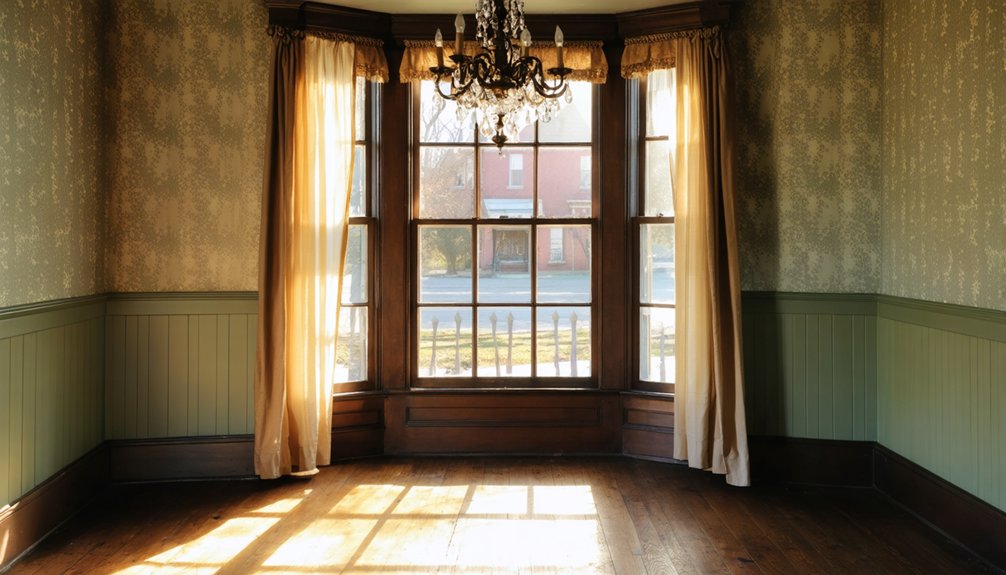
Unlike most ghost towns scattered across Kansas, Potwin Place stands as a remarkable preservation success story.
You’ll find this 1880s neighborhood thriving today through architectural preservation efforts that have maintained its Victorian-era “Painted Ladies” and distinctive brick-lined streets.
The community’s revitalization strategy has transformed historic homes into bed-and-breakfasts and small offices while preserving their original character.
You’ll notice the impact of National Register listing through well-maintained properties and active heritage tourism.
The neighborhood’s preservation achievements include restored façades, landscaped roundabouts, and protected streetscapes that echo its railroad town origins.
Regular community events like Potwin Halloween keep the historic district economically viable, while design guidelines guarantee future alterations respect the area’s authentic 19th-century charm.
Frequently Asked Questions
Are There Any Reported Paranormal Activities in These Kansas Ghost Towns?
You’ll encounter ghost sightings at all four documented haunted locations, with reports of orbs, apparitions, and unexplained phenomena. Stull Cemetery and Pawnee Rock feature particularly strong paranormal activity throughout the year.
What Survival Items Should Visitors Bring When Exploring These Abandoned Towns?
Like pioneers with smartphones, you’ll need essential survival gear: water, GPS, first-aid kit, sturdy boots, sunscreen, flashlights, and emergency blankets. Don’t forget offline maps for reliable exploration tips.
Can Metal Detecting Be Legally Done in These Ghost Towns?
You’ll need proper permits and can’t remove historical artifacts over 100 years old from federal land. You’re free to metal detect on private ghost towns only with written landowner permission, following ARPA regulations.
Which Seasons Offer the Best Photography Opportunities in These Locations?
While summer’s harsh light might disappoint, you’ll find stunning shots in fall’s rich foliage and winter’s stark wonderland. Spring offers gentle morning light and wildflowers against weathered structures.
Are There Guided Tours Available to Visit Multiple Ghost Towns?
You won’t find organized guided tour options covering multiple ghost towns – though you can explore virtual tours through YouTube channels like “Travel with a Wise Guy” featuring abandoned locations like Pleasanton and Mildred.
References
- https://legendsofkansas.com/kansas-ghost-town-list/
- https://en.wikipedia.org/wiki/List_of_ghost_towns_in_Kansas
- https://www.geotab.com/ghost-towns/
- https://www.youtube.com/watch?v=VPZtNoncnig
- https://abandonedks.com
- https://thewanderingpigeon.com/2015/10/03/day-of-kansas-ghost-towns/
- https://everafterinthewoods.com/abandoned-ghost-towns-in-kansas-that-still-hold-stories-of-the-past/
- https://www.youtube.com/watch?v=alC1wDdSVvg
- https://www.kcur.org/arts-life/2022-04-09/ghost-towns-are-all-around-kansas-city-if-you-know-where-to-look
- https://www.humanitieskansas.org/get-involved/kansas-stories/places/mining-for-stories-in-a-kansas-ghost-town