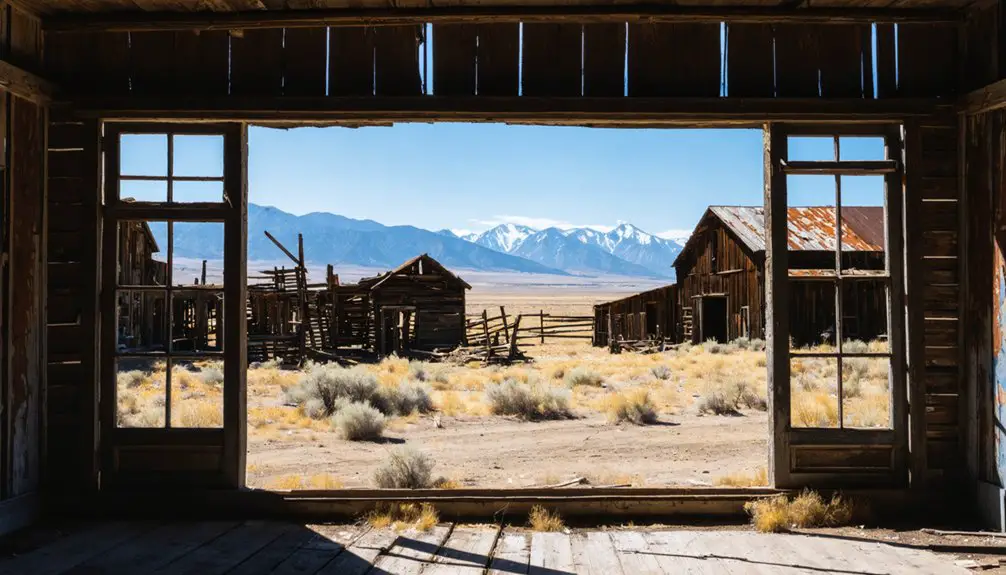
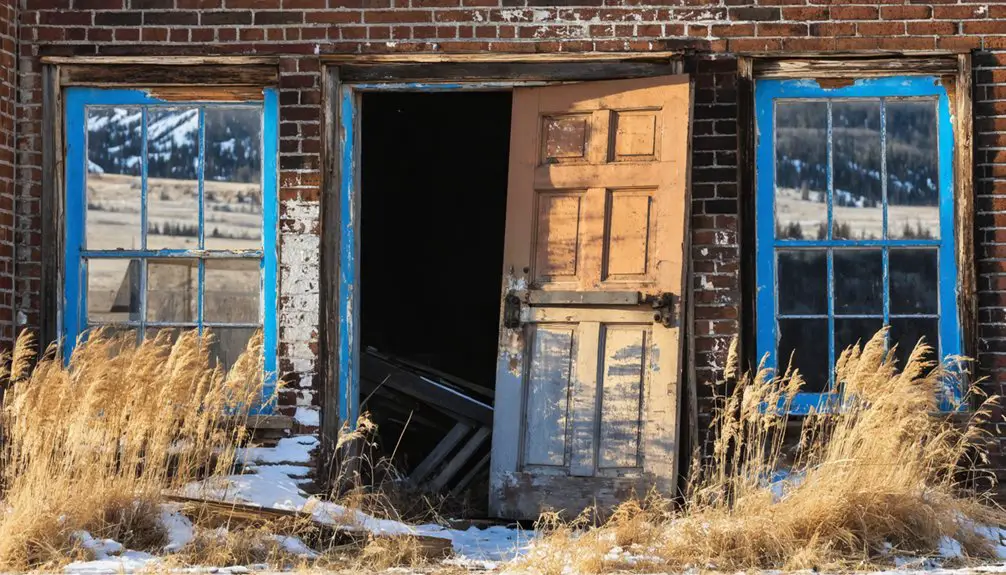
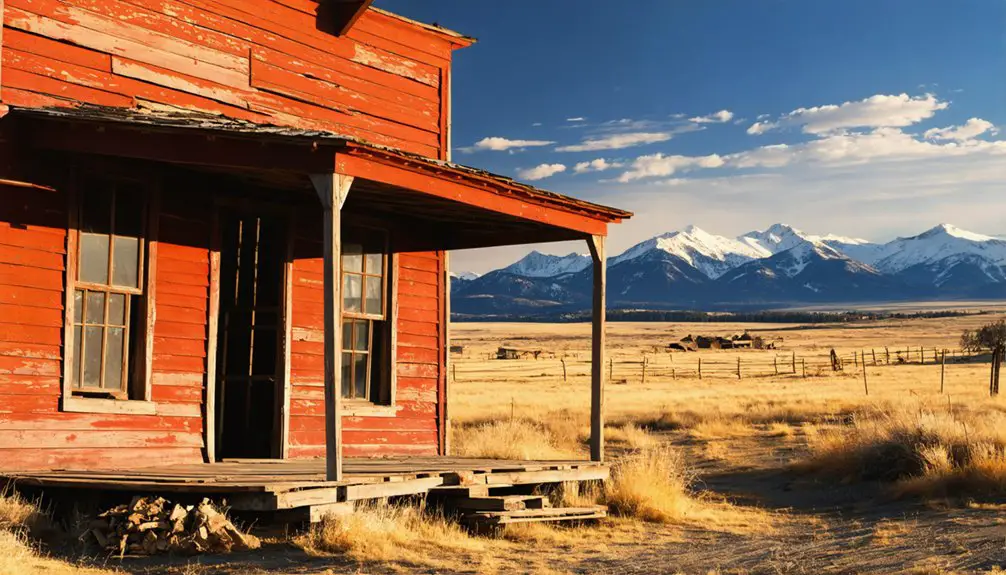
You’ll find Montana’s ghost towns tucked away in mountain valleys and along forgotten rail lines, with some of the best-preserved sites dating to the 1860s gold rush. Visit Bannack State Park near Dillon, explore Virginia City’s weathered buildings, or venture to Garnet Ghost Town’s 30 original structures frozen in “arrested decay.” Pack your sturdy boots and high-clearance vehicle – these remote wooden remnants of the Old West hold countless stories of boom, bust, and frontier justice.
Key Takeaways
- Bannack State Park, Montana’s first territorial capital, offers well-preserved buildings and year-round access to explore its mining history.
- Garnet Ghost Town features 30 original buildings maintained in “arrested decay” and offers guided summer tours and rentable cabins.
- Virginia City stands as a remarkably intact mining town with extensive preservation efforts funded by the Montana Heritage Commission.
- Granite Ghost Town, near Philipsburg, showcases remnants of the world’s richest silver mine but requires high-clearance vehicles for access.
- Elkhorn State Park preserves notable structures like Fraternity Hall and Gillian Hall, remaining accessible throughout the year.
The Rise and Fall of Montana’s Mining Communities
When gold glittered in Montana’s streams back in the 1860s, you’d have witnessed one of the greatest mining rushes in American history. Boom towns like Bannack, Virginia City, and Helena’s Last Chance Gulch sprang up overnight as fortune seekers poured in. The discovery of the Drumlummon Mine claim in 1876 led to the establishment of yet another bustling mining town at Marysville.
But it was the copper beneath Butte’s soil that really transformed Montana’s destiny. By 1896, five square miles produced an astounding 210 million pounds of copper annually.
You’d have seen economic cycles swing wildly as mining evolved from simple placer operations to massive corporate enterprises. The Anaconda Copper Mining Company emerged in 1895, building company towns where they controlled everything from housing to grocery stores.
Through the decades, labor disputes shaped these communities’ fates, while technological advances like open-pit mining kept some towns alive but changed their character forever.
When markets crashed or resources depleted, these once-bustling communities often became the ghost towns you’ll find today.
Notable Ghost Towns Worth Exploring
You’ll find Montana’s most fascinating ghost towns tucked away in mountain valleys and along forgotten rail lines, from the well-preserved buildings of Garnet to the quieter remnants of Castle Town.
When you’re planning your ghost town adventures, remember that some sites like Castle Town require special permission, while others like Elkhorn State Park welcome visitors year-round. Fraternity Hall and Gillian Hall stand as centerpieces of Montana’s smallest state park in Elkhorn. During its peak in 1898, one thousand residents called Garnet home during the height of the gold mining boom.
These historic places are carefully maintained through state and local preservation efforts, ensuring you’ll get an authentic glimpse of Montana’s mining and homesteading heritage while staying safe during your explorations.
Hidden Gems Still Standing
Montana’s rugged landscape harbors some of the best-preserved ghost towns in the American West, each telling tales of boom-and-bust mining ventures from the 1800s.
You’ll find hidden treasures like Garnet Ghost Town, nestled in the mountains 30 miles east of Missoula, where well-maintained buildings stand as they did in 1898.
Don’t overlook destinations like Granite Ghost Town, home to what was once the world’s richest silver mine. The Anaconda Ghost Town, where the world’s largest gold nugget was discovered, offers a glimpse of 1800s mining life through its weathered cabins and barn. Popular attractions include guided historical tours that showcase the authentic structures and artifacts from the era.
These remote outposts still capture the spirit of frontier freedom, from Bannack’s original schoolhouse to Virginia City’s steam train adventures. The journey to these historic sites often includes scenic forest drives that enhance the exploration experience. Each site preserves a chapter of Montana’s wild mining heritage.
Access and Safety Tips
Though these historic mining settlements beckon adventurous spirits, reaching Montana’s best-preserved ghost towns requires careful planning and the right vehicle.
You’ll find Bannack State Park 17 miles west of Highway 278 near Dillon, while Garnet Ghost Town lies 11 miles up a winding dirt road from Route 200, east of Missoula. For Granite Ghost Town near Philipsburg, you’ll want a high-clearance vehicle to tackle the rough terrain. The Sweet Palace candy store in Phillipsburg offers a charming rest stop before tackling the rugged ghost town roads.
Before striking out on your own, stop by visitor centers for maps and local insights. The access routes often involve steep, narrow mountain roads that’ll challenge your driving skills. During summer months, the Bannack Visitor Center offers guided tours and valuable historical information.
If you’re pulling an RV or trailer, you’ll need to reconsider – these old mining paths weren’t built for modern rigs. Pack provisions, as dining options are sparse in these remote locations.
Preservation Efforts Today
While countless Western mining settlements have crumbled into dust, several Montana ghost towns stand proudly today thanks to dedicated preservation efforts.
Among the most intriguing options are the ghost towns available in Montana that invite visitors to explore their rich histories. Each site tells a unique story of the rugged past, offering a glimpse into the lives of those who once thrived there. As modern travelers seek adventure and inspiration, these towns serve as a reminder of the resilience and spirit of the American West.
Exploring ghost towns in Montana’s wilderness allows adventurers to walk in the footsteps of miners and pioneers. Surrounded by majestic mountains and untouched landscapes, these locations often reveal remnants of old buildings and artifacts, enhancing their allure. Visitors can immerse themselves in the stories of survival and nostalgia that echo through the whispering winds of the past.
You’ll find passionate community engagement bringing life back to these historic treasures. In Garnet, the state maintains well-preserved buildings from the 1800s gold rush, while Virginia City and Nevada City showcase impressive restoration techniques funded by a $6.5 million investment. Visitors can enjoy an immersive historical experience through informational plaques and well-preserved buildings that tell the story of 1890s mining life.
The Montana Heritage Commission has repaired 78 buildings and added modern amenities like water lines. Local societies, including the Ghost Town Preservation Society, contribute financial support and raise awareness through conventions and tours. One notable site is Elkhorn Ghost Town, which hosts immersive historical events during the summer months.
In Marysville, dedicated volunteers protect intact 1890s log cabins, earning stellar visitor reviews. The Extreme History Project brings these stories alive through immersive events and cultural programs.
Access and Safety Guidelines for Ghost Town Visits
When you’re heading out to explore Montana’s ghost towns, you’ll need to mind both legal requirements and your own safety preparations.
Bannack welcomes visitors daily but requires sticking to marked paths and designated areas, while Garnet enforces stricter rules including no pets, metal detectors, or camping.
You’ll want to pack essential gear like bear spray, extra water, and proper footwear while keeping a safe distance from wildlife and unstable structures.
Legal Access Requirements
Exploring Montana’s ghost towns requires careful attention to legal access rules that vary across private, state trust, and public lands.
You’ll need to watch for posted signs or orange paint marking private property boundaries – Montana’s friendly trespass laws let you enter unposted land, but a landowner’s verbal warning means it’s time to skedaddle.
For state trust lands, you’ll need a conservation license if you’re 12 or older, though notably, no specific permit is mentioned for visiting BLM-managed ghost towns like Garnet.
Getting there legally means sticking to public roads, adjacent public lands, or securing permission from neighboring landowners.
Remember to park within 50 feet of roads without blocking gates, and if you’re bringing your e-bike, treat it like any other motorized vehicle.
Safety Precautions When Exploring
To safely navigate Montana’s historic ghost towns, you’ll need to mind both visible and hidden hazards that lurk in these century-old settlements.
Pack essential safety gear including sturdy boots to protect against rusty nails and broken glass, plus a reliable flashlight for exploring dark corners. Keep your first aid kit and insect repellent handy.
Watch your step around collapsed floors and rotting structures, and always maintain a clear path to exit buildings.
When driving to remote sites, stick to recommended routes like MT 200 for Garnet access. Wildlife encounters are common, so keep your distance – 100 yards from bears and 25 yards from other creatures.
Historical Significance and Economic Impact
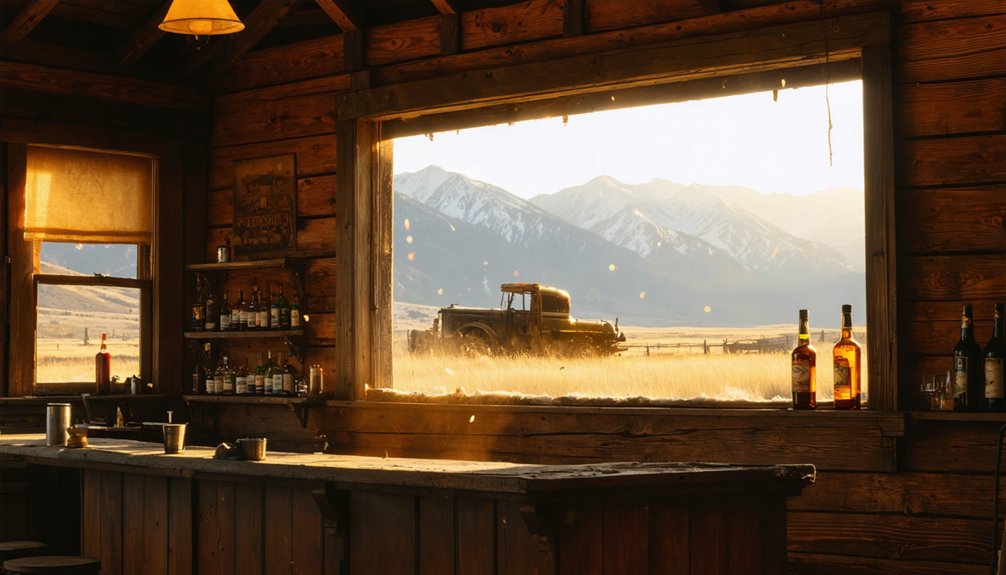
During Montana’s explosive gold and silver rushes of the 1860s, frontier settlements like Virginia City and Bannack transformed from dusty outposts into thriving economic powerhouses.
You’d have seen mining techniques evolve as these towns generated remarkable wealth, with Granite’s silver mine alone yielding $40 million. The economic resilience of these communities was tested when gold prices doubled to $32 per ounce in 1934, breathing new life into places like Garnet.
These boomtowns weren’t just about mineral wealth – they shaped Montana’s territorial development. Virginia City served as the territorial capital, while Bannack’s notorious Sheriff Plummer and the vigilante justice era left an indelible mark on frontier law and order.
Today, their weathered buildings stand as monuments to the untamed spirit of western expansion.
Preservation Efforts and Challenges
When concerned citizens first noticed Bannack and Garnet’s buildings crumbling in the 1940s, they launched preservation efforts that would shape Montana’s ghost towns for generations. Through remarkable community involvement, groups like the Daughters of the American Revolution and local museum associations stepped up to protect these treasures.
You’ll find their legacy today in Bannack’s authentic ghost town atmosphere and Garnet’s carefully maintained structures.
Despite funding challenges and remote locations, dedicated organizations keep these time capsules alive. The BLM and Garnet Preservation Association maintain 30 original buildings in “arrested decay,” while Montana State Parks protects Bannack’s historic character.
You can experience their work through guided summer tours, rentable cabins, and scenic byways – all while these groups balance preservation with public access.
Geographic Distribution Across Montana
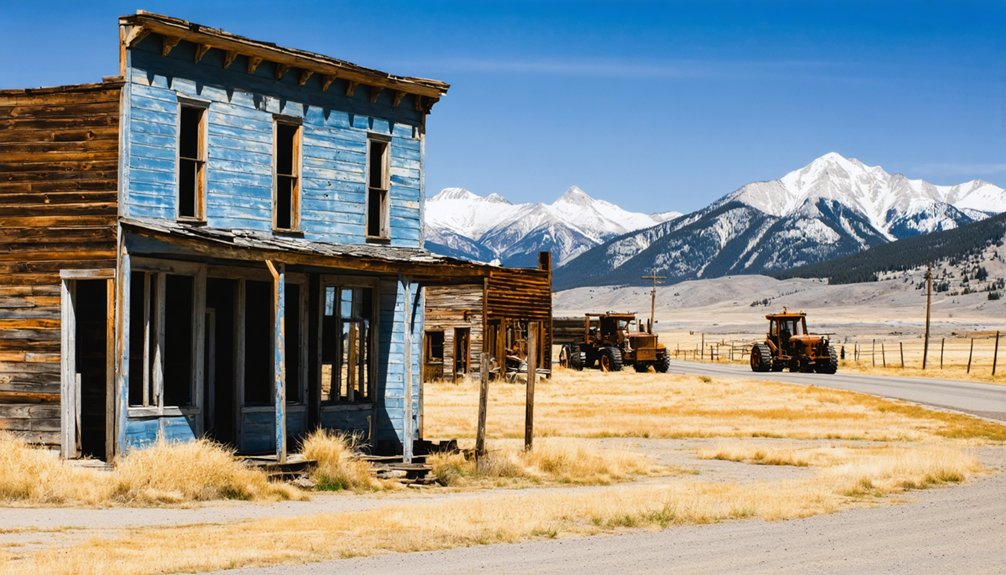
Montana’s ghost towns paint a fascinating pattern across the state’s diverse landscape, with the richest concentration nestled in the western mountain ranges.
You’ll find the most impressive ghost town demographics along the Rocky Mountain front and Sapphire-Anaconda ranges, where 19th-century gold and silver strikes sparked bustling settlements like Bannack and Virginia City. These settlement patterns followed the natural contours of stream valleys and mountain benches, creating distinct clusters that you can still explore today.
Head east across the plains, and you’ll discover a different story. Scattered remnants of homesteading dreams and abandoned railroad towns dot the prairie counties, though they’re often just foundation traces now.
Prairie ghosts whisper through crumbling foundations, where failed homesteads and forgotten railroad stops fade into Montana’s eastern horizon.
While western mining towns boast preserved structures in state parks, their eastern cousins have largely succumbed to time and weather.
The Role of Railways in Town Abandonment
As railroads carved their way through Montana’s frontier in the late 1800s, they became both the lifeline and death knell for countless settlements.
You’d see towns like Ingamar spring up overnight along the Milwaukee Road, boasting 46 businesses by 1910, while others withered when railway infrastructure passed them by.
Take Bannack – once 5,000 strong, it slowly faded after being bypassed for Dillon in the 1880s.
The railways could make or break a town’s fortune.
Coolidge thrived with 350 souls until the Great Depression crushed silver prices in 1930.
When the tracks came up, economic decline wasn’t far behind.
Even established stops weren’t safe – a 1927 flood washed out 12 miles of track, and by 1940, those rails were gone for good.
Living History and Tourism Opportunities
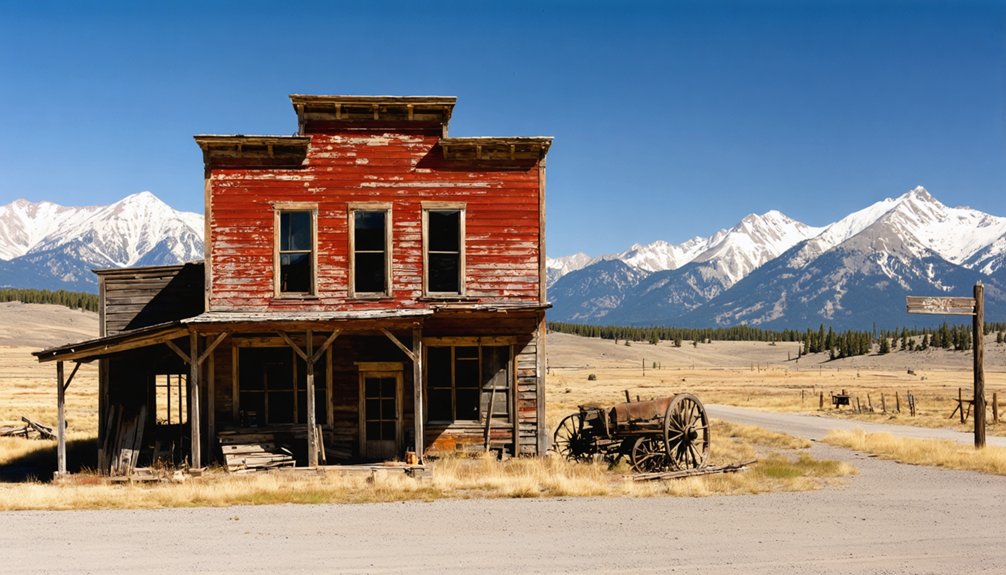
Today’s adventurous tourists can step back in time through Montana’s carefully preserved ghost towns, each offering unique glimpses into frontier life.
You’ll find living history at its finest in Virginia City, where you can catch a ride on a historic steam train to Nevada City, watch theatrical performances, and witness Old West reenactments.
In Bannack State Park, you won’t want to miss Bannack Days, where costumed interpreters bring tales of vigilante justice to life among 50 original buildings.
For an authentic mining experience, head to Garnet Ghost Town, the state’s best-preserved reminder of frontier mining life.
The Montana Ghost Town Preservation Society guarantees these treasures remain intact, hosting guided tours and annual conventions that’ll connect you with the raw spirit of the American West.
Best Times to Visit Montana’s Ghost Towns
Timing matters when planning your ghost town adventures across Big Sky Country.
Summer’s peak season brings the fullest access, with Virginia City’s daily operations and over 60 preserved structures at Bannack beckoning from Memorial Day through Labor Day. You’ll find Bannack Days in July alive with historical reenactments.
For savvy seasonal exploration, target September’s sweet spot – you’ll dodge crowds while enjoying summer-like weather and open facilities. Your visitor experiences expand with unrestricted wandering through Elkhorn and Virgelle’s quiet streets.
October delivers spooky ghost walks at Bannack, perfect for history buffs seeking autumn chills.
Avoid winter’s limitations when snow blankets high-elevation towns like Garnet and Castle Town. Most sites close or become challenging to reach, though early spring offers promising exploration before summer crowds return.
Frequently Asked Questions
Are There Any Reported Ghost Sightings or Paranormal Activities in Montana’s Ghost Towns?
You’ll find plenty of ghost stories across Montana’s haunted locations, from Virginia City’s Boot Hill apparitions to Garnet’s phantom piano music and Gunslinger Gulch’s moving objects and unexplained footsteps.
What Should Photographers Bring to Capture the Best Ghost Town Images?
You’ll want your camera body, wide and telephoto lenses, tripod, and flashlights. Don’t forget neutral density filters for those long exposures, and focus on architectural details like weathered doorways and rusted signs.
Can Visitors Take Artifacts or Minerals Found in Ghost Towns?
With 90% of ghost town artifacts already lost to looters, you can’t legally take anything. Federal and state laws protect artifact preservation and enforce mineral regulations. Take only photos, leave only footprints.
Which Ghost Towns Are Accessible for People With Mobility Limitations?
You’ll find accessible pathways at Garnet and Bannack, where mobility aids work well on level main streets. Both towns let you explore numerous historic buildings through wide, wheelchair-friendly routes.
Are There Guided Night Tours Available at Any Montana Ghost Towns?
You’ll find guided night tours at Bannack State Park during their Ghost Walk events, where costumed actors bring history to life. Other ghost towns don’t offer regular night experiences, though Butte’s haunted tours run separately.
References
- https://www.greatfallstribune.com/story/life/my-montana/2018/06/28/these-12-best-ghost-towns-see-montana/736153002/
- https://www.youtube.com/watch?v=BQH5LghhkVs
- https://glaciermt.com/ghost-towns
- https://southwestmt.com/ghosts/ghost-towns/
- https://www.oregonhikers.org/forum/viewtopic.php?t=28842
- https://xlcountry.com/montana-ghosts-towns/
- https://visitmt.com/things-to-do/ghost-towns
- https://nwda.orbiscascade.org/ark:/80444/xv28731
- https://www.mininghistoryassociation.org/ButteHistory.htm
- https://www.hcn.org/issues/issue-121/the-rise-and-fall-of-a-gold-mining-company/