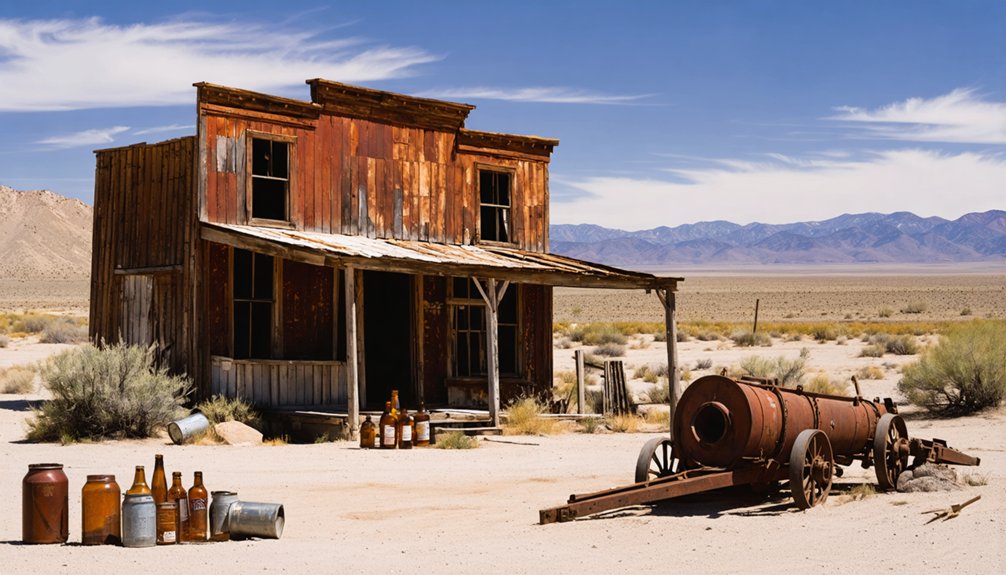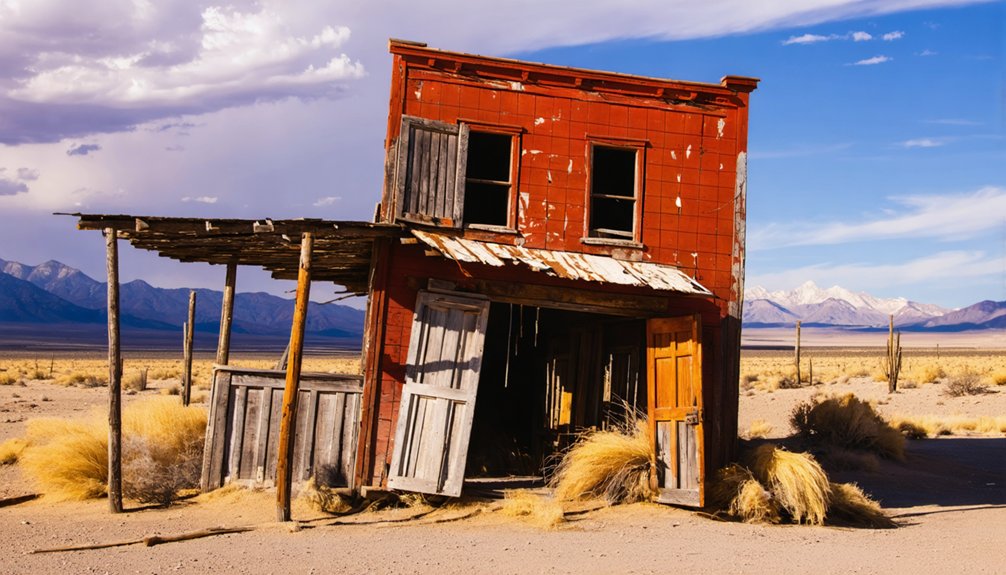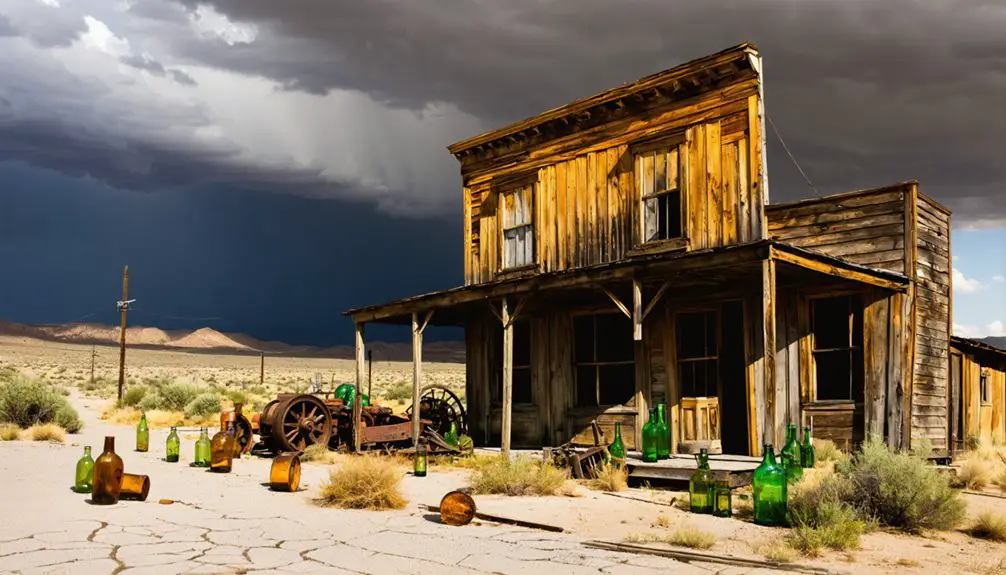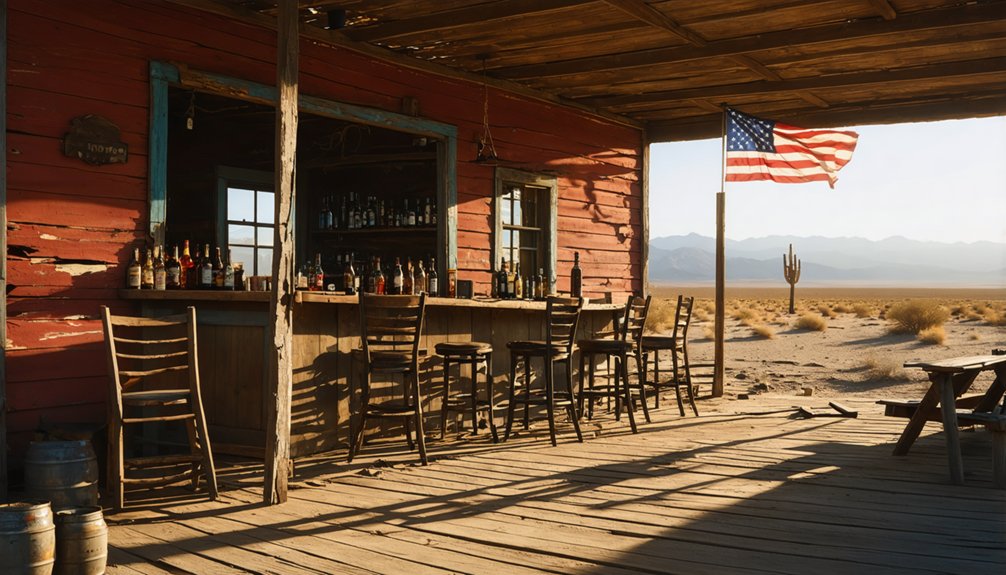
You’ll find over 600 ghost towns scattered across Nevada’s high desert landscape, remnants of the state’s rich mining heritage dating back to 1849. These abandoned settlements, from Rhyolite’s iconic bank ruins to Goldfield’s haunted hotel, tell stories of America’s silver and gold rushes. While some towns like Belmont preserve their historic courthouse and mill ruins, others have vanished entirely into the desert, each holding secrets of Nevada’s boom-and-bust past.
Key Takeaways
- Nevada has over 600 protected ghost town sites, with many preserved through “arrested decay” to maintain their historical authenticity.
- Rhyolite features the iconic Cook Bank building and grew from two tents to 5,000 residents before declining after the 1907 financial panic.
- Goldfield’s haunted hotel, built in 1908, stands as a testament to mining wealth and attracts visitors with its paranormal reputation.
- Belmont’s 1876 courthouse, mill ruins, and stone walls remain intact from its silver mining heyday when 2,000 residents called it home.
- Jarbidge maintains about 15 residents today, while Goodsprings hosts 150 year-round inhabitants, representing still-populated ghost towns.
Nevada’s Rich Mining Heritage and Ghost Town Legacy
While many American frontiers were shaped by agriculture and railroads, Nevada’s identity was forged in the fires of mineral extraction. When Mormon settlers discovered placer gold near Dayton in 1849, they sparked a transformation that would define the state’s destiny.
The ancient Anasazi turquoise miners worked the area near Boulder City between 300-500 A.D., establishing Nevada’s earliest known mining operations.
But it was the legendary Comstock Lode of 1859 that ignited Nevada’s first major mining boom, leading to its separation from Utah and establishment as a U.S. Territory.
The discovery of the Comstock Lode transformed Nevada’s destiny, birthing a territory from Utah’s shadow into mining prominence.
The Mackay School of Mines opened in 1908 to provide formal education for Nevada’s growing mining industry.
You’ll find ghostly whispers of this prosperous past in the wake of the Comstock’s decline after 1877. The mines that once yielded hundreds of millions in silver and gold – enough to help fund the Union Army – gradually fell silent.
This pattern of boom and bust would repeat itself through Tonopah’s silver strikes of 1900 and Goldfield’s early 1900s gold rush.
The Rise and Fall of Rhyolite: A Photographer’s Paradise
Among Nevada’s most enchanting ghost towns, Rhyolite stands as a symbol of the state’s dramatic mining legacy.
You’ll find its story began in 1904 when prospectors Harris and Cross struck gold, transforming a two-tent camp into a bustling metropolis of 5,000 residents within six months. For Rhyolite photography enthusiasts, the town’s remaining structures offer compelling subjects, especially the iconic three-story Cook Bank building, which cost $90,000 to construct in 1908.
Rhyolite’s history mirrors the classic boom-and-bust cycle of mining towns. You can trace its rapid decline following the 1907 financial panic and diminishing ore quality. The town’s modern amenities included electricity and telephones, making it one of Nevada’s most advanced communities of its time. The town’s impressive water system was completed by June 1905, providing ample water supplies to the growing population.
Goldfield’s Haunted Hotels and Historic Courthouse
You’ll find the infamous Goldfield Hotel standing as a monument to both architectural grandeur and supernatural mystery, with its 1908 mahogany-paneled lobby and gold-leaf ceilings now overshadowed by persistent tales of Elizabeth’s ghost in Room 109 and other reported paranormal activity.
Initially costing over $300,000 to construct, the once-luxurious 150-room hotel served as Goldfield’s social hub during the mining boom before decades of vandalism and neglect transformed it into one of Nevada’s most notorious haunted landmarks.
While the building remains largely boarded up today, its historical significance and ghostly reputation continue to draw paranormal investigators and history enthusiasts alike to this cornerstone of Goldfield’s preserved downtown district.
The hotel was funded by mining magnate George Wingfield, who played a pivotal role in developing Goldfield during its prosperous early years.
Haunted Goldfield Hotel Legacy
Located in the heart of Goldfield’s historic district, the infamous Goldfield Hotel harbors some of Nevada’s most chilling paranormal activity since its 1908 opening.
You’ll encounter the ghost of George Wingfield through his cigar smoke near the lobby staircase, while Room 109 echoes with Elizabeth Legend’s tragic tale of imprisonment and death. Among the most terrifying ghostly encounters, you’ll find a knife-wielding entity in the Gold Room and two suicide spirits who aggressively patrol the third floor.
These spectral stories have drawn countless paranormal investigators, including TV shows like Ghost Hunters and Ghost Adventures. Visitors frequently report feeling cold unexplained breezes throughout the building.
Built over a pioneer cemetery and surviving the devastating 1923 moonshine fire, the hotel’s dark legacy continues to attract visitors despite its abandoned state and ongoing vandalism issues. Originally constructed with 154 luxurious rooms, the hotel stood as a testament to the city’s gold rush prosperity.
Historic Courthouse Tiffany Treasures
Standing proudly since 1907, the Esmeralda County Courthouse anchors Goldfield’s historic district with its rusticated sandstone facade and Classical Revival architecture.
The historic building’s location in Mineral County reflects its regional significance in Nevada’s governance.
You’ll find this enduring landmark at the corner of Crook and Euclid Avenues, where it’s served continuously as the county’s judicial center for over a century.
Inside, you’ll discover an impressive collection of courthouse artifacts that transport you to Nevada’s golden age.
Original Tiffany lamps illuminate the halls, while period furnishings and historic photographs showcase the town’s prosperous mining era.
Unlike many abandoned Nevada courthouses, this building remains fully operational, housing modern government offices while preserving its historic charm.
You can even explore the original Pauly jail cells, which still occasionally house inmates, making this courthouse both a working institution and living museum.
The courthouse played a pivotal role in the town’s most famous sporting event, hosting the legendary Gans-Nelson boxing championship in 1906.
Belmont: Where Silver Dreams Still Echo
Deep in Nevada’s high desert, Belmont emerged as one of the state’s most promising silver towns after prospectors discovered rich ore deposits in 1865.
You’ll find this remarkably preserved ghost town’s legacy in its $15 million ore production and peak population of 2,000 residents, including future Nevada governor Tasker Oddie.
While exploring Belmont’s history, you’ll encounter:
- The iconic 1876 courthouse, now a protected historical site where visitors still carve their names
- Towering mill ruins with intact machinery and a historic tramline overhead
- Original stone walls and cabin remnants that have withstood 150+ years of desert winds
Despite its decline by the 1890s and post office closure in 1922, Belmont stands as one of Nevada’s most accessible ghost towns, just 45 minutes north of Tonopah.
Hidden Gems: Jarbidge and Goodsprings
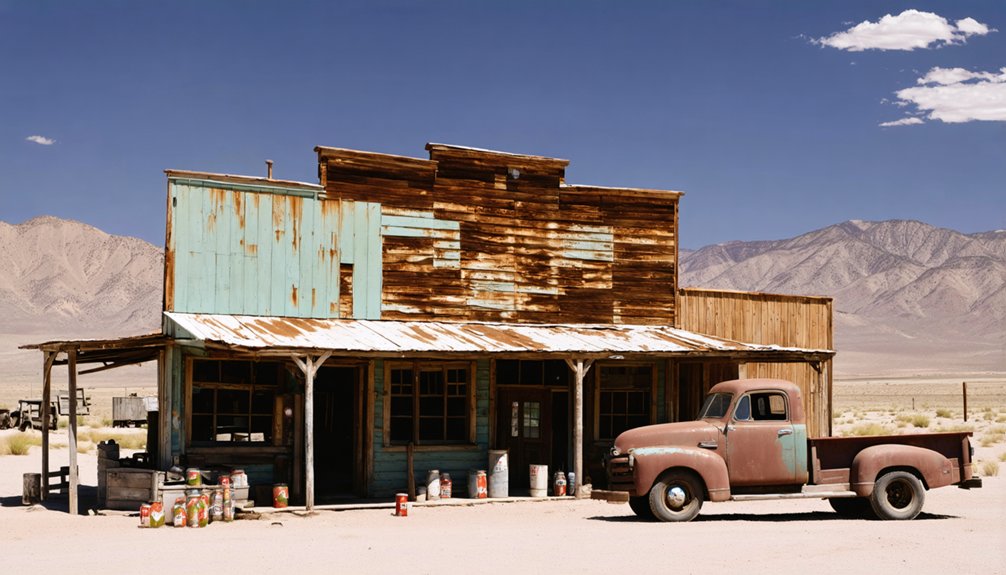
While Nevada boasts numerous ghost towns, two remarkable settlements stand out for their distinctive histories and enduring legacies.
You’ll find Jarbidge legends steeped in mystery, from the Shoshone tales of a canyon monster to the Lost Sheepherder’s Ledge, where gold discoveries led to tragic endings. This remote mining camp witnessed the West’s last stagecoach robbery in 1916, leaving behind bloody handprints that pioneered forensic evidence.
Meanwhile, Goodsprings thrived on silver and zinc, reaching its zenith with 1,000 residents by 1916. Today, you can step into the historic Pioneer Saloon, Clark County’s oldest drinking establishment, where century-old bullet holes still mark the walls.
Though both towns have dwindled, they’ve escaped total abandonment – Jarbidge maintains about 15 residents, while Goodsprings hosts around 150 year-round inhabitants.
Tales From the Desert: Notable Ghost Town Sites
Scattered across Nevada’s vast desert landscape, four remarkable ghost towns exemplify the state’s turbulent mining history and territorial development.
These abandoned mining towns in Nevada hold stories of ambition and hardship, where miners once sought their fortunes in the unforgiving terrain. Today, the remnants of their hopes and dreams are preserved for visitors, inviting exploration and reflection on a bygone era. Each ghost town offers a unique glimpse into the challenges faced by those who tried to carve out a life in this arid wilderness.
Each site reveals unique chapters of frontier life, from Rhyolite’s bottle house to Goldfield’s haunted hotel. These desert ruins hold countless mining artifacts and ghost town folklore, beckoning modern explorers to discover their secrets.
Abandoned saloons and weathered mines whisper tales of frontier dreams, drawing curious souls to uncover Nevada’s golden-age mysteries.
- Rhyolite stands as a photographer’s paradise with its iconic bank ruins and Tom Kelly’s ingenious 51,000-bottle house.
- Goldfield defies total abandonment, where you’ll find an active courthouse, operational saloon, and legendary paranormal activity.
- Belmont showcases impressive stone architecture and a courthouse that’s withstood over 150 years of desert winds, while Fort Churchill’s adobe walls remind you of Nevada’s territorial military presence.
Preserving Nevada’s Ghost Town History
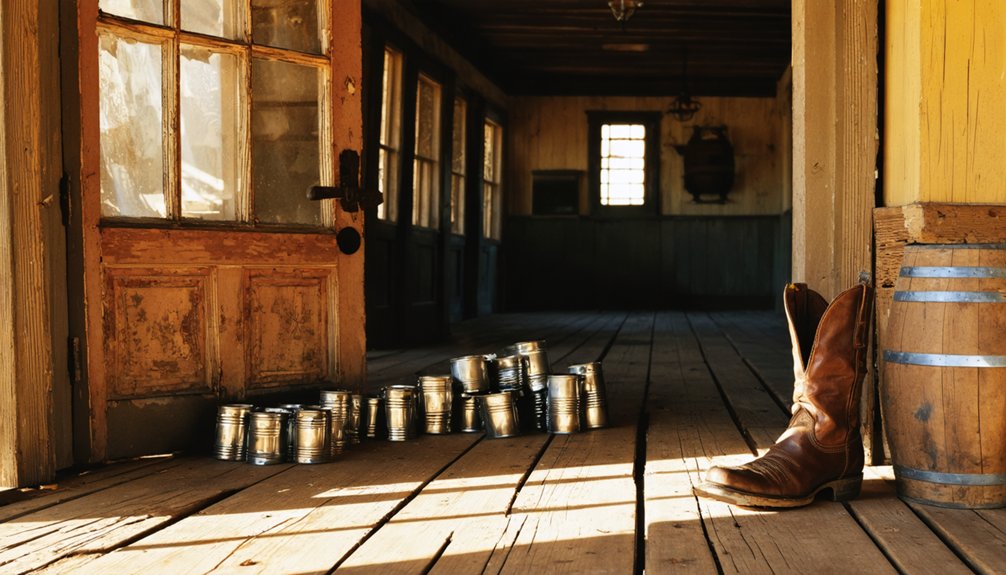
Through a meticulous process known as “arrested decay,” Nevada preserves its ghost towns by stabilizing historical ruins without compromising their weathered authenticity.
You’ll find over 600 protected sites across the state, where ghost town preservation efforts maintain everything from square-headed nails to entire buildings, like Tom Kelly’s Bottle House in Goldfield.
The state’s commitment to historical significance extends beyond physical preservation. You can explore guided tours at Berlin-Ichthyosaur State Park or witness artistic revitalization at Rhyolite’s Goldwell Open Air Museum.
Federal and state laws strictly protect these sites, making it illegal to remove artifacts. The desert climate naturally aids conservation, while dedicated volunteers and surveillance systems guarantee these remarkable vestiges of mining history remain intact for future generations to discover.
Frequently Asked Questions
Are There Any Dangerous Wildlife Encounters in Nevada’s Ghost Towns?
You’ll face bone-chilling wildlife encounters if you’re not careful! Watch for venomous snakes, mountain lions, and aggressive wild burros. Practice wildlife safety by staying alert and avoiding dawn/dusk exploration times.
Can Visitors Legally Take Artifacts Found in Ghost Town Sites?
No, you can’t legally take artifacts from ghost towns. Legal regulations strictly prohibit removing any historic items, as they’re protected for artifact preservation under federal and state laws.
Which Ghost Towns Are Most Accessible During Winter Months?
Like sheltered harbors in winter’s storm, Fort Churchill and Unionville offer you the best winter accessibility. You’ll find paved roads and natural protection, while Sutro Tunnel’s lower elevation keeps exploration viable year-round.
Do Any Ghost Towns Still Have Active Mining Claims?
You’ll find active mining claims near several ghost towns, including Nelson’s Techatticup Mine and sites in Elko County, though most require proper permits and safety precautions for any exploration.
What Permits Are Needed to Explore Nevada’s Ghost Towns?
While 94% of Nevada’s ghost towns sit on public BLM land, you don’t need permits for casual exploration. You’ll need BLM permits only if collecting over 250 pounds of materials.
References
- https://www.visittheusa.com/experience/6-nevada-ghost-towns-explore-if-you-dare
- https://www.atlasobscura.com/things-to-do/nevada/ghost-towns
- https://www.smithsonianmag.com/sponsored/nevadas-living-and-abandoned-ghost-towns-180983342/
- https://nvtami.com/nevada-ghost-towns-map/
- https://nvtami.com
- https://travelnevada.com/ghost-town/
- https://forgottennevada.org/sites/newlist.html
- https://nbmg.unr.edu/mining/MiningHistory.html
- https://nevadamining.org/new-history-page/
- https://www.visualcapitalist.com/sp/nevada-silver-districts/