You’ll find over 400 abandoned ghost towns across New Mexico’s diverse terrain, from mining camps to railroad stops. Places like Dawson tell tragic tales of mining disasters, while Loma Parda’s ruins whisper stories of Wild West vice and adventure. These forgotten towns peaked in the early 1900s, with some boasting populations of 9,000 before economic shifts led to their decline. Each weathered building and crumbling wall holds secrets waiting to be uncovered in person.
Key Takeaways
- Dawson became a ghost town after its coal mining operations ceased, known for two major mining disasters in 1913 and 1923.
- Loma Parda transformed from a farming village to a vice town near Fort Union before declining into ruins after the fort’s closure.
- Cuervo peaked with 300 residents in the 1930s after railroad development but was later abandoned, leaving historic trading post structures.
- Red River City experienced rapid growth in 1895 due to precious metal discoveries before economic downturns led to its decline.
- Mining ghost towns across New Mexico feature preserved adobe structures, timber buildings, and stone ruins from the early 1900s.
The Rise and Fall of New Mexico Mining Communities
While Spanish colonists initially faced mining restrictions in New Mexico during the early 1700s, the territory’s rich mineral deposits couldn’t stay hidden for long.
You’ll find that mining booms transformed the southwestern corner of the territory, where most historical mining towns sprouted up. The Santa Fe Trail‘s establishment in 1822 kicked things into high gear, letting traders exchange $30,000 in goods for a whopping $180,000 in precious metals. In the same year, gold miners arrived and discovered bituminous coal at Coal Bank.
Mining fever swept across New Mexico’s southwest, where bustling towns emerged after the Santa Fe Trail unlocked vast mineral wealth in 1822.
From the gold rush at Rio Hondo in 1826 to the silver strikes in Magdalena by 1863, you could’ve witnessed fortune-seekers flocking to these promising lands. Red River City exploded into a bustling town when precious metals discoveries in 1895 drew thousands of hopeful miners to the area.
But economic downturns, like the 1929 crash, hit these communities hard. What were once bustling mining camps around places like Elizabethtown and the Moreno Valley now stand as silent reminders of New Mexico’s glittering past.
Exploring Dawson’s Tragic Mining Legacy
In the high desert of northern New Mexico, Dawson’s story began in 1901 when rancher John Barkley Dawson sold his coal-rich land to the aptly named Dawson Fuel Company.
You’ll find a tale of both prosperity and heartbreak, as this bustling mining town grew from 2,000 to 9,000 residents under Phelps Dodge’s ambitious development.
Despite its modern amenities and promise of the American dream, Dawson’s mining safety record was devastatingly scarred by two major disasters. The 1913 explosion at Stag Canyon Mine No. 2 claimed 263 lives, while the 1923 disaster took another 123 souls.
Yet the community’s resilience showed in their response, as miners from neighboring camps rushed to help with rescue efforts. Today, the white iron crosses in Dawson’s cemetery stand as silent sentinels marking the final resting places of these fallen miners. The town was once part of the sprawling Maxwell Land Grant, which encompassed 1.7 million acres of territory.
Daily Life in Historic Southwestern Boomtowns
You’d hardly recognize these once-bustling mining camps where thousands of hopeful prospectors gambled their fortunes in dangerous underground tunnels while above ground, a vibrant social scene thrived with saloons, mercantiles, and stagecoaches rolling through daily.
Life underground meant backbreaking 12-hour shifts extracting precious metals, while the constant threat of cave-ins and accidents loomed over every miner’s head. The Little Fannie Mine proved especially deadly for workers who braved its depths. The peak production years between 1911-1917 saw over 2,000 residents flooding these boom towns.
When you weren’t working the mines, you might catch a game of cards at the saloon, dodge stagecoach robberies, or duck for cover during one of the region’s notorious Apache raids that kept these frontier towns on constant alert.
Mining Camp Social Life
Life in New Mexico’s mining camps during the late 1800s bustled with a surprising mix of civilization and chaos. You’d find tent life gradually giving way to more permanent structures, as mining camps like Chloride transformed from canvas shelters to proper homes for 500 residents.
Community gatherings centered around the town’s numerous saloons – places like Lake Valley boasted 12 of them, along with hotels and retail shops. Historic photographs show that even women and dogs frequented these mining communities, bringing a sense of normalcy to frontier life. The nearby Cook’s Peak mines employed many Native American laborers from Mexico who became part of these frontier communities.
While danger lurked in the form of Apache raids and stage robberies, you could still find touches of refinement. Most camps established schools for their children, and some like Clarkville even built libraries and hospitals.
The social scene varied dramatically – from Lake Valley’s rough-and-tumble atmosphere with its brothels and daily violence, to Clarkville’s more orderly existence where saloons were banned entirely.
Hard Labor Underground
While the promise of striking it rich drew countless miners to New Mexico’s boomtowns, the harsh reality underground told a different story.
You’d spend dawn to dark in abysmal conditions, facing underground dangers that would make your skin crawl. Picture yourself descending 1,300 feet in mere minutes, then trudging miles through dark tunnels to reach your workstation. Miners often worked over six hundred feet underground in grueling conditions during the Great Depression era. By the mid-1950s, workers produced fifty tons of ore each day through backbreaking manual labor.
- You’d earn less than $20 monthly after deductions for basics like food and tools, paid in company scrip rather than real money.
- Working with hand drills and mules, you’d battle radiation levels 750 times above safety standards.
- Labor struggles defined daily life as strikes erupted over unfair conditions, leading to bitter conflicts between union members and scab workers.
The physical toll was devastating – from “red lungs” to silicosis, your body paid the ultimate price for that elusive underground wealth.
Preserving Stories Through Abandoned Architecture
Despite decades of abandonment, the weathered buildings of New Mexico’s ghost towns continue to tell rich stories through their architectural remains.
Among these forgotten sites, the ghost towns of Lincoln County stand out for their unique history tied to the Wild West. Each deserted street and dilapidated storefront whispers tales of former mining booms and the vibrant lives that once filled the area. Visitors to these towns can almost hear the echoes of the past, as they explore the remnants of a bygone era.
You’ll find fascinating tales written in adobe walls, timber frames, and stone masonry – each material revealing its own pattern of survival against the harsh desert elements. Through architectural preservation, these structures speak volumes about the ingenuity of frontier builders and the lives they built.
Modern storytelling techniques help protect these fragile remnants. Before any restoration work begins, you’ll see preservationists meticulously documenting everything through photos and drawings.
They’ll use compatible materials like earth-based mortars for adobe repairs, ensuring these historic structures don’t decay faster from mismatched fixes. While some sites remain off-limits due to safety or private ownership, many ghost towns still welcome you to explore their weathered yet enduring architecture.
Notable Ghost Towns Along Route 66
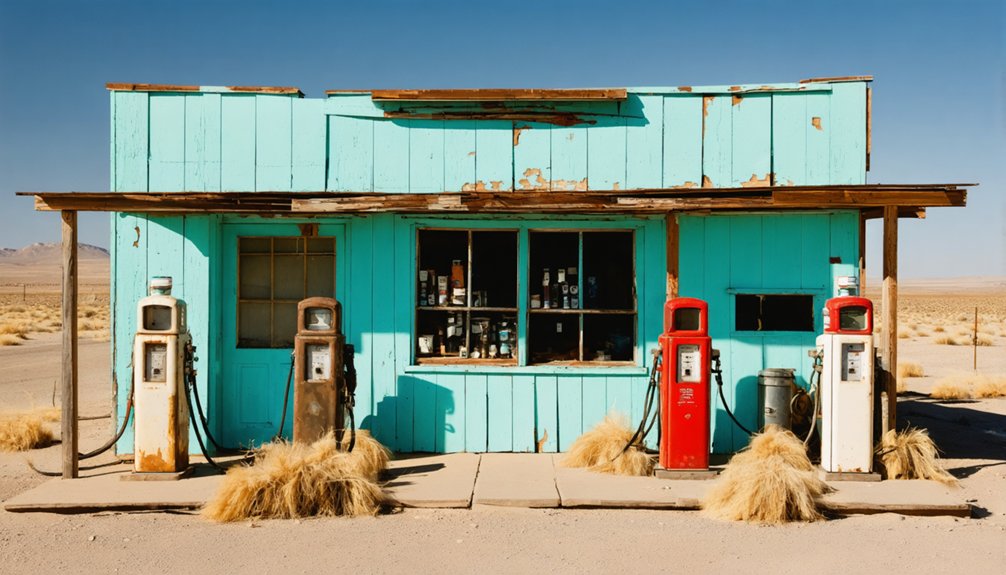
As you travel Route 66 through New Mexico, you’ll find historic trading posts like Budville that once served as essential commercial hubs for both locals and cross-country travelers.
The weathered shells of roadside motels in Glenrio mark where weary drivers once stopped for the night, while their crumbling walls whisper stories of the highway’s golden age.
In Cuervo, the railroad’s influence lives on through scattered brick houses and converted railcars, reminding us how these towns grew from railway stops into highway service centers before ultimately fading away.
Historic Trading Posts Remain
Once Route 66 connected Chicago to Los Angeles, trading posts sprouted up across New Mexico to serve both travelers and local Native American communities.
These outposts became essential hubs of Native American commerce, where you’d find authentic crafts, jewelry, and crucial goods.
- Bowlin’s Old Crater Trading Post in Bluewater made its mark selling Native crafts until I-40 bypassed it in 1973
- Santo Domingo Trading Post’s stunning Mission Revival architecture housed a thriving business from 1922 to 1995
- Painted Desert Trading Post, established by Dotch Windsor in 1940, offered everything from Gulf gas to Navajo rugs
Trading post history lives on in these abandoned structures, from the unique ammunition box walls of Thoreau Trading Post to Chief Yellowhorse’s state-line store.
While interstate bypasses spelled their doom, these silent sentinels remind us of Route 66’s golden age.
Roadside Motels Tell Stories
While Interstate 40 carved a new path through New Mexico’s landscape, it left behind a string of fascinating ghost towns that tell the story of Route 66’s heyday.
You’ll find these roadside nostalgia gems scattered along places like Glenrio, straddling the Texas-New Mexico line, where abandoned motel facades stand frozen in time.
In Montoya and Cuervo, you can trace the evolution from railroad stops to Mother Road havens, now silent except for passing freight trains.
The motel memories are particularly poignant in spots like Budville and Prewitt, where family-run establishments once welcomed weary travelers.
These mom-and-pop motels couldn’t survive I-40’s bypass, leaving behind empty parking lots and weathered signs that whisper tales of road trips past.
Today, they’re popular stops for photographers and Route 66 enthusiasts seeking authentic pieces of American history.
Cuervo’s Railroad Heritage Legacy
Deep in the heart of New Mexico, the Spanish-named town of Cuervo emerged from humble beginnings as a trading post in the 1500s before the railroad’s arrival in 1901 transformed it into a bustling settlement.
The railroad’s impact on Cuervo’s history was profound, though complicated. When trains stopped running in 1910, trade shifted to nearby Santa Rosa, but rail activity eventually resumed with multiple daily passes.
- An old wooden railroad car converted into a gas station stands in ruins today
- The railroad’s path paralleled the historic Route 66 alignments
- Train service helped establish Cuervo’s peak population of nearly 300 in the 1930s
You’ll find remnants of this railroad heritage scattered throughout Cuervo, now mostly abandoned but still telling tales of its glory days along the iron rails.
The Wild West Tales of Loma Parda
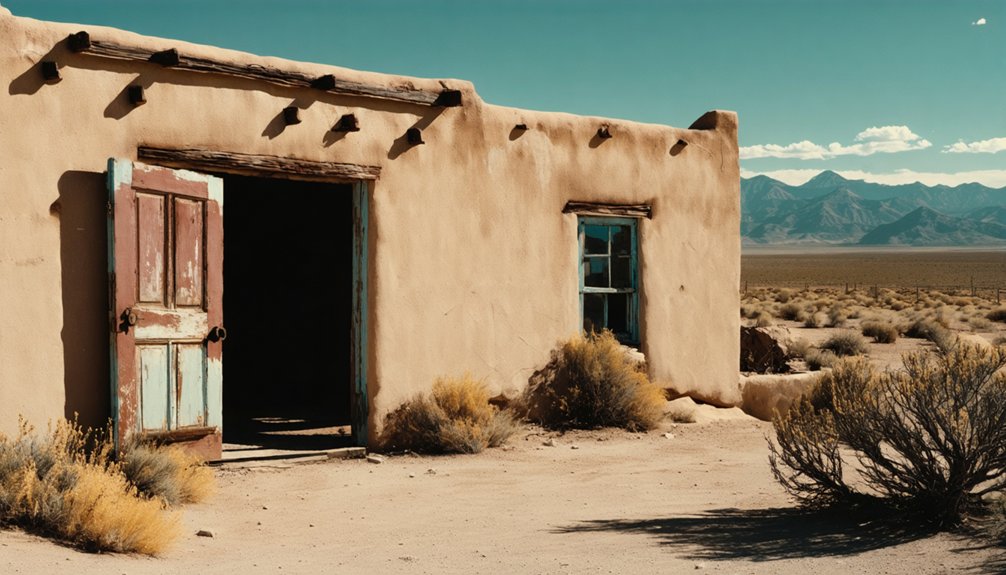
Tucked along the Mora River, the notorious town of Loma Parda earned its reputation as “Sodom on the Mora” during the wild days of the American frontier.
What began as a quiet farming village in the 1830s transformed into the West’s most infamous vice town after Fort Union’s establishment in 1851. You’d have found yourself amid a bustling scene of saloons, brothels, and gambling halls where soldiers and cowboys spent their hard-earned cash.
The Loma Parda legends are as wild as they come.
There’s the tale of Captain Sykes, who rounded up local prostitutes and shaved their heads, leading to the naming of Baldwomen’s Canyon. Even a priest caused scandal by eloping with a woman from the convent.
But when Fort Union closed in 1889, this den of sin couldn’t survive, leaving only crumbling ruins today.
Natural Forces Reshaping Forgotten Places
Like the human dramas that played out in Loma Parda, nature’s forces have taken their own toll on New Mexico’s ghost towns.
You’ll find the landscape constantly reshaping these abandoned places through natural erosion and flood damage, writing new chapters in their stories of decay.
The relentless forces of time reveal themselves in dramatic ways:
- Flash floods tear through canyons after wildfires, creating massive gullies that slice through buried ruins
- Wind-blown dust storms strip away layers of history, while summer monsoons transform old trails into destructive waterways
- Rising sea levels and extreme weather patterns force modern communities to abandon their homes, creating today’s ghost towns
The desert’s harsh elements show no mercy, whether it’s crumbling adobe walls or eroding cliff dwellings – nature reclaims these sites at its own pace.
Photography Guide to Historic Mining Sites
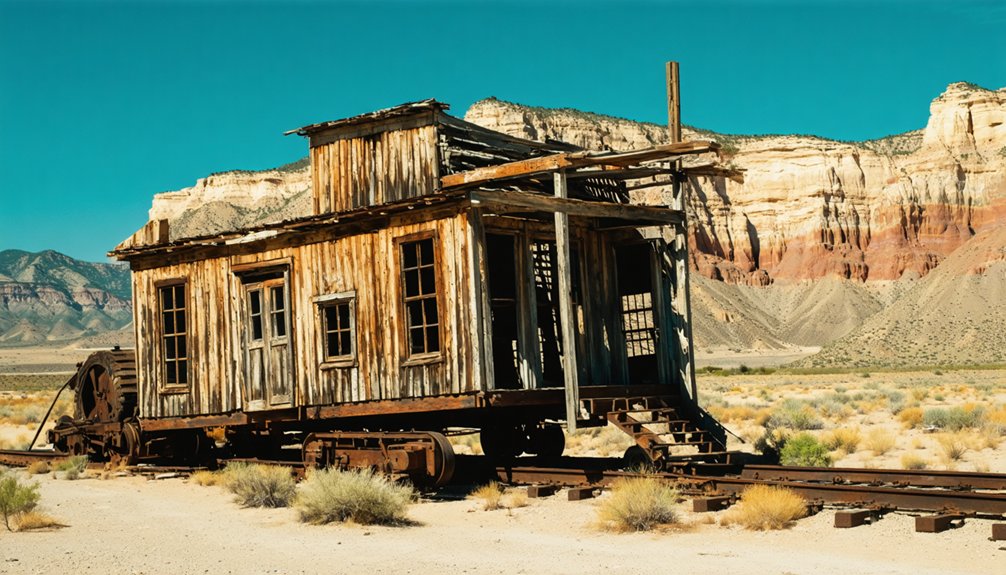
Whether you’re a seasoned photographer or just starting out, New Mexico’s mining ghost towns offer some of the most haunting and photogenic subjects in the Southwest.
From Chloride’s well-preserved saloons to Mogollon’s intact storefronts, you’ll find endless compositions waiting to be captured.
Pack your wide-angle lens for dramatic interior shots and a telephoto for isolating weathered details.
Don’t forget to bracket your exposures – the harsh desert light creates challenging contrasts between bright skies and shadowy doorways.
You’ll want filters too: polarizers cut glare on rusty machinery, while ND filters help create moody long exposures.
Planning Your Ghost Town Adventure
Before setting out to explore New Mexico’s forgotten settlements, you’ll need to map your route and make some critical preparations. Ghost town logistics start with thorough research using official tourism maps and datasets to pinpoint accessible sites, while checking land ownership and required permits to avoid trespassing issues.
Consider including some of the ghost towns in New Mexico that have intriguing histories, as visiting them can provide a fascinating glimpse into the past. Make sure to allocate enough time for each stop, as these locations often have unique stories etched into their remnants. Documenting your journey through these abandoned places could also enhance your experience, offering insights into the region’s cultural heritage.
- Pack essential safety gear including extra water, emergency supplies, and vehicle recovery equipment – you’ll be heading into remote territory where cell service is spotty at best.
- Cross-reference multiple maps to verify locations and plan your approach routes, especially for sites requiring off-road travel.
- Time your adventure for spring or fall to dodge extreme weather, and always leave your planned itinerary with someone who can alert authorities if needed.
These safety considerations will help guarantee your ghost town expedition is both legal and memorable.
Frequently Asked Questions
Are There Any Reported Paranormal Activities in These Ghost Towns?
Ever wondered what lurks in these towns? You’ll find paranormal sightings everywhere – from ghostly apparitions at Foster’s Hotel to shadowy figures in Dawson’s mines and mysterious lights at Bonito Lake’s haunted locations.
Can Visitors Legally Take Artifacts Found at Ghost Town Sites?
You can’t legally take artifacts – it’s a federal crime with serious legal implications. Instead, help with artifact preservation by photographing finds and reporting them to local museums for everyone’s benefit.
Which Ghost Towns Are Accessible During Winter Months?
You’ll find Madrid most reliably accessible during winter months via scenic Route 14. Kingston’s variable mountain weather allows visits when mild, while White Oaks and Glenrio offer year-round interstate access.
Do Any of These Towns Still Have Active Mining Claims?
You’ll find tons of active claims around Jicarilla’s ghost town, where prospectors still hunt for gold. Grant and Sierra counties maintain high concentrations of claims near their historic mining sites.
Are Overnight Camping or Ghost Tours Allowed in These Locations?
You’ll need to check specific camping regulations for each location – some allow overnight stays at designated sites. While formal ghost tour companies are rare, you can explore many areas during daylight hours.
References
- https://newmexicotravelguy.com/new-mexico-ghost-towns/
- https://compaslife.com/blogs/journal/abandoned-enchantment-ghost-towns-of-new-mexico-1
- https://www.atlasobscura.com/things-to-do/new-mexico/ghost-towns
- https://www.legendsofamerica.com/nm-ghostwesttucumcari/
- https://www.newmexicomagazine.org/blog/post/abandoned-ghost-towns-new-mexico/
- https://www.tripadvisor.com/Attractions-g28952-Activities-c47-t14-New_Mexico.html
- https://www.newmexico.org/places-to-visit/ghost-towns/
- https://www.newmexico.org/places-to-visit/ghost-towns/map/
- https://agmc.info/wp-content/uploads/simple-file-list/New-Mexico-documents/New_Mexico_Mining_History.pdf
- https://redrivernmhistoricalsociety.org/1867-1905-mining-days/