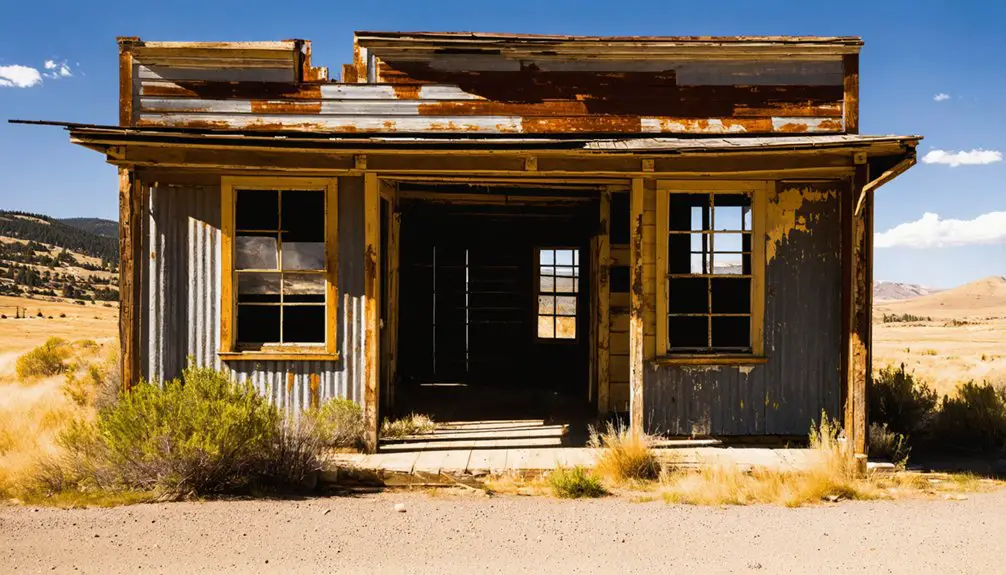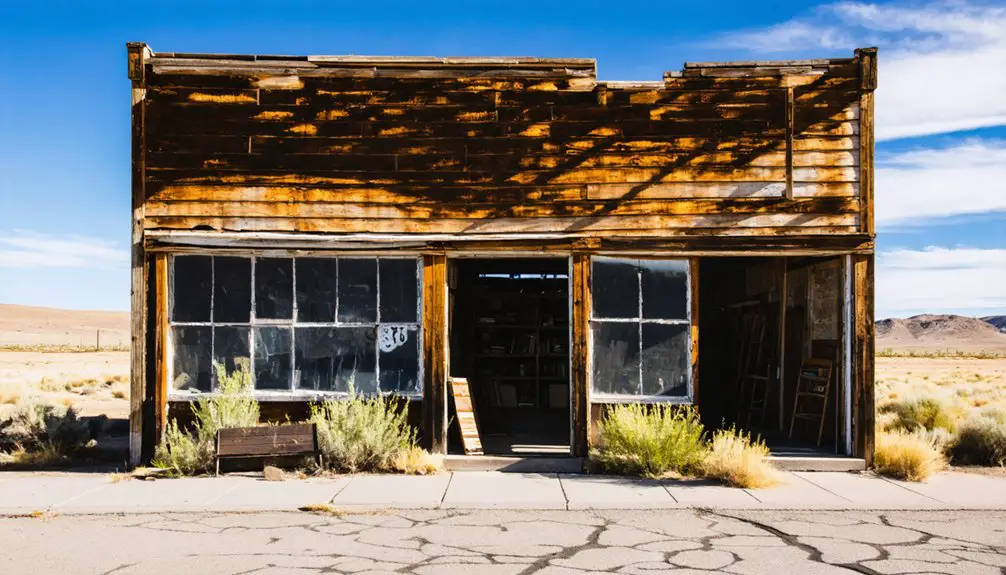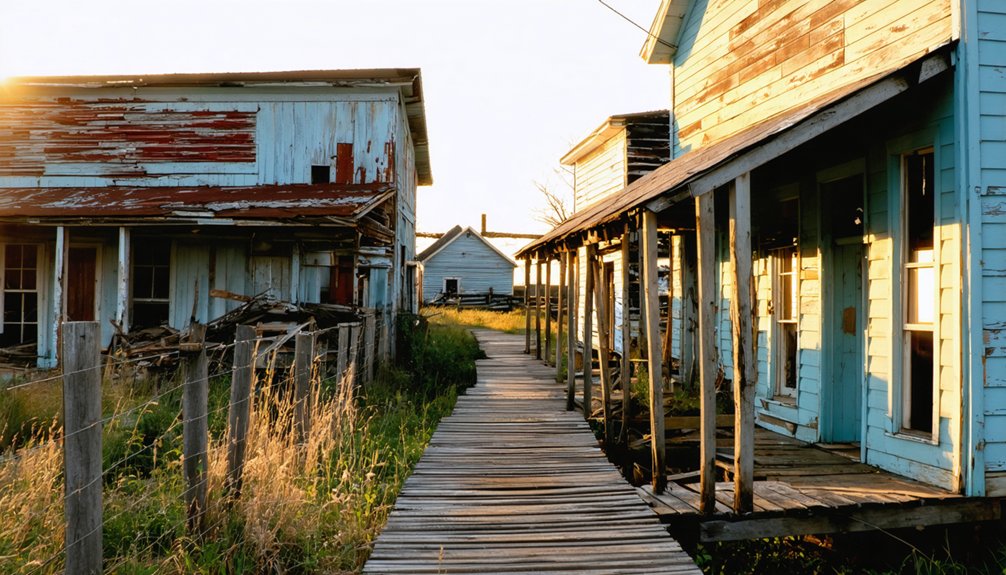
You’ll find over 200 documented ghost towns across Oregon, with many dating back to the 1850s gold rush era. These abandoned settlements include mining camps, railroad outposts, and former commercial hubs like Jacksonville and Shaniko. Notable sites feature well-preserved structures, walking trails, and interpretive displays that showcase Oregon’s frontier history. From the Northern Route’s Shaniko to the Southern Trail’s Golden, each ghost town holds unique stories of boom-and-bust cycles waiting to be discovered.
Key Takeaways
- Oregon has over 200 documented ghost towns, with Shaniko, Buncom, Golden, and Sumpter being among the best-preserved sites for visitors.
- Many Oregon ghost towns originated from mining communities following the 1851 gold discovery at Josephine Creek.
- Shaniko, once known as the “Wool Capital of the World,” declined after losing rail access in 1911 but maintains a preserved commercial district.
- Golden features four protected historic structures and remains a popular destination for photographers and history enthusiasts.
- Transportation changes, including railroad bypasses and highway realignments, contributed significantly to the abandonment of numerous Oregon towns.
What Defines an Oregon Ghost Town
While popular imagination might picture ghost towns simply as abandoned settlements, Oregon’s legal framework provides specific criteria for what constitutes a “historic ghost town.” The state’s Revised Statutes establish precise definitions based on land status, voter residency thresholds, and property origins tied to United States patents.
You’ll find that academic criteria differ from legal definitions, focusing more on physical evidence and population patterns. Scholars typically look for visible remains like ruins, buildings, or cemeteries, and they’ll evaluate a location’s economic decline. With over 200 ghost towns documented throughout Oregon, these locations represent a significant part of the state’s historical landscape. Public access is required for a site to be officially classified as a ghost town.
They’ll often classify sites based on their current condition, from places with no remaining structures to those with intact but empty buildings. Whether you’re exploring these sites or researching them, you’ll need to reflect on both the legal parameters and academic standards that define Oregon’s ghost towns.
The Rise and Fall of Mining Communities
The early 1850s marked a transformative period in Oregon’s history when gold discoveries sparked the birth of countless mining settlements.
You’ll find the first major strike occurred at Josephine Creek in 1851, where miners like Cluggage and Pool extracted up to 100 ounces daily at Jackson Creek. The gold rush triggered rapid development, with Jacksonville emerging as the commercial hub of the southern goldfields. Baker City grew into one of the Pacific Northwest’s most significant urban centers.
Oregon’s first major gold strike sparked a rush at Josephine Creek, yielding 100 ounces daily and transforming Jacksonville into a thriving commercial center.
Mining techniques evolved from simple placer operations to large-scale hydraulic mining, forever changing Oregon’s landscape. The use of gravity-fed water systems dramatically altered the terrain of mining areas.
While white Americans claimed the richest deposits, Chinese miners made up nearly half the workforce in Southwest Oregon, often working “played out” claims successfully.
But the boom couldn’t last – many towns peaked quickly and faded, leaving behind environmental challenges like mercury contamination in waterways and abandoned settlements that dot Oregon’s landscape today.
Best-Preserved Ghost Towns to Visit
Among Oregon’s numerous ghost towns, several stand out for their remarkable preservation and accessibility to modern visitors. Shaniko offers the most extensive collection of original ghost town architecture, with its well-preserved commercial district perfect for photography.
You’ll find multiple standing buildings in Buncom, while Golden maintains four key structures including a church and store under formal heritage protection. The Buncom Historical Society actively preserves three historic buildings from the mid-19th century mining era. Oregon boasts 200 ghost towns, making it the state with the highest concentration of these historic sites in America.
For unique visitor experiences, head to Sumpter to explore its historic mining dredge and restored buildings with guided tours.
Most sites are accessible by car, though some remote locations require high-clearance vehicles or hiking. Remember to respect posted restrictions, as many structures are fragile and legally protected.
The best viewing conditions occur during summer months, with some sites offering spectacular nighttime photography opportunities under clear Eastern Oregon skies.
Transportation’s Role in Town Abandonment
You’ll find that transportation shifts played a decisive role in Oregon’s ghost town formation, as evidenced by how the Great Southern Railroad‘s 1905 arrival in Boyd initially brought prosperity before newer routes bypassed the settlement.
The early maritime commerce shaped coastal development until better inland routes emerged. When the Dalles-California Highway redirected traffic away from these railroad towns in the 1920s, many communities like Boyd and Kingsley saw their commercial activities migrate to better-connected centers. The town’s grain elevator still stands today as a silent reminder of Boyd’s once-thriving agricultural economy.
The evolution from stagecoach routes to rail lines, and later to automotive highways, repeatedly reshaped settlement patterns, with towns like Prosper and Randolph fading as new transportation corridors emerged elsewhere.
Railroad Bypass Effects
As railroad companies plotted their routes through Oregon in the late 1800s and early 1900s, their decisions to bypass certain towns proved fatal for many once-thriving communities.
The railroad impacts were swift and devastating, triggering economic decline that transformed bustling settlements into ghost towns. You’ll find that once a town lost its rail connection, its fate was often sealed. The rise of wool production shipping made this especially evident in Central Oregon, where towns lived or died by rail access. Today, many of these abandoned towns serve as haunting time capsules of frontier life.
Consider these critical effects of railroad bypass:
- Local businesses like warehouses, mills, and stockyards quickly lost customers and shut down.
- Property values plummeted as merchants and residents relocated to new rail-served towns.
- Municipal services collapsed as tax revenues dried up, sometimes leading to entire buildings being physically moved to new railroad towns.
Shaniko’s story exemplifies this pattern – after losing rail access in 1911, its population crashed from 600 to mere dozens.
Highway Realignment Impact
The construction of modern highways and subsequent realignments dealt another devastating blow to Oregon’s rural communities, echoing the earlier railroad bypasses.
You’ll find stark examples of highway impacts along US 395, where Davis Creek’s transformation into a ghost town followed the 1960s realignment that isolated this once-vital transportation hub on Goose Lake’s southern edge.
Throughout Oregon, you can trace similar patterns of community isolation.
The 1956 Interstate mandate reshaped traffic flows as I-5 cut through the Willamette, Umpqua, and Rogue valleys.
Major realignments of US 101 bypassed coastal communities, while I-84’s construction diverted travelers from historic Columbia River Highway towns.
These new routes may have improved transportation efficiency, but they’ve left a legacy of abandoned main streets and forgotten communities across the state.
Freight System Evolution
Through successive waves of transportation innovation, Oregon’s freight system evolved from stagecoach dominance to railroad supremacy, reshaping the fate of countless communities.
You’ll find evidence of these railroad shifts in places like Shaniko, once the “Wool Capital of the World,” where freight routes transformed from dusty stagecoach stops to bustling rail depots.
The evolution unfolded in three distinct phases:
- Stagecoach era dominated early transport, with stops like Eleven Mile House and Brothers serving travelers.
- Railroad boom brought the Great Southern Railroad to Boyd in 1905, revolutionizing wheat and wool shipping.
- Rival rail lines and highways emerged by 1926, triggering the decline of once-prosperous freight hubs.
Hidden Gems of the Blue Mountains
You’ll find a rich mining heritage preserved in the Blue Mountains’ ghost towns, where structures from Granite’s 1880s gold rush stand alongside Bourne’s early-1900s mill ruins.
While winter snow often blocks access to high-elevation sites like Greenhorn, you can explore the region’s mining history year-round at lower elevations like Bates State Park, where maintained trails wind through the remains of a historic timber mill town.
These abandoned settlements offer you glimpses into Oregon’s industrial past through their weathered cabins, collapsed mine buildings, and interpretive trails that connect the sites’ mining and logging stories.
Mining Heritage Lives On
Nestled within Oregon’s majestic Blue Mountains, five remarkable ghost towns preserve the state’s golden legacy from the late 1800s.
From Granite’s Independence Day discovery to Cornucopia’s snow-buried treasures, each site tells a unique tale of mining techniques and ghost town legends that shaped Oregon’s frontier.
- Explore Sumpter’s heritage area where you’ll find legal gold panning and historic train robbery reenactments.
- Discover Bourne’s decaying cabins with trees growing through their roofs, accessible via challenging forest roads.
- Visit Greenhorn, once Oregon’s highest incorporated city at 6,300 feet, where mining operations shifted from placer to lode extraction.
You’ll find 80% of Cornucopia’s gold still locked beneath the earth, while Canyon Creek’s historic $5 million annual output remains a reflection of the region’s rich mineral wealth.
Trail Access Year Round
While the Blue Mountains reveal their historic mining sites year-round, the 550-mile network of trails offers diverse seasonal access points for ghost town exploration.
You’ll find ideal trail conditions from August through September, though many sections remain accessible in other seasons.
For breathtaking views near Bourne, take the challenging Cracker Creek drive or hike the Elkhorn Crest National Scenic Trail, reaching elevations of 8,400 feet.
If you’re heading toward Galena, prepare for river fords along the North Fork John Day, but watch for ticks in early summer.
Near Bates State Park, you can explore three miles of serene paths past the old mill pond, while the Boulder Overlook Trail provides stunning vistas of the surrounding wilderness.
Historic Industries That Built and Broke Towns

Throughout Oregon’s history, four major industries shaped the rise and fall of countless frontier towns: mining, logging, transportation, and agriculture.
You’ll discover that ghost town origins often trace back to rapid economic cycles, where boomtowns emerged and vanished as resources depleted or markets shifted.
When exploring Oregon’s abandoned settlements, you’ll encounter these distinct patterns:
- Mining camps sprouted overnight when strikes were reported, with populations swelling to hundreds before declining when ore played out.
- Logging communities thrived around sawmills and rail lines until timber became scarce or regulations changed.
- Railroad hubs bustled with hotels and freight yards until motor vehicles redirected commerce elsewhere.
These industrial remnants now dot Oregon’s landscape, from preserved buildings like Buncom’s bunkhouse to overgrown mill foundations and abandoned rail grades.
Photography and Exploration Tips
To capture Oregon’s ghost towns in their best light, you’ll want to schedule your photography during the “golden hour” – the first and last hours of sunlight when long shadows and warm tones illuminate historic structures dramatically.
When exploring these abandoned sites, it’s essential to obtain necessary permits and check local access restrictions, as some locations may require guided tours or special permissions.
For your safety, bring sturdy footwear, watch for unstable structures, and always let someone know your planned location and return time before visiting remote ghost town sites.
Best Photo Lighting Times
Since lighting can make or break ghost town photography, understanding the ideal times to shoot is essential for capturing these historic sites.
You’ll find the most enchanting opportunities during golden hour – that magical window just after sunrise and before sunset when warm, low-angle light brings out textures in weathered wood and crumbling masonry.
For advanced lighting techniques that’ll transform your shots:
- Plan your visit during blue hour (twilight) to capture moody atmospherics with balanced exposures between sky and buildings
- Use overcast conditions for even lighting that reveals subtle details and saturated colors
- Exploit post-rain moments when wet surfaces create reflective highlights and richer colors
Don’t forget to check sunrise/sunset calculators and astronomical twilight times to perfectly time your visit to Oregon’s ghost towns.
Safety During Site Visits
While Oregon’s ghost towns offer compelling photographic opportunities, exploring these historic sites requires careful attention to safety protocols and legal considerations.
Before your visit, verify site access by checking property records and obtaining necessary permits for federal, state, or tribal lands. Always carry written permission documentation from landowners or managers.
Be vigilant about environmental hazards when exploring structures. Stay clear of unstable buildings showing signs of structural failure, and use respiratory protection when entering dusty interiors that may contain asbestos or lead paint.
Never explore alone – bring a buddy and establish check-in protocols with a reliable contact. Carry essential safety gear including first-aid supplies, communication devices, and appropriate PPE.
When photographing, use long lenses to capture details from safe distances rather than risking dangerous building entry.
Preservation Efforts and Heritage Sites
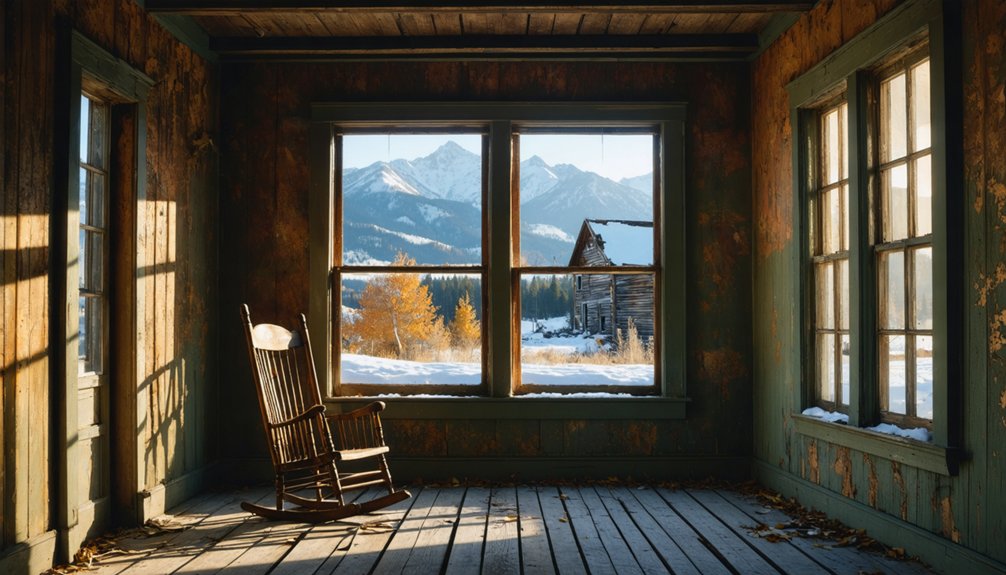
Despite the relentless march of time, Oregon’s ghost towns have found champions in local communities and preservation organizations working to protect these historical treasures.
Through heritage conservation efforts and community engagement, sites like Buncom and Maxville showcase successful preservation initiatives.
You’ll find various approaches to protecting these historical sites:
- The Maxville Heritage Interpretive Center collects and preserves logging community history while developing educational programs and traveling exhibits.
- Buncom’s annual festival raises funds to maintain mid-19th century mining structures.
- The Cultural Advocacy Coalition secured $750,000 in state funding for ghost town preservation.
Even challenging projects like Waldport West and Bayocean demonstrate ongoing dedication to preservation, with proposals for walking trails and interpretive displays helping visitors connect with Oregon’s rich past.
Seasonal Events and Tourist Activities
Throughout the year, Oregon’s ghost towns come alive with seasonal events and tourist activities that offer unique glimpses into the state’s frontier past.
Exploring ghost towns in Oregon’s wilderness reveals remnants of a time when gold rushes motivated settlers to carve out lives in isolated areas. Visitors can discover historic buildings, abandoned mines, and captivating stories that evoke the spirit of adventure and resilience. Each town holds secrets waiting to be uncovered, offering a unique connection to the past that enchants those who wander through these silent streets.
You’ll find the Buncom Festival each May, where Wild West reenactments and community gatherings help preserve the town’s historic structures. At Shaniko, you’re free to explore the old jail, school, chapel, and hotel at your own pace while photographing weathered buildings and vintage vehicles.
You can venture through Sumpter’s massive gold dredge, wander past mining tailings, or spot frogs along the pond trail.
Golden’s heritage site lets you roam freely among the church and mercantile buildings where “Bonanza” once filmed. For added adventure, combine your ghost town visit with stops at White River Falls, Shaniko’s mysterious Mima Mounds, or the scenic Elkhorn Range.
Maps and Trail Access Guide

Maneuvering through Oregon’s ghost towns requires careful planning and reliable maps to reach these remote locations.
You’ll find these historical sites scattered across diverse terrains, from eastern grasslands to dense forests, each offering unique ghost town exploration opportunities.
- Northern Route: Access Shaniko via main highways from The Dalles, where you’ll discover well-preserved abandoned structures including the historic hotel, City Hall, and jail.
- Eastern Circuit: Navigate to Lonerock and Hardman using State Highway 207, with Hardman positioned 20 miles south of Heppner.
- Southern Trail: Explore Golden and Sterlingville via Highway 238, following Cady Road to Sterling Creek Road, where you’ll find remnants of Oregon’s gold rush era.
For remote locations like Greenhorn, prepare for forest trails and seasonal access conditions.
Frequently Asked Questions
Are There Laws Against Removing Artifacts From Oregon Ghost Towns?
Like guarding buried treasure, the law’s crystal clear: you can’t remove artifacts from ghost towns. You’ll need permits for excavation and face hefty fines for preserving historical significance through artifact preservation.
Can You Legally Camp Overnight in Abandoned Ghost Town Buildings?
You shouldn’t camp inside ghost town buildings, as camping regulations and historical preservation laws protect these structures. Instead, you can legally set up dispersed camping outside, following standard distance requirements.
Which Ghost Towns Have Reported Paranormal Activity or Haunted Legends?
Like moths to a flame, you’ll find haunted legends at Shaniko Hotel, where paranormal sightings from violent range wars persist. However, Idiotville, Whitney, and Golden lack documented ghostly activity beyond spooky ambiance.
Do Any Oregon Ghost Towns Still Have Active Mining Claims?
You’ll find active mining claims in Granite and Sumpter, two living ghost towns in eastern Oregon. Both locations welcome ghost town exploration while maintaining modern-day placer mining operations.
What Survival Gear Is Recommended for Exploring Remote Ghost Towns?
Where decay meets danger, you’ll need survival kits with first aid, GPS, maps, emergency shelter. Pack essential tools like sturdy boots, N95 mask, gloves, and reliable communication devices.
References
- https://thatoregonlife.com/2016/04/road-trip-ghost-towns-eastern-oregon/
- https://www.visitoregon.com/oregon-ghost-towns/
- https://en.wikipedia.org/wiki/List_of_ghost_towns_in_Oregon
- http://www.photographoregon.com/ghost-towns.html
- https://www.pdxmonthly.com/travel-and-outdoors/oregon-ghost-towns
- https://traveloregon.com/things-to-do/culture-history/ghost-towns/
- https://www.overlandbound.com/forums/threads/ghost-towns-in-oregon.20177/
- https://westernmininghistory.com/664/what-is-a-ghost-town-wmh-town-classifications-explained/
- https://oregon.public.law/statutes/ors_221.862
- https://eastoregonian.com/2019/04/11/ghosts-of-eastern-oregon/