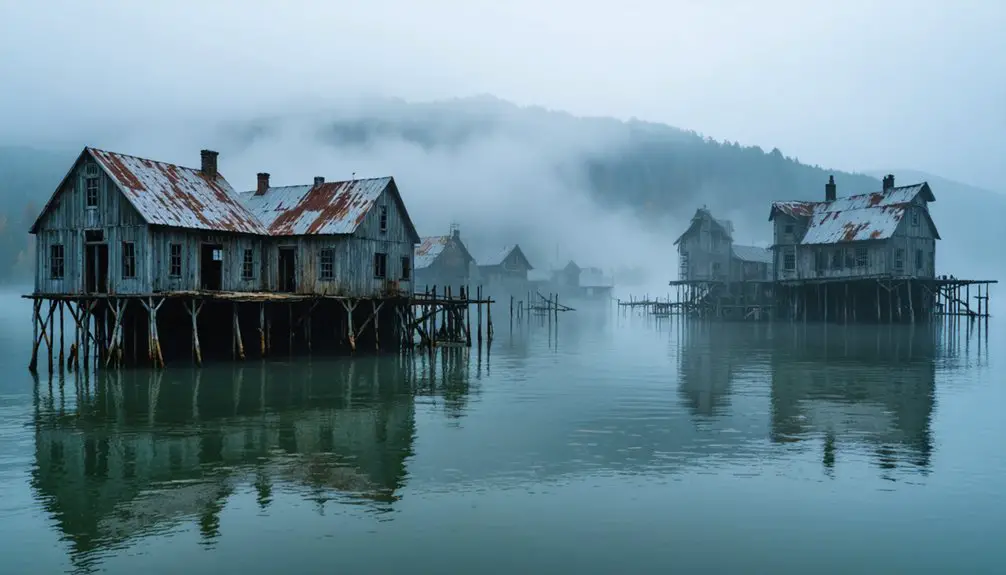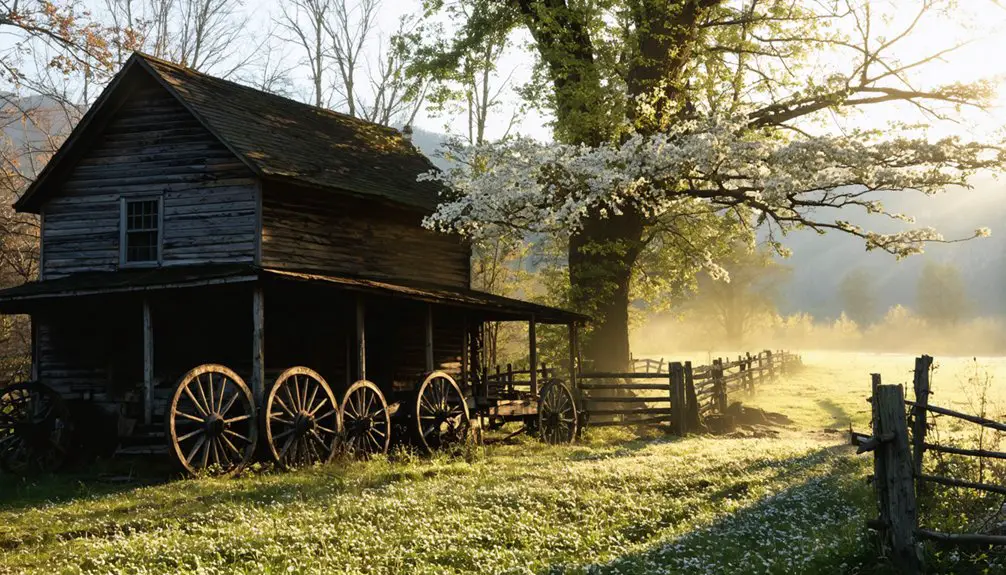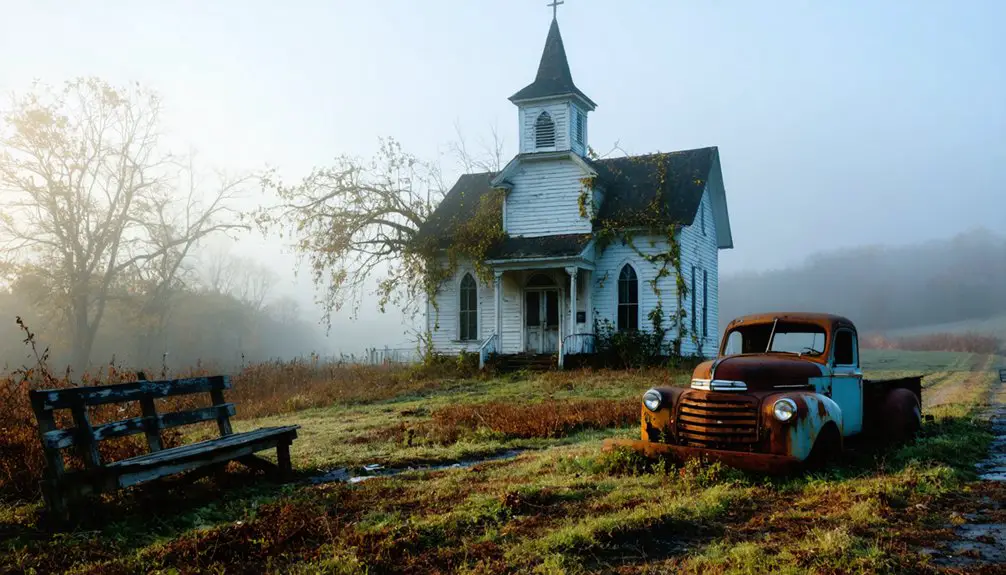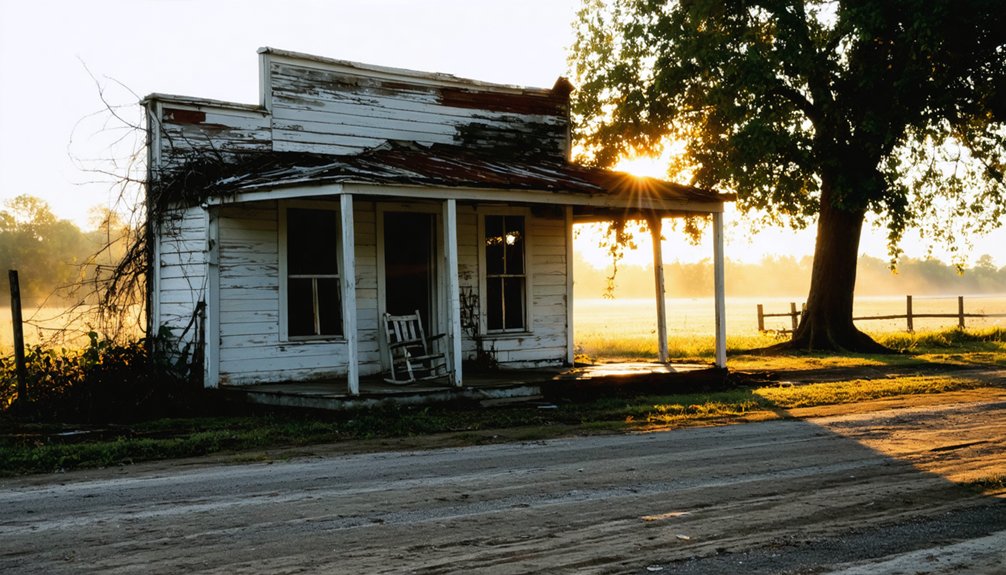
You’ll discover over 100 abandoned ghost towns across Tennessee, from the preserved buildings of Elkmont in the Smoky Mountains to submerged communities beneath TVA lakes. These forgotten places include mining settlements, logging camps, and entire towns displaced by dam projects. While some sites like Old Jefferson were completely demolished, others like Fontana’s river towns reveal their foundations during drought periods. Exploring these haunting remnants opens a window into Tennessee’s rich historical tapestry.
Key Takeaways
- Elkmont in the Great Smoky Mountains features 19 preserved historic buildings from its logging and resort town past.
- Old Jefferson was completely demolished in the 1960s but holds historical significance as Rutherford County’s first county seat.
- Loyston lies underwater beneath Norris Lake, once a thriving community with 70 residents before TVA flooded it.
- Fontana Lake submerged multiple communities including Proctor, Judson, and Bushnell in the 1940s during dam construction.
- Copper Hill stands as an industrial ghost town, marked by stripped mountainsides from extensive mining operations.
The Lost World of Elkmont: A Summer Resort Frozen in Time
While many ghost towns emerged from failed mining operations, Elkmont’s story began as a thriving logging settlement in the mid-1800s before transforming into an exclusive summer resort destination.
Unlike classic mining ghost towns, Elkmont evolved from bustling lumber camp to upscale mountain getaway before its eventual abandonment.
You’ll find this slice of Elkmont history nestled in what’s now the Great Smoky Mountains National Park, where the Little River Lumber Company once harvested 86,000 acres of timber.
In 1910, the area’s identity shifted when Knoxville’s elite established the Appalachian Club, followed by the grand Wonderland Hotel in 1912.
Resort nostalgia peaked in the 1920s as wealthy families enjoyed summers filled with dances, swimming, and socializing.
The good times wouldn’t last forever – by 1934, the National Park Service acquired the land, and the last residents departed in 2001, leaving behind a haunting collection of abandoned cottages.
Today, the National Park Service plans to preserve 19 buildings by 2025, ensuring that future generations can experience this unique piece of Smoky Mountain history.
This historic site represents just one of several locations known as Elkmont across the United States.
Beneath the Waters: Tennessee’s Submerged Communities
When you explore Tennessee’s submerged communities, you’ll find places like Loyston and Fontana that now rest beneath vast reservoirs created by TVA projects in the mid-20th century.
You can still witness traces of these lost towns during drought periods, when falling water levels reveal old foundations, roads, and other remnants of once-thriving settlements.
Standing at observation points like Loyston Overlook in Big Ridge State Park, you’ll connect with the profound changes that reshaped entire communities as their valleys were transformed into lakes that forever altered East Tennessee’s landscape.
The historic Baker’s Forge community faced significant upheaval when 2,000 graves had to be relocated, including those of Revolutionary War veterans, before the waters rose.
These dam projects, initiated during FDR’s presidency, provided crucial jobs and hydroelectric power while helping to prevent devastating floods that had previously damaged local economies.
Fontana’s Lost River Towns
Beneath the tranquil waters of Fontana Lake lies a collection of once-vibrant communities that disappeared in the early 1940s during one of Tennessee’s most ambitious hydroelectric projects.
As you explore Fontana’s history, you’ll discover towns like Proctor, Judson, and Bushnell – settlements that vanished when the TVA flooded 68,000 acres for the war effort. Many residents received inadequate compensation from the government, with some paid less than 50 cents per acre for their land.
You won’t find these communities on modern maps, but they’re etched in the memories of over 1,300 displaced families who once called this region home. Their stories tell of lumber mills, copper mines, and close-knit mountain life.
Today, when lake levels drop, you might glimpse remnants of these submerged settlements: old roads, building foundations, and cemetery markers that remind us of the sacrifices made for progress during World War II. The creation of the lake was driven by the need to produce electricity for Alcoa Aluminum Company, supporting critical wartime manufacturing.
Loyston’s Underwater Heritage
Today, you’ll find the remnants of Loyston silently resting at the bottom of Norris Lake – a poignant symbol of Tennessee’s transformation during the Great Depression. Founded in the early 1800s, this once-thriving community served as a crucial hub along State Highway 61 until the TVA’s Norris Dam project forced its evacuation in the mid-1930s.
Before its flooding, Loyston was home to approximately 70 residents who maintained a close-knit community with their own post office, school, and churches. The town earned its identity when it was officially named after John Loy in 1894.
Through underwater archaeology, you can still glimpse Loyston’s ghostly remains during lake drawdowns – building foundations, road traces, and structural outlines emerge from their watery tomb.
Lewis Hine’s photographs and TVA documentation aid in cultural preservation efforts, mapping the town’s layout before its submergence. While sediment and aquatic growth now obscure much of Loyston’s physical heritage, oral histories and local museums keep alive the stories of displaced families who once called this valley home.
The Phantom Town of Old Jefferson
You’ll find Old Jefferson’s story uniquely tragic among Tennessee ghost towns, as this once-thriving settlement was completely demolished in the 1960s for a reservoir that never fully materialized.
The U.S. Army Corps of Engineers failed to account for extensive underground cave systems that would affect water levels, resulting in the unnecessary destruction of an entire community through eminent domain.
Though the town’s physical structures are gone, you can still explore the surprisingly dry site where scattered remnants and foundations hint at Jefferson’s rich history as Rutherford County’s first county seat. The area served as a crucial route for Trail of Tears detachments in 1838, marking a somber chapter in the region’s past. Located at the fork of Stones River, the town’s strategic position made it an ideal location for river travel and commerce during its early years.
Tragic Premature Demolition
The tragic demolition of Old Jefferson stands as one of Tennessee’s most poignant examples of misguided land acquisition policy, where an entire historic settlement was needlessly destroyed.
You’ll find that this premature demolition in the 1960s, executed for the J. Percy Priest Dam project, led to devastating community displacement that could have been avoided.
The Corps of Engineers’ actions resulted in:
- Systematic destruction of historic buildings through bulldozing and burning
- Forced relocation of multi-generational farming families
- Unnecessary clearing of land that never flooded as projected
- Lasting grievances within the local community
The greatest irony lies in the geological miscalculation – extensive cave systems prevented the expected flooding, leaving behind a ghost town that didn’t need to be demolished in the first place.
Lost Town’s Hidden Remnants
palavras takadként obisubmission
Unfulfilled Reservoir Plans
Deep within Rutherford County’s history lies the haunting story of Old Jefferson, a once-thriving settlement that fell victim to an ambitious but miscalculated reservoir project.
The U.S. Army Corps of Engineers‘ unfulfilled ambitions for the J. Percy Priest Dam led to a massive displacement of residents in the 1960s.
You’ll find the forgotten infrastructure of this failed project revealed through:
- Extensive karst cave systems that diverted water underground, preventing the reservoir from reaching planned levels
- Demolished historic buildings and farms that were needlessly destroyed
- Relocated structures that now stand in nearby Smyrna as silent witnesses
- Original townsite that remains largely dry and forested, contrary to engineers’ projections
The Corps’ miscalculation of the region’s limestone terrain left Old Jefferson high and dry – a ghost town created for a flood that never came.
Hidden Mining Towns of the Smokies
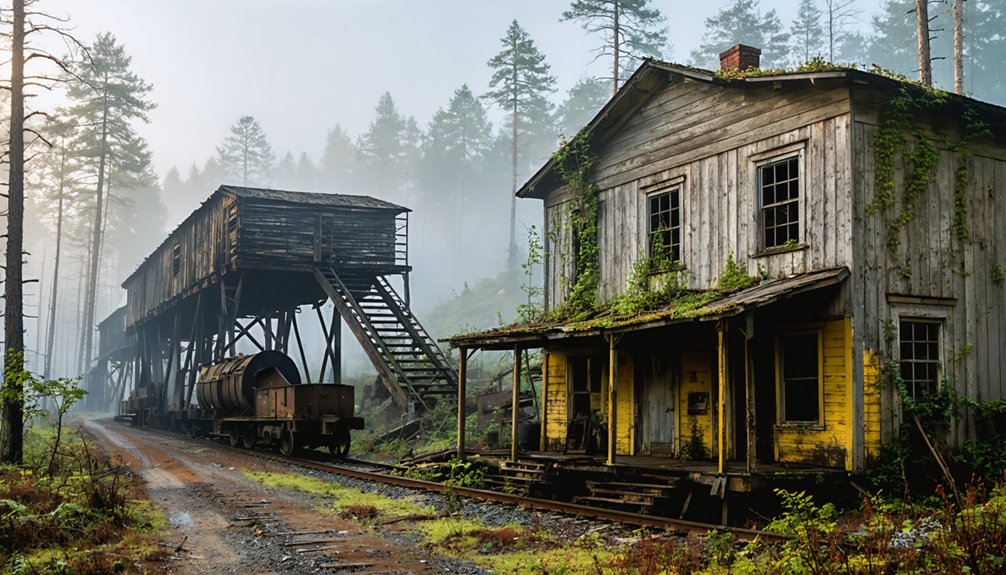
Hidden within the mist-shrouded valleys of Tennessee’s Great Smoky Mountains, abandoned mining settlements tell fascinating stories of industrial ambition and community persistence.
You’ll find one of the most compelling examples in Elkmont’s history, where the Little River Lumber Company transformed a quiet mountain hollow into a bustling logging camp after 1907. What began as a working-class logging heritage soon evolved into an exclusive resort community known as “Daisy Town,” complete with seasonal cottages for Knoxville’s elite.
Today, you can explore this ghost town’s remains along the Little River and Jakes Creek trails, where stone chimneys, foundations, and preserved structures stand as silent witnesses.
While most buildings have succumbed to time, about 19 restored structures offer glimpses into this remarkable shift from industrial outpost to vacation retreat.
Life Along the Railroad: Forgotten Transit Hubs
While mining towns dotted the mountainous terrain, Tennessee’s railroad network carved an equally compelling story across the state’s landscape.
You’ll find forgotten landmarks of this railway heritage scattered throughout former transit hubs, where commerce once flourished along the Tennessee Central’s winding path.
- Monterey’s bustling commercial district shifted to Cookeville after the rails declined, leaving behind empty storefronts and quiet streets.
- Campbell Junction’s logging operations dried up, transforming from a crucial junction point to a whisper of its former self.
- Isoline’s coal mines and timber mills supported a thriving community, now marked only by its Baptist Church.
- Crossville’s role as a major stop diminished when Southern Railway cut back operations to Crab Orchard in 1996.
These abandoned hubs remind us how quickly fortunes can change when transportation patterns shift.
Sucktown and Shakerag: Tales of Rural Settlements
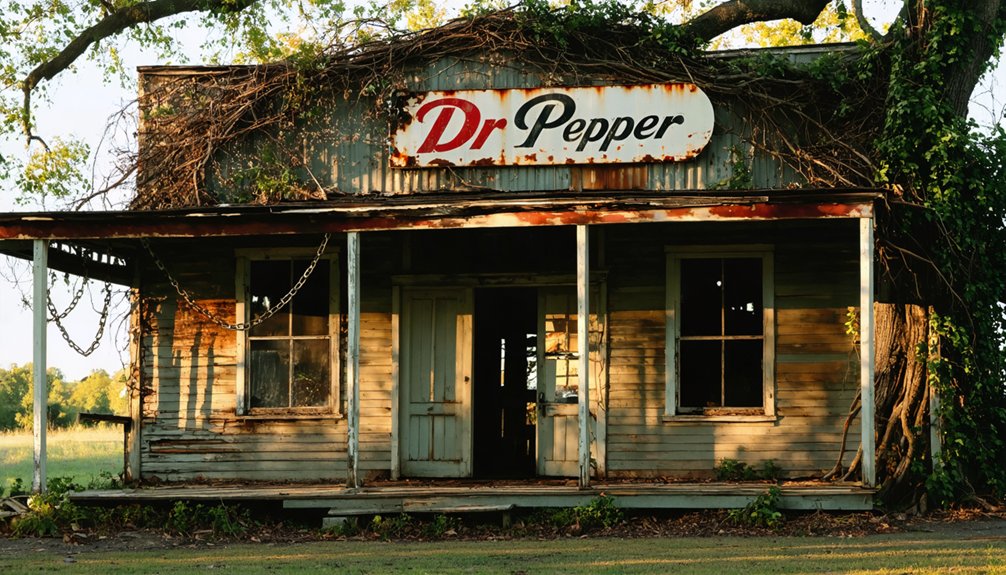
Along the rural backroads of Williamson County, you’ll find traces of Sucktown, a former agricultural settlement that time has nearly erased.
This unincorporated community thrived on small-scale farming in the late 1800s, with families cultivating corn, tobacco, and livestock on parcels under 200 acres.
You’ll discover Sucktown’s history through surviving property records and local oral histories, though the settlement never established formal infrastructure like a post office or railroad station.
The Legacy of TVA’s Dam Projects
Tennessee’s landscape was forever altered during the Tennessee Valley Authority‘s ambitious dam-building campaign between 1933 and 1950.
As you explore the state’s waterways today, you’ll find entire communities sleeping beneath the surface, their stories a reflection of TVA displacement impacts and cultural heritage loss.
Consider these submerged settlements and their legacies:
- Loyston vanished beneath Norris Lake, with its buildings and streets now hidden in the depths.
- May Spring’s historic mill disappeared under Cherokee Dam’s waters in 1942.
- Fontana Lake swallowed numerous mountain communities, leaving relocated graves and unfulfilled promises.
- Countless unnamed hamlets and homesteads were scattered across river valleys, their histories preserved only in local memory.
These underwater ghost towns represent more than lost buildings – they’re monuments to displaced families and disrupted communities who sacrificed their homes for regional progress.
Exploring Tennessee’s Industrial Ghost Towns
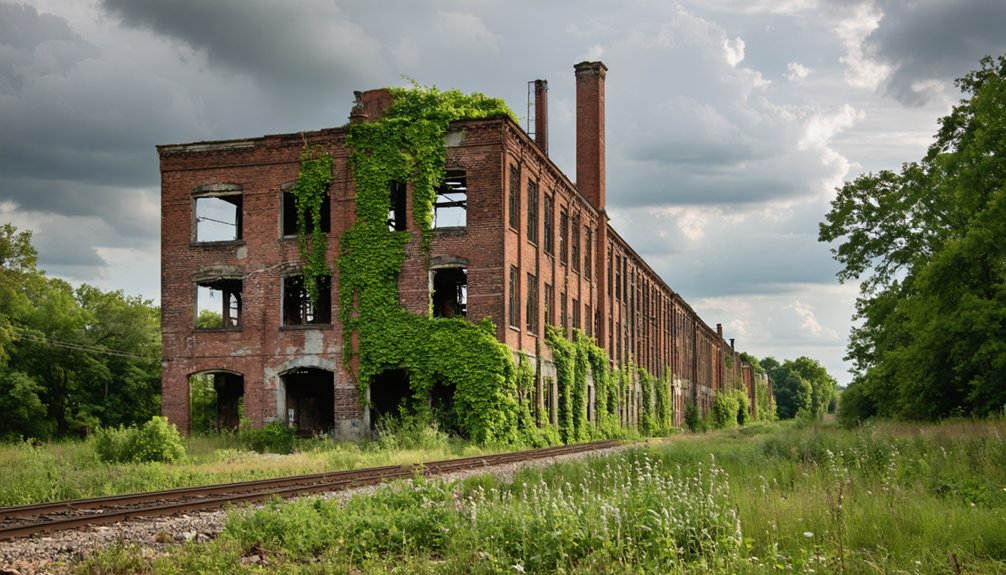
When you visit Tennessee’s abandoned mining camps today, you’ll find haunting remnants like Copper Hill’s stripped mountainsides and Wilder’s crumbling coal town structures that tell stories of intense industrial activity and worker struggles.
Railroad ghost towns such as Elkmont preserve traces of the state’s logging heritage through remaining foundations, while hydroelectric sites like Calderwood show how infrastructure projects transformed communities.
These historical locations serve as outdoor museums where you can explore Tennessee’s industrial past through surviving structures, geological changes, and architectural artifacts that document the rise and fall of company towns.
Mining Camp Remnants Today
Throughout the rugged terrain of the Cumberland Plateau and surrounding regions, industrial ghost towns stand as haunting remnants of Tennessee’s mining heritage, with three distinct areas offering remarkable windows into the state’s extractive past.
These ghost towns of Tennessee tell stories of bustling communities that once thrived on the promise of prosperity. As visitors wander through the abandoned structures and rusting machinery, they can almost hear the echoes of life that filled these now-silent streets. Exploring these places offers a unique opportunity to connect with the history and resilience that shaped the region.
Today, you’ll find these representations of industrial decay across the landscape:
- In Ducktown Basin, vast copper mining complexes have left behind smelter ruins, tailings piles, and a once-barren “lunar” landscape that’s slowly recovering through reclamation efforts.
- Around Wilder, collapsed coal tipples, abandoned coke ovens, and derelict company houses tell stories of labor struggles and community life.
- Throughout Fentress County, scattered mine portals and foundation ruins mark where thriving coal camps once stood.
- Near Iron Mountain (Tharpe), submerged ironworks and mill remains preserve traces of 19th-century industrial activity.
Railroad Town Historical Sites
The iron rails of progress carved lasting imprints across Tennessee’s landscape, leaving behind fascinating railroad ghost towns that chronicle the state’s industrial evolution.
You’ll find Elkmont’s remnants along the former Little River Railroad, where $1.95 train rides once brought tourists from Knoxville on observation cars.
Railroad expansion transformed Isoline into a bustling community when Tennessee Central Railroad purchased the Cumberland Plateau line in 1901, though industrial decline eventually emptied its streets.
The Little River Lumber Company‘s railroad network stretched 18 miles, connecting Elkmont to Townsend and beyond.
Today, you can explore these historic sites where movable set-off houses, post offices, and busy rail yards once thrived.
Only scattered traces remain, like Isoline Baptist Church along Highway 127, marking where these railroad communities once flourished.
Preserving Our Vanished Communities
Preserving Tennessee’s ghost towns requires a complex web of legal frameworks, funding sources, and conservation techniques to protect these valuable historical assets.
When you’re passionate about cultural preservation and community heritage, you’ll find several ways to get involved in saving these historic sites:
- Support public-private partnerships through Friends groups and non-profit endowments, like the successful $9 million Elkmont preservation fund.
- Participate in Section 106 reviews that balance ecological restoration with historic preservation.
- Contribute to targeted capital campaigns that fund hazardous material removal and structural stabilization.
- Engage with preservation projects that use “arrested decay” techniques to maintain authentic historical character while ensuring public access.
These combined efforts help safeguard Tennessee’s abandoned communities for future generations while respecting both environmental and cultural mandates.
Planning Your Ghost Town Adventure: Safety and Access Tips
When planning a ghost town exploration in Tennessee, safety and legal considerations must guide your entire adventure.
Your ghost town preparation should begin with thorough research through local historical societies to verify access permissions and structural conditions. Never enter buildings without confirming stability, as many sites like Elkmont have dangerous floor holes and unstable foundations.
Follow essential safety protocols by traveling in groups, sharing your route details with a trusted contact, and carrying proper recovery gear for remote locations.
You’ll need to park at designated areas, stay on established paths, and respect taped-off sections. Remember that removing artifacts is illegal – these sites are protected under federal law.
Watch for hazards like steep terrain, wildlife, and weather impacts, and always plan to exit before dark.
Frequently Asked Questions
Are There Any Ghost Towns in Tennessee That Are Still Inhabited?
You’ll find several inhabited areas near Tennessee’s ghost towns, including Model, Fork Mountain, and Wilder, where residents maintain homes and preserve historical significance through continued community presence.
These areas offer a glimpse into the past while providing opportunities for exploration and adventure. Visitors to ghost towns available in Tennessee can enjoy hiking, photography, and learning about the history of these forgotten places. Each ghost town has its own unique story, making them fascinating destinations for history enthusiasts and outdoor adventurers alike.
What Supernatural Phenomena Have Been Reported in Tennessee’s Abandoned Towns?
You’ll find spectral sightings at Elkmont’s haunted locations, where witnesses report shadowy figures in cabin windows, mysterious lights, and whispers near the cemetery. Loyston’s underwater ruins spark claims of ghostly voices.
How Many Ghost Towns Existed in Tennessee Before 1900?
Like stars fading from the frontier sky, at least 19 lost settlements dotted Tennessee’s landscape before 1900, including historically significant places like Rhea Springs, Williamsburg, and Bean Station.
Can Metal Detecting Be Done Legally in Tennessee Ghost Towns?
You’ll need permits and permissions for legal metal detecting in ghost towns since they’re often protected by metal detecting laws and ghost town regulations on both public and private lands.
Which Tennessee Ghost Towns Have the Most Original Artifacts Remaining?
While you might think submerged towns retain more, Elkmont’s historic preservation efforts have protected the most original artifacts, with nineteen preserved buildings, followed by Butler’s museum collection at Watauga Lake.
References
- https://www.tnvacation.com/trip-inspiration/articles/ghost-towns-tennessee
- https://www.wanderingsmokymountains.com/smoky-mountain-ghost-towns-in-tennessee/
- https://www.tnmagazine.org/19-ghost-towns-in-tennessee-that-are-not-underwater/
- https://www.loveproperty.com/gallerylist/91679/tour-the-abandoned-tennessee-ghost-town-where-millionaires-vacationed
- https://www.youtube.com/watch?v=s9lVc_zwaAU
- http://www.onlyinyourstate.com/experiences/tennessee/tn-ghost-towns
- https://freepages.rootsweb.com/~gtusa/history/usa/tn.htm
- https://en.wikipedia.org/wiki/Elkmont
- https://roadtrippers.com/magazine/abandoned-ghost-town-smoky-mountains/
- https://smokymountainnationalpark.com/blog/fun-facts-about-elkmont-ghost-town/