You’ll find fascinating ghost towns scattered across Vermont’s rugged landscape, each with unique stories of industrial rise and fall. Notable sites include Glastenbury, known for mysterious disappearances in the “Bennington Triangle,” and Greenbank’s Hollow, where a five-story woolen mill once thrived. Ricker Basin and Somerset showcase preserved ruins from the logging era, with stone foundations and hidden cemeteries waiting to be discovered. These abandoned settlements hold secrets of Vermont’s rich industrial heritage beneath their wilderness-reclaimed remains.
Key Takeaways
- Glastenbury became a ghost town after logging operations depleted resources, later gaining notoriety for mysterious disappearances between 1945-1950.
- Greenbank’s Hollow features ruins of a five-story woolen mill complex that employed 40 workers until its destruction by fire in 1885.
- Ricker Basin, founded in 1816, was abandoned after the 1927 Great Vermont Flood and subsequent Waterbury Dam construction in 1938.
- Somerset, a logging settlement that peaked at 321 residents, became deserted after an 1898 flood destroyed vital railroad infrastructure.
- South Glastenbury transformed from a bustling logging town of 250 people to abandonment following devastating floods in 1898.
Vermont’s Mysterious Ghost Town of Glastenbury
Though Glastenbury appears on Vermont’s earliest maps as a chartered township from the late 18th century, its rugged terrain and limited arable land made it destined for a brief, tumultuous existence.
Doomed from its founding, Glastenbury’s harsh mountain landscape foretold the struggles of those who dared settle its unforgiving slopes.
You’ll find a tale of boom-and-bust, where logging operations stripped the mountain bare by the 1880s, leaving behind eroded soil and a devastated economy.
Starting with just six original families in 1791, Glastenbury struggled to maintain a stable population from its earliest days.
The town’s attempts at reinvention, including a short-lived tourist resort in 1898, were thwarted by destructive floods that washed out crucial rail infrastructure.
But it’s the mysterious Glastenbury disappearances between 1945-1950 that truly captured public imagination, earning the area its “Bennington Triangle” moniker. The most notable case involved guide Middie Rivers, who vanished while leading a hunting party and was never found.
Today, this unincorporated forestland within the Green Mountains holds only scattered ruins, old logging roads, and the whispered stories of those who vanished in its dense woods.
Uncovering the Industrial Legacy of Greenbank’s Hollow
As you explore Greenbank’s Hollow, you’ll discover the remnants of Benjamin Greenbank’s once-thriving woolen mill that employed over 40 workers and produced textiles for regional markets in the mid-1800s.
The village’s industrial operations relied on waterpower from Greenbank’s Hollow brook, with the five-story mill complex serving as the centerpiece of a bustling community that included worker housing, a schoolhouse, and a general store. Today, visitors can view the restored covered bridge at the original crossing location. The devastating 1885 fire destroyed the mill and nearby bridge, marking the end of the village’s industrial era.
Though fires and economic shifts led to the village’s eventual abandonment, the preserved stone foundations and millrace ruins offer tangible evidence of Vermont’s industrial heritage.
Mill Operations and Products
The Vermont Valley Woolen Mill‘s industrial legacy began in 1849 when Benjamin Greenbank purchased a small woolen mill from H. Bolton.
You’ll find that under Greenbank’s leadership, the modest operation transformed into a five-story industrial powerhouse that defined Greenbank’s Hollow in Danville, Vermont.
The mill’s woolen production thrived through its innovative use of local brook water power, which drove the machinery needed for processing wool into various textiles and fabrics. The facility impressively manufactured 700 yards of cloth each day at its production peak. At its peak, the mill employed 45 workers and supported dozens of local families.
As you explore the industrial heritage of this site, you’ll discover how the mill served as the economic backbone of the surrounding village, producing Vermont Valley-branded woolen goods throughout much of the 1800s.
The operation continued until December 14, 1885, when a devastating fire destroyed the mill and several nearby buildings.
Historic Bridge Significance
While Benjamin Greenbank’s industrial vision transformed Danville’s landscape, his engineering legacy lives on most prominently in the innovative bridge infrastructure that connected the Vermont Valley Woolen Mill complex.
Before the devastating fire of 1885, the bridge system supported a thriving industrial operation that employed 45 workers and produced hundreds of yards of cloth daily.
The historic bridge design showcased Victorian-era architectural significance, seamlessly integrating industrial needs with the scenic hollow’s natural features.
You’ll find remarkable engineering elements that characterized this industrial marvel:
- Water-powered mechanisms relied on strategic bridge placement to harness the brook’s energy
- Multi-story mill operations depended on bridges to connect processing areas
- Victorian construction techniques guaranteed durability through innovative support systems
The bridge infrastructure you see in ruins today tells the story of Vermont’s industrial ambition, where Greenbank’s engineering prowess created a self-sustaining manufacturing hub that dominated the region’s woolen industry throughout the 1800s.
Community Life Preserved
Beneath crumbling stone foundations and weathered timbers, you’ll discover the preserved legacy of a once-thriving industrial community at Greenbank’s Hollow.
The community dynamics revolved around Benjamin Greenbank’s imposing five-story woolen mill, which transformed a quiet Vermont valley into a bustling industrial center during the 1800s.
You can trace the social interactions of daily life through the remaining infrastructure – from the local store where villagers gathered for supplies to the schoolhouse where children learned.
The post office, grist mill, and saw mill formed the backbone of this self-contained settlement, while residential structures housed the workforce that powered the industrial hub.
Today, the ruins stand as silent witnesses to an era when Victorian ingenuity and water-powered industry shaped the vibrant community life of this Danville village.
The Lost Settlement of Ricker Basin
Located within Little River State Park near Waterbury, Vermont, Ricker Basin stands as a poignant reminder of a once-thriving 19th-century settlement. Founded in 1816 by Joseph Ricker and fellow pioneers, this resilient community carved out a life along the Winooski River valley, growing to about 50 residents at its peak.
Today, you’ll discover traces of community resilience among the forested terrain:
- Stone foundations and cellar holes from former farmhouses and water-powered mills
- An overgrown cemetery preserving the memory of early settlers
- Remnants of a trading post and schoolhouse that once served local families
The devastating storm dropped seven inches of rain in just six hours, overwhelming the river basin. The settlement met its fate in November 1927 when the Great Vermont Flood devastated the basin. The arrival of the nearby railroad line had previously brought growth and prosperity to the area.
The subsequent construction of the Waterbury Dam in 1938 submerged portions of the site, permanently sealing its transformation into a ghost town.
Smith Family Farms: A Hidden Historical Gem
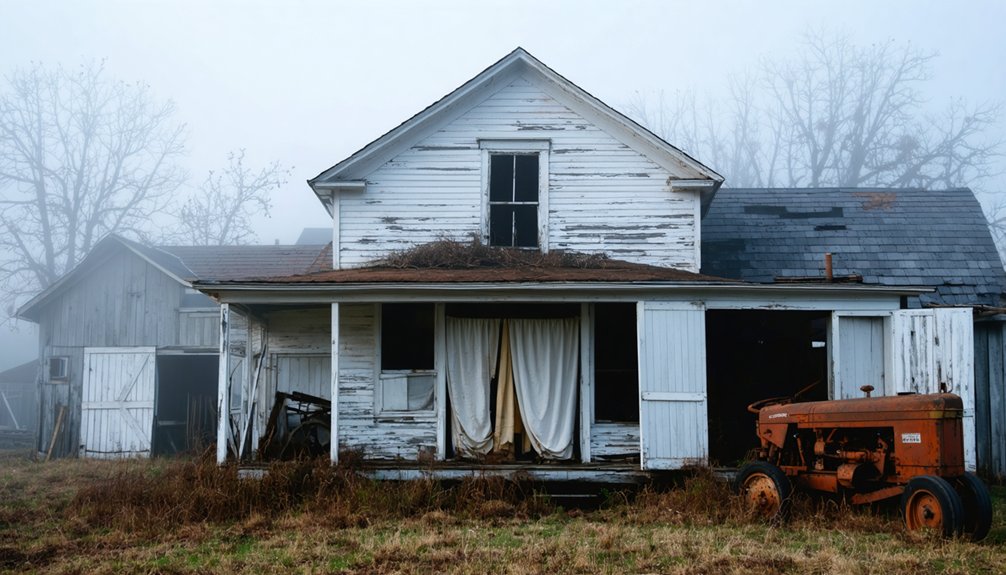
Another remarkable ghost town lies nestled on the east-facing slope of Mt. Horrid in Rochester, Vermont, where you’ll find the abandoned 200-acre Smith family farm at 1,900 feet elevation.
The site’s historical significance stems from extensive documentation through letters, deeds, and daybooks preserved in a wooden chest.
You can trace the family’s challenging journey from their initial 1791 settlement in Tunbridge, where they built a modest 14×10-foot hut, through their subsequent moves across Vermont. The family’s final destination was Palmyra, New York in 1816, where they would establish a new homestead.
Financial hardships, crop failures, and mounting debts forced them to sell properties and relocate multiple times between 1803 and 1816.
Today, only remnants remain, including hearthstone and cellar stonework, but the site offers unique insights into early Vermont farming life that surpass most other upland farm records.
Somerset’s Forgotten Past in the Green Mountains
If you travel to Somerset in Vermont’s southern Green Mountains today, you’ll find nature reclaiming what was once a bustling 19th-century industrial settlement, where logging and charcoal production drove the population to peak at 321 residents in the 1880s.
The town’s fate was sealed by the devastating 1898 flood that destroyed the railroad infrastructure, leading to its eventual disincorporation in 1937 and leaving behind hazardous old wells, eroded trails, and overgrown ruins scattered throughout the dense forest.
Among these forgotten remnants, you might stumble upon the hidden forest cemetery, a solemn reminder of Somerset’s former inhabitants who once carved out their lives in this rugged mountain wilderness.
Historical Industrial Roots
Despite consens
Nature Reclaims Settlement
Nestled deep within Vermont’s Green Mountains, the ghostly remnants of Somerset tell a compelling story of nature’s reclamation.
You’ll find this forgotten landscape tucked away in the Green Mountain National Forest, where dense wilderness has steadily consumed what was once a bustling logging settlement of over 300 residents.
Nature’s resilience is evident as you explore the stone foundations and cellar holes that peek through the undergrowth – all that’s left of Somerset’s former glory.
The forest has reclaimed the hillsides where loggers once cleared timber, and the surrounding mountains have returned to their wild state.
Near Somerset Reservoir, some ruins lie partially submerged, while others have vanished completely beneath decades of vegetation, leaving only whispers of the town’s industrial past.
Hidden Forest Cemetery
Among Somerset’s most haunting remnants lies a small bone yard that tells a peculiar tale of disruption and attempted restoration.
In a stark contrast to modern forest burial and conservation practices, a local farmer once cleared this historic cemetery to expand his hayfield. When guilt compelled restoration, he returned the graves alphabetically – having forgotten their original positions.
Today, you’ll find this forgotten cemetery shrouded in woodland shadows, where nature has reclaimed what humans once disturbed. The site serves as a poignant reminder of Vermont’s changing landscape:
- Lost burial grounds scattered throughout the Green Mountains
- Forest’s gradual reclamation of human-altered spaces
- Stark difference from modern natural cemeteries like Roxbury’s Vermont Forest Cemetery
The forgotten bone yard stands as a silent witness to Somerset’s vanished past.
The Rise and Fall of South Glastenbury
While Vermont’s Green Mountains offered abundant timber resources in the late 18th century, South Glastenbury emerged as a thriving logging settlement that would eventually become one of the state’s most notable ghost towns.
Today, many abandoned locations in Vermont serve as reminders of this rich history, drawing the attention of urban explorers and photographers alike. These remnants of the past often evoke a sense of nostalgia and curiosity about the lives that once thrived in these now-desolate places. As nature gradually reclaims these sites, the stories of their former inhabitants linger in the air, inviting visitors to contemplate what life was like in these forgotten corners of the state.
You’ll find that the town’s population peaked at 250 residents by 1880, sustained by logging practices that stripped Glastenbury Mountain of its mature trees.
When timber profits dwindled, investors attempted to transform the area into a summer resort, complete with a hotel and trolley service.
But nature had other plans – devastating floods in 1898 destroyed the railroad tracks, crippling both the resort and logging operations.
Preserving Vermont’s Abandoned Communities
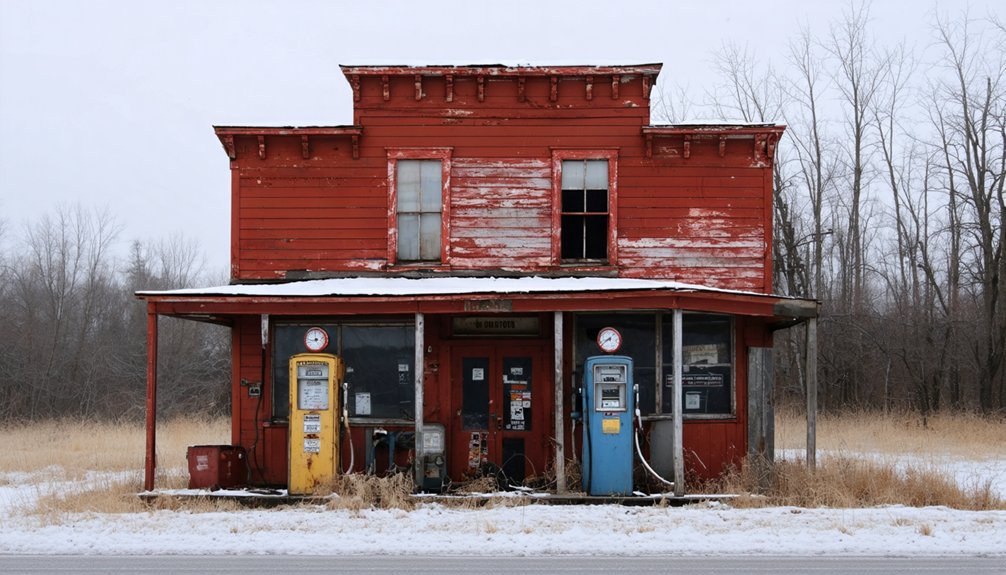
Despite mounting development pressures across Vermont’s historic landscape, local communities have rallied to protect their abandoned settlements through innovative preservation strategies.
You’ll find inspiring examples of community preservation across the state, where residents have united against large-scale development threats to maintain their historical significance.
- The Alliance for Vermont Communities raised $300,000 to purchase threatened parcels in Royalton, Sharon, Strafford, and Tunbridge when a massive 20,000-person development loomed.
- Vermont Land Trust’s protection initiatives saved the historic Woodford settlement area and Hogback Mountain from development.
- The Preservation Trust of Vermont supports over 360 projects annually through grants and revolving funds, empowering local communities to save their heritage.
These grassroots efforts guarantee Vermont’s abandoned communities remain protected for future generations to explore and appreciate.
Natural Reclamation of Historic Settlement Sites
Once Vermont’s historic settlements are abandoned, nature begins a remarkable reclamation process that transforms these sites over decades.
Through natural succession, you’ll witness grasses and herbs quickly colonizing cleared lots within three years, followed by blackberry and raspberry shrubs dominating the landscape by year fifteen.
Within 20 to 80 years, you’ll find white pine, red maple, and hemlock establishing a forest canopy.
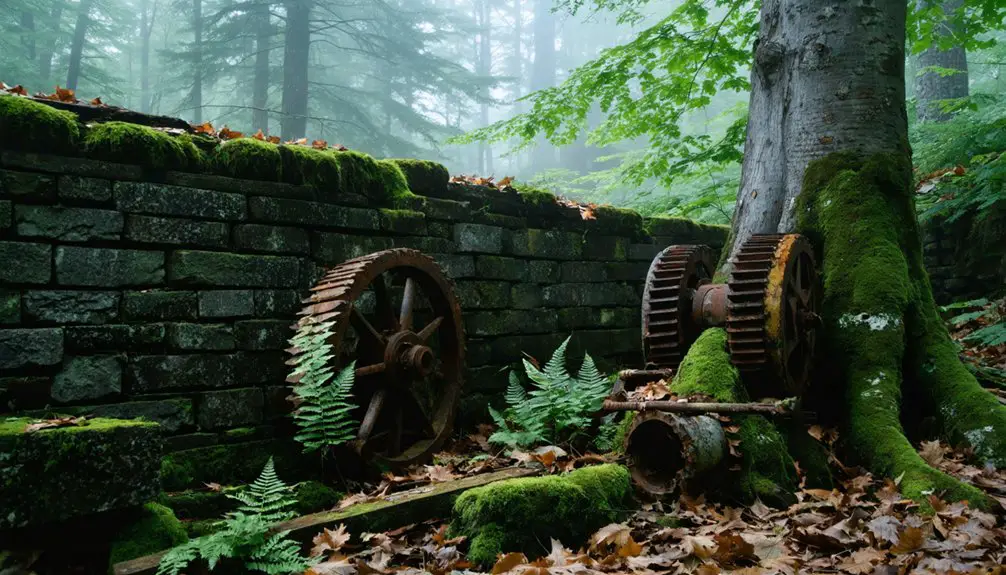
As ecosystem restoration unfolds, you’ll discover stone walls becoming havens for moss and ferns, while old foundations host climbing vines.
Former mill ponds transform into vibrant wetlands, attracting diverse wildlife.
You’ll notice deer, turkey, and cavity-nesting birds making homes in decaying structures.
The soil gradually recovers too, as carbon accumulates and water quality improves through natural filtration processes.
Tales From Vermont’s Deserted Mill Towns

Throughout Vermont’s industrial past, you’ll find fascinating stories of mill towns that rose and fell with changing fortunes. These forgotten industries left behind haunting remnants of once-thriving communities, from Warren Mill’s repeated battles with fire to South Glastenbury’s ambitious resort dreams crushed by natural disasters.
Mill memories survive in places like:
Fragments of Vermont’s industrial heritage echo through abandoned mill sites, each telling stories of ambition, prosperity, and decline.
- Westmore, where early settlers abandoned their mills in 1812 fearing Indian attacks, only to return two decades later
- Greenbanks Hollow, once buzzing with wool and timber production, now stands silent in Caledonia County
- West Castleton, where the 1929 stock market crash ended a prosperous slate milling operation
You can still trace these industrial ghosts across Vermont’s landscape, where nature slowly reclaims the remnants of communities that once powered the state’s economy.
Exploring Vermont’s Ghost Town Heritage Trails
You’ll find several well-marked trailheads leading to Vermont’s abandoned settlements, with the Slate History Trail at Bomoseen State Park and Little River State Park’s History Trail offering some of the most accessible entry points.
When planning your ghost town explorations, you’ll need to take into account seasonal park closures, trail conditions that vary dramatically between winter and summer months, and available daylight hours.
The state park system maintains updated trail guides and visitor information that can help you time your visit, with spring and fall typically providing ideal hiking conditions to these historic sites.
Heritage Trail Access Points
Scattered across Vermont’s rugged landscape, a network of heritage trails invites modern-day explorers to discover the state’s abandoned communities and industrial remnants.
You’ll find trail access points and historical markers leading to these forgotten places throughout the state, from Bennington County’s peaks to Washington County’s reservoir lands.
Key entry points include:
- Route 9 in Woodford, where you can trek north to the 1800s settlement and Waters Hill Cemetery
- Little River Road between Bolton and Waterbury, accessing the submerged Ricker Basin ghost town
- Bomoseen State Park’s entrance, leading to West Castleton’s slate quarry ruins
Each trailhead connects you to Vermont’s industrial past, whether following abandoned rail beds, exploring former mill towns, or discovering slate quarrying heritage across the Green Mountains.
Seasonal Hiking Considerations
When exploring Vermont’s abandoned settlements, seasonal conditions dramatically impact both access and visibility of historic remnants.
You’ll find winter demands snowshoes and avalanche awareness near exposed ridgelines, while spring thaw creates hazardous stream crossings and muddy trail conditions.
Summer brings flash storms and dense undergrowth, though fall offers ideal visibility for locating cellar holes and stone walls.
You’ll need to adapt your gear and timing to match seasonal challenges.
Pack microspikes for icy morning trails, waterproof boots during spring runoff, and extra layers for fall’s shorter daylight hours.
Weather awareness is essential – check trail updates for seasonal closures and reroutes.
Remember that GPS signals can weaken under thick summer canopy, so carry paper maps and plot your route in advance.
Frequently Asked Questions
Are There Any Restrictions on Metal Detecting in Vermont’s Ghost Towns?
Like guarded treasures of time, you’ll face strict metal detecting regulations in Vermont’s ghost towns. You must obtain permits for state-owned sites and follow historical preservation laws, though private lands need only owner permission.
What Wildlife Now Inhabits These Abandoned Settlement Areas?
You’ll find remarkable wildlife adaptation, from deer and bears in old orchards to coyotes patrolling former farmlands. Birds nest in ruins while amphibians thrive in abandoned cellars – nature’s perfect ecological restoration.
How Can Visitors Access These Ghost Towns During Winter Months?
You’ll need snowshoes, skis, or a snowmobile for winter access to most ghost towns. Check local DOT maps, obtain necessary permits, and stick to designated trails or guided ghost town tours.
Do Any Descendants of Original Residents Still Visit These Locations?
You’ll find descendant stories alive at these sites, with families regularly attending heritage events, maintaining cemeteries, and documenting family connections through reunions, oral histories, and organized commemorative gatherings.
Are Paranormal Investigations Permitted at These Abandoned Settlement Sites?
Get the green light – you’re free to conduct paranormal activities at these sites. Investigation regulations don’t restrict ghost hunting on public lands, though you’ll need permission for private property locations.
References
- https://kids.kiddle.co/List_of_ghost_towns_in_Vermont
- https://www.youtube.com/watch?v=2fvPo9iQC-w
- https://www.onlyinyourstate.com/experiences/vermont/ghost-town-vt
- https://myfamilytravels.com/supposedly-boring-vermont-towns-hiding-some-truly-strange-landmarks
- https://www.burlingtonfreepress.com/story/news/2018/10/29/history-space-tale-two-vt-ghost-towns/38202243/
- https://preservationinpink.wordpress.com/abandoned-vermont/
- http://freepages.rootsweb.com/~gtusa/history/usa/vt.htm
- https://happyvermont.com/2014/10/23/glastenbury-ghost-town/
- https://anna-kasper.com/2025/10/29/my-fuller-ancestors-one-of-six-families-in-glastenbury-vermont-52-ancestors-week-44-rural/
- https://en.wikipedia.org/wiki/Bennington_Triangle