You’ll discover California’s abandoned mining ghost towns scattered across the Sierra Nevada and desert regions, remnants of the 1848 Gold Rush when over 300,000 prospectors transformed the landscape. Notable sites like Bodie, with its 100+ preserved buildings at 8,379 feet elevation, showcase the boom-and-bust cycle of mineral extraction. While these historic settlements offer fascinating glimpses into the past, they harbor environmental hazards from toxic metals to unstable mine shafts. Exploring these time capsules requires careful preparation and geological awareness.
Key Takeaways
- Bodie is California’s best-preserved gold rush ghost town, featuring over 100 historic buildings and 65 former saloons at 8,379 feet elevation.
- California has over 5,000 abandoned mines and ghost towns, ranging from Gold Rush-era settlements to 20th-century mineral extraction sites.
- Notable ghost towns include Old Shasta, Empire Mine, Calico, and Eagle Mountain, each representing different periods of California’s mining history.
- Many ghost towns contain hazardous abandoned mine shafts, toxic heavy metals, and structurally unstable buildings requiring careful exploration.
- Ghost towns exist on federal, state, and private lands, with public access varying based on ownership and preservation regulations.
The Rise and Fall of California’s Mining Settlements
When gold deposits were discovered at Sutter’s Mill in 1848, California’s landscape underwent a dramatic transformation that would reshape its geological and demographic makeup for decades to come.
You’ll find that the non-Native population exploded from 14,000 to nearly 100,000 by 1849’s end, as fortune-seekers from across the globe carved out multicultural boomtowns along river placers and Sierra foothills.
The earliest recorded gold discovery in San Bernardino County occurred at Salt Springs in 1848, setting off a wave of prospecting across the region’s vast desert landscape.
These settlements’ economic fluctuations followed distinct patterns: initial surface mining gave way to deep quartz operations, requiring heavy capital investment in infrastructure and equipment.
Surface mining’s shift to complex quartz operations transformed California’s Gold Rush economy through massive investments in mining infrastructure.
Cultural dynamics evolved as diverse populations from China, Europe, and Latin America established their own enclaves. During the peak of mining activity, over $100,000 in gold dust passed weekly through the gateway town of Shasta between 1852 and 1857.
While many towns flourished with advancing transportation networks and processing facilities, they’d ultimately succumb to ore depletion, falling commodity prices, or environmental damage, leaving behind the ghost towns you can explore today.
Exploring Bodie: A Preserved Slice of the Old West
Among California’s best-preserved ghost towns, Bodie stands as a remarkable tribute to the boom-and-bust cycle of Western mining settlements.
You’ll find this time capsule perched at 8,379 feet in the Sierra Nevada, where gold’s discovery in 1859 sparked a rush that transformed a simple mining camp into a bustling town of 8,000 residents.
The town thrived with 65 saloons dotting its streets, earning a wild reputation for lawlessness and violence.
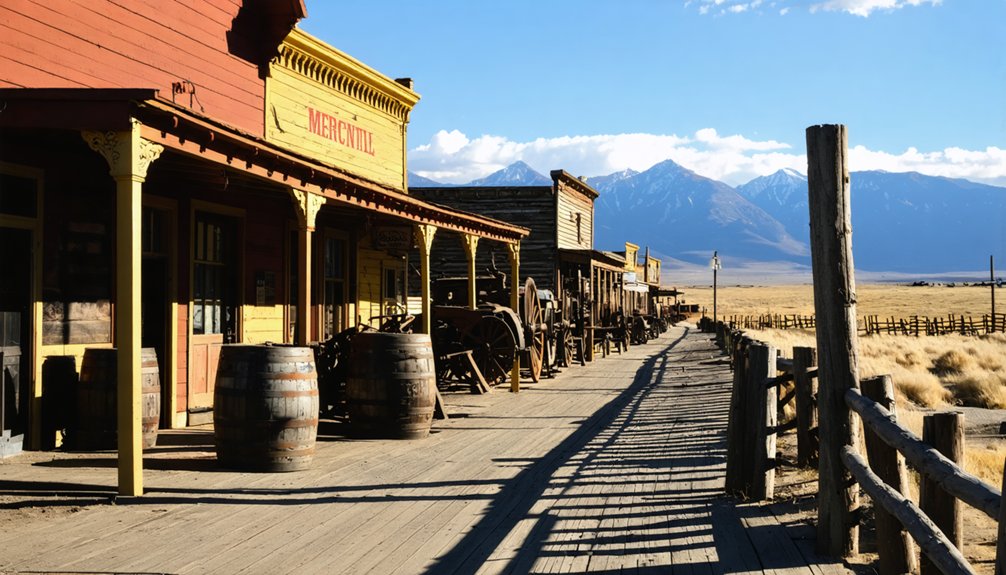
Today, you can walk the same dusty streets where prospectors once sought their fortunes, peering through windows of over 100 buildings preserved in “arrested decay.”
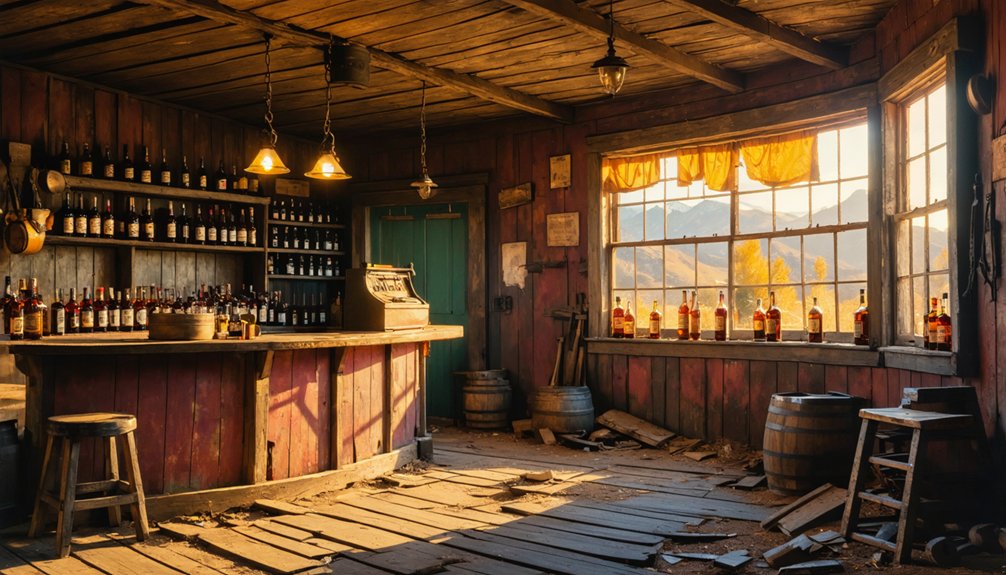
The site’s rich Bodie history reveals itself through abandoned saloons, a bank vault that survived the 1932 fire, and the Boone Store’s shelves still stocked with period goods. Due to multiple historical sites sharing the name, visitors should specify Bodie Ghost Town when planning their trip.
As California’s official gold rush ghost town tourism destination, Bodie lets you experience an authentic slice of the untamed American West.
Notable Ghost Towns Across the Golden State
While Bodie exemplifies the preserved mining town experience, California’s landscape harbors dozens of remarkable ghost towns that tell unique stories of the state’s mineral-rich past.
You’ll find distinct regional patterns in these abandoned settlements. Northern California’s ghost town legends center around gold extraction, from Old Shasta’s crumbling brick ruins to the extensive hard-rock operations at Empire Mine. Dublin Gulch stands out for its carved caliche homes that miners created in the volcanic clay.
The southern desert holds different treasures – Calico’s silver-rich deposits and Eagle Mountain’s iron ore legacy reflect mining folklore of a later era. Each site reveals unique geological and technological adaptations: hydraulic mining scars at Malakoff Diggins, stamp mills at Skidoo, and mercury processing remains at New Idria.
These sites aren’t just abandoned – they’re geological time capsules documenting California’s mineral extraction evolution from the 1850s through the 20th century. The Harmony Borax Works operated from 1883 to 1888 and became famous for pioneering mineral transportation with its Twenty Mule Team wagons.
Environmental Impact and Toxic Legacy
If you visit California’s abandoned mining towns today, you’ll encounter toxic heavy metals and acid drainage that continue leaching into watersheds, with methylmercury now present throughout local ecosystems from 19th-century gold extraction methods.
The contaminated sediments from thousands of unreclaimed Sierra mines flow downstream during floods, depositing hazardous materials across Central Valley lowlands. Every year, several visitors face injury and death from exploring these hazardous mine sites, highlighting the critical need for increased public awareness about these dangers. San Bernardino County contains a significant portion of California’s 100,000 abandoned mining features.
What’s particularly sobering is that these mining toxins will persist for the next 10,000 years, creating an enduring environmental legacy from California’s brief but intense Gold Rush era.
Mining Toxins Persist Today
Despite the passing of over a century since California’s gold mining heyday, toxic pollutants continue to plague the state’s landscapes and waterways.
You’ll find mercury-laden sediments and contaminated soils throughout the Sierra Nevada, where an estimated 10 million pounds of mercury were historically discharged. This toxic legacy now poses serious health risks as methylmercury accumulates in fish and wildlife.
Microbial activity transforms the mercury into methylated mercury compounds that concentrate up the food chain.
You’re likely to encounter dangerous levels of arsenic, lead, chromium, and asbestos in the soils near abandoned mines and ghost towns.
These toxins become airborne through dust kicked up by wind and recreational activities. When storms and wildfires strike, they’ll further disturb contaminated sediments, sending pulses of pollutants downstream.
The complexity of these mixed contaminants makes cleanup particularly challenging, as they persist in various forms across soil, water, and living organisms. The Idaho-Maryland Mine site contains toxic mine waste that includes hazardous levels of arsenic, lead, and mercury.
Water Contamination Near Sites
The devastating legacy of acid mine drainage from over 5,000 abandoned California mines continues to poison groundwater and surface waters throughout the state.
You’ll find murky blue-green acidic water up to 90 feet deep in northern pit mines, while mercury contamination affects over 10,000 miles of waterways. The Sierra Nevada, which supplies 60% of California’s drinking water, bears the toxic burden of mining’s past.
If you test the water quality near these ghost towns today, you’ll discover hazardous levels of arsenic, lead, and mercury seeping into crucial watersheds.
The contamination effects are especially severe in places like Greenhorn Creek and Clear Lake, where mining debris has transformed pristine streams into toxic channels. These pollutants will continue leaching into California’s water systems for thousands of years.
Long-Term Ecosystem Disruption
Mining’s toxic footprint across California’s ghost towns has permanently altered entire ecosystems, creating a devastating environmental legacy that spans soil, air, and water systems.
You’ll find ecosystem resilience severely compromised as heavy metals persist in soils, inhibiting natural habitat restoration and disrupting essential nutrient cycles.
- Toxic metal contamination spreads through soil layers, preventing vegetation regrowth and diminishing biodiversity
- Desert ecosystems near abandoned sites show dramatic shifts in plant communities
- Wildlife faces ongoing threats from unstable structures and contaminated shelter spaces
- Sacred Indigenous lands experience continued degradation of traditional ecosystems
- Mercury and chemical waste create long-lasting disruptions to soil microorganisms
The geological record reveals layers of mining waste that continue transforming California’s landscape, threatening both current species and future generations of wildlife in these once-pristine territories.
Architectural Remains and Mining Infrastructure
You’ll find a remarkable array of wooden structures across California’s ghost towns, from the basic miners’ cabins to elaborate stamp mills that once processed precious metals.
The remaining machinery includes rusted ore crushers, abandoned rail systems, and processing equipment that reveals the technological progression of 19th-century mining operations.
Unstable mine shafts, deteriorating support timbers, and partially collapsed tunnels present significant hazards beneath these architectural remnants, with many sites requiring careful monitoring and restricted access.
Surviving Wooden Building Types
Scattered across California’s ghost towns, wooden structures tell the architectural story of the state’s mining era through their surviving remnants.
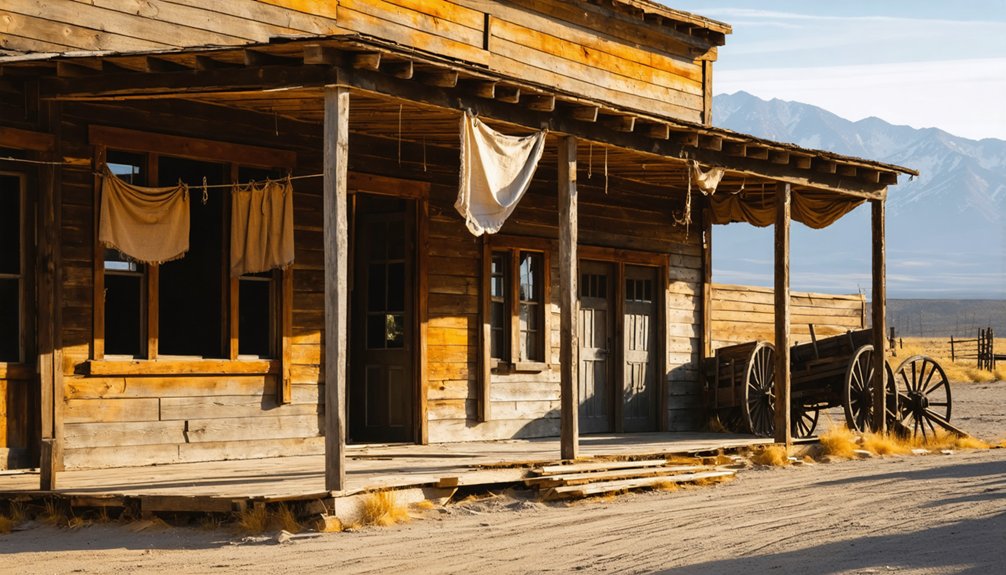
You’ll find these timber structures standing as evidence of the pioneering spirit, from simple miners’ cabins to grand Victorian boarding houses. The preserved facades reveal distinct building patterns that developed as settlements grew from crude camps into bustling towns.
- Board-and-batten miners’ cabins showcase the earliest settlement phase with their basic single-room designs.
- False-front commercial buildings line former main streets, many still containing original shelving and counters.
- Victorian-frame boarding houses demonstrate the evolution toward permanent communities.
- Schoolhouses and churches reflect social infrastructure development.
- Headframes and ore bins represent the industrial backbone of these mining communities.
Mill and Machinery Remnants
The architectural bones of California’s mining heyday persist through a vast network of industrial remnants, from Eagle Mountain’s rusted refineries to Calico’s preserved processing facilities.
You’ll find abandoned machinery and crumbling concrete foundations that tell the story of massive extraction operations, including Eagle Mountain’s peak production of 350,000 tons in 1975.
Equipment restoration efforts have brought new life to sites like Cerro Gordo, where preserved mills and processing machinery showcase the evolution of mining technology.
The machinery preservation movement extends across California’s desert counties, where you’ll discover over 100,000 mining features ranging from sealed shafts to abandoned processing plants.
At sites like Old Shasta City and Calico, you can explore the industrial archaeology through rehabilitated structures and authentic mining equipment that once powered the state’s mineral boom.
Underground Mine Safety Hazards
While mining infrastructure provides fascinating historical insights, these abandoned sites harbor severe hazards requiring extreme caution.
You’ll find deadly mine shaft dangers throughout California’s 47,000 derelict sites, where structural decay and geological instability create life-threatening conditions. Historical records spanning 125 years document numerous fatalities and near-misses in these treacherous underground networks.
- Unsupported tunnels can collapse without warning, with 84% of sites containing hazardous features
- Vertical shafts drop hundreds of feet, often hidden by vegetation or unstable covers
- Decaying timber supports and rusted infrastructure pose immediate structural risks
- Unmarked passages intersect with unstable ground, leading to sudden subsidence
- Legacy workings beneath modern developments threaten surface stability
Safety Considerations for Ghost Town Visitors
Visiting California’s abandoned mining ghost towns requires careful attention to numerous safety hazards that can pose serious risks to explorers. Before venturing out, you’ll need proper safety gear including sturdy boots, protective clothing, and at least 2 liters of water per person.
Always notify emergency contacts of your route plan and expected return time, as cell service is typically nonexistent in these remote locations.
Watch for unstable structures, open mine shafts up to 1,200 feet deep, and hazardous debris like rusted metal and broken glass. High elevations create extreme weather conditions, while loose rock and uneven terrain demand constant vigilance.
You’ll want to check road conditions before departing and confirm your vehicle is equipped with recovery gear, as many sites are only accessible via rough, unsurfaced roads.
Public Access and Legal Status of Historic Sites
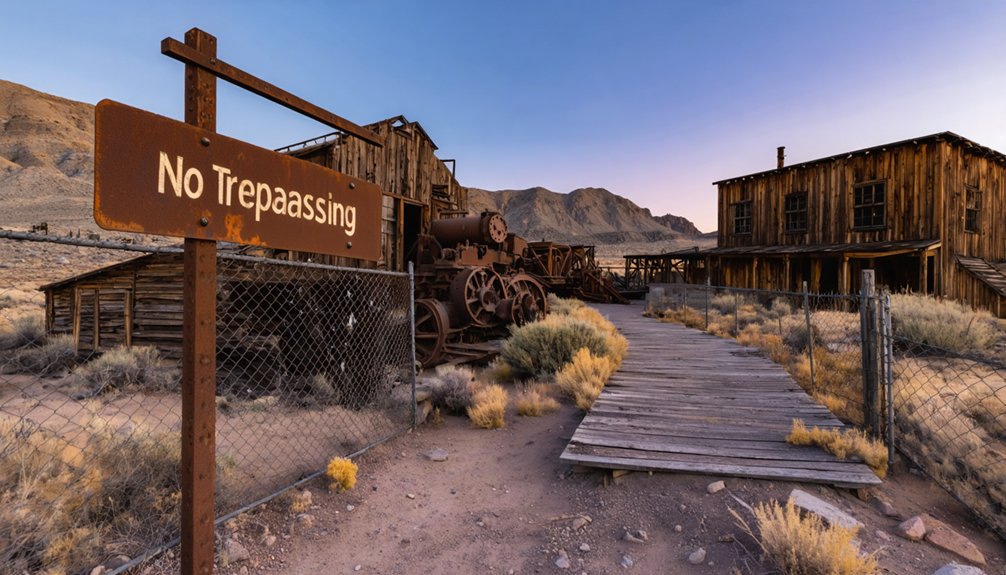
Beyond physical hazards, traversing the complex legal landscape of California’s ghost towns requires understanding their diverse ownership patterns and access rights.
You’ll find these historic sites scattered across a patchwork of federal, state, and private lands, each with distinct legal ownership frameworks that determine your ability to explore them.
- BLM and National Park Service lands typically allow public access under specific regulations
- Private ghost towns require owner permission before you can enter
- Historic structures may be off-limits even on public lands due to preservation laws
- Mine workings are commonly restricted or gated for your safety
- Vehicle requirements and seasonal closures can limit your access to remote sites
When planning your ghost town expedition, check current land status and access restrictions through the managing agency or property owner to guarantee legal compliance.
Photography and Documentation Guidelines
To properly document California’s ghost towns through photography, you’ll need to master both technical skills and ethical documentation practices.
Start with wide-angle contextual shots of the site’s geological setting, then move systematically through architectural layers like exposed strata. You’ll want to capture chronological evidence of human occupation, from initial mining operations through periods of abandonment.
Begin at a distance to reveal the site’s full story, then document each layer of history from bedrock to final desertion.
For ideal results, shoot RAW files in bracketed exposures, especially when documenting high-contrast scenes of weathered structures against bright desert skies.
Remember to record GPS coordinates and maintain detailed metadata of your documentation.
Most importantly, follow strict non-disturbance protocols – don’t move artifacts or create new paths through these delicate historical sites.
Your photography techniques should preserve these time capsules while your documentation ethics guarantee their protection for future generations.
Planning Your Ghost Town Adventure
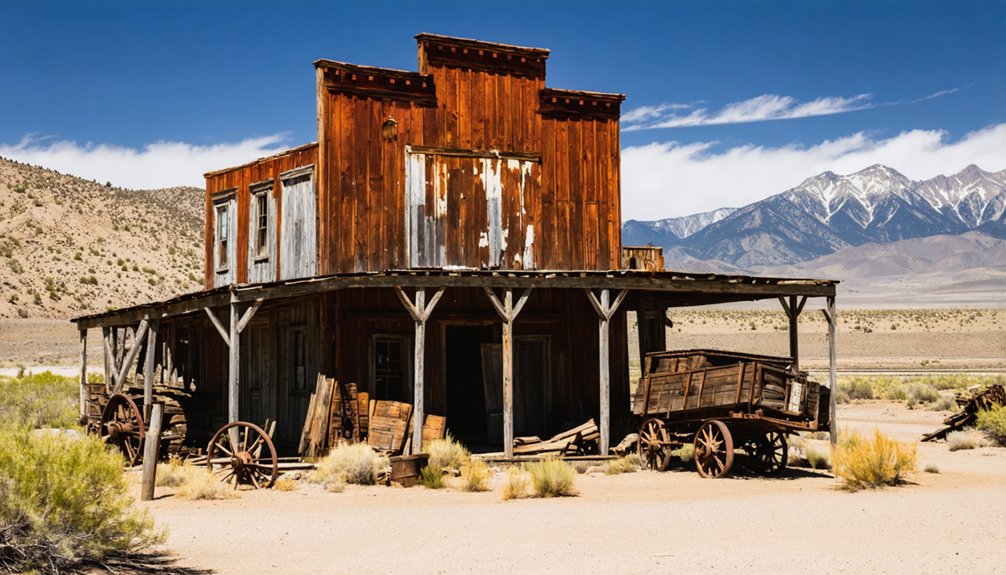
When plotting your expedition to California’s ghost towns, proper planning becomes essential for traversing these remote historical sites safely. Your ghost town logistics should account for both geological conditions and seasonal variations that shaped these frontier settlements.
In addition to understanding the history and unique stories behind each site, travelers should also seek out the most fascinating ghost towns to explore in California. Many of these towns offer guided tours that provide deeper insights into their past, while others remain untouched, inviting a more adventurous spirit. Be sure to bring your camera to capture the stunning landscapes that surround these abandoned places.
Adventure preparation demands strategic timing and supplies to maneuver the challenging terrain that once tested pioneer fortitude.
- Pack abundant water, food, and fuel since many sites lack modern amenities
- Time your visits during spring or fall to avoid extreme desert heat and mountain snow
- Bring sturdy boots for traversing unstable ground and deteriorating structures
- Carry detailed maps or GPS units for remote locations off paved roads
- Plan visits within site operating hours, especially for preserved locations like Bodie and Calico
Frequently Asked Questions
Are There Any Reported Paranormal Activities in California’s Ghost Towns?
You’ll discover numerous haunted locations throughout these former mining settlements, with ghost sightings including spectral miners, mysterious lights, unexplained sounds, and otherworldly encounters reported at Calico, Bodie, and Black Diamond.
What Happened to the Residents’ Belongings When They Abandoned These Towns?
You’ll find their abandoned artifacts scattered between weather-beaten walls and lost treasures buried beneath layers of time – some salvaged by scavengers, others preserved by climate, many simply left behind forever.
Can Metal Detectors Be Used at Abandoned Mining Town Sites?
You can’t legally use metal detectors at ghost town sites on federal or state lands. You’ll need special permits and must follow strict metal detection regulations and treasure hunting ethics.
Which Ghost Towns Are Closest to Major California Cities?
You’ll find Mentryville just 40 miles from Los Angeles and Drawbridge 30 miles from San Francisco. Both offer historical significance through preserved structures, though tourist attractions are limited due to their protected status.
Do Any Former Residents or Their Descendants Still Visit These Sites?
Like layers of time preserved in stone, you’ll find descendants making regular pilgrimages to these ghost towns, attending reunions, sharing oral histories, and maintaining family connections through heritage tourism and historical preservation efforts.
References
- https://www.legendsofamerica.com/ca-deathvalleyghosttowns/
- https://patch.com/california/banning-beaumont/13-ghost-towns-explore-california
- https://www.californist.com/articles/interesting-california-ghost-towns
- https://www.geotab.com/ghost-towns/
- https://www.visitcalifornia.com/road-trips/ghost-towns/
- https://www.tripadvisor.com/Attractions-g28926-Activities-c47-t14-California.html
- https://californiahighsierra.com/trips/explore-ghost-towns-of-the-high-sierra/
- https://nvtami.com/ghost-towns-nevada-california/
- https://wanderwisdom.com/road-trips/top-old-west-and-mining-towns-to-visit-in-california
- https://westernmininghistory.com/state/california/