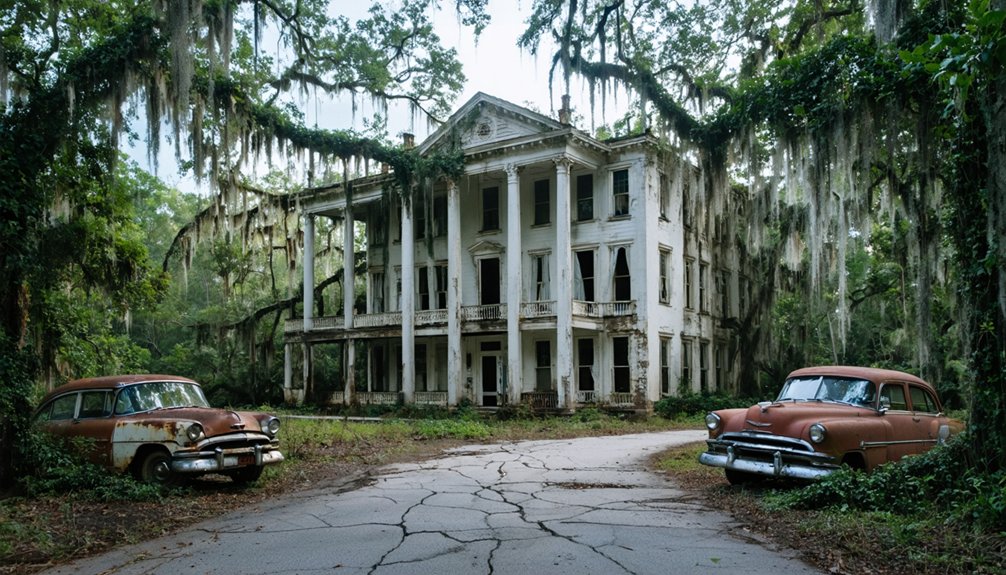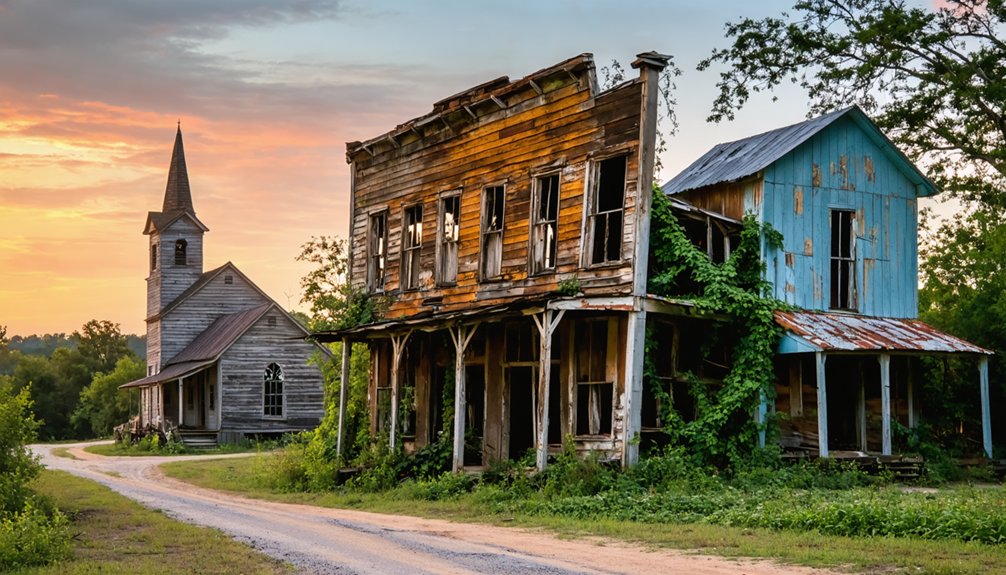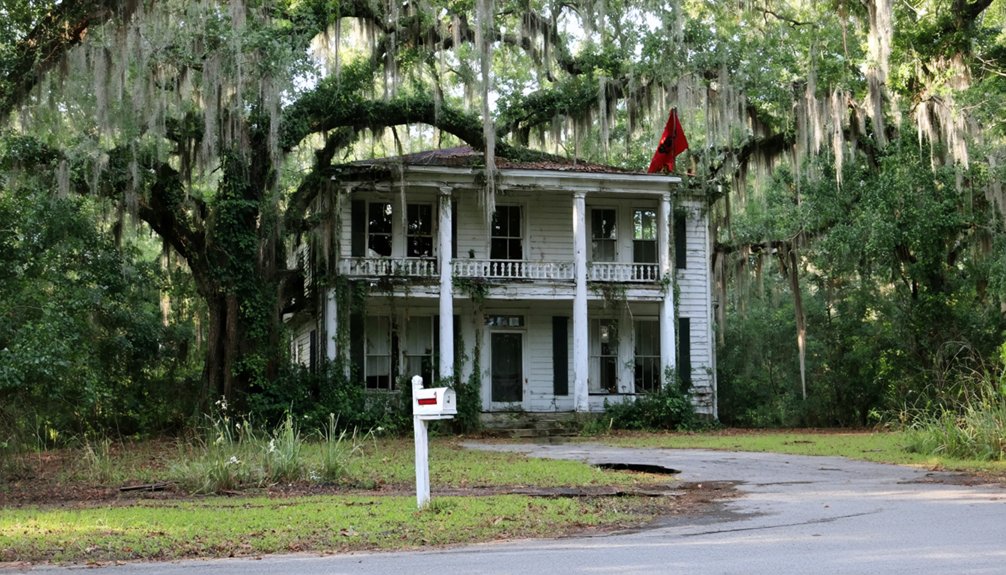
You’ll find numerous abandoned suburbs across the Southern states, including East St. Louis (78% population loss), Mobile’s Toulminville neighborhood (1,500 lost housing units), and Atlanta’s foreclosed communities (3,000+ vacant properties). Texas hosts 511+ ghost towns primarily from oil industry collapse, while foreclosure clusters plague South Carolina and Florida. These abandonments disproportionately affect non-white communities, creating economic devastation through collapsed tax bases and infrastructure failure. The patterns reveal deeper socioeconomic fractures waiting to be understood.
Key Takeaways
- East St. Louis has experienced 78% population decline since 1950, transforming from an industrial center to an abandoned suburb.
- Mobile, Alabama’s Toulminville and Oakdale neighborhoods face extreme disinvestment, with Toulminville losing 1,500 housing units since 2000.
- Atlanta suburbs show decline with 3,071 abandoned foreclosed properties and the city’s first net migration loss in decades.
- Texas contains over 511 ghost towns, primarily former oil boomtowns like Pecos where home prices dropped from $210,000 to $135,000.
- South Carolina and Florida suburbs face accelerating decline from foreclosure clusters in counties such as Dorchester, Charlotte, and Kaufman.
East St. Louis and the Illinois Abandoned Belt
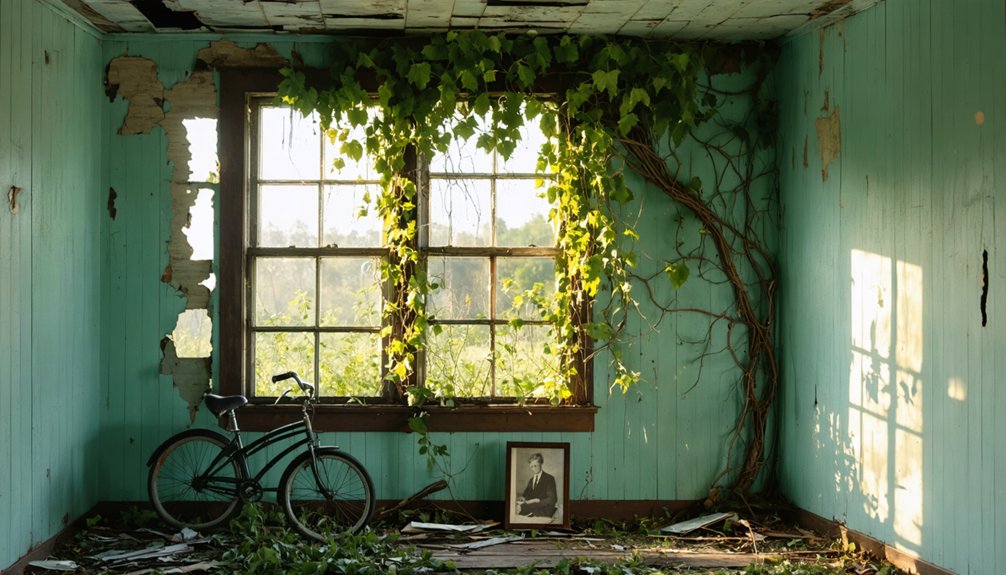
Five major factors transformed East St. Louis from a thriving industrial center into a monument of urban decay.
Once the “Pittsburgh of the West,” this transportation hub connected 27 railroad lines while housing steel mills, chemical plants, and manufacturing facilities that created economic prosperity through the 1950s.
The collapse came swiftly. Freeway construction severed community networks while white flight drained tax revenue.
As highways cut through established neighborhoods, residents with means fled, taking the city’s financial lifeblood with them.
Critical infrastructure failed as police cars broke down and garbage collection stopped. Industrial decline left contaminated brownfields making redevelopment nearly impossible.
The city’s cultural significance as the birthplace of jazz legend Miles Davis stands in stark contrast to its current state of abandonment.
Racial violence, particularly the 1906 massacre that killed 48 people, tore at the social fabric.
The population plummeted from a peak of 82,000 residents in 1950 to fewer than 18,000 today, representing a staggering 78% population loss.
Today, you’ll find urban prairie where neighborhoods once stood, abandoned office buildings, and forgotten factories like the Elementis Pigments plant.
These architectural ghosts tell a stark story of demographic upheaval and socioeconomic devastation.
Mobile, Alabama’s Vanishing Neighborhoods
While East St. Louis represents industrial decay, Mobile’s abandonment stems from westward expansion that hollowed out once-vibrant neighborhoods.
You’ll find Toulminville, Oakdale, and other historic districts suffering extreme disinvestment, with entire blocks virtually abandoned despite the city’s 179,000 population.
The statistics paint a stark reality: Toulminville alone lost 1,500 housing units since 2000, including 452 from the Roger Williams housing closure.
Urban blight has consumed neighborhoods where 96% of residents are African American, and crime rates exceed national averages by 148%.
The city’s Neighborhood Revitalization Program attempts to address this decline by transferring tax-delinquent properties to new owners. In many areas, these abandoned structures have become nuisance properties requiring demolition or securing by city officials. These neighborhoods, including Maysville, Texas Hills, and Trinity Gardens, share a unique community sense despite ongoing challenges.
These initiatives promote side lot acquisitions and community improvement projects, but they face the massive challenge of reversing decades of systematic disinvestment and abandonment.
The Ghost Towns of Texas: A Growing Crisis
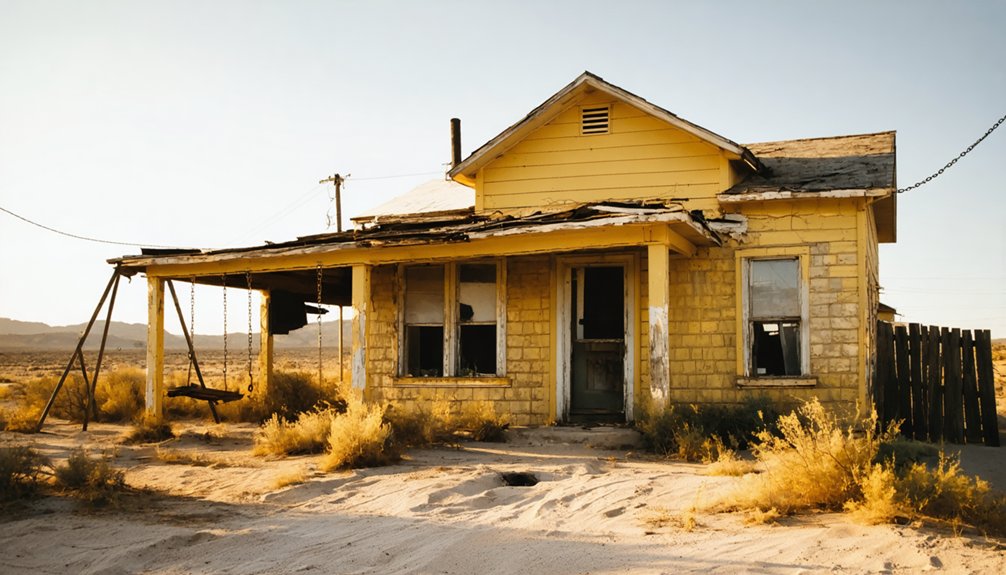
You’ll find Texas’s landscape increasingly dotted with abandoned communities, where once-thriving oil boomtowns now stand as empty shells with deteriorating infrastructure and plummeting property values.
The cyclical nature of energy markets has transformed vibrant developments into modern ghost towns, particularly across the High Plains where 27 counties experienced significant population outmigration between 2022 and 2023.
This pattern of abandonment extends beyond historical rural decline, now threatening newer suburban developments around major metropolitan areas where overbuilding during the post-COVID boom has left partially vacant subdivisions and declining home prices. With an estimated 511 ghost towns completely abandoned throughout Texas, the situation represents a growing crisis for state planners and local governments alike.
Cities like Pecos have seen dramatic shifts from economic booms to busts, with home prices that surged then plummeted from $210,000 in 2020 to just $135,000 by 2025.
Oil Busts, Empty Houses
Texas’s once-thriving oil towns now stand as stark monuments to the boom-and-bust cycle that’s fundamentally reshaping the state’s demographic landscape.
You’ll find the skeletal remains of prosperity in places like Odessa, Big Spring, and Port Arthur, where home prices have plummeted 20-35% amid rising vacancy rates.
The oil industry’s collapse has triggered a domino effect—rig shutdowns force workers to relocate, leaving behind ghost neighborhoods of abandoned construction.
Housing inventory has exploded from 1.2 to over 6 months in these communities, signaling market surrender.
What you’re witnessing is structural failure, not just economic hiccups.
The housing market collapse reveals deeper vulnerabilities in Texas’s mono-industry regions.
Without the economic diversity found in the Dallas-Austin-Austin triangle, these communities face existential questions about whether recovery is even possible.
In many cases, the natural gas industry’s decline has especially devastated counties like Sutton, pushing them toward ghost town status.
Austin has managed to avoid this decline with only 30% of young adults moving away, creating a stark contrast with struggling oil towns.
From Boomtowns to Abandonment
Though many Americans associate ghost towns with Wild West mythology, the reality in contemporary Texas reveals a sobering modern crisis, with 511 ghost towns marking the highest concentration in any U.S. state.
You’ll find these abandoned communities concentrated most heavily in Wilson County, where 31 ghost towns cluster near New Braunfels. These ghost towns contribute to an interactive map created to visualize abandoned settlements across the country. Their architectural remnants—courthouses, jails, general stores—stand as evidence to compressed boom-bust cycles.
Towns like Helena, once a county seat and now home to just 200 residents, exemplify the precarious balance between ghost town preservation and rural revitalization.
The economic architecture of decline follows a familiar pattern: industry closures, highway rerouting, and agricultural downturns trigger service losses, property devaluation, and ultimately exodus. This pattern contributes to the overall rural depopulation trend across Texas.
While Texas metros flourish, 75 counties recently lost population, with the High Plains region particularly vulnerable.
Sunbelt Suburban Collapse in Atlanta and Beyond
Atlanta’s once-thriving suburban landscape now shows unmistakable signs of decline, marking a stark reversal in the city’s decades-long growth trajectory.
After experiencing its first net migration loss in three decades, the metropolis now contends with 3,071 abandoned foreclosed properties scattered throughout its suburban rings.
The BeltLine project, while revitalizing urban corridors, accelerated gentrification and pushed longtime residents outward, only to find suburban havens increasingly unaffordable.
You’ll notice entire neighborhoods in flux, with active listings up 40% as former residents flee to Chattanooga, Greenville, and Huntsville.
English Avenue and Vine City epitomize this collapse, with two-thirds of English Avenue depopulated by 2018.
This suburban exodus represents freedom of movement enabled by remote work, but simultaneously reveals the fragility of Atlanta’s growth model.
Bank Foreclosures and Their Aftermath in Southern Communities
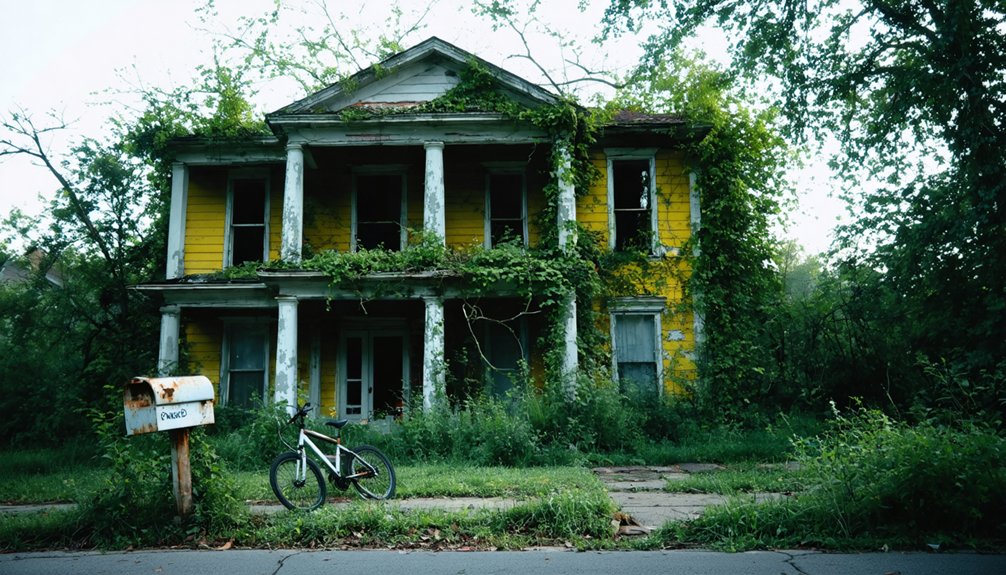
A devastating wave of foreclosures has reshaped the suburban landscape across the South, with South Carolina and Florida bearing the heaviest burden in 2025.
Foreclosure clusters in counties like Dorchester (SC), Charlotte (FL), and Kaufman (TX) have accelerated suburban decline, creating neighborhoods of abandoned homes where once-thriving communities stood.
In addition to these challenges, forgotten towns in the southern US are facing similar fates, as economic downturns leave them struggling to attract new residents or businesses. The lack of investment in these areas has made it increasingly difficult for them to revitalize, leading to a further erosion of community ties and local culture. As a result, many once-vibrant towns are now fading into obscurity, with their histories and stories at risk of being lost forever.
The ghost towns of suburbia emerge, block by block, as foreclosure clusters transform family neighborhoods into eerie monuments of economic failure.
You’ll find the economic consequences rippling through these regions:
- Property values plummeting as bank-owned properties (REOs) flood markets faster than buyers can absorb them
- Local governments struggling with code enforcement costs while tax revenues shrink
- Extended foreclosure timelines—reaching a staggering 3,520 days in Louisiana—prolonging neighborhood blight
The social fabric tears as stable residents flee these declining suburbs, further accelerating population loss and leaving behind increasingly vulnerable communities caught in a downward spiral of abandonment.
Racial Disparities in Southern Suburban Abandonment
Southern suburban abandonment reveals stark racial divides, with largely non-white communities bearing the heaviest burden of disinvestment and decline.
You’ll find these patterns aren’t accidental but rooted in deliberate policies – exclusionary zoning, redlining, and discriminatory financing practices that fostered racial segregation throughout the 20th century.
Atlanta exemplifies this reality, where 87% of African Americans live in suburbs, creating concentrated black middle-class communities that nevertheless face systematic economic marginalization.
Property values in these areas remain undervalued compared to mainly white neighborhoods, hindering wealth accumulation through homeownership.
The consequences manifest in failing infrastructure, poor educational opportunities, and higher poverty rates—especially for black women who experience poverty at rates near 20%.
These abandoned suburbs represent the physical manifestation of ongoing systemic inequities, where demographic “tipping points” often precede complete community disinvestment.
Economic Impacts of Abandoned Housing in the South
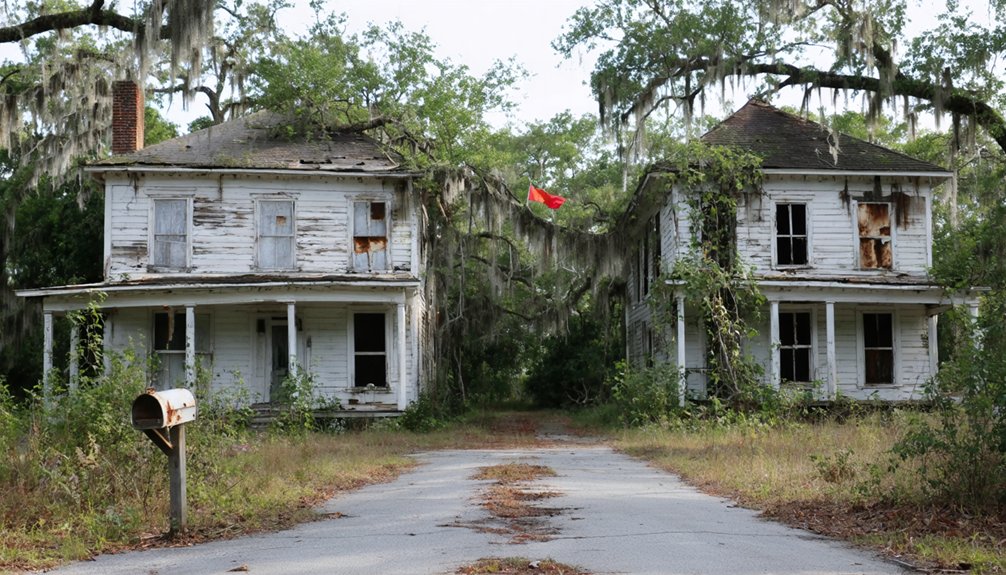
The economic devastation caused by abandoned housing ripples throughout Southern communities, creating a financial undertow that pulls down entire regions.
You’ll find states like North Carolina losing nearly $12 billion in economic output and 100,000 potential jobs, while municipalities struggle with collapsed tax bases that force higher rates on remaining residents.
- Baltimore alone hemorrhages over $100 million annually in lost taxes and utility revenues
- Property values plummet in surrounding neighborhoods, triggering cycles of disinvestment
- Emergency service costs spike due to increased crime, arson, and public health hazards
Economic revitalization becomes nearly impossible without addressing this abandonment crisis.
The architectural decay symbolizes deeper socioeconomic fractures, where community engagement offers the only sustainable pathway forward—turning liabilities into assets through strategic rehabilitation rather than costly demolition.
Frequently Asked Questions
What Wildlife Commonly Inhabits Abandoned Southern Suburban Properties?
Like ghosts reclaiming their territory, you’ll find suburban ecosystems transformed by raccoons, deer, coyotes, snakes, owls, and insects—wildlife adaptation flourishing where human demographic patterns have retreated from architectural frameworks.
Can Individuals Legally Purchase Abandoned Southern Suburbs at Auction?
Yes, you can legally acquire abandoned southern suburbs through auction processes, though property rights involve maneuvering complex title issues, socioeconomic barriers, and demographic shifts that have transformed these once-vibrant architectural landscapes into available opportunities.
How Have Local Schools Adapted to Declining Student Populations?
You’ll find schools consolidating buildings, repurposing facilities, and reducing staff as student enrollment falls. They’re strategically reallocating educational resources through closures, multi-grade classrooms, and community partnerships to maintain quality despite demographic shifts.
What Restoration Initiatives Have Successfully Revitalized Abandoned Southern Neighborhoods?
Like phoenix rising from ashes, you’ll see success in Bowen Homes’ crime-focused redesign, Port Royal’s heritage tourism leveraging historical preservation, and Greenleaf’s post-fraud revival through transparent community engagement and financial restructuring that liberated stagnant developments.
How Do Utility Companies Handle Infrastructure in Largely Abandoned Areas?
You’ll find utility companies reduce infrastructure maintenance in abandoned areas, implementing strategic consolidation, remote monitoring, and selective decommissioning to manage costs while maintaining minimum service levels despite declining revenue streams.
References
- https://www.richmondfed.org/region_communities/regional_data_analysis/regional_matters/2023/rm_08_17_23_baltimore_abandoned_housing
- https://schoolofcities.utoronto.ca/neighbourhood-abandonment-in-the-american-rust-belt/
- https://247wallst.com/housing/2024/04/11/americas-modern-ghost-towns-2/
- https://unitedwaynca.org/blog/vacant-homes-vs-homelessness-by-city/
- https://www.lincolninst.edu/publications/articles/new-american-ghost-towns/
- https://popcenter.asu.edu/content/abandoned-buildings-and-lots-0
- https://www.geotab.com/ghost-towns/
- https://www.youtube.com/watch?v=8r02xeyalvQ
- https://infrastructureusa.org/spooky-infrastructure-ghost-towns-across-the-united-states/
- https://mrpexplores.substack.com/p/east-st-louis-illinois-more-abandoned