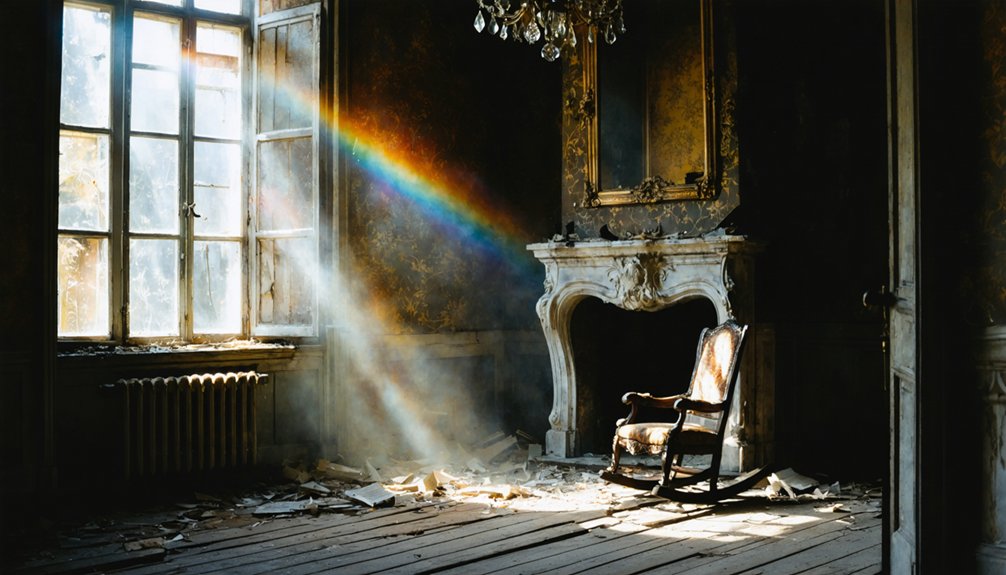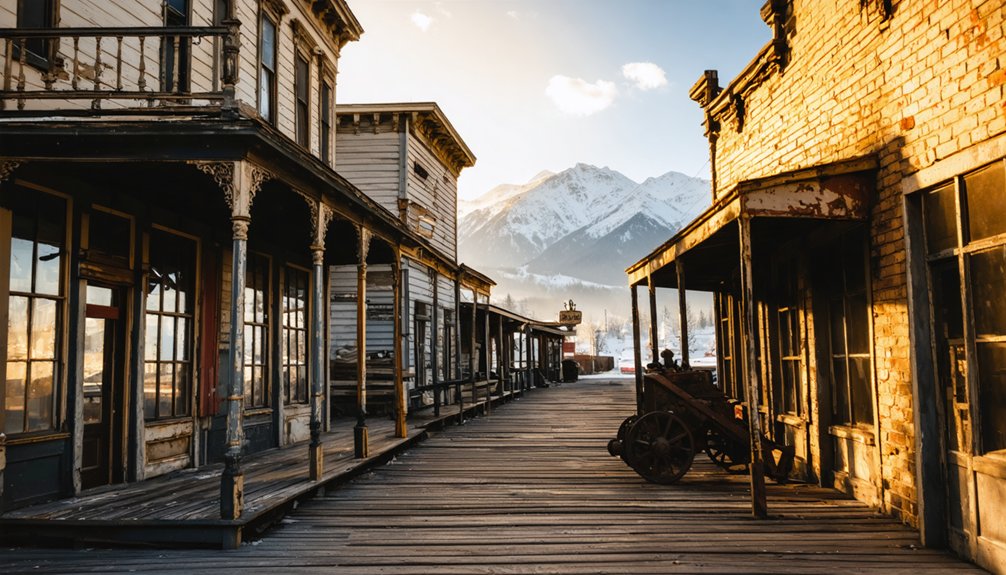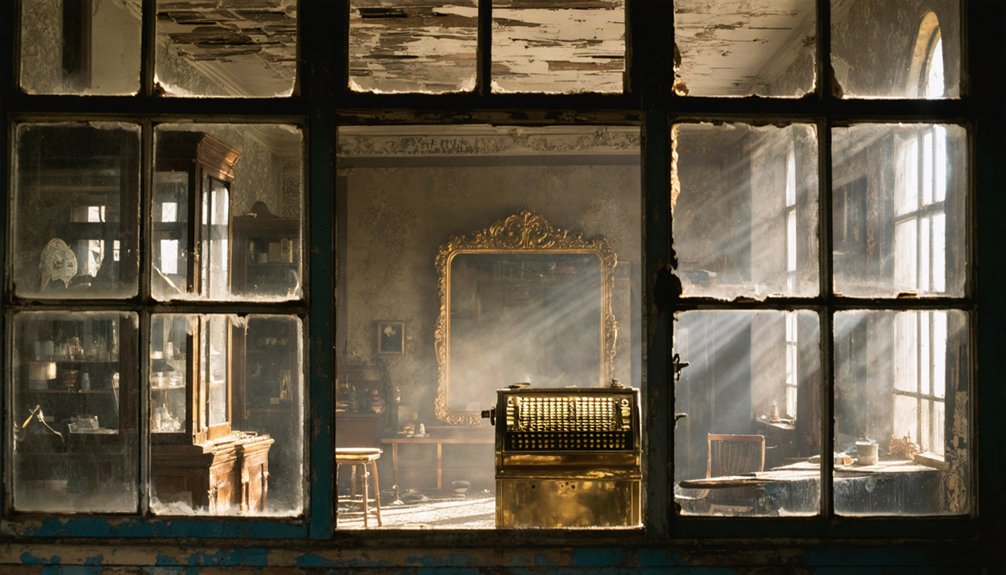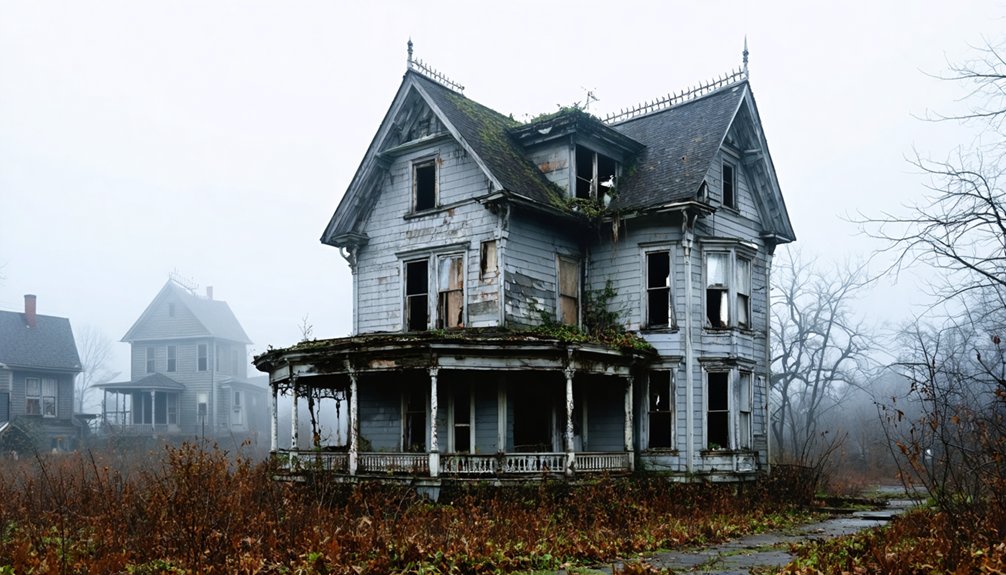
You’ll find America’s abandoned Victorian villages in various forms: gold rush ghost towns like Bodie, California; company coal towns in Appalachia; textile mill villages across the South; and railroad hubs in rural landscapes. These 1860-1900 settlements showcase ornate facades, brick factories, and worker housing now being reclaimed by nature. Some remain in “arrested decay” as historical sites, while others hide beneath forest canopies, their stories waiting to be uncovered.
Key Takeaways
- Abandoned Victorian villages include former Gold Rush boomtowns like Bodie, California, and Virginia City, Montana, which now exhibit “arrested decay.”
- Company towns like Segundo, Colorado, and Lynch, Kentucky represent Victorian-era capitalism with structures abandoned after industry decline.
- Post-Civil War textile mill villages feature distinctive saltbox homes, company stores, and brick factories near rivers for water power.
- Hidden Victorian ruins in rural America include former railroad towns with brick structures built between 1830-1880, now overtaken by vegetation.
- Victorian-era railroad infrastructure includes over 200,000 miles of abandoned pathways with forgotten stations showcasing architectural decay.
Gold Rush Ghost Towns: Victorian-Era Mining Communities Frozen in Time
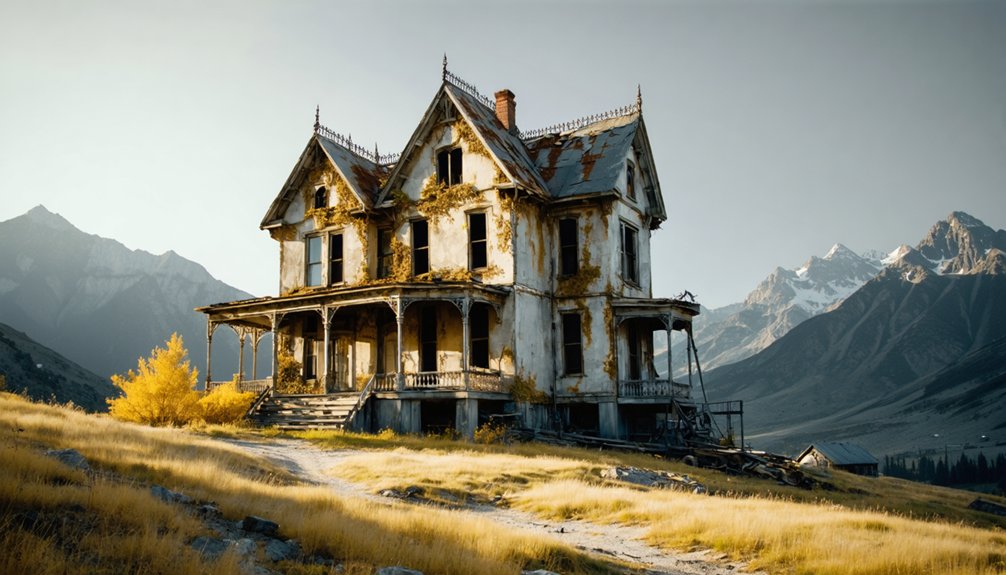
When the California Gold Rush erupted in 1848, it sparked a nationwide fever that would transform the American West into a landscape dotted with Victorian-era boomtowns.
Today, you’ll find these skeletal remains scattered across western states like Nevada, Montana, and Colorado—physical remnants of America’s mineral-driven expansion. Ghost town architecture reflects the Victorian period, with characteristic wooden false fronts, ornate storefronts, and utilitarian structures built hastily during boom times.
Towns like Bodie, California and Virginia City, Montana stand frozen in “arrested decay,” preserving authentic mining community history. Bodie was eventually shut down during World War II as part of restrictions on non-essential gold mines.
What makes these places remarkable is how quickly they rose and fell. A town could explode from nothing to 10,000 residents, only to empty just as dramatically when gold veins ran dry. Many towns, like Rhyolite in Nevada, became popular Hollywood filming locations due to their well-preserved structures.
These abandoned settlements now serve as open-air museums of America’s restless, fortune-seeking spirit.
Forgotten Mill Villages: Industrial Remnants of the American South
While the ghost towns of the West emerged from the frenzied pursuit of gold, the South’s abandoned Victorian communities tell a different story of American ambition.
Following the Civil War, textile barons built self-contained worlds near rivers where water power could drive their machines. You can still find these remnants—characterized by distinctive mill village architecture including saltbox homes, company stores, and brick factories.
These weren’t just workplaces but complete social ecosystems. Worker community dynamics revolved around company control—families migrated from failing farms, worked alongside their children, and used company scrip at company stores. Among these historic sites is the Banning Mills Industrial Archaeological District, which was one of the first locations in Georgia to have electric lights installed in 1888. The Glenco Textile Manufacturing Company in Burlington, North Carolina stands as another significant example where Confederate veterans found employment in the mills, contributing to the region’s post-war economic recovery.
Rural Decline: Lesser-Known Victorian Town Ruins Across America
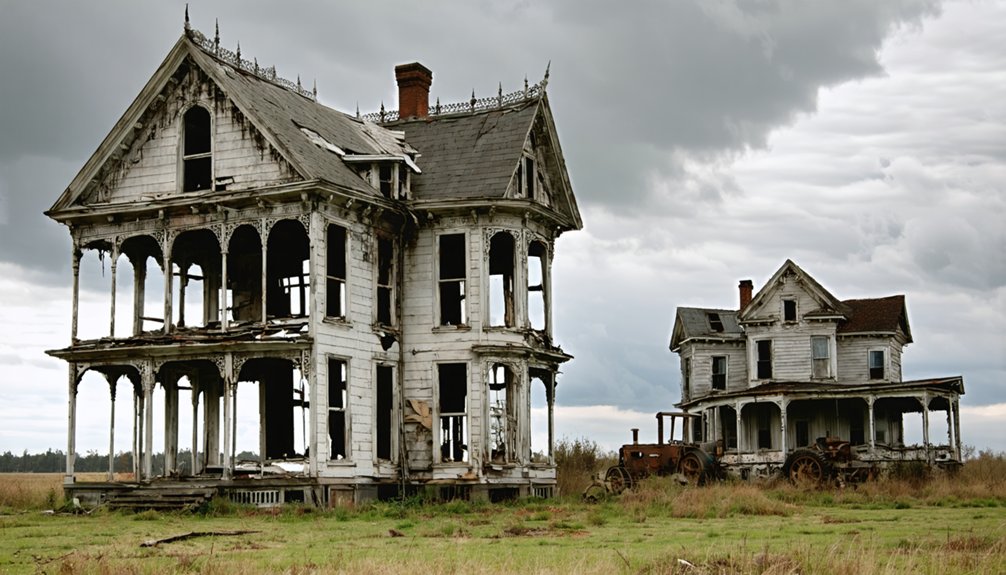
Beyond the famous ghost towns of the American West lies a forgotten landscape of Victorian-era communities slowly returning to nature across rural America.
These brick structures, built between 1830-1880, stand silently alongside major highways, their architectural decay telling stories of rural abandonment that few travelers notice.
Unlike documented historic sites, these lesser-known ruins often lack proper historical records:
- Abandoned Victorian homes with distinctive aged brick construction visible to thousands of daily commuters
- Former railroad towns with intact main streets featuring general stores and post offices now consumed by vegetation
- Residential areas containing houses and vintage vehicles abandoned decades ago as communities lost economic purpose
Many such sites include mill villages that once operated with workers enduring twelve-hour shifts six days a week, leaving behind architectural remnants of America’s industrial past. Similar to the Dunnington Mansion in Farmville, these structures represent significant Victorian architectural styles now falling into disrepair.
What makes these sites remarkable is their invisibility in plain sight—architectural treasures deteriorating while America rushes past, their stories untold in official histories.
Steel and Coal: The Abandoned Industrial Landscapes of Victorian America
In America’s industrial heartland, you’ll find the crumbling remnants of Victorian-era steel mills and coal mines standing as silent monuments to a bygone economic powerhouse.
The landscape is punctuated by broken chimneys rising above abandoned company towns where workers once lived within walking distance of their labor, now connected only by rusted rails and forgotten railway stations.
These industrial ruins tell a complex story of American prosperity, technological innovation, and eventual economic devastation as manufacturing centers that once defined entire regions were systematically abandoned. Bethlehem Steel Plant, with its preserved blast furnaces that once helped build iconic American bridges and battleships, now offers visitors a tangible connection to this industrial heritage. Among these historic sites, Delaware’s old powder mill, transformed by Louise du Pont Crowninshield with carefully constructed pools and gardens, represents a rare example of horticultural revival within industrial ruins.
Broken Chimneys, Silent Mills
The abandoned silhouettes of America’s industrial might stand as stark monuments to a vanished Victorian era of manufacturing dominance.
As you explore these broken chimneys and silent mills, you’ll witness how manufacturing employment plummeted from 28% to 18% between 1970 and 1994, leaving 40-acre industrial complexes crumbling into ruins.
These decaying landscapes tell stories of economic devastation:
- Skeletal smokestacks pierce gray skies above cavernous halls once alive with innovation, now filled with rusted metal and shattered glass.
- Coal breakers stand abandoned throughout Pennsylvania’s anthracite region, representing the collapse of entire communities.
- Vast empty factory floors have transformed into magnets for urban explorers, with assembly lines frozen in time.
This industrial deterioration symbolizes freedom lost and awaiting reclamation in America’s forgotten Victorian industrial villages. Many of these abandoned sites now provide unexpected refuges for diverse wildlife amidst the surrounding urban decay. The Fisher Body Plant 21 in Detroit, once producing over 370,000 auto bodies annually, stands as a prominent example of American ruins reflecting our dedication to industrial innovation.
Company Towns Now Empty
America’s iconic company towns, once thriving hubs of industrial activity, now stand as haunting reminders of Victorian-era capitalism’s rise and fall. You can witness this industrial legacy in places like Segundo, Colorado, abandoned after a devastating 1929 fire, or Lynch, Kentucky, where 10,000 residents dwindled to a fraction as coal demand collapsed.
The company town decline accelerated during the Great Depression and New Deal era, when government policies undermined paternalistic corporate control. Towns like Blue Heron and Cass transformed from economic centers to recreational parks, preserving their historical significance while shedding their original purpose.
As transportation improved and regional economies developed, these once-isolated communities lost their reason for existence.
Today, you’ll find rows of identical houses, boarded storefronts, and crumbling infrastructure—physical testimony to America’s industrial past.
Rusted Rails, Forgotten Stations
Beneath the overgrown vegetation and decades of rust, Victorian-era industrial landscapes tell stories of America’s rapid expansion and subsequent contraction. Following abandoned railroad tracks, you’ll discover over 200,000 miles of iron pathways laid between 1860-1900, many now silent monuments to railroad nostalgia.
These rusted rails connect to forgotten stations where architectural decay transforms once-grand terminals into haunting time capsules.
- Abandoned rural stations feature original ticket windows and waiting rooms, their wooden structures slowly returning to earth.
- Ornate urban terminals like Cincinnati’s Union Station showcase Victorian ambition through ironwork and stained glass.
- Repurposed corridors like the High Line and Great Allegheny Passage offer freedom to experience these industrial artifacts.
Victorian-era bridges and tunnels stand as solitary sentinels, marking pathways that once connected a nation now memorialized by rust and remembrance.
Borscht Belt Grandeur: Decaying Victorian Resort Architecture
Standing as elegant skeletons amid overgrown Catskill landscapes, the abandoned Victorian-style resorts of the Borscht Belt offer a haunting glimpse into America’s once-thriving Jewish vacation culture.
When you explore these ruins, you’re witnessing the Architectural Evolution from modest boardinghouses to sprawling resort complexes.
These grand structures—featuring imposing facades, sweeping verandas, and massive ballrooms—embodied Jewish entrepreneurial resilience against discrimination.
Ornate columns and crystal chandeliers stood as defiant symbols of success against a backdrop of exclusion.
The Borscht Belt’s architectural legacy spans Victorian influences and mid-century resort design, with properties like Grossinger’s and The Concord boasting thousands of dining seats and Olympic pools.
Today, their crumbling walls tell a complex story of cultural adaptation and eventual obsolescence as air travel expanded and antisemitism diminished.
These decaying monuments to leisure capture a pivotal chapter in American Jewish history that flourished, then faded, leaving only architectural ghosts behind.
Lost in the Woods: Isolated Victorian Villages Reclaimed by Nature
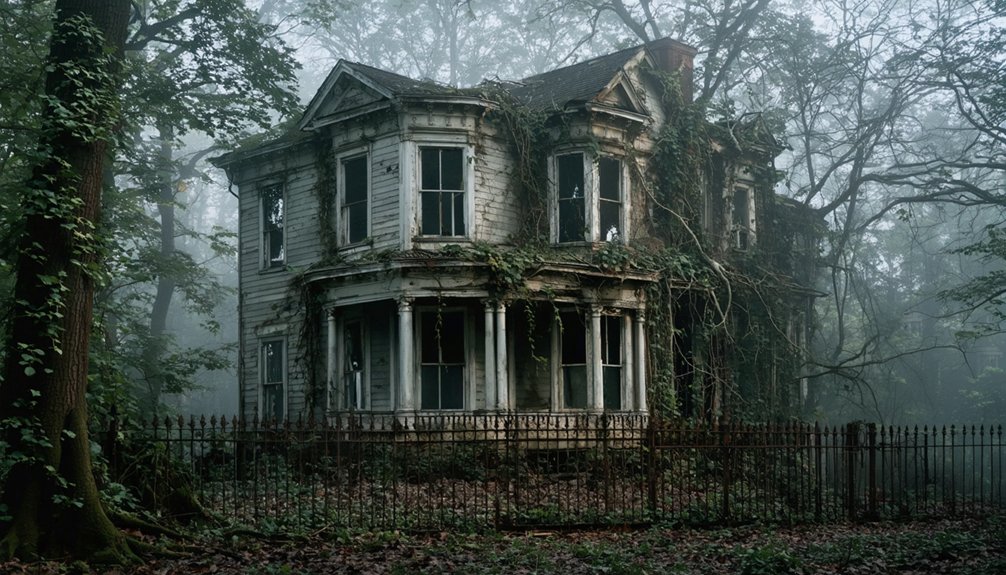
You’ll find America’s forgotten Victorian mill villages hidden beneath forest canopies, where nature systematically reclaims what industry abandoned.
These isolated settlements reveal their presence through glimpses of boxy wood-frame houses, church steeples, and mill silos partially consumed by aggressive vegetation.
The ruins stand as ecological transformations where vines strangle facades, roots fracture foundations, and wildlife establishes dominance in spaces where industrial communities once thrived.
Hidden Victorian Settlements
Deep within America’s forests and rural landscapes, remnants of the Victorian era lie quietly hidden, slowly surrendering to nature’s persistent reclamation.
These forgotten settlements—with their ornate woodwork, steeply pitched roofs, and decorative trim—tell hidden histories of America’s industrial expansion and subsequent economic decline.
You’ll find these architectural treasures in remote locations where they once thrived near natural resources:
- Bodie, California, with over 100 preserved Victorian structures abandoned after the gold rush
- Thurmond, West Virginia, a railroad town whose Victorian homes now merge with surrounding forest
- Terlingua, Texas, where Victorian mining structures stand defiant against desert encroachment
Most settlements vanished after resource depletion, transportation route changes, or natural disasters.
Their architectural significance remains frozen in time—communal spaces and private homes alike reflecting the pride of communities that once flourished in America’s transformational era.
Nature’s Secret Takeover
As time silently marches forward, nature’s methodical reclamation transforms once-thriving Victorian villages into hauntingly beautiful ruins across America’s forgotten landscapes.
You’ll witness nature’s resilience firsthand—ivy strangling brick facades, moss carpeting collapsed rooftops, and saplings bursting through floorboards.
This urban reclamation happens methodically: wooden structures rot from persistent moisture, while foundations crack under advancing root systems.
Wildlife completes this transformation by establishing new ecosystems within these human remnants. Birds nest in rafters while mammals claim abandoned rooms as dens.
Preservation faces overwhelming challenges. Remote locations and prohibitive costs guarantee most sites remain surrendered to wilderness.
Each passing season further obscures these Victorian settlements as vegetation envelops buildings until they’re nearly invisible—hidden relics of America’s past gradually dissolving back into the landscape from which they arose.
Preservation Challenges: Saving America’s Abandoned Victorian Heritage
The silent crumbling of America’s abandoned Victorian villages represents one of the most pressing heritage conservation challenges facing preservationists today.
You’ll find these efforts hampered by fragmented ownership and unclear titles creating legal hurdles that thwart coordinated restoration attempts. Without adequate community involvement, these ornate structures continue deteriorating while preservation advocates battle development interests.
The primary obstacles include:
- Financial constraints: specialized restoration skills and materials exceed typical budgets
- Environmental factors: weather damage, vegetation encroachment, and potential contamination
- Ownership complications: private property rights versus public heritage value
The path forward requires balancing historical integrity with modern functionality.
Successful preservation often emerges through adaptive reuse projects that transform these architectural treasures into economically viable spaces while honoring their historical significance—though finding this balance remains exceptionally difficult.
Frequently Asked Questions
How Can I Legally Explore Abandoned Victorian Ruins?
For legal urban exploration, obtain written permissions from property owners, join sanctioned historical society tours, research public access sites, and carry documentation of your legal permissions during visits.
Do Paranormal Investigators Regularly Visit These Abandoned Villages?
Echoing footsteps in crumbling hallways, you’ll find paranormal investigators frequently visit these sites. Ghost hunting teams and urban exploration groups regularly document Victorian ruins, seeking evidence of spiritual activity amid historical decay.
As they venture deeper into the eerie landscapes, the allure of ghost towns of the American West draws them further into the past. Each abandoned building stands as a testament to a bygone era, with stories etched into the walls waiting to be uncovered. The haunting silence is often punctuated by the rustling of leaves, reminding explorers that nature is slowly reclaiming these once-thriving communities.
What Valuable Artifacts Have Been Recovered From These Sites?
You’ll find European antiques, Victorian furnishings, period dishware, and family heirlooms of significant artifact significance. These items provide critical historical context about America’s industrial development and immigrant cultural heritage.
Which Abandoned Victorian Villages Are Safest for Family Visits?
Bodie, California and Virginia City, Nevada are the most family friendly locations with ranger oversight, maintained pathways, and strong historical preservation efforts ensuring safety while respecting your freedom to explore.
Can I Purchase Abandoned Victorian Properties for Restoration?
Yes, you can acquire these historical gems, but you’ll face significant renovation costs and ownership hurdles. Explore restoration grants from historical societies and government programs to offset your investment while managing preservation requirements.
References
- https://www.wideopencountry.com/the-10-eeriest-ghost-towns-in-america/
- https://www.youtube.com/watch?v=BxnmkrlX6vE
- https://www.atlasobscura.com/things-to-do/united-states/abandoned
- https://www.youtube.com/watch?v=inRD6vYBy8M
- https://www.youtube.com/watch?v=ONtJ-QTcMWo
- https://www.atlasobscura.com/articles/the-lovely-ruins-of-america-s-borscht-belt
- https://www.youtube.com/watch?v=Qy9ZpNzLS20&vl=es
- http://www.hudsonvalleyruins.org/yasinsac/links1.html
- https://www.loveexploring.com/gallerylist/67994/americas-eeriest-gold-rush-ghost-towns
- https://www.geotab.com/ghost-towns/