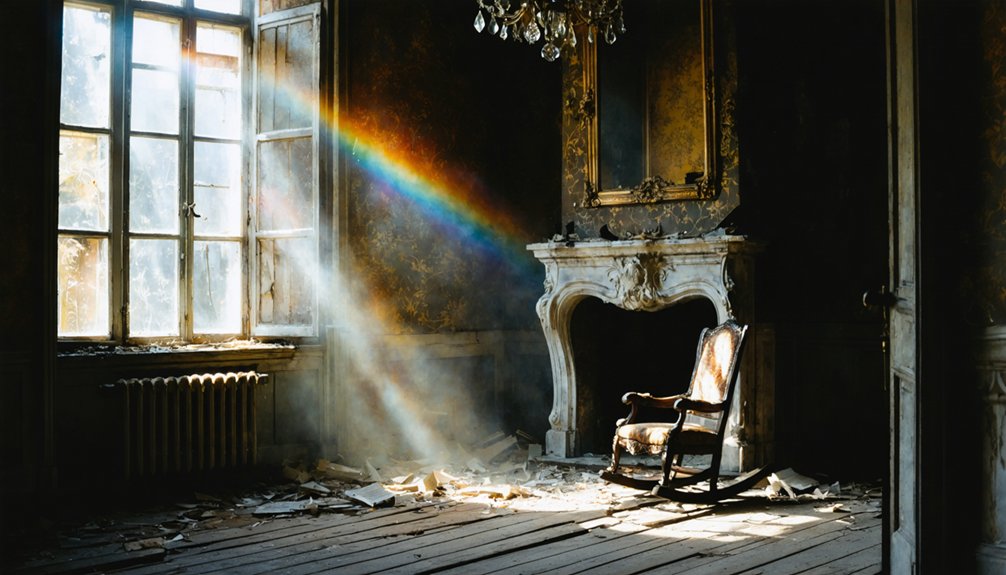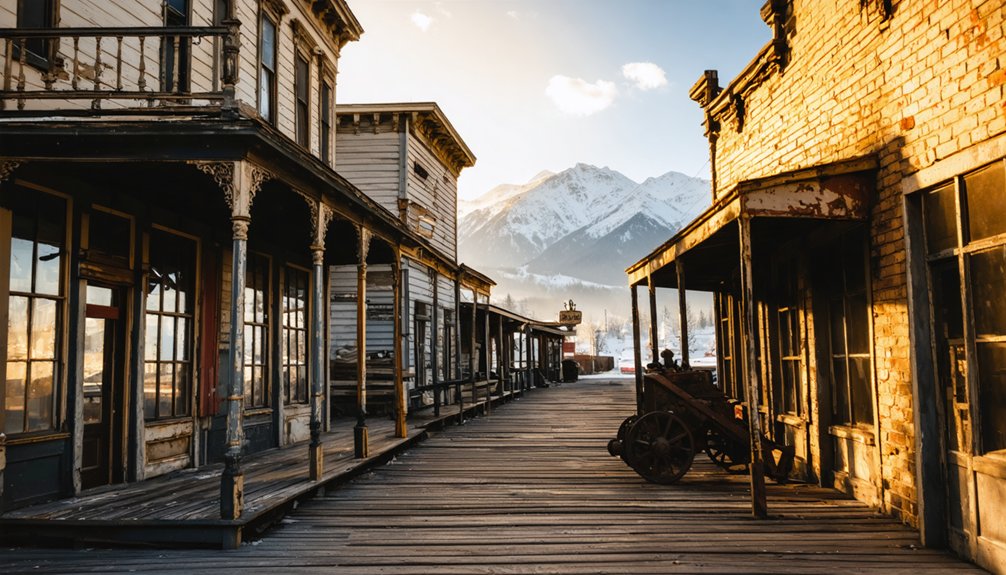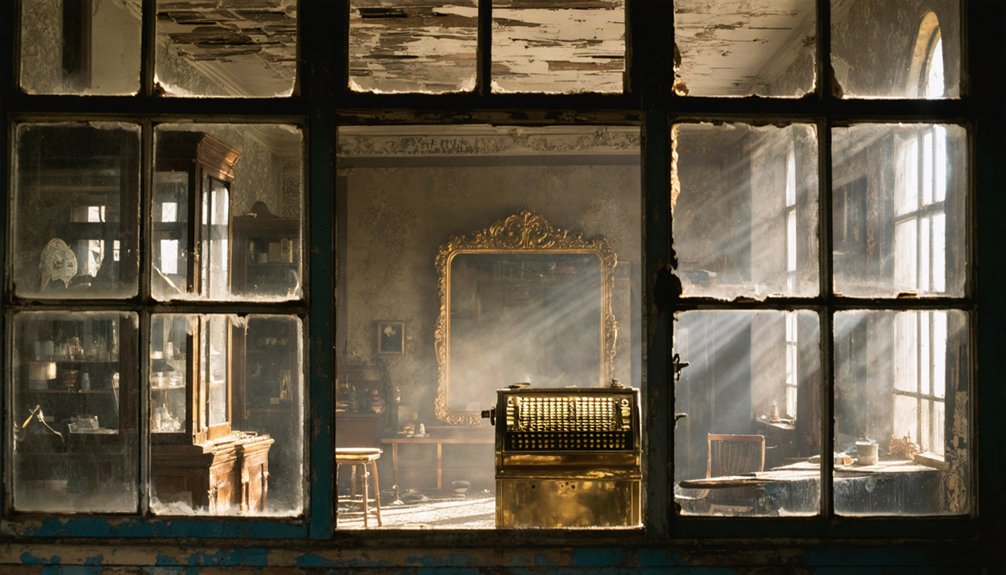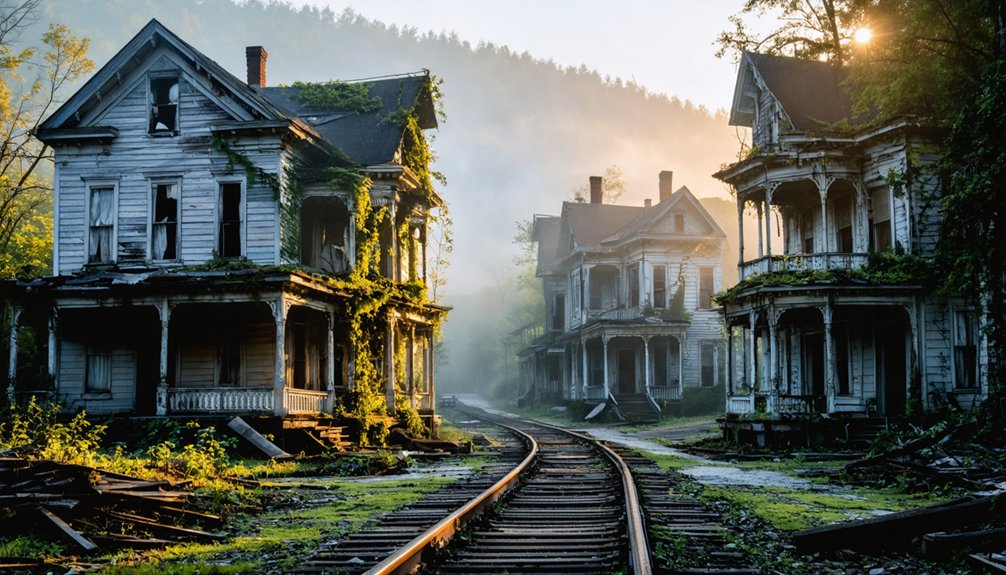
You’ll find numerous abandoned Victorian villages across America, from Western ghost towns like Bodie, California and St. Elmo, Colorado to New England’s forgotten mill complexes in Rhode Island and Connecticut. These time capsules showcase 19th-century architecture in various states of “arrested decay.” Economic collapse, resource depletion, and transportation shifts led to their abandonment. Many now serve as National Historic Landmarks where the stories of America’s industrial and frontier past await.
Key Takeaways
- Bodie, California features over 100 preserved Victorian structures maintained in “arrested decay” as a time capsule of frontier history.
- New England contains numerous abandoned mill villages with Victorian-era factories, worker housing, and community buildings.
- Virginia City, Nevada preserves Victorian architecture and remnants of the 1859 Comstock Lode silver mining boom.
- St. Elmo, Colorado remains largely intact since the 1920s with original Victorian buildings available for self-guided exploration.
- Garnet, Montana offers approximately 30 preserved Victorian-era buildings popular for ghost town photography and tourism.
The Historic Ghost Towns of the American West
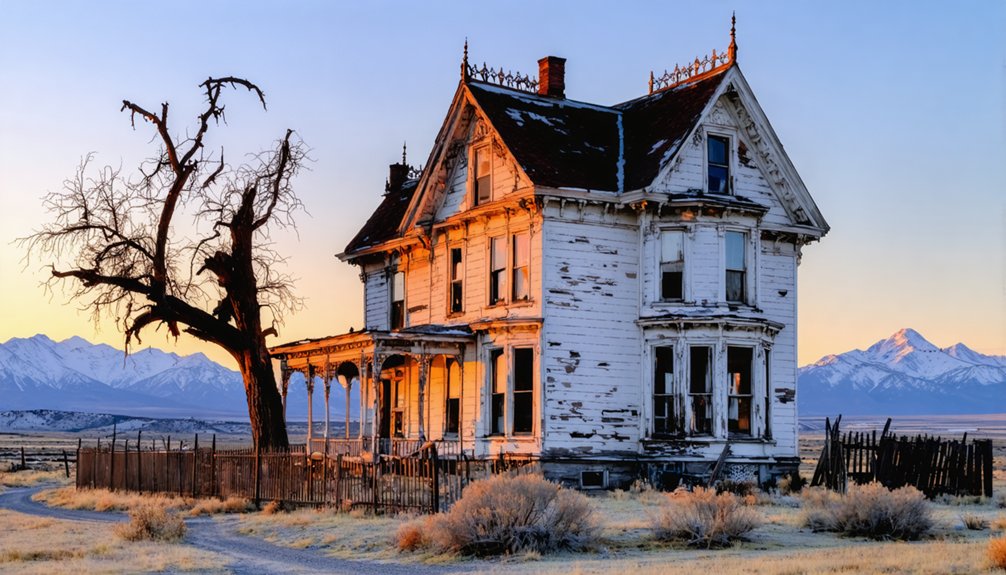
While America’s modern cities continue to grow and transform, the American West holds a unique collection of Victorian-era ghost towns that stand as remarkable time capsules of the nation’s frontier past.
Amid America’s urban evolution, the West’s abandoned Victorian settlements freeze frontier history in haunting perfection.
You’ll find places like Bodie, California, with over 100 structures maintained in “arrested decay,” and St. Elmo, Colorado, where wooden buildings remain largely intact since its abandonment in the 1920s.
For enthusiasts of ghost town photography, locations like Garnet, Montana offer approximately 30 preserved buildings amid rugged terrain.
Mining history comes alive in South Pass City, Wyoming and Bannack, Montana, where dozens of original structures—from saloons to schoolhouses—remain accessible for self-guided exploration. Virginia City, Nevada established after the discovery of the Comstock Lode in 1859, preserves remnants of its silver mining glory days.
Visitors to Rhyolite, Nevada can observe the striking contrast between abandoned early 20th century structures and modern art installations that now occupy the landscape.
These remote Victorian villages provide an unfiltered glimpse into America’s boom-and-bust mining heritage, free from modern intrusions.
Abandoned Mill Villages of New England
Beneath the seemingly idyllic landscape of New England lies a forgotten industrial legacy in the form of abandoned mill villages that once thrived as centers of textile production during the Victorian era.
These company towns declined dramatically as manufacturing shifted south or overseas during the early to mid-20th century, leaving behind remarkable examples of mill architecture amid economic decline. The Valley Falls Mill in Central Falls ceased operations in 1930 and was among the earliest conversions to residential housing in New England when it was transformed into senior housing in 1979.
One such example in Eastern Connecticut showcases a sprawling mill complex that once employed up to 1,200 workers but was abandoned following labor disputes in the mid-1930s.
When exploring these abandoned industrial communities, you’ll find:
- Large brick or stone factory complexes strategically positioned along waterways that once powered the machinery
- Remnants of complete villages including worker housing, company stores, and community buildings
- Sites in various states of preservation—from crumbling ruins reclaimed by nature to partially renovated structures adapted for modern residential or commercial use
Preservation Efforts and National Heritage Sites
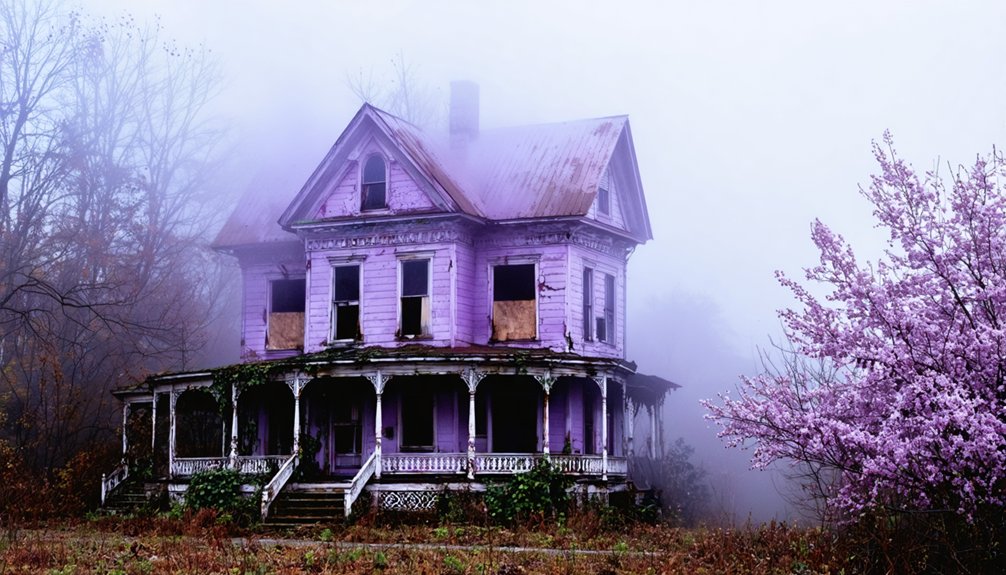
As these once-vibrant New England mill communities fell into decline, a dedicated network of preservationists has emerged to prevent their complete disappearance from America’s landscape.
You’ll find grassroots community advocacy groups documenting these architectural treasures through photography and video, raising public awareness of their historical significance. Some villages have secured protection through National Historic Landmark designations, though restoration challenges persist.
Financial constraints remain the most significant obstacle, with high restoration costs deterring potential investors. Environmental degradation accelerates structural deterioration while regulatory hurdles delay critical preservation work. The Abandoned Dunnington Mansion exemplifies the urgent need for intervention, with its dilapidated Victorian architecture slowly crumbling on an otherwise maintained golf course. These abandoned homes often create poignant time capsules of family histories, with personal belongings left behind telling stories of their former occupants.
Despite these challenges, adaptive reuse offers promising solutions, with some Victorian structures finding new life as museums or community centers. Federal grants occasionally support these efforts, though they’re frequently hindered by private ownership issues and competing development priorities.
Why These Once-Thriving Communities Were Left Behind
The collapse of America’s Victorian villages resulted from complex, interwoven factors that systematically dismantled their economic foundations. When you examine the historical record, you’ll find economic collapse often began with resource depletion in single-industry towns built around mining, logging, or manufacturing.
America’s Victorian villages fell victim to resource exhaustion, leaving ghost towns where single-industry communities once thrived.
Transportation shifts further isolated communities as new highways and rail lines bypassed once-bustling centers of commerce. Centralia, Pennsylvania stands as a stark example where underground mine fires have continuously burned since the 1960s, making the area uninhabitable. Similar to these abandoned communities, many Victorian mansions like the one built in 1903 were left to decay when their original owners died without succession plans in place.
- Victorian-era villages like Nuttallburg, West Virginia suffered triple blows from coal resource depletion, devastating flash floods, and reduced rail traffic along the Chesapeake and Ohio Railroad.
- Environmental hazards, including mine fires and contaminated water sources, rendered some communities physically uninhabitable.
- Demographic changes accelerated abandonment as younger generations sought opportunities in cities, leaving aging populations unable to sustain essential services.
Exploring America’s Victorian Past Through Tourism
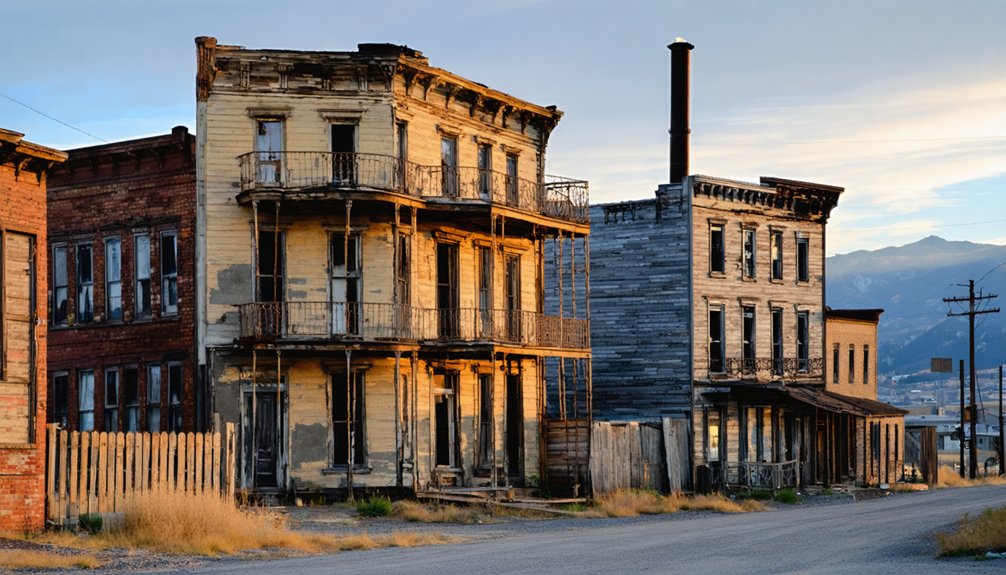
Exploring abandoned Victorian villages has emerged as a distinctive niche in American heritage tourism, offering visitors immersive encounters with the nation’s industrial past.
abandoned victorian villages in america often draw history enthusiasts and photographers, eager to capture their haunting beauty. These locations, steeped in rich stories of once-thriving communities, offer a glimpse into a time when architecture reflected the aspirations and creativity of their inhabitants. Visitors can wander through crumbling structures, each telling its own tale of glory and decline amid the passage of time.
You’ll find destinations like Coleridge, North Carolina, where an abandoned mill showcases preserved Victorian architecture, and the Mohawk Valley’s cluster of forsaken structures in Little Falls, Herkimer, and Ilion.
Tourism activities range from guided historical tours to urban exploration and photography sessions documenting architectural details and decay.
Many sites host seasonal events like ghost tours at Edinburgh Manor, a former Victorian-era asylum in Iowa.
Little Falls features many buildings on the National Register of Historic Places, making it a prime example of beautiful decay with historical significance.
The remarkable condition of these sites often includes original woodwork and architectural features that have remained intact despite years of abandonment.
Preservation efforts through historical societies and adaptive reuse projects guarantee these architectural treasures remain accessible.
When you visit these sites, you’re not just witnessing history—you’re supporting ongoing restoration initiatives that keep America’s Victorian legacy alive.
Frequently Asked Questions
Can You Legally Live in an Abandoned Victorian Village?
You can’t legally occupy abandoned Victorian villages without securing property rights first. Historical preservation regulations often require permits and compliance with restoration standards before establishing legal residency.
How Are Forgotten Victorian Artifacts Handled When Discovered?
When you discover Victorian artifacts, they’re typically cataloged by historical societies, facing restoration challenges due to deterioration. Museums acquire significant pieces, while preservation specialists document them through photography and 3D scanning for future research.
What Paranormal Activity Is Reported in These Villages?
You’ll encounter shadow figures, Victorian apparitions, and unexplained sounds in these villages. Their haunted history includes ghost sightings near windows, cold spots, and voices—phenomena often tied to tragic evictions or labor conditions.
Are There Underwater Victorian Settlements in America?
Yes, you’ll find several Victorian-era settlements underwater in America. Robinette (Oregon), Detroit (Oregon), and St. Thomas (Nevada) offer rich opportunities for underwater exploration of this submerged history dating from the 1800s.
Which Abandoned Victorian Villages Are Available for Purchase?
Ever dream of owning history itself? You’ll find few complete Victorian villages for purchase, though individual mansions like Markey in Ohio occasionally enter markets requiring significant restoration projects under historical preservation guidelines.
References
- https://www.loveexploring.com/gallerylist/131658/abandoned-in-the-usa-92-places-left-to-rot
- https://www.geotab.com/ghost-towns/
- https://devblog.batchgeo.com/ghost-towns/
- https://www.youtube.com/watch?v=T0GdldWhOHI
- https://www.americansky.co.uk/travel-inspiration/top-10-wild-west-towns-in-america
- https://www.youtube.com/watch?v=oBQbJr1FE5k
- https://en.wikipedia.org/wiki/Lists_of_ghost_towns_in_the_United_States
- https://www.atlasobscura.com/lists/americas-best-preserved-ghost-towns
- https://www.tripadvisor.com/Articles-loOISRppph64-American_ghost_towns.html
- https://gritoverland.com/top-10-ghost-towns-to-visit-in-the-american-west/