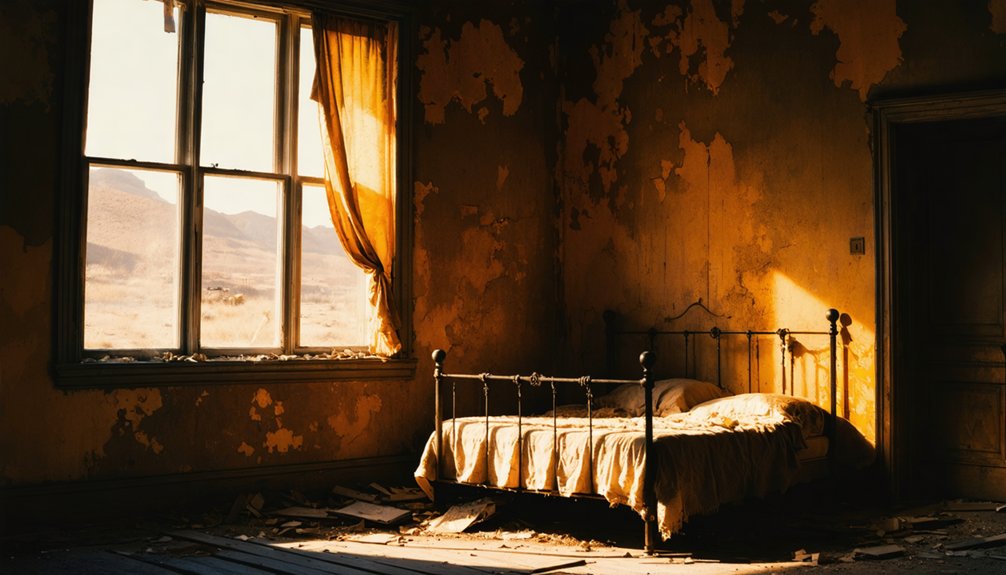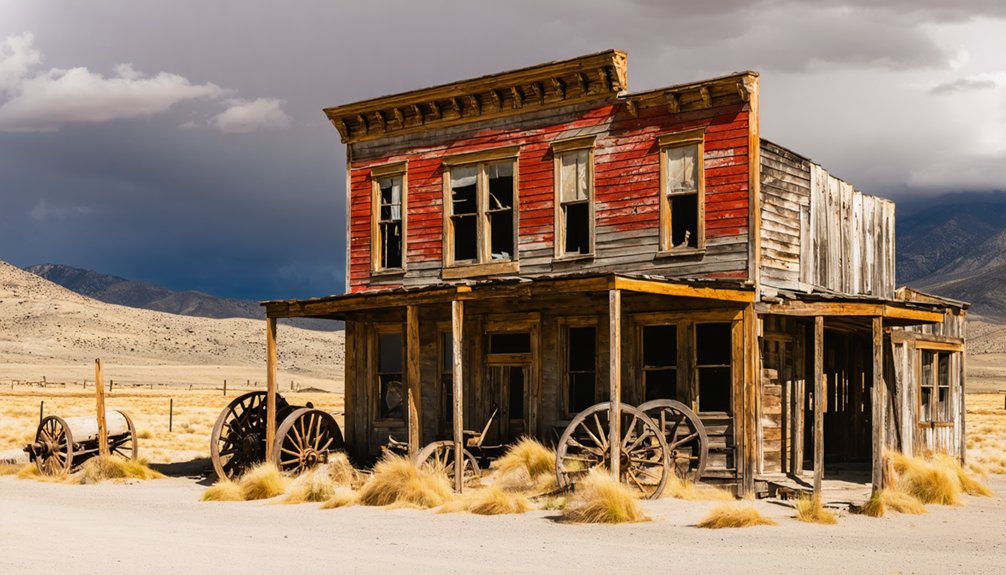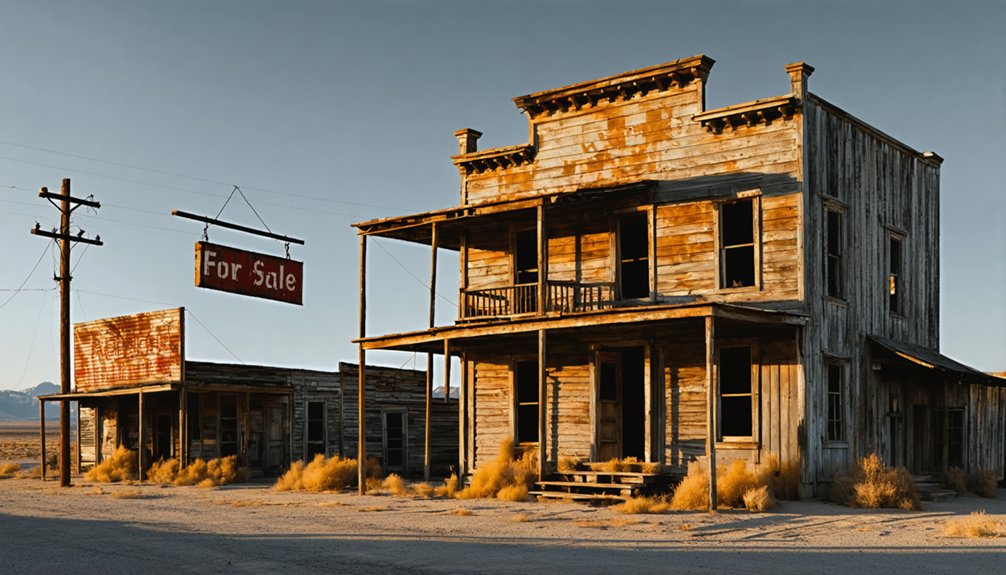
You’ll find numerous ghost towns for sale across the U.S. and internationally, with current listings ranging from $50,000 parcels to multi-million dollar historic properties. The Southwest and Mountain West dominate the U.S. market, particularly in California, Nevada, and Texas. Recent high-profile sales, like a $22.5M California desert town in 2023, show strong investor interest. Understanding property classifications, restoration costs, and regulatory requirements will help you navigate this unique real estate segment.
Key Takeaways
- Ghost towns are actively listed for sale across the USA, with prices ranging from $50,000 to over $10 million.
- Notable current listings include Villa de la Mina in Texas ($1.2M-$1.95M) and Cerro Gordo-adjacent parcels in California ($99,000).
- The Southwest and Mountain West regions, particularly California, Nevada, and Texas, offer the most ghost town properties.
- International ghost town opportunities exist in Europe, including €1 houses in Italy and multi-million-pound properties in Switzerland.
- Entry-level ghost towns under $100,000 are available in the Midwest and Plains states for investors with modest budgets.
What Defines a Ghost Town Property
While many people envision a ghost town simply as an abandoned settlement, the formal definition encompasses specific criteria that distinguish these unique properties in the real estate market.
You’ll find these properties typically feature substantial remaining infrastructure, including standing buildings, roads, and foundations that hint at their former significance. The key markers include a dramatic population decline to few or no inhabitants, along with the cessation of the economic activities that once sustained the community.
Common abandonment causes range from exhausted mining operations and failed agricultural ventures to natural disasters and shifting transportation routes. Many ghost towns emerged when primary industries became unprofitable, forcing residents to seek opportunities elsewhere. In Oregon, settlements are officially classified as ghost towns when they lack a sufficient electorate to maintain governance.
From barren mines to abandoned farms, towns fade into history when their economic lifelines run dry or disaster strikes.
When you’re evaluating ghost town properties, you’ll need to take into account their legal status, which can involve complex ownership records, zoning restrictions, and historic preservation requirements that may affect potential development or restoration plans.
Current Ghost Town Listings in the USA
Current listings in the U.S. ghost town market range from $50,000 parcels to multi-million-dollar properties.
Market analysis shows notable offerings like Villa de la Mina in Texas, listed between $1.2M-$1.95M, featuring 62 acres and 20+ buildings. You’ll find more affordable options like the $99,000 Cerro Gordo-adjacent parcel in California’s Owens Valley.
The Southwest and Mountain West dominate the market, with California, Nevada, and Texas leading available inventory. The Colorado Mountain Haven property offers 305 pristine acres with historic mining claims. Many of these towns are former mining or railroad hubs that declined when local industries collapsed.
Montana showcases unique offerings like Frontier Town, which sold in early 2025, while South Dakota’s Swett property, including a tavern and residence, has been available around $250,000.
A significant 2023 California desert town sale at $22.5M demonstrates the market’s high-end potential.
International Ghost Town Properties
Beyond the American frontier, the international ghost town market presents diverse opportunities spanning Europe, Australia, and beyond.
You’ll find properties ranging from a £3.6 million off-grid outpost in Switzerland to €1 houses in Italian villages seeking rural revitalization. New Zealand’s Mellonsfolly Ranch offers an authentic replica of an 1860s Wyoming frontier town. Significant international investments include historic Italian Borgos near Siena, complete with manor houses and extensive acreage, and Portuguese hamlets awaiting creative development.
For turnkey options, consider Scotland’s Loch Lomond lodge resort or Sweden’s holiday village featuring a boutique hotel and marina across 498 hectares. The stunning Grand Designs featured treehouse eco-village in England showcases award-winning sustainable living spaces.
Australia offers luxury wellness compounds, while Spain presents entire villages with Pyrenean views. Ireland’s portfolio includes income-generating properties with pubs and apartments.
These international ghost towns provide varying entry points for investors seeking both preservation projects and ready-to-operate ventures.
Price Categories and Market Trends
Despite the wide-ranging nature of ghost town properties, distinct price categories have emerged in today’s market.
You’ll find entry-level opportunities under $100,000 in the Midwest and Plains, while mid-tier historic towns typically range from $500,000 to several million. Premium properties with significant infrastructure can exceed $10 million.
Ghost town pricing largely depends on proximity to population centers, utility access, and legal status. Recent market fluctuations show increased investor interest driving high-profile sales, while rural depopulation maintains a steady supply of affordable options.
You’ll notice tourism trends pushing prices higher for accessible locations, as buyers convert properties into resorts and event spaces. Texas markets like Pecos have seen rising vacancy rates create new ghost town conditions, with rental vacancies now exceeding 20%.
The 2024-2025 housing slowdown has created new “ghost town” scenarios in some suburban areas, expanding available inventory and creating unique investment opportunities. In Arizona, formerly vibrant communities have seen median prices drop 15-25% as neighborhoods experience high vacancy rates.
Popular Ghost Town Locations
You’ll find the highest concentration of available ghost town properties in Western states like California, Arizona, and Colorado, where historic mining operations left behind unique real estate opportunities ranging from $70,000 to $1.6 million.
While European village estates like Bridgeville command premium prices near $1.2 million, desert ghost properties in regions like Death Valley and Texas’s Lajitas offer distinctive features including mining claims and tourist infrastructure.
The market shows particular strength in Arizona’s Turquoise District and Montana’s frontier regions, where properties often combine historic structures with modern amenities for commercial ventures. Successful buyers often start with single historic buildings before expanding their town ownership portfolio. Notable ghost towns like Cerro Gordo showcase successful restoration projects that transform abandoned mining sites into thriving tourist destinations.
Western Mining Towns
While numerous ghost towns dot the American landscape, Western mining settlements represent the most commercially viable opportunities in today’s real estate market.
You’ll find the highest concentration in Nevada, where silver and gold boom towns regularly appear for sale. Colorado offers former mining camps with intact adits and processing facilities, while California features abandoned company towns with historic structures.
If you’re interested in mining heritage and ghost town tourism, consider West Texas properties like Villa de la Mina, which comes with existing tourism infrastructure.
Montana and Arizona occasionally list entire frontier settlements as turnkey B&B operations. Prices typically range from mid-six figures to several million dollars, with values driven by standing structures, utilities, mineral rights, and proximity to tourist attractions.
European Village Estates
European ghost towns represent a distinct market segment, offering historic properties steeped in centuries of culture and dramatic narratives.
You’ll find diverse acquisition opportunities, from Italy’s earthquake-ravaged Craco and Balestrino, showcasing classic European architecture, to Belgium’s industrially displaced Doel. Each location presents unique ghost town aesthetics and investment potential.
While some sites like France’s Oradour-sur-Glane remain preserved as memorials, others like Cyprus’s Varosha offer modernized beachfront infrastructure behind restricted zones.
The market varies from hilltop medieval villages to abandoned 20th-century resorts. Your investment options range from scientific research facilities to film locations, with properties available near major cities like Naples and Antwerp.
Consider factors like accessibility, preservation status, and local regulations when evaluating these historic European estates.
Desert Ghost Properties
Desert ghost towns across the American Southwest offer distinct investment opportunities at varying price points, from $99,000 to $1.95 million.
In California, you’ll find Cerro Gordo’s off-grid 62-acre parcel with mineral rights, while Arizona features multiple options including Dos Cabezas’ historic adobe structures and Pearce’s fully restored ghost town museum.
The Willcox property combines ghost town aesthetics with modern bed-and-breakfast amenities.
For larger-scale investors, Texas’ Villa de la Mina presents 62 acres of desert landscapes with 20 standing buildings from the silver mining era, complete with a pool and railroad track.
Each property maintains its unique character while offering potential for various uses – from desert retreats to commercial ventures like hotels or spas, letting you choose the level of development that matches your vision.
Types of Structures and Features
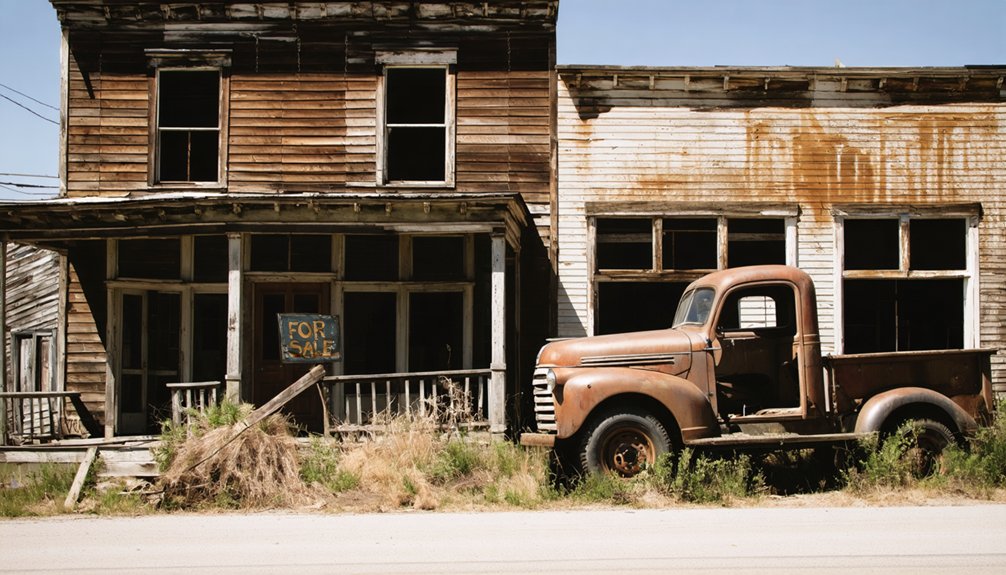
Ghost towns across America feature distinct structural classifications that help determine their market value and restoration potential.
When evaluating a ghost town property, you’ll encounter various levels of preservation, from barren sites with only foundations to well-preserved false front architecture typical of the 19th century. Mining features like headframes, adits, and bottle houses can greatly boost a property’s historical value and tourism potential.
Key structures you’ll find include original boardwalks, train depots, and in rare cases, miners’ union hospitals.
The most valuable properties often maintain concrete sidewalks and indoor plumbing infrastructure from their boom years.
Your investment options range from Class 1 barren towns requiring extensive archaeological work to Class 5B restored communities with functioning historic buildings and established tourism infrastructure.
Restoration and Development Potential
When evaluating a ghost town’s restoration potential, you’ll need to analyze three critical factors that determine feasibility and return on investment: market positioning, development costs, and regulatory requirements.
Recent ghost town sales range from $100,000 to several million dollars, depending on property size, existing structures, and development rights. Your restoration challenges will vary based on intended use and existing conditions.
- Structural stabilization costs typically run $50,000-500,000 per building, with historic preservation requirements potentially increasing expenses.
- Infrastructure development, including utilities and access roads, can exceed building restoration costs.
- Environmental remediation and permits may add significant unexpected expenses, especially for former mining sites.
- Development opportunities span multiple sectors: tourism, hospitality, private retreats, or film production locations.
Purchase Considerations and Challenges
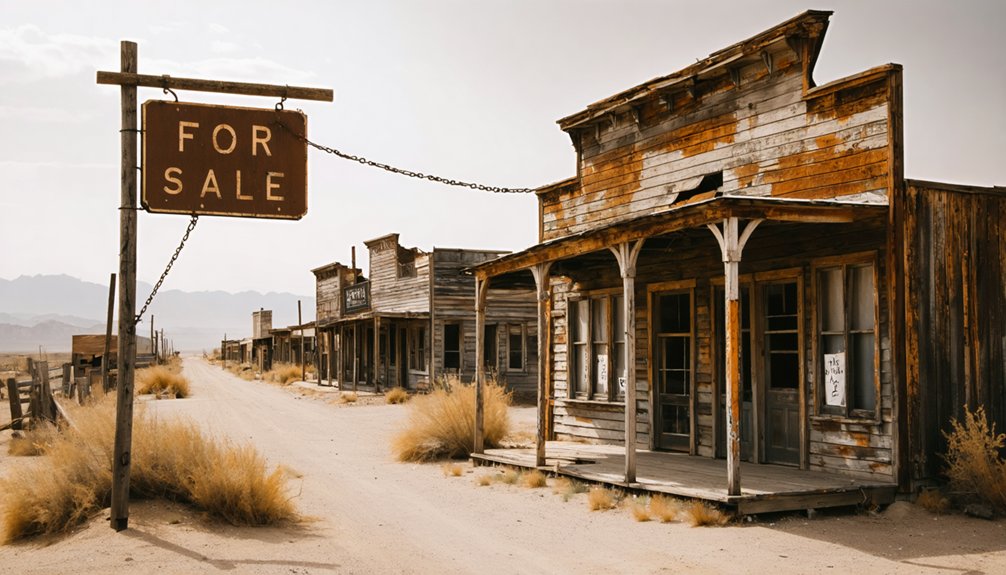
Before investing in a ghost town property, you’ll face substantial complexities that extend far beyond standard real estate transactions. Ownership verification often proves challenging due to unclear property titles from generational transfers and abandonment.
Ghost town investments come with daunting complexities, as tangled ownership histories and abandoned properties create murky legal territory.
You’ll need to navigate strict zoning laws, historical preservation regulations, and negotiate with multiple landowners across parcels.
Infrastructure presents major purchase challenges, as most ghost towns lack basic utilities. You’ll need significant capital for water systems, electricity connections, and sewage installations.
Banks typically view these as high-risk investments, making financing difficult. Insurance premiums remain elevated, while restoration costs can spiral to ten times initial estimates.
Consider the logistics of remote locations, including distance from supplies and weather vulnerabilities. Your success depends on long-term commitment and resilience against isolation factors.
Historical Significance and Value
American ghost towns represent billion-dollar historical assets shaped by three major economic forces: mining booms, political capitals, and industrial development between 1860-1940.
When you explore historical preservation opportunities in these abandoned settlements, you’ll discover how mining towns like Bodie and Virginia City created significant wealth centers that influenced modern population patterns.
Today’s tourism impact transforms these sites into valuable investment properties.
- Virginia City and Calico demonstrate successful historical preservation models, generating revenue through guided tours and museum operations.
- Sites like Cahawba showcase archaeological significance with preserved ruins and river port infrastructure.
- Mining boom towns offer authentic glimpses into America’s industrialization era and Wild West culture.
- Heritage tourism drives economic revival, with restored buildings and mines attracting global visitors seeking frontier experiences.
Frequently Asked Questions
Can I Start a Business in a Ghost Town Without Historical Preservation Restrictions?
You’ll need to carefully select a ghost town without National Register status or local preservation ordinances. Research business opportunities in unregulated zones where you’re free from historic district restrictions.
Are There Special Insurance Requirements for Owning an Abandoned Ghost Town?
Like an Old West gambler, you’ll need extensive insurance types beyond basic vacant land coverage. Your ghost town requires specialized liability coverage for historic structures, environmental hazards, and potential visitor accidents.
How Long Does the Average Ghost Town Property Stay on the Market?
You’ll find ghost towns typically remain listed 130+ days, far exceeding standard market trends. Their unique nature and declining property values in abandoned areas contribute to extended selling periods beyond 90 days.
Do Local Indigenous Tribes Have Any Claims on Ghost Town Properties?
Like layers of sediment in desert rock, tribal land claims run deep. You’ll need to research if the property has Indigenous property rights through federal treaties, reservation boundaries, or aboriginal title claims.
What Permits Are Needed to Conduct Paranormal Investigations in Purchased Ghost Towns?
You’ll need business licenses, special event permits, occupancy permits, and investigation regulations clearance for paranormal activities. Check local zoning laws regarding commercial ghost investigations and public assembly limits.
References
- https://sunrisecapitalgroup.com/would-you-buy-a-ghost-town-here-are-some-charming-options-for-brave-investors/
- https://www.loveproperty.com/gallerylist/51810/entire-villages-and-towns-for-sale-that-you-can-actually-buy
- https://trueparity.com/blog/real-estate-ghost-towns-invest-in-hidden-gems
- https://www.youtube.com/watch?v=ByFK4-CAbgs
- https://www.accio.com/biz-cheap/abandoned-towns-for-sale-cheap
- https://www.ezhomesearch.com/blog/towns-for-sale-in-the-usa/
- https://villageio.com/all-villages-and-ghost-towns-for-sale/
- https://www.mossyoakproperties.com/property/ghost-town-acres-cambria-pennsylvania/46000/
- https://oldhousesunder50k.com
- https://www.lindasellsmoore.com/blog/what-is-a-ghost-town/