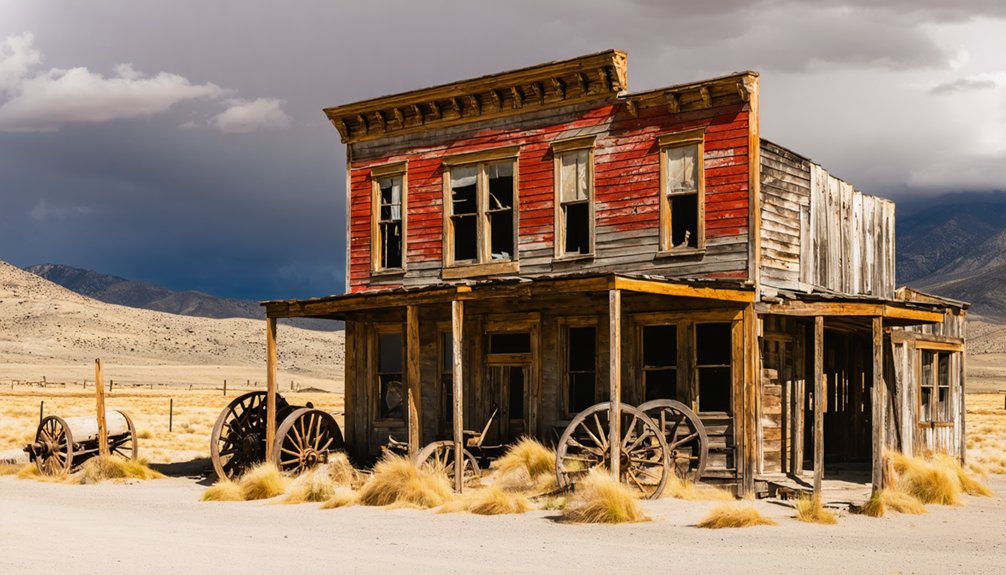
Yes, America has 3,800-4,530 documented ghost towns across all fifty states, with historians suggesting the actual number could reach 20,000. These abandoned settlements tell stories of boom-and-bust cycles in mining, agriculture, and transportation. Texas leads with 511 ghost towns, followed by California (346) and Kansas (308). You’ll find these time capsules preserved through “arrested decay” techniques, offering tangible connections to America’s dynamic past of resource extraction and economic reinvention.
Key Takeaways
- The United States contains between 3,800-4,530 documented ghost towns, though historians estimate the true number may reach 20,000.
- Texas leads with 511 documented ghost towns, followed by California (346) and Kansas (308).
- Ghost towns exist in virtually every state, with Oklahoma, Kansas, California, Florida, and South Dakota each having over 240.
- Famous American ghost towns worth visiting include Bodie (California), Virginia City (Nevada), St. Elmo (Colorado), and Terlingua (Texas).
- Ghost towns emerged primarily from economic decline, natural disasters, government intervention, and technological changes that rendered communities obsolete.
What Exactly Is A Ghost Town?
Desolation pervades the landscape of a ghost town, those haunting remnants of once-thriving communities that now stand as silent monuments to America’s economic and social transformations.
You’ll recognize these abandoned settlements by their substantial visible infrastructure—buildings, roads, and structures that whisper stories of bygone eras.
A true ghost town emerges when a community’s original reason for existence vanishes. The population dwindles until nearly everyone departs, leaving behind tangible evidence of human habitation. In Oregon, they are officially defined as incorporated cities that lack sufficient electorate to maintain governance.
These sites of urban exploration range from completely abandoned locations to those with minimal remaining residents.
The historical significance of ghost towns lies in how they preserve America’s developmental narrative. Wikipedia’s WikiProject Ghost Towns aims to improve coverage of these abandoned settlements globally, not just in the United States.
Whether they’re mining camps with intact structures like Bodie, California, or merely foundations barely visible beneath encroaching wilderness, these places represent vital chapters in our national story of boom, bust, and adaptation.
The Surprising Number of Ghost Towns Across America
While many Americans might picture just a handful of iconic abandoned settlements from Western movies, the actual count of ghost towns across the United States reveals a staggering reality: between 3,800 and 4,530 documented ghost towns dot the American landscape, with some historians suggesting the true number could reach 20,000 when including temporary mining camps and frontier settlements.
America’s ghost towns number not in dozens, but thousands—a hidden landscape of abandoned dreams stretching across the continent.
You’ll find these hidden treasures in virtually every state, with Oklahoma, Kansas, California, Florida, and South Dakota each hosting over 240 abandoned communities. Researchers can access comprehensive information about these abandoned places through specialized websites like Ghosttowns.com and similar digital archives.
Even Montana, despite its sparse population, contains more than 100 ghost towns.
These sites hold immense historical significance, reflecting America’s dynamic past—from mining booms and busts to agricultural hardships and transportation shifts that reshaped the nation’s development. Many ghost towns were abandoned due to resource depletion when mines closed or soil fertility declined, leaving behind only remnants of once-thriving communities.
Each abandoned settlement tells a unique story of American resilience and change.
Top 5 States With The Highest Concentration Of Ghost Towns
America’s ghost towns cluster most densely in five states, with Texas leading at 511 documented sites, followed by California (346), Kansas (308), South Dakota (238), and Oklahoma (236).
You’ll find these abandoned settlements primarily emerged from western mining operations and resource extraction industries, where boom-bust economic cycles transformed once-thriving communities into historical remnants.
The physical condition of these ghost towns varies dramatically—from carefully preserved tourist destinations like Bodie, California to rapidly deteriorating structures reclaimed by nature throughout the American West. Kern County in California contains the highest concentration of ghost towns with 113 documented locations. Professor Peter Ling describes them as vivid reminders of America’s turbulent past, evoking images of outlaws and miners common in Hollywood narratives.
Western Mining Regions
Colorado contains over 200 ghost towns, with Saint Elmo representing exceptional historical significance through its well-preserved structures.
Montana’s Bannack—once the territorial capital—embodies classic frontier architecture, while Nevada’s silver-driven communities like Belmont exemplify how mineral depletion forced mass exodus. Belmont features the historic Dirty Dick’s Saloon that operates off-the-grid since 1867.
These abandoned settlements reflect America’s extractive industry cycles, where boomtowns flourished briefly before harsh economic realities prompted their abandonment. California boasts approximately 110 structures still standing in Bodie, making it one of the most well-preserved ghost towns in the western United States.
Resource Boom-Bust Cycles
Beyond the iconic mining settlements of the West, resource-driven ghost towns spread across the entire American landscape in predictable boom-bust patterns.
Texas leads with an astonishing 511 documented ghost towns, largely from oil booms that went bust after the Spindletop discovery of 1901. California follows with 346 abandoned settlements from the Gold Rush era, where towns like Bodie flourished briefly before economic shifts rendered them obsolete.
Kansas, Florida, and South Dakota complete the top five states with the highest concentrations of these historical remnants.
In Kansas, agricultural prosperity followed by the Dust Bowl created 308 ghost towns, while Florida’s 257 abandoned settlements resulted from phosphate mining and citrus farming busts. Oklahoma ranks high with 236 ghost towns, mainly resulting from land runs and subsequent economic failures.
These boom-bust cycles reflect America’s restless pursuit of resources, leaving behind fascinating windows into bygone economic realities. High vacancy rates in today’s struggling cities like Detroit and St. Louis echo historical patterns of abandonment.
Preservation Versus Deterioration
While ghost towns dot the American landscape as remnants of bygone eras, their preservation status varies dramatically across states with the highest concentrations of these abandoned settlements.
Texas and California lead ghost town preservation efforts, though deterioration threatens their historical integrity. You’ll find stark contrasts in conservation approaches:
- Texas (511 towns): Heritage tourism revitalizes some communities, while others succumb to post-Depression economic decline.
- California (346 towns): Bodie exemplifies successful preservation amid widespread natural decay and vandalism.
- Kansas (308 towns): Agricultural collapse left minimal preservation beyond historical markers.
- South Dakota: Environmental remediation takes precedence over restoration due to mining contamination.
- Pennsylvania: Adaptive reuse balances preservation against town deterioration factors like aging infrastructure.
Each state’s approach reflects a tension between historical conservation and the inevitable forces of time.
Famous American Ghost Towns Worth Visiting
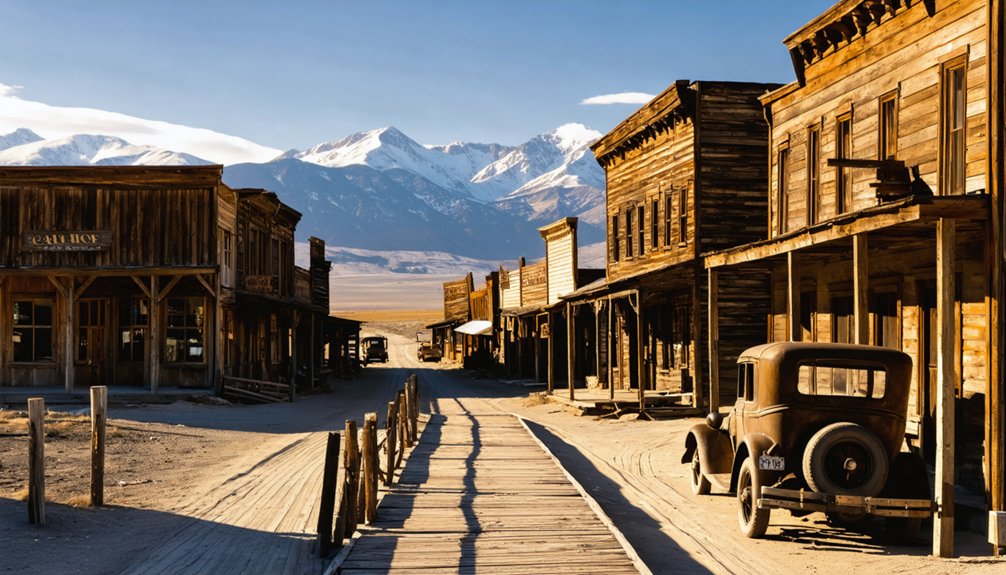
America’s landscape is dotted with abandoned settlements that tell fascinating stories of boom-and-bust cycles, offering history enthusiasts unparalleled glimpses into the nation’s frontier past.
Bodie history captivates visitors through its “arrested decay” preservation status, while Virginia City stands as a living proof of the 1859 Comstock Lode silver discovery.
For those venturing into the Rockies, St. Elmo presents remarkably intact structures that whisper tales of early 20th-century mining life.
Terlingua tourism has transformed this former mercury mining town into a cultural destination near Big Bend National Park.
Bannack preservation efforts have secured over 60 original structures within a state park, where annual re-enactments bring the territorial capital’s gold rush heritage to life.
Each settlement represents America’s pioneering spirit and resource-driven development.
Why Towns Become Abandoned: Common Causes
Throughout American history, ghost towns have emerged through a complex interplay of economic, environmental, and social forces that transform once-thriving communities into abandoned relics. The underpinnings of these abandonments often reveal the fragility of human settlement patterns in the face of changing conditions.
- Economic decline functions as the primary catalyst, with single-resource towns collapsing after mines emptied, forests cleared, or factories closed.
- Natural disasters reshape landscapes and destinies, from Dust Bowl devastation to catastrophic floods.
- Government intervention creates ghost towns through dam projects, environmental buyouts, and infrastructure initiatives.
- Technological advancement renders human labor obsolete through mechanization and automation.
These abandonment patterns reflect America’s perpetual economic reinvention and geographic mobility—a reflection of your nation’s restless pursuit of opportunity across an ever-changing frontier.
Ghost Town Tourism: Exploring America’s Forgotten Places
Once relegated to the periphery of travel destinations, ghost towns have emerged as compelling attractions in the American tourism landscape, drawing visitors who seek authentic connections with the nation’s past.
With over 3,800 identified across the country—concentrated primarily in Texas and California—these abandoned settlements offer remarkable opportunities for ghost town photography enthusiasts and history buffs alike.
You’ll find preserved structures at Bodie, California, dramatic ruins at Rhyolite, Nevada, and even haunted attractions at numerous locations where paranormal investigations have become popular activities.
The economic impact extends beyond entrance fees; nearby communities benefit from visitors exploring these historic sites.
Heritage tourism has revitalized many ghost towns, with some like Tombstone hosting reenactments while others like Oatman maintain minimal populations and unique features such as roaming wild burros.
Preservation Efforts: Saving America’s Historic Ghost Towns
The fading wooden structures and crumbling masonry of America’s ghost towns would vanish entirely without the dedicated preservation efforts now underway across the country. Organizations like the Ghost Town Club of Colorado and the Bodie Foundation represent America’s commitment to safeguarding these historical treasures through various approaches:
- “Arrested decay” preservation, pioneered in Bodie, California, which maintains structures in their abandoned state without restoration.
- Community involvement through volunteer workdays and local preservation societies that provide essential ongoing maintenance.
- Public-private partnerships where state parks departments collaborate with federal agencies on stabilization projects.
- Creative funding mechanisms like Montana’s “Explore Ghost Town” license plate program.
Despite these innovations, funding challenges persist, with major restoration projects often requiring substantial grants and donations to cover the significant costs of professional preservation techniques.
Frequently Asked Questions
Can You Legally Live in an Abandoned Ghost Town?
Like maneuvering through legal quicksand, you can’t simply homestead abandoned towns. You’ll face ghost town regulations including property ownership, zoning restrictions, and building code compliance—all formidable legal implications restricting your frontier dreams.
Are Ghost Towns Dangerous to Visit?
Ghost towns present real hazards requiring safety precautions. You’ll encounter structural instability, wildlife threats, and potential legal issues, yet most visitor experiences remain positive when you’re properly prepared and vigilant.
What’s the Newest Ghost Town in America?
Centralia, Pennsylvania stands as America’s newest ghost town, where a coal fire since 1962 fuels modern abandonment. You’ll witness ongoing environmental catastrophe transforming a once-vibrant community into an eerie, nearly deserted landscape.
Do Ghost Towns Have Paranormal Activity?
Like dusty pages of forgotten stories, many ghost towns harbor paranormal activity. You’ll find haunted history and spectral sightings frequently documented, though science attributes these phenomena to psychological and environmental factors rather than actual spirits.
How Are Ghost Towns Officially Designated and Classified?
Ghost towns are designated by historical societies based on criteria including historical significance, population decline, and remaining structures. Classification systems vary from state-level recognition to the five-category system used by Ghost Town USA.
References
- https://www.loveexploring.com/gallerylist/188219/the-us-state-with-the-most-ghost-towns-revealed
- https://en.wikipedia.org/wiki/Wikipedia:WikiProject_Ghost_towns
- https://devblog.batchgeo.com/ghost-towns/
- https://freepages.rootsweb.com/~gtusa/history/
- https://themortgagepoint.com/2024/10/25/americas-new-ghost-towns/
- https://en.wikipedia.org/wiki/Ghost_town
- https://247wallst.com/special-report/2021/05/19/30-american-ghost-towns-7/
- https://www.slideshare.net/slideshow/famous-ghost-towns/26047073
- https://www.geotab.com/ghost-towns/
- https://www.wikiwand.com/en/articles/ghost_town