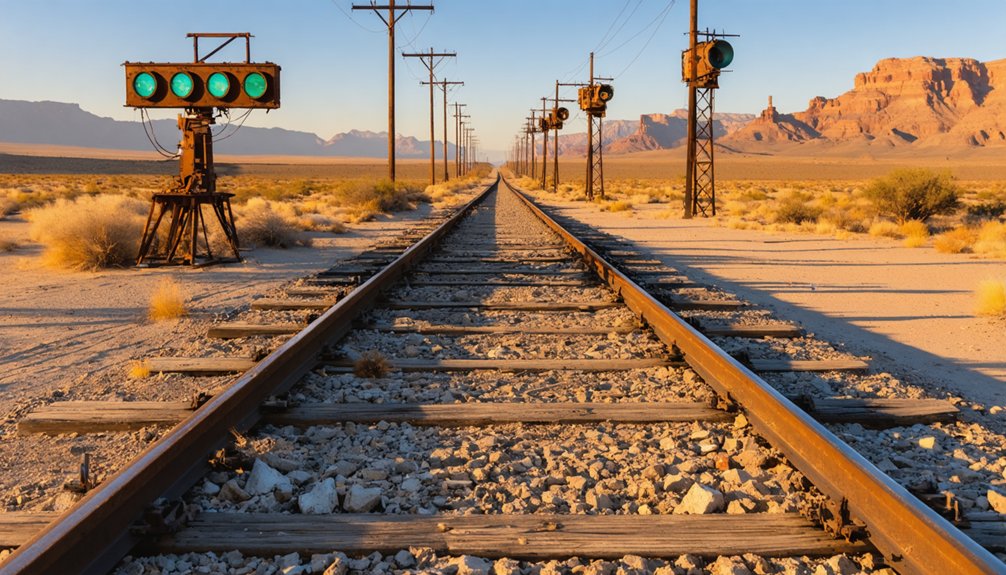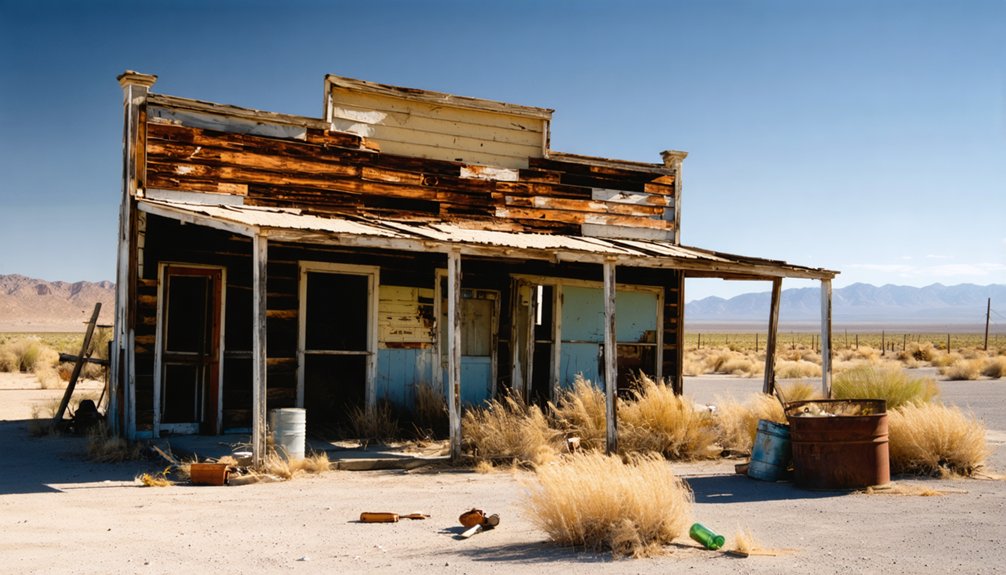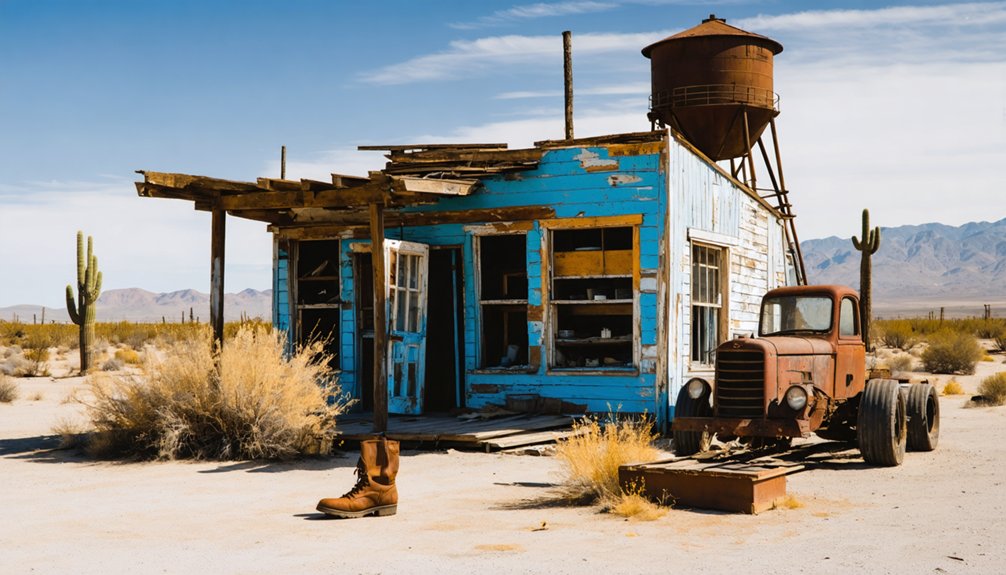
You’ll discover over 275 documented ghost towns across Arizona, most emerging during the state’s mining boom between the 1860s and early 1900s. Notable sites include Fairbank, with its restored schoolhouse, and Ruby, featuring 25 preserved structures. These abandoned settlements showcase authentic mining artifacts, historic buildings, and rich stories of the Old West. From Jerome to Bisbee, each site offers unique glimpses into Arizona’s prosperous mineral era, with varying levels of preservation to explore.
Key Takeaways
- Arizona has numerous ghost towns from its mining era, with prominent examples including Fairbank, Gleeson, Pearce, and Courtland.
- Jerome and Bisbee are successfully revitalized ghost towns that now thrive as tourist destinations featuring historic mining districts.
- Ruby is one of Arizona’s best-preserved ghost towns, containing 25 intact structures from its mining heyday.
- Oatman, a former gold mining town, reached 3,500 residents during the 1915 gold rush and remains partially inhabited today.
- The Southern Arizona Ghost Town Loop connects five historic ghost town sites across 45 miles of desert terrain.
The Rich History of Arizona’s Abandoned Mining Towns
While Arizona’s landscape is dotted with numerous ghost towns today, these abandoned settlements once thrived as bustling mining communities during the state’s mineral boom era.
You’ll find that most of these towns experienced dramatic boom-and-bust cycles, with mining techniques evolving as prospectors extracted gold, silver, copper, lead, and zinc. The economic impacts were profound but often short-lived, with boom periods typically lasting just a few years to decades before inevitable decline.
These towns’ fates were closely tied to their single-industry dependence, making them vulnerable to market collapses and resource depletion. When mines closed or smelting operations ended, populations quickly dwindled. Popular guidebooks like Arizona Ghost Towns and Mining Camps continue to document these historical sites for modern visitors.
Some communities attempted comebacks between the 1890s and 1930s, but factors like transportation shifts and rising operational costs ultimately led to their permanent abandonment. The Bureau of Land Management now maintains several of these historic sites for preservation.
Most Famous Ghost Towns in Cochise County
Cochise County’s most prominent ghost towns – Fairbank, Gleeson, Pearce, and Courtland – offer visitors fascinating windows into Arizona’s mining heritage.
You’ll discover ghost town legends amid preserved structures like Fairbank’s restored schoolhouse and Gleeson’s brick jail. At Fairbank, you can explore the former stagecoach stop’s remains within a protected conservation area, while Gleeson showcases authentic mining artifacts and equipment scattered among its adobe ruins. Pearce’s establishment and growth stemmed from the gold discovery in 1894.
Step back in time at Fairbank and Gleeson, where historic jails and schoolhouses tell tales of Arizona’s rugged mining past.
Similar to Bisbee’s mining claims, these towns experienced significant population growth during Arizona’s mineral rush era.
In Pearce, you’ll find a unique concrete jail and a historic cemetery that tells the story of frontier life and hardship.
Courtland, once home to 2,000 residents, now features remnant foundations and mine tailings. Each site requires different access approaches – from paved roads at Fairbank to high-clearance vehicles needed for reaching Courtland’s remote location.
Hidden Gems of Southern Arizona
You’ll find Ruby among southern Arizona’s most intact ghost towns, featuring 25 preserved structures including a jail, schoolhouse, and historic mine equipment.
Pearce’s remnants tell the story of a bustling gold rush community, with its historic commercial buildings and cemetery serving as reminders of its prosperous past.
Gleeson’s restored jail and interpretive trail offer you a glimpse into early 20th-century mining life, while showcasing the area’s rich copper and lead mining heritage.
Near Tucson, Kentucky Camp was established during the gold discovery of 1874, attracting hundreds of miners seeking their fortune in the region.
Friends of San Pedro River lead informative tours through multiple ghost towns in the area, sharing fascinating historical details about mining life.
Ruby’s Mining Town Legacy
Nestled in the rugged terrain of southern Arizona near the Mexican border, Ruby stands as one of the state’s best-preserved mining ghost towns at an elevation of 4,186 feet.
Originally known as Montana Camp, the settlement was established after prospectors made their first strike in the late 1870s.
The town’s social dynamics were shaped by strict company rules, leading miners to establish seven saloons just outside town limits. You’ll find well-preserved remnants of Ruby’s mining artifacts, including the original schoolhouse, jail, and company housing scattered across the landscape.
Ruby achieved its peak as Arizona’s largest lead and zinc producer from 1935 to 1939 before closing in 1940.
The town’s dramatic history includes two notorious 1920s murders that sparked the first use of aircraft in an Arizona manhunt.
While privately owned today, Ruby’s remaining structures and cemetery offer glimpses into authentic company town life during the Depression era.
Local oral histories collected by Archive Tucson have helped preserve firsthand accounts of daily life in these historic mining camps.
Pearce: Gold Rush Memories
Gold fever struck the Sulphur Springs Valley in 1894 when James Pearce, a retired Cornish miner-turned-cattleman, discovered rich deposits at what would become the Commonwealth Mine.
The town of Pearce rapidly grew around this lucrative find, boasting 1,500 residents by 1919. You’ll find evidence of this rich mining heritage in the 200-stamp mill built by mine owner John Brockman, who cleverly designed heavy gold bars to thwart horseback thieves. The mine ultimately produced over $15 million in gold before closing.
The Merkantile Store, built in 1895, served as the town’s banking and postal center. While the Great Depression and depleted ore led to Pearce’s decline by the 1940s, you can still explore remarkable historic structures today.
The 1915 Pearce Jail, Our Lady of Victory Catholic Church, and the old Mine Manager’s House preserve the town’s storied past.
Visit the first Saturday monthly between October and May to tour the jail, a reflection of Arizona’s frontier spirit.
Gleeson’s Historic Jail Trail
Along High Lonesome Road, 16 miles east of Tombstone, the historic Gleeson Jail stands as a symbol to Arizona’s copper mining era. Built in 1910 to detain rowdy miners, this restored two-cell structure now serves as a museum showcasing local artifacts and the town’s rich history.
You’ll find the jail open on the first and fourth Saturdays or by appointment, where local volunteers share tales of Gleeson’s boom years. The town flourished after John Gleeson’s copper discovery in 1900, supporting a population of up to 2,000 residents.
Beyond the jail’s historic significance, you can explore ruins of the hospital, school foundation, and a cemetery that echo the town’s vibrant past. The site, accessible via the Ghost Town Trail, offers a glimpse into the area’s evolution from Apache turquoise mining to copper extraction.
Notable Ghost Towns Along Route 66
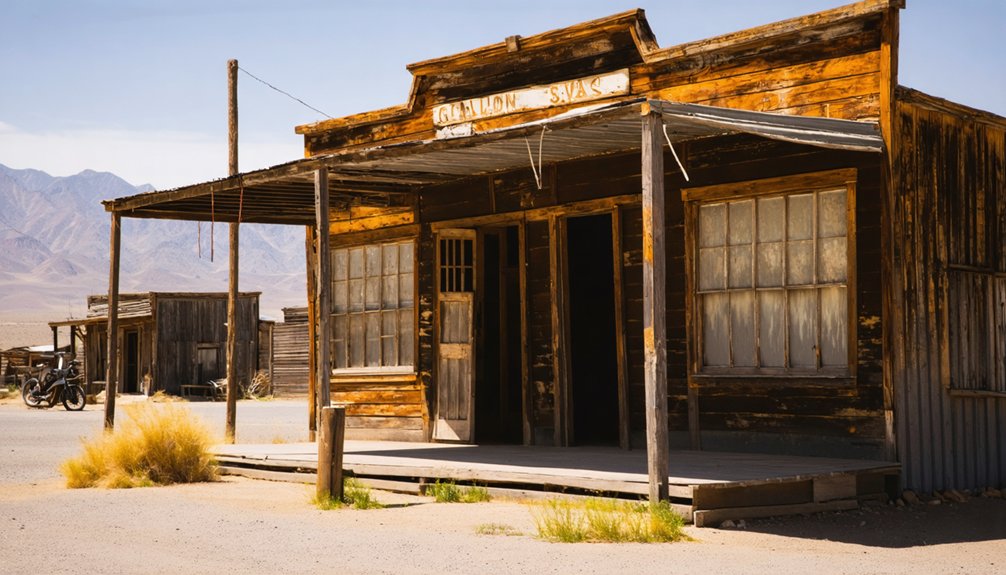
Through Arizona’s historic Route 66 corridor, several mining settlements transformed into ghost towns after their initial booms went bust.
You’ll discover Hackberry’s history as a silver mining outpost that began in 1874, later finding new life as a Route 66 service stop before declining when Interstate 40 bypassed it.
Similarly, Oatman thrived during the 1915 gold rush, reaching 3,500 residents before dwindling to just 43 today, where wild burros now roam its streets freely.
Other notable stops include Chloride, which maintains a small population of 250 despite its mining decline, and Two Guns, site of the infamous Apache Death Cave massacre.
Canyon Diablo earned its reputation as a lawless frontier before becoming another casualty of railroad completion, joining the ranks of Arizona’s abandoned Route 66 communities.
Preservation Efforts and Historic Sites
You’ll find Arizona’s ghost towns under various preservation frameworks, from federally protected heritage sites like the San Pedro Riparian National Conservation Area’s Fairbank settlement to privately funded restoration projects at Vulture City.
Many visitors are drawn to the stories of abandoned towns throughout Arizona, where remnants of past lives tell tales of resilience and hardship. Exploring these deserted landscapes offers a unique glimpse into the state’s history and the challenges faced by those who once called these places home. Each ghost town has its own character, with crumbling buildings and silent streets that invite both reflection and adventure.
Local communities and organizations like the Friends of the San Pedro River contribute essential support through docent programs and educational initiatives that help maintain these historic treasures.
The Bureau of Land Management oversees several significant sites, including Swansea’s well-preserved mining structures, while working alongside private preservation efforts such as the Arizona Land Project’s work in Courtland.
Protected Federal Heritage Sites
Several historically significant ghost towns across Arizona have earned protected status as federal heritage sites, preserving their remarkable structures and cultural legacy.
Fort Bowie National Historic Site stands as a representation of Apache Wars history, requiring a 1.5-mile hike to explore its adobe ruins and former Butterfield Stage Station.
The Bureau of Land Management maintains both Swansea and Fairbank, with Swansea featuring over 50 restored buildings filled with artifacts, while Fairbank preserves its role as Tombstone’s essential rail connection.
These federal heritage designations guarantee site preservation through careful management and public access restrictions.
You’ll find Swansea 30 miles east of Parker, while Fort Bowie showcases military architecture from 1862 until its closure in 1894 following Geronimo’s surrender.
Local Community Restoration Projects
Local preservation efforts across Arizona’s ghost towns have gained momentum through strategic partnerships between community organizations and landowners.
You’ll find innovative community engagement through organizations like Project Restore Vulture City, which relocates historic buildings while preserving mining heritage. The Arizona Land Trust actively acquires parcels in places like Courtland to address restoration challenges through public access and preservation planning.
Volunteer programs tackle essential tasks including building stabilization, native landscaping, and cemetery conservation.
These initiatives receive support through diverse funding mechanisms, from federal grants to local fundraising. The Bureau of Land Management and Forest Service partner with volunteers at sites like Fairbank and Ruby, where hands-on conservation workshops teach masonry, wood repair, and interpretive skills for ongoing site stewardship.
Tourism and Site Management
Thorough preservation efforts at Arizona’s ghost towns integrate both federal and state-level protections through the National Register of Historic Places and State Historic Preservation Office programs.
These designations enable sustainable management practices while securing funding for preservation and interpretation.
- You’ll find heritage tourism thriving in revitalized towns like Jerome and Bisbee, where historic buildings now house museums, galleries, and unique lodging options.
- You can explore curated walking tours and interpretive sites that tell the story of mining technology, labor history, and cultural interactions.
- You’re protected by extensive safety measures, including permit systems, designated trails, and hazard warnings that help preserve these historic sites while ensuring visitor security.
The Bureau of Land Management and Forest Service maintain archaeological protections, while public-private partnerships support business development in historic commercial districts.
Best Ghost Towns for Tourism and Photography
Arizona’s most enchanting ghost towns offer photographers and tourists an unparalleled glimpse into the American West’s mining era through remarkably preserved structures and engaging activities.
For photography tips, you’ll find the best-preserved structures at Ruby, featuring an intact jail, school, and mine machinery.
Vulture City’s 16 restored 1800s buildings provide excellent architectural shots, especially during seasonal lantern-lit events.
Tourism highlights include Goldfield’s authentic narrow gauge train rides and Old West gunfights.
Jerome’s Douglas Mansion and Gold King Mine offer diverse photo opportunities among historic mining equipment and vintage vehicles.
Swansea, managed by the Bureau of Land Management, provides unrestricted access to photograph well-preserved buildings that showcase 19th-century mining challenges.
You can enhance your experience with camping at Ruby or Swansea, where you’ll capture stunning dawn and dusk shots.
Mining Boom Legacy in Western Arizona
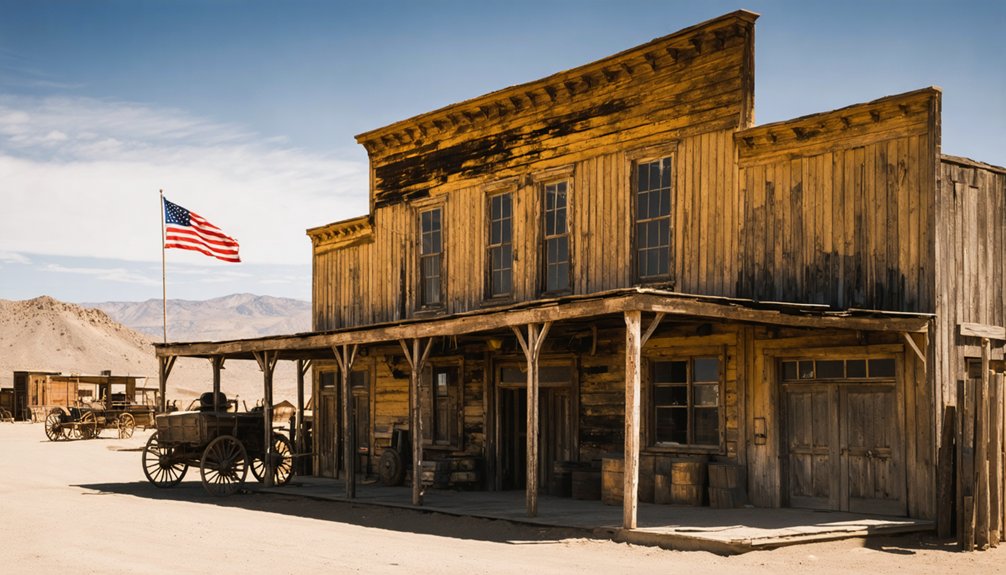
Three major mining booms transformed Western Arizona’s landscape from the mid-1800s through early statehood, leaving an indelible mark on the region’s development.
You’ll find this mining heritage etched across the territory, from the Bradshaw Mountains to the Black Mountain ranges, where ghost town economies once thrived during successive waves of gold, silver, and copper extraction.
- The 1860s gold rush sparked the first major boom, establishing frontier towns along the Hassayampa River and throughout the mineral-rich volcanic belts.
- Silver strikes around 1877 triggered intense development until the 1893 price collapse devastated mining communities.
- Copper mining dominated the early statehood period, though many operations eventually succumbed to resource depletion and market forces.
These cycles of boom and bust have left behind a remarkable legacy of abandoned mines, mills, and company towns that define Arizona’s historic landscape.
Essential Tips for Ghost Town Exploration
Before beginning a ghost town expedition, you’ll need to carefully consider several critical aspects of safety, legality, and site preservation.
Secure legal access by verifying land ownership and obtaining written permissions, as many sites sit on private property or protected lands.
Always confirm property ownership and secure proper permits before exploring ghost towns to avoid trespassing on private or protected areas.
Prioritize ghost town safety by carrying essential gear: GPS with offline maps, sturdy boots, and emergency supplies including abundant water for Arizona’s harsh climate.
Never enter unstable structures or abandoned mines, which pose lethal hazards from collapse and hidden shafts.
Document your discoveries through photography rather than collection, and practice leave-no-trace principles to preserve these historic sites for future explorers.
Always share trip plans with a contact and carry proper navigation tools when visiting remote locations with limited cell coverage.
Must-Visit Ghost Town Trails and Routes
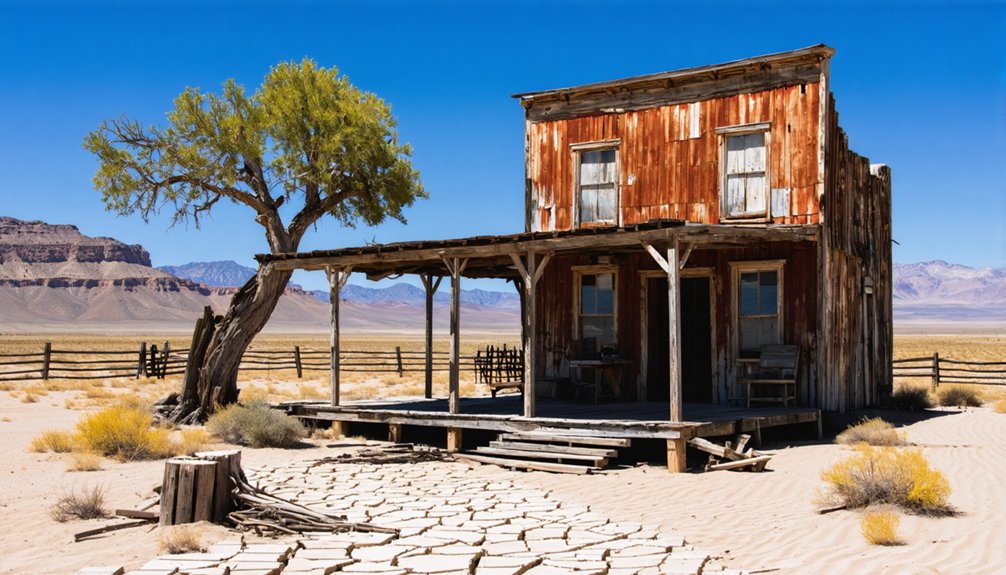
For an immersive journey through Arizona’s mining heritage, several well-documented ghost town trails offer distinctive opportunities to explore abandoned settlements and historic ruins.
1. The Tombstone-Gleeson-Pearce Trail spans 34 miles, showcasing mining history through preserved structures and ruins.
You’ll encounter the tourist-friendly Tombstone, Gleeson’s historic schoolhouse, and Pearce’s mining remnants.
2. Signal Ghost Town Trail stretches 18.7 miles along Signal Road, offering direct access to abandoned mine structures.
While generally passable, you’ll want to verify seasonal conditions before exploring this representation of Arizona’s mining past.
3. The Southern Arizona Ghost Town Loop connects five historic sites through scenic riparian corridors.
This 45-mile route demonstrates varying levels of ghost town preservation, from well-maintained interpretive sites to weathered ruins requiring respectful exploration.
Frequently Asked Questions
Are There Any Ghost Towns in Arizona Where People Still Live?
Like time capsules frozen in amber, Jerome, Bisbee, Goldfield, and Oatman maintain modern residents who’ve adapted living conditions in these historic mining towns, blending tourist attractions with daily life.
Can You Legally Collect Artifacts From Arizona Ghost Towns?
You can’t legally collect artifacts from Arizona ghost towns. Federal and state legal regulations strictly protect these sites for artifact preservation, with hefty fines and possible imprisonment for violations.
Which Arizona Ghost Towns Are Considered Haunted?
Jerome’s haunted history includes ghostly encounters at the Grand Hotel and abandoned mines. Ruby’s Montana Mine reportedly harbors supernatural activity, while Gleeson’s old jail and hospital attract paranormal investigators.
Are Permits Required to Visit Ghost Towns on Private Land?
You’ll need explicit permission from landowners to visit ghost towns on private land, as visitation policies typically require written permits, waivers, or paid admission before entering these properties.
What Is the Best Season to Explore Arizona’s Ghost Towns?
Want the ultimate ghost town adventure? Winter’s your best time, when cooler weather conditions make exploring easier. You’ll enjoy clearer visibility, accessible trails, and comfortable temperatures for guided tours like Vulture City’s highlights.
References
- https://en.wikipedia.org/wiki/List_of_ghost_towns_in_Arizona
- https://kids.kiddle.co/List_of_ghost_towns_in_Arizona
- https://www.visitarizona.com/like-a-local/4-arizona-ghost-towns-you-may-have-never-heard-of
- https://www.visittucson.org/blog/post/8-ghost-towns-of-southern-arizona/
- https://www.ghosttowns.com/states/az/az.html
- https://www.atlasobscura.com/things-to-do/arizona/ghost-towns
- https://www.youtube.com/watch?v=Q18D1sHH2Cc
- https://www.arizonahighways.com/article/arizona-ghost-towns
- https://www.tripadvisor.com/Attractions-g28924-Activities-c47-t14-Arizona.html
- https://goldfieldghosttown.com