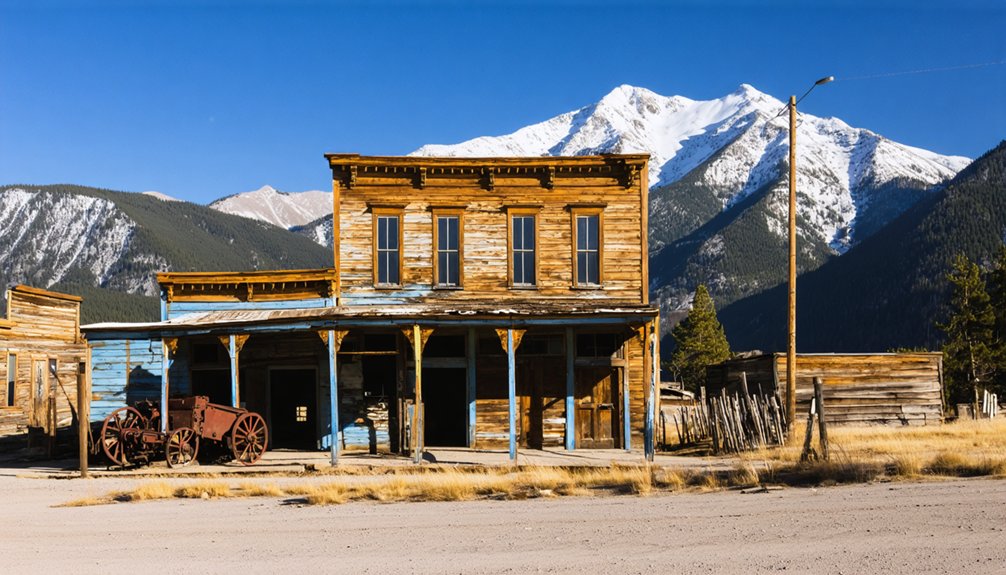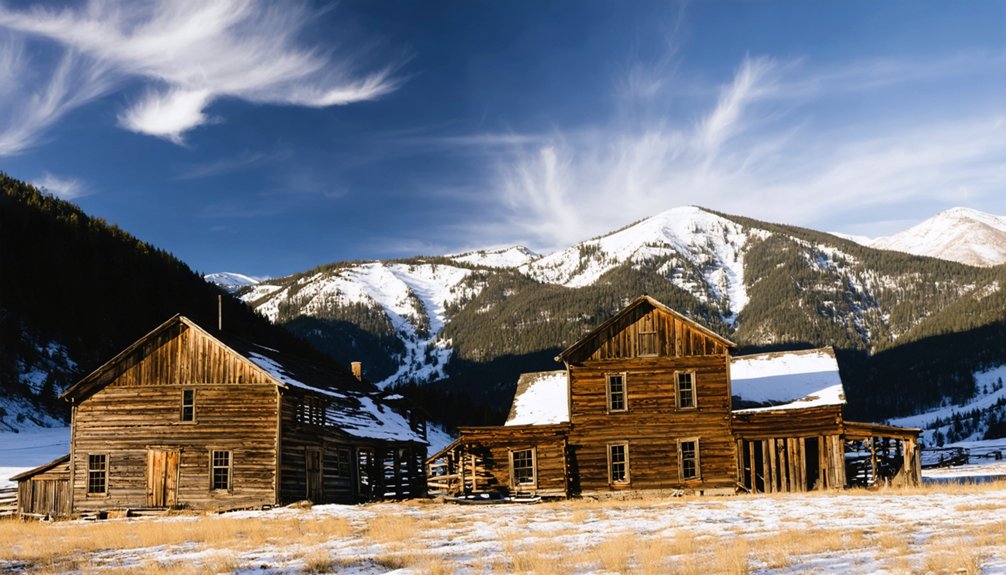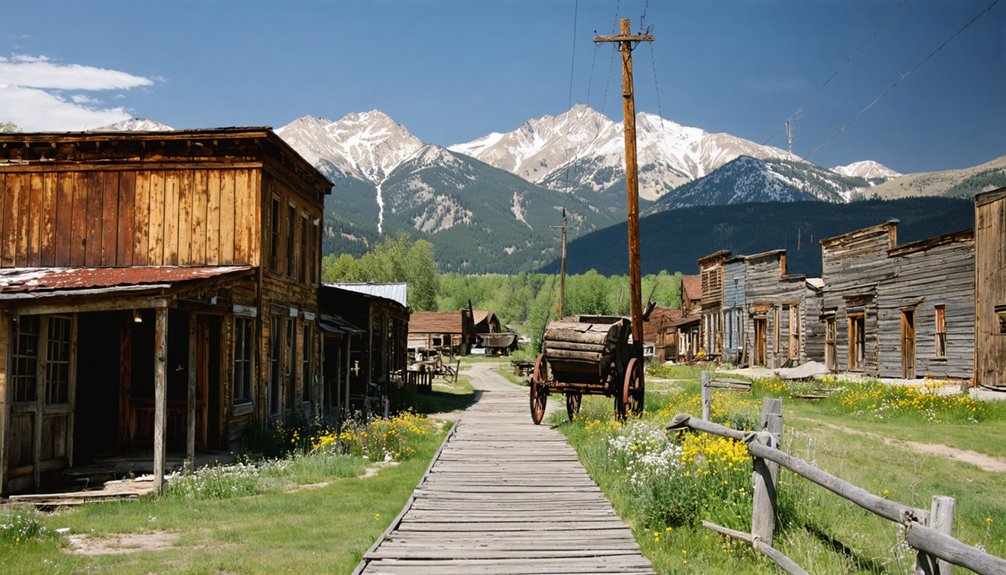
You’ll discover over 1,500 ghost towns across Colorado, most dating back to the state’s 1850s mining boom. These abandoned settlements range from well-preserved sites like St. Elmo, with 43 standing buildings, to remote alpine locations like Animas Forks at 11,200 feet elevation. Many are accessible by car or SUV, including popular destinations such as Ashcroft and Independence Pass. The rich history of these frontier towns reveals fascinating stories of boom-and-bust cycles, labor struggles, and pioneering spirit.
Key Takeaways
- Colorado has numerous ghost towns from its mining era, with well-preserved locations like St. Elmo featuring 43 standing buildings along Main Street.
- Many ghost towns are accessible by car, including popular destinations like Ashcroft, St. Elmo, and Independence Pass area.
- Historic sites like Animas Forks showcase original buildings at 11,200 feet elevation, offering glimpses into Colorado’s mining heritage.
- South Park City preserves 28 authentic buildings from 1880-1940, complete with period artifacts and structures like jails and hotels.
- These abandoned towns emerged during Colorado’s gold and silver mining boom of the mid-1800s and declined after the 1893 silver crash.
What Makes Colorado a Haven for Ghost Towns
While many Western states boast ghost towns, Colorado’s unique combination of historical, geographical, and economic factors created an especially rich landscape of abandoned settlements.
The state’s mining history played a pivotal role, as gold and silver discoveries in the mid-1800s sparked rapid town development throughout the Rocky Mountains. You’ll find these remnants mainly in remote, high-altitude locations where harsh winters and challenging terrain made long-term settlement difficult once the mines closed. The extreme conditions proved especially challenging at settlements like Carson Ghost Town, where the high altitude near the Continental Divide ultimately led to desertion. The Pikes Peak rush of 1858 marked the beginning of Colorado’s explosive mining development.
Gold fever birthed countless mountain towns, but nature’s harsh reality proved too challenging once the precious metals vanished.
Economic decline hit particularly hard when silver prices crashed in 1893, and many single-industry towns couldn’t survive.
The lack of economic diversification, combined with shifting transportation routes and the exodus of primarily male mining populations, sealed the fate of countless communities.
Today, these abandoned towns remain preserved by their isolation, offering glimpses into Colorado’s boom-and-bust heritage.
Most Well-Preserved Ghost Towns Worth Visiting
Among Colorado’s numerous ghost towns, several stand out for their exceptional preservation and accessibility to modern visitors.
Among these sites, the ghost towns in Colorado explained offer insights into the state’s rich mining history and the communities that once thrived there. Visitors can explore well-preserved structures and learn about the lives of those who inhabited these hauntingly beautiful locales. Some towns, like Cripple Creek and Central City, even host events that celebrate their unique heritage, making them popular destinations for history buffs and adventurers alike.
St. Elmo offers prime ghost town photography opportunities with its 43 standing buildings and preserved Main Street.
Animas Forks, perched at 11,200 feet, showcases stunning alpine mining heritage through its multi-story structures, including the iconic Duncan House.
Independence Pass area features well-preserved homesteads, while Ashcroft and Gothic benefit from their proximity to modern resort towns.
For a unique experience, you’ll find Vicksburg’s tree-lined streets still nourished by original miner-dug irrigation systems.
Each site maintains its historical authenticity through active preservation efforts, with many listed on the National Register of Historic Places.
You’ll need to plan seasonal access carefully, as weather conditions can affect visitability.
The town of Creede attracts visitors with its Underground Mining Museum, offering educational experiences about Colorado’s rich mining heritage.
Dearfield represents a remarkable piece of history as Colorado’s only black settlement, established as an agricultural community in the early 1900s.
Historical Significance of Mining Boom Towns
These well-preserved ghost towns offer glimpses into one of America’s most dramatic settlement periods.
When news of gold and silver strikes spread in the late 1800s, you’d have witnessed explosive population growth as prospectors and workers rushed to stake their claims. The mining economy transformed raw wilderness into bustling cities practically overnight, driven by railroad expansion and waves of investment capital. The Pikes Peak rush transformed Central City from a tiny settlement into a boomtown of 10,000 residents in just one month.
You’ll find evidence of complex labor dynamics in these towns, where immigrant workers, labor unions, and mine owners shaped the social landscape. The Ludlow Massacre of 1914 marked a turning point in the fight for workers’ rights.
The boom-to-bust cycle could be ruthless – a town’s fate hung on mineral prices and production yields. When mines failed or metal prices crashed, these once-thriving communities often emptied as quickly as they’d filled, leaving behind the haunting remains you can explore today.
Best Ways to Access Colorado’s Ghost Towns
Colorado’s ghost towns offer five distinct access options based on road conditions and vehicle requirements.
You’ll find paved routes to preserved sites like Ashcroft, St. Elmo, and Independence, making them ideal for standard vehicles.
Well-maintained dirt roads lead to destinations like Eureka and Animas Forks, though SUVs are recommended. Visitors should allow 1.5 hours drive time from Junction West Durango Riverside Resort to reach these locations.
More challenging access challenges await at locations requiring 4WD vehicles, such as Pearl Pass and the Alpine Loop Scenic Byway, where high clearance and off-road experience are essential.
If you’re seeking guidance, daily tours depart from mining hubs like Durango and Silverton.
You can also explore seasonal alternatives, including hiking trails to Ghost Town Hollow or winter visits to year-round accessible sites like St. Elmo, where road conditions remain manageable regardless of season. When visiting Ashcroft Ghost Town in winter, visitors should equip their vehicles with AWD or tire chains for safe travel.
Weather and Geographic Impact on Abandoned Sites
While scenic beauty initially drew settlers to Colorado’s ghost towns, harsh weather patterns and challenging geography ultimately hastened their demise.
Towns like Last Chance faced destructive grass fires that contributed to their abandonment. The climatic impact is particularly severe at high elevations, where heavy snowfall shortens mining seasons and increases isolation. You’ll find that freeze-thaw cycles and intense UV radiation accelerate structural decay, causing roof collapses and deteriorating masonry. These abandoned settlements experience reverse heat effects, creating colder microclimates compared to inhabited areas nearby.
In mountain valleys, debris flows and avalanches can destroy entire settlements, while towns built on floodplains face risks from flash floods and shifting water channels.
If you’re exploring these sites today, you’ll notice how weather continues to shape their remains – from wind-abraded walls on the plains to frost-heaved foundations in alpine locations.
These environmental forces make preservation particularly challenging.
Notable Structures and Remaining Architecture
You’ll find remarkably well-preserved buildings across Colorado’s ghost towns, from weathered saloons and general stores with their iconic false-front facades to original log cabins that have withstood decades of harsh mountain conditions.
The Crystal Mill, built in 1893, stands as perhaps the most photographed industrial structure, while sites like Animas Forks showcase intact boarding houses with distinctive architectural features like the Bay Window House.
Mining equipment, including ore carts, stamp batteries, and water-power mechanisms, remains visible at numerous sites, offering tangible connections to the state’s mining heritage.
Preserved Buildings and Saloons
Historic ghost towns scattered across Colorado’s mountains showcase remarkably preserved frontier architecture, from weathered wooden storefronts to authentic saloons frozen in time.
You’ll find pristine examples of saloon architecture at St. Elmo’s dusty Main Street and South Park City’s authentic 1900s establishments. The Duncan House at Animas Forks stands as a symbol of frontier craftsmanship with its distinctive two-story design and bay window.
These preserved relics tell vivid stories of the Old West. Independence’s original homesteads and mill site remain intact despite harsh alpine conditions, while Ashcroft’s restored log cabins demonstrate meticulous period construction.
South Park City houses 28 genuine buildings from the 1880-1940 era, including a historically accurate jail, hotel, and schoolhouse – each filled with authentic frontier artifacts.
Mining Equipment Still Standing
Throughout Colorado’s ghost towns, impressive mining equipment and machinery still stand as evidence to the state’s industrial heritage.
You’ll find remarkable mining machinery remnants at sites like Crystal Mill, where the 1893 timber-and-stone powerhouse retains its original waterwheel framing. The Henson Ute-Ulay Mill complex showcases multiple buildings with heavy milling equipment perched on steep cliffs.
Historical equipment preservation efforts have documented significant artifacts at Animas Forks, including rusted flywheels and Wilfley shaking tables. At Tomboy and surrounding sites, you can explore mill foundations, crushing frames, and ore chute relics.
Notable remnants of stamp batteries and crushers survive at Winfield, Carson, and Summitville, while impressive headframes still mark the entrance to once-productive mine shafts at various locations throughout these preserved industrial sites.
Original Log Cabin Remains
Remarkable log cabin architecture survives across Colorado’s most well-preserved ghost towns, offering tangible connections to the state’s mining past.
The log cabin preservation efforts showcase diverse architectural styles from the late 1880s mining era, with each site maintaining its unique characteristics at elevations reaching nearly 11,000 feet.
You’ll discover authentic mining-era structures at these notable locations:
- Winfield’s schoolhouse and Ball Cabin museum displaying historic mining artifacts
- Dyersville’s collection of nearly dozen cabins with both intact and partial remains
- Vicksburg’s original buildings lined with historic poplar trees
- Alta’s National Register-listed cabins including preserved boarding houses
- Ashcroft’s restored cabins featuring intricate log construction techniques
These remnants stand as evidence to Colorado’s rugged frontier spirit, with many structures maintaining their original form despite decades of exposure to harsh mountain elements.
Year-Round Activities and Tourism Opportunities
You can explore Colorado’s ghost towns throughout all four seasons, with accessible sites along maintained roads offering year-round photographic and interpretive opportunities.
For high-elevation locations above 10,000 feet, winter access often requires specialized transportation like snowmobiles or guided backcountry tours.
Whether you prefer summer hiking and ATV excursions or winter snowshoeing and cross-country skiing, local outfitters and historical societies provide guided experiences that showcase these preserved mining settlements in every season.
Seasonal Ghost Town Adventures
Colorado’s ghost towns offer distinct seasonal experiences that let visitors explore the state’s mining heritage throughout the year. From May through September, you’ll find peak accessibility with ghost town festivals and seasonal tours in full swing.
Winter transforms these historic sites into serene snowbound landscapes, particularly near Steamboat Springs.
Here’s what you can experience across seasons:
- Summer brings gold panning at Ghost Town Museum and self-guided tours at Hahns Peak.
- Fall showcases spectacular aspen viewing around Fulford via jeep tours.
- Spring opens high-elevation access to Animas Forks at 11,180 feet.
- Winter offers nearby skiing and snowmobiling opportunities.
- Year-round exploration available at well-preserved St. Elmo’s wooden storefronts.
These seasonal adventures let you tailor your ghost town visits to match both weather conditions and your preferred outdoor activities.
Guided Tours Available Year-Round
Four distinct categories of guided tours operate year-round across Colorado’s historic ghost towns, letting visitors explore these remnants of the mining era regardless of season.
You’ll find guided jeep tours traversing unpaved mountain roads to remote sites like Animas Forks, with experienced drivers maneuvering high-clearance vehicles through the San Juan Mountains.
Walking tours in historic towns such as Breckenridge and Leadville offer themed experiences, from ghost stories to cemetery visits.
When weather challenges outdoor exploration, you can step inside climate-controlled museums like the Ghost Town Museum in Colorado Springs, where recreated environments and artifacts bring mining history to life.
For a theatrical twist, specialty tours blend historical facts with haunted tales and dramatic storytelling at various preserved ghost town locations.
Hidden Gems Off the Beaten Path
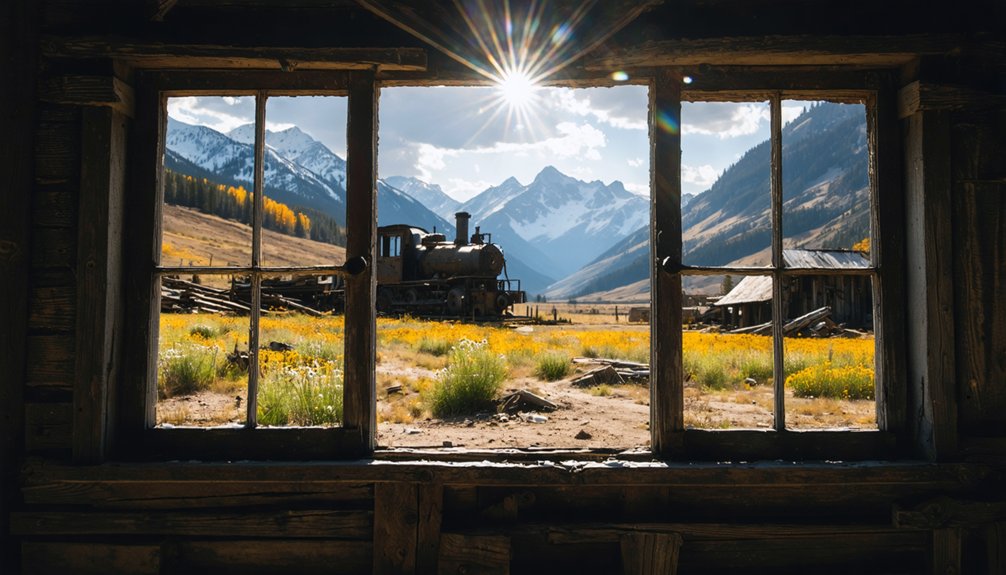
While popular ghost towns draw crowds of tourists, several remarkable mining settlements remain tucked away in Colorado’s remote valleys and mountain passes.
For offbeat adventures, you’ll discover hidden treasures like Teller City, nestled in dense forests near Walden, where hundreds of log cabins once stood alongside 30 bustling saloons.
Here are some of Colorado’s most intriguing off-path ghost towns:
- Animas Forks sits at 11,000 feet with 10 preserved buildings and the state’s highest newspaper office
- Vicksburg offers seasonal museums and original prospector-planted poplars
- Winfield features four intact log structures, including a preserved schoolhouse
- St. Elmo boasts wooden storefronts reminiscent of John Wayne films
- Teller City reveals its silver mining past through a scenic three-quarter-mile loop trail
Frequently Asked Questions
Are Overnight Stays Allowed in Any Colorado Ghost Towns?
You’ll find overnight accommodations at luxury resorts like Dunton Hot Springs or St. Elmo’s guesthouses, while ghost town camping near others requires checking land-management rules for legal dispersed camping options.
What Safety Precautions Should Visitors Take When Exploring Ghost Towns?
You’ll need more than just your adventurous spirit! Bring safety gear including first-aid supplies, charged phone, and warm clothes. Stay alert for wildlife, avoid unstable structures, and always explore with companions.
Are Metal Detectors Permitted at Colorado Ghost Town Sites?
You’ll need to check specific metal detecting regulations, as they vary by location. It’s prohibited on National Park Service lands but may be allowed on BLM sites, following historical preservation rules.
Do Any Ghost Towns Have Reported Paranormal Activity or Haunting Stories?
You’ll find abundant ghost stories at places like St. Elmo, Central City, and Animas Forks, with locals reporting haunted locations featuring unexplained footsteps, apparitions, and eerie phenomena in abandoned buildings.
Can Visitors Take Artifacts or Souvenirs From Ghost Town Locations?
While you might spot enticing historical items, you can’t remove artifacts from Colorado ghost towns. Federal and state souvenir policies strictly protect these sites, with hefty fines for violating artifact preservation laws.
References
- https://en.wikipedia.org/wiki/List_of_ghost_towns_in_Colorado
- https://coloradoinfo.com/blog_post/explore-ghost-towns-in-colorado/
- https://alissapeterson.com/blog/discover-the-spookiest-colorado-ghost-towns
- https://www.colorado.com/articles/colorado-ghost-towns
- https://www.uncovercolorado.com/ghost-towns/
- https://303magazine.com/2024/05/where-history-sleeps-colorado-ghost-towns/
- https://www.americansky.co.uk/colorado-holidays/exploring-colorados-ghost-towns
- https://www.atlasobscura.com/things-to-do/colorado/ghost-towns
- https://www.tripadvisor.com/Attractions-g28927-Activities-c47-t14-Colorado.html
- https://www.denver7.com/news/local-news/colorado-ghost-towns-their-past-present-and-future-in-the-rocky-mountains