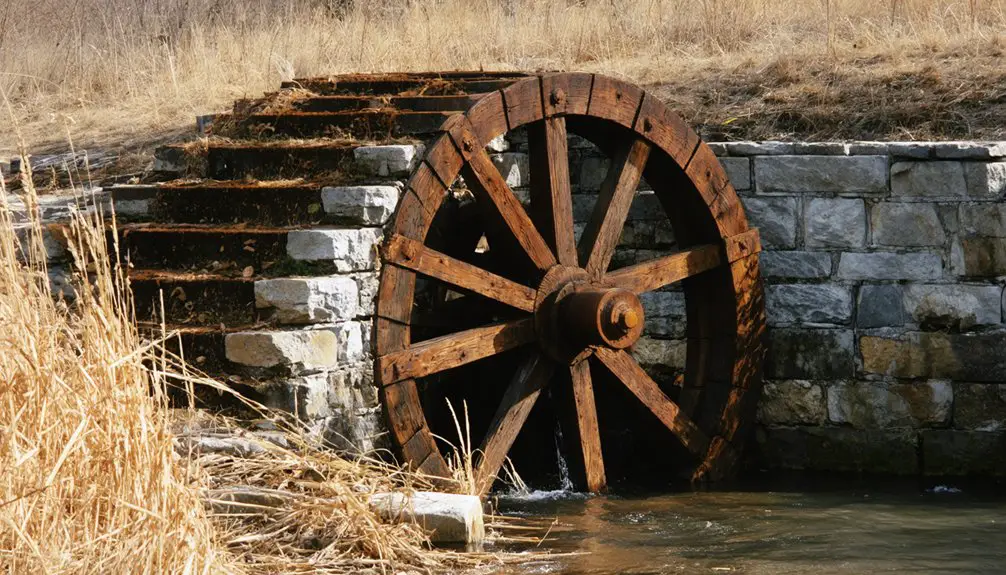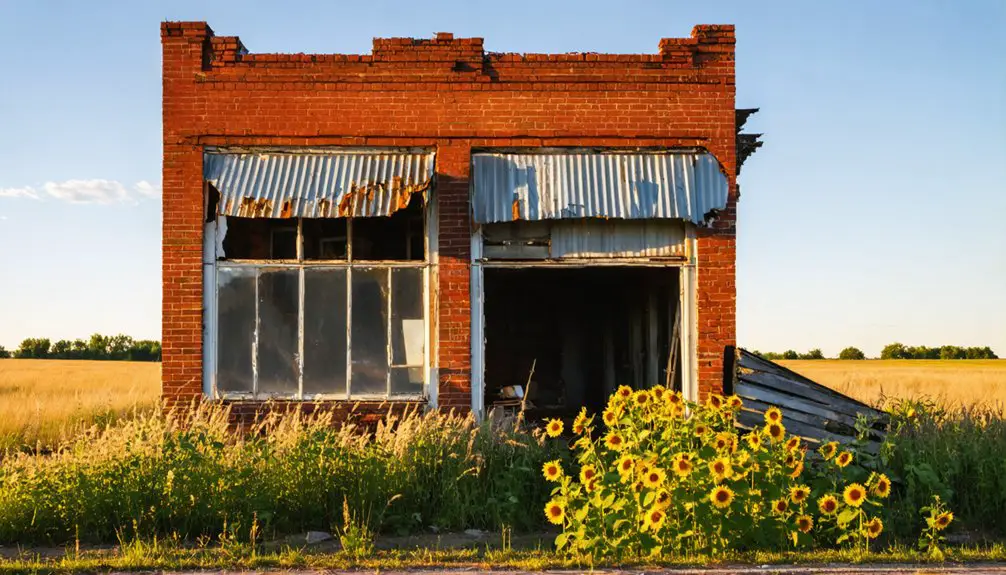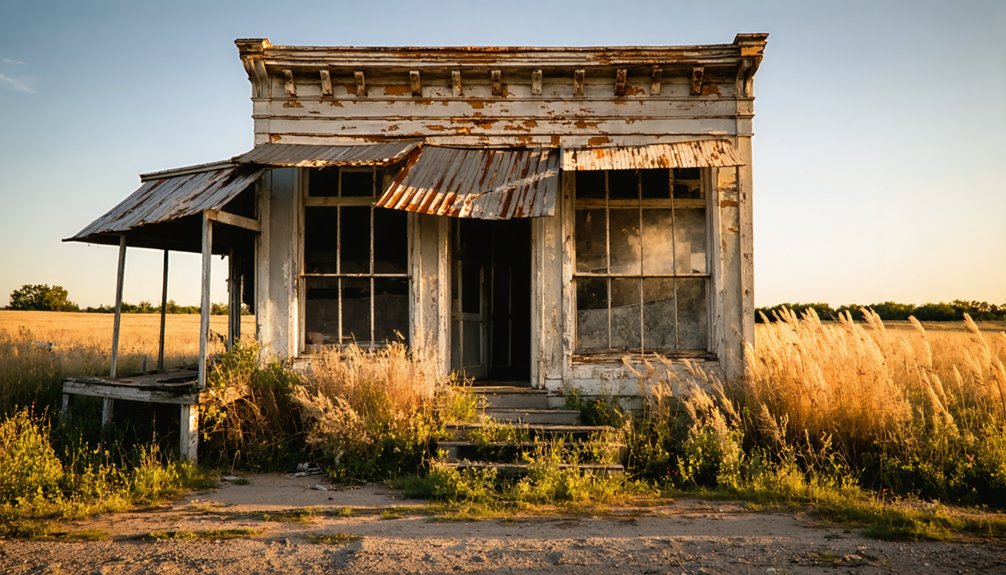
You’ll find over 6,000 ghost towns scattered across Kansas, making it a treasure trove of abandoned settlements. These range from completely deserted sites to “living ghost towns” with just a handful of residents. Many towns fell victim to economic shifts, railroad bypasses, resource depletion, and natural disasters. Notable locations include Densmore, Lake City, Trading Post, Prairie City, and Bushong – each telling its own tale of rise and decline through their remaining structures and ruins.
Exploring these historic ghost towns in Kansas offers a unique glimpse into the past, allowing visitors to imagine the bustling life that once filled these now-silent streets. Each town has its own story, from the hopeful dreams of settlers to the harsh realities that led to their abandonment. As you wander through the remnants of these once-thriving communities, you can almost hear the echoes of history whispering through the ruins.
Key Takeaways
- Kansas has over 6,000 documented ghost towns, making it a state with numerous abandoned settlements throughout its territory.
- Notable ghost towns include Densmore, Lake City, Trading Post, Prairie City, and Bushong, each with distinct remaining structures and histories.
- Most Kansas ghost towns emerged due to economic decline, railroad bypasses, resource depletion, and technological changes in agriculture.
- Many abandoned towns feature remaining structures like churches, schools, cemeteries, and empty buildings accessible for historical exploration.
- Visitors must follow strict legal guidelines and safety protocols when exploring Kansas ghost towns, as many structures are hazardous.
What Defines a Kansas Ghost Town
Four key factors determine whether a place qualifies as a Kansas ghost town: legal status, population decline, physical deterioration, and loss of essential services.
You’ll find that legal status often hinges on whether a community maintains incorporation or appears in Census Bureau records. Demographic indicators like sustained near-zero population or dramatic decline from historic peaks serve as vital markers. Research indicates Kansas once had over 6,000 dead towns, suggesting many communities have faded into ghost town status.
Ghost towns reveal themselves through official records, with incorporation status and population figures telling tales of community decline.
Physical signs include abandoned buildings, overgrown streets, and discontinued utilities. When you’re evaluating a potential ghost town, look for infrastructural decline such as closed post offices, decommissioned rail lines, or defunct public services. Many towns became ghost towns after losing county seats, which led to rapid population decline.
While some places may retain a handful of residents, they can still qualify as ghost towns if they’ve lost their schools, churches, and community gathering spaces. Kansas property records continue tracking these sites even after their populations vanish.
Historical Factors Behind Town Abandonment
Through careful examination of Kansas ghost towns, several major historical factors emerge that led to their widespread abandonment.
You’ll find that economic decline struck these settlements through transportation shifts, as railroad bypasses redirected commerce to competing towns. Resource depletion also played a significant role, with many towns failing after their mines dried up or natural resources were exhausted. The lack of promised railroad connections proved especially devastating for African American settlements seeking economic growth and prosperity.
Natural disasters also decimated numerous Kansas settlements, forcing residents to permanently relocate.
- Transportation changes devastated towns like Nicodemus when railroads bypassed them, while others like Vine Creek vanished when train stops relocated.
- Mining towns such as Empire City and Treece collapsed when zinc, lead, and coal deposits were depleted.
- Agricultural technological advances reduced required farm labor, causing rural populations to shrink as equipment replaced workers and farms consolidated.
Notable Kansas Ghost Towns Worth Exploring
When exploring Kansas’s forgotten settlements, you’ll discover several remarkably preserved ghost towns that offer glimpses into the state’s pioneering past.
In northern Kansas, Densmore history comes alive through its remaining homes and business structures near the Solomon River. Many of these structures emptied after the town lost its bid to become a county seat, leaving minimal employment options for residents. Kansas has a rich history of haunted locations that attract paranormal enthusiasts to these abandoned structures.
Lake City population stands at just 47 residents as of 2020, making it a living ghost town along the Medicine Lodge River.
You can visit Trading Post, one of Kansas’s earliest white settlements, along the Marais des Cygnes River in the southeast.
Prairie City in Douglas County features an old cemetery, church ruins, and an abandoned stone house.
In Lyon County, Bushong’s massive empty high school and collapsed gymnasium serve as stark reminders of its dramatic decline.
Preservation Status and Remaining Structures
Many Kansas ghost towns maintain varying levels of preservation status, from well-preserved landmarks to barely visible foundations. While some sites receive preservation funding through National Historic Site designations, like Nicodemus, others rely on state registers or local protection.
You’ll find various conditions across these historic settlements:
- Well-preserved landmarks including restored township halls, mills, and bridges that serve as focal points for heritage tourism
- Churches and schools that remain standing but require ongoing maintenance, with some repurposed for new uses
- Cemeteries and partial ruins that often represent the last visible traces of once-thriving communities
Private ownership frequently impacts preservation efforts, though nonprofit grants and targeted donations help fund rehabilitation projects. Riverdale demonstrates this preservation challenge with just two occupied homes remaining in what was once a more populous settlement. Elk Falls exemplifies this preservation pattern with 19th-century structures largely vanished and reclaimed by nature.
Historic designations through the National Register provide additional opportunities for protection, but many sites still lack formal recognition and face ongoing maintenance challenges.
Safety and Legal Guidelines for Ghost Town Visits
Exploring Kansas ghost towns requires strict adherence to legal and safety protocols. Before venturing out, you’ll need to understand trespassing laws that prohibit unauthorized entry onto private property, even if structures appear abandoned. Scout the area for potential hazards and obstacles before beginning your exploration.
Make sure there are adequate exit points when exploring any accessible structures that allow authorized entry. Barbed-wire fences and posted signs indicate restricted access areas that require owner permission.
You’ll face significant structural hazards in these locations, including unstable walls, collapsed roofs, and fire risks. Scout your surroundings carefully and avoid entering dilapidated buildings that could pose injury risks.
If you spot dangerous conditions, report them to Sedgwick County Code Enforcement at 316-660-1840 or the local building inspector.
Frequently Asked Questions
Can I Metal Detect or Collect Artifacts From Kansas Ghost Towns?
You’ll need written permission and proper permits for metal detecting in Kansas ghost towns, as regulations protect artifacts. Most sites are on private land, requiring landowner consent and adherence to preservation concerns.
Are There Guided Tours Available to Explore Kansas Ghost Towns?
You’ll discover a million ways to explore Kansas ghost towns through guided tours – from state tourism agencies’ historical walks to paranormal investigations, local museums’ seasonal events, and private operators’ heritage-focused excursions.
What’s the Best Season to Photograph Kansas Ghost Town Sites?
You’ll get your best ghost town shots in early autumn when fall foliage adds color and comfortable temperatures prevail. Plan your visits during golden hour for dramatic lighting and enhanced architectural details.
Do Any Kansas Ghost Towns Have Reported Paranormal Activity?
While most Kansas ghost towns lack documented paranormal claims, you’ll find haunted legends and ghost sightings concentrated in still-inhabited historic towns like Atchison, Leavenworth, and Ellinwood’s underground tunnels.
How Can I Find Old Maps Showing the Locations of Ghost Towns?
You’ll find ghost town locations through historical research at local libraries, online archives like Legends of Kansas, and interactive mapping tools like Proxi.co and Geotab’s Ghost Towns of America.
References
- https://en.wikipedia.org/wiki/List_of_ghost_towns_in_Kansas
- https://kids.kiddle.co/List_of_ghost_towns_in_Kansas
- https://legendsofkansas.com/kansas-ghost-town-list/
- https://www.youtube.com/watch?v=VPZtNoncnig
- https://www.realtor.com/news/trends/dying-kansas-ghost-towns-houses-tesla/
- https://abandonedks.com
- https://www.kcur.org/arts-life/2022-04-09/ghost-towns-are-all-around-kansas-city-if-you-know-where-to-look
- https://www.sfgate.com/realestate/article/exploring-kansas-dying-ghost-towns-what-you-20805093.php
- https://www.youtube.com/watch?v=x0G1GMLRrF8
- https://kslegislature.gov/li_2018/b2017_18/committees/ctte_h_loc_govt_1/documents/testimony/20180123_20.pdf