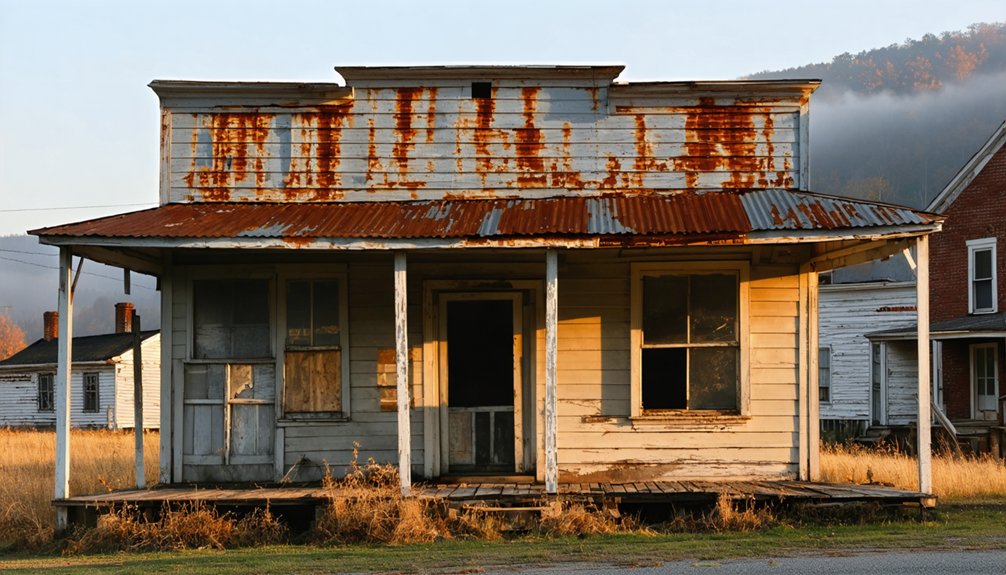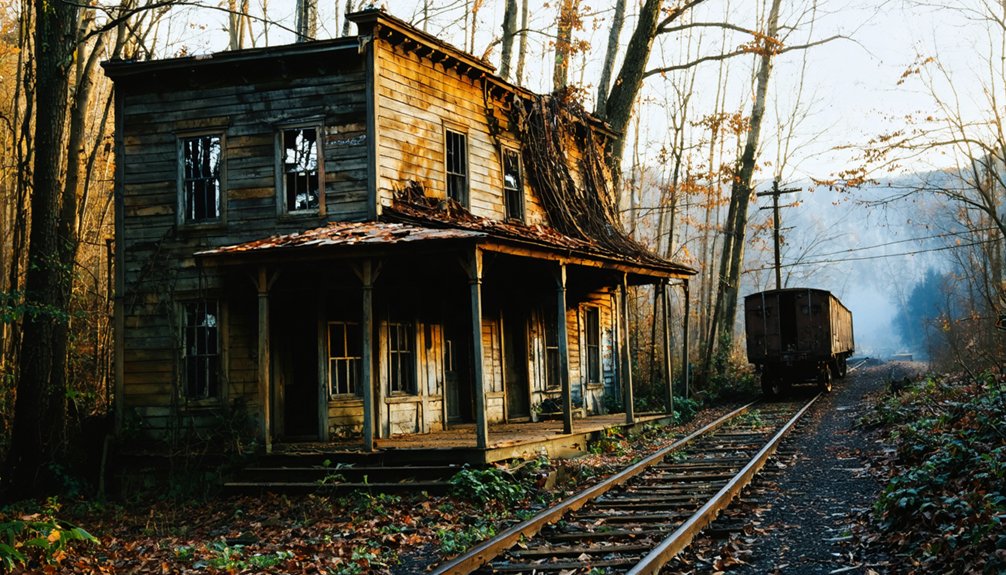
You’ll find numerous ghost towns scattered across Kentucky, particularly in the eastern coal fields where mining operations once flourished. Notable examples include Blue Heron and Barthell in McCreary County, which feature restored buildings and mining artifacts. Paradise, made famous by John Prine’s song, was completely demolished for TVA development in the 1970s. From coal camps to river trading posts, these abandoned settlements tell compelling stories of Kentucky’s economic transformation and cultural heritage.
Key Takeaways
- Kentucky has several ghost towns, with Blue Heron and Barthell in McCreary County being notable examples of abandoned coal mining communities.
- Paradise, made famous by John Prine’s song, was completely demolished in the 1970s to make way for a TVA coal-fired power plant.
- Blue Heron functions as a mining museum town with a reconstructed coal tipple and interpretive trails maintained by the National Park Service.
- Barthell features restored buildings, industrial remnants, partially restored company houses, and a reconstructed commissary adapted for tourism.
- The Jellico area contains numerous abandoned mining communities where only foundations remain as evidence of their existence.
What Makes a Kentucky Ghost Town
How does a once-thriving Kentucky community transform into a ghost town? The process often begins with sudden economic decline, typically triggered by the shutdown of coal mines, timber mills, or river trading posts.
When prosperity drains from a Kentucky town, it starts with shuttered mines, silent mills, and abandoned river docks.
When these primary industries collapse, you’ll see mass exodus as workers and their families seek opportunities elsewhere. Early settlers were first drawn to these areas by the fertile soil and strategic river locations that supported agriculture.
Paradise, Kentucky tragically became a ghost town when the Peabody Company began strip mining operations in the area. In Kentucky’s remote hollows and coal country, you’ll find communities that vanished after their company-town employers withdrew, leaving no alternative economy. The loss of essential institutions like schools, post offices, and churches strips away community identity.
Property abandonment accelerates as younger generations migrate to urban centers, leaving aging populations behind. Natural forces then take over – vegetation reclaims streets, floods reshape landscapes, and strip mining scars the earth, until all that remains are deteriorating structures and forgotten foundations.
Notable Abandoned Towns in Kentucky
Among Kentucky’s most notable ghost towns, you’ll find several abandoned coal camps that offer glimpses into the state’s mining heritage, including Blue Heron and Barthell in McCreary County.
You can explore the restored buildings and industrial remnants at Barthell, where original miner housing and company infrastructure have been adapted for tourism, or visit Blue Heron’s partially reconstructed coal tipple and interpretive trails maintained by the National Park Service. Blue Heron was established in 1937 and operated until 1962 when abandoned.
The town of Paradise, immortalized in John Prine’s famous song, represents a different kind of ghost town – one largely erased by TVA development, though its cultural impact endures through music and documented industrial history. Today, Blue Heron serves as a mining museum town that educates visitors about Kentucky’s coal mining past.
Kentucky’s Coal Camp Ruins
Kentucky’s coal camp ruins stand as poignant reminders of the state’s once-thriving mining industry, particularly in counties like McCreary where abandoned settlements like Blue Heron and Barthell Coal Camp preserve the legacy of company-built communities.
These sites offer you glimpses into coal camp history and mining community culture through their remaining structures and artifacts. Steel structures remain at Blue Heron like industrial constellations against the sky, marking the landscape of this historic site.
- Blue Heron (Mine 18) showcases the typical layout of a company town, with remnants of boarding houses, a company store, and worker housing now serving as interpretive exhibits within the Big South Fork National Recreation Area.
- Barthell Coal Camp features partially restored company houses and a reconstructed commissary, allowing you to experience authentic early 20th-century mining town architecture.
- The Jellico-area camps demonstrate how smaller mining communities often vanished completely, leaving only foundations and cemeteries as evidence of their existence.
Paradise Ghost Town shares a similar fate, as it was completely demolished in the 1970s when a coal-fired power plant was constructed.
Paradise: Gone But Remembered
Paradise, once a thriving river community in Muhlenberg County, met its end in 1967 when the Tennessee Valley Authority demolished the town due to environmental hazards from the nearby Paradise Fossil Plant.
You’ll find only the hilltop cemetery remains of this historic settlement, which began as Stom’s Landing in the early 1800s. The town’s Paradise memories live on through John Prine’s famous song and local oral histories that tell of life before coal impacts changed everything. Residents faced dirty laundry outdoors and persistent health issues from the constant ash fallout.
Originally sustained by river trade and the nearby Airdrie ironworks, Paradise fell victim to strip-mining operations and toxic emissions from the coal plant. The facility made history by featuring the largest cyclonic boiler in the world.
While some dispute whether Peabody or Pittsburg & Midway Coal Company bears primary responsibility, the outcome remains the same – a community erased, with only scattered foundations and a cemetery overlooking the industrial landscape that replaced it.
The Coal Mining Legacy
During the early twentieth century, coal mining transformed Kentucky’s landscape by establishing numerous company-owned settlements that would later become ghost towns.
You’ll find remnants of these once-thriving communities scattered across the state, telling stories of industrial boom and community decline.
Here’s what made these coal mining settlements unique:
- Companies like Stearns Coal & Lumber and U.S. Coal & Coke built entire towns from scratch, complete with schools, stores, and housing.
- These settlements featured innovative designs, like Blue Heron’s buildings that could be disassembled and moved as mines depleted.
- Infrastructure was extensive, with Lynch boasting 50 miles of water lines and one of the world’s largest company stores. Mine number 31 set a world record production of 12,820 tons of coal in just 9 hours.
Today, you can explore these abandoned sites, from Packard’s quiet ruins to Barthell’s restored camp houses, each preserving Kentucky’s rich mining heritage. Blue Heron Mine 18 operated until December 1962, marking the end of its coal mining era.
Environmental Impacts and Displacement
Beyond the visible ruins of abandoned coal towns lies a complex web of environmental challenges that continue to shape Kentucky’s landscape and communities.
You’ll find over 14,000 orphan oil and gas wells leaking methane and toxic chemicals into the soil and groundwater, while countless acres of unreclaimed mine lands create unstable terrain and acid drainage that poisons local watersheds.
The environmental degradation has triggered widespread community displacement as property values plummet and health risks soar.
Strip-mining has permanently altered the region’s hydrology, making communities more vulnerable to devastating flash floods.
When you explore these ghost towns today, you’re witnessing not just historical remnants, but the lasting effects of industrial practices that continue to force residents from their ancestral homes.
Visiting Historical Ghost Town Sites
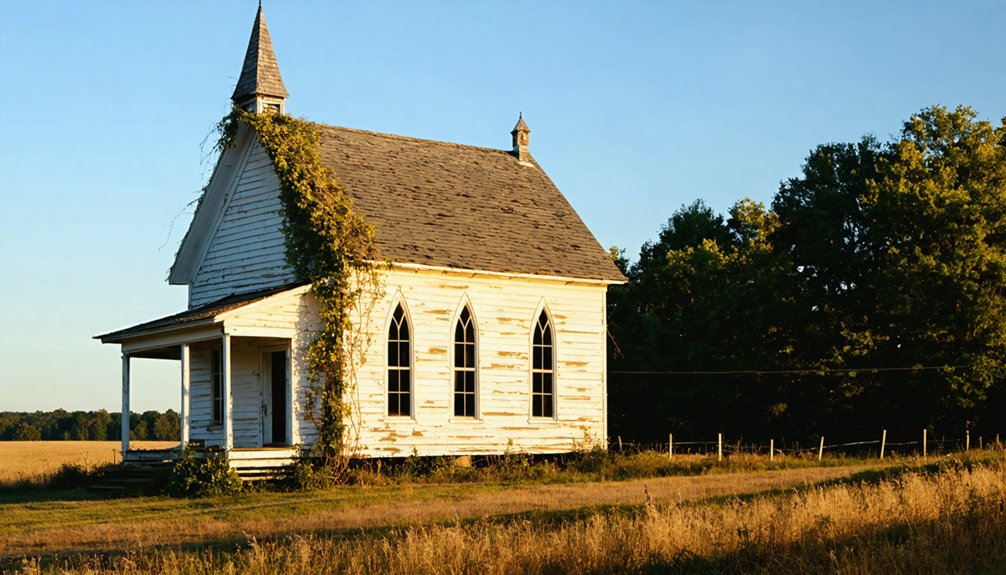
When you’re planning to visit Kentucky’s ghost towns, you’ll find the best-preserved sites at Barthell Coal Camp and Blue Heron Mine, where intact structures and interpretive exhibits offer safe, guided exploration opportunities.
For the most rewarding experience, contact site managers in advance to verify seasonal hours and access requirements, especially for remote locations like Bells Mines and Paradise.
Remember to wear sturdy shoes, bring water, and stay within marked paths, as these historical sites often contain unstable ground and deteriorating structures that require careful navigation.
Safety and Access Tips
Before exploring Kentucky’s ghost towns, you’ll need to understand critical safety protocols and access requirements that protect both visitors and historical sites.
To avoid trespass risks, always obtain written permission from property owners, as abandoned status doesn’t equate to public access.
Essential safety equipment includes:
- Personal protective gear: sturdy boots, hard hat, gloves, and a respirator for protection against structural hazards and environmental contaminants
- Navigation tools: GPS device, charged phone, and emergency beacon for reliable communication in remote areas
- Emergency supplies: first-aid kit, flashlight, water, and emergency blanket for unexpected situations
Never explore alone, and visit only during daylight hours.
Watch for hazards like unstable structures, mine shafts, and contaminated materials. Leave detailed plans with trusted contacts and respect all posted warnings.
Best Preserved Locations Today
Kentucky’s most fascinating ghost towns offer remarkably preserved glimpses into the state’s coal mining and rural heritage.
Exploring ghost towns in Kentucky reveals abandoned structures that tell stories of lives once lived and dreams unfulfilled. Each site is a testament to the passage of time, showcasing unique architecture and artifacts that invite curiosity. Whether it’s the haunting beauty of a deserted street or the remnants of an old church, these towns captivate visitors with their eerie charm.
You’ll find Barthell’s meticulously restored structures, including a company store, cabins, and authentic railcars, making it the best-preserved ghost town for experiencing early 1900s mining life.
Blue Heron’s unique “ghost structures” and mining museum showcase preserved machinery and coal tipples of historical significance.
Paradise stands as the state’s most famous abandoned settlement, with its infrastructure telling the story of coal industry decline.
For a different perspective, visit Creelsboro’s rock house and natural arch, which reflect rural life before the Cumberland Dam changed the region forever.
Packard’s mining camp remnants provide a raw, untouched view of Kentucky’s Appalachian coal heritage.
Planning Your Ghost Adventure
Planning a visit to Kentucky’s ghost towns demands strategic preparation to maximize your experience at these historically significant sites.
You’ll find ghost tours and historical reenactments at locations like Blue Heron, where audio recreations bring mining life back to the surface. Each destination offers unique glimpses into Kentucky’s past, from coal camps to river commerce.
- Visit during seasonal operating hours – Barthell’s museum and Blue Heron are best explored during daylight hours, with overnight options in renovated homes.
- Pack appropriate gear – Sturdy footwear is essential for uneven terrain, especially at McCreary County sites.
- Plan your route strategically – Fuel up in hub towns like Stearns, and utilize visitor centers at Land Between the Lakes for maps and guidance.
Preservation Efforts and Protected Areas

Through a combination of state, federal, and grassroots initiatives, preservation efforts for Kentucky’s ghost towns have gained significant momentum in recent decades.
You’ll find the Kentucky Heritage Council leading preservation techniques through grants, tax credits, and technical assistance for historic sites. The National Register of Historic Places provides essential federal protections, while local Main Street programs implement practical conservation strategies.
Community engagement flourishes through historical societies and volunteer groups who’ve transformed abandoned buildings into museums and living history sites.
You can explore these preserved spaces thanks to municipal projects that’ve improved site accessibility and safety. Federal land management agencies, including the U.S. Army Corps of Engineers and Forest Service, maintain many former townsites, ensuring their protection while allowing public access for future generations.
Hidden Stories Behind Kentucky’s Lost Communities
While economic factors often drove the abandonment of Kentucky’s ghost towns, each lost community harbors deeper narratives of social upheaval and cultural displacement.
You’ll find the demographic shifts etched into surviving cemetery headstones and preserved in oral histories passed down through displaced families.
- Places like Paradise and Blue Heron stand as powerful examples of how industrial decline and federal projects forced entire multi-generational communities to uproot and scatter.
- Cultural memory lives on through folklore, regional songs, and community narratives that keep these vanished towns alive in local identity.
- Material remnants – from old railway tracks to mine equipment – provide tangible connections to these lost communities, allowing you to piece together the human stories behind their abandonment.
Planning Your Ghost Town Adventure
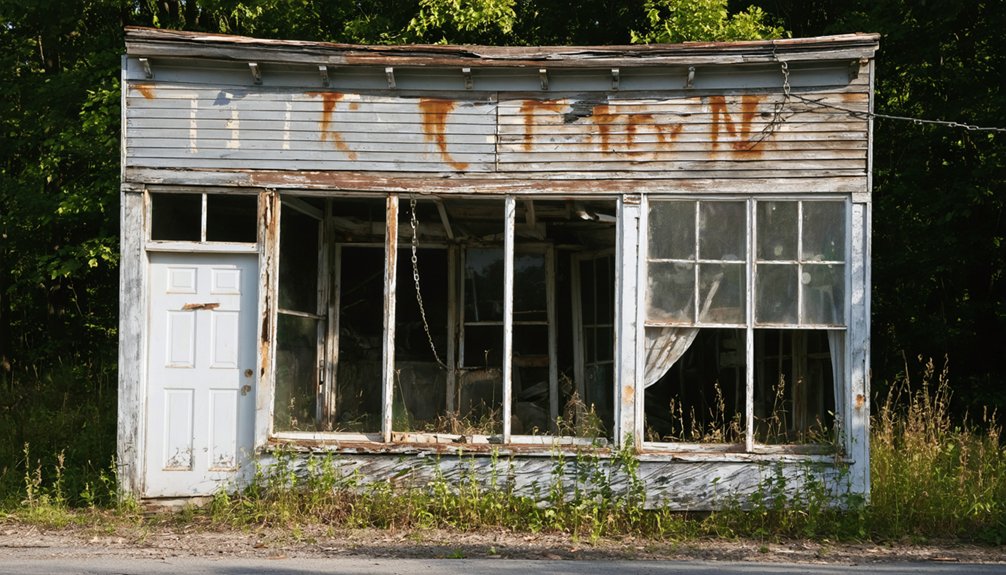
Before commencing your Kentucky ghost town expedition, you’ll need to master essential logistical, safety, and ethical considerations that’ll guarantee a successful adventure.
Start by mapping routes through public lands and checking county records for property access. Pack wilderness safety gear and download offline maps, as cell service is often nonexistent in remote valleys.
For ghost town photography, secure necessary permits and respect local folklore surrounding these historic sites. Always travel with a companion and inform someone of your plans, especially when exploring coal country’s winding mountain roads.
Remember to treat historical structures, cemeteries, and artifacts with reverence – follow Leave No Trace principles and avoid disturbing cultural remains.
Some locations require 30-90 minutes of extra travel time, so plan accordingly.
Frequently Asked Questions
Are There Any Haunted Ghost Towns in Kentucky?
Like whispers echoing through time, you’ll find haunted history at Kentucky’s Blue Heron, Paradise, Barthell, and Bell Mines ghost towns, where spectral sightings of former miners still linger among abandoned structures.
Can You Legally Take Artifacts From Kentucky Ghost Towns?
You can’t legally remove artifacts without proper permits and landowner permission. You’ll face serious legal ramifications, including fines and criminal charges, as Kentucky law prioritizes artifact preservation on public and private lands.
Which Kentucky Ghost Towns Still Have Active Cemeteries?
Time stands still at Barthell, Lynch, Blue Heron, Paradise, and Mill Springs, where you’ll find active burial sites of historical significance. These ghost towns maintain cemeteries for both heritage and modern interments.
Do Any Kentucky Ghost Towns Have Year-Round Residents?
You’ll find year-round residents in Cave City, where locals maintain homes despite declining tourism. While not completely abandoned, its ghost town demographics show a mix of permanent inhabitants and vacant buildings.
What Happened to the Churches in Abandoned Kentucky Towns?
Purposeful patterns persist as you’ll find most abandoned churches demolished or decaying, though their cemeteries remain sacred historical markers. Cumberland Presbyterian ruins and hilltop gravesites still tell Kentucky’s ghostly community stories.
References
- https://kids.kiddle.co/List_of_ghost_towns_in_Kentucky
- https://en.wikipedia.org/wiki/List_of_ghost_towns_in_Kentucky
- https://wbkr.com/visit-these-20-creepy-kentucky-ghost-towns-for-a-halloween-road-trip/
- http://freepages.rootsweb.com/~gtusa/history/usa/ky.htm
- https://www.youtube.com/watch?v=D9gOmfCuKLs
- https://everafterinthewoods.com/abandoned-ghost-towns-in-kentucky-that-still-hold-echoes-of-the-past/
- https://www.freakyfoottours.com/us/kentucky/
- https://www.geotab.com/ghost-towns/
- https://westernkyhistory.org/exploring-the-forgotten-towns-and-ghost-towns-of-western-kentucky/
- https://www.onlyinyourstate.com/experiences/kentucky/ghost-town-ky