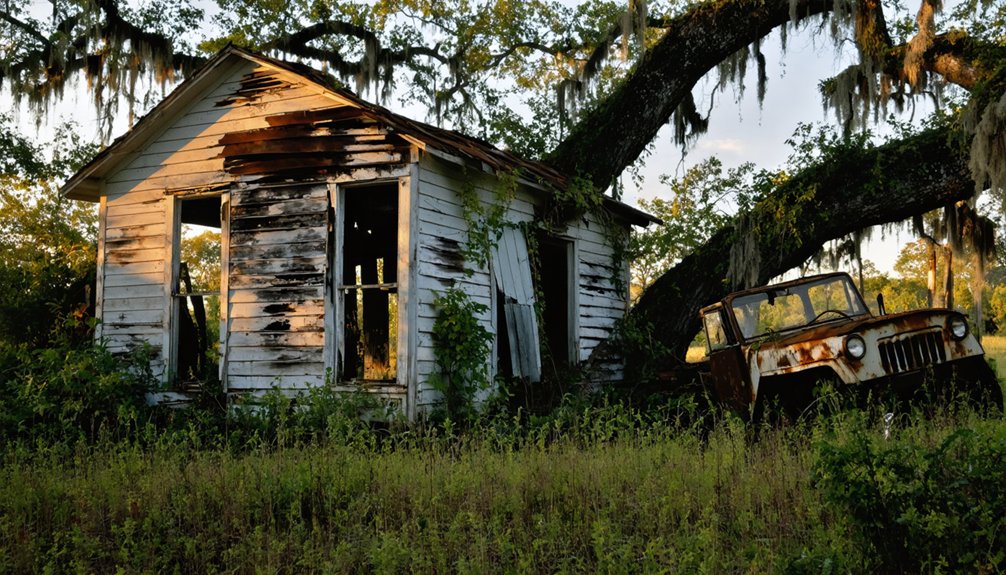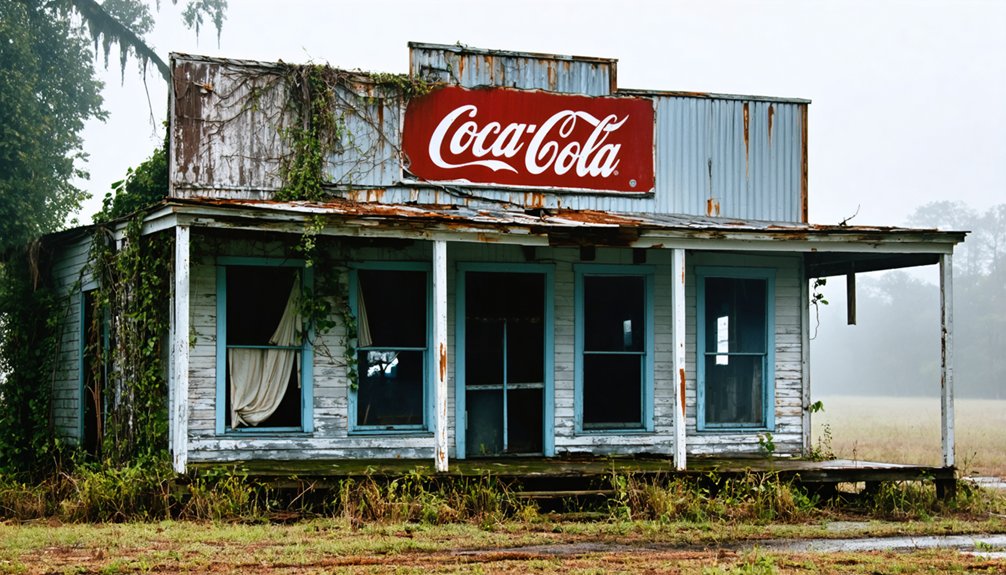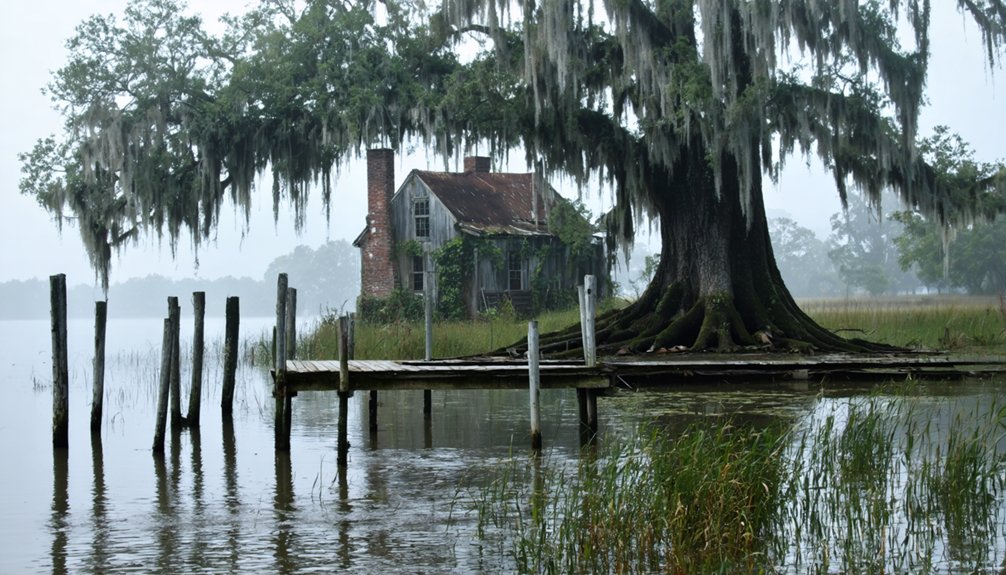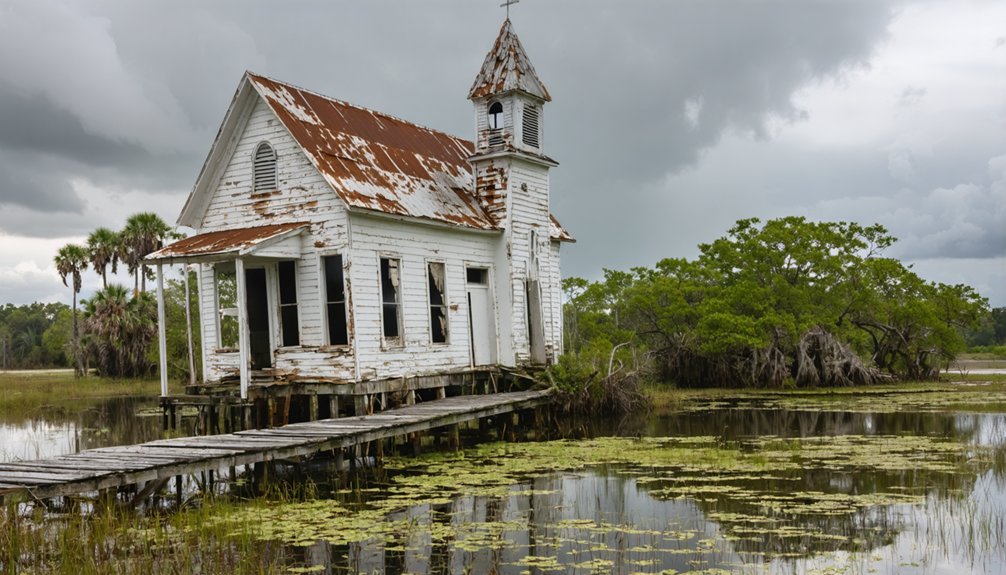
You’ll find nearly 100 documented ghost towns scattered across Louisiana, abandoned due to hurricanes, coastal erosion, and economic decline. Notable sites include Ruddock, devastated by the 1915 hurricane, and Burrwood, which succumbed to rising waters. While some towns like Taft remain accessible by road, others like Frenier require boat access. Louisiana’s ghost towns offer fascinating windows into the state’s complex history of environmental challenges and social transformation.
Key Takeaways
- Louisiana has nearly 100 documented ghost towns, with many more potentially undocumented, especially in low-lying coastal areas.
- Notable ghost towns include Ruddock, Cheniere Caminada, Burrwood, and Morrisonville, each abandoned due to different historical events.
- Natural disasters, particularly hurricanes like the 1893 and 1915 storms, caused many communities to become permanently uninhabited.
- Pointe Coupee Parish contains multiple ghost towns, including Elliot City and False River, showing concentrated abandonment in certain regions.
- Many Louisiana ghost towns remain accessible today, with some offering guided tours or visible remnants of their past existence.
Understanding Louisiana’s Ghost Town Legacy
While Louisiana’s vibrant culture and bustling cities often take center stage, the state’s landscape is dotted with abandoned settlements that tell a compelling story of environmental challenges, economic shifts, and social transformation.
You’ll find these ghost towns reveal profound lessons about community resilience in the face of natural forces. Coastal erosion, devastating hurricanes, and flood control projects have forced entire communities to relocate, while economic upheavals from industry collapses have turned thriving settlements into mere memories. The loss of a parish seat designation often triggered the decline of once-prosperous courthouse towns.
The cultural significance of these sites persists through surviving cemeteries, structural remnants, and altered landscapes. From submerged coastal villages to former plantation communities, each abandoned settlement represents a chapter in Louisiana’s complex history of adaptation and displacement, shaped by both environmental pressures and socioeconomic changes. Hundreds of towns vanished during the 20th century, leaving behind ghostly remnants that serve as windows into the state’s past.
Notable Abandoned Settlements Across Parishes
You’ll find Louisiana’s most concentrated collection of ghost towns in Pointe Coupee Parish, where nine abandoned settlements, including the historic Elliot City and False River, stand as silent testimonies to the past.
Exploring the ghost towns of Louisiana history reveals fascinating stories of resilience and change. Each site offers a unique glimpse into the lives of those who once called these places home, showcasing the rich tapestry of Louisiana’s cultural heritage. As you wander through these remnants, you can’t help but feel the echoes of the past resonating in the quiet landscapes.
The destructive power of natural disasters has claimed several communities, especially Ruddock in St. John the Baptist Parish, which succumbed to a devastating 1915 hurricane, leaving only rotted remnants and highway markers. The coastal town of Cheniere Caminada met a similar fate when the 1893 hurricane destroyed it completely.
Along the Mississippi River delta, coastal erosion has submerged the once-thriving town of Burrwood in Plaquemines Parish, which previously supported an estimated population of 1,000. Industrial impacts have also shaped Louisiana’s ghost towns, as seen in Morrisonville where toxic contamination from Dow Chemical forced residents to relocate in 1990.
Famous Ghost Town Locations
Louisiana’s ghost towns fall into four distinct categories: bayou settlements, lumber towns, river-port communities, and industrial sites – each telling a unique story of abandonment.
The allure of exploring abandoned sites across Louisiana lies in their rich history and the secrets they hold. Each location offers a glimpse into a past where vibrant communities thrived, only to be left to the elements as time marched on. Adventurers and historians alike are drawn to these remnants, eager to uncover the stories buried within their crumbling walls.
You’ll find the most compelling stories in places like Bayou Chene, where a thriving stilt-built community once stood in the Atchafalaya Basin, complete with schools and churches, until repeated flooding forced its residents to leave. Similar to the haunting history of Oak Alley Plantation, where phantom carriages can still be heard rolling through the abandoned grounds.
Burrwood, with its significant population of 1,000 residents, succumbed to coastal erosion and now lies mostly underwater.
In the lumber sector, towns like Fisher and Peason Ridge vanished when timber operations ceased. These communities were built around longleaf pine forests that supplied the region’s booming sawmill industry.
Along the rivers, settlements like Red River Landing and Torras faded as changing river channels disrupted commerce.
Industrial sites, such as Taft, have transformed into vast industrial zones, leaving only cemeteries as silent witnesses.
Hurricane-Destroyed Historic Communities
Throughout coastal Louisiana’s parishes, powerful hurricanes have permanently altered the landscape of once-thriving communities, leaving behind haunting remnants of their former existence.
Many abandoned Louisiana towns mirror the economic decline factors that emptied settlements across America’s frontier regions.
You’ll find the stark remains of Ruddock, where the devastating 1915 New Orleans Hurricane claimed 58 lives and scattered a population of 900 residents. Similarly, Burrwood’s final structure surrendered to the waters in 2010, following decades of hurricane impacts and coastal erosion. Hurricane Betsy wreaked unprecedented devastation on the region until Katrina’s arrival in 2005.
The community’s resilience proved insufficient against nature’s persistent assault.
Pecan Island stands as a symbol of more recent destruction, with Hurricane Rita dealing the decisive blow to this coastal settlement.
While some communities adapted to environmental challenges, these locations exemplify how severe storms can permanently reshape Louisiana’s human geography, transforming vibrant settlements into weathered memories.
What Led to These Towns Being Deserted
You’ll find that Louisiana’s ghost towns emerged primarily from two devastating forces: natural disasters and economic decline.
In coastal areas, hurricanes like the 1893 storm that destroyed Cheniere Caminada and the 1915 hurricane that wiped out Ruddock rendered entire communities uninhabitable, while industrial towns faced their own mortality as sawmills depleted timber resources and chemical companies contaminated residential areas. Nearly 100 ghost towns have been documented throughout the state, though the actual number may be higher.
The combination of environmental catastrophes and industrial transformation reshaped Louisiana’s landscape, leaving behind abandoned settlements from Morrisonville’s chemical contamination to Carson’s timber exhaustion.
Natural Disasters Strike Hard
Mother Nature released her fury on several Louisiana communities in the early to mid-1900s, leaving behind a haunting legacy of ghost towns that couldn’t recover from devastating natural disasters.
You’ll find evidence of this destruction in places like Ruddock and Frenier, where the 1915 New Orleans hurricane obliterated entire communities, claiming numerous lives and destroying critical infrastructure.
The storm impact proved insurmountable, with both towns’ disaster recovery efforts failing due to their vulnerable locations between Lakes Maurepas and Pontchartrain.
More recently, a giant sinkhole in Bayou Corne forced hundreds of residents to evacuate permanently in 2012, adding another ghost town to Louisiana’s list.
Bayou Chene succumbed to relentless flooding, while Burrwood’s fate was sealed by coastal erosion and repeated hurricane strikes.
These towns’ demise wasn’t just about the immediate destruction – their locations on soft, low-lying ground made rebuilding practically impossible, forcing residents to abandon their homes permanently.
Industry and Economic Decline
While natural disasters dealt devastating blows to Louisiana’s communities, the systematic collapse of local industries proved equally destructive in creating ghost towns across the state.
You’ll find the economic impacts particularly stark in places like Ruddock, where cypress lumber depletion left entire communities stranded without alternative revenue sources. Resource depletion, combined with railroad rerouting and military land seizures, accelerated the demise of once-thriving towns.
- Empty sawmills stand silent where bustling lumber operations once employed hundreds
- Abandoned train depots crumble along forgotten rail lines
- Toxic industrial zones stretch for miles, marked by “No Trespassing” signs
- Bulldozed home foundations peek through overgrown fields at Peason Ridge
- Shuttered storefronts line Main Streets where local banks once financed dreams
Most Famous Ghost Towns Worth Exploring
Louisiana’s most haunting ghost towns beckon adventurous explorers with their rich histories and eerie remnants of the past.
You’ll discover the Ruddock ruins along Interstate 55, where shadowy figures and whispers echo the town’s tragic end in the 1915 hurricane. Nearby, Frenier folklore centers on voodoo priestess Julia Brown’s curse, with broken docks and skeletal trees marking its watery grave.
Shadowy spirits haunt Ruddock’s ghostly remains, while Frenier’s cursed waters whisper dark tales of Julia Brown’s vengeance.
Don’t miss Bayou Chene’s platforms rising from the Atchafalaya Basin, evidence of a unique wetland lifestyle.
At Cheniere Caminada, you’ll witness the devastating power of the 1893 hurricane that claimed over 2,000 lives.
For industrial heritage enthusiasts, Laurel Valley’s abandoned sugar plantation structures offer a glimpse into Louisiana’s agricultural past, famously featured in the film “Angel Heart.”
Preserving Louisiana’s Lost Communities
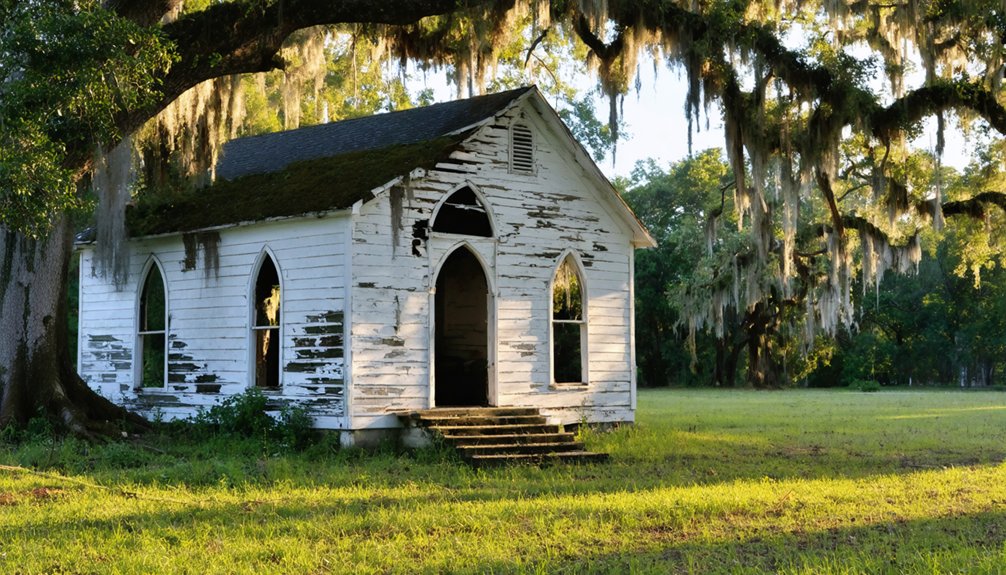
Preserving historic ghost towns presents unique challenges across the state’s diverse landscapes, where multiple agencies and frameworks collaborate to protect these endangered communities.
Through community engagement and targeted preservation strategies, you’ll find both state and federal resources working to save these cultural treasures. The Louisiana Trust for Historic Preservation identifies at-risk sites, while the Division of Historic Preservation provides technical guidance and funding opportunities.
- Crumbling antebellum mansions slowly succumbing to nature’s relentless advance
- Weathered wooden storefronts bearing silent witness to bygone commercial glory
- Abandoned river ports with ghostly wharves stretching into muddy waters
- Historic districts where preservation tax credits breathe new life into vacant buildings
- Storm-ravaged coastal communities fighting against time and tides
Historical Remnants and Modern Access Points
Today’s visitors to Louisiana’s ghost towns encounter a complex tapestry of historical remnants, ranging from submerged coastal settlements to weathered plantation ruins.
You’ll find the historical significance of these sites varies dramatically: Burrwood’s underwater remains tell a story of coastal erosion, while Laurel Valley’s sugar mill ruins showcase early 20th-century plantation life.
Modern accessibility differs at each location – you can reach Taft’s industrial zone and active cemetery by road, while Burrwood and Frenier require boat access.
The haunting remnants of Ruddock remain accessible via I-55, though only scattered debris persists beneath thick vegetation.
At Frenier, broken docks and skeletal trees stand as silent witnesses to the devastating 1915 hurricane, now explored through guided tours along Lake Pontchartrain.
Frequently Asked Questions
Are Any Louisiana Ghost Towns Legally Accessible for Overnight Camping or Stays?
You won’t find legal overnight camping at these ghost towns – current camping regulations prohibit stays. While you can explore during daytime hours, ghost town amenities don’t include designated camping facilities.
What Paranormal Activities or Haunted Legends Are Associated With These Ghost Towns?
You’ll encounter haunted legends of mass drownings, voodoo curses, and restless spirits at these sites, with paranormal sightings including ghostly lights, disembodied voices, and mysterious figures near abandoned cemeteries and waterways.
Can Metal Detecting or Artifact Collecting Be Done in Ghost Towns?
You’ll need permits and landowner permission for metal detecting in ghost towns. Follow artifact preservation ethics and local regulations to avoid legal issues and protect historical resources.
Which Ghost Towns Are Completely Underwater and Accessible Only by Diving?
Like pearls hidden in murky waters, Elliot City in Louisiana’s Morganza Spillway beckons underwater exploration enthusiasts. You’ll need proper diving safety certifications and permits to access this fully submerged historic settlement.
Do Any Ghost Towns Still Have Living Former Residents or Descendants Nearby?
You’ll find former residents and nearby descendants actively maintaining connections to Louisiana’s ghost towns through cemetery visits, church congregations, and family plots, especially in places like Taft and Ruddock.
References
- https://kids.kiddle.co/List_of_ghost_towns_in_Louisiana
- https://etsn.fm/ixp/33/p/7-louisiana-ghost-towns/
- https://thebayouinsider.substack.com/p/ghost-towns-and-forgotten-roads-louisianas
- https://classicrock1051.com/17-ghost-towns-louisiana/
- https://710keel.com/discover-70-ghost-towns-from-across-louisiana/
- https://www.ghosttowns.com/states/la/la.html
- https://jonesswanson.com/mails/louisianas-disappearing-towns-tool-kit/
- https://www.shreveporttimes.com/story/news/2025/09/04/does-louisiana-have-any-ghost-towns-how-many-are-there-where-to-find-abandoned-towns/85972403007/
- https://prcno.org/on-the-origins-of-louisiana-cities-towns-and-villages/
- https://en.wikipedia.org/wiki/List_of_ghost_towns_in_Louisiana