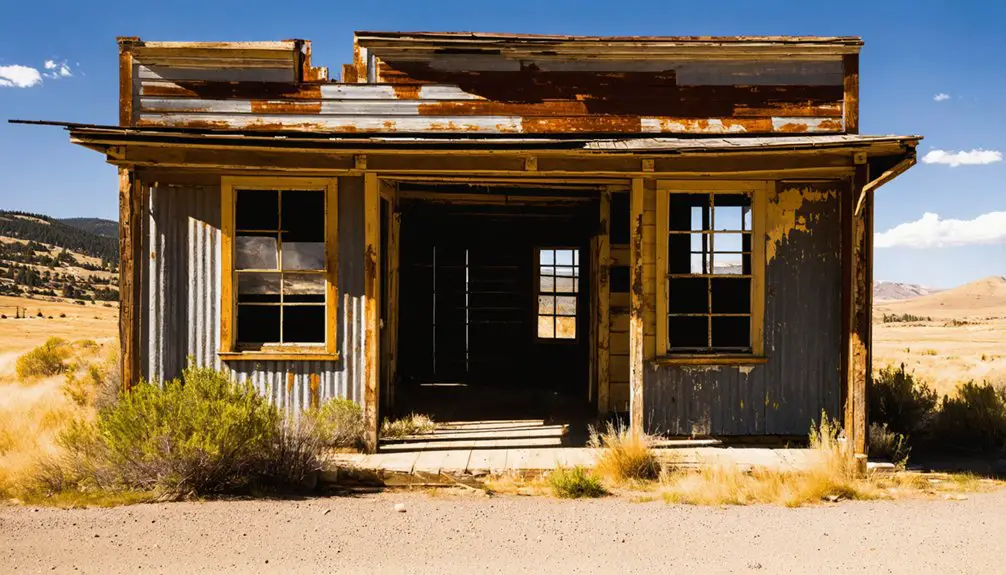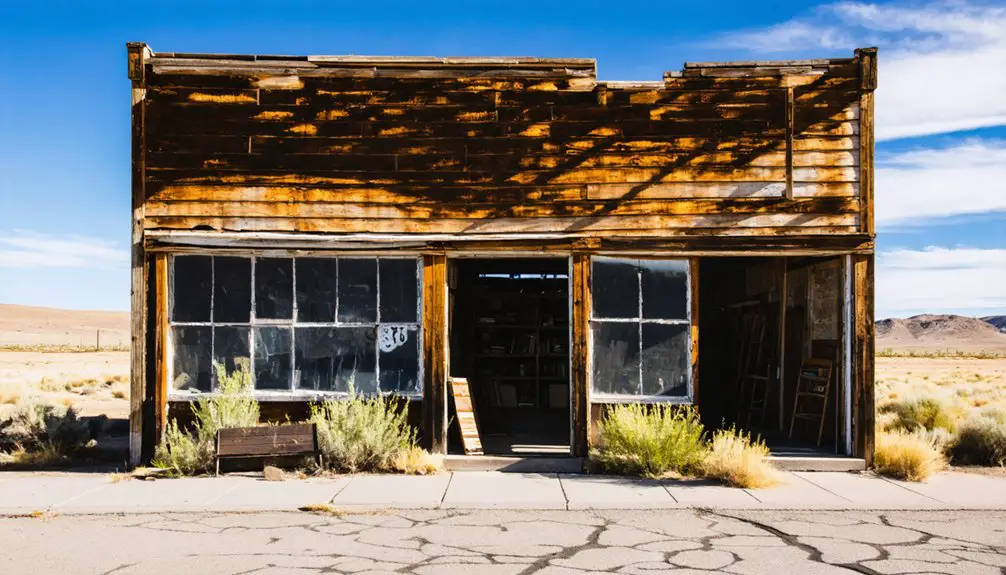
Oregon contains over 200 documented ghost towns, with the highest concentrations in Eastern/Central Oregon‘s mining regions and coastal/logging areas. You’ll find well-preserved sites like Shaniko, a former wool shipping hub, and Sumpter, which showcases a massive gold dredge. These abandoned settlements serve as archaeological records of 19th and 20th-century pioneer life, from mining boomtowns to coastal communities. Each site offers unique opportunities to explore Oregon’s rich cultural heritage through historic structures and artifacts.
Key Takeaways
- Oregon has over 200 documented ghost towns, primarily located in Eastern/Central Oregon’s mining regions and coastal/logging areas.
- Shaniko, a former wool shipping hub, remains partially inhabited with 30 residents and features preserved historic buildings.
- Sumpter showcases remnants of Oregon’s gold mining era, including a massive dredge and structures from its boomtown period.
- Baker City contains over 100 preserved historic structures from its mining heyday, though it’s now an active town.
- Many Oregon ghost towns are accessible via scenic backroads, with some offering guided tours and annual heritage events.
The Legacy of Oregon’s Abandoned Towns
Oregon’s ghost towns live on as poignant reminders of the state’s dynamic settlement history, with over 200 documented abandoned communities scattered across its diverse landscape.
You’ll find these historic sites concentrated in Eastern and Central Oregon’s mining regions and throughout the coastal and Willamette Valley logging areas. Waldport West, a once-thriving community, exemplifies this era with its abandoned sawmill still standing as a testament to Oregon’s lumber industry. Their cultural significance extends beyond mere ruins, serving as essential archaeological records of 19th and 20th-century settlement patterns and industrial technologies.
While some sites have been preserved as heritage parks with interpretive centers, others have surrendered to nature’s reclamation. According to historian Stephen Arndt, there are precisely 256 ghost towns throughout Oregon. The environmental impact varies at each location – some areas show signs of mining contamination, while others have undergone natural revegetation.
Among these ghost towns to explore in Oregon, visitors can uncover fascinating stories of the past and witness the ruins of once-thriving communities. Each town offers a unique glimpse into the history of the region, with remnants of architecture that tell tales of resilience and decline. For adventurers and history buffs alike, these sites provide an inviting backdrop for exploration and reflection.
Many sites now rest on public lands or private timberlands, offering varying degrees of accessibility for exploration.
Northern Oregon’s Most Notable Ghost Towns
While Northern Oregon’s rich pioneer history has left behind numerous abandoned settlements, four ghost towns stand out for their distinctive narratives and preserved remnants.
You’ll find Shaniko’s history preserved in its main street buildings, once a bustling wool shipping hub until shifting rail routes led to its decline. The small town maintains a population of 30 residents today. The town’s restored hotel remains one of its most impressive landmarks.
Bayocean’s dramatic story of coastal erosion saw an ambitious seaside resort completely reclaimed by the ocean.
Antelope’s identity evolved through controversies over municipal governance, while retaining its historic architecture.
Lonerock’s features showcase its ranching heritage, now frozen in time with minimal population.
- Shaniko’s preserved commercial district offers the most complete ghost town experience
- Bayocean’s complete destruction serves as a cautionary tale of coastal development
- Antelope’s surviving buildings tell a complex story of boom, decline, and conflict
- Lonerock’s remote location has helped preserve its authentic pioneer character
- These sites represent diverse causes of town abandonment, from economic shifts to natural forces
Mining Towns of Eastern Oregon
Eastern Oregon’s rich gold districts, concentrated in the Blue Mountains, gave rise to some of the West’s most remarkable mining settlements during the 1860s.
Mining corporations with outside investors eventually took over the small independent operations in the region.
The transition from placer to lode mining marked a significant shift in the region’s development.
You’ll discover Sumpter’s history as a bustling boomtown of 2,000 residents, complete with an opera house and brewery, before a devastating 1917 fire altered its course.
Baker City emerged as the “Queen City of the Inland Empire,” featuring over 100 preserved historic structures that showcase its golden era.
Once a crown jewel of Oregon’s mining empire, Baker City stands frozen in time through its historic architecture.
The remote Cornucopia mining settlement, established in 1886, exemplifies the boom-and-bust pattern common to the region.
While these towns paint a romantic picture of the Old West, they left lasting environmental impacts – from mercury contamination in waterways to altered landscapes from hydraulic mining that forever changed Eastern Oregon’s terrain.
Central Oregon’s Historic Settlements
Central Oregon’s high desert landscape harbors a fascinating collection of ghost towns that tell a different story from their mining counterparts to the east.
You’ll discover these settlements emerged from agricultural endeavors, railroad expansion, and homesteading dreams rather than mineral wealth. Shaniko history exemplifies this pattern, reaching its peak with $5 million in wool profits by 1905, while Antelope revival efforts showcase the region’s resilience through various transformations. The Shaniko Hotel reopened in 2023 to welcome visitors once again, marking a new chapter in the town’s story. Visitors can explore authentic pioneer life through guided walking tours at Fort Rock Valley Homestead Museum from May to October.
- Fort Rock Valley Homestead Museum preserves 13 authentic pioneer structures
- Shaniko’s preserved buildings include the original jail, school, and chapel
- Brothers and Mitchell emerged from early transportation and settlement needs
- Antelope rebuilt itself after an 1894 fire destroyed most of the town
- Historic settlements connect through scenic backroads perfect for exploration
Southern Oregon’s Forgotten Communities
Southern Oregon’s rugged terrain conceals a collection of remarkably preserved ghost towns that emerged during the region’s 19th-century gold rush era.
Buncom history stands out with three surviving clapboard buildings, while Golden heritage is preserved through four key structures, including a church and former store. At Golden’s peak, the town was bolstered by a stage company detour that brought prosperity.
You’ll discover Sterlingville’s significance primarily through its cemetery, which lies 4.2 miles from Buncom and tells the story of a once-thriving community of 1,200 residents.
Kerby architecture reflects its 1850s origins, with numerous historic buildings still standing from the boom era.
These abandoned settlements are easily accessible via county roads, offering you the chance to explore authentic remnants of Southern Oregon’s mining heritage through self-guided tours and community events like Buncom Day.
For the safest experience, travelers should visit during daylight due to the uneven terrain and potentially hazardous conditions.
The Rise and Fall of Oregon’s Wool Empire
While gold fever gripped much of Oregon in the mid-1800s, another empire quietly took shape as pioneering wool manufacturers established mills across the state’s river valleys.
You’ll find that wool production became a cornerstone of Oregon’s economy, with innovative mill technology transforming raw fiber into valuable textiles. Communities rallied to build these industrial centers, raising capital and offering incentives to attract manufacturers.
Major wool processing hubs included:
- Thomas Kay Woolen Mill in Salem with its groundbreaking sprinkler system
- Pendleton Woolen Mills, which grew into a nationally recognized brand
- Portland Woolen Mills, becoming the West’s largest wool manufacturer
- Ashland Woolen Mills, processing 80% of Jackson County’s wool
- Oregon Worsted Company, specializing in niche production
The industry thrived through wartime contracts but ultimately succumbed to synthetic fibers and overseas competition by the mid-20th century.
Best-Preserved Ghost Towns for Visitors
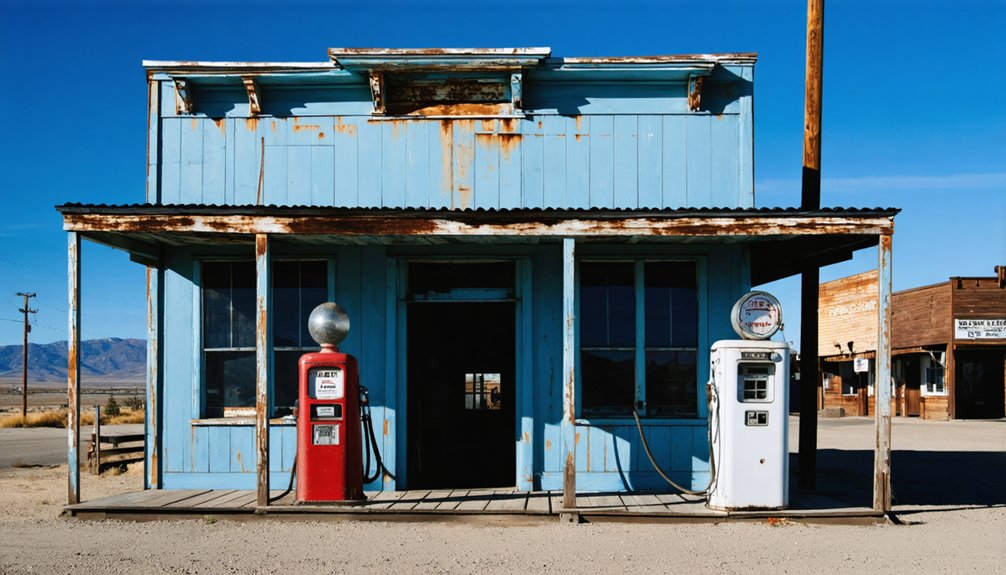
Oregon’s most enchanting ghost towns offer visitors a pristine glimpse into the state’s pioneering past.
You’ll find exceptional ghost town architecture in Shaniko, where the historic hotel, City Hall, and Fire Hall remain standing, drawing hundreds of tourists annually.
For authentic visitor experiences, explore Golden’s four preserved structures, now an Oregon State Heritage Site nestled in Josephine County’s woodlands.
In Buncom, you can wander among well-preserved buildings surrounded by pine trees and participate in the annual Buncom Day Festival.
Sumpter’s massive dredge and remaining structures tell the tale of its gold mining glory days, while Greenhorn’s seven surviving homes stand as silent sentinels to its prospecting era.
Each town provides unique opportunities to step back into Oregon’s frontier history.
Oregon’s Ghost Town Photography Destinations
For photographers seeking to capture haunting remnants of frontier life, five remarkable ghost towns stand out as premier destinations across the state. These locations offer unique ghost town aesthetics, from Shaniko’s wooden sidewalks and vintage vehicles to Whitney’s desolate main street.
The weathered structures and varied textures create perfect conditions for HDR photography and artistic compositions.
- Shaniko delivers atmospheric shots with its historic buildings and scattered vintage automobiles
- Ashwood’s abandoned structures photograph best in indirect lighting for moody effects
- Whitney provides excellent HDR opportunities with its diverse architectural textures
- Antelope offers compelling cultural context with its Rajneeshpuram connection
- Southeastern Oregon’s backroads present remote locations featuring pioneer landmarks and dramatic landscapes
These photography tips will help you document Oregon’s forgotten places while respecting private property boundaries and preserving their authentic character.
Annual Events and Festivals in Ghost Towns
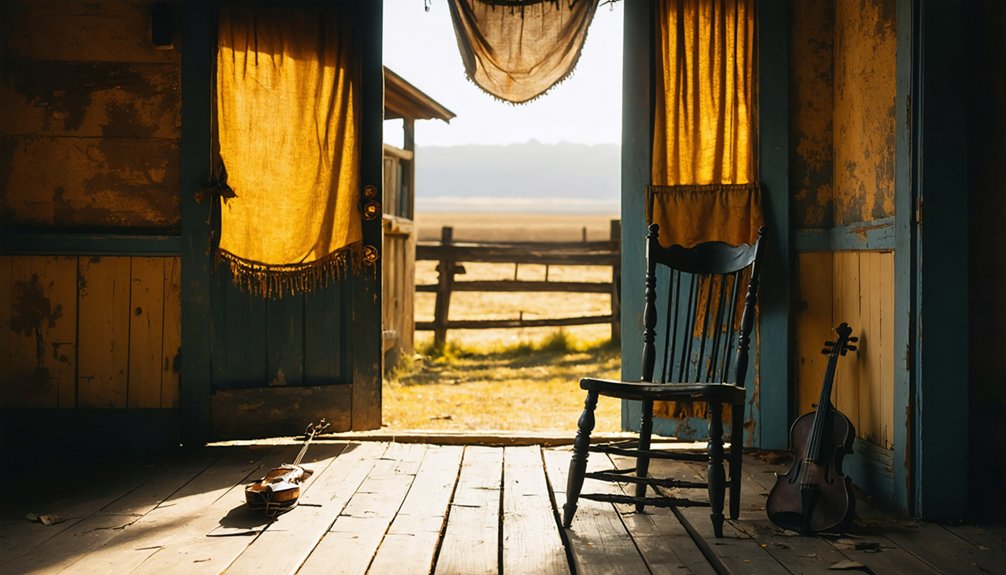
Beyond capturing photos of abandoned buildings, you’ll find these historic settlements come alive during special events throughout the year.
Shaniko Days transforms the former “Wool Capital of the World” with vintage cars, craft vendors, and mini-parades, while the town’s vintage music festival and bluegrass jamboree bring spirited performances to its weathered structures.
These festive gatherings preserve the Old West charm along the Journey Through Time Scenic Byway.
For paranormal enthusiasts, the Oregon Ghost Conference in Seaside stands as the Northwest’s largest gathering of its kind, connecting visitors to haunted historic sites statewide.
Meanwhile, cultural celebrations like Prineville’s Ghost Town Haunted House create seasonal attractions that keep the region’s spooky heritage alive through immersive, themed experiences.
Planning Your Oregon Ghost Town Road Trip
Planning a successful ghost town expedition across Oregon requires careful consideration of five key regions: eastern Oregon‘s Sumpter and John Day area, southern Oregon’s Buncom and Sterlingville corridor, central Oregon’s Shaniko-Antelope district, the southeastern high desert from Jordan Valley to Burns, and the northeastern Baker County clusters.
For ideal ghost town logistics and seasonal considerations, you’ll need to prepare thoroughly:
- Stock up on fuel and supplies in major towns like Bend or Baker City before exploring remote areas.
- Verify land ownership status and obtain necessary permissions beforehand.
- Carry emergency supplies, including water, spare tire, and satellite communication devices.
- Plan your route using topographic maps, GPS, and current BLM road status updates.
- Time your visits according to weather conditions, as winter snow can make many sites inaccessible.
Your daily driving distances will typically range from 30-150 miles between ghost town clusters, depending on your chosen route and site remoteness.
Frequently Asked Questions
Are There Any Dangerous Animals or Hazards to Watch for in Ghost Towns?
Like an iPhone in a mineshaft, you’ll need to stay alert. Watch for wildlife encounters including cougars, bears, and rattlesnakes. Take safety precautions against unstable buildings, open mines, and toxic materials.
Can You Legally Take Artifacts or Souvenirs From Oregon Ghost Towns?
You can’t legally remove artifacts from Oregon ghost towns. Federal and state legal restrictions protect historical sites, making artifact preservation mandatory. You’ll need permits for any collection, regardless of location.
Which Ghost Towns in Oregon Are Considered Haunted or Paranormal Hotspots?
Ever wonder what lurks in Oregon’s abandoned towns? You’ll find reported paranormal activity in Shaniko’s historic hotel, while Sumpter’s dredge attracts ghost hunters seeking evidence of deceased miners through paranormal investigations.
Do Any Oregon Ghost Towns Still Have Year-Round Permanent Residents?
You’ll find year-round residents in several Oregon ghost towns, including Shaniko with about 35 people, Hardman with 20, and Bourne with a handful, preserving historical significance through their resident stories.
Is Special Permission Required to Explore or Photograph Oregon Ghost Towns?
Like traversing a legal maze, you’ll need to check property ownership first. Ghost town exploration guidelines vary – public lands often allow casual visits, while private sites require explicit permission for photography or access.
References
- https://www.nationaldaycalendar.com/lists/12-oregon-ghost-towns
- https://www.visitoregon.com/oregon-ghost-towns/
- https://en.wikipedia.org/wiki/List_of_ghost_towns_in_Oregon
- https://thatoregonlife.com/2016/04/road-trip-ghost-towns-eastern-oregon/
- https://www.pdxmonthly.com/travel-and-outdoors/oregon-ghost-towns
- http://www.photographoregon.com/ghost-towns.html
- https://traveloregon.com/things-to-do/culture-history/ghost-towns/
- https://www.youtube.com/watch?v=GaS3xjrQ-_I
- https://theashlandchronicle.com/oregon-has-an-abandoned-town-that-most-people-dont-know-about/
- https://corvallisadvocate.com/exploring-oregons-ghost-towns/