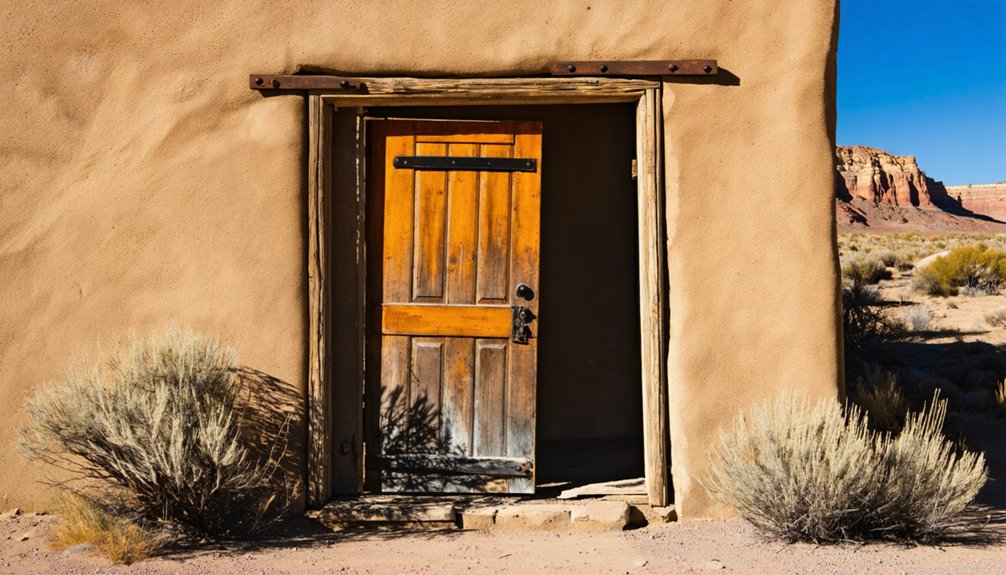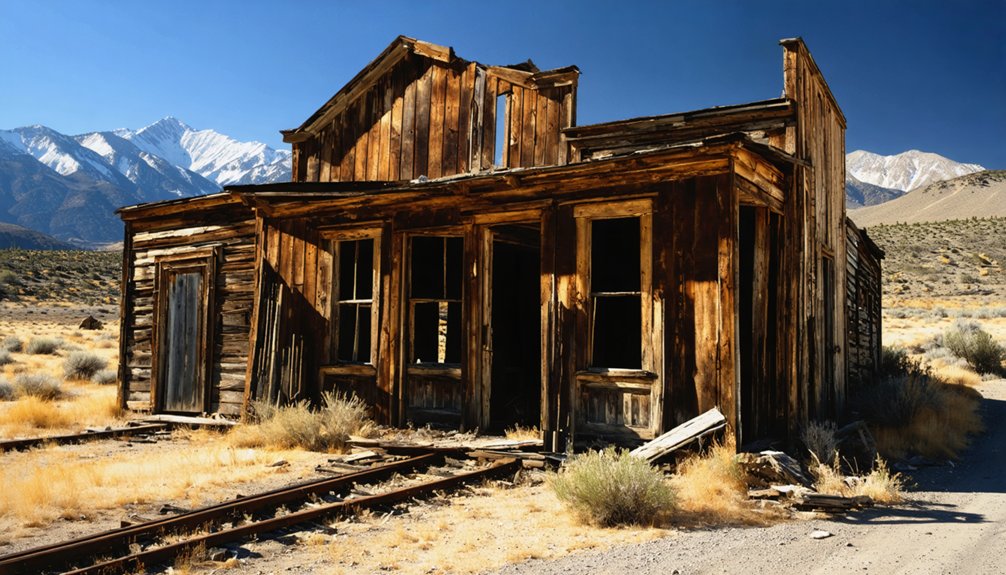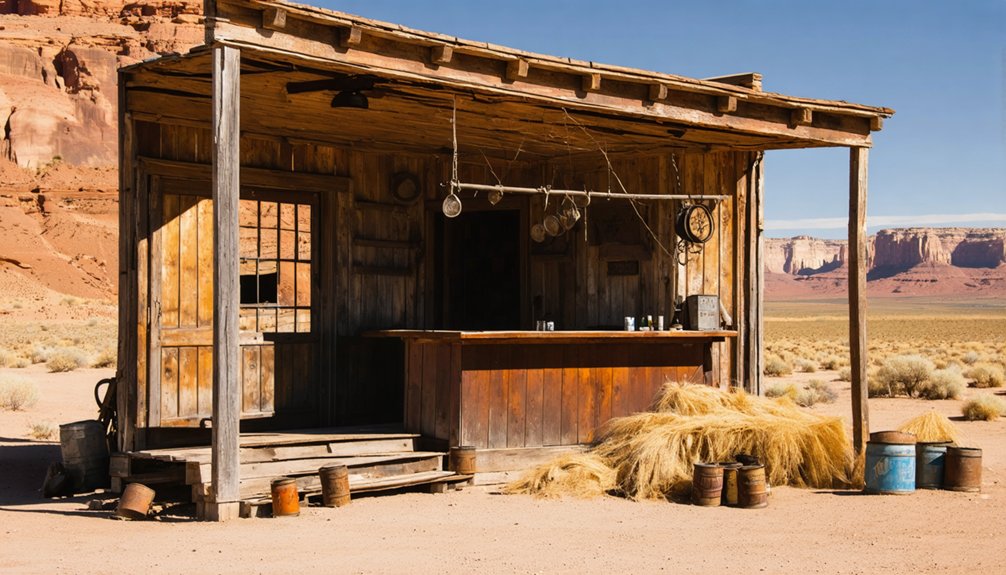
You’ll find over 140 ghost towns scattered across Utah’s diverse landscape, each telling unique stories of boom-and-bust cycles from the 1800s. These abandoned settlements, from Silver Reef’s silver mines to Grafton’s pioneer ruins, showcase the state’s rich mining and Mormon settlement heritage. While some towns like Frisco experienced sudden collapse, others like Eureka maintain partially preserved structures. Exploring these historical sites reveals fascinating chapters of Utah’s pioneering spirit and industrial past.
Key Takeaways
- Utah has over 140 ghost towns, primarily resulting from mining booms, Mormon settlements, and railroad development during the 19th century.
- Famous ghost towns include Silver Reef, Frisco, and Old Irontown in southern Utah, each showcasing unique mining heritage and historical structures.
- Eureka, a central Utah ghost town, features historic buildings and the Tintic Mining Museum from its mining heyday population of 4,000.
- Ghost towns in Utah are classified as “ghosted” when population drops below 10% of peak numbers, ranging from abandoned sites to semi-populated communities.
- Many ghost towns are accessible for visitors, though some require careful planning and adherence to safety guidelines due to hazardous abandoned mines.
Defining Utah’s Ghost Towns
Ghost towns, those haunting remnants of Utah’s past, represent settlements that have experienced dramatic population shifts or complete abandonment after their economic foundations crumbled.
Like empty shells scattered across Utah’s landscape, ghost towns stand as silent witnesses to dreams that flourished and faded.
You’ll find these sites classified by both their physical condition and functional status, with experts typically considering a town “ghosted” when its population drops below 10% of its peak numbers.
Urban decay manifests in various stages, from barren sites with mere foundations to semi-abandoned communities where a handful of residents persist among vacant buildings.
Some towns still have intact structures despite being uninhabited, while others retain only archaeological traces of their former glory.
The classification often depends on the presence of original structures, the extent of deterioration, and whether the settlement has completely lost its original economic purpose, such as mining or railroad operations.
Many ghost towns originated from specific industries like mining and agriculture, each leaving behind distinct historical markers of their economic roots.
Popular among history enthusiasts and photographers, these abandoned settlements offer a unique glimpse into Utah’s pioneering past.
Historical Significance and Development
During the latter half of the 19th century, Utah’s landscape transformed dramatically as three distinct forces sparked the creation of numerous settlements: mining discoveries, Mormon pioneer expansion, and transcontinental railroad development.
You’ll find that Utah’s mining history emerged through silver strikes at Silver Reef in 1866, iron works near Cedar City in 1868, and coal discoveries like Sego in 1908. Silver Reef quickly grew to include nine grocery stores and numerous saloons.
Mormon pioneers established agricultural communities such as Grafton in 1859, while railroad hubs like Promontory and Terrace flourished with the completion of the transcontinental railroad in 1869.
These towns experienced rapid growth followed by agricultural decline and economic hardship. The 1874 money panic, devastating fires, and recurring floods ultimately led to the abandonment of once-thriving communities like Old Irontown, Silver City, and Grafton. Today, Utah has over 140 ghost towns scattered across its territory, each telling a unique story of boom and bust.
Among these remnants of the past, ghost towns in southern Utah capture the imagination of visitors and historians alike. Each location offers a glimpse into the lives of those who once called them home, revealing the challenges they faced and the dreams they pursued. Exploring these abandoned places provides a haunting yet fascinating experience, reminding us of the transient nature of prosperity.
Famous Southern Utah Abandoned Sites
You’ll discover fascinating mining ruins and pioneer settlements scattered throughout Southern Utah’s stunning landscapes, from the well-preserved structures of Grafton’s Mormon cotton-growing community to the crumbling remnants of Silver Reef’s unique sandstone silver mines.
The region’s ghost towns paint a vivid picture of Utah’s pioneering spirit, whether you’re exploring Frisco’s notorious silver-mining past or examining Old Irontown’s historic beehive ovens that stand as testament to the area’s industrial heritage.
Your journey through these abandoned sites reveals compelling stories of boom-and-bust cycles, from the short-lived prosperity of mining operations to the harsh realities that forced settlers to eventually abandon their dreams. Visitors can explore the historic charcoal kilns still standing at Frisco, offering a glimpse into the town’s once-thriving mining operations.
Mining Town Ruins Today
Among the most compelling ghost towns in southern Utah, three major sites stand as monuments to the region’s mining heritage: Old Irontown, Frisco, and Silver Reef.
You’ll find distinctive mining techniques represented at each location – from iron smelting at Old Irontown’s beehive ovens to silver extraction from unique sandstone deposits at Silver Reef. Exploring these sites requires navigating through remote desert roads to reach their isolated locations.
The settlement dynamics varied dramatically: Old Irontown’s church-sponsored venture failed within eight years, while Frisco grew into a rowdy boomtown with countless saloons before declining in the 1920s. At its peak, Silver Reef yielded approximately $10 million worth of silver before operations ceased.
Today, you can explore the ruins firsthand: Old Irontown offers interpretive trails showcasing industrial archaeology, Frisco presents scattered remnants of its mining heyday, and Silver Reef maintains a museum in its restored Wells Fargo building where you can discover the town’s remarkable silver-mining past.
Pioneer Settlement Adventures
While mining towns dominated Utah’s ghost town landscape, several fascinating pioneer settlements also met similar fates of abandonment.
You’ll discover pioneer resilience in places like Grafton, where Mormon settlers battled recurring floods along the Virgin River before relocating to higher ground in 1862. The schoolhouse built in 1886 served as a multi-purpose building for education, worship, and community gatherings. Grafton later became a filming location for several Western movies.
Settlement challenges proved equally challenging at Iosepa, where Hawaiian converts established an isolated colony that peaked at 125 residents before crop failures forced their departure.
Old Irontown represents another indication of pioneer determination, as settlers attempted to establish a local iron industry before economic pressures and the 1874 monetary panic led to its closure.
Today, you can explore these sites through preserved structures like Grafton’s schoolhouse, Iosepa’s cemetery, and Old Irontown’s distinctive beehive-shaped charcoal kiln.
Notable Central and Northern Ghost Towns
The central and northern regions of Utah harbor some of the state’s most fascinating ghost towns, each telling a unique story of mining prosperity and eventual decline.
You’ll find Eureka history preserved in its historic buildings and Tintic Mining Museum, where the population once flourished at 4,000 during the 1910 mining boom.
Latuda ruins stand as silent reminders along the Carbon Corridor, abandoned since the mine’s closure in 1967.
The Iosepa cemetery, marked by towering shade trees, offers a serene memorial to Hawaiian pioneers.
East of Eureka, Dividend memorial commemorates the area’s mining heritage and recent tragic events.
In the Great Basin Natural Heritage Area, Frisco landscapes showcase weathered buildings and distinctive charcoal kilns, evidence of its Wild West mining era.
Mining Town Remnants and Stories
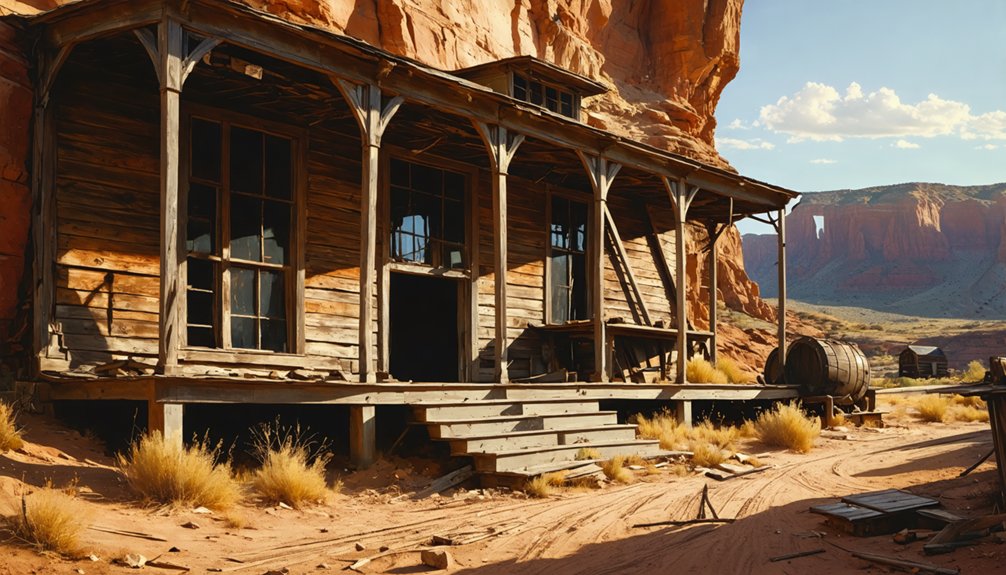
As you explore Utah’s abandoned mining towns, you’ll find haunting remnants of the mineral boom era, from Frisco’s beehive-shaped stone kilns to Old Ironton’s foundry ruins.
Mining equipment scattered across these sites tells the story of rapid growth and equally swift decline, exemplified by Silver Reef’s 1879 collapse following a silver price drop that flooded its shafts.
These ghost towns serve as stark reminders of underground dangers, with incidents like Frisco’s catastrophic 1885 mine collapse forcing entire communities to abandon their homes and livelihoods.
Mining Equipment Still Stands
Scattered across Utah’s ghost towns, remnants of 19th-century mining equipment stand as silent witnesses to America’s industrial heritage.
You’ll find ghostly machinery at sites like Joy, where corroded steel components and processing equipment reveal the scale of gold, silver, and copper operations. In Frisco, stone charcoal kilns and metalwork fragments showcase the ore-refining process, while Ophir’s abandoned hoists and tower footings reflect historic mine layouts.
These mining relics tell a story of industrial innovation and determination.
At Silver Reef, you can examine visible tailings and waste rock piles that document ore-processing methods. The ruins aren’t just static displays – they’re invaluable resources for archaeological research, environmental studies, and understanding the technical achievements of Utah’s mining pioneers.
Mineral Booms and Busts
Mining wealth brought explosive growth and devastating collapse to Utah’s mineral-rich landscapes during the late 19th century.
You’ll find dramatic examples in places like Frisco, where the Horn Silver Mine’s catastrophic 1885 cave-in triggered an overnight exodus from a town of 6,000, leaving only stone kilns and scattered foundations behind.
Different economic cycles played out in the Tintic District’s Eureka, where you’ll see more gradual decline patterns.
Unlike Frisco’s sudden bust, Eureka’s mining legacies live on in preserved historic buildings and continued habitation.
Silver Reef presents yet another variation – its unique sandstone silver deposits spurred rapid growth but couldn’t sustain prosperity when silver prices fell.
Today, its remaining Wells Fargo building and stone foundations tell the story of Utah’s boom-and-bust mining heritage.
Underground Dangers Remain
While Utah’s ghost towns stand as silent monuments to mineral wealth, their underground chambers pose deadly risks to modern visitors.
You’ll find approximately 17,000 abandoned mines throughout Utah, with only 7,000 secured using protective measures like metal grates and concrete barriers. These underground hazards have claimed 11 lives since 1982, including four individuals who drowned in a flooded passageway.
Mine safety concerns include vertical drop-offs, toxic air, contaminated water, and unstable structures weakened by vandalism and weather. The Abandoned Mine Reclamation Program has made progress, but dangerous conditions persist.
You’re likely to encounter everything from unexploded explosives to 300-foot airshafts, so heed the “no trespassing” signs – they’re protecting you from the deadly legacy of Utah’s mining era.
Religious and Cultural Settlement Ruins
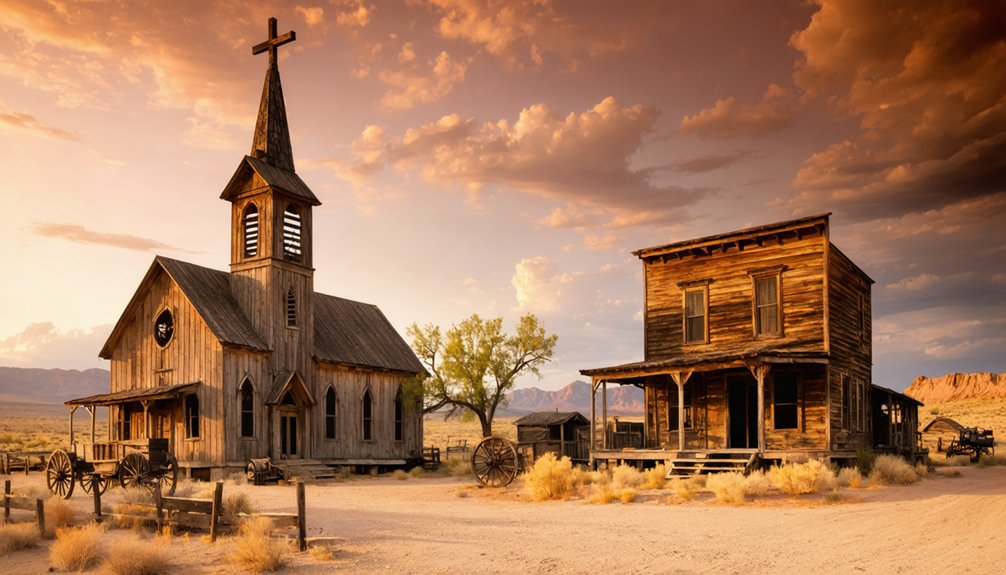
Throughout Utah’s territorial period, religious movements played a pivotal role in establishing settlements that now exist as architectural and cultural ruins.
You’ll find compelling examples in places like Grafton, where Mormon pioneers attempted cotton cultivation until floods and religious conflicts forced their retreat. The settlement’s adobe schoolhouse and cemetery remain as monuments to their cultural heritage.
In southeastern Utah, the Elk Mountain Mission and San Juan expedition sites reveal ambitious colonization efforts that often clashed with Indigenous peoples.
The 1855 Elk Mountain fortification near Moab lasted only months before tensions erupted, while the remarkable Hole-in-the-Rock passage demonstrates the engineering determination of Mormon settlers.
These sites now serve as powerful reminders of Utah’s complex religious settlement history.
Planning Your Ghost Town Visit
Before starting a ghost town expedition in Utah, you’ll need to carefully consider several logistical factors that can greatly impact your experience.
Research access routes thoroughly, as many sites require travel on unpaved roads that can become impassable during adverse weather. Consider seasonal timing – spring and fall typically offer the most favorable conditions, while summer brings extreme heat and winter often blocks high-elevation access.
Follow visitor guidelines strictly when exploring these historic sites. You’ll need to practice “Leave No Trace” principles and avoid disturbing any artifacts or structures, as these are protected by law.
Check road conditions and vehicle requirements in advance, and be prepared for limited facilities. Always carry detailed maps and GPS coordinates, as many ghost towns lie far from major highways and cell service can be unreliable.
Safety and Legal Considerations
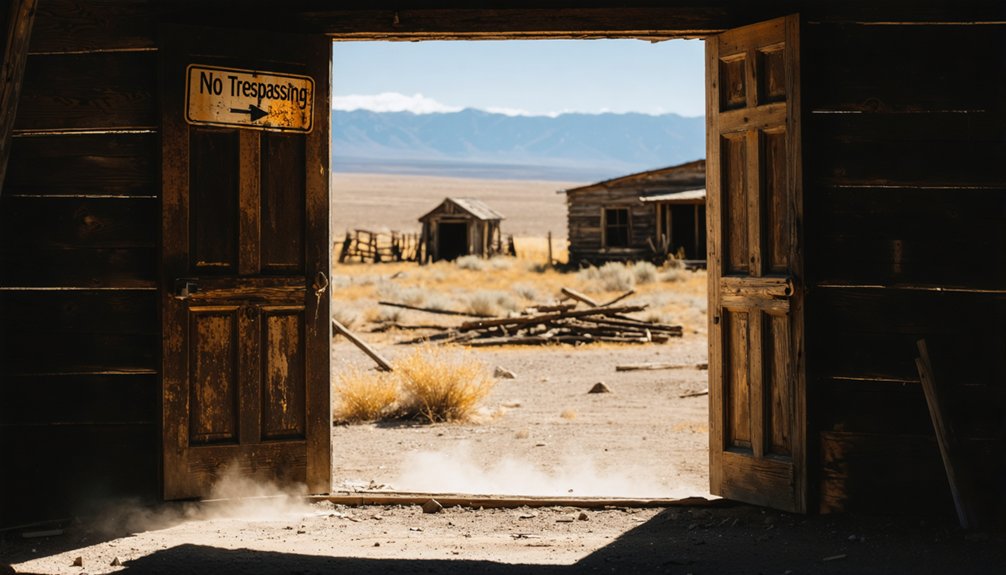
Since abandoned mines pose the greatest safety risk in Utah’s ghost towns, visitors must exercise extreme caution around these hazardous sites.
With 17,000 abandoned mines across the state and multiple fatalities recorded, you’ll need to strictly follow safety guidelines by avoiding entry into any mine structures, whether sealed or open. Low oxygen, toxic gases, unstable ground, and maze-like tunnels create life-threatening conditions.
You must respect trespassing laws and property rights when exploring ghost towns. Many sites, like Ophir, are privately owned with restricted access. Always heed posted warnings and stay on designated trails.
When camping, use established sites, properly extinguish fires, and pack out all waste. Remember that historically significant structures are protected, and disturbing them violates preservation laws.
Best Times and Seasons to Explore
When planning your ghost town expedition in Utah, timing can greatly impact both comfort and photographic opportunities.
Spring adventures offer mild temperatures and vibrant wildflower displays, making it ideal for exploring ruins and interpretive sites without the risk of heat exhaustion. You’ll find fewer crowds during weekdays, particularly in shoulder seasons.
For autumn photography, you’ll benefit from cooler temperatures and exceptional lighting conditions. The golden hours just after sunrise and before sunset provide perfect illumination for capturing weathered structures, while fall foliage adds dramatic color to your compositions.
You’ll also encounter reduced insect activity and fewer tourists compared to summer months. For high-elevation ghost towns, consider snow conditions in winter, as they might affect accessibility but can create stunning snow-against-red-rock contrasts.
Frequently Asked Questions
Are There Any Completely Underwater Ghost Towns in Utah?
You’ll find Rockport’s submerged history beneath Rockport Reservoir, making it Utah’s most notable underwater ghost town. While Thistle experienced flooding, it’s not completely submerged for underwater exploration.
Can You Camp Overnight in Utah’s Ghost Towns?
You’ll need to check specific camping regulations for each ghost town, as some are on private land while others on BLM land allow dispersed camping. Most lack formal camping amenities.
Do Any Utah Ghost Towns Still Have Active Mining Claims?
You’ll find active mining claims in many Utah ghost towns, with roughly 5.9% of the state’s 456,825 mining claims still active today, including historic districts like Silver City and Tintic Mining District.
Are Paranormal Investigations Allowed at Utah Ghost Town Sites?
You’ll need permits for ghost hunting at Utah’s abandoned sites. Most locations require prior authorization, and investigation guidelines vary based on land ownership – federal, state, or private property.
Which Utah Ghost Towns Are Accessible by Regular Passenger Vehicles?
Like pearls strung along Utah’s highways, you’ll find Grafton, Silver Reef, Thistle, Old Irontown and Eureka easily accessible by car. Visit these historically significant sites during dry seasons for ideal exploration.
References
- https://435locals.com/ghost-towns-near-zion/
- https://www.utahsadventurefamily.com/5-ghost-towns-in-utah-for-families/
- https://www.atlasobscura.com/things-to-do/utah/ghost-towns
- https://www.visitutah.com/things-to-do/history-culture/ghost-towns
- https://www.ksl.com/article/51308628/restored-utah-ghost-towns-that-should-be-on-your-summer-travel-bucket-list
- https://www.youtube.com/watch?v=FLdClYRU0bY
- https://www.ghosttowns.com/states/ut/ut.html
- https://en.wikipedia.org/wiki/List_of_ghost_towns_in_Utah
- https://www.familysearch.org/en/wiki/Utah_Ghost_Towns
- http://www.expeditionutah.com/forum/index.php?threads/ghost-town-classification-type-guide.3462/