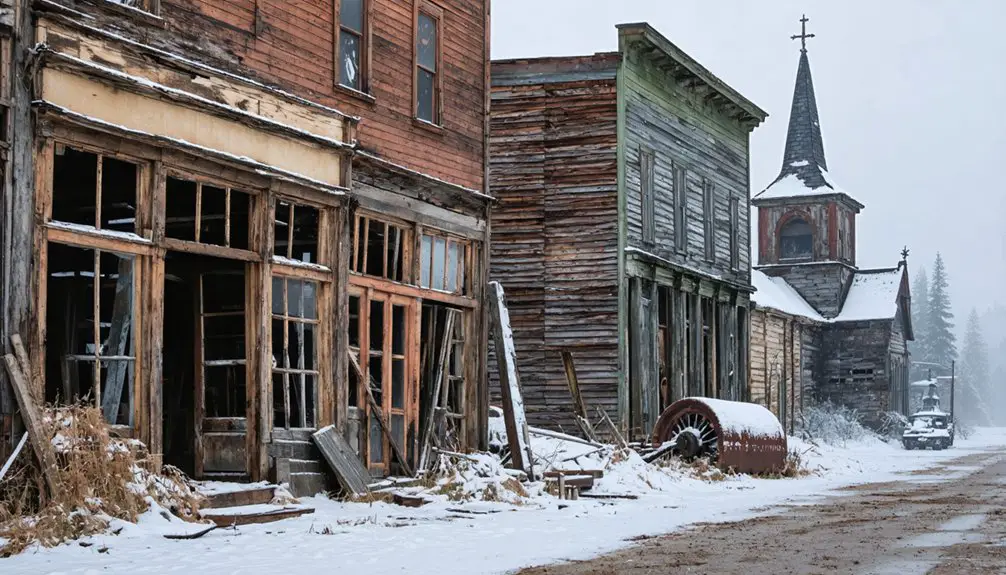
You’ll find numerous ghost towns scattered throughout West Virginia, particularly in Fayette County and along the New River Gorge. These abandoned communities, like Thurmond, Winona, and Nuttallburg, emerged during the coal mining boom after the Civil War. Many feature preserved company stores, coke ovens, and mining equipment that tell the story of West Virginia’s industrial heritage. The region’s most fascinating sites, including the 821-step Kaymoor Mine complex, await your exploration.
Key Takeaways
- Thurmond, a former railroad hub in Fayette County, is now a preserved ghost town with only five residents.
- Nuttallburg stands as a ghost town featuring preserved coke ovens and industrial buildings from West Virginia’s coal mining era.
- Winona retains turn-of-century architecture and abandoned structures, serving as a testament to West Virginia’s industrial past.
- Kaymoor’s abandoned mining complex includes historic mine works and an 821-step descent to explore the former community.
- Dun Glen and Sewell are deserted settlements with remnants of company houses, tramways, and mining equipment still visible.
The Rich History of Coal Mining Ghost Towns
As the Civil War drew to a close, West Virginia’s coal industry exploded into a period of unprecedented growth that would transform the state’s landscape and economy.
The ghost town origins can be traced to the rapid development of railroads along the New, Coal, and Guyandotte rivers, connecting remote mining operations to industrial centers in the Ohio Valley. By 1883, major rail lines helped boost production to nearly three million tons annually.
The railroads carved new paths through West Virginia’s valleys, transforming isolated coal camps into vital links in America’s industrial chain.
You’ll find the rich mining culture reflected in the proliferation of company towns, with over 465 scattered across West Virginia by 1930. Miners and their families relied on company scrip for all their purchases at the company store.
These communities, particularly concentrated in the southern counties, shaped miners’ lives for generations. More than 60 mining towns emerged along the New River Gorge alone, ranging from well-maintained communities to harsh company-controlled settlements that reflected the era’s industrial ambitions. One notable example was Kaymoor, which produced an astounding 16.9 million tons of coal during its operational years from 1900 to 1962.
Notable Abandoned Communities in Fayette County
While many ghost towns dot West Virginia’s landscape, Fayette County stands out for its remarkable collection of preserved mining communities that tell the story of America’s industrial heritage. Near Fayette Station Bridge, visitors can explore stone foundations and remnants of historic structures hidden in the surrounding woods. At its peak, the area saw fifteen passenger trains pass through daily.
The Thurmond history chronicles a once-bustling railroad hub, now preserved by the National Park Service with just five residents remaining. Winona architecture reflects turn-of-century design through its surviving pool hall and church.
Explore these fascinating sites within the New River Gorge region:
- Thurmond’s restored C&O Railroad depot serves as a seasonal visitor center
- Kaymoor’s 821-step stairway leads to extensive mine works and town remnants
- Nuttallburg’s coke ovens and rail infrastructure showcase industrial innovation
These abandoned communities offer unique windows into America’s coal mining era, with each site carefully maintained to preserve their historical significance.
Hidden Treasures Along New River Gorge
You’ll discover a rich collection of industrial heritage sites along New River Gorge, where abandoned mining complexes like Kaymoor and Nuttallburg showcase the region’s coal production legacy through preserved tipples, coke ovens, and conveyor systems.
Walking the town ruins of Thurmond reveals a once-bustling railroad hub with its restored depot and commercial buildings still standing sentinel over active tracks. A challenging 821 wooden stairs descend to the historic Kaymoor Mine site, offering a glimpse into the area’s coal mining past. Visitors can explore interpretive exhibits that detail the fascinating history of these former mining communities.
The hidden treasures extend to Red Ash Island’s secluded trails and Craig Branch Falls, where nature has reclaimed these historic landscapes while preserving their stories in weathered foundations and abandoned rail lines.
Abandoned Mining Communities Preserved
Two remarkable ghost towns stand as proof to West Virginia’s coal mining heritage along the New River Gorge.
You’ll discover the Kaymoor Ruins with its sealed mine portal 560 feet above the railroad and the Nuttallburg Structures, which remain the most intact coal mining complex in the state.
These abandoned communities tell the story of America’s industrial might through their preserved remnants. The area was renowned for producing “smokeless” bituminous coal that was highly sought after by industry. The Chesapeake & Ohio Railroad established in 1873 revolutionized coal transportation in the region.
At these sites, you’ll find:
- Historic coke ovens and processing facilities that once transformed raw coal into valuable fuel
- Foundations of worker housing where mining families built their lives
- Original tipples and conveyor systems that moved coal from mountainside to railway
Both locations are now protected within the New River Gorge National River, where you can explore via hiking trails and wooden staircases while nature slowly reclaims these industrial relics.
Historic Railroad Town Ruins
As coal and timber industries flourished along the New River Gorge, railroad towns emerged as essential transportation hubs that supported the region’s economic growth.
You’ll find the best-preserved remnants at Thurmond, where the restored depot once served 75,000 passengers annually during its peak operations.
Throughout the gorge, you can explore abandoned railroad infrastructure that tells the story of this industrial era.
From old rail spurs connecting former mine sites to crumbling foundations of boarding houses, these sites offer glimpses into life along the Chesapeake & Ohio Railway.
The town reached its peak prosperity with the richest banks in West Virginia during the early 1900s.
By 1920, fifteen passenger trains daily passed through these bustling rail stops.
You’ll discover stone culverts, bridge remains, and rusted machinery clinging to cliffside locations.
While many sites are difficult to access, their remote locations have helped preserve these authentic pieces of West Virginia’s railroad heritage.
River Access Ghost Sites
Hidden along the New River Gorge‘s winding banks, several ghost town sites offer unique river-level access to West Virginia’s industrial past.
You’ll find preserved ruins at Thurmond’s C&O Railroad Depot, where intact historic buildings stand as evidence to the area’s bustling rail heritage.
For adventurous explorers, these river access ghost sites reveal industrial remnants through:
- Nuttallburg’s coke ovens and conveyor ruins at Double Z rapid
- Kaymoor’s dramatic tipple remains visible from river terraces
- Beury’s scattered foundations along tributary trails
You’ll need to plan carefully – many sites require strenuous hikes with 400-800 foot elevation changes.
The National Park Service maintains trails and interpretive signs throughout these preserved locations, though seasonal conditions affect accessibility.
For the best experience, check current river levels and park guidelines before your visit.
Exploring Southern West Virginia’s Lost Towns
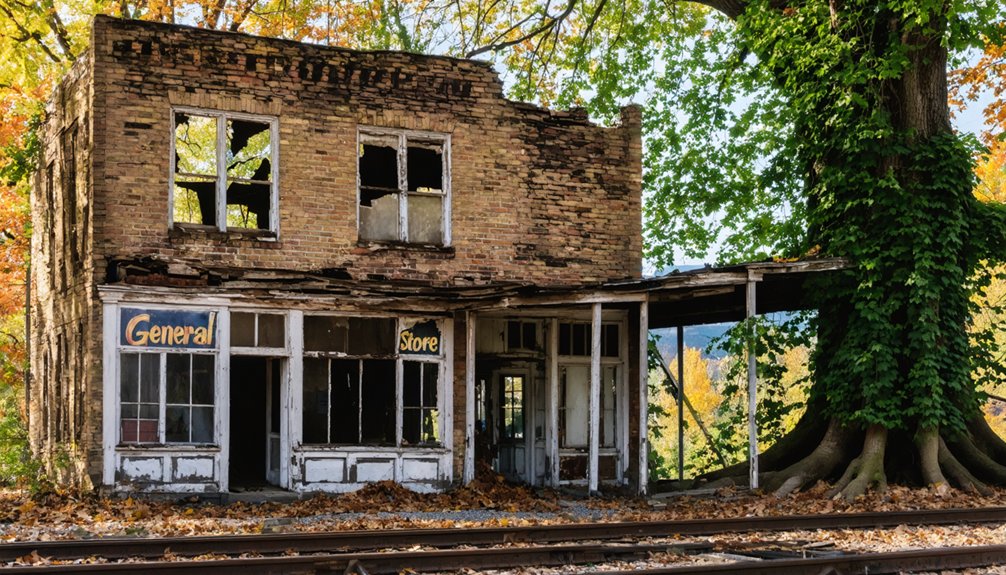
You’ll discover southern West Virginia’s rich mining heritage through ghost towns like Nuttallburg and Stotesbury, where coal tipples and coke ovens still stand as evidence of the region’s industrial past.
The abandoned railroad towns along the New River, including Thurmond and Kaymoor, offer glimpses into an era when rail transport was the lifeblood of these mountain communities.
Whether you’re following ranger-guided trails or exploring old cemetery sites, these lost towns reveal themselves through careful observation of structural ruins, rail grades, and preserved artifacts that dot the rugged landscape.
Mining Heritage Lives On
The abandoned coal towns scattered across southern West Virginia’s rugged landscape tell powerful stories of industrial ambition, cultural diversity, and economic upheaval.
As you explore these coal communities, you’ll discover mining memories preserved in places like Kaymoor, where 821 stairs lead to remnants of a once-bustling operation that produced over 16 million tons of coal.
These former mining towns showcase three distinct features that defined their existence:
- Multi-ethnic workforces, from European immigrants to African American miners
- Company-built infrastructure including homes, churches, and processing facilities
- Engineering marvels like Sewell’s coke ovens and Nuttallburg’s coal tipples
You’ll find these preserved sites now protected within national parks, offering glimpses into the lives of those who shaped America’s industrial might through blood, sweat, and determination.
River Towns Stand Empty
Along the winding New River Gorge, once-thriving communities like Dun Glen, Thurmond, and Nuttallburg stand as silent witnesses to southern West Virginia’s industrial past.
You’ll find Dun Glen perched 700 feet above the river, where local river town folklore tells of abandoned structures and a lonely cemetery that’s only accessible by hiking the newly built trail from Thurmond.
Thurmond’s haunting presence, with just five residents maintaining its municipal government, recalls days when 95,000 daily passengers bustled through its Chesapeake & Ohio depot.
At Nuttallburg, you can explore preserved maroon industrial buildings and 40 remaining coke ovens where ghostly encounters are said to echo through the tipple.
These empty towns, along with Kay Moor’s scattered ruins and Stotesbury’s abandoned churches, preserve the memory of West Virginia’s coal-driven heritage.
Hidden Among Mountain Trails
Deep within southern West Virginia’s mountain wilderness, a network of rugged trails connects dozens of forgotten coal towns that once bustled with mining activity.
You’ll discover these remnants along the Hatfield-McCoy trail system, where mountain exploration reveals hidden chapters of Appalachian history.
For the most rewarding trail adventures, focus on these key destinations:
- Kaymoor’s 821-step descent to abandoned mine workings
- Nuttallburg’s hillside complex overlooking the Double Z rapid
- Winona’s mix of inhabited and abandoned structures near Keeney’s Creek
The Devil Anse Trail System winds past weathered log cabins and rusted mining equipment, while Buffalo Mountain’s paths lead to the historic Hatfield Cemetery.
You’ll find the old College Hill Hospital looming above Williamson, where guided tours connect you to the region’s paranormal past.
Preservation and Access to Historic Mining Sites
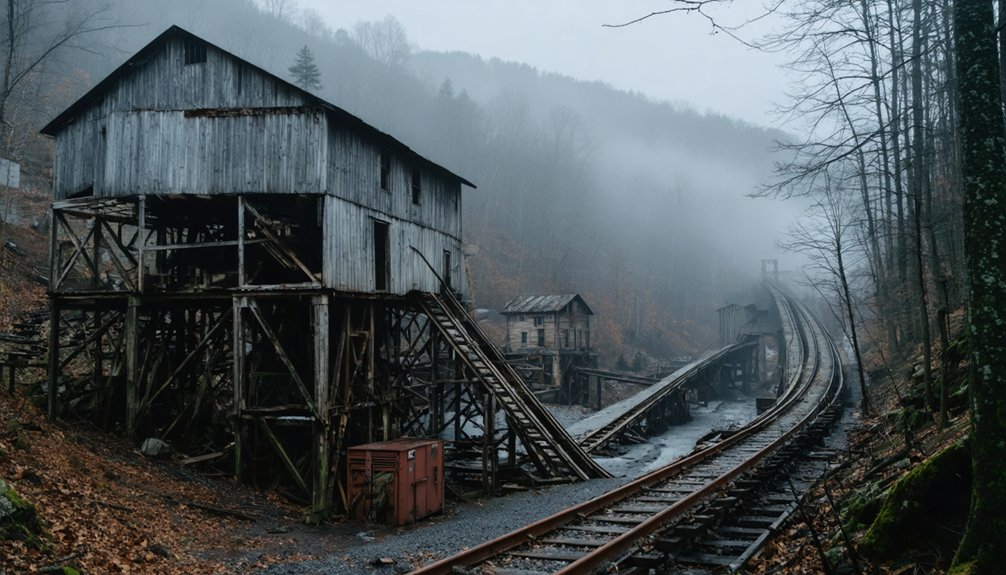
While West Virginia’s ghost towns hold valuable historical artifacts, preservation efforts face ongoing challenges across multiple fronts.
You’ll find dedicated teams working to protect mining heritage through projects like the Thurmond artifacts preservation, where archaeologists have rescued medicine bottles and miners’ equipment from deteriorating storage conditions.
The National Coal Heritage Area has invested over $380,000 to safeguard historic structures, while the state’s Abandoned Mine Lands Program tackles pre-1977 safety hazards.
If you’re interested in exploring these sites, you should know that preservation groups actively advocate against demolition, with organizations like the Preservation Alliance of West Virginia fighting to protect New River Gorge’s historic buildings.
They’re working to guarantee you’ll have access to these remarkable pieces of coal mining history for generations to come.
West Virginia’s Most Fascinating Deserted Settlements
These historic abandoned settlements scattered throughout West Virginia offer you remarkable glimpses into the state’s coal mining past.
You’ll discover places like Dun Glen, perched 700 feet above New River, where a challenging hike reveals town ruins and a cemetery that tell stories of earlier times.
At Sewell, within Babcock State Park, you can explore the remnants of 50 coke ovens dating back to 1874.
The most intriguing aspects of these ghost towns include:
- Original tramways and primitive wagon roads that connected isolated mining communities
- Industrial structures that showcase early coal processing technology
- Preserved company houses and separate church buildings that reflect social structures
These sites aren’t just abandoned places – they’re windows into the lives of those who built West Virginia’s mining heritage.
Frequently Asked Questions
Are There Any Reported Paranormal Activities in West Virginia’s Ghost Towns?
You’ll find numerous ghost sightings at haunted locations across West Virginia’s abandoned towns, with Thurmond, Nuttallburg, and Kaymoor featuring frequent reports of unexplained footsteps, voices, and shadowy figures near mine ruins.
Explorations into the ghost towns in West Virginia reveal a rich history intertwined with both tragedy and mystery. Visitors often leave with chills down their spines, especially at sites where ancient coal mining operations once thrived. The eerie landscapes are not only a testament to the past but also a playground for those who seek an adrenaline rush from paranormal experiences.
Can Visitors Legally Collect Artifacts From Abandoned Ghost Town Sites?
Like hidden treasure waiting to be found, you can’t legally collect artifacts without permits. Both federal and state legal regulations strictly protect ghost town sites for artifact preservation and historical significance.
Which Ghost Towns Offer Guided Tours or Organized Historical Experiences?
You’ll find guided explorations through Thurmond and Nuttallburg ghost towns, plus historical reenactments at Trans-Allegheny Lunatic Asylum. Shepherdstown and Harpers Ferry offer established candlelit ghost walks year-round.
What Safety Precautions Should Explorers Take When Visiting Ghost Towns?
Bring proper exploration gear: sturdy boots, flashlights, and first-aid supplies. Follow safety guidelines by never exploring alone, avoiding unstable structures, and telling someone your plans before venturing into these time-forgotten places.
Do Any Ghost Towns Host Annual Festivals or Special Events?
You’ll find several festivals across West Virginia’s ghost towns, featuring festival activities like haunted tours at Trans-Allegheny Asylum, historical reenactments at former mining sites, and Point Pleasant’s popular annual Mothman celebration.
References
- https://kids.kiddle.co/List_of_ghost_towns_in_West_Virginia
- https://wvexplorer.com/2025/10/19/ghost-towns-in-southern-west-virginia/
- https://wvtourism.com/5-wv-ghost-towns/
- https://www.atlasobscura.com/things-to-do/west-virginia/ghost-towns
- https://www.youtube.com/watch?v=-EeLwLa2t90
- https://minskysabandoned.com/2015/07/30/west-virginia-ghost-towns-part-1-nuttallburg/
- https://www.wvnews.com/news/wvnews/echoes-of-the-past-exploring-west-virginias-ghost-towns/article_2ec39746-1214-11ef-9af7-bbe4e62e6509.html
- https://www.geotab.com/ghost-towns/
- https://www.legendsofamerica.com/west-virginia-coal-mining/
- https://www.onlyinyourstate.com/trip-ideas/west-virginia/wv-mining-towns