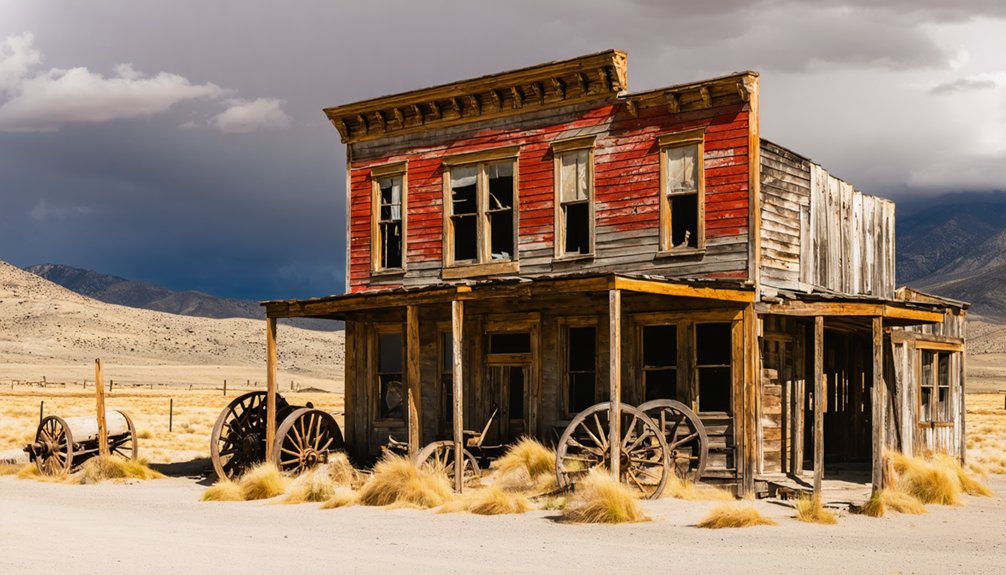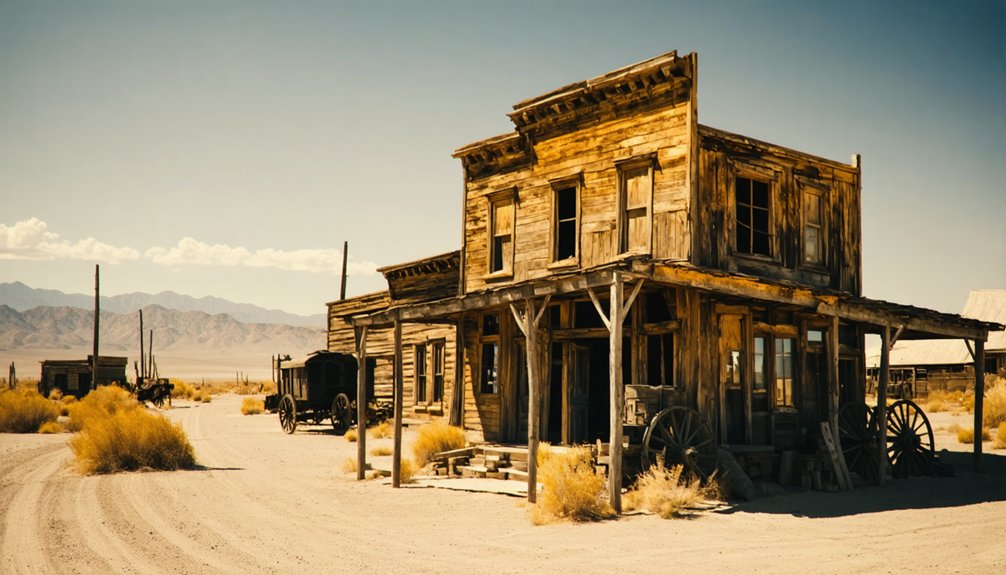
You’ll find over 130 well-preserved ghost towns scattered across the American West, with notable sites in Arizona, California, Montana, and Nevada. These abandoned settlements, primarily from the Gold Rush era, feature authentic buildings, mining structures, and cultural artifacts preserved through state park management. From Bodie’s “arrested decay” to Jerome’s artistic revival, you can explore original main streets, civic buildings, and mining operations. Discovering these historic towns reveals fascinating stories of boom-and-bust cycles in American frontier life.
Key Takeaways
- Numerous Western ghost towns remain intact today, with Bodie, California being one of the best-preserved examples in its “arrested decay” state.
- Jerome, Arizona survives as a well-preserved ghost town that transformed into an artists’ community while maintaining its historical structures.
- South Pass City features the restored Carissa Mill, offering visitors authentic glimpses into Wyoming’s gold mining history.
- Bannack, Montana maintains its original structures and provides year-round access to visitors interested in exploring authentic Western mining history.
- Rhyolite, Nevada stands near Death Valley with its original main street and buildings, making it easily accessible for modern visitors.
What Defines a Western Ghost Town
While many people imagine ghost towns simply as abandoned settlements in the American West, the formal definition encompasses specific criteria that scholars and historians use to classify these remnants of the past.
You’ll find that abandonment causes typically stem from economic collapse, resource depletion, or catastrophic events that led to dramatic population decline from peak levels. These towns often emerged as mining outposts that later fell into disuse. To qualify as a ghost town, visible infrastructure or ruins must remain, such as building foundations, roads, or cemeteries.
While some definitions require complete desertion, others accept places with minimal remaining residents. The loss of active businesses and municipal functions often serves as a key indicator. According to Western Mining History, towns are designated as ghost towns when they have no active businesses.
You’ll notice that some classifications distinguish between towns that died when their economic purpose vanished versus those abandoned due to disasters.
The Legacy of the Gold Rush Era
The Gold Rush era profoundly shaped the American West’s development through a series of dramatic boom-and-bust cycles that left behind today’s ghost towns.
You’ll find these gold rush impacts everywhere, from Montana’s Virginia City, which exploded from nothing to thousands of residents after the 1863 Alder Gulch strike, to Colorado’s mining settlements that transformed the territorial landscape.
The mining legacies remain visible in the infrastructure and institutions these towns created. Visitors today can explore preserved structures at Bannack State Park, where over 60 historic buildings tell the story of Montana’s first territorial capital.
From railroads to courthouses, the physical traces of mining’s heyday still shape Western towns’ modern identities.
While some communities like Butte, Montana grew into permanent cities, others followed Monte Cristo’s fate – where even Rockefeller’s substantial $470,000 investment couldn’t prevent abandonment after devastating floods in 1896-1897.
Though the boom times were often brief, they established early banking systems, newspapers, and transportation networks that laid the foundation for Western development, despite the harsh conditions and vigilante justice that characterized these frontier settlements. Monte Cristo’s population peaked at over 1,000 residents in 1894 before its eventual decline and abandonment by 1907.
Best-Preserved Ghost Towns in the American West
If you’re seeking authentic remnants of the American frontier, you’ll find remarkably preserved mining towns scattered across the Western states, from Bodie’s “arrested decay” in California to Bannack’s intact 1860s structures in Montana.
These historical treasures offer visitors a genuine glimpse into boom-and-bust mining life through their standing hotels, saloons, general stores, and stamp mills that have withstood more than a century of time. Jerome’s transformation from a bustling copper town now features restored art galleries that attract modern visitors.
While some ghost towns like Rhyolite present dramatic desert ruins, others such as St. Elmo and Garnet maintain nearly complete main streets with original wooden buildings, allowing you to walk the same paths as nineteenth-century prospectors. Visitors to South Pass City can experience gold mining history through guided tours of the historic Carissa Mill.
Authentic Frontier Mining Towns
Five remarkably preserved frontier mining towns stand as living monuments to America’s Western expansion, each offering visitors an authentic glimpse into the rough-and-tumble days of the Old West.
You’ll discover untamed Oatman burros roaming freely through a former gold rush powerhouse, while Bodie structures remain frozen in time amid California’s high desert.
In Tombstone, you can walk the same streets where the legendary O.K. Corral gunfight unfolded. Daily Wild West shootouts captivate tourists who gather to watch historical reenactments of the infamous gunfight.
Montana’s Bannack preserves its territorial capital heritage with original wooden sidewalks and historic jail cells.
Virginia City showcases the wealth of the Comstock Lode through its restored saloons and mining-era architecture.
Each destination uniquely captures the spirit of frontier life, when fortune seekers and pioneers carved out existence in these remote outposts. These towns emerged during the era of manifest destiny, as Americans pushed westward to claim new territories and opportunities.
Most Complete Standing Structures
Among America’s most intact ghost towns, remarkable structural preservation offers unparalleled windows into frontier life.
You’ll find Bodie, California leading the way with over 100 original structures maintained in arrested decay, including its iconic Standard Mill. The town’s impressive 65 saloons and other buildings made it California’s second largest city after San Francisco by 1880.
Montana’s Garnet showcases pristine ghost town architecture through 30 preserved log cabins and shops, while Ruby, Arizona retains dozens of adobe and wooden buildings in one of the Southwest’s most complete town layouts.
South Pass City, Wyoming’s restored frontier buildings and St. Elmo, Colorado’s weathered wooden structures demonstrate successful preservation techniques that have protected these sites from deterioration. The town of Bannack features over 60 structures that remain standing within its state park boundaries.
These ghost towns stand as evidence to the durability of 19th-century construction, with their general stores, saloons, mills, and schoolhouses frozen in time since their mining-era peaks.
Accessibility for Modern Visitors
Modern adventurers seeking to explore the American West‘s best-preserved ghost towns will find several remarkably accessible destinations that offer distinct visitor experiences.
With proper planning, you’ll discover well-maintained sites across five states, each providing unique opportunities to step back in time.
- Bodie State Historic Park offers year-round access via maintained roads, with ideal visiting conditions during summer months when visitor amenities and guided tours are readily available.
- Rhyolite’s proximity to Death Valley provides convenient accessible routes for road-trippers, particularly during sunrise and sunset hours.
- St. Elmo’s three-hour drive from Denver rewards you with well-preserved structures along clear mountain roads.
- South Pass City’s location near the Oregon Trail ensures straightforward access to its restored buildings, complete with self-guided exploration options.
Notable Architectural Features and Structures
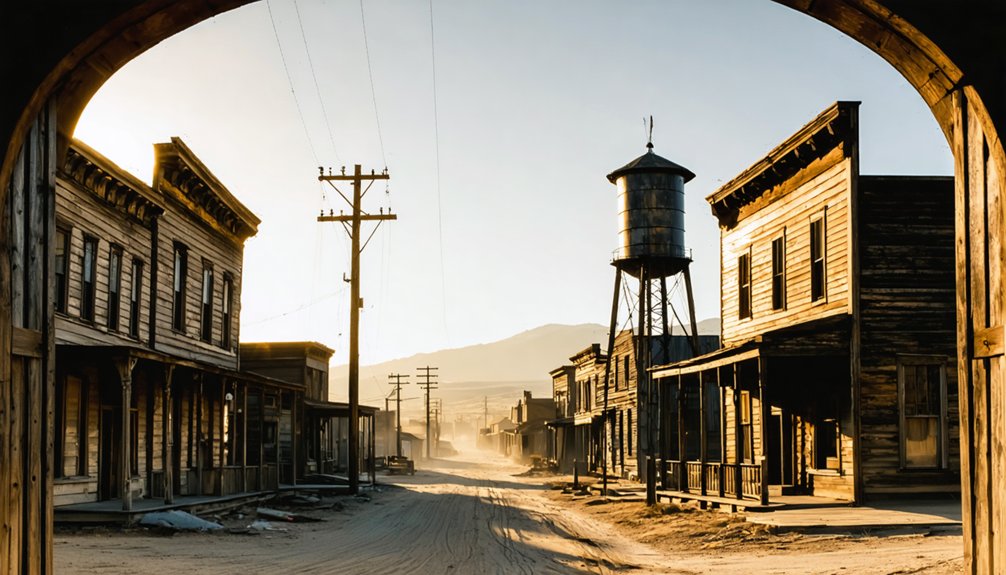
The architectural legacy of Western ghost towns reveals a distinctive blend of necessity, ambition, and frontier pragmatism.
You’ll find iconic false-front commercial buildings dominating main streets, where wooden façades create an illusion of grandeur while masking simple pitched roofs behind them. Civic buildings, constructed from stone and brick, often stand as the most enduring structures, with courthouses and post offices showcasing the town’s former prosperity.
These settlements feature a mix of architectural styles adapted to local conditions. You’ll encounter everything from adobe structures in the Southwest to corrugated metal buildings that could be quickly assembled during boom times.
Many buildings incorporated salvaged materials and prefabricated elements, while banks and hotels typically occupied prime corner lots with more substantial masonry construction and ornate details.
Historical Significance and Mining Heritage
Western mining towns burst into existence during the late 1800s as prospectors discovered rich mineral deposits throughout the American frontier.
These settlements represent a vital chapter in America’s mining heritage, showcasing the pioneering spirit that drove westward expansion.
- Mining districts like Butte, Montana reached populations over 100,000 during World War I, demonstrating the historical significance of copper production in America’s industrial growth.
- The Techatticup Mine in Nevada traces its roots to Spanish prospectors in the 1700s before becoming part of the Colorado Mining District.
- Towns like Eureka, Utah preserve their legacy through the Tintic Mining Museum and National Register buildings.
- Leadville, Colorado exemplifies mining heritage preservation, avoiding abandonment through resource diversification and railroad connections.
Tourism and Modern-Day Accessibility
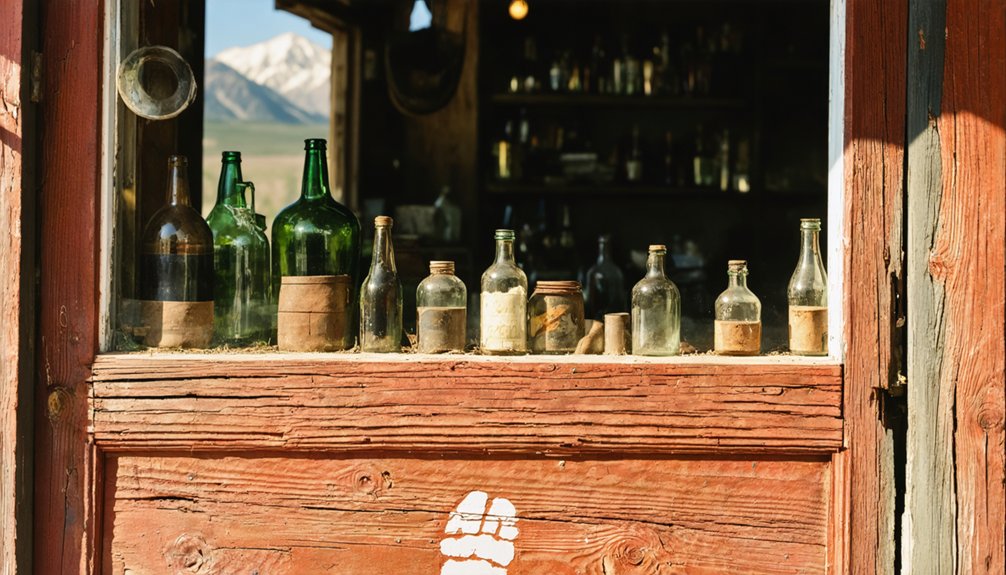
You’ll find these historic ghost towns accessible through paved highways, dirt roads, and hiking trails, though some locations like St. Elmo require 4-wheel drive vehicles during certain seasons.
Most sites maintain regular visiting hours from spring through fall, with some like Calico and Goldfield operating year-round and offering extended summer hours.
Professional guides lead educational tours at many locations, including mine explorations at Calico and Bodie, helping you understand the rich mining heritage while ensuring safety in these preserved spaces.
Getting There Today
Visiting historic ghost towns today requires careful planning around seasonal access and transportation limitations. Your transportation options and visitor experiences will vary greatly based on location and time of year.
While some sites like Calico offer accessible main streets and modern amenities, others demand more adventurous approaches.
- Summer months (June-August) provide ideal access to most locations, with clear roads and mild weather for exploring sites like St. Elmo and Garnet.
- High-altitude towns like Animas Forks (3,400m) need high-clearance vehicles and are best visited May-September.
- Some locations offer assisted access – Jerome’s free weekend shuttle system and Calico’s wheelchair-accessible facilities.
- Remote sites like Garnet require extensive preparation – you’ll need downloaded maps, supplies, and appropriate transportation for off-grid conditions without cell service or electricity.
Seasonal Hours and Access
If you’re planning to explore Western ghost towns, you’ll need to carefully check seasonal hours and access restrictions before your trip. Most sites operate on predictable daily schedules (typically 9:00-17:00), but seasonal closures greatly impact when you can visit.
High-elevation towns like Bodie become snowbound in winter, while desert locations often restrict access during extreme summer heat.
Watch for reduced services during off-peak months – many visitor services like guided tours, shops, and living history demonstrations run limited schedules. You’ll find most interpretive programs concentrated in summer months.
Major holidays usually trigger closures, particularly Christmas, New Year’s, Easter, and Thanksgiving. Weather can also force temporary shutdowns, with wildfire threats, flooding, and storms affecting accessibility.
Always check current conditions and road status before departing, especially during challenging weather seasons.
Guided Tour Opportunities
While ghost towns captivate visitors with their haunting allure, guided tours transform these abandoned settlements into immersive historical experiences.
You’ll find diverse tour experiences that cater to your adventurous spirit and historical interests across the American West.
- Set off on Mojave Desert expeditions with expert guides who’ll lead you through rugged trails to remote ghost towns, revealing tales of boom-and-bust cycles and Western expansion.
- Journey along Route 66 from Las Vegas to explore Chloride, Oatman, and El Dorado, encountering wild burros and Irish miners’ legends.
- Discover Vulture City’s guided exploration options, including nighttime flashlight tours and hands-on blacksmithing workshops.
- Venture through Jerome’s haunted locations with EMF readers and spirit boxes, or explore South Pass City’s restored buildings and historic Carissa Mill.
Preservation Efforts and State Park Management
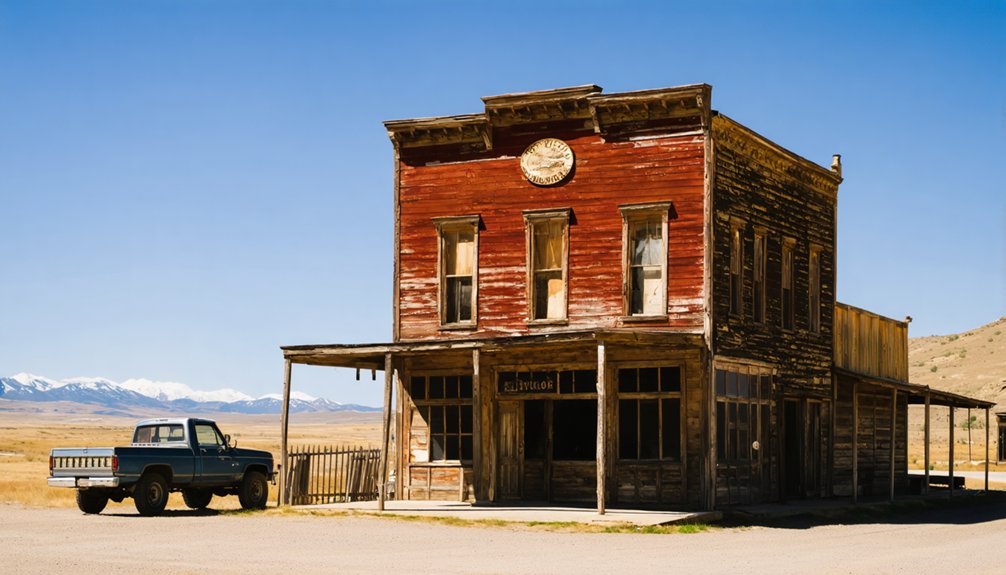
Through systematic preservation initiatives and dedicated state park management, numerous ghost towns across the American West have found new life as protected historic sites.
You’ll find prime examples in California’s Bodie State Historic Park and Nevada’s Berlin-Ichthyosaur State Park, where state agencies implement extensive preservation strategies. These efforts include structural stabilization, weatherproofing, and controlled visitor access programs.
The preservation work is funded through multiple channels, including the Historic Preservation Fund, which has distributed over $904 million to State Historic Preservation Offices.
State parks employ archaeological surveys, create interpretive centers, and partner with nonprofit organizations to maintain these historic treasures.
Through careful ghost town preservation and state park management, you can explore these fascinating remnants of the Old West while ensuring their survival for future generations.
Living History and Cultural Impact
These preserved ghost towns serve as dynamic windows into America’s frontier past, extending far beyond their physical structures.
Through cultural preservation efforts, you’ll discover authentic experiences that bring history to life in remarkable ways.
- Virginia City maintains its vibrant spirit through historical reenactments in original saloons and along wooden sidewalks, offering you a genuine taste of 19th-century silver boom culture.
- Bodie’s frozen-in-time buildings transport you to the raw reality of gold rush life, with tours revealing intimate details of 1800s daily existence.
- Berlin’s unique blend of mining history and paleontology creates an educational adventure, connecting you to both human and prehistoric past.
- Grafton’s untouched pioneer farming settlement and authentic frontier cemetery provide stark contrasts to mining-focused ghost towns, showcasing diverse Western settlement patterns.
Frequently Asked Questions
Are There Any Reported Paranormal Activities in These Ghost Towns?
You’ll find haunted legends throughout these ghost towns, with St. Elmo’s hotel reporting ghostly sightings, while Bodie’s eerie atmosphere and Bannack’s violent past fuel numerous paranormal encounters.
Can Visitors Legally Collect Artifacts or Minerals From Ghost Town Sites?
Like the gold rush dreams they represent, you can’t freely collect artifacts from ghost towns. Legal restrictions protect these sites – you’ll need permits for minerals and artifacts are strictly forbidden.
Which Ghost Towns Are Accessible During Winter Months?
You’ll find year-round winter accessibility in Virginia City and Jerome, offering ghost town tours regardless of snow. Bodie and St. Elmo require specialized transportation like snowmobiles during winter months.
Do Any Original Residents’ Descendants Still Maintain Properties in These Towns?
Like tumbleweeds in the wind, you’ll find no evidence of descendant ownership in these four ghost towns. Historical records show property preservation is managed by state parks, not original families.
What Safety Precautions Should Visitors Take When Exploring Abandoned Mine Shafts?
Don’t enter abandoned mine shafts – they’re lethal deathtraps. If you’re exploring nearby, stay at least 100 feet back, watch for unstable ground, and never venture beyond fenced or posted areas.
References
- https://www.mentalfloss.com/geography/american-ghost-towns-can-still-walk-through
- https://www.sixt.com/magazine/travel/top-ghost-towns-us/
- https://mwg.aaa.com/via/places-visit/western-ghost-towns
- https://backroadplanet.com/9-ghost-towns-still-standing-in-the-west/
- https://www.geotab.com/ghost-towns/
- https://www.ghosttowns.com
- https://www.youtube.com/watch?v=yeTVfoQxqJc
- https://wildwestcity.com/old-west-ghost-towns/
- https://en.wikipedia.org/wiki/Lists_of_ghost_towns_in_the_United_States
- https://westernmininghistory.com/664/what-is-a-ghost-town-wmh-town-classifications-explained/