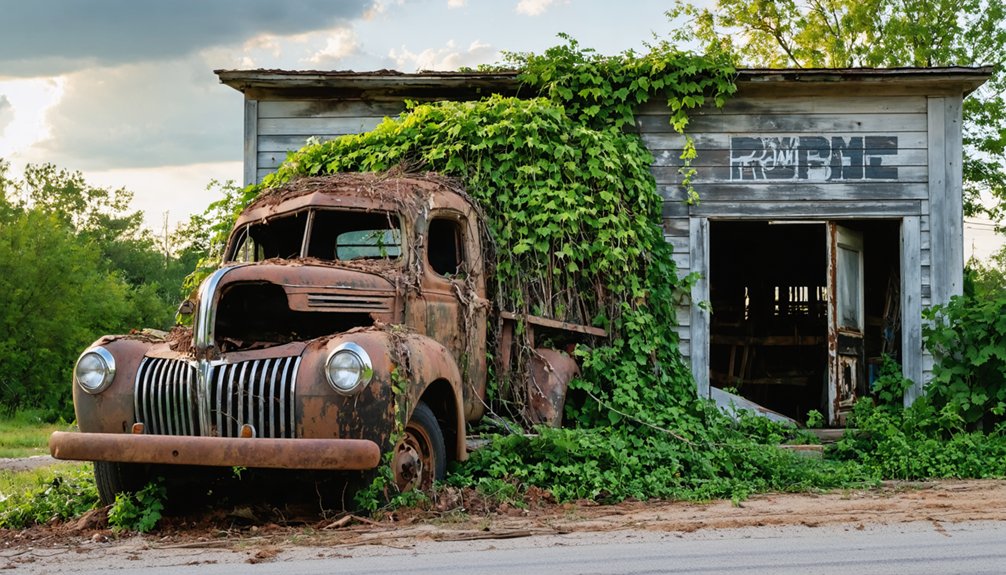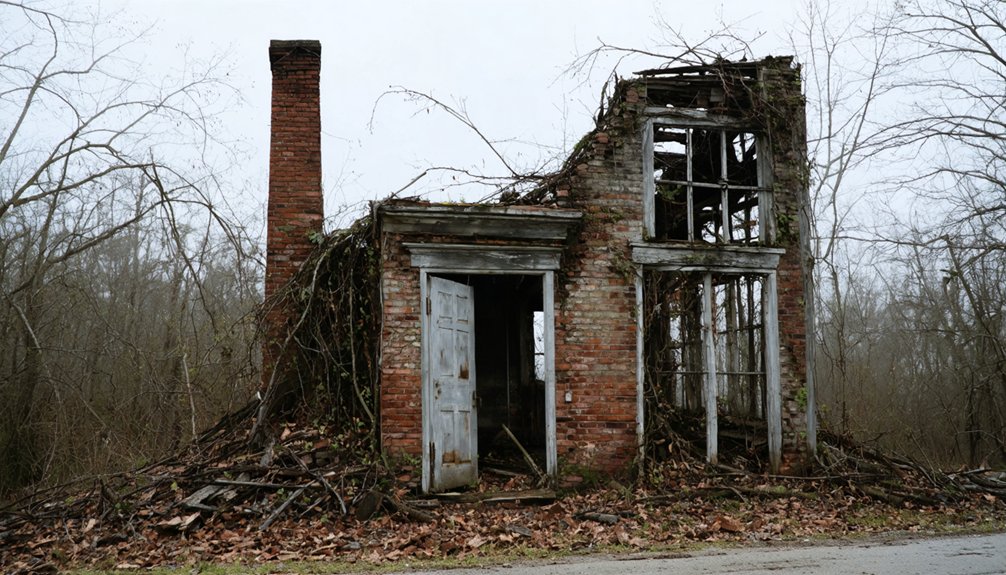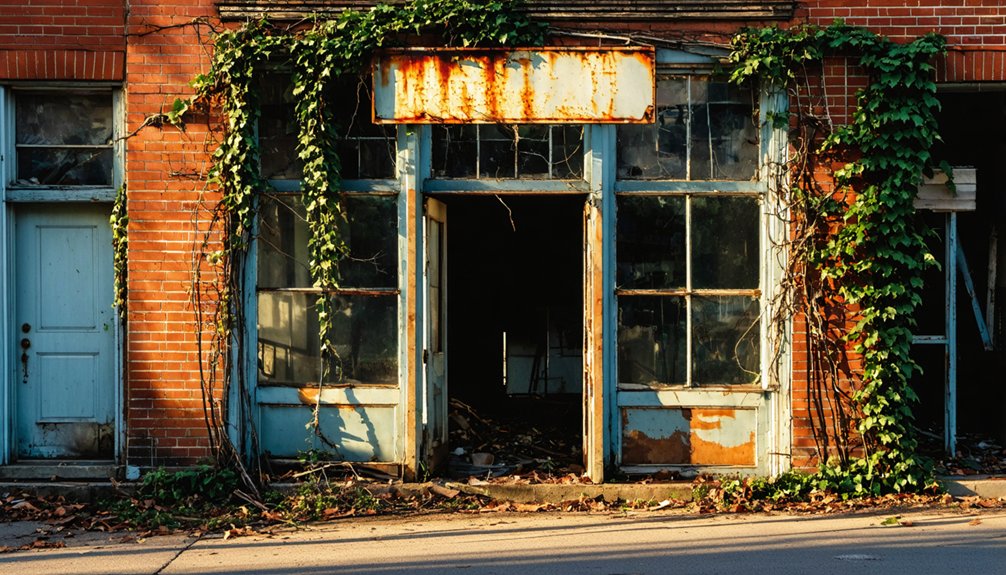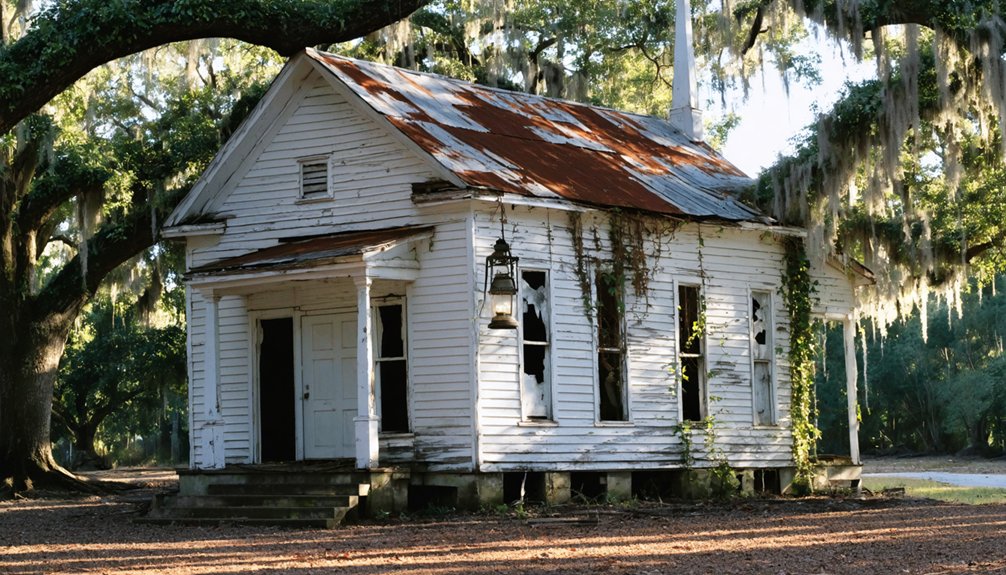
You’ll find over 350 documented ghost towns scattered across Alabama, from the Tennessee Valley to the Gulf Coast. These abandoned settlements include Old Cahawba (the former state capital), Arcola, Historic Blakeley, and Fort Morgan, each telling unique stories of economic decline, natural disasters, and public health crises. Many sites preserve archaeological features, antebellum architecture, and military heritage, while others like Riverton now rest underwater. Alabama’s ghost towns hold fascinating secrets waiting to be uncovered.
Key Takeaways
- Alabama has approximately 350 documented ghost town locations across the state, making it rich in abandoned historical settlements.
- Old Cahawba, Alabama’s first state capital, stands as one of the most significant ghost towns with preserved archaeological features.
- Ghost towns like Arcola, Historic Blakeley, and Fort Morgan showcase architectural remnants, military heritage, and plantation history.
- Natural disasters, economic decline, health crises, and infrastructure deterioration were primary causes for towns becoming abandoned.
- Many ghost towns are accessible for exploration, with some protected by historical commissions and state parks for preservation.
What Defines an Alabama Ghost Town
While many people associate ghost towns with the American West, Alabama’s landscape is dotted with abandoned communities that tell fascinating stories of boom and bust.
You’ll find these forgotten places often situated near rivers and crossroads, where once-thriving settlements have been reduced to architectural features ranging from intact structures to mere foundations.
To qualify as an Alabama ghost town, a site must have been an active community with residents and commerce before being abandoned by its original population. Like many ghost towns worldwide, these sites became abandoned due to economic challenges when local industries ceased operations.
The cultural impact of these places remains visible in neglected buildings, old cemeteries, and forgotten roadways. Many emerged as mining hubs or transport stops, only to fade when resources were depleted or transportation routes changed.
These lost settlements speak through their silent ruins, telling stories of prosperity cut short when mines closed and railways diverted elsewhere.
Natural disasters, economic decline, and post-Civil War changes also contributed to their abandonment. With approximately 350 documented locations across the state, Alabama’s ghost towns represent a significant part of the region’s historical landscape.
how many abandoned towns in Alabama are hidden within the dense forests and rolling hills can be surprising to many. Each site tells a unique story of the past, reflecting the challenges faced by communities over the years. Exploring these forgotten places offers a glimpse into Alabama’s rich history and the resilience of its people.
Historical Significance of Abandoned Towns
These abandoned Alabama communities serve as powerful windows into the state’s complex social and economic evolution.
Through their preserved antebellum architecture, you’ll discover tangible evidence of 19th-century social structures and plantation economies that shaped regional development. The sites’ cemeteries and burial records provide essential demographic studies, revealing mortality rates and family networks across generations.
You’ll find cultural artifacts in the form of local folklore and oral traditions that keep community memories alive. The Crocheron Columns remain as enduring symbols of Alabama’s grand architectural past. The town of Cahaba, once home to 2000 residents, exemplifies the dramatic population shifts these communities experienced.
When railroad routes changed or agricultural collapse hit, these towns faced rapid decline. Their archaeological remains, from Native American mounds to postbellum structures, tell stories of cultural shifts and economic upheaval.
Through artifacts, building foundations, and environmental evidence, these ghost towns continue to yield valuable insights into Alabama’s past.
Notable Ghost Towns Across Alabama
Alabama’s most prominent ghost towns offer fascinating glimpses into the state’s pioneering past, from former state capitals to vanished river settlements.
In addition to these ghost towns, there are numerous historic sites to explore in Alabama that showcase the state’s rich cultural heritage. From the Civil Rights landmarks in Birmingham to the historic homes of Mobile, visitors can immerse themselves in the stories that shaped the nation. Each site offers a unique perspective, making Alabama an intriguing destination for history enthusiasts.
At Old Cahawba, you’ll find ghost town legends amid the preserved archaeological grid, with the Fambro-Arthur Home and Barker slave quarters still standing as silent witnesses. A former Confederate prison camp held 3,000 Union soldiers during the Civil War.
The French-founded river town of Arcola, now marked only by plantation remnants, tells stories through archaeological finds along the Black Warrior River’s banks. The historic Hatch Plantation site stands as one of the earliest European settlements in the area.
Historic Blakeley and Fort Morgan preserve military heritage through fort earthworks and coastal defenses, while underwater settlements like Riverton rest beneath Pickwick Lake’s surface, their presence marked only by relocated cemeteries.
These sites, whether accessible through state parks or requiring special permission, continue to reveal Alabama’s rich historical tapestry.
Why These Towns Were Abandoned
Behind the haunting ruins of Alabama’s ghost towns lie complex factors that forced entire communities to abandon their homes and businesses.
You’ll find that natural disasters, economic decline, and public health crises drove many residents away from once-thriving settlements across the state.
- Devastating river floods made towns like Cahawba unsafe and ultimately uninhabitable.
- Loss of industry and bypassing of transportation routes left communities without economic lifelines.
- Yellow fever and cholera epidemics decimated populations, causing survivors to flee.
- Relocation of government seats and closure of civic buildings stripped towns of their purpose.
- Infrastructure deterioration and lack of maintenance made daily life increasingly difficult.
The emergence of railroad transportation networks in the 1830s and 1840s left some towns isolated and contributed to their eventual abandonment.
The combination of these challenges proved too much for many Alabama towns, transforming bustling communities into silent remnants of the past. One prominent example is Old Cahawba, which lost its status as state capital in 1826.
Preserved Ghost Town Sites You Can Visit
Visitors seeking to explore Alabama’s past can discover five remarkably preserved ghost town sites that offer glimpses into the state’s rich history.
At Old Cahawba Archaeological Park, you’ll find the state’s first capital with preserved slave quarters and mansion ruins. The site showcases dense forest ruins that tell stories of communities spanning over 500 years.
Historic Blakeley State Park showcases a 200-year-old undisturbed site with fort structures and historic trees.
The Old St. Stephens Site maintains its original town layout with courthouse remnants, while Claiborne’s history lives on through relocated buildings and historical markers.
Arcola Village, established in the 1820s along the Black Warrior River, rounds out these archaeological treasures. These locations remind us of the seasonal flooding and epidemics that forced many residents to abandon their homes.
These ghost town preservation efforts have created an extensive 400-mile loop through South Alabama, allowing you to experience these abandoned settlements firsthand through walking paths, bike trails, and river access points.
Hidden Underwater Ghost Towns
If you’re exploring Alabama’s submerged history, you’ll find entire communities hidden beneath the waters of Smith Lake, Lake Martin, and Lake Guntersville.
These underwater ghost towns, like Kowaliga and parts of the former Trimble area, were flooded during mid-20th century dam projects that displaced residents and submerged buildings, farms, and infrastructure.
Local stories and documented accounts tell of preserved structures still resting on lake bottoms, including barns, railroad beds, and the foundations of homes that once housed thriving communities.
Riverton’s Deep Water Legacy
Deep beneath the waters of Pickwick Lake lies the historic town of Riverton, a once-thriving river community founded in 1887 by Philadelphia investors on former Chickasaw land.
Before its submersion in 1938, you would’ve found a bustling riverside settlement with an essential lock system designed by the same engineer who later tackled the Panama Canal.
- The town served as the first major upstream landing after Paducah, Kentucky
- George Washington Goethals designed the Riverton Lock to bypass dangerous shoals
- Over 5,000 workers cleared the land before Pickwick Dam flooded the area
- The former railroad path can still be traced along Riverton Rose Road
- Local myths claim you can spot submerged buildings, though all structures were demolished
Today, Riverton’s history lives on primarily through ghost town myths and engineering legacy.
Lost Towns Beneath Pickwick
Beneath the expansive waters of Pickwick Lake lies more than just a drowned landscape – you’ll find the remains of several lost communities sacrificed for regional progress.
Riverton history, dating back to 1715, tells the story of a crucial Tennessee River landing that once supported early industrial growth. When the Tennessee Valley Authority completed Pickwick Dam in 1938, the waters claimed not only the town but also significant submerged infrastructure, including the Colbert Shoals Canal and Riverton Lock.
You can trace fragments of this underwater ghost town along Riverton Rose Road, but the core settlement, railroad tracks, and navigation structures rest eternally beneath the surface.
While the dam’s construction improved river navigation and power generation, it forever changed the region’s landscape, leaving Riverton as a symbol of progress’s price.
Planning Your Ghost Town Adventure
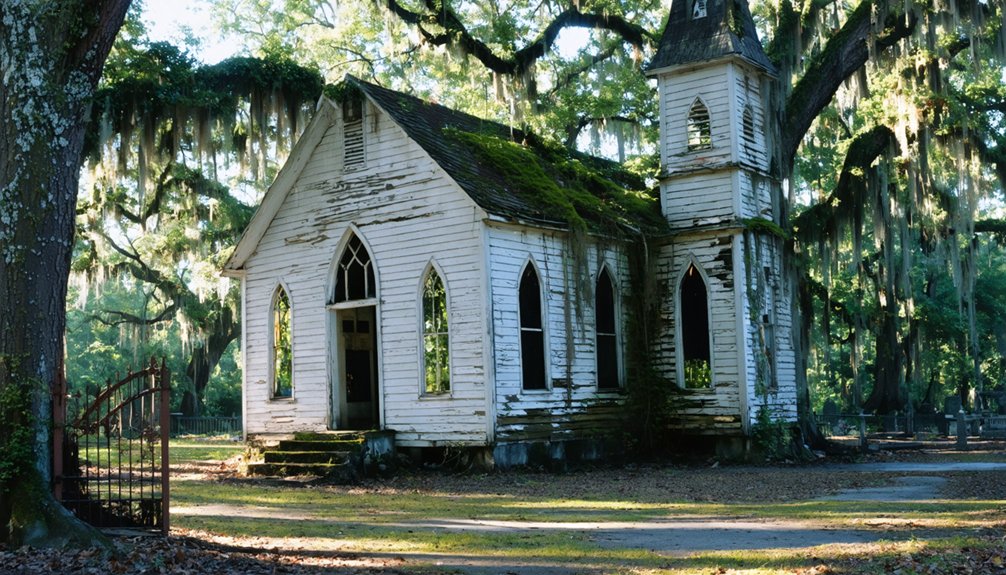
Planning a ghost town adventure in Alabama requires careful mapping and preparation to make the most of your historical expedition. The South Alabama loop offers an excellent starting point, covering 400 miles of historic sites perfect for ghost town photography and authentic exploration.
You’ll discover abandoned buildings, vintage infrastructure, and centuries-old cemeteries across six former settlements.
- Check local historical societies and get updated maps showing safe, accessible locations
- Follow the original historic roads to sites like New St. Stephens and Claiborne
- Verify site access beforehand, as some locations are now private property
- Pack essential gear for photographing abandoned structures and historical markers
- Plan your route around the 8-hour South Alabama loop, which includes preserved buildings and archaeological sites
Photography and Exploration Tips
You’ll want to equip yourself with a mirrorless or DSLR camera, tripod, and both wide-angle and prime lenses to capture Alabama’s ghost towns in their full glory.
Before heading out, make sure you’ve secured proper permissions and checked weather conditions, as seasonal changes can dramatically affect both access and photographic opportunities.
Remember to pack essential safety gear like flashlights and lens cleaning supplies, while staying mindful of local regulations that protect these historic sites.
Best Camera Gear Choices
When exploring Alabama’s ghost towns with a camera, choosing the right photography gear can make the difference between capturing mediocre snapshots and creating compelling visual documentation.
For ideal results, you’ll want to take into account weather-sealed camera bodies that can handle dusty environments and lenses that offer versatility in challenging lighting conditions.
- Full-frame mirrorless cameras excel in low-light situations and offer superior dynamic range for interior shots
- A wide-angle zoom (14-35mm) captures building contexts and expansive town views
- Fast-aperture prime lenses (f/1.8 or wider) allow for cleaner high-ISO shots inside dim structures
- A sturdy tripod with a quick-release plate is essential for long exposures and night photography
- LED headlamps and portable flash units help illuminate dark interiors and architectural details
Safety and Legal Access
Before venturing out with your camera gear to explore Alabama’s ghost towns, understanding the legal and safety parameters can protect both you and these historic sites.
Most locations require specific permissions or guided tours – Cahaba demands entry fees, while Prairie Bluff’s roads are now part of a gated community.
Remember these key safety precautions: avoid structurally compromised buildings, watch for uneven terrain, and stay clear of overgrown cemeteries dating back to the 1860s.
For legal considerations, respect private property boundaries and archaeological protections, especially at sites like Old St. Stephens.
Your best approach is to contact local historical societies for access permissions and stick to designated areas like historical markers and restored buildings marked on the Abandoned Atlas Travel Map.
Seasonal Photography Considerations
Successful ghost town photography in Alabama requires careful attention to seasonal conditions that affect both equipment and creative opportunities.
You’ll need to adapt your approach throughout the year to capture the best images while protecting your gear from the elements. Understanding seasonal lighting and dynamic range variations will help you plan shoots that maximize the visual potential of these historic sites.
- Plan golden hour shoots in winter when low sun angles reveal interior details and create dramatic shadows
- Protect your equipment from summer humidity with silica gel and weather-sealed bags
- Take advantage of winter’s bare trees to capture previously hidden structures and foundations
- Use bracketing techniques during harsh midday light to balance bright skies with dark interiors
- Scout locations during different seasons to document how vegetation and water levels affect access and compositions
Preserving Alabama’s Ghost Town Legacy
As Alabama’s ghost towns face the relentless effects of time and nature, dedicated preservation efforts have emerged across the state to protect these invaluable historical sites.
You’ll find exemplary ghost town preservation at Old Cahawba, where the Alabama Historical Commission manages an archaeological park protecting the former state capital’s remains.
Historic Blakeley State Park safeguards fort ruins while embracing natural reclamation, and St. Stephens’ archaeological significance shines through its undisturbed 200-year-old remains.
Each site tells a unique story of Alabama’s past: the Hatch Plantation stands proudly in Arcola, Bellefonte’s cemetery and inn chimney resist time near the nuclear site, and Riverton’s underwater remnants persist beneath Pickwick Lake.
From plantation homes to sunken ruins, Alabama’s ghost towns stand as silent witnesses to the state’s diverse and complex history.
These preserved spaces offer you direct connections to Alabama’s rich heritage.
Frequently Asked Questions
Are There Any Haunted Ghost Towns in Alabama?
You’ll discover haunted legends at Old Cahawba, Alabama’s most famous ghost town, where paranormal activities are frequently reported near church ruins, slave quarters, and cemeteries. Blakeley’s battlefield spirits also await.
Can Metal Detecting Be Done Legally in Alabama Ghost Towns?
You’ll need landowner permission or proper permits for metal detecting in ghost towns. Most sites have strict regulations protecting historic preservation, so always check local, state, and federal rules first.
Which Alabama Ghost Towns Have the Most Artifacts Still Intact?
You’ll find the richest artifact preservation at Old Cahawba, where exposed foundations, intact cemeteries, and protected archaeological sites contain centuries of historical significance from Native American through Civil War periods.
Do Any Alabama Ghost Towns Still Have Permanent Residents?
You won’t find any current residents in Alabama’s ghost towns today. The last permanent resident was Mattie Arthur at Old Cahawba’s Fambro House, marking the end of that ghost town’s inhabited history.
What Native American Settlements Became Ghost Towns in Alabama?
Like scattered autumn leaves, Maubila, Tuckabatchee, and Hillabee Creek settlements vanished after conflicts. You’ll find these former Native towns, rich in Cherokee heritage and Creek settlements, abandoned across Alabama’s riverways.
References
- https://thebamabuzz.com/5-alabama-ghost-towns-to-put-on-your-bucket-list/
- https://alabamabucketlist.com/ghost-towns-in-alabama/
- https://www.onlyinyourstate.com/experiences/alabama/alabama-ghost-towns
- https://digitalalabama.com/alabama-ghost-towns/alabama-ghost-towns/9449
- https://deepsouthurbex.com/2020/01/02/6-south-alabama-ghost-towns/
- https://sites.rootsweb.com/~alghstwn/index.htm
- https://www.abandonedalabama.com
- https://www.geotab.com/ghost-towns/
- https://freepages.history.rootsweb.com/~gtusa/usa/al.htm
- https://www.britannica.com/topic/ghost-town