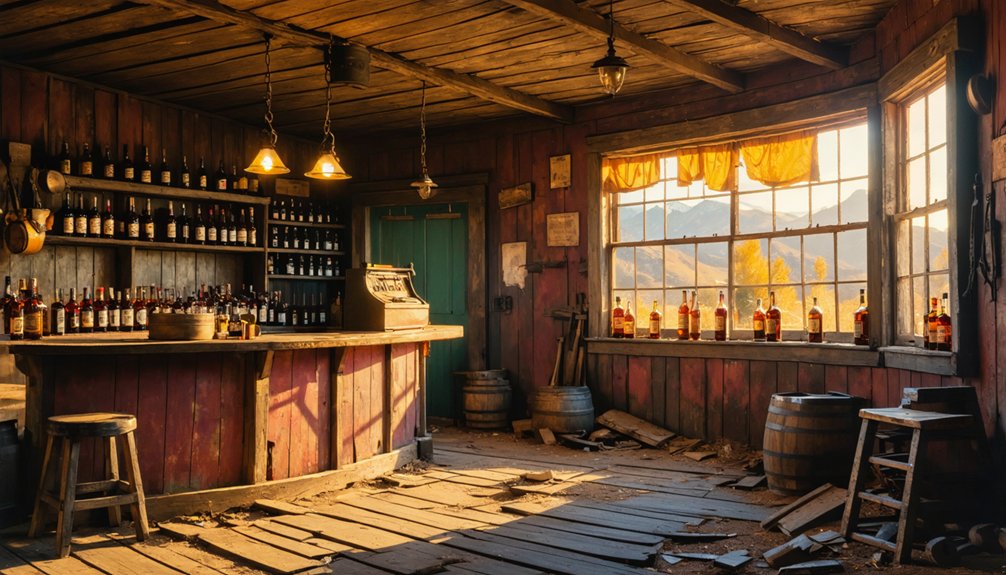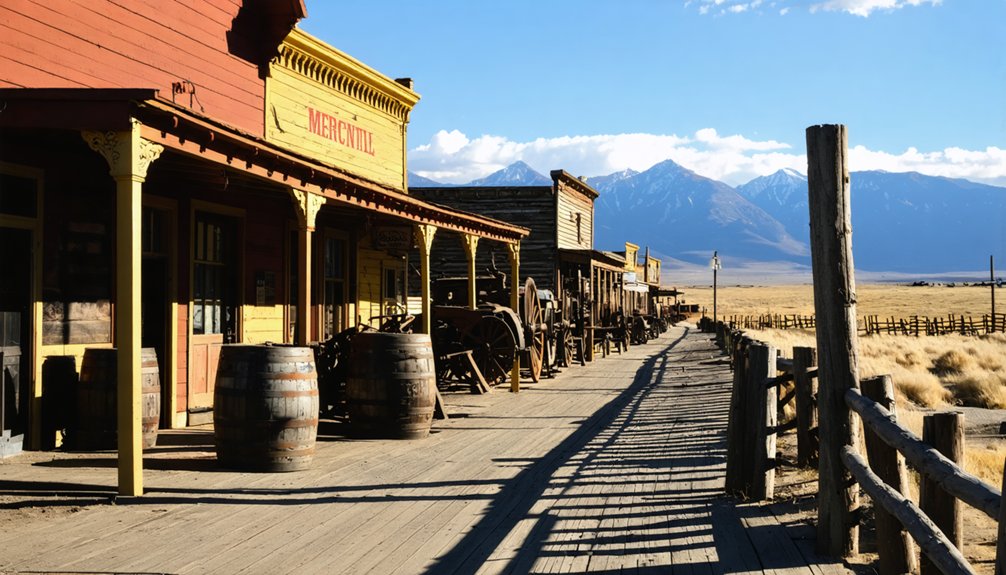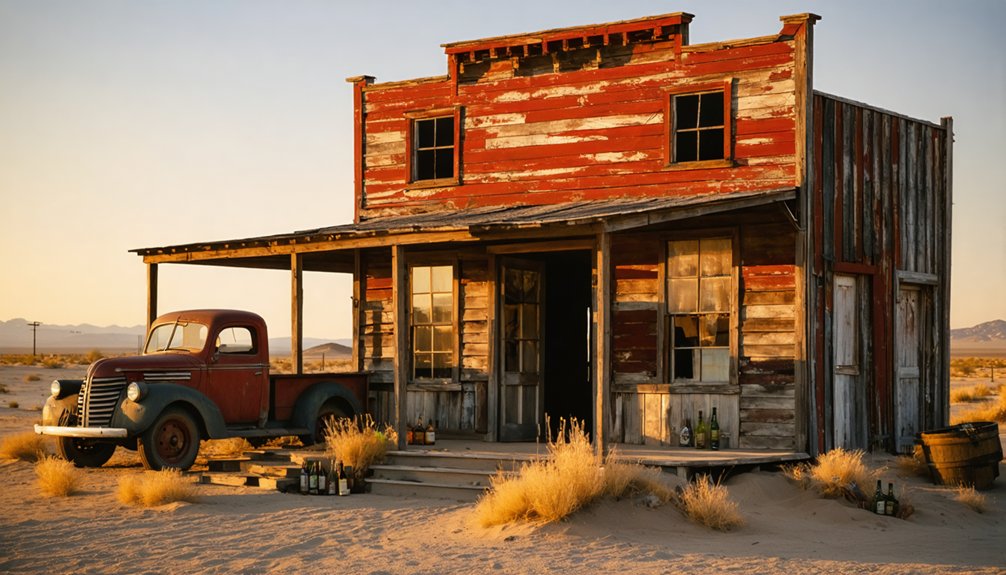
You’ll find nearly 300 ghost towns scattered across California, most originating from the Gold Rush era when mining settlements experienced dramatic boom-and-bust cycles. Notable examples include Bodie State Historic Park, which once housed 10,000 residents and produced $30 million in gold, and Old Shasta, now preserved as a state park. These abandoned towns feature weathered buildings, mining remnants, and foundations that tell compelling stories of California’s frontier past. Further exploration reveals hidden settlements throughout the Sierra Nevada and along historic Route 66.
Key Takeaways
- California has nearly 300 abandoned settlements, with many originating from the Gold Rush era and now preserved as state historic parks.
- Bodie is California’s most famous ghost town, once housing over 10,000 residents and producing $30 million in gold during its peak.
- Many California ghost towns feature well-preserved buildings, mining equipment, and other historical artifacts that visitors can explore today.
- Ghost towns like Calico, Cerro Gordo, and Old Shasta offer tourists unique opportunities to experience California’s rich mining history.
- Most California ghost towns resulted from resource depletion, particularly after gold mines were exhausted or industries closed down.
What Defines a California Ghost Town
While the term “ghost town” conjures images of abandoned buildings and empty streets, defining these historic sites requires specific criteria in California.
In California, ghost towns are more than eerie remnants – they’re historic sites defined by strict preservation standards.
You’ll find that ghost town criteria primarily center on economic abandonment and visible physical remains. A site must show tangible evidence of its past, whether through dilapidated buildings, standing ruins, or even just foundations. Public access to these historical locations is essential, as public viewing must be available for official ghost town classification. The main reason for abandonment typically stems from economic non-viability, often due to resource depletion or industry closure. Smaller communities frequently became ghost towns when railroads bypassed them, redirecting economic activity elsewhere.
You’ll need to evaluate population thresholds when identifying true ghost towns. While some debate exists, most definitions allow for either complete desertion or a minimal skeleton population.
California’s official recognition system distinguishes between gold rush and silver rush ghost towns, with Bodie and Calico serving as prime examples of these historic categories.
The Legacy of Gold Rush Abandonment
When you explore California’s ghost towns today, you’ll find the physical remains of dreams that vanished as quickly as the precious metals that sparked them.
The landscape is dotted with nearly 300 abandoned settlements, from Bodie’s weathered structures at 8,379 feet to Cerro Gordo’s isolated mountain perch, each telling a story of rapid boom and devastating bust. These deserted towns were once filled with saloons and stores, bustling with the daily activities of hopeful settlers. Bodie itself reached its peak between 1876 and 1882 with a population exceeding 10,000 residents.
These silent streets and empty buildings, preserved in various states from “arrested decay” to complete ruin, represent more than $30 million in extracted gold and silver wealth that ultimately couldn’t sustain the communities built around their mines.
Mining Towns’ Empty Dreams
The dreams of California’s Gold Rush miners crumbled into the ghost towns that dot today’s landscape, leaving behind stark reminders of boom-and-bust cycles that defined the state’s mining era.
You’ll find dreams deferred in places like Bodie, where a population of 10,000 vanished after producing $30 million in gold, and prosperity lost in Old Shasta’s once-proud row of brick buildings, now silent ruins north of San Francisco. In its heyday, over $100,000 in gold passed through Shasta’s streets every week.
These abandoned settlements tell similar tales: Ballarat’s brief glory with its seven saloons and 500 residents, Eagle Mountain’s modern amenities and tree-lined streets standing empty since 1983, and Malakoff Diggins’ scarred landscape following the 1884 hydraulic mining ban.
Today, many serve as state historic parks, preserving their arrested decay as evidence of California’s volatile mining heritage. In Dublin Gulch, resourceful miners crafted unique dwellings by carving into caliche clay, creating one of California’s most architecturally distinctive ghost towns.
Abandoned Riches Below Ground
Beneath California’s abandoned mining settlements lies an untold story of vast mineral wealth, forever locked away when operations ceased. You’ll find subsurface treasures scattered throughout the Sierra Nevada foothills, where the Idaho-Maryland Mine’s 3,400-foot shaft hints at unexplored riches.
These mining legacies include arsenic-laden gold deposits and silver-rich veins that once transformed Los Angeles’ economy. The rise of hydraulic mining techniques in 1853 left permanent scars on the landscape while extracting deeper deposits. Modern gold prices reaching record high values have renewed interest in these dormant mines.
- Deep mine shafts plunging thousands of feet into darkness, their wealth untouched
- Toxic red tailings piles glinting with traces of precious metals
- Abandoned equipment frozen in time, marking entries to mineral-rich chambers
- Flooded tunnels concealing untapped gold-bearing quartz veins
- Remote mountain claims where silver deposits remain unconquered
Today, these inaccessible riches remain sealed beneath the earth, their extraction complicated by environmental concerns and economic feasibility.
Silent Streets Tell Stories
These settlements share common patterns of rapid rise and swift decline.
In Dog Town, the first Mono County gold settlement, buildings sprouted within weeks only to empty just as quickly.
Forgotten memories linger in places like Bennettville, where investors’ dreams of silver riches crumbled at 10,000 feet elevation.
Many towns flourished initially with brick and stone buildings constructed alongside wooden structures.
Lundy’s remote canyon location and harsh winters hastened its demise, leaving only weathered ruins for modern explorers to discover.
California’s approximately 300 ghost towns stand as testament to the dramatic impact of mining booms and busts.
Best-Preserved Ghost Towns for Visitors
California’s most fascinating ghost towns offer visitors an authentic glimpse into the state’s rich mining heritage, with five destinations standing out for their exceptional preservation and historical significance.
You’ll discover unrivaled authenticity at Bodie Park, where weathered buildings stand frozen in time, while Calico Town delivers a more curated experience with its restored saloon and railroad attractions.
Cerro Gordo’s Silver Queen legacy lives on through its well-preserved American Hotel, and Shasta Park’s courthouse tells tales of frontier justice.
- Explore decaying wooden structures against Sierra Nevada backdrops
- Wander through dusty saloons with original artifacts intact
- Peer into miners’ caves carved into rugged mountainsides
- Examine authentic mining equipment from the golden age
- Step through deserted streets where thousands once sought fortune
Desert Ghost Towns Along Route 66
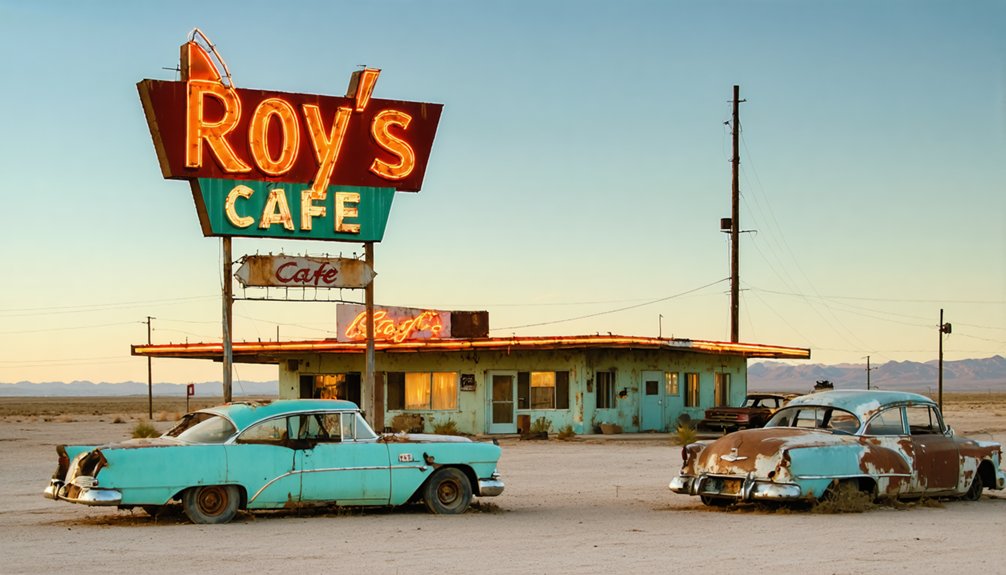
Along the storied stretch of Route 66 through the Mojave Desert, a series of haunting ghost towns chronicles the rise and decline of America’s most famous highway.
Abandoned settlements along Route 66’s desert corridor tell silent stories of American mobility’s shifting tides.
You’ll discover Mojave relics scattered across a 100-mile corridor from Goffs to Ludlow, where Interstate 40’s arrival led to widespread abandonment.
In Amboy, iconic Route 66 remnants stand frozen in time, while Essex’s weathered post office and gas station ruins tell tales of isolation.
Goffs anchors the eastern gateway of this desert passage, where the “Ghost Town Road” stretch leads to vanished settlements like Ibis and Homer.
Further west, Ludlow marks where old Route 66 reconnects with I-40, its decaying buildings serving as silent witnesses to the highway’s golden age and eventual bypass.
Hidden Mining Towns in the Sierra Nevada
As you explore the remote Sierra Nevada’s hidden mining settlements, you’ll encounter everything from Bodie’s well-preserved “arrested decay” structures to the crumbling foundations of short-lived camps like Bennettville and Lundy.
Through carefully maintained historic sites and interpretive trails, you can examine authentic 19th-century mining operations, from massive stamp mills to primitive living quarters that housed thousands during the gold and silver boom years.
The harsh mountain conditions and seasonal accessibility of these high-elevation towns (many above 8,000 feet) offer stark evidence of the challenging conditions miners faced while pursuing mineral wealth in California’s rugged terrain.
Historic Mining Operations Today
Hidden within the rugged terrain of the Sierra Nevada, numerous mining settlements stand frozen in time, offering glimpses into California’s ambitious precious metal pursuits of the 1800s.
You’ll find evidence of diverse mining techniques, from hydraulic methods at Dog Town to sophisticated ore processing at Cerro Gordo, which had significant economic impact on Los Angeles’ early development.
- Restored bunkhouses and assay offices at Bennettville’s 10,000-foot elevation preserve high-altitude mining heritage
- Dog Town’s scattered stone ruins mark the site of eastern Sierra’s largest gold nugget discovery
- Cerro Gordo’s American Hotel and miners’ cabins cling to steep mountainsides
- Lincoln Log Mine’s mill and snow shed structures showcase adaptation to harsh winters
- Mammoth Consolidated Mine’s compact operation features intact log cabins and diesel-powered mill remains
Gold Rush Living Conditions
During the peak of California’s Gold Rush, miners endured harsh realities that contrasted sharply with their dreams of instant wealth.
You’ll find that most prospectors faced severe gold rush hardships, working in primitive conditions while paying inflated prices for basic necessities. The mining camp struggles included lawlessness and violence before organized government took hold.
The intense mining activity transformed the landscape dramatically – rivers were diverted, forests cleared, and hillsides stripped bare.
While some locations like Georgetown yielded impressive returns of $20,000 in just six weeks, most miners barely scraped by. As deposits were exhausted, temporary settlements like Portuguese Flat quickly transformed into abandoned ghost towns.
The stark contrast between wealthy mine owners living in upscale Nevada City and the miners dwelling in basic camps highlighted the economic disparity of the era.
Exploring Remote Mountain Settlements
Deep within the Sierra Nevada‘s rugged terrain, remote mining settlements emerged during the late 1800s, leaving behind compelling remnants of California’s mineral-seeking past.
You’ll discover ghost towns like Bennettville at 10,000 feet elevation, where a restored bunkhouse stands as a symbol of silver mining dreams, and Cerro Gordo’s American Hotel perched high above Owens Valley.
These mountain remnants tell stories of brief prosperity and harsh realities that shaped California’s mining history.
- Weathered stone foundations of Dogtown emerge from the eastern Sierra slope
- Ward Mining Camp’s hidden log cabins nestle among protective trees
- Rusted stamp mills and mining equipment dot steep mountainsides
- Remote settlements’ isolation preserved authentic structural remains
- High-elevation camps reveal strategic placement near ore deposits
Safety Considerations When Exploring
While ghost towns offer fascinating glimpses into California’s past, exploring these historic sites requires careful attention to numerous safety hazards and legal considerations.
abandoned mining towns near Barstow provide a unique opportunity to witness the remnants of a once-thriving industry. Visitors should remain vigilant of unstable structures and wildlife that may inhabit these deserted areas. Additionally, understanding the history behind these towns can enrich the experience and deepen the appreciation of California’s mining legacy.
You’ll need proper safety gear including sturdy boots, layered clothing, and emergency supplies when venturing into these remote locations. The sites often present serious risks from unstable buildings, hidden mine shafts, and hazardous materials like asbestos.
Weather conditions can change rapidly, with extreme temperature swings and flash flood potential in desert areas. Limited cell coverage means you should carry satellite communication devices and inform others of your plans.
Remember that many ghost towns are protected by law – removing artifacts or entering restricted areas can result in legal penalties. Always check land ownership status and obtain necessary permits before visiting these historic sites.
Historical Significance and Preservation
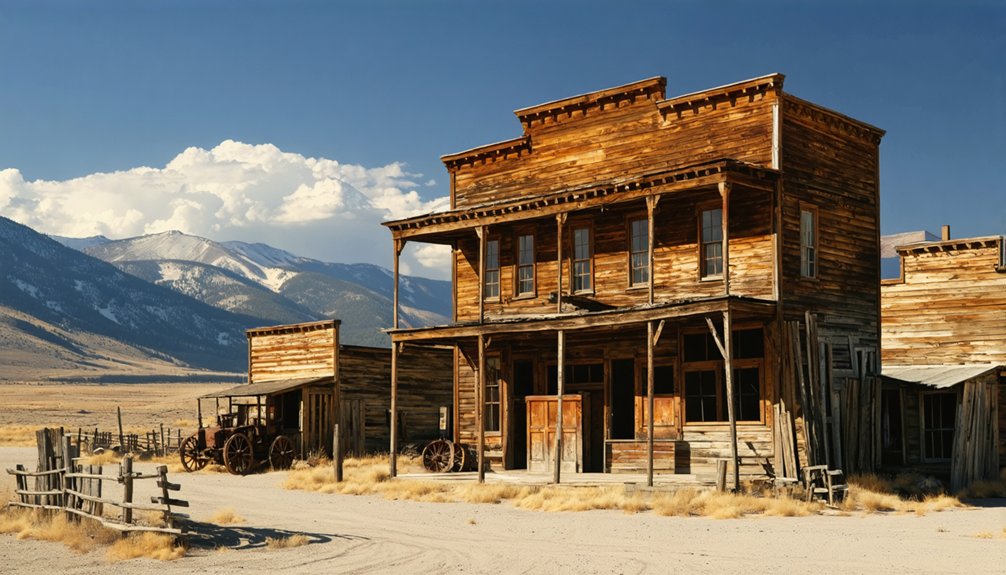
As evidence to California’s rich mining heritage, ghost towns like Bodie and Calico stand as powerful reminders of the state’s boom-and-bust resource extraction era.
Through careful ghost town preservation efforts, you’ll find these historic sites maintain their authenticity while telling the dramatic story of California’s mining past.
Bodie, once California’s third-largest city, remains deliberately unrestored as a State Historic Park, while Calico operates as a living museum of silver mining history.
- Bodie’s authentic wooden structures frozen in a state of “arrested decay”
- Calico’s restored 1880s buildings set against colorful mineral-rich hills
- Historic stamp mills and mine shafts showcasing 19th-century technology
- Original brick buildings at Shasta State Historic Park
- Pioneer cemeteries and architectural remnants at Silver Mountain City
Planning Your Ghost Town Adventure
Ready to explore California’s historic ghost towns? You’ll discover a well-mapped network of preserved sites from the northern gold fields to the Mojave Desert.
Your ghost town activities can range from guided tours of Bodie’s 110 preserved structures to interactive experiences at Calico Ghost Town’s railroad rides and gold panning stations.
For ideal itinerary tips, plan your route through key locations like Shasta State Historic Park, Malakoff Diggins, and Empire Mine before heading south to Randsburg and Calico.
You’ll need a reliable vehicle, as many sites are tucked away in remote desert locations. Consider starting at more developed sites like Calico, which offers family-friendly amenities, before venturing to authentic ruins like Bodie, where original artifacts still rest in preserved buildings.
Frequently Asked Questions
Are There Any Ghost Towns in California Where People Still Live?
You’ll find modern ghost towns like Randsburg and Hornitos still maintain small populations, offering living history experiences with fewer than 100 residents preserving these historic California communities today.
Can You Legally Camp Overnight in California Ghost Towns?
You’ll need to check specific camping regulations since each ghost town differs – State Parks ban overnight stays, but BLM/USFS lands might allow dispersed camping if you follow ghost town etiquette.
Which California Ghost Towns Are Known for Paranormal Activity?
You’ll find haunted legends and ghostly sightings most prominently at Bodie State Historic Park, Calico Ghost Town, and Ballarat, where documented mining deaths and frontier violence fuel paranormal activity reports.
Do Any California Ghost Towns Still Have Active Mining Claims?
Areonних faction
What Artifacts Can Visitors Legally Collect From California Ghost Towns?
Precious and protected places preclude your collecting – you can’t legally remove any artifacts from California ghost towns due to strict preservation restrictions protecting historical sites’ cultural significance under state and federal regulations.
References
- https://www.visitcalifornia.com/road-trips/ghost-towns/
- https://www.camp-california.com/california-ghost-towns/
- https://www.tripadvisor.com/Attractions-g28926-Activities-c47-t14-California.html
- https://www.californist.com/articles/interesting-california-ghost-towns
- https://maps.apple.com/guides?curated=7683917705499014961&_provider=9902
- https://californiahighsierra.com/trips/explore-ghost-towns-of-the-high-sierra/
- https://nvtami.com/ghost-towns-nevada-california/
- https://www.youtube.com/watch?v=3AkK0gKGmmg
- https://en.wikipedia.org/wiki/Ghost_town
- https://www.terrastories.com/downloads/CaliforniaGhostTown.pdf