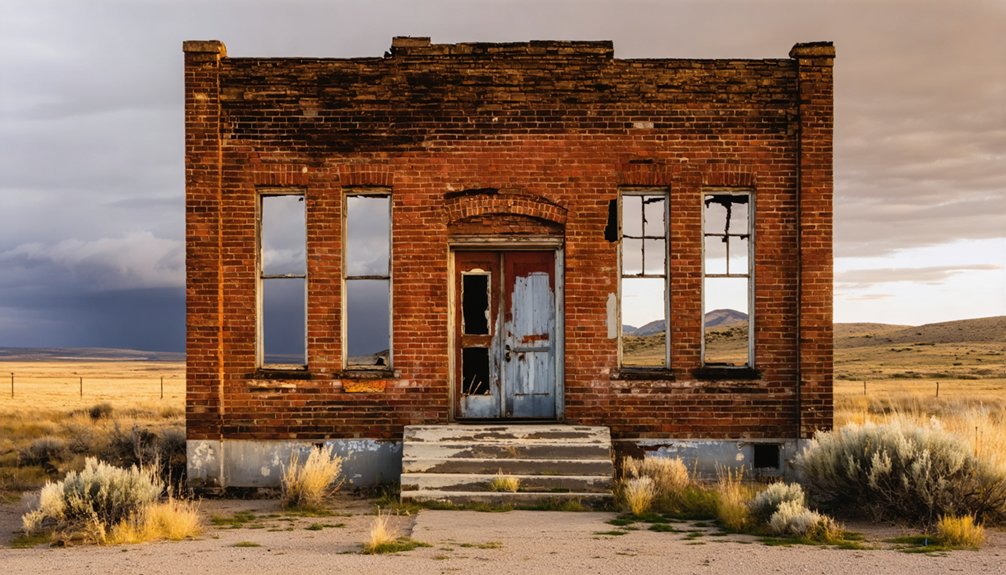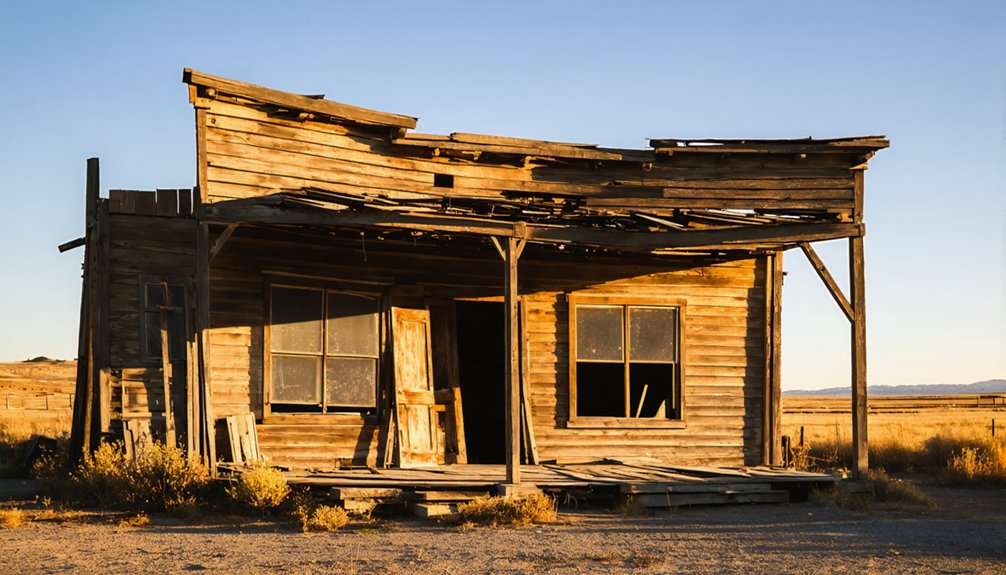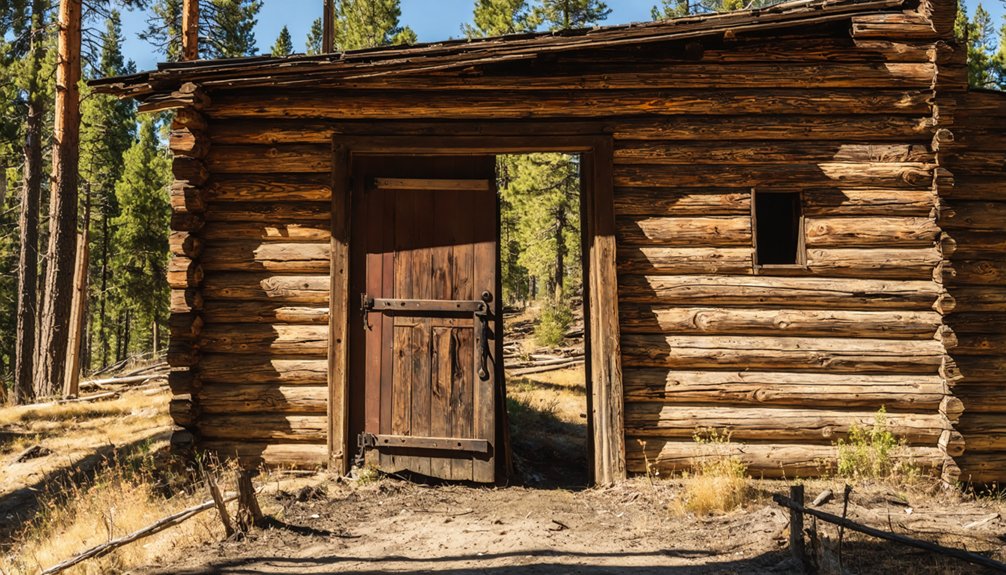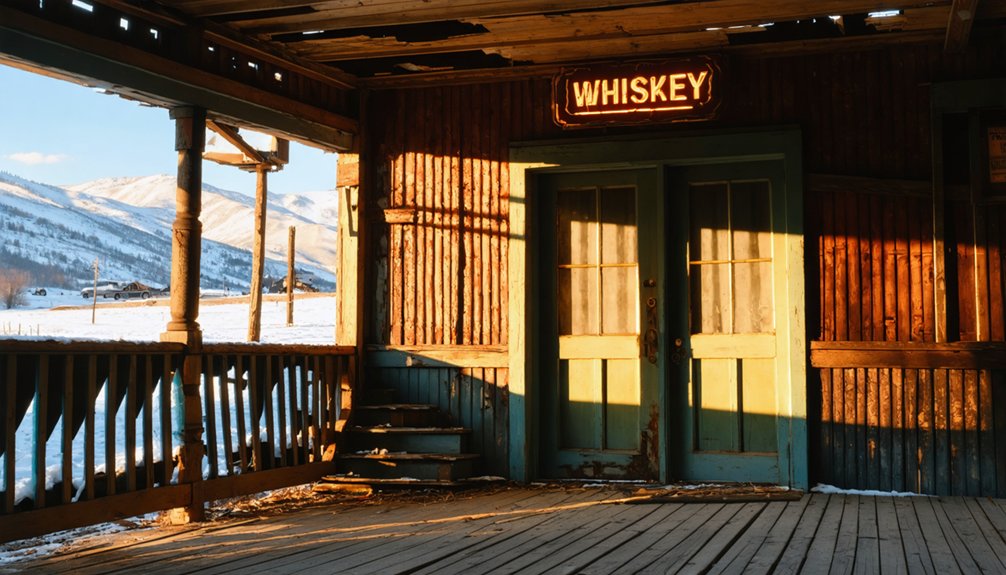
You’ll find numerous well-preserved ghost towns throughout Idaho, with Silver City standing as the state’s most famous abandoned settlement. Many feature original 1880s buildings, mining equipment, and cemeteries that tell the story of the region’s gold rush era. The state’s rugged terrain hosts remarkable sites like Custer, Bonanza, and Bayhorse, where you can explore authentic stone buildings and charcoal kilns. These mountain treasures offer a glimpse into the American frontier that few other states can match.
Key Takeaways
- Idaho has numerous ghost towns, with Silver City being the most famous and well-preserved, featuring original buildings from the 1880s.
- Central Idaho’s Custer and Bonanza showcase classic mining town histories and can be accessed via ATV trails.
- Bayhorse ghost town features remarkable stone buildings and charcoal kilns, offering self-guided walking tours for visitors.
- Most ghost towns are best visited between Memorial Day and early fall when roads are snow-free and weather is favorable.
- Idaho City, once the largest city in the Northwest during the gold rush, remains as a historic ghost town.
Most Notable Ghost Towns Worth Exploring
While Idaho’s mining heritage has left dozens of abandoned settlements across the state, several ghost towns stand out as particularly compelling destinations for modern-day explorers.
You’ll find Silver City, the state’s most famous ghost town, featuring numerous original buildings from its 1880s heyday when 2,500 residents called it home. The town’s harsh winter conditions contributed significantly to its eventual decline.
In central Idaho, you can explore Custer and Bonanza, which showcase classic boom-and-bust mining town histories through their preserved structures and mineworks. The settlements remain in a state of disrepair with crumbling walls and deteriorating foundations marking the landscape.
Don’t miss Bayhorse’s remarkable mill site with its stone buildings and charcoal kilns, or Rocky Bar’s mountain setting in the Sawtooths.
Throughout Owyhee County, you’ll discover a cluster of fascinating sites including De Lamar and Ruby City, where cemeteries and ruins tell stories of Idaho’s early territorial days.
Getting There: Location and Access Tips
Since most of Idaho’s ghost towns lie scattered across rugged terrain, you’ll need to plan your access routes carefully before setting out to explore them.
Among the most notable ghost towns throughout Idaho are Bannack and Silver City, each rich with history and tales of the past. As you venture into these abandoned places, be prepared to encounter remnants of old buildings and mining equipment that tell stories of a once-thriving community. Make sure to bring a camera to capture the stunning landscapes that surround these eerie yet fascinating sites.
In central Idaho, you can reach Bonanza and Custer via ATV trails between Challis and Stanley, where you’ll find hundreds of miles of trails for traversing through the Land of the Yankee Fork State Park. These historic towns were once bustling with rich gold deposits in the 1880s.
For southwest Idaho destinations, Silver City stands as the most accessible ghost town, with preserved structures you can reach through Owyhee County roads. Modern visitors can compare locations with 1895 detailed maps that show historic roads and settlements.
The Boise Basin area offers multiple sites, including Placerville and Pioneerville, while local accommodations near Banner provide bases for exploring its preserved log cabins.
In Owyhee and Elmore counties, you’ll find De Lamar and Rocky Bar through established forest routes.
What Makes Idaho’s Ghost Towns Unique
Beneath Idaho’s rugged mountain ranges lie some of America’s most distinctive ghost towns, each telling a unique story of the state’s mining heritage.
Unlike many commercialized ghost towns elsewhere, Idaho’s abandoned settlements maintain their authenticity through well-preserved 19th-century structures and genuine historical artifacts. You’ll find places like Silver City, perched at 6,200 feet in the Owyhee Mountains, where the Idaho Hotel still operates much as it did a century ago. The town reached its peak of 2,500 residents during the prosperous 1880s.
These towns carry both cultural significance and tragic tales, from the submerged remains of Roosevelt beneath its namesake lake to the haunting Boot Hill cemetery in Idaho City. Idaho City once swelled to become the largest city in northwest, surpassing even Portland and Seattle during the height of the gold rush.
What truly sets them apart is their integration with pristine wilderness, offering you not just a glimpse of mining history, but also unspoiled mountain landscapes and outdoor adventures.
Best Times to Visit and Safety Guidelines
Although Idaho’s ghost towns beckon year-round, planning your visit during ideal seasons guarantees both access and safety.
You’ll find the best seasonal visits from Memorial Day through early fall, when snow-free roads allow safe passage to sites like Silver City. Summer brings warm, sunny weather perfect for exploring, while early June offers spectacular camas lily blooms near ghost town locations. Visitors can experience fascinating Sierra Silver Mine tours that showcase the region’s rich mining heritage. Situated at over 6,000 feet, Silver City’s elevation demands careful preparation for high-altitude conditions.
For safety measures, stick to high-clearance vehicles on the rough gravel roads, and respect private property boundaries, especially in Silver City where security personnel monitor access.
You’ll want to watch for old mine sites and tram remnants while hiking the Owyhee Mountains. Take advantage of guided tours in Idaho City or self-guided walks through Bayhorse’s trail system to assure a secure exploration of these historic treasures.
Preservation Efforts and Future Outlook
While Idaho’s ghost towns face ongoing preservation challenges, a robust network of organizations actively safeguards these historic treasures. Local historical societies, nonprofit land trusts, and federal agencies employ diverse preservation strategies, from structural stabilization to artifact conservation.
You’ll find dedicated volunteers working alongside preservation experts to repair roofs, reinforce foundations, and protect fragile artifacts. The annual Custer Days celebration demonstrates successful community engagement in preserving historic sites.
The Atlanta School offers specialized training in vernacular construction techniques to support preservation efforts. Future challenges include securing sustainable funding sources and managing increasing visitor impacts. However, innovative public-private partnerships are helping address these concerns through creative solutions like membership programs, guided tours, and special events.
Grant funding from state preservation offices and heritage trusts continues to support critical restoration projects, while careful stewardship agreements with private property owners guarantee public access to significant sites remains available for future generations.
Frequently Asked Questions
Are There Any Reported Paranormal Activities in Idaho’s Ghost Towns?
You’ll find numerous haunted locations throughout Idaho’s ghost towns, with ghostly encounters reported in Silver City’s Idaho Hotel, Custer’s abandoned buildings, and Bayhorse’s preserved stone structures.
Can Visitors Stay Overnight in Any of Idaho’s Ghost Towns?
You’ll find ghost town accommodations in several Idaho locations. Try the historic Idaho Hotel in Silver City, rustic cabins in Burgdorf and Chesterfield, or enjoy overnight camping in Gilmore’s atmospheric mining town.
What Valuable Artifacts Have Been Found in Idaho Ghost Towns?
You’ll find historical artifacts like rusted mining equipment, carved headstones, blue glass fragments, broken crockery, and massive tools throughout these sites, though removing items isn’t allowed to preserve their heritage.
Do Any Ghost Towns Still Have Functioning Businesses or Year-Round Residents?
You’ll find Silver City’s historic Idaho Hotel still operating, catering to ghost town tourism. Several preserved towns like Custer run seasonal guided tours, but few maintain year-round businesses or permanent residents.
Are Metal Detectors Allowed in Idaho’s Abandoned Mining Ghost Towns?
You’re playing with fire – metal detecting regulations strictly prohibit searching ghost town sites under ARPA. You’ll need specific permits and landowner permissions, and most historic areas are off-limits for ground disturbance.
References
- https://www.thegoldminehotel.com/ghost-towns-and-haunted-places-in-idaho
- https://idaho-forged.com/idahos-ghost-towns-eerie-yet-approachable/
- https://history.idaho.gov/wp-content/uploads/2018/08/0064.pdf
- https://www.geotab.com/ghost-towns/
- https://www.ghosttowns.com/states/id/id.html
- https://visitidaho.org/things-to-do/ghost-towns-mining-history/
- https://en.wikipedia.org/wiki/List_of_ghost_towns_in_Idaho
- https://www.youtube.com/watch?v=rTSZSlxTmbs
- https://visitidaho.org/travel-tips/explore-idahos-ghost-towns/
- https://blackcatmining.com/products/idaho-ghost-towns