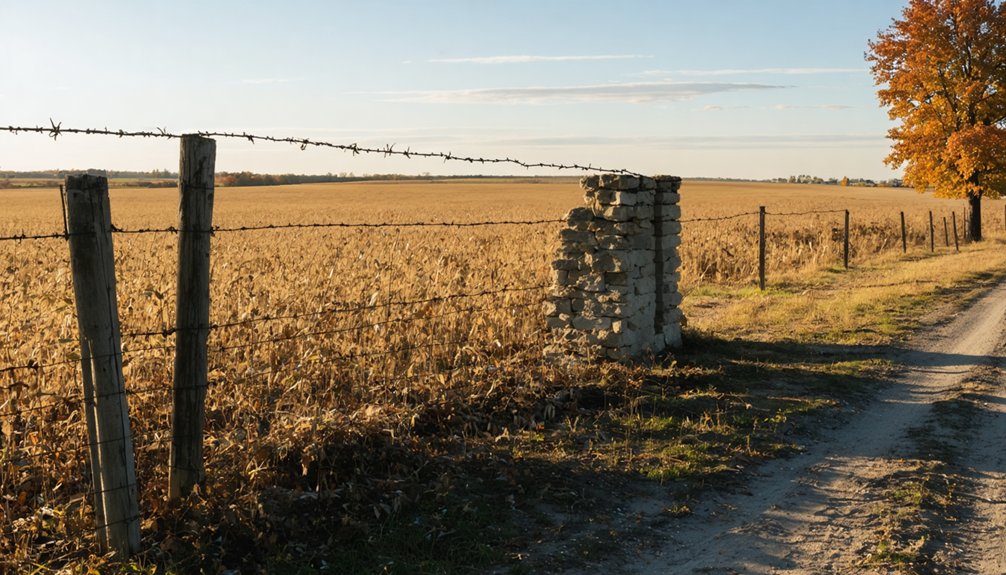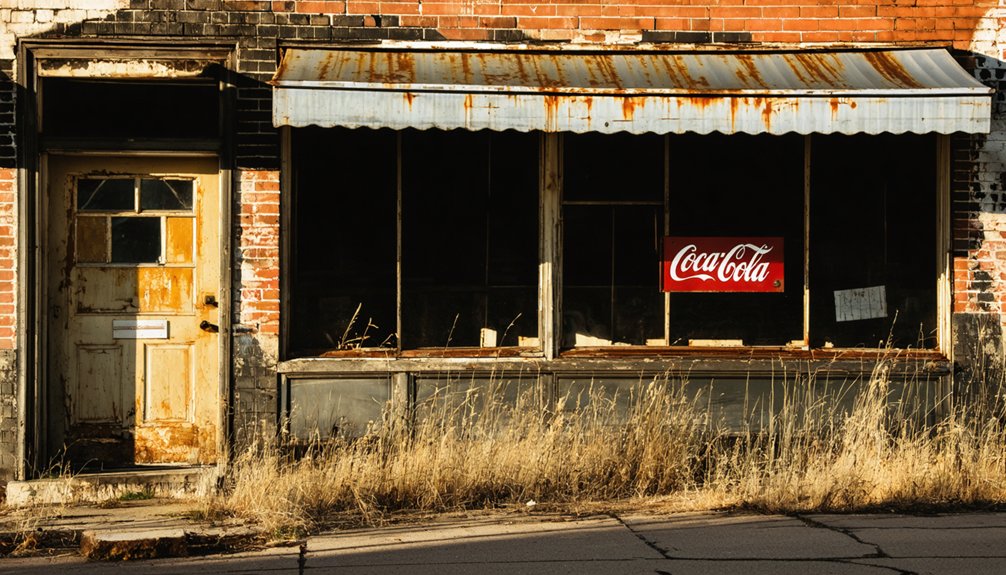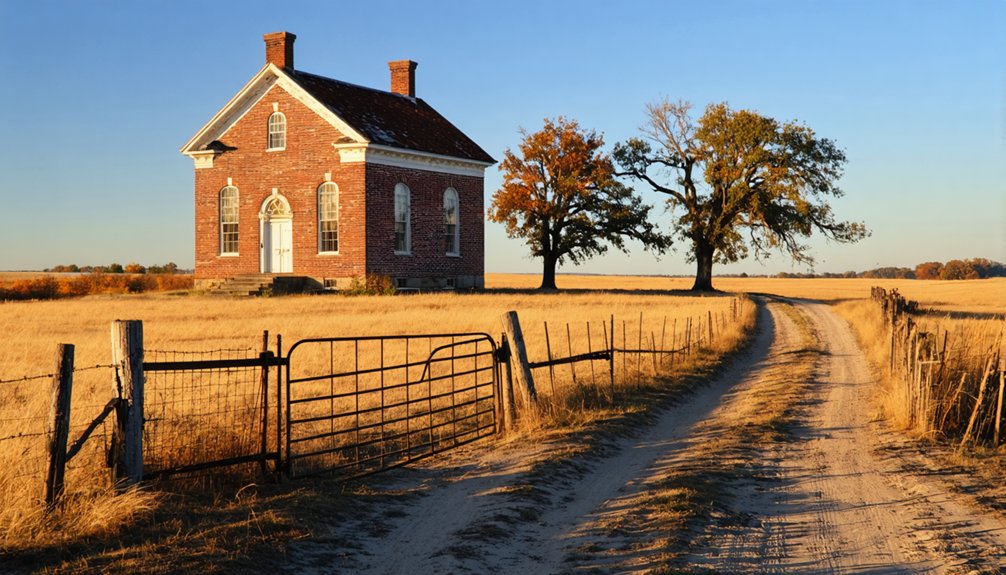
You’ll find numerous ghost towns throughout Illinois, from abandoned mining settlements like Cardiff and Brownsville to flood-ravaged river communities such as Old Shawneetown and Kaskaskia. Many of these forgotten places showcase remnants of their past glory, including building foundations, empty storefronts, and historic cemeteries. Along Route 66, you’ll discover abandoned roadside attractions and service stations like the Salsbury Station in Mount Olive. These silent witnesses tell compelling stories of Illinois’s boom-and-bust cycles, natural disasters, and shifting fortunes.
Key Takeaways
- Illinois has numerous ghost towns, including abandoned mining communities like Cardiff and Brownsville that once had thriving schools, churches, and stores.
- Natural disasters caused several ghost towns, with Valmeyer relocating after the 1993 flood and Parrish abandoned after the 1925 Tri-State Tornado.
- Route 66 corridor features multiple ghost towns, including Zanesville and Funks Grove, with abandoned buildings and historic service stations.
- Shifting river courses and flooding led to the disappearance of towns like Kaskaskia, while others declined due to economic changes.
- Historic ruins of these ghost towns include mining equipment, empty storefronts, foundations, and cemeteries that document Illinois’s past communities.
The Historical Legacy of Illinois Ghost Towns
While Illinois’s landscape today features thriving cities and towns, the state’s history is marked by numerous settlements that have faded into obscurity due to geographic, political, and social forces.
You’ll find that these ghost towns tell compelling stories of economic decline triggered by shifting river courses, devastating floods, and the rerouting of essential transportation networks.
Certain settlements like Vishnu Springs emerged around natural features, with entrepreneurs capitalizing on the supposed healing properties of mineral waters.
Social dynamics played a significant role, as epidemics decimated populations and racial violence disrupted communities.
The relocation of county seats and competition between rival settlements often determined which towns would survive. The town of Brownsville exemplifies this pattern, as its decline began after a courthouse fire in 1843.
Natural resource depletion, particularly in mining communities, led to mass exodus, while changing transportation patterns—from stagecoach routes to railroads to highways—left many once-prosperous towns isolated and eventually abandoned.
Mining Town Remains: A Tale of Boom and Bust
You’ll find stark evidence of Illinois’s mining past in the abandoned equipment and industrial relics that still dot former boomtowns like Cardiff and Brownsville.
Tight-knit communities once thrived here with schools, churches, and general stores serving the mining families.
The maze of underground tunnels beneath these ghost towns presents both historical significance and modern safety concerns, with documented mine workings running under old town streets throughout Southern Illinois. Water filled mines by 1914, making many of these underground passages inaccessible and dangerous.
These once-bustling coal communities now stand eerily quiet, their remaining foundations and cemeteries serving as proof of the dramatic boom-and-bust cycles that shaped Illinois’s industrial landscape.
Mining Equipment Left Behind
The abandoned mining sites scattered across Illinois stand as stark reminders of the state’s industrial past, with the Interstate Coal Company‘s remains offering some of the most complete examples of left-behind equipment.
You’ll find the powerhouse as a gutted shell, its walls reaching skyward without a roof, while abandoned machinery sits silent in the tipple and preparation plant. The mine’s steam power plant operations matched those of similar historic sites like the Illinois Mine in Nevada. The Joliet rock crusher’s ghostly relics include elevated wheels and shoots that once processed limestone for the prison’s construction. The structure features old railroad tracks that were used to transport processed materials.
Throughout these sites, you’ll notice concrete footings where massive headframes once stood, and track-sized recesses in shaft walls where cage timbers guided mining cars.
While thieves and salvagers have stripped most mechanical components, the processing buildings still hold their roofs, preserving a glimpse into Illinois’s industrial heritage.
Underground Tunnels Still Exist
Beneath the streets and buildings of numerous Illinois mining towns, intricate networks of tunnels still weave through the bedrock as silent witnesses to the state’s industrial heritage.
Your tunnel exploration adventures could lead you through the abandoned passages of Rosiclare’s fluorspar mines or Rockford’s steam tunnels, where urban archaeology reveals stories of industrial innovation and possible Underground Railroad connections.
Early settlers utilized small dogholes mines before the advent of large-scale industrial mining operations.
- Rosiclare’s underground maze stretches beneath city streets, evidence of its fluorspar mining legacy
- Valmeyer’s Salt Lick Point Mine features narrow passages and vintage transport equipment
- Rockford’s downtown conceals an extensive network of former steam heating tunnels
- Over 200,000 acres of Illinois land bears the marks of historic mining activity
- More than 330,000 homes sit above these subterranean passages, with mapped tunnels spanning 72 counties
The mines of Rosiclare were once part of the largest fluorospar operation in the United States during the 1930s before closing in 1995.
Coal Towns Now Empty
Once bustling with industrial activity, Illinois’s abandoned coal towns stand as weathered monuments to the state’s mining heritage.
You’ll find places like Cardiff in Livingston County, which sprang up in 1899 but now lies empty – a classic example of ghost town origins tied directly to coal mining history.
In Macoupin County, company towns like Enthusiasticville, Sawyerville, and Benld grew around Superior Coal Company’s operations, where miners descended over 200 feet daily into dark tunnels. The town of Benld faced particular hardship when its elementary school had to be demolished due to mine subsidence.
Today, these communities struggle with the physical legacy of mining – vast underground networks that threaten buildings with subsidence.
Braidwood, once home to 2,000 residents, exemplifies the boom-and-bust cycle. After surviving labor unrest, fires, and violence in the 1870s, it now serves as a reminder of Illinois’s complex mining past. The town’s early days were marked by immigrant diversity, as its population swelled with workers from various backgrounds by 1873.
River-Shaped Abandoned Communities
Along Illinois’s major rivers, powerful forces of nature and economic decline have shaped a landscape dotted with abandoned settlements.
You’ll find dramatic stories of river confluence towns like Cairo, which saw its population plummet from 15,000 to under 2,000, and Kaskaskia, where the Mississippi’s changing course led to town isolation on the Missouri side.
- The mighty Mississippi’s 1881 channel shift left historic Kaskaskia cut off from Illinois
- Repeated flooding forced many American Bottoms communities to relocate to higher ground
- Former riverside settlements now exist only as foundations within wildlife refuges
- River port towns along the Illinois River became ghost towns as river traffic declined
- Erosion and catastrophic floods literally washed away portions of riverfront communities
Notable Ghost Towns Along Route 66
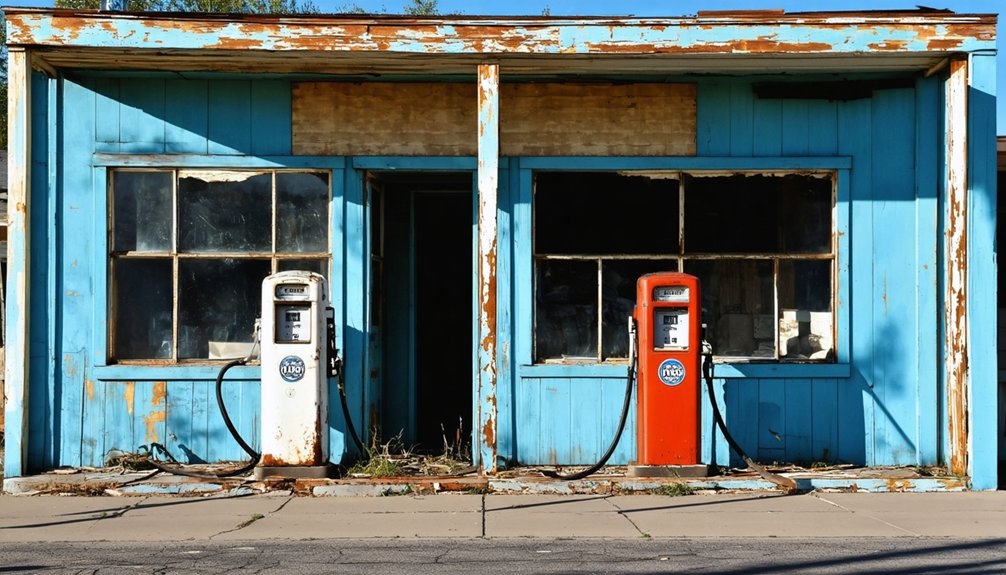
As you travel historic Route 66 through Illinois, you’ll encounter abandoned communities like Zanesville and Funks Grove, where crumbling gas stations and overgrown tourist cabins stand as silent witnesses to the golden age of America’s Mother Road.
The Salsbury Service Station in Mount Olive, built in 1926 and operational until 1991, represents one of the oldest surviving service stations along the original highway alignment, though it now serves as a preserved historic structure rather than an active business.
These forgotten places, many now protected as historic sites or nature preserves, offer glimpses into the rise and decline of roadside commerce that flourished before Interstate 55 diverted traffic from the original route.
Historic Roadside Business Ruins
The decaying remnants of Illinois’ Route 66 businesses tell a compelling story of mid-century American roadside culture.
You’ll find historic ruins scattered along the original highway alignment, from Art Deco service stations to abandoned motor courts. These roadside nostalgia sites capture a unique moment in American travel history, before interstate bypasses changed everything.
- Preserved filling station façades in Pontiac and Dwight still display original period signage
- Mid-century service station ruins between Joliet and Springfield feature standalone islands and canopies
- Tourist cabin foundations and empty pool shells near Dwight and Litchfield mark former motel sites
- Stripped neon signs and vacant diner shells stand as silent sentinels to bygone café culture
- Concrete pads and utility hookups reveal where roadside attractions once entertained travelers
Empty Towns Time Forgot
Once bustling with commerce and travelers, numerous small towns along Illinois’ Route 66 corridor now stand silent and largely abandoned.
You’ll find forgotten railroads and deserted settlements like Zanesville, where only scattered foundations and stone piles remain where buildings once stood.
In Funks Grove, you can explore the overgrown train depot and general store ruins while experiencing the historic maple sirup operations that still persist despite the town’s decline.
These communities emptied for different reasons – some gradually faded as highways bypassed them, while others faced more sudden ends.
Today, these ghost towns serve as time capsules of Route 66’s heyday, with their crumbling motels, abandoned gas stations, and empty tourist courts telling stories of an era when the Mother Road was America’s main street.
Preservation Sites Worth Visiting
Today’s adventurous travelers can explore several well-preserved ghost towns along Illinois’ historic Route 66, each offering unique glimpses into America’s transportation heritage.
The state’s commitment to ghost town preservation has maintained these time capsules of American history, with Funks Grove and Mount Olive standing out for their historical significance.
- Funks Grove showcases Illinois’ largest accessible virgin forest and a haunting, overgrown train depot.
- Mount Olive’s Salsbury Service Station, built in 1926, remains the oldest usable station on Illinois’ Route 66.
- The Nature Preserve at Funks Grove earned National Natural Landmark status.
- Traditional maple sirup production continues at Funks Grove, maintaining Route 66 heritage.
- Mount Olive’s preserved service station, though no longer pumping gas, offers authentic 1920s architecture and atmosphere.
Natural Disasters and Town Relocations
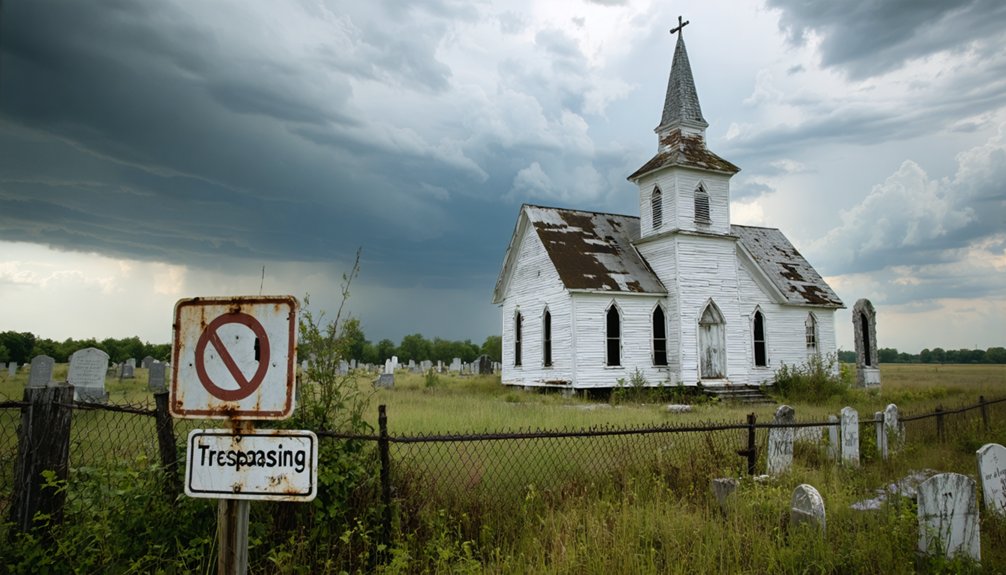
Throughout Illinois’s history, natural disasters have repeatedly forced entire communities to abandon their original locations and rebuild elsewhere, with flooding emerging as the most devastating catalyst for town relocations.
Natural forces have reshaped Illinois’s map, as disasters drive communities from their foundations to start anew elsewhere.
You’ll find dramatic examples like Valmeyer, which relocated entirely to higher ground after the catastrophic 1993 flood, and Old Shawneetown, where residents established New Shawneetown inland following the 1937 Ohio River disaster.
The flood impacts pale in comparison to what you’ll discover about tornado recovery efforts.
The 1925 Tri-State Tornado decimated Parrish, leading to its permanent abandonment.
Meanwhile, the Mississippi River’s changing course literally erased towns like Kaskaskia, leaving fewer than 20 residents and physically moving the historic center to Missouri’s side of the river.
Preservation Efforts and Heritage Sites
Multiple preservation organizations work tirelessly to protect Illinois’s ghost town heritage, with Landmarks Illinois leading statewide efforts through its endangered sites program and rehabilitation grants.
Through active community engagement, you’ll find various organizations partnering with public agencies to preserve these historic sites through adaptive reuse and documentation.
- The National Trust for Historic Preservation includes Route 66 and related Illinois sites in their advocacy programs
- Local historical societies conduct walking tours and operate grant programs to document former towns
- Private conservancies partner to preserve archaeological sites, cemeteries, and meeting houses
- You can explore National Register-listed structures like the Benjaminville Friends Meeting House
- Tax incentives and preservation grants enable private investors to restore historic buildings and create heritage sites
Frequently Asked Questions
Are Any Illinois Ghost Towns Legally Open for Overnight Camping Visits?
You’ll need explicit permission for ghost town camping, as most sites are on private land. Legal overnight stays exist only at designated campgrounds near ghost towns with proper permits.
Can Metal Detecting Be Done in Illinois Ghost Town Locations?
You’ll need landowner permission to metal detect at Illinois ghost town sites, as regulations vary by property type. Most historic locations require permits and following strict guidelines to protect ghost town history.
Exploring ghost towns in Illinois history can reveal fascinating stories about the past, from abandoned homes to remnants of former businesses. However, it’s essential to approach these sites with respect and care, ensuring that any discoveries contribute positively to our understanding of local heritage. By doing so, individuals can play a role in preserving the narratives that these ghost towns embody.
Which Illinois Ghost Towns Have Reported Paranormal Activity or Haunted Locations?
Like whispers from the past, you’ll find paranormal investigations centered in Alton’s McPike Mansion, Galena’s historic district, Aurora’s Two Brothers Roundhouse, and haunted legends throughout the Effingham and LaSalle-Peru regions.
Do Any Illinois Ghost Towns Still Maintain Active Postal Addresses?
You won’t find active postal services in Illinois ghost towns today. While some historic preservation efforts document their former post offices, these communities have lost their official mailing addresses as populations dispersed.
The remnants of abandoned mining towns in Illinois serve as haunting reminders of a once-thriving industry. Overgrown streets and crumbling facades tell stories of prosperity that have long since faded away. Explorers and historians alike are drawn to these sites, eager to uncover the narratives hidden within the ruins.
In the shadow of these forgotten towns, visitors can discover unique overnight stays in Illinois that offer a glimpse into the past. These accommodations, ranging from rustic cabins to historic inns, provide an immersive experience for those looking to connect with the area’s rich history. As guests settle in, they can explore the nearby ghost towns and reflect on the stories that shaped this intriguing region.
What Safety Precautions Should Visitors Take When Exploring Illinois Ghost Towns?
You’ll need safety gear including boots, gloves, and flashlights. Follow visitor guidelines by checking permits, avoiding trespassing, bringing a companion, and sharing your route with someone beforehand.
References
- https://www.ghosttowns.com/states/il/il.html
- https://www.youtube.com/watch?v=93k0qtvzkn4&vl=en-US
- https://www.atlasobscura.com/things-to-do/illinois/ghost-towns
- https://freepages.rootsweb.com/~gtusa/history/usa/il.htm
- https://savingplaces.org/guides/ghost-towns-on-route-66
- https://www.geotab.com/ghost-towns/
- https://www.freakyfoottours.com/us/illinois/
- https://drloihjournal.blogspot.com/p/lost-towns-of-illinois-series.html
- https://www.heraldtimesonline.com/story/lifestyle/home-garden/2021/01/15/some-illinois-ghost-towns/43846097/
- https://everafterinthewoods.com/8-forgotten-ghost-towns-in-illinois-that-are-quietly-fascinating/