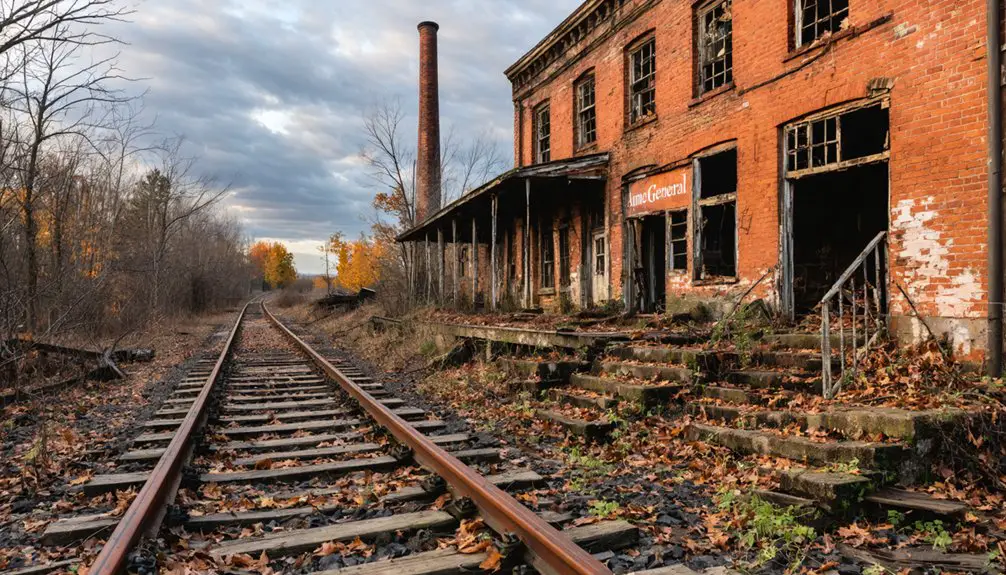
Yes, you’ll find over 110 ghost towns across Pennsylvania, the highest concentration in any U.S. state. The most famous is Centralia, where an underground mine fire has burned since 1962 and continues today. You’ll discover abandoned coal mining communities, former oil boom towns like Pithole City, and deserted logging settlements. Many sites offer guided tours and museums showcasing mining heritage, though proper safety precautions are essential to explore these fascinating remnants of Pennsylvania’s industrial past.
Key Takeaways
- Pennsylvania has over 110 ghost towns, making it the state with the highest number of abandoned settlements in the United States.
- Centralia, Pennsylvania’s most famous ghost town, remains largely abandoned due to an underground mine fire burning since 1962.
- Former mining towns like Pithole City and Nemacolin became ghost towns after resource depletion and industry closures.
- Many abandoned Pennsylvania towns feature preserved historical structures, including mining facilities, bunkers, and factories from industrial periods.
- Ghost towns are primarily concentrated in Western Pennsylvania’s coal region, Northwest’s oil country, and North-central’s logging areas.
Pennsylvania’s Most Famous Coal Ghost Town
Centralia, Pennsylvania’s most infamous ghost town, stands as a haunting reminder of an environmental disaster that began in 1962. When trash burning in a strip-mine pit ignited an exposed coal seam, it sparked an underground fire that’s still raging today. The blaze spread through abandoned mine tunnels beneath the town, reaching temperatures up to 900°F in some areas.
A relentless inferno burns beneath Centralia’s empty streets, devouring coal seams and forcing residents to abandon their hometown forever.
As the Centralia fire continued uncontrolled, the town’s population plummeted from 1,000 residents in 1980 to just five by 2020, making it Pennsylvania’s least-populated municipality. The thriving community once boasted rich anthracite deposits that fueled the local economy. The St. Ignatius Church remains operational despite the dangerous conditions, serving as a testament to the community’s resilience.
During the 1980s and 1990s, state and federal authorities used eminent domain to buy out property owners and condemn buildings.
Today, this coal ghost town draws visitors from around the world and has inspired numerous works of fiction, including the popular film Silent Hill.
Preserved Mining Towns and Historic Sites
You’ll find a rich collection of Pennsylvania’s mining heritage preserved across several key museums and historic sites, from the immersive underground tours at No. 9 Coal Mine to the preserved 19th-century buildings of Eckley Miners’ Village.
While these living museums showcase the region’s prosperous mining era, they stand in stark contrast to notorious ghost towns like Centralia, where underground mine fires forced entire communities to relocate. At Eckley Miners’ Village, visitors can experience authentic mining history through guided tours that provide detailed historical insights into the daily lives of coal miners and their families.
The state’s preserved mining sites serve as powerful reminders of both the industry’s economic importance and its lasting environmental impact on Pennsylvania’s landscape. The Lackawanna Coal Mine Tour allows visitors to explore 300 feet underground, offering firsthand insight into the working conditions miners faced daily.
Mining Heritage Museums Today
Today’s mining heritage museums across Pennsylvania provide visitors with immersive experiences into the state’s rich coal mining history.
You’ll find authentic sites like Eckley Miners’ Village, where you can explore preserved 19th-century company houses, stores, and churches that tell the story of immigrant miners and their families. The village highlights the hardships of coal mining and its impact on local communities. Visitors can gain deeper insights through guided walking tours offered every Saturday at 1pm during the summer season.
For a deeper exploration into mining heritage, you can venture underground at the Lackawanna Coal Mine Tour or No. 9 Coal Mine & Museum.
The Pennsylvania Anthracite Heritage Museum in Scranton offers extensive exhibits on technological evolution and cultural preservation, while specialized collections at the Broad Top Area Coal Miners Museum and Coal and Coke Heritage Center focus on bituminous mining and coke production.
These sites are connected through Pennsylvania’s Industrial Heritage Trail, making it easier to plan your exploration of the state’s mining past.
Underground Fire Ghost Towns
While many historic mining sites welcome visitors, some Pennsylvania ghost towns remain permanently sealed off due to ongoing underground mine fires.
You’ll find Centralia’s history particularly haunting – in 1962, a landfill fire ignited coal seams beneath the borough, creating an inferno that still burns today.
The fire’s impact devastated the community, forcing most residents to abandon their homes after a 1981 incident where a child nearly fell into a sinkhole. The state spent $42 million relocating residents as toxic gases, ground instability, and intense heat made the area increasingly dangerous.
The once-bustling mining town reached its peak with 2,000 residents in 1960 to just 10 by 2010 as the evacuation efforts continued.
The fire now spans up to 3,700 acres and burns 300 feet deep in places. Scientists expect it’ll continue burning for another 250 years, making Centralia a permanent ghost town. Today, the Assumption Church remains the only public building still in service.
Resource Boom and Bust Settlements
Throughout Pennsylvania’s industrial history, resource-dependent settlements experienced dramatic cycles of prosperity and decline, leaving behind more than 110 ghost towns – the highest number of any U.S. state.
You’ll find stark examples in places like Pithole City, which emerged rapidly near America’s first commercial oil well only to vanish within months as oil resources depleted.
The same economic cycles played out in Nemacolin, where a thriving coal mining community collapsed after the Buckeye Mine closure, leaving behind vandalized duplexes and abandoned buildings. These mining communities once produced nearly a million tons of coal annually during their peak operations.
Like countless coal towns before it, Nemacolin’s heartbeat stopped when the mine closed, leaving only empty shells of its former vitality.
Resource extraction shaped the fate of lumber boomtowns like Laquin, which disappeared completely once timber reserves ran out. Historic sites like Eckley Miners’ Village now serve as living museums preserving the industrial heritage.
Even mighty steel towns weren’t immune – Brownsville and Monessen saw their populations plummet when the steel industry failed, leaving behind empty streets and derelict buildings as evidence of their former glory.
Military and Industrial Abandoned Sites
You’ll find Pennsylvania’s most striking military ghost town in Alvira, where the federal government razed an entire farming community in 1942 to construct 150 munitions bunkers for World War II.
The concrete bunkers, which stored TNT and other explosives during the war, now stand abandoned throughout State Game Lands 252 near Allenwood.
While many of these military ruins remain accessible via Alvira Road, they serve as silent reminders of how wartime industrial demands transformed rural Pennsylvania communities into temporary military installations that were later abandoned.
Abandoned Military Bunker Networks
Among Pennsylvania’s most intriguing military ruins, the Alvira bunker network stands as a tribute to America’s World War II mobilization efforts.
Located west of Route 15 near Allenwood, these remnants tell the story of a wartime TNT facility that operated for just 11 months after Pearl Harbor.
For those interested in bunker exploration, here’s what you’ll find:
- 149 dome-shaped concrete igloos designed to direct explosions upward
- An abandoned town site where 100 residents were displaced by eminent domain
- Historic Alvira Cemetery featuring Civil War graves nearby
- A network of gated dirt roads through State Game Lands 252
The bunkers’ historical significance extends beyond their military purpose, representing both the sacrifice of local communities and America’s rapid wartime industrialization.
You’ll find many bunkers still remarkably preserved, though hidden by dense vegetation.
Decommissioned Factory Ruins
Pennsylvania’s industrial heritage stands frozen in time through its remarkable collection of decommissioned factories and mills.
You’ll find iconic industrial relics like Bethlehem Steel Stacks, where five massive blast furnaces that once produced steel for America’s skyscrapers now tower as silent sentinels.
The decay aesthetics continue at the Bayless Paper Mill ruins, accessible via Austin Dam Memorial Park’s trails, while the National Iron and Steel Museum showcases the imposing 120″ Mill Motor House with its preserved giant crane.
Greenwood Furnace’s ghost town remnants tell the story of a bustling ironworks community that operated for 70 years.
For a unique glimpse into failed industrial housing, you can explore Concrete City’s abandoned worker homes in Nanticoke, where experimental construction met an early demise.
Safety and Legal Considerations for Ghost Town Visits
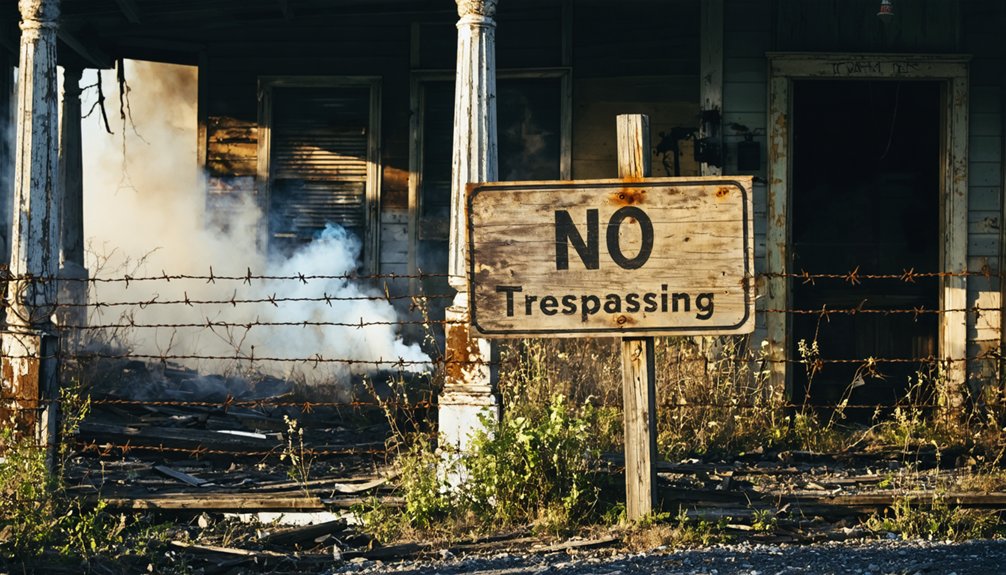
While exploring Pennsylvania’s ghost towns can be a fascinating adventure, visitors must first understand the legal and safety implications of their excursions. To avoid criminal trespass charges and stay safe, here’s what you’ll need to evaluate:
abandoned towns near Pennsylvania attractions are often rich in history and offer a unique glimpse into the past. These locations can be both eerie and beautiful, making them popular among photographers and history enthusiasts alike. It’s crucial to research each site to ensure you respect private property and adhere to local regulations while you explore.
- Always verify property ownership and obtain permission before entering – many sites are privately owned or state-regulated, and trespass laws are actively enforced.
- Check structural integrity from a safe distance – abandoned buildings often have weakened floors, unstable foundations, and hidden hazards that can cause serious injury.
- Wear protective gear including heavy boots, gloves, and N95 respirators – toxic materials like asbestos, lead paint, and mold are common health risks.
- Share your plans with someone and bring navigation tools – remote locations often lack cell service, and emergency response times can be lengthy in these isolated areas.
Where to Find Ghost Towns Across Pennsylvania
Four distinct regions across the state contain the majority of Pennsylvania’s ghost towns, each tied to different industrial booms and economic shifts.
In Western Pennsylvania, you’ll find coal and coke ghost towns along the 46-mile Ghost Town Trail, including Wehrum and Revloc, while Yellow Dog Village offers 26 intact buildings from the mining era.
Northwest Pennsylvania’s oil country features Pithole and Petroleum Center, where you can explore archaeological remains from the 1860s oil boom.
North-central Pennsylvania holds abandoned logging settlements like Poe Mills and Landrus, plus the historic Bayless Paper Mill ruins.
For ghost town exploration with unique historical significance, head to reservoir areas where entire communities were submerged or relocated, such as those affected by the Kinzua Dam project.
Frequently Asked Questions
Are There Any Guided Ghost Town Tours Available in Pennsylvania?
You’ll find guided tours showcasing ghost town history at Eckley Miners’ Village, Centralia, Pithole City, Yellow Dog Village, and Frick’s Lock, with museum staff, local historians, and community guides leading visits.
What Wildlife Commonly Inhabits Pennsylvania’s Abandoned Ghost Towns?
Like nature’s squatters, you’ll spot deer, bears, foxes, and raccoons making homes in abandoned ruins. Wildlife sightings during urban exploration include songbirds, owls, snakes, and salamanders thriving amid forgotten places.
How Many Ghost Towns in Pennsylvania Are Completely Underwater?
You’ll find at least 4 fully submerged ghost towns during your underwater exploration of Pennsylvania’s reservoirs, including Somerfield, Marburg, Tohickon Village, and Social Hall – each preserving fascinating submerged history.
Do Any Pennsylvania Ghost Towns Have Reported Paranormal Activity?
You’ll find numerous ghost sightings in Centralia, where underground fires still burn. Other haunted locations include Eckley Miners’ Village, Wehrum, and Yellow Dog Village, where visitors report shadow figures and voices.
Can Metal Detecting Be Done Legally in Pennsylvania Ghost Towns?
You’ll need permits and landowner permission for metal detecting in ghost towns. Most sites are protected by strict historical site preservation regulations, whether they’re on state, federal, or private land.
References
- https://www.atlasobscura.com/things-to-do/pennsylvania/ghost-towns
- https://uncoveringpa.com/ghost-towns-in-pa
- https://kids.kiddle.co/List_of_ghost_towns_in_Pennsylvania
- https://pabucketlist.com/pa-abandoned-places/
- https://www.youtube.com/watch?v=yxFuqGq-FJ8
- https://www.youtube.com/watch?v=0jxNCcpVW2o
- https://www.geotab.com/ghost-towns/
- http://freepages.rootsweb.com/~gtusa/history/usa/pa.htm
- https://pabucketlist.com/the-rise-and-fall-of-centralia-pas-toxic-ghost-town/
- https://www.youtube.com/watch?v=ygYIoJVrV5w