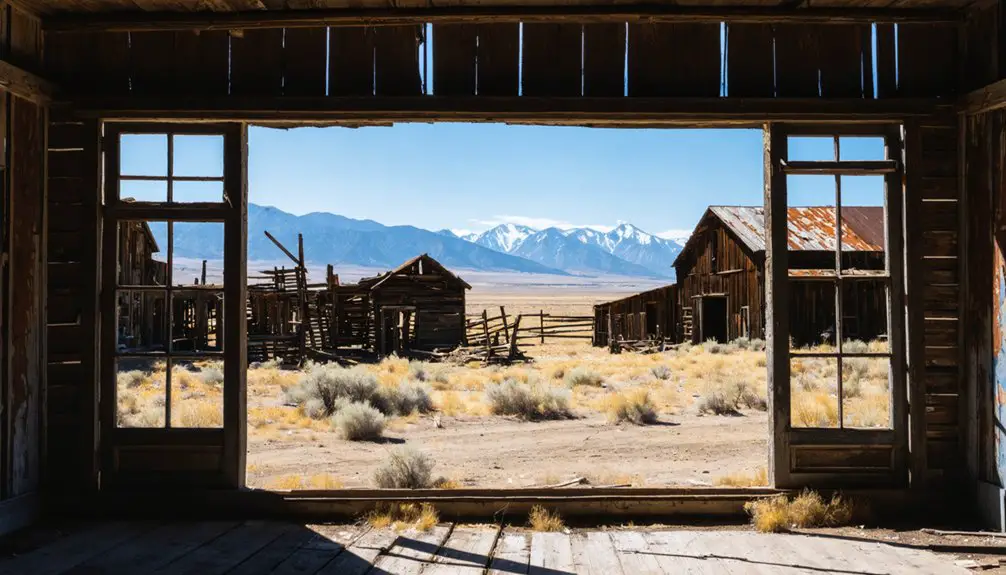
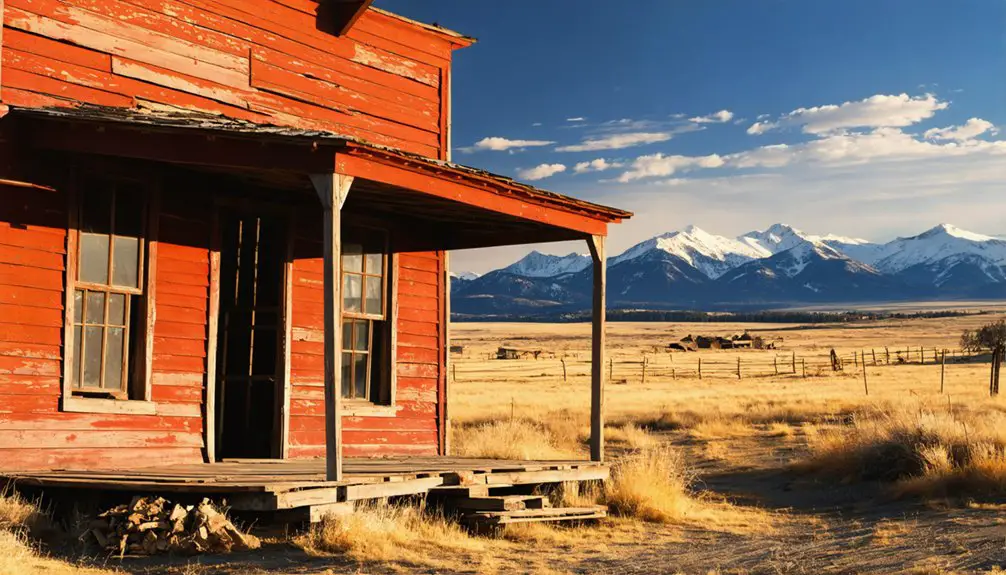
You can legally explore Montana’s ghost towns, but access rules vary by location. State-managed sites like Bannack and Granite require entry permits and have set operating hours from sunrise to sunset. BLM and Forest Service ghost towns allow public entry, while private sites need landowner permission. You’ll need to follow strict preservation guidelines that prohibit artifact removal or metal detecting. Vehicle requirements and seasonal conditions will affect your access, so understanding specific site regulations guarantees a successful visit.
Key Takeaways
- Most Montana ghost towns are accessible through proper channels, with state-owned sites like Bannack and Granite offering clear public access.
- Entry permits are required during standard operating hours (sunrise to sunset) for state park ghost towns.
- Private ghost town properties require landowner permission, while BLM and Forest Service sites allow public entry.
- Garnet Ghost Town is open daily from late May to September, with a $10 entrance fee for visitors over 16.
- Visitors must follow preservation guidelines, including no artifact removal, metal detecting, or unauthorized digging.
Legal Access Points and Public Rights
While exploring Montana’s ghost towns may seem straightforward, the complex web of land ownership patterns creates significant legal considerations for visitors.
You’ll need to navigate a patchwork of public and private lands, with nearly 900,000 acres affected by checkerboard ownership that presents serious access challenges. BLM and Forest Service sites generally allow public entry, but private parcels require explicit landowner permission to avoid trespass implications.
Accessing Montana ghost towns means carefully navigating mixed public-private ownership, with many sites requiring specific landowner permission for legal entry.
Your safest options are state-owned ghost towns like Bannack and Granite, where clear public access rules exist. In Granite Ghost Town, you can access the state park site freely but be aware there are no staffed facilities.
When visiting other locations, you must determine precise boundaries and legal routes, as crossing private land without permission can result in civil or criminal penalties. Local county attorneys often dismiss trespassing cases, but the risk of citation remains.
Watch for posted signs, fences, and gates that legally indicate private property restrictions.
Key State Park Ghost Town Regulations
You’ll need to obtain proper entry permits before accessing Montana’s ghost town state parks during their standard operating hours of sunrise to sunset.
Your vehicle access is restricted to designated roadways and parking areas within the historic sites, with camping vehicles permitted only in specified zones.
You must display valid permits on your vehicle’s dashboard while parked within state park boundaries, including at Bannack, Garnet, and Granite Ghost Town sites. At Garnet Ghost Town, metal detectors are prohibited to help preserve the historical integrity of the 19th-century buildings and artifacts.
Legal Access Hours
Montana’s state park ghost towns maintain specific operating hours and access regulations to preserve their historic integrity.
You’ll find different access times depending on which ghost town you’re visiting, with most sites following standard state park operating schedules.
When planning your visit, keep these key regulations in mind:
- Bannack’s visitor center and over 50 historic buildings are open for self-guided exploration during standard park hours, with quiet hours enforced from 10:00pm to 7:00am. At Bannack, visitors can explore authentic preserved buildings or view them through windows.
- Garnet Ghost Town’s visitor center operates from late May through September, 10:00am to 4:30pm daily.
- Both locations require you to follow posted ghost town hours and access regulations, including restrictions on camping locations and fire usage.
Remember that special permits are required for activities outside normal operating hours, and you must submit applications at least ten days in advance.
Required Entry Permits
To explore Montana’s historic ghost towns, you’ll need to obtain the appropriate entry permits based on your planned activities and the managing agency.
Different permit types apply: Recreation Use Permits for day visits to BLM sites, Commercial Use Authorizations for guided tours, and Special-Event permits for large groups.
If you’re planning overnight stays, you’ll need separate cabin rental reservations where available.
Your America the Beautiful pass works at BLM-managed sites and can cover up to three additional people. Children under 16 often enter free.
For archaeological research or artifact collection, you’ll need specific permits under state antiquities laws. Submit your applications to the appropriate field office, and expect potential delays if environmental or cultural resource reviews are required.
Always check specific site requirements before visiting.
Vehicle Access Rules
Vehicle access to Montana’s ghost towns follows strict seasonal regulations, particularly along the popular Garnet Range Road. You’ll need to plan your visit around vehicle restrictions that protect these historic sites while ensuring public safety.
Key access limitations you must follow:
- Wheeled vehicles are only permitted from May 1 through December 15, with winter months restricted to snowmobile, ski, or snowshoe access.
- You’ll need a high-clearance vehicle for the gravel and dirt roads, as RVs and trailers aren’t recommended on certain routes.
- The main access from Highway 200 via Garnet Range Road spans 11 miles, including 6.4 miles of gravel and 3.7 miles of paved surface.
Spring and fall conditions may require parking at a distance due to snow, so check current road conditions before your journey. The well-maintained scenic drive makes the journey worthwhile despite travel restrictions. A $10 entrance fee is required for visitors over 16 years of age.
BLM-Managed Ghost Town Guidelines
When visiting Bureau of Land Management ghost towns in Montana, you’ll need to follow strict preservation guidelines that protect these historic sites.
During your ghost town exploration, you can’t remove artifacts, use metal detectors, or dig anywhere within the grounds. The BLM manages these areas carefully to maintain their historical integrity. The Miners Union Hall once hosted vibrant community gatherings and social events.
You’re free to visit sites like Garnet Ghost Town during operating hours, but you’ll need to respect several restrictions. The site currently welcomes over 30,000 visitors annually.
No camping or campfires are allowed within the town limits, though you can camp on surrounding BLM land for up to 14 days. You must keep your pets leashed, avoid littering, and stay clear of dangerous mine shafts.
These preservation efforts guarantee that future generations can experience Montana’s mining heritage firsthand.
Required Permits and Entry Fees
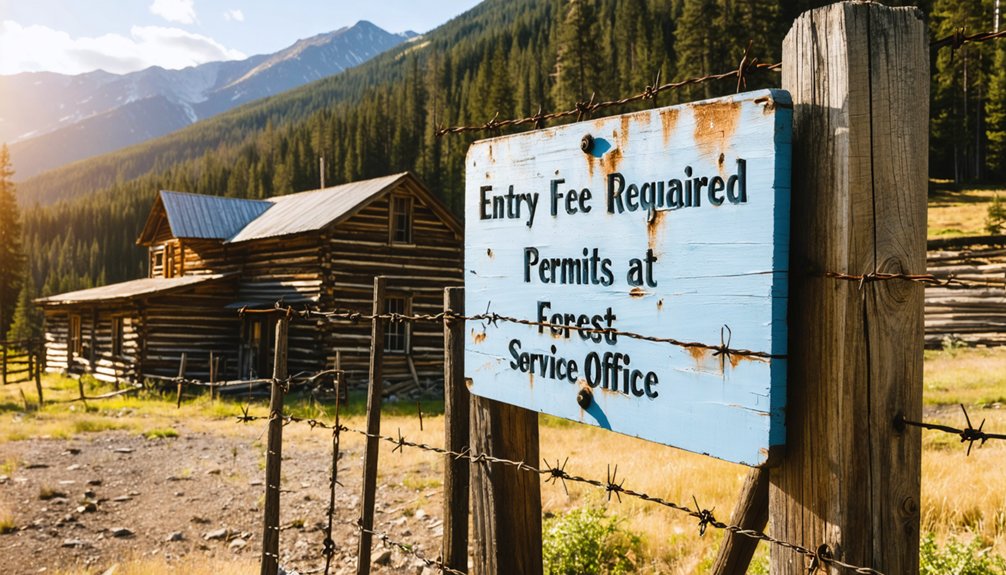
Montana’s ghost town entrance fees vary across three main categories: BLM-managed sites, state parks, and private attractions. Each type has distinct entry requirements and permit fees you’ll need to navigate before exploring these historic sites.
- At BLM sites like Garnet Ghost Town, you’ll pay $10 per person (16+) through self-service fee boxes or the visitor center, with possible fee reductions if you have federal passes. National Parks Pass holders can enjoy free entry at these locations. The visitor center is open during summer months for maps and information about the preserved buildings.
- State parks may waive daily fees for Montana residents who’ve paid the $9 registration fee, though special programs and guided tours cost extra.
- Privately operated sites like Virginia City set their own pricing structures, often charging separately for specific attractions like museums or train rides.
Remember to bring cash for remote locations, and secure necessary permits if you’re planning commercial activities like professional photography or guided tours.
Vehicle Requirements and Road Conditions
You’ll need a high-clearance 4×4 vehicle equipped with recovery gear and emergency supplies to safely navigate the rugged, unpaved roads leading to Montana’s ghost towns.
Your access to these historic sites depends heavily on seasonal conditions, with spring thaws and autumn rains often making routes impassable due to mud, washouts, and hazardous stream crossings.
When traveling public roads, you must comply with state vehicle regulations and abandonment laws, as disabled vehicles left on public rights-of-way can be impounded after 48 hours.
High-Clearance Vehicle Necessity
The challenging terrain leading to Montana ghost towns demands vehicles with substantial ground clearance and robust construction. Your vehicle’s road safety depends heavily on having at least 8 inches of clearance to navigate the rugged backroads that often feature washouts, ruts, and rocky surfaces.
When planning your ghost town expedition, consider these critical requirements:
- Four-wheel drive capability for enhanced stability on unpaved and eroded paths
- High clearance vehicles to prevent undercarriage damage from obstacles
- Sturdy construction to handle rough terrain, including gravel roads and stream crossings
Standard passenger cars risk becoming stranded, potentially leading to abandonment issues if stuck for over 48 hours on public highways.
The Department of Fish, Wildlife, and Parks monitors these access roads, making proper vehicle selection essential for your adventure.
Seasonal Road Accessibility
While many ghost towns remain accessible year-round, seasonal road conditions strictly govern when and how you’ll reach these historic sites.
Most locations establish specific seasonal access windows, typically allowing wheeled vehicles during snow-free months (like May through December). During winter, you’ll need to switch to snowmobiles, skis, or snowshoes.
You’ll find that road maintenance stops during winter months, and spring thaw often creates challenging conditions with deep ruts, washboard surfaces, and potential flooding at stream crossings.
Before heading out, check the site’s official page for current restrictions, as violations can result in fines.
Keep in mind that even when calendar dates permit access, actual road conditions may still restrict travel, especially at higher elevations where snow and ice persist longer.
Accessing Montana’s ghost towns requires specific vehicle capabilities and close attention to road conditions. For public use of these historic sites, you’ll need to verify your transportation meets the necessary requirements for road access, particularly on dirt and gravel backroads.
When planning your ghost town expedition, remember these essential navigation rules:
- A high-clearance vehicle is mandatory for reaching destinations like Granite Ghost Town State Park and similar sites.
- Seasonal conditions affect accessibility, with peak access during late May through September when visitor centers typically operate.
- You must comply with any temporary emergency closures or restrictions that may be implemented for safety or resource protection.
Always check current road conditions before departing, as weather and maintenance can greatly impact your ability to reach these remote locations.
Seasonal Operating Hours and Accessibility
Visitors planning trips to Montana’s ghost towns should note the varied seasonal operating schedules that affect accessibility throughout the year.
Before exploring Montana’s historic ghost towns, check their operating hours as seasons significantly impact when and how you can visit.
You’ll find Bannack State Park open year-round, with summer hours extending from 8 a.m. to 9 p.m., while winter operations reduce to 8 a.m. to 5 p.m.
Garnet Ghost Town presents unique accessibility challenges during winter months, when you can only reach it by snowmobile, cross-country ski, or snowshoe from January through April.
If you’re visiting Bannack in winter, you can enjoy ice skating on the dredge pond from January to early March, with free loaner skates available.
The visitor centers at both locations operate on seasonal schedules, with Bannack’s open Memorial Day through Labor Day and Garnet’s running late May through September.
Safety Protocols and Site Preservation
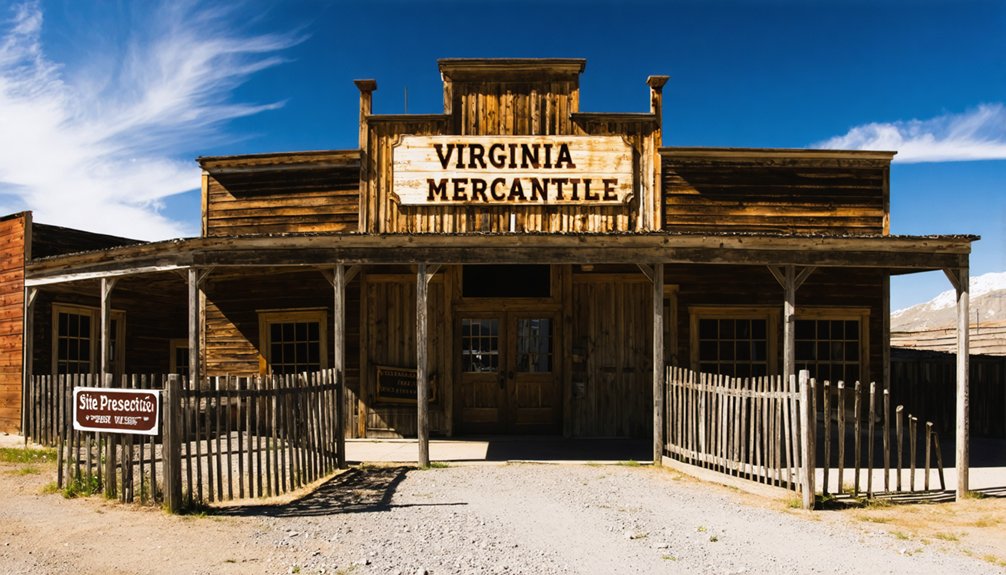
When exploring Montana’s ghost towns, you’ll find protective barriers and warning signs that you must heed to avoid hazardous areas like unstable mine shafts and deteriorating structures.
You’re required to follow posted building safety rules, including staying out of structures marked as unsafe and remaining on designated pathways to protect both yourself and historical integrity.
To preserve these irreplaceable historical sites, you must leave all artifacts exactly where you find them and avoid any activities that could damage the structures or disturb the archaeological record.
Protective Barriers and Signs
To guarantee both public safety and historical preservation, Montana’s ghost towns employ thorough systems of protective barriers and warning signs.
These protective measures include perimeter fencing, locked gates, and strategically placed barriers that guide you along safe viewing corridors while protecting fragile archaeological features.
You’ll encounter three main types of signage:
- Regulatory signs stating legal rules and access restrictions
- Safety warnings alerting you to structural hazards or dangerous terrain
- Interpretive panels providing historical context without requiring close-up access
The signage effectiveness relies on clear communication of both legal requirements and safety concerns.
While these barriers and signs might seem restrictive, they’re essential to preserving these historic sites for future generations while ensuring your safety as you explore Montana’s rich mining heritage.
Building Structure Safety Rules
Montana’s ghost town structures face five vital safety hazards that require strict protocols: open mine shafts, structural deterioration, vandalism, theft, and environmental damage.
For your safety, you’ll need to follow strict building stability guidelines when exploring these historic sites. Don’t enter structures with exposed studs, missing siding, or compromised roofs, as these conditions can lead to sudden collapses.
You’re prohibited from removing materials, using metal detectors, or digging near buildings, as these activities further weaken already fragile structures. The Bureau of Land Management implements essential safety measures, including structural stabilization and hazard removal, to protect both visitors and historic integrity.
Historical Artifact Protection Measures
Federal and state laws strictly govern the protection of historical artifacts in ghost town sites, requiring you to follow specific protocols when encountering these valuable remnants of Montana’s past.
Your legal responsibilities include reporting discoveries to the Montana State Historic Preservation Office or landowner while leaving items undisturbed in their original location.
For proper artifact preservation and site protection, follow these essential rules:
- Never remove or disturb artifacts – it’s illegal on federal lands and strongly discouraged on private property.
- Document findings through photos and GPS coordinates without physical interference.
- Stay on existing paths and avoid climbing structures or moving objects to maintain site integrity.
Camping and Overnight Stay Policies
While exploring Montana’s ghost towns, visitors must navigate a complex web of camping regulations that vary across different land management jurisdictions.
On BLM land, you’ll find the most permissive rules, allowing free camping for up to 14 days, though you can’t camp within half a mile of Garnet Ghost Town.
State Trust Lands require a Conservation License and limit stays to 16 days within a 30-day period.
In National Forests, you can’t stay more than 16 consecutive days at one site.
State Parks offer improved camping with amenities but enforce strict quiet hours.
FWP sites restrict camping to designated areas with a 7-night maximum stay.
Remember to check specific camping restrictions and obtain necessary overnight permits before setting up camp near any ghost town.
Prohibited Activities and Enforcement
To protect historic ghost towns and their irreplaceable artifacts, strict regulations govern visitor activities across Montana’s protected sites.
Be aware that enforcement actions can include citations, fines, and even criminal charges for serious violations. You’ll need to follow specific rules about prohibited activities to avoid penalties while exploring these historic treasures.
Here are key restrictions you must observe:
- No discharge of firearms or explosives within ghost towns, especially in designated state parks like Granite Ghost Town.
- Metal detecting and artifact collection are strictly forbidden – these items are protected by federal and state laws.
- Off-road vehicle use is limited to designated routes only, with violations resulting in fines and possible vehicle impoundment.
Remember that rangers and law enforcement actively monitor these sites and enforce these regulations to preserve Montana’s heritage.
Special Events and Group Visit Rules
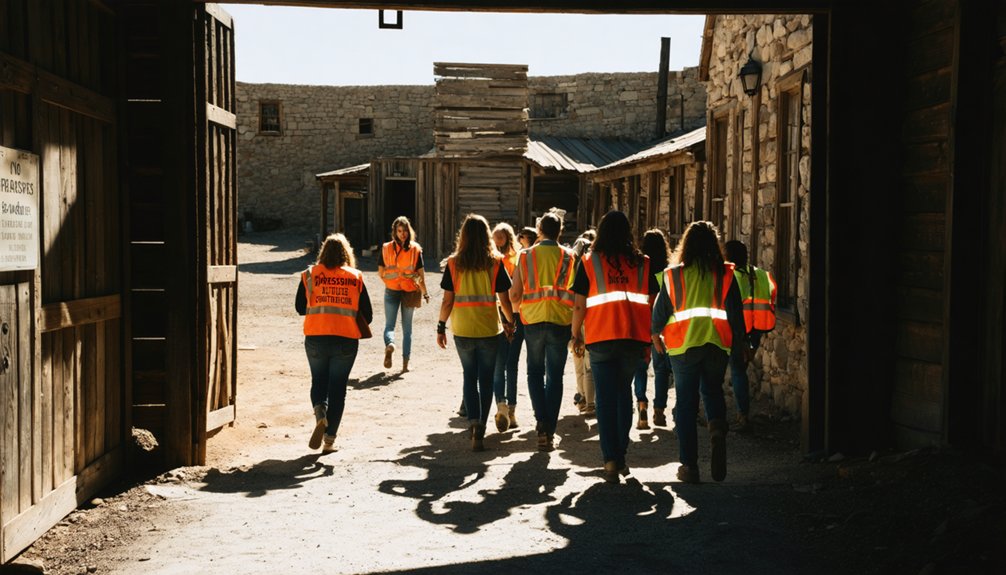
Many of Montana’s ghost towns offer organized events and group activities that showcase their rich historical heritage.
At Garnet, you’ll find family-oriented gatherings like dinner parties, card games, and summer picnics that reflect the town’s social traditions. You can access the site for $3 per person, or free with a National Parks Pass, during visitor center hours from 10:00 am to 4:30 pm between late May and September.
Experience authentic frontier gatherings at Garnet Ghost Town, where historic traditions come alive through seasonal family activities and guided exploration.
Bannack festivals, particularly Bannack Days, feature historic displays and re-enactors bringing the past to life. The visitor center provides guided tours from Memorial Day through Labor Day.
You’ll find dedicated group facilities, interpretive exhibits, and equestrian camping areas for organized visits. Both sites maintain specific schedules and access rules to preserve their historic integrity while accommodating group exploration.
Frequently Asked Questions
Can You Take Artifacts or Souvenirs From Montana Ghost Towns?
Like precious pages of history, ghost town artifacts must stay untouched. You can’t legally take souvenirs – it’s against federal and state laws, with hefty fines and possible jail time for violators.
Are Ghost Hunting and Paranormal Investigations Allowed at These Sites?
You’ll need permits and permissions for ghost tours and paranormal investigations. Public sites require agency approval, while private locations need owner consent. Many ghost towns restrict after-hours access and equipment use.
What Wildlife Might You Encounter While Exploring Montana Ghost Towns?
You’ll likely encounter bears, cougars, moose, elk, and rattlesnakes while exploring Montana’s ghost towns. Take wildlife encounters seriously by carrying bear spray and staying alert in these remote locations.
As you wander through historic ghost towns in Montana, you’ll also discover remnants of the past, from old mining equipment to crumbling buildings that tell stories of a bygone era. Each site offers a glimpse into the rich history of the American West, inviting you to imagine the lives once lived there. Be sure to bring your camera, as the scenic vistas surrounding these towns are equally breathtaking, making for perfect photo opportunities.
Are Metal Detectors Permitted at Montana Ghost Town Sites?
You’ll find metal detecting regulations vary by site – it’s generally restricted in Montana ghost towns due to historical preservation laws. You can’t dig or remove artifacts on federal or state lands.
Can You Fly Drones to Photograph or Film Ghost Towns?
Through the lens of time, you’ll need to navigate drone regulations carefully. You can’t fly in national parks or state parks without permits, and private property requires landowner photography permissions.
References
- https://fwp.mt.gov/conservation/wildlife-management-areas/public-use-rules
- https://fwp.mt.gov/stateparks/granite-ghost-town
- https://www.blm.gov/blog/2025-07-25/recreation-all-accessibility-montana-dakotas-public-lands
- https://the406life.com/hauntingly-beautiful-montana-ghost-towns/
- https://www.blm.gov/visit/garnet-ghost-town
- https://starrynightlodging.com/blog/ghost-town-tour-of-montana
- https://www.blm.gov/programs/recreation/recreation-activities/montana-dakotas
- https://www.onxmaps.com/offroad/trails/us/montana/granite-mine-ghost-town
- https://montanafreepress.org/2024/03/11/nearly-900000-acres-of-montana-in-access-limbo/
- https://www.youtube.com/watch?v=2wd4DVyZmkY