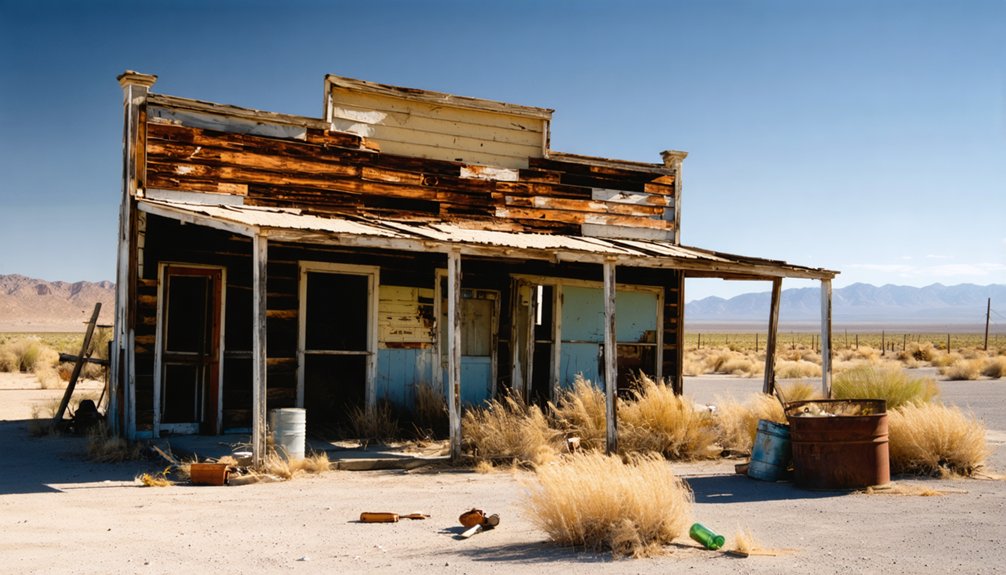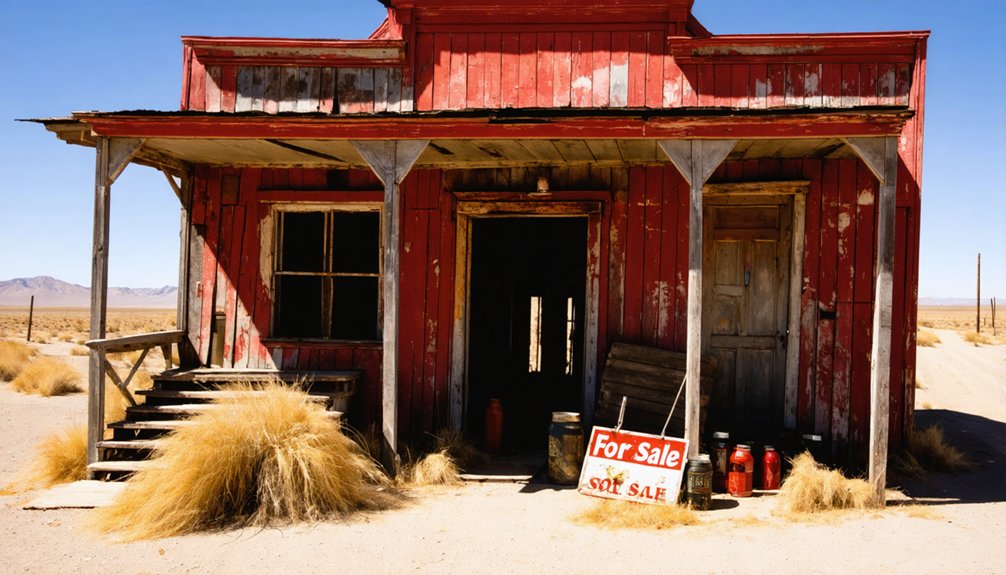
You’ll find several historic ghost towns currently available in Arizona, from the fully restored Pearce Ghost Town Museum at $1.1 million to raw mining claims starting at $109,000. Many properties feature original structures from the 1870s, including preserved mercantiles and adobe buildings. The Elfrida mining claims offer 348 acres with 19 patented claims at $439,000. If you’re passionate about preserving Arizona’s frontier heritage, these authentic pieces of Old West history hold untold possibilities.
Key Takeaways
- Pearce Ghost Town Museum is available for $1.1 million, featuring a restored property with historic amenities and mining artifacts.
- Willcox offers two historic properties with 1870s adobe structures, priced at $599,800 and $519,000 respectively.
- Elfrida mining claims spanning 348 acres with 19 patented claims are currently listed at $439,000.
- Ghost town properties in Arizona range from $1.1 million for developed sites to $109,000 for raw acreage.
- Properties must be assessed for water rights, access roads, utility connections, and compliance with historic preservation guidelines.
Current Ghost Town Properties on the Market
While Arizona’s historic ghost towns capture the romance of the Old West, several authentic properties currently present rare opportunities for preservation-minded buyers.
You’ll find the fully restored Pearce Ghost Town Museum, featuring period-authentic living spaces and vintage amenities, listed at $1.1 million. The property’s inclusion on the National Register of Historic Places makes it especially appealing for history buffs. The Old Pearce Mercantile showcases an extensive collection of historical products from the region’s mining era.
In Willcox, two distinct properties showcase 1870s adobe structures – one offering three historic buildings on three acres for $599,800, and another similar parcel available at $519,000.
Both properties maintain ghost town aesthetics while providing modern functionality.
For those seeking raw potential, the Elfrida mining claims span 348 acres with 19 patented claims from the late 1800s, recently reduced to $439,000.
Each property offers unique possibilities for property restoration while preserving Arizona’s mining heritage.
Understanding Ghost Town Property Types
When exploring ghost town properties in Arizona, you’ll encounter five distinct categories that help classify these historic remnants of the American West.
Classic ghost towns offer the most potential for property restoration, featuring standing structures like houses and jails but no permanent residents. Properties must have tangible remains visible for proper classification.
Company towns present uniform layouts with worker housing and communal buildings, often preserving their original industrial character. Many sites are now managed by the Bureau of Land Management, ensuring proper preservation of historical structures.
Near ghost and semi-ghost towns maintain small populations while showcasing numerous abandoned buildings – perfect if you’re seeking a blend of history and community.
The most challenging category involves barren or neglected sites, where only foundations or sparse ruins remain.
Understanding these ghost town classifications helps you target properties that align with your preservation goals and restoration capabilities.
Price Points and Market Trends
Anyone exploring Arizona’s ghost town market will find dramatic shifts in property values throughout 2024-2025.
From fully restored museum properties at $1.1 million to raw acreage starting around $109,000, the current market offers diverse opportunities for preservation-minded buyers.
You’ll discover everything from 348-acre parcels to historic bed-and-breakfast properties with authentic period features.
The pricing dynamics reflect broader Arizona real estate trends, with substantial reductions becoming commonplace.
Ghost Town Trail properties have seen price swings up to 68%, mirroring regional declines in places like Kingman and Bullhead City.
While seller desperation has led to significant cuts in urban areas, these historic properties maintain their intrinsic value for those seeking to own a piece of the Old West’s legacy.
With foreclosure rates reaching one in every 1,600 homes statewide, investors are finding unprecedented opportunities in Arizona’s historic property market.
Legal Considerations for Buyers
Purchasing a piece of Old West heritage demands careful attention to modern legal complexities that can impact your ghost town investment.
Today’s legal frameworks require thorough investigation of zoning designations, environmental obligations, and historic preservation requirements before you stake your claim. Regular property inspections are essential to protect against unauthorized occupants attempting adverse possession claims. Arizona law requires ten years of continuous occupancy for adverse possession without paying taxes. Property restrictions can greatly affect how you’ll restore and utilize these treasured remnants of Arizona’s frontier past.
- Research zoning and overlay districts that might limit your ability to rebuild historic structures or develop tourist amenities while preserving period authenticity.
- Investigate environmental liabilities from former mining operations, including potential cleanup costs and ongoing management obligations.
- Verify access rights, utility easements, and tribal considerations that could affect your freedom to develop and maintain the property as desired.
Title and Land Rights Assessment
Beneath the romantic allure of owning an Arizona ghost town lies a complex web of title and land rights that demands meticulous investigation.
You’ll need to untangle layers of historical claims, from fragmented deeds to old mining rights, through thorough title searches that span generations of ownership.
Your due diligence must address potential land disputes arising from adverse possession claims, where long-term occupants might’ve established legal rights to portions of the property.
Don’t overlook the essential examination of county records, tax histories, and boundary surveys that could reveal conflicting descriptions or hidden easements.
Remember that mining claims might still affect surface rights, and governmental interests could impact future use. Be aware that private use restrictions could affect how you develop or repurpose the ghost town property.
Any squatters who openly occupied the ghost town’s buildings and land for ten continuous years may have legal ownership through adverse possession.
Protecting your investment means confronting these historical complexities head-on before finalizing any ghost town purchase.
Revenue Generation Strategies
Your ghost town investment can generate substantial revenue through period-authentic tours, gold panning demonstrations, and guided historical experiences that attract heritage tourism.
You’ll find additional income streams by converting preserved buildings into boutique lodging, event venues, and museum spaces that showcase the site’s unique character.
Mining history becomes a valuable asset when you monetize it through interactive exhibits, artifact displays, and hands-on activities that transport visitors back to Arizona’s frontier era.
Tourism and Tour Operations
Savvy ghost town operators have discovered that strategic tourism ventures can transform abandoned mining settlements into thriving heritage destinations.
With over 500,000 annual visitors to towns like Tombstone and Oatman, you’ll find authentic experiences that bring the Wild West to life. Ghost tours and O.K. Corral reenactments consistently draw crowds, while visitor engagement through period-authentic museums preserves the frontier spirit. Natural resource depletion caused these towns to decline initially, but tourism has given them new life.
- Experience immersive ghost tours that captivate 74% of Cochise County visitors seeking Old West history
- Join the 26% of travelers who stay two nights to fully explore these preserved mining communities
- Discover why word-of-mouth recommendations drive 50% of visitation to these historic treasures
These tourism operations don’t just preserve history – they create sustainable economies that honor Arizona’s pioneering legacy while offering you unfettered access to the past.
Lodging and Event Spaces
While abandoned mining towns hold countless stories within their weathered walls, transforming these historic structures into lodging and event spaces offers a sustainable path to preservation.
You’ll find that themed experiences in authentically restored rooms can command premium rates, especially when you tap into the growing heritage tourism market. By creating immersive stays and unique event venues through adaptive reuse, you’re not just preserving history – you’re making it profitable.
Consider developing signature offerings like ghost-hunting packages, period-authentic weddings, and corporate retreats.
You can maximize revenue by aligning with regional tourism patterns and festival calendars. With proper planning around infrastructure upgrades and preservation requirements, you’ll create a destination that appeals to history buffs, paranormal enthusiasts, and experience-seeking travelers while maintaining the site’s historic integrity.
Mining History Monetization
Mining history offers lucrative opportunities beyond traditional tourism revenue streams when you explore innovative approaches to monetization.
By leveraging your property’s mining heritage, you’ll find multiple pathways to economic revitalization. Consider reprocessing historic tailings using modern extraction methods, which can yield profitable returns while simultaneously supporting environmental cleanup efforts.
Strategic mineral rights leasing to specialty mining operators provides steady income through royalty agreements without operational risk.
- Transform your site into an immersive educational experience with guided tours, prospecting classes, and hands-on demonstrations.
- Develop interpretive centers featuring period-authentic exhibits and curated artifact collections.
- Create seasonal heritage festivals and reenactments that celebrate the pioneering spirit of Arizona’s mining era.
These ventures honor your property’s historic legacy while generating sustainable revenue through thoughtful preservation and interpretation.
Infrastructure and Access Requirements
When you’re considering a ghost town purchase, you’ll need to tackle basic utilities first – most sites require complete reconstruction of power lines, water systems, and telecommunications infrastructure.
The condition of access roads will greatly impact your development timeline and costs, with many properties requiring substantial improvements to support modern vehicle traffic.
You’ll also want to thoroughly investigate existing water rights, as these can be both valuable assets and potential obstacles in Arizona’s arid climate.
Utility Hookups Matter Most
Although ghost towns may evoke romantic images of the Old West, today’s buyers must tackle modern utility infrastructure requirements before bringing these historic properties back to life.
You’ll need to carefully assess connection costs for essential services, as remote locations often lack basic utilities that modern living demands.
- Water access might require costly municipal main extensions or well drilling, with strict compliance standards for both options.
- Electrical service typically demands underground installation in rights-of-way, with special permits needed for extending power to vacant land.
- Wastewater solutions depend on location – either connecting to municipal sewer systems or installing septic systems that meet environmental regulations.
Be prepared for substantial investments in these fundamental services.
While preserving the authentic character of your ghost town property is important, meeting current utility standards is non-negotiable for making it habitable.
Road Access Challenges
Reaching your historic ghost town property demands careful consideration of road access challenges that can make or break your investment.
While paved county routes offer reliable year-round access, many ghost towns lie at the end of primitive 4×4 tracks requiring high-clearance vehicles and off-road expertise.
You’ll need to verify legal access rights, as historic routes often cross private mining claims where public passage isn’t guaranteed.
Road maintenance responsibilities and access permits become essential factors in your ownership journey.
County standards govern improvements, and you may need environmental reviews for any road modifications.
During monsoon season, flash floods can leave dirt approaches impassable, while winter’s freeze-thaw cycles deteriorate pavement at higher elevations.
Plan carefully for these seasonal challenges to protect your investment in Arizona’s remarkable mining heritage.
Water Rights Verification
Human të inverspermitinst
Historic Preservation Guidelines
When preserving Arizona’s cherished ghost towns, owners must navigate a complex web of historic designation pathways and regulatory requirements.
You’ll need to understand multiple preservation options, from National Register listing to local landmark status. Consider pursuing historic designation through the Arizona SHPO or establishing preservation easements to protect your property’s historical integrity for generations.
You’ll work within established guidelines for maintenance, alterations, and adaptive reuse while respecting period authenticity.
Take advantage of financial incentives like the Federal Historic Rehabilitation Tax Credit or state tax reductions to offset preservation costs.
Local preservation commissions will review your renovation permits, but you can access technical assistance and matching grants through the Certified Local Government program to help maintain your ghost town’s distinctive character and historical significance.
Mining Claims and Environmental Factors
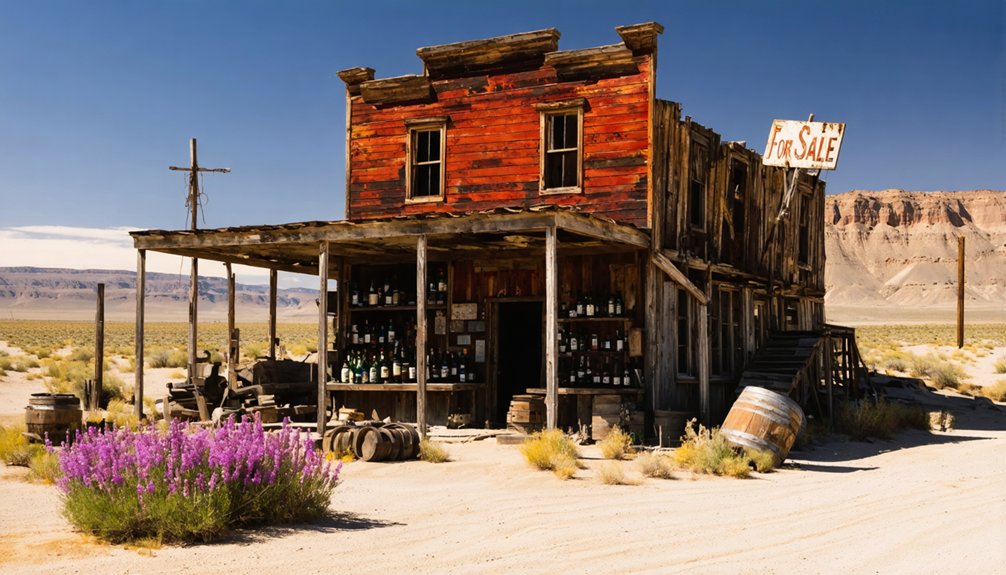
The rich tapestry of Arizona’s ghost town legacy interweaves with over a million mining claims filed since the Mining Law of 1872.
Today, you’ll find only 10.94% of these claims remain active, while modern mining safety and environmental regulations have transformed the landscape. As you consider purchasing a ghost town property, you’ll need to navigate both historic preservation and current land management requirements.
- Over 100,000 abandoned mine openings exist statewide, with many requiring careful assessment and potential remediation.
- The U.S. Forest Service has reclaimed numerous unclaimed sites since the 1960s, impacting property boundaries and access.
- Mining claims on public lands, managed by the Bureau of Land Management, may affect your purchase rights and restoration plans.
Before finalizing any ghost town purchase, it’s essential to research existing claims and environmental considerations that could influence your property’s future.
Frequently Asked Questions
How Long Does It Typically Take to Sell a Ghost Town?
You’ll typically need 6-24 months to sell a ghost town, though market trends can stretch this longer. Your selling strategies, including targeted marketing and price adjustments, heavily influence the timeline.
Can Foreign Investors Purchase Arizona Ghost Towns?
With over 275 ghost towns in Arizona, you’ll face strict foreign ownership limits. You can’t invest if you’re from China, Russia, Iran, or North Korea under SB 1082’s investment regulations protecting historic properties.
Among the various ghost towns available in Arizona, many offer unique opportunities for preservation and tourism. Exploring these areas can provide insight into the state’s rich history and the challenges faced by former communities. Whether you’re interested in architecture, local legends, or simply a quiet retreat, Arizona’s ghost towns present a fascinating glimpse into the past.
What Security Measures Are Needed to Protect Remote Ghost Town Properties?
You’ll need remote surveillance cameras, perimeter fencing, regular property maintenance visits, motion-activated lighting, secure access controls, and local law enforcement coordination to protect your historic ghost town’s valuable structures and artifacts.
Are There Special Insurance Requirements for Ghost Town Properties?
With 60% of standard policies voiding after 30 days vacant, you’ll need specialized insurance policies that cover vandalism, theft and fire. Property assessments every 30-45 days are required to maintain coverage.
Do Native American Tribes Have Any Claims on Ghost Town Lands?
You’ll need to carefully research tribal sovereignty claims before buying a ghost town, as Native American tribes may have historical land disputes or pending trust applications affecting the property’s title and jurisdiction.
References
- https://sunrisecapitalgroup.com/would-you-buy-a-ghost-town-here-are-some-charming-options-for-brave-investors/
- https://www.zillow.com/homedetails/N-Ghost-Town-Trl-Elfrida-AZ-85610/439736690_zpid/
- https://www.lmtonline.com/realestate/article/5-for-Friday-the-13th-Spooky-Ghost-Towns-for-Sale-17716649.php
- https://www.youtube.com/watch?v=1CiiNg-F9Fw
- https://www.youtube.com/watch?v=mk8A1n_gv6U
- https://www.ezhomesearch.com/blog/towns-for-sale-in-the-usa/
- https://www.realtor.com/realestateandhomes-detail/358-Acres-Ghost-Town-Trl_Elfrida_AZ_85610_M97088-32119
- https://www.accio.com/biz-cheap/cheap-towns-for-sale-in-usa
- https://freepages.history.rootsweb.com/~gtusa/definitions.pdf
- https://en.wikipedia.org/wiki/List_of_ghost_towns_in_Arizona