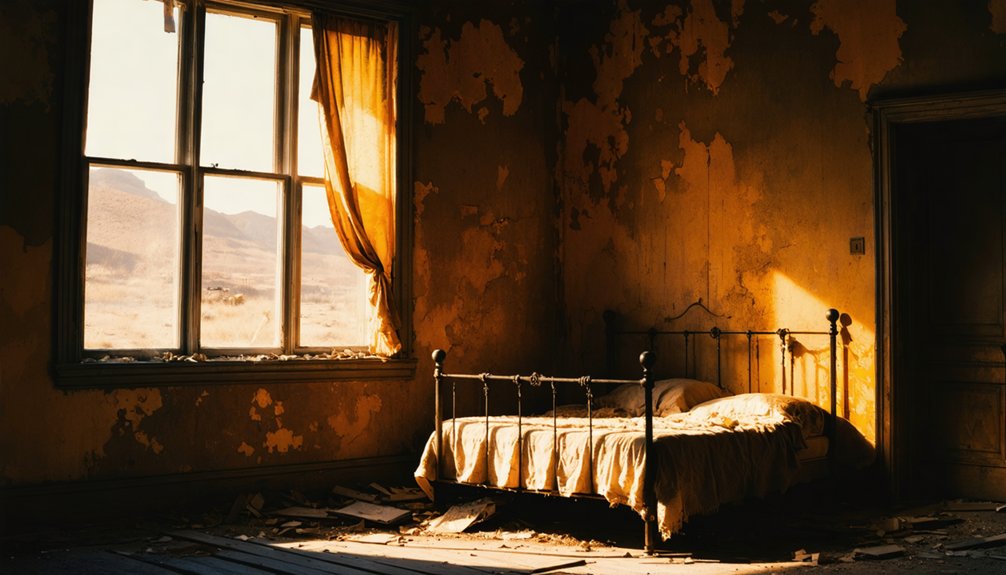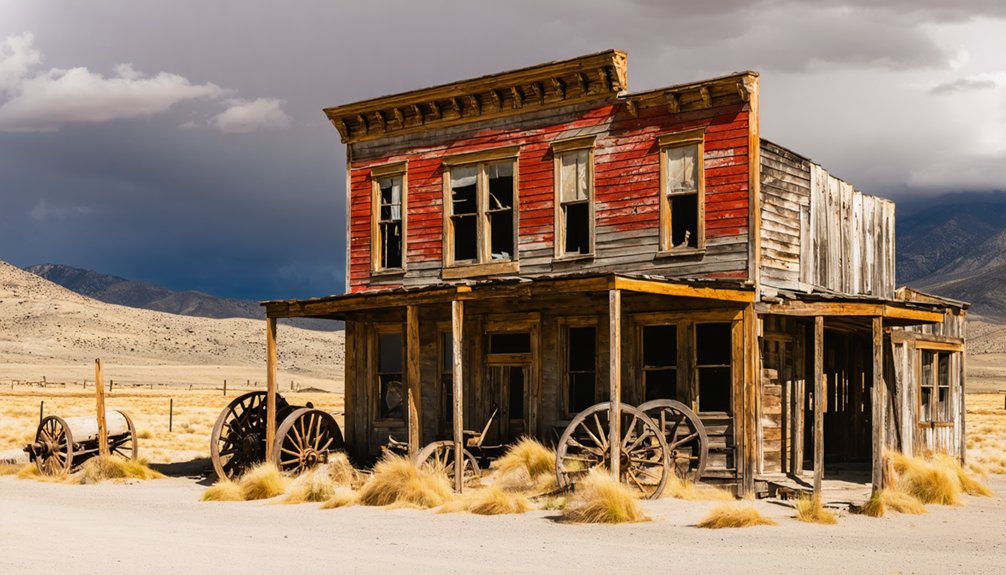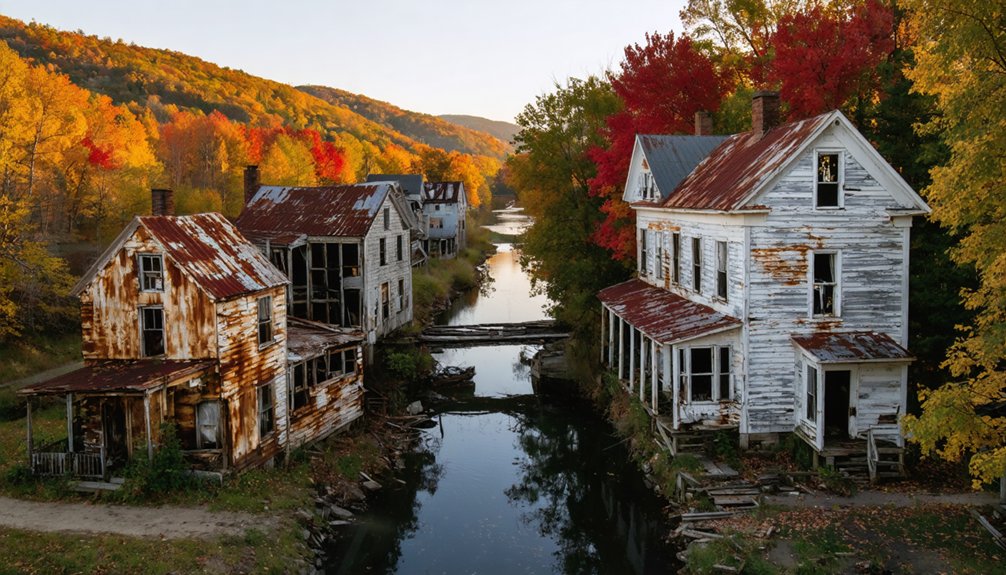
You’ll find prime drone photography opportunities at New England’s historic abandoned mill towns, particularly during autumn’s golden hours. Focus on former industrial hubs like Chicopee and Holyoke for dramatic architectural ruins against natural backdrops. Launch your drone during early morning fog or twilight for ethereal shots, and use wide-angle lenses (14-24mm) for establishing views. Pack ND filters and verify local ordinances before flying – there’s much more to discover about these forgotten settlements.
Key Takeaways
- Gay City State Park in Connecticut features well-preserved 19th-century mill ruins perfect for golden hour aerial photography.
- Dogtown in Massachusetts offers stone ruins and cellar holes amid woodland, ideal for foggy morning drone shoots.
- The abandoned Tyng Mansion ruins in Tyngsborough, Massachusetts provide dramatic architectural elements for sunset aerial captures.
- Vermont’s Ricker Basin ghost town contains foundations and mill remnants best photographed during leaf-off seasons.
- Maine’s Swan Island features abandoned 18th-century structures along the Kennebec River, excellent for misty morning drone photography.
Essential Gear for New England Ghost Town Aerial Photography
Aerial photographers venturing into New England’s ghost towns need specialized gear to tackle the region’s unique challenges.
You’ll want a full-frame mirrorless drone setup that can handle high-contrast scenes between weathered structures and dense foliage. For camera settings, shoot in RAW with 20-50MP resolution to maximize post-processing flexibility and maintain editorial quality.
Your lens selection should include both wide-angle primes (14-24mm equivalent) for dramatic establishing shots and medium telephotos (50-100mm) for architectural details. Following the success of Abandoned From Above, this equipment setup has proven ideal for capturing forgotten historical sites. Sites like Westboro State Hospital showcase how quickly historic structures can disappear, making timely documentation crucial.
Carefully select both wide-angle and telephoto lenses to capture the full scope and intimate details of abandoned structures.
Pack variable ND filters and polarizers to control exposure and reduce glare from wet surfaces. Don’t forget protective covers for your gear – New England’s coastal salt spray and structural decay can wreak havoc on equipment.
Bring at least three flight batteries to compensate for cold-weather power drain, and keep your data secure with encrypted SSDs for immediate backups.
Safety and Legal Considerations When Flying at Abandoned Sites
While having the right gear is essential, understanding the legal landscape is your first line of defense when photographing New England’s ghost towns by air.
You’ll need to navigate complex drone regulations across federal, state, and local jurisdictions. Most abandoned sites fall under strict restrictions – USACE properties are completely off-limits, while state parks require specific permits. Violators of these restrictions could face criminal or civil penalties.
Before launching your drone, secure written permission from property owners and verify local ordinances, especially in areas like Chicopee and Holyoke. Equip your drone with magnetometer sensors to identify any hidden metal structures beneath the surface.
Follow safety guidelines by maintaining visual line of sight and watching for hazards like deteriorating structures and overhead obstacles.
For commercial shoots, you’ll need FAA Part 107 certification. Remember that military ruins and watershed areas require additional clearance, so always check with relevant authorities before planning your ghost town aerial adventure.
Best Times of Day to Capture Haunting Aerial Footage
Mastering the art of ghost town drone photography means understanding how natural light transforms abandoned landscapes throughout the day.
To master ghost town drone photography, you must first grasp light’s power to reshape forsaken places as day unfolds.
You’ll capture the most atmospheric shots during golden hour – both sunrise and sunset offer unique advantages. Early morning fog adds mystery to decaying structures, while sunset’s warm tones create dramatic silhouettes of weathered buildings. Consider utilizing HDR bracketing for optimal exposure balance when capturing complex architectural features. Use smartphone apps to plan your shoots and determine the optimal times for golden hour lighting.
For textural detail, fly during overcast conditions when soft, even lighting reveals intricate architectural features without harsh shadows.
After sunset, you’ll find compelling opportunities during the 15-30 minute twilight window when natural light mingles with any remaining artificial illumination. This dusk period is perfect for capturing eerie scenes that highlight the ghost town’s abandoned character.
For truly haunting footage, consider long exposures under starlit skies, when your drone can reveal the site’s nocturnal character.
Top Drone Flight Paths for Maximum Visual Impact
Successful ghost town drone photography relies on strategic flight paths that maximize visual storytelling and dramatic impact.
You’ll want to start with straight-line passes along main streets to disclose the town’s layout, then execute low parallel runs down former commercial strips to capture abandoned storefronts. For signature structures, try tight orbits that create compelling parallax between ruins and landscape.
Mix up your drone routes with vertical disclosures – start at ground level and slowly ascend to showcase scale and decay. Consider dedicating at least two hours filming at each location to thoroughly document all angles.
Figure-eight patterns will reveal hidden facades, while descending “dollhouse” passes expose interior footprints.
Navigate carefully through the area’s tangled paths, as the maze-like trails can disorient even experienced drone pilots.
Don’t forget to include long approach lines that build anticipation before the big disclosure, and retreating exit shots that show your subject receding into nature’s embrace.
Preserving History Through Aerial Documentation
You’ll find that aerial documentation of New England’s ghost towns offers an essential opportunity to preserve architectural details before they vanish forever beneath encroaching vegetation and decay.
Through your drone’s lens, you’re not just taking photos – you’re creating digital archives that capture the stories of these abandoned places, from Victorian-era mill buildings to remote logging settlements.
Inspired by the haunting beauty of places like the Clinton Train Tunnel, photographers and explorers continue to document these historical remnants across Massachusetts and beyond.
Capturing Lost Architectural Details
While ghost towns slowly succumb to nature’s reclamation, drone photography offers a powerful tool for preserving their architectural legacy through detailed aerial documentation.
You’ll want to focus on sites with diverse building types – from old churches to mill buildings – that showcase New England’s rich historical significance. Look for locations where structural elements like chimneys, rooflines, and foundations remain visible from above.
For ideal architectural preservation, fly your drone at 45-70 degree angles to capture detailed textures of remaining walls and cornices.
Time your flights during leaf-off seasons or after snowfall when building footprints stand out clearly against the landscape.
Combine high-resolution nadir shots with oblique passes to create thorough 3D models that measure and document these vanishing structures before they’re lost forever.
Before Nature Reclaims All
Time’s running out to document New England’s vanishing ghost towns before nature completely reclaims them.
You’ll need to capture these sites strategically using high-resolution drone photography during leaf-off seasons when building foundations and structural remains are most visible.
Plan your flights using systematic grid patterns and overlapping angles to create detailed 3D models that preserve architectural features for future generations.
Before launching your drone, verify flight permissions and coordinate with local historical societies to identify at-risk structures requiring immediate documentation.
Use repeat flights to track progressive decay, and always capture thorough metadata with each session.
Remember to respect these fragile sites – avoid revealing exact coordinates publicly, and maintain a non-invasive approach during your ghost town exploration.
Nature’s reclamation is inevitable, but your aerial documentation guarantees these places won’t be forgotten.
Digital Archives Save Stories
Digital storytelling takes flight as drone photographers like Jason Allard capture New England’s forgotten places before they vanish forever.
You’ll discover a growing online archive of aerial documentation through YouTube series like “Abandoned From Above,” which preserves everything from Woonsocket Middle School to the Superman Building.
Historical preservation reaches new heights when you explore these digital time capsules.
Through drone footage, you can witness ivy consuming Bells Mansion and peek inside Connecticut summer resorts where beds remain made and curtains still hang.
The footage archives WWII sites, Cape Cod ruins, and Texas Towers, making them accessible to anyone with an internet connection.
Each video tells a story, from Gould Island’s forbidden access to Potter Hill Mill’s burned guest houses, ensuring these pieces of New England history won’t fade into oblivion.
Advanced Techniques for Capturing Architectural Details
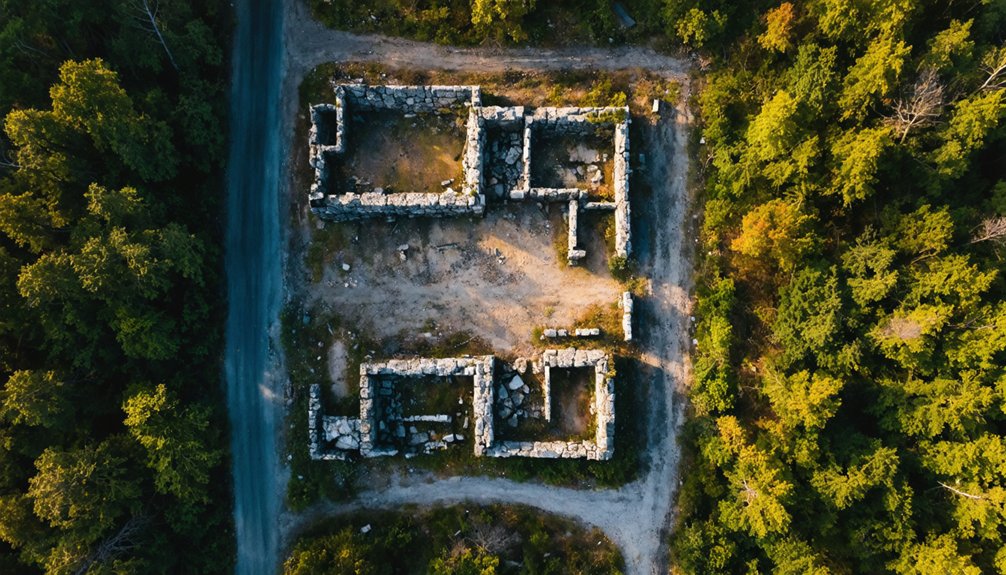
You’ll want to optimize your drone’s exposure settings during New England’s golden hours when the sun casts long shadows across weathered architectural features.
To capture the layered details of these historic structures, position your drone at varying heights – from dramatic 45-degree angles to reveal facade textures, to higher elevations that separate the buildings from their forested surroundings.
Carefully plan each shot beforehand to maximize efficiency and minimize unnecessary flight time over these delicate historic sites.
Aerial Light Management Techniques
While mastering aerial drone photography demands skill, understanding advanced light management techniques is essential for capturing ghost town architecture in striking detail.
You’ll want to launch your drone during early morning or late afternoon when aerial light creates dramatic long shadows that reveal compelling dimensional textures. Avoid midday flights when harsh sun flattens architectural features and ruins the mood.
For the most atmospheric shots, time your flights during golden hour just after sunrise or before sunset. The warm tones and soft light will bring out intricate details in weathered buildings while creating depth through natural shadow management.
Consider using ND filters to control bright conditions and achieve longer exposures that smooth clouds and create ethereal effects around abandoned structures.
Layered Detail Photography Methods
Taking your ghost town photography to the next level requires mastering layered detail techniques that bring depth and dimension to architectural shots.
When shooting New England’s abandoned structures, position your drone to capture distinct foreground-middle-background planes, letting architectural elements naturally overlap for enhanced spatial depth.
You’ll want to bracket your exposures using consistent apertures around f/8-f/11 to maintain sharpness across multiple layers while preserving both highlight and shadow details.
Switch between telephoto compression to emphasize layered perspectives in pattern-rich facades and wide-angle views to dramatize spatial relationships.
For peak architectural textures, create separate exposure layers for exterior highlights and interior shadows, then blend them using luminosity masks.
Focus stacking multiple frames from near to far ensures every weathered detail remains tack-sharp across all planes.
Weather Conditions That Enhance Ghost Town Atmosphere
When it comes to capturing haunting aerial images of New England’s ghost towns, specific weather conditions can transform an ordinary abandoned site into a photographer’s paradise.
You’ll want to track atmospheric effects that create mood and mystery, from low-lying fog that shrouds abandoned mills to diffused overcast light that reveals intricate architectural details.
Seasonal changes offer unique opportunities to capture these forgotten places in their most compelling states.
- Time your flights during autumn’s golden hour when long shadows dramatize decaying structures against vibrant foliage.
- Scout locations after light snowfall when winter’s stark branches frame abandoned buildings in ethereal white.
- Launch your drone during misty mornings when fog layers create depth and isolation, perfect for showcasing Maine’s coastal ghost towns.
Frequently Asked Questions
Are There Any Reported Paranormal Encounters During Drone Flights at These Locations?
You won’t find documented paranormal sightings during drone experiences at these locations. While ground-level ghost stories exist at Dogtown, aerial footage hasn’t captured any unexplained phenomena at these New England ruins.
Which Ghost Towns Require Special Permission From Historical Societies to Film?
You’ll find no explicit ghost town permits or filming restrictions at Dogtown, Monson, Bells Mansion, or the Abandoned Summer Resort, though it’s wise to check local drone regulations before flying.
How Do Local Residents Feel About Drone Photographers Visiting These Sites?
Like a double-edged sword, you’ll find community perspectives split – some locals embrace drone documentation of their heritage, while others worry about privacy and drone etiquette disrupting their peaceful neighborhoods.
What Happens if Your Drone Gets Tangled in Overgrown Vegetation?
If your drone gets tangled, immediately kill the motors to prevent damage. You’ll need to carefully assess vegetation hazards and use manual recovery techniques or specialized tools for safe drone recovery.
Which Locations Have Underground Structures That Can’t Be Captured From Above?
You won’t spot abandoned mines or hidden tunnels at Steinert Hall’s subterranean concert space, Hanton City’s burial grounds, Stone Chambers in hillsides, or Quabbin’s sunken towns – they’re all frustratingly below ground!
References
- https://www.cbsnews.com/boston/news/jason-allard-abandoned-from-above-aerial-drone-camera-video-new-england-wbz-tv/
- https://www.youtube.com/watch?v=7X7TXuB8Pk4
- https://www.businessinsider.com/videographer-captures-abandoned-places-from-above-sky
- https://www.youtube.com/watch?v=jPneYGJR4-o
- https://www.rimonthly.com/abandoned-from-above-a-new-perspective-on-once-iconic-rhode-island-sites/
- https://www.youtube.com/watch?v=MmKyEc9aHJ0
- https://ghostofnewengland.com
- https://www.youtube.com/watch?v=PMJ_m0-NVdI
- https://www.youtube.com/watch?v=oifvwimEC_A
- https://www.nae.usace.army.mil/Media/News-Releases/Article/1476608/prohibition-on-the-use-of-unmanned-aircraft-systems-uas-on-federal-lands-under/