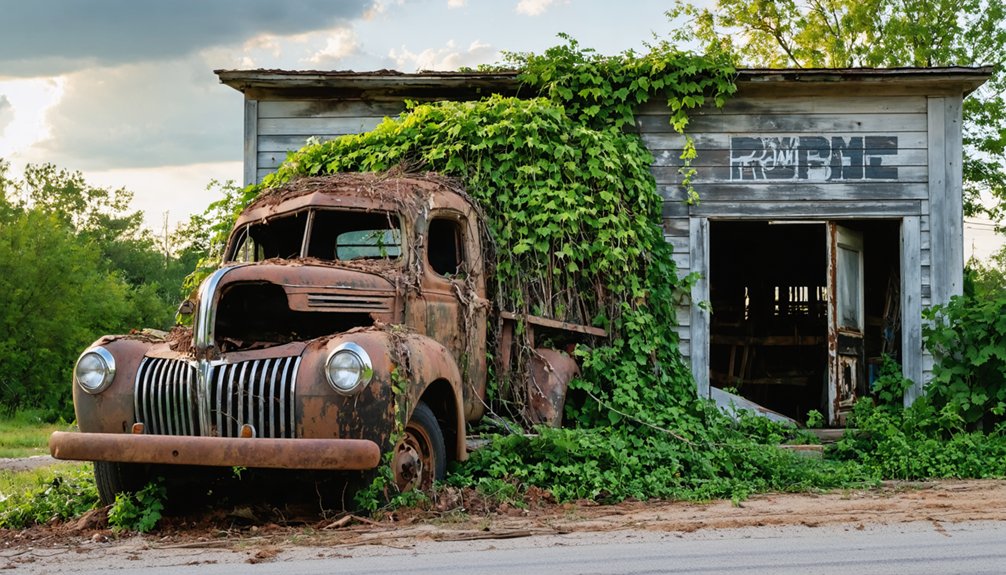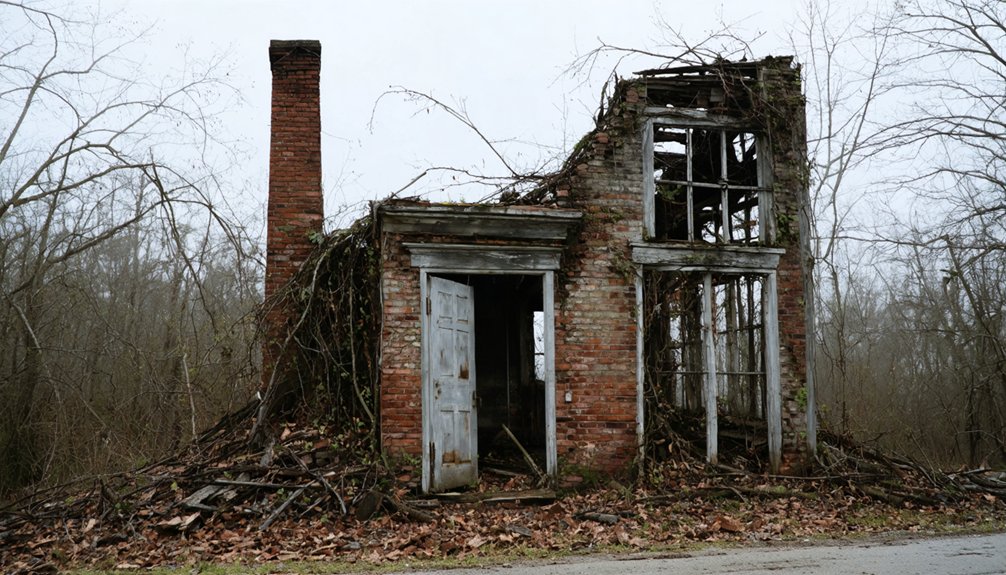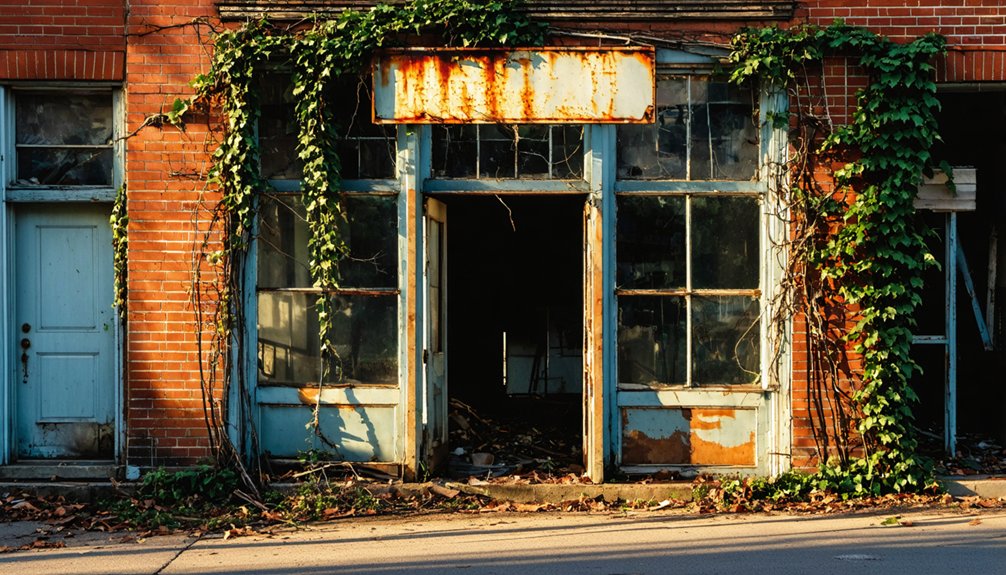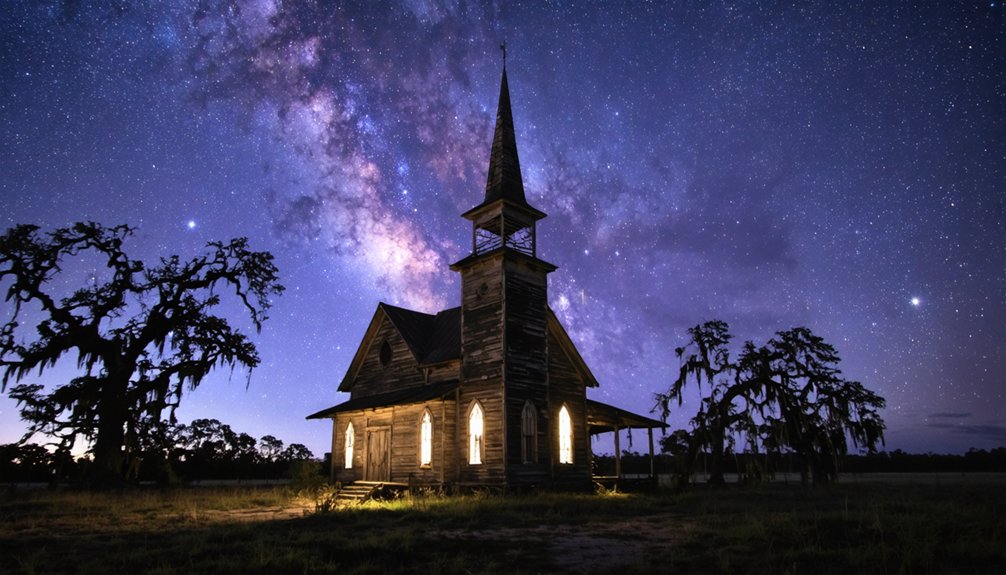
You’ll find exceptional astrophotography conditions at Alabama’s historic ghost towns, where Bortle Class 2-4 skies reveal stunning Milky Way detail. Blakeley offers dramatic architectural foregrounds, while Perdue Hill provides unobstructed southern horizon views perfect for deep-sky imaging. Jackson Lake Island’s movie set ruins create unique compositional opportunities. For ideal results, utilize a full-frame camera with tracking mount during winter’s superior transparency. These remote locations harbor secrets that only emerge under darkened skies.
Key Takeaways
- Blakeley historic site offers dramatic architectural remains against dark skies with minimal light pollution for Milky Way photography.
- Perdue Hill features well-preserved historic buildings and unobstructed southern horizon views ideal for deep-sky imaging.
- Jackson Lake Island provides unique abandoned movie set compositions with Bortle Class 2-4 skies perfect for astrophotography.
- Cahaba archaeology site’s flat terrain and open spaces enable panoramic night sky shots with excellent visibility.
- Old St. Stephens’ preserved 1800s street grid creates compelling foreground elements for star trail photography in dark sky conditions.
Why Ghost Towns Are Perfect for Night Sky Photography
While urban light pollution increasingly threatens dark sky visibility across Alabama, ghost towns provide ideal conditions for advanced astrophotography due to their remote locations and minimal artificial illumination.
You’ll find Bortle Class 2-4 skies that reveal stunning Milky Way detail and faint deep-sky objects through your camera’s sensor. Like the brothels and saloons that once defined Bodie’s bustling streets, these abandoned places tell stories of bygone eras.
Ghost town history offers compelling architectural elements like weathered storefronts, mine headframes, and historic cemeteries that create dramatic foreground compositions against starlit skies. Unusual art installations by modern artists add an intriguing contemporary layer to these historical settings.
These structures enable precise light-painting techniques – you can illuminate facades with colored gels while capturing long exposures of star trails above.
The lack of modern lighting infrastructure means you won’t need heavy post-processing to remove light pollution, and you’ll achieve cleaner stacks with consistent background levels across your imaging sequences.
Essential Gear and Planning for Ghost Town Astrophotography
Successful ghost town astrophotography requires an extensive equipment setup engineered for the unique challenges of remote night shooting.
Remote night photography demands specialized gear to capture haunting vistas where forgotten places meet starlit skies.
You’ll need a full-frame mirrorless or DSLR camera with superior high-ISO performance, paired with both wide-angle and telephoto lenses for maximum compositional freedom. To prevent star trails, mount your gear on a tracking system like the iOptron SkyTracker for exposures beyond 30 seconds. Consider adding a Bahtinov mask to achieve precise focus on bright stars. An equatorial mount is essential for tracking accuracy during long exposure sessions.
Critical accessories include dew heaters to combat Alabama’s humidity, camera settings automation through intervalometers, and robust calibration tools for ideal image stacking.
Don’t overlook your power requirements – pack sufficient 12V batteries for overnight operations. Before heading out, secure property access permissions and bring navigation tools with offline maps.
Your safety gear should include red-light headlamps and emergency communications equipment for these remote locations.
Top Alabama Ghost Town Locations for Stargazing
Among Alabama’s most compelling astrophotography destinations, five ghost towns stand out for their minimal light pollution and historical intrigue.
In addition to these captivating locations, drone enthusiasts will find some of the best drone spots in Alabama that offer stunning aerial views of the remnants of these towns. The combination of historical features set against the backdrop of vast skies creates an ideal setting for both aerial photography and exploration. Whether capturing the ghostly outline of old buildings or the natural beauty surrounding them, these sites provide ample opportunities for both adventure and artistry.
As you plan your visit, consider the best seasons to explore Alabama ghost towns when temperatures are mild and the scenery is most vibrant. Spring brings blooming wildflowers that can create a breathtaking contrast against the hauntingly beautiful ruins. In the fall, the foliage adds a touch of warmth to the landscape, making it a perfect time for photography and exploration.
You’ll find ideal dark sky conditions at Blakeley history site, where fort remnants and ancient trees create dramatic foreground elements against the Milky Way. Located along the 280-mile route, this site offers photographers multiple vantage points for capturing celestial scenes. Local astronomy clubs frequently organize guided viewing sessions at this location.
Claiborne architecture, preserved at Perdue Hill, offers unobstructed southern horizon views perfect for deep-sky imaging.
The Spectre filming location on Jackson Lake Island provides unique compositional opportunities with its decaying movie set structures.
Cahaba archaeology site, your starting point for the 400-mile ghost town circuit, features flat terrain suitable for panoramic night shots.
Old St. Stephens rounds out these premium locations with its perfectly preserved 1800s street grid, ideal for capturing star trails above authentic period structures.
Safety Tips and Legal Considerations for Night Shoots
Before starting nighttime ghost town photography expeditions, you’ll need to implement thorough safety protocols and verify legal permissions.
Research trespassing laws for each location and secure necessary access permits to avoid criminal charges. Don’t risk entering condemned structures with hazardous debris. Humility and respect can help foster positive relationships with property owners when seeking permission to photograph.
Allow 10 to 15 minutes for your eyes to fully adapt to darkness before beginning your shoot.
Equip yourself with essential protective equipment: sturdy boots with snake guards, bug repellent, and reflective gear for roadside visibility.
Pack multiple light sources, including dim flashlights for maintaining night vision and brighter ones for traversing rough terrain. Bear spray is vital for wildlife encounters.
Always use the buddy system and file detailed plans with someone trustworthy.
Map your shooting locations in advance, noting potential hazards like unstable structures or steep drops.
Stay alert to your surroundings and prioritize safety over getting the perfect shot.
Best Seasons and Weather Conditions for Ghost Town Star Photos
When planning astrophotography sessions at Alabama’s ghost towns, you’ll need to carefully analyze seasonal sky conditions and weather patterns to maximize image quality.
Winter delivers prime seasonal advantages with extended astronomical darkness and superior transparency due to lower humidity levels, while autumn’s cold fronts create reliable clear-sky windows ideal for deep-sky imaging.
Monitor high-pressure systems from late fall through winter for the highest probability of pristine shooting conditions. You’ll want to avoid summer’s convective storms and spring’s unstable weather patterns that can quickly derail your shoot. Extensive research and mapping of potential locations should be completed well before your nighttime photography session.
For coastal ghost towns, factor in increased cloud coverage and humidity, especially during hurricane season. The abandoned movie sets of Spectre offer unique foreground elements against the night sky. Time your sessions to coincide with new moons or strategic moonsets, and always verify real-time forecasts 6-12 hours before heading out to your location.
Frequently Asked Questions
Are There Guided Astrophotography Tours Available at Any Alabama Ghost Towns?
After searching a million resources, you won’t find dedicated guided tours or astrophotography workshops at Alabama’s ghost towns, though you’re free to coordinate custom night sessions through local astronomy clubs.
Which Ghost Towns Have the Most Interesting Architectural Elements for Foreground Compositions?
You’ll find the richest architectural styles at Old Cahawba’s Episcopal ruins and Perdue Hill’s antebellum mansions, offering dramatic foreground interest through Gothic stonework, classical columns, and precise geometric symmetry.
How Do Paranormal Investigation Groups Affect Astrophotography Sessions at These Locations?
You’ll need to coordinate shooting schedules with paranormal groups – their EMF meters and light tools can interfere with long exposures, though their investigation etiquette typically respects other photographers’ needs.
What Historical Artifacts Can Still Be Photographed Alongside the Night Sky?
Like sentinels under starlight, you’ll capture historic relics including rusting locomotives, courthouse ruins, cemetery markers, and industrial equipment through nocturnal photography with your wide-angle lens and tracking mount.
Do Any Ghost Towns Require Special Permits for Commercial Astrophotography Shoots?
You’ll need commercial permits for state-owned sites like Old Cahawba, with $1M liability insurance. Federal lands require special-use permits, while private ghost towns demand written permission plus proof of commercial coverage.
References
- https://thebamabuzz.com/5-alabama-ghost-towns-to-put-on-your-bucket-list/
- https://alabamabucketlist.com/ghost-towns-in-alabama/
- https://deepsouthurbex.com/2020/01/02/6-south-alabama-ghost-towns/
- https://www.youtube.com/watch?v=hTe8F-_3-hY
- https://www.go-astronomy.com/dark-sky-parks-stargazing-state.php?State=AL
- https://www.onlyinyourstate.com/experiences/alabama/overhyped-places-look-better-online-al
- https://en.wikipedia.org/wiki/List_of_ghost_towns_in_Alabama
- https://www.nationalparksatnight.com/blog/2021/10/23/from-shadows-of-the-past-5-photos-of-ghost-towns-at-night
- https://www.photocascadia.com/for-the-love-of-ghost-towns/
- https://www.jeffsullivanphotography.com/2015/06/11/bodie-ghost-town-night-photography/