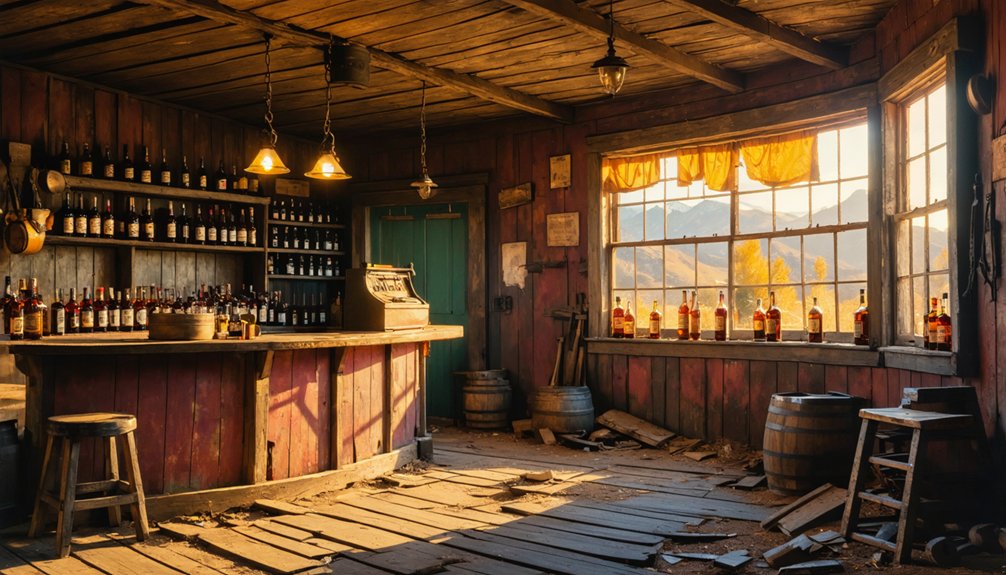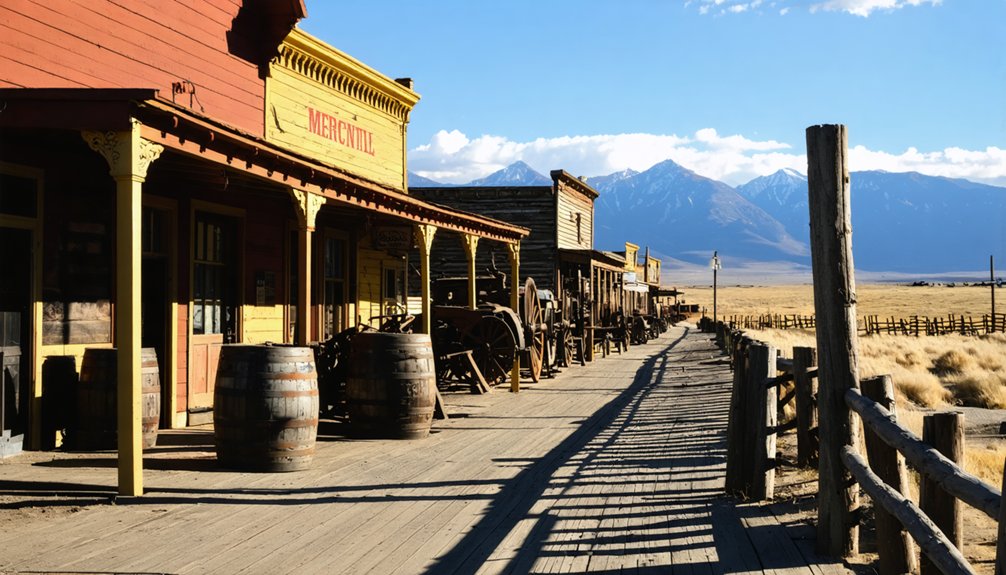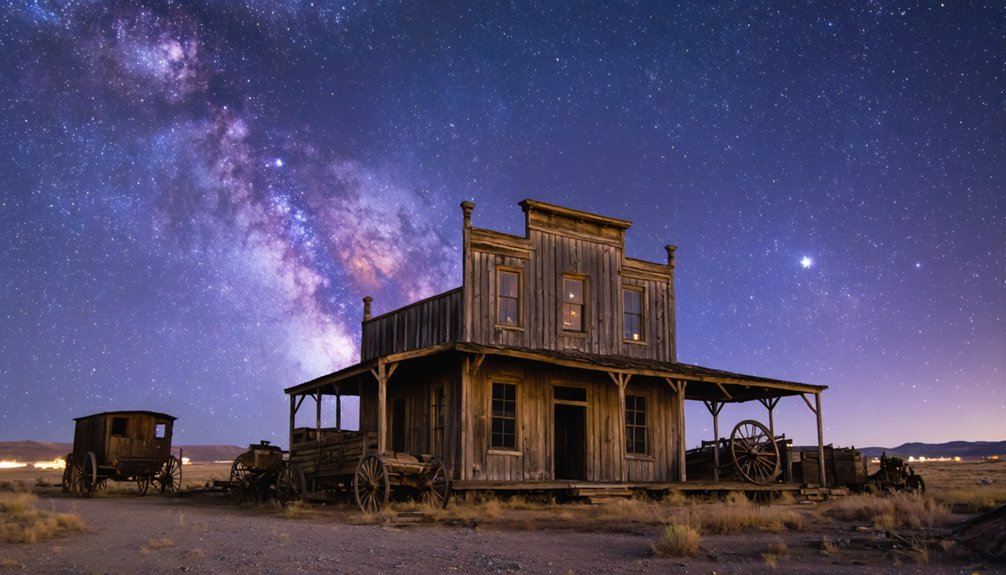
You’ll find California’s best ghost town astrophotography at Bodie State Historic Park and Cerro Gordo, where Bortle 1-3 dark skies reveal stunning Milky Way views from February through November. Death Valley’s Harmony Borax Works offers clear desert skies and haunting historic structures as foreground elements. The Eastern Sierra locations provide high-altitude advantages for sharper star definition and minimal light pollution. These abandoned settlements hold secrets that only night sky photographers can fully access.
Key Takeaways
- Bodie State Historic Park offers pristine Bortle 1-3 skies and peak Milky Way visibility from June to August.
- Death Valley’s Harmony Borax Works provides clear desert skies and excellent shooting conditions from February through October.
- Cerro Gordo ghost town delivers exceptional high-altitude clarity for astrophotography with extended viewing seasons from February to November.
- Alabama Hills combines abandoned mining sites with dramatic rock formations for compelling foreground elements in evening shots.
- Mammoth Consolidated Mine and Dog Town offer high-elevation locations with minimal light pollution and superior atmospheric transparency.
Why Ghost Towns Make Perfect Dark Sky Photography Locations
While urban photographers struggle with light pollution and cluttered horizons, California’s ghost towns offer astrophotographers a perfect dark-sky paradise.
You’ll discover pristine Bortle 1-3 skies where the Milky Way core shimmers without interference from modern lighting. These abandoned settlements, remnants of mining and railroad ghost town history, sit in broad valleys with unobstructed views perfect for tracking shots and panoramas. Always bring a sturdy tripod for maximum stability during long exposures of the night sky.
You can leverage weathered buildings and vintage machinery as compelling foreground elements, creating depth in your night sky compositions. The desert locations provide exceptional atmospheric clarity, while minimal infrastructure means you won’t battle street lights or passing cars. In places like the Mojave National Preserve, you’ll find abandoned machinery perfectly framed against starlit skies.
Master astrophotography techniques like selective light painting on historic structures while capturing crystal-clear star fields above – these forgotten places offer unparalleled creative freedom for night sky photographers.
Essential Equipment and Planning for Ghost Town Shoots
Before venturing into California’s ghost towns for astrophotography, you’ll need to assemble specialized gear that can handle the unique challenges of nighttime shoots in remote locations.
Start with a full-frame mirrorless camera and fast wide-angle lenses (f/2.8 or wider) for capturing the Milky Way above abandoned structures. Your lens selection should include at least one telephoto for compressed shots of distant buildings against the stars. For smartphone users, having a manual camera app will provide essential control over exposure settings. An equatorial tracking mount will be crucial for accurately following celestial objects as the Earth rotates.
Proper camera maintenance is essential in these harsh environments. Pack weatherproof cases, dew heaters, and cleaning supplies to protect your gear from dust and moisture.
Mount everything on a robust tripod with vibration dampening, and consider adding a portable star tracker for longer exposures. Don’t forget backup power supplies and redundant storage – you won’t find outlets or tech stores in ghost towns.
Best Times to Capture the Milky Way at Historic Sites
You’ll want to plan your ghost town astrophotography during California’s peak Milky Way core visibility window from late March through early October, when the galactic center rises above the horizon during convenient evening hours.
To capture the most dramatic details, schedule your shoots during the darkest nights around the new moon (±3 nights) and wait until astronomical twilight when the sun is at least 18° below the horizon.
Your success rate will soar if you time your visits to historic sites based on their specific access constraints – coastal locations demand early evening shoots before marine layer rolls in, while high-desert ghost towns offer pristine dark skies through pre-dawn hours. At Bodie State Historic Park, photographers need a special photography permit to access the site during prime astrophotography hours at sunrise and sunset. Many photographers opt to share rides from Lee Vining to reduce transportation costs while accessing these remote locations.
Core Visibility Seasonal Windows
Since California’s ghost towns lie scattered across diverse landscapes and elevations, each site offers unique seasonal windows for capturing the Milky Way’s majestic core.
You’ll find peak visibility at Bodie from March through October, with ideal shooting mid-June to mid-August when the galactic center soars above 30 degrees at midnight.
Death Valley’s Harmony Borax Works shines from February to October, while Cerro Gordo’s elevation near Lone Pine delivers pristine views from late February through November. The Gold Tier status of Death Valley’s skies makes it particularly ideal for capturing crisp star trails against abandoned mining equipment.
The seasonal patterns at Calico and Midland favor April to September shooting, with both locations offering clear desert skies and minimal light pollution. The Colorado River Astronomy Club regularly hosts stargazing events at Midland, making it an excellent choice for both solo and group astrophotography sessions.
Understanding these visibility factors helps you plan your ghost town astrophotography adventures when the Milky Way core aligns perfectly with historic structures.
Night Sky Darkness Timing
While California’s ghost towns offer incredible Milky Way photography year-round, mastering the timing of true darkness proves essential for capturing their ethereal beauty.
You’ll find the deepest night sky darkness between 22:00-03:00 in Southern California desert locations, while Death Valley’s prime window shifts to 00:00-04:00 during spring and autumn. For Eastern Sierra ghost towns, plan your shoots between 21:30-02:30 when the core rises higher. Popular Dark Sky Festivals throughout the year provide guided opportunities to learn optimal timing techniques.
Several darkness factors affect your timing: Wait until astronomical twilight ends (90 minutes post-sunset), and watch for urban light domes from nearby cities. The Goldstone Deep Space Complex area offers exceptionally dark skies due to its remote location in the Mojave Desert.
You’ll capture cleaner shots after midnight when temperature inversions break and humidity drops. Skip nights with high winds, wildfire smoke, or cirrus clouds – these conditions can wash out your star-filled scene.
Moon Phase Planning Tips
Planning around the moon’s phases makes or breaks your Milky Way ghost town photography in California.
You’ll want to target new moon phases when the moon rises with the sun and sets at sunset, giving you the darkest possible skies. During these periods, head to remote locations like Bodie or Milpitas Wash where mountain ranges block residual moonlight.
Avoid shooting 3-5 days before and after full moons – they’ll wash out the delicate details you’re seeking.
For ideal astrophotography timing, aim for 1-2 hours after sunset during new moon periods. If you’re shooting during waning gibbous phases, wait for the moon to drop below 20° altitude.
Winter months offer an advantage at desert ghost towns, as the moon’s lower position reduces overall sky glow.
Top Ghost Towns in California’s Eastern Sierra Region
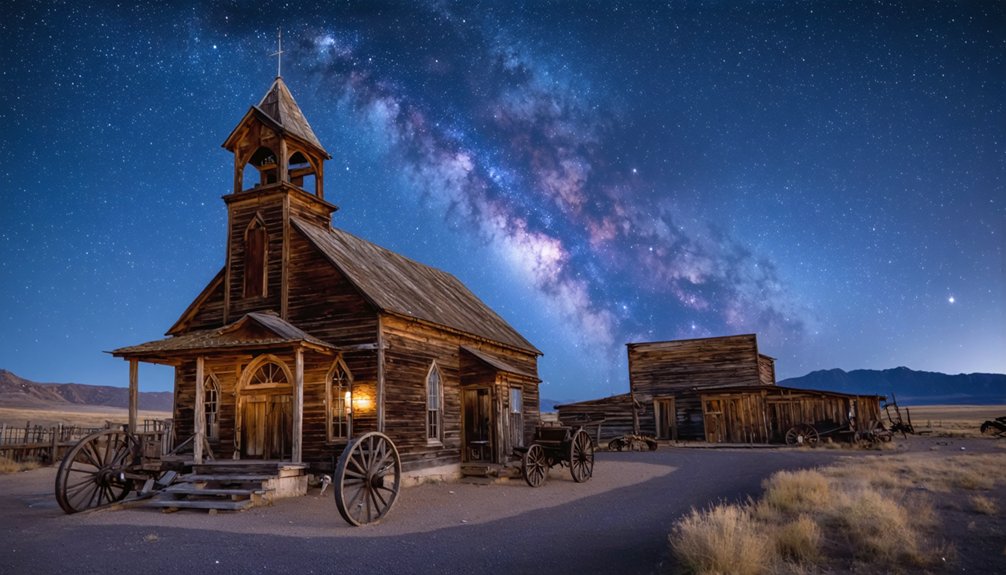
You’ll find Bodie State Historic Park to be a prime astrophotography destination, perched at 8,379 feet where the thin air and minimal light pollution create perfect conditions for capturing the Milky Way.
The park’s well-preserved structures offer compelling foreground elements for your night sky compositions, especially during the prime shooting season from late spring through early fall.
When you’re setting up your shots, remember to follow park regulations for tripod placement and lighting while taking advantage of the Bortle 2-3 skies that reveal remarkable deep-sky details on moonless nights.
Bodie’s Dark Sky Paradise
Located at a stellar 8,379 feet in California’s Eastern Sierra, Bodie ghost town beckons astrophotographers with its pristine dark skies and haunting historic structures.
You’ll find minimal light pollution thanks to its remote basin setting and the surrounding Bodie Hills, creating perfect conditions for capturing the Milky Way and deep-sky objects.
The town’s preserved wooden buildings, mine headframes, and church steeple provide compelling silhouettes against the starlit sky.
You’ll need to plan carefully – the last three miles are unpaved, and winter access often requires snowshoes or skis.
While you can’t enter most buildings, their windows offer unique framing opportunities for night sky compositions.
Remember to secure any necessary permits for commercial shoots, and note that camping isn’t allowed within the historic area.
Consider staging from nearby Bridgeport for supplies and lodging.
Best Photo Access Times
When photographing ghost towns in California’s Eastern Sierra region, timing your visit becomes essential for capturing the perfect blend of celestial drama and historic ambiance.
Exploring ghost towns in California can also reveal intriguing stories of the past, with remnants of buildings and artifacts telling tales of those who once thrived there. Each visit can evoke a sense of nostalgia and adventure, inviting you to imagine life during the gold rush era. As the sun sets behind the mountains, these deserted places take on an ethereal quality, further enhancing their ghostly charm.
You’ll find prime ghost town access at Alabama Hills during evening hours, where moonlit silhouettes create stunning foreground elements against the night sky.
For spectacular pre-dawn shots, head to Cerro Gordo when the blue hour meets astronomical twilight – perfect for capturing warm interior lights against star fields.
At Cerro Sombra and Masonic, plan your astrophotography timing for early night hours to capture pristine star trails with minimal light pollution.
The Owens Valley ghost sites offer exceptional Milky Way core opportunities during late-night to pre-dawn hours, when the galactic center reaches its highest point in the sky.
High-Altitude Imaging Benefits
The high elevations of California’s Eastern Sierra ghost towns offer extraordinary advantages for astrophotography that complement their ideal viewing times.
You’ll find exceptional atmospheric clarity at sites like Bodie State Historic Park, perched at 8,375 feet, where thinner air reduces light distortion and enhances stellar visibility.
The elevation advantages continue at Mammoth Consolidated Mine and Silver Mountain City, where crisp alpine conditions create sharper star definition in your images.
These remote locations combine high-altitude positioning with minimal light pollution, particularly at Dog Town and Masonic Camp.
You’re shooting through less atmosphere at these elevations, which means less interference between your lens and the stars.
The pristine Eastern Sierra night skies deliver outstanding conditions for capturing the Milky Way above historic mining structures.
Desert Ghost Towns for Stunning Night Sky Images
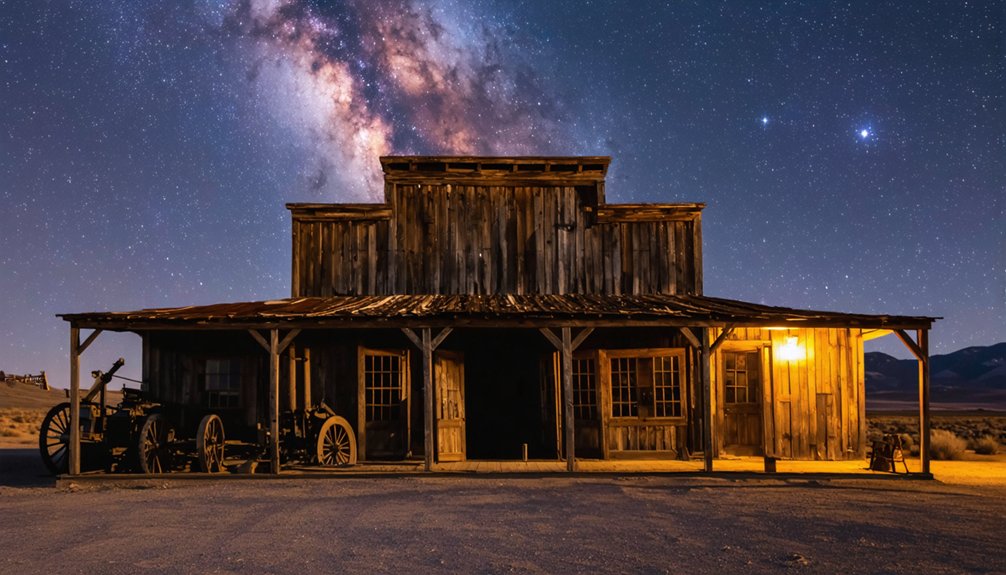
Deep within California’s desert landscapes, five remarkable ghost towns beckon astrophotographers seeking pristine dark skies and haunting foregrounds.
Midland Ghost Town offers concrete pads and free campsites, while Borrego Springs, an International Dark Sky Community, serves as your gateway to Anza-Borrego’s preserved night skies.
You’ll find historic ruins at Calico Ghost Town near Barstow, where silver rush remnants create compelling compositions beneath the stars.
Nelson Ghost Town’s vintage cars and Western buildings provide unique foreground elements, with dedicated dark sky workshops available in 2025.
For a distinctly post-apocalyptic vibe, head to Amboy Ghost Town along Route 66, where midcentury modern structures stand sentinel against the Milky Way’s brilliant glow.
Each location combines minimal light pollution with enchanting architectural elements for unforgettable night imagery.
Weather and Environmental Considerations
Successfully capturing ghost town astrophotography requires careful attention to California’s diverse weather patterns and environmental conditions.
You’ll find winter nights offer ideal viewing with crisp, clear skies and minimal atmospheric interference. Watch for wind patterns, especially at exposed locations like Dante’s View, where gusts can disrupt your equipment setup.
Plan your shoots around moon phases, targeting new moon periods for maximum darkness and detail in the Milky Way.
Spring brings mild temperatures to spots like Panamint Valley, where daytime highs hover in the mid-70s and nights cool to around 50°F.
Consider how environmental factors like dust storms and humidity can impact visibility – Death Valley‘s ultra-dry conditions create exceptionally transparent skies, while summer moisture elsewhere can diminish image quality.
Always check forecasts and prepare for temperature swings.
Permits and Legal Access Requirements
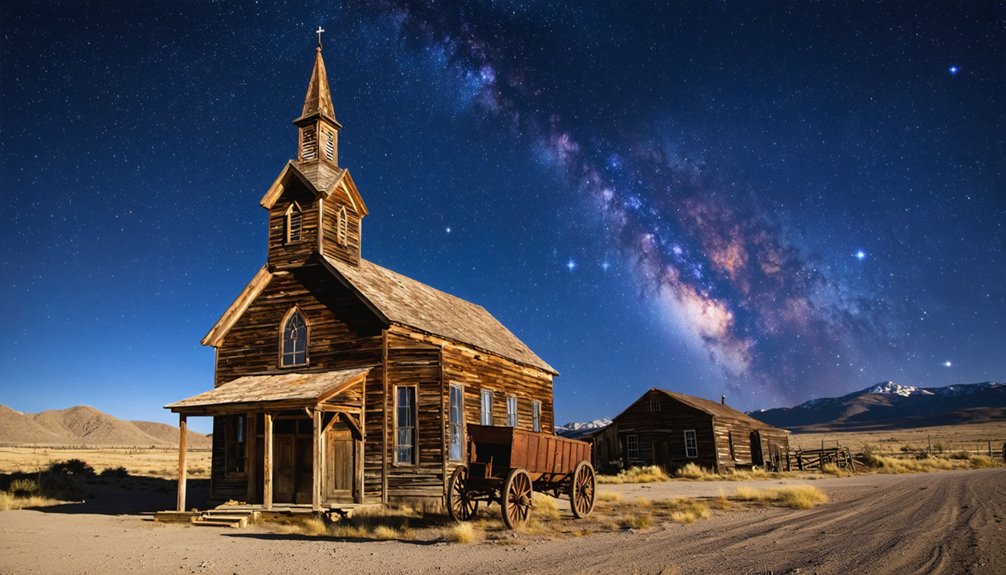
Maneuvering legal access to California’s ghost towns requires careful attention to three key areas: property ownership status, required permits, and trespass laws.
Before setting up your astrophotography gear, you’ll need to secure legal permissions from the appropriate authorities. Many ghost towns sit on federal land, requiring special-use permits from agencies like the BLM or NPS, while others remain privately owned and demand written consent from landowners.
Don’t let access limitations dim your creative vision – just plan ahead. For night shoots, you’ll often need additional filming permits and may require insurance coverage.
Always carry copies of your permits and landowner contacts during your session. Remember that trespassing laws have strengthened in 2025, so proper documentation is your best protection while capturing those stunning Milky Way shots above historic ruins.
Camera Settings and Composition Tips for Ghost Town Astrophotography
Mastering camera settings transforms ordinary ghost town shots into ethereal nightscapes that blend terrestrial history with celestial wonder.
Through skillful camera work, abandoned places become portals where Earth’s past meets the cosmic dance of stars above.
You’ll want to open your aperture to f/2.8 for ideal star clarity while maintaining foreground sharpness. Set your ISO between 1600-3200 and keep shutter speeds under 25 seconds to prevent star trails.
For composition techniques, use wide-angle lenses to capture abandoned structures against vast starlit skies. Position weathered buildings in your foreground while manually focusing on the brightest stars.
You’ll get the best results during new moons when skies are darkest. Use live view magnification for precise focus, and shoot in Kelvin white balance mode to maintain accurate color temperatures.
For advanced shots, try using an intervalometer to create mesmerizing star trails above historic ruins.
Frequently Asked Questions
Are There Guided Astrophotography Tours Available at These Ghost Towns?
You’ll find guided tours and photography workshops at Ballarat’s Great Orion Dark Sky Festival, but the other ghost towns don’t offer formal astrophotography guidance – though they’re perfect for self-guided shooting.
How Safe Are Ghost Towns at Night From Wildlife and Trespassers?
You’ll need to stay alert for wildlife encounters and personal safety risks. Bring companions, maintain well-lit campsites, check structures before setting up, and keep food secured. Don’t venture solo after dark.
Which Ghost Towns Have the Best Preserved Buildings for Foreground Subjects?
Like stepping through time’s door, you’ll find Bodie’s historically significant structures offer the most complete architectural styles, with over 100 weathered buildings perfectly preserved as foreground elements for your night sky compositions.
Can Drones Be Used for Night Photography at Ghost Town Locations?
You’ll need permits and face strict regulations against drone use in most ghost towns. Focus on ground-based night photography techniques instead – drones are banned at Bodie, Mojave, and historic sites.
Are There Nearby Emergency Services if Something Goes Wrong During Shoots?
Like a safety net beneath a tightrope walker, you’ll find emergency contacts within reach, but response times can stretch 1-2 hours. Take extra safety measures since most locations require helicopter evacuation.
References
- https://www.pbssocal.org/shows/socal-wanderer/seven-best-places-for-stargazing-in-californias-low-desert
- https://www.visitcalifornia.com/experience/7-great-places-california-stargazing/
- https://www.youtube.com/watch?v=29POPXLs4Ew
- https://www.easternsierraobservatory.com/california-dark-sky-festival
- https://www.7×7.com/dark-skies-california-nevada-2674332800.html
- https://www.go-astronomy.com/dark-sky-parks-stargazing-state.php?State=CA
- https://www.goodnite.com/blog/space-centers-and-ghost-towns-discover-the-delights-of-san-bernardino-county/
- https://stephenbayphotography.com/blog/where-to-photograph-the-milky-way-around-san-diego/
- https://www.nps.gov/deva/night-exploration.htm
- https://store.bandccamera.com/blogs/how-to/photographing-ghost-towns