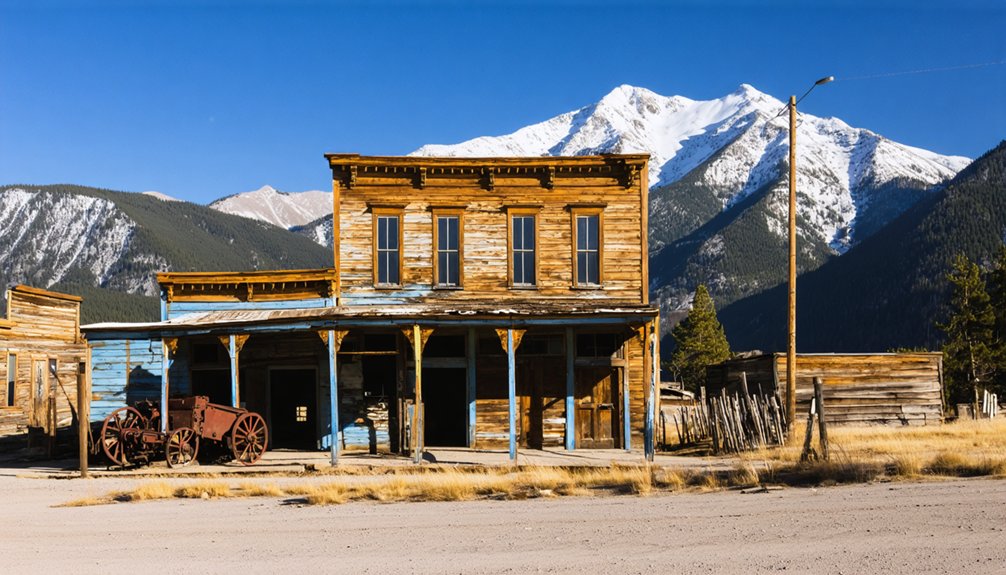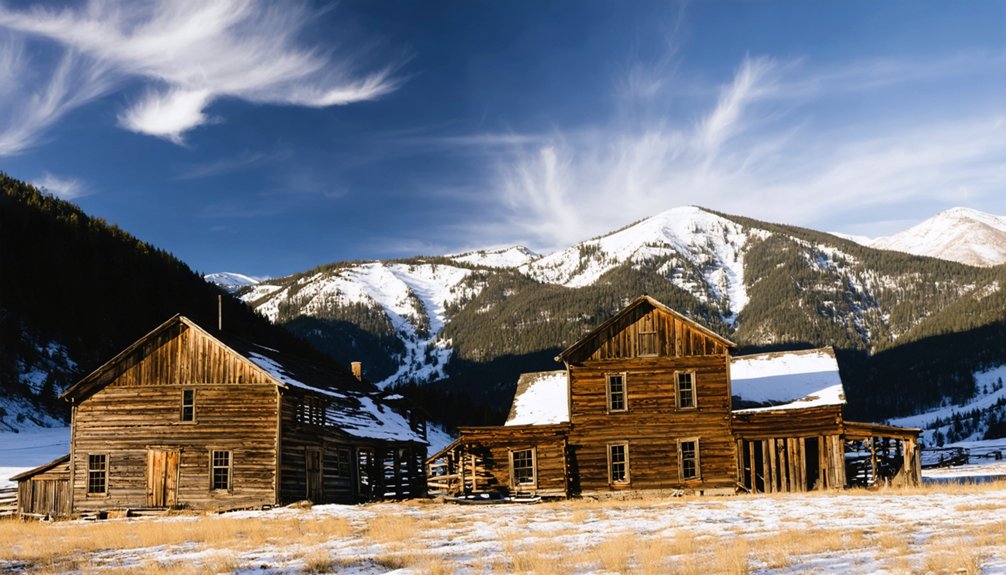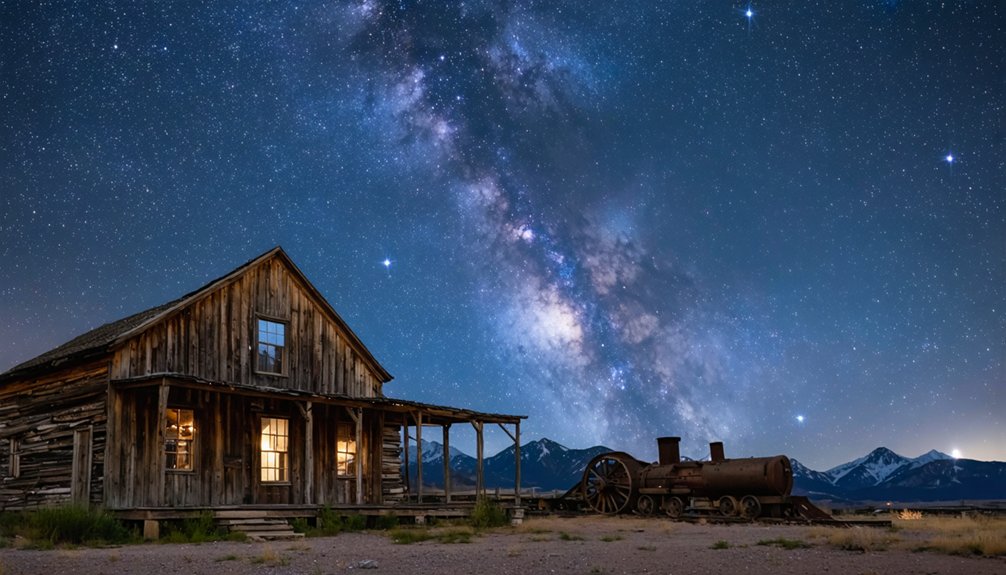
You’ll find exceptional astrophotography conditions at Colorado’s ghost towns, where minimal light pollution and high-altitude locations create pristine dark skies. Top sites include Westcliffe and Silver Cliff, both certified dark sky communities, along with St. Elmo and Animas Forks at elevations above 11,200 feet. The abandoned mining structures provide compelling foreground elements for Milky Way shots, particularly during late summer and fall. Proper planning and specialized gear will reveal these locations’ full photographic potential.
Key Takeaways
- Westcliffe and Silver Cliff are certified dark sky communities with preserved ghost town architecture, providing optimal conditions for night photography.
- St. Elmo and Tin Cup feature iconic wooden storefronts that create striking silhouettes against star-filled skies.
- Animas Forks offers pristine dark skies at 11,200 feet elevation, enabling exceptionally clear astrophotography conditions.
- Winter months in Colorado ghost towns provide the clearest nights and best visibility for capturing star fields.
- Ghost towns near Smokey Jack Observatory allow access to guided night photography sessions and expert astronomical assistance.
Why Ghost Towns Make Perfect Dark Sky Locations
While many photographers struggle to find pristine dark sky locations, Colorado’s ghost towns offer exceptional natural astronomy sites due to their complete lack of artificial illumination.
You’ll discover these remote mountain outposts preserve natural darkness through their abandoned status, with no streetlights, building illumination, or vehicle traffic to contaminate the night sky.
The historical significance of these mining ruins adds unique compositional elements while their elevated positions in Colorado’s arid climate deliver superior atmospheric transparency. These locations promote ecological balance by maintaining natural darkness essential for nocturnal wildlife.
Ghost towns’ crumbling facades serve as haunting foregrounds while Colorado’s thin mountain air reveals the cosmos in stunning clarity.
You’ll benefit from unobstructed 360-degree views across open terrain, minimal light pollution from distant cities, and stable shooting conditions without human interference.
The combination of high altitude, low humidity, and protection from urban light domes creates ideal conditions for capturing deep-sky objects, meteor showers, and dramatic Milky Way panoramas. These locations provide excellent opportunities for public education through astronomy programs and night sky viewing sessions.
Top Ghost Town Sites for Night Sky Photography
Colorado’s diverse ghost towns offer distinct advantages for astrophotography, with several standout locations combining ideal dark sky conditions and compelling historic elements.
Exploring abandoned mining towns in Colorado reveals a fascinating glimpse into the past, where remnants of old structures provide unique foregrounds for capturing the night sky. As you set up your camera amidst these historical sites, the surrounding wilderness offers a serene backdrop, enhancing the overall experience of both photography and exploration. Each town tells its own story, and with every shot, you can capture not only the stars above but also the whispers of history that linger in the air.
You’ll find certified dark skies in Westcliffe and Silver Cliff, where basin-and-range geography naturally shields light pollution while preserved architecture adds character to your compositions. The nearby Smokey Jack Observatory offers guided night photography sessions for capturing the perfect shot. Light pollution reduction efforts in these areas have made them prime destinations for stargazers.
For classic ghost town lore merged with astrophotography techniques, head to St. Elmo and Tin Cup’s wooden storefronts, which create perfect silhouettes against star-filled skies.
The high-alpine settings of Animas Forks and Alta deliver exceptionally crisp star images at 11,200+ feet, though they require careful planning for weather and access.
Lesser-known sites like Uravan and Dearfield provide unique cultural narratives and dark horizons ideal for capturing meteor showers and long-exposure Milky Way shots.
Essential Gear and Planning for Ghost Town Astrophotography
Successful ghost town astrophotography requires five essential gear categories: cameras, lenses, mounts, tripods, and specialized accessories.
For ideal camera selection, consider a full-frame DSLR or mirrorless body like the Nikon Z9 or Canon 7D Mark II with low-light capabilities. Your lens options should include fast wide-angles with f/2.8 or lower aperture – the Tamron 17-28mm f/2.8 or Sony 35mm f/1.4 GM excel for Milky Way compositions above ghost town structures. A Bahtinov mask will help achieve precise star focusing when setting up your shots. Accurate tracking through proper mount selection is essential for capturing sharp, detailed star fields.
You’ll need an equatorial mount like the iOptron SkyTracker or ZWO AM5N to counter Earth’s rotation, mounted on a sturdy tripod with multiple leg extensions.
Complete your kit with an electronic focuser, guide scope, and specialized filters like the Optolong L-eXtreme for nebula detail. The ZWO ASIAIR Plus can centralize control of your entire imaging setup.
Seasonal Considerations and Weather Patterns
Once you’ve assembled your astrophotography gear, understanding Colorado’s seasonal weather patterns becomes your next major planning factor.
Winter months deliver your highest probability of clear nights, while summer’s monsoon season brings frequent afternoon clouds above 8,000 feet. You’ll find spring offers variable windows between storms, and fall provides excellent transparency despite increased frost risk. Late summer and fall offer the most stunning shots of the Milky Way core. Many photographers capture stunning nightscapes at Ghost Town Hollow, positioned at a staggering 11,800-foot elevation on Pikes Peak.
Weather impacts vary greatly by elevation and location. High-altitude sites experience dramatic seasonal variations, with temperatures routinely dropping below freezing outside mid-summer.
You’ll need to manage battery drain in cold conditions, expecting 30-50% shorter runtime at subzero temperatures. Watch for valley fog in mountain basins, and plan for rapid temperature changes that can cause lens condensation.
Local microclimates can override regional forecasts, so verify site-specific conditions before heading out.
Local Resources and Dark Sky Communities
While planning your astrophotography expeditions to ghost towns, you’ll benefit from Colorado’s network of six International Dark Sky Communities and their associated resources.
Colorado’s dark sky communities offer perfect staging grounds for capturing the cosmos above historic ghost town remains.
Westcliffe, Ridgway, Norwood, and Paonia offer prime access to historic mining ruins within 10-60 miles of their dark sky cores. Visitors often experience spectacular Milky Way views even from lighted areas in these communities.
You’ll find essential support through local astronomy hubs like Smokey Jack Observatory in Westcliffe and the Lake Fork Earth & Sky Center, which provide real-time sky conditions and guided expertise. These locations actively promote sustainable tourism while preserving the natural darkness of the night sky.
Connect with regional astronomy clubs, such as the Denver Astronomical Society, to access field reports and volunteer leaders familiar with remote ghost sites.
Before shooting, verify land ownership and check community tourism offices for night-access policies, as dark sky designation doesn’t guarantee entry to private historic properties.
Frequently Asked Questions
Are There Legal Restrictions for Night Photography in Abandoned Ghost Towns?
You’ll need permits for night photography in regulated ghost towns, but you’re often free to shoot on public lands with groups under 5 people if you don’t disturb resources or use commercial equipment.
What Wildlife Precautions Should Photographers Take When Shooting at Night?
You’ll need bear spray, red-filtered headlamps, and a minimum 400mm lens. Stay alert for wildlife encounters, maintain safe distances from nocturnal animals, and avoid baiting or disturbing their habitats.
Can I Camp Overnight Directly in Ghost Town Structures?
You shouldn’t camp in ghost town structures – it’s both illegal under camping regulations and dangerous due to structural safety risks like collapsing roofs, rotten floors, and hazardous materials.
How Do Mining Claims Affect Access to Ghost Town Photography Locations?
You’d love to think mining claims don’t matter, but they’ll restrict your access rights considerably. Check local mining regulations and ownership status before shooting – valid claims trump your photography plans.
Are Special Permits Required for Commercial Astrophotography in Ghost Towns?
You don’t need special commercial permits for astrophotography in Colorado ghost towns based on available data, though it’s wise to research individual site photography rights before conducting business activities.
References
- https://coloradoinfo.com/blog_post/stargazing-in-colorado/
- https://www.longmontleader.com/colorado/explore/20-must-visit-ghost-towns-in-colorado-for-an-eerie-adventure-10192944
- https://www.colorado.com/articles/guide-to-colorado-international-dark-sky-places
- https://www.westword.com/arts-culture/best-dark-sky-locations-in-colorado-for-stargazing-24651949/
- https://www.coloradolifemagazine.com/blog/post/11-colorado-ghost-towns
- https://gobreck.com/go-breck/dark-sky-stargazing-in-breckenridge/
- https://thefaiolas.com/lake-city-in-colorado-waterfalls/
- https://pamphotography.blog/2012/07/29/photographing-colorado-ghost-towns/
- https://www.montenido.org/blog/why-dark-sky-communities-are-important
- https://darksky.org/news/3-benefits-of-a-dark-sky-designation/