You’ll find exceptional astrophotography conditions at Kansas ghost towns scattered throughout the Flint Hills and Gypsum Hills regions, where Bortle 2-4 dark skies prevail. Head to Hoge in Ness County for 160 acres of homestead ruins, or explore Teter Rock’s dramatic silhouettes against the Milky Way. The abandoned structures in Ludell and Rome offer compelling railroad-era compositions with minimal light pollution. Peak shooting occurs October through March, when clear skies and decreasing precipitation create ideal conditions for night photography. Deeper exploration of these locations reveals hidden architectural gems perfect for starlit compositions.
Key Takeaways
- Hoge in Ness County offers 160 acres of homestead ruins under Bortle class 2-3 skies perfect for unique Milky Way compositions.
- Kendall in Decatur County features abandoned buildings that create compelling silhouettes against starlit horizons with minimal light pollution.
- Rome’s railroad-adjacent ruins provide excellent foreground elements for night photography with unobstructed views of the dark sky.
- Densmore’s red-brick church and deteriorating structures offer distinctive architectural elements for astrophotography compositions in remote settings.
- Ludell presents minimal light interference and historic structures, making it ideal for capturing the Milky Way against pioneer-era buildings.
Top Dark Sky Locations in Flint Hills Ghost Towns
While Kansas’s Flint Hills region boasts several prime astrophotography locations, the Tallgrass Prairie National Preserve stands out with its Bortle class 2-3 dark skies and 360-degree views from elevated hill crests.
You’ll find excellent ghost town landscapes at Teter Rock, where the prominent formation creates dramatic silhouettes against starlit ruins. Long exposure shots work best with a sturdy tripod to eliminate camera shake.
For expanded shooting options, head to Texaco Hill via the open range road, offering unobstructed views ideal for wide-lens captures.
The Flint Hills Wildlife Drive presents countless backroad locations with minimal artificial light, perfect for ISO 1600-6400 settings.
Chase State Fishing Lake, situated near Cottonwood Falls, provides natural barriers from light pollution, making it ideal for deep space observation. Experienced astrophotographers often use DSLR cameras to capture the stunning celestial displays.
These locations leverage the region’s rolling topography and conservation efforts to maintain pristine dark sky conditions.
Stargazing Gems of the Gypsum Hills Region
Deep within Kansas’s rugged Gypsum Hills, photographers discover pristine dark skies framed by dramatic red-brown buttes and gypsum-capped mesas.
Nature’s amphitheater of red cliffs and white-topped mesas frames Kansas’s darkest skies, beckoning astrophotographers to its remote reaches.
You’ll find Bortle Class 2-4 conditions at remote pullouts, perfect for capturing the Milky Way’s core on moonless nights. The region’s sparse vegetation and natural canyon “light sinks” minimize light pollution, while elevated rimlines provide unobstructed 360° views for panoramas. Star parties regularly gather here to share equipment and expertise.
For ideal astrophotography techniques in the Gypsum Hills, time your visit between late August and October when humidity drops and seeing conditions peak. Remember to check local weather forecasts before heading out to ensure clear skies for your shoot.
You’ll need high-clearance vehicles to access the best spots, and don’t forget dew heaters for your lenses – temperature swings can be significant.
Pack extra gear and offline maps, as cell coverage remains spotty throughout the remote byways and canyon bottoms.
Western Kansas Abandoned Sites Under the Stars
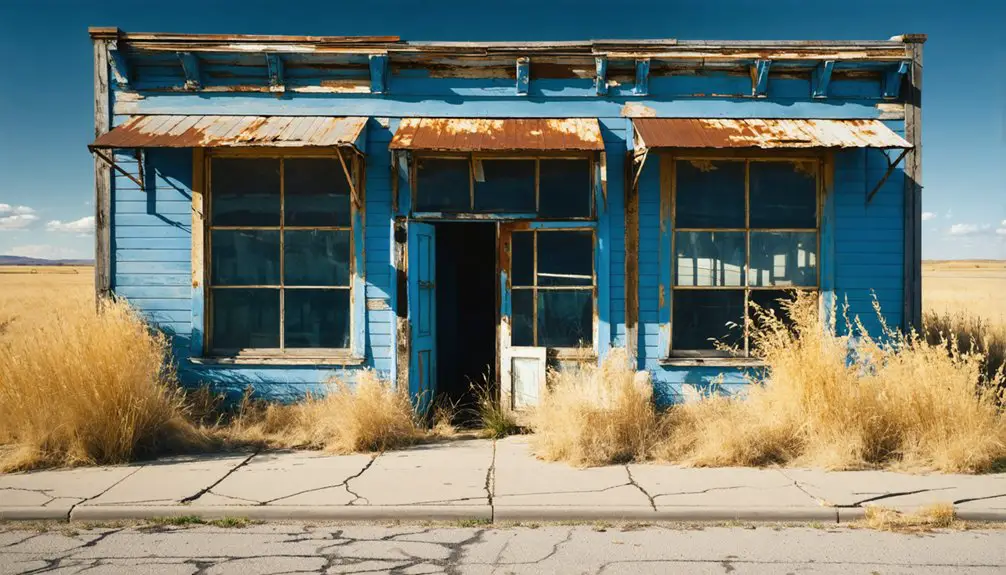
Western Kansas conceals a network of abandoned settlements that offer photographers unparalleled dark-sky shooting locations.
You’ll discover prime shooting spots at Hoge in Ness County, where 160-acre homestead ruins dot the challenging terrain, and Kendall in Decatur County, where abandoned buildings frame the starlit horizon.
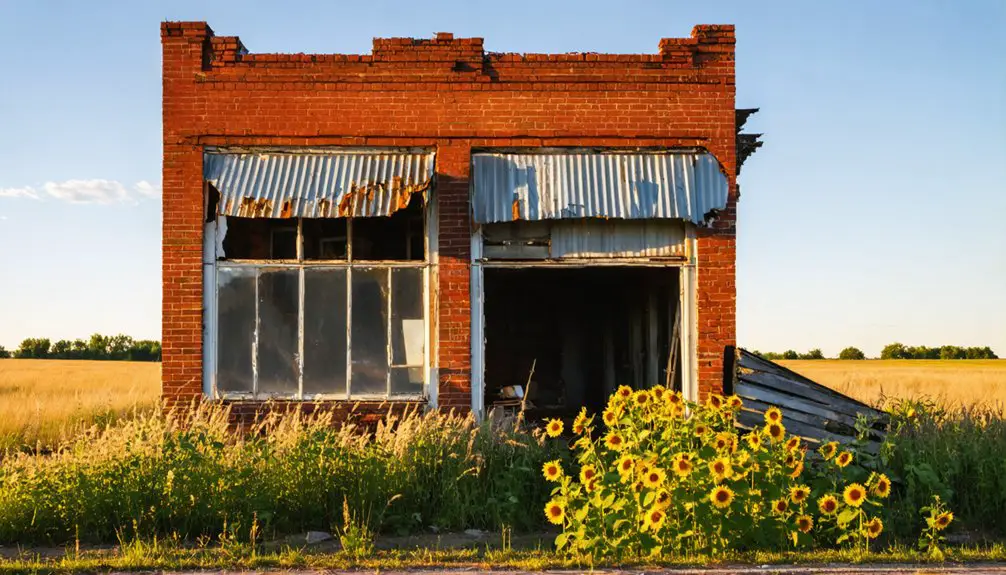
For compelling abandoned landscapes, explore Densmore’s deteriorating structures, including its red-brick Methodist Church entangled in vegetation.
Ludell and Rome provide additional ghost town history, with Rome’s railroad-adjacent ruins and Ludell’s remote location offering minimal light interference.
These sites let you capture the Milky Way against architectural remnants of Kansas’s pioneering past. Like Diamond Springs, these locations served as essential rest stops for travelers heading west.
Many of these locations became ghost towns after experiencing technological farming changes that dramatically reduced the need for agricultural workers.
Each location presents unique compositional opportunities, from crumbling foundations to weathered structures silhouetted against the cosmic canvas.
Photographing the Milky Way in Historic Eastern Kansas
Although Eastern Kansas presents different challenges than its western counterpart, you’ll find exceptional Milky Way photography opportunities among its historic ruins and abandoned settlements. The region’s ghost towns, particularly around Garnett and Marshall County, offer Bortle 3-4 dark skies perfect for capturing the night sky. Consider visiting any of the area’s Farpoint Observatory sites for additional inspiration and stargazing education.
You’ll want to target the April-August window when the Milky Way core reaches its ideal height. Scout locations during daylight and secure property permissions before venturing out. The Flint Hills’ abandoned limestone structures and grain elevators provide compelling foreground elements of historical significance. Historic schoolhouses from the 1800s still stand as perfect subjects against the starlit sky.
Pack your fast wide-angle lens, bring adequate safety gear, and plan around new moon phases. After rain events, stick to well-maintained roads and always carry emergency supplies – cell service can be spotty in these remote locations.
Hidden Night Sky Treasures of Southern Kansas
Southern Kansas harbors some of the state’s most compelling astrophotography locations, particularly around Mount Sunflower, the Cimarron National Grassland, and the rugged Gypsum Hills region.
You’ll find hidden treasures in ghost towns that offer Bortle 2-3 dark skies, ideal for night photography of the Milky Way core against abandoned structures.
For prime conditions, head to the elevated terrain of the Gypsum Hills, where natural buttes shield against light pollution. Like the Tallgrass Prairie Preserve, this area offers stunning views of Kansas’ undeveloped landscape against the night sky.
The best shooting windows occur during late summer through early autumn, when you’ll enjoy warm temperatures and minimal insects.
Scout locations during daylight hours, as many sites require high-clearance vehicles and private land permissions.
Consider using Farpoint Observatory in Eskridge as a home base for nighttime excursions, as their staff can provide expert guidance on local conditions.
Near Fall River Reservoir, you can capture unique water reflections of stars, but time your visits around calm winds and moonless nights for the clearest results.
Remote Ghost Towns With Bortle 2 Skies
Kansas’s most pristine dark skies cluster around remote ghost towns that offer Bortle 2 conditions – perfect for capturing the Milky Way against historic ruins.
Discover Kansas’s forgotten ghost towns, where pristine dark skies meet historic ruins – an astrophotographer’s dream under Bortle 2 conditions.
For best ghost town exploration, head to Mount Sunflower’s expansive plains where abandoned settlements provide unobstructed southern views essential for astrophotography techniques.
Hoge in Ness County and sites near Monument Rocks deliver prime dark-sky territory with minimal light pollution.
You’ll find exceptional shooting locations at railroad ghost clusters along western lines, where isolated depots and foundations serve as compelling foreground elements.
When planning your shoot, target the scattered settlements near Goodland and Garden City – these far-west locations consistently maintain sub-3 Bortle readings on moonless nights, suitable for long-exposure captures of the galactic core against weathered structures.
Essential Equipment and Planning for Ghost Town Astrophotography

You’ll need a full-frame camera with fast wide-angle and telephoto lenses to capture both sweeping nightscapes and detailed architectural elements against the stars in ghost town settings.
Your stabilization setup must include a sturdy tripod rated for your heaviest gear combination, along with a star tracker for pinpoint celestial objects during long exposures.
Pack multiple batteries, memory cards, and safety equipment including bright LED headlamps with red modes to navigate abandoned structures while preserving your night vision.
Camera Gear Must-Haves
Three core components form the foundation of successful ghost town astrophotography: a capable camera body, fast lenses, and a stable mounting system.
You’ll need a full-frame DSLR or mirrorless camera like the Canon 6D or Nikon D750 for superior low-light performance. Pair this with wide-angle lenses featuring f/2.8 or lower apertures – the Rokinon 14mm f/2.8 or Tamron 17-28mm f/2.8 are solid choices for capturing expansive night skies above abandoned structures.
For camera settings, shoot in manual mode with 10-30 second exposures and ISO 400-1600. An equatorial mount or portable star tracker is essential for sharp images, letting you track the sky’s rotation.
Don’t forget gear maintenance – keep sensors clean and batteries charged for those remote ghost town locations.
Location Safety Tips
While ghost town astrophotography offers unique creative opportunities, proper safety planning remains essential for successful night shoots.
When exploring Kansas ghost towns after dark, you’ll need to scout locations during daylight hours first, watching for unstable structures and hazardous terrain. Always bring a companion to share the exploration and maintain situational awareness in these remote settings.
The best seasons for Kansas ghost towns are typically spring and fall, when the weather is milder and the scenery is vibrant. As the landscape transforms, these towns reveal their haunting beauty, attracting both adventurers and photographers alike. Additionally, be mindful of local events that may draw more visitors during certain times of the year, which can enhance your exploration experience.
Before entering any ghost town site, obtain necessary permissions if it’s on private property. You’ll want to thoroughly assess the surrounding area for potential risks and establish clear exit routes.
Position your equipment away from deteriorating buildings and maintain a safe distance from compromised foundations. Remember to use your headlamp strategically while maneuvering between structures, but minimize its use during shooting to preserve your night vision adaptation.
Weather Patterns and Best Viewing Seasons
You’ll find Kansas’s ideal astrophotography conditions from October through March, when clear night frequency peaks and atmospheric humidity drops to its lowest levels.
Summer months present challenges with increased cloud cover and convection patterns, though you can still capture quality images by carefully monitoring weather forecasts and planning around brief clear windows.
When shooting at ghost town locations, you’ll need to watch for severe weather hazards common to the region, including sudden thunderstorms in spring and early summer, and extreme temperature variations in winter that can affect both personal safety and equipment performance.
Clear Skies By Season
Understanding Kansas’s seasonal weather patterns proves essential for planning successful astrophotography sessions at ghost towns.
You’ll find suitable seasonal visibility during autumn, with precipitation dropping from 3.52 inches in September to just 1.49 inches in December, coupled with crisp air conditions that enhance night sky clarity.
Winter offers 5-6 clear viewing days monthly, though temperatures dip to 20-24°F at night.
Spring brings increasing precipitation, while summer presents the most variable conditions with 8-10 rain days monthly.
The state’s semiarid west consistently provides clearer skies due to its sub-20-inch annual rainfall.
For your shooting schedule, target autumn months when temperatures moderate from 81°F to 44°F and precipitation days decrease to 5-6 monthly.
This season’s stable conditions and reduced moisture create favorable circumstances for capturing the cosmos above Kansas’s abandoned settlements.
Weather Hazards While Stargazing
Several atmospheric phenomena can severely impact your astrophotography sessions at Kansas ghost towns, from atmospheric turbulence to moisture-related issues.
You’ll need to monitor jet stream patterns, as they frequently create poor seeing conditions across the Great Plains, especially during spring and fall frontal periods.
Your weather preparedness should account for mid-latitude cyclones and convective storms, which peak in late spring and early summer.
Equipment protection becomes essential when dealing with high humidity near rivers or after rainfall – dew can form rapidly on your optics, demanding active dew control systems.
Watch for winds exceeding 10-15 mph, as they’ll introduce vibrations that compromise long exposures.
Check ClearSky charts and local seeing indices before setup, and maintain dew heaters, shields, and desiccants to safeguard your gear during unattended imaging runs.
Accessing Remote Ghost Town Sites After Dark

Successfully accessing Kansas ghost towns for nighttime astrophotography requires methodical preparation and legal due diligence.
Before heading out, you’ll need to verify property ownership through county assessor databases and obtain written permission from private landowners. Check BLM records and state land office data to confirm public access rights where applicable.
Your safety protocols should include high-lumen lighting, protective footwear, and emergency communication devices like satellite messengers for areas without cell coverage.
You’ll want to notify the local sheriff’s office of your planned activities and carry proper permits for commercial shooting or drone operations.
Map your routes using all-weather access roads, pack weather-appropriate gear, and maintain safe distances from unstable structures.
Remember that trespassing laws are strictly enforced – always document your legal right to be on-site.
Combining Historical Elements With Night Sky Photography
Kansas ghost towns offer prime opportunities to merge historical architecture with celestial photography, creating compelling visual narratives that span both space and time.
Exploring some of the best drone spots in Kansas allows photographers to capture the unique landscapes and remnants of the state’s past from an entirely new perspective. As you navigate these locations, the blend of the serene prairies and historical sites elevates both artistic expression and a sense of adventure. Each flight reveals not just the beauty of Kansas, but also stories long forgotten, waiting to be told through your lens.
You’ll find exceptional celestial storytelling potential at sites like Atchison, where Victorian facades and the Amelia Earhart museum provide haunting foregrounds against starlit skies.
At Monument Rocks, you can capture the Milky Way arching over pale chalk formations, while Mushroom Rock’s otherworldly hoodoos create distinct silhouettes for star trails.
Teter Rock’s dramatic tower stands ready for meteor shower compositions, and Castle Rock’s natural arches frame deep space subjects.
Each location offers unique historical architecture to anchor your night sky images – from weathered sandstone spires to 19th-century buildings, allowing you to document Kansas’s terrestrial and astronomical heritage simultaneously.
Frequently Asked Questions
Are There Any Paranormal Investigation Groups That Conduct Night Sky Tours?
You’ll find amateur skeptic groups and paranormal tours offering night photography at historic locations, often partnering with astronomy clubs and observatories for combined ghost hunting and stargazing experiences.
You’ll find reliable cell service in Smolan, Volland, and Keene ghost towns via Verizon or AT&T. For emergency navigation, download offline maps and carry a portable charger as backup.
Do Any Locations Require Special Tribal Permission for Night Access?
You’ll need tribal permission for night access if visiting ghost towns on Prairie Band Potawatomi or Kickapoo reservations, but most Kansas ghost towns lie outside tribal regulations on state/private lands.
Where Can I Find Old Maps Showing Original Ghost Town Layouts?
While modern maps won’t show them, you’ll find historical ghost town layouts through county historical societies, Kansas Historical Society’s map portal, and GLO survey plats at National Archives regional facilities.
Which Ghost Towns Have Dangerous Wildlife Activity During Night Photography?
You’ll face nocturnal hazards at Haller’s ruins from coyotes, Belmont’s abandoned cellar pits harbor rattlesnakes, and Silkville’s crumbling structures attract mountain lions – take wildlife precautions at these remote sites.
References
- https://www.mickeyshannon.com/articles/kansas-dark-skies-guide/
- https://everafterinthewoods.com/abandoned-ghost-towns-in-kansas-that-still-hold-stories-of-the-past/
- https://www.youtube.com/watch?v=dF7vGl5xasI
- http://www.onlyinyourstate.com/experiences/kansas/elmdale-kansas
- https://www.go-astronomy.com/dark-sky-parks-stargazing-state.php?State=KS
- https://www.farmprogress.com/marketing/starstruck-in-kansas-your-night-sky-bucket-list
- https://www.travelks.com/blog/stories/post/top-places-to-stargaze-in-kansas/
- https://globaldebauchery.com/weird-towns-in-kansas/
- https://rwtadventures.com/astrotourism-maps/us/kansas-light-pollution-map/
- https://kansascitymag.com/stop-and-see-the-stars/