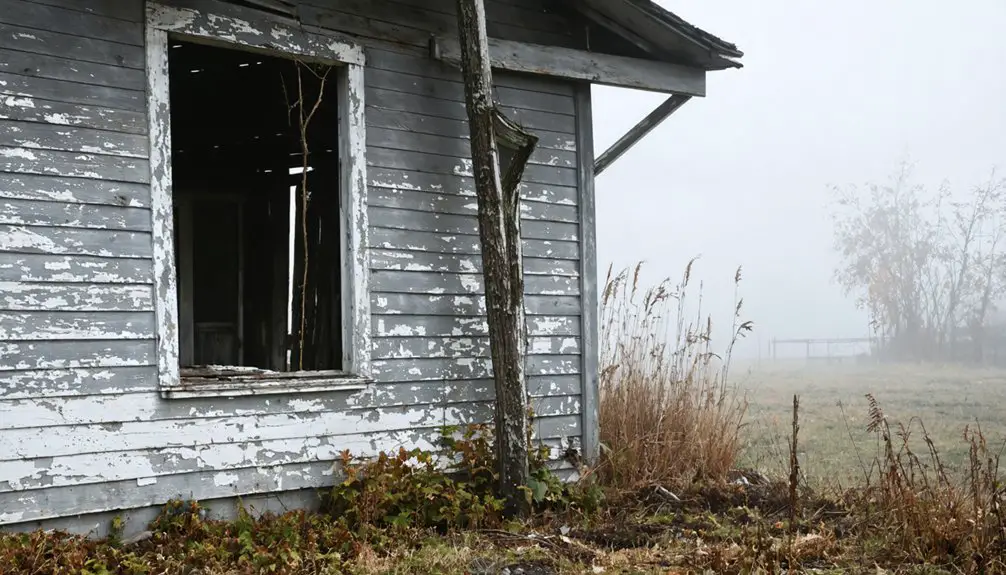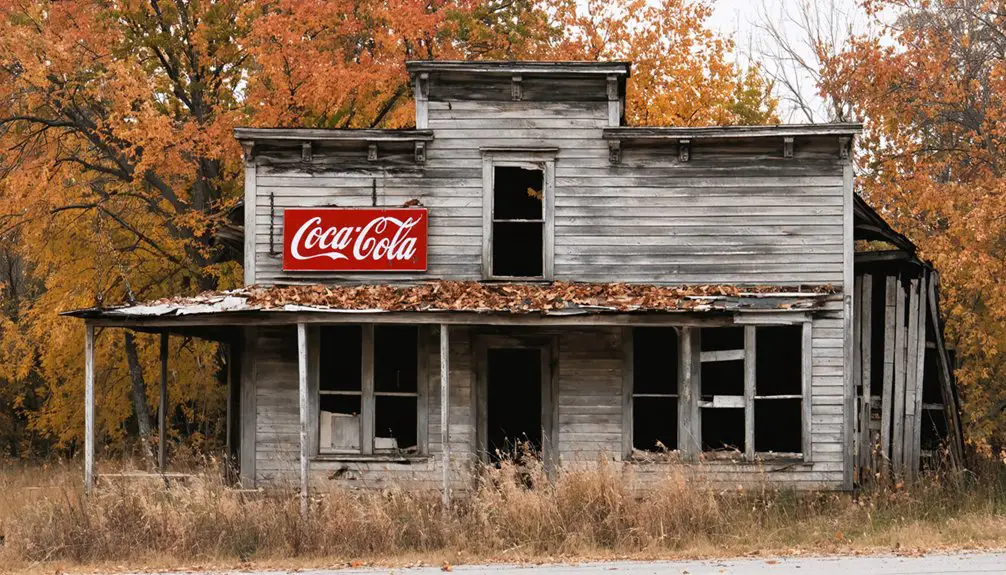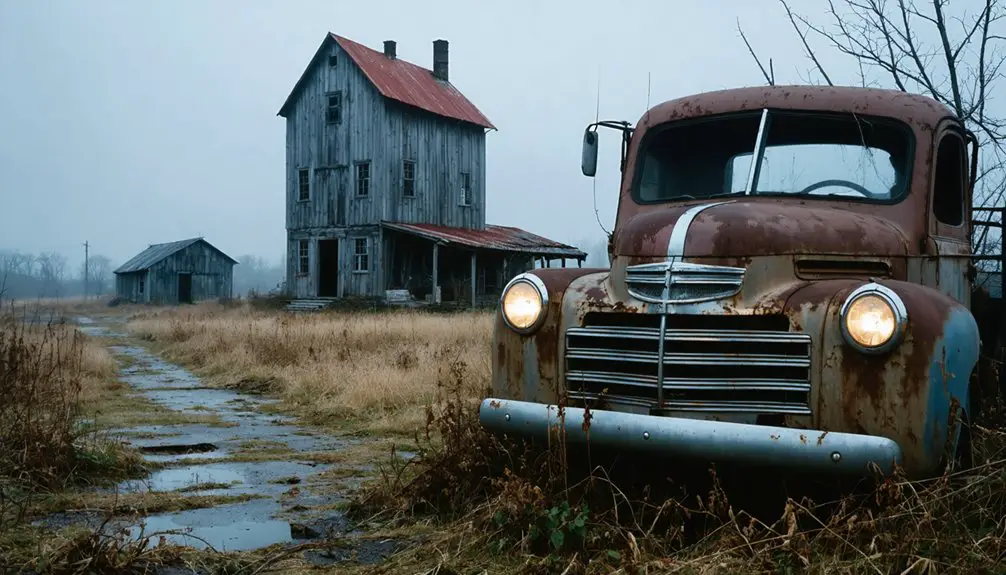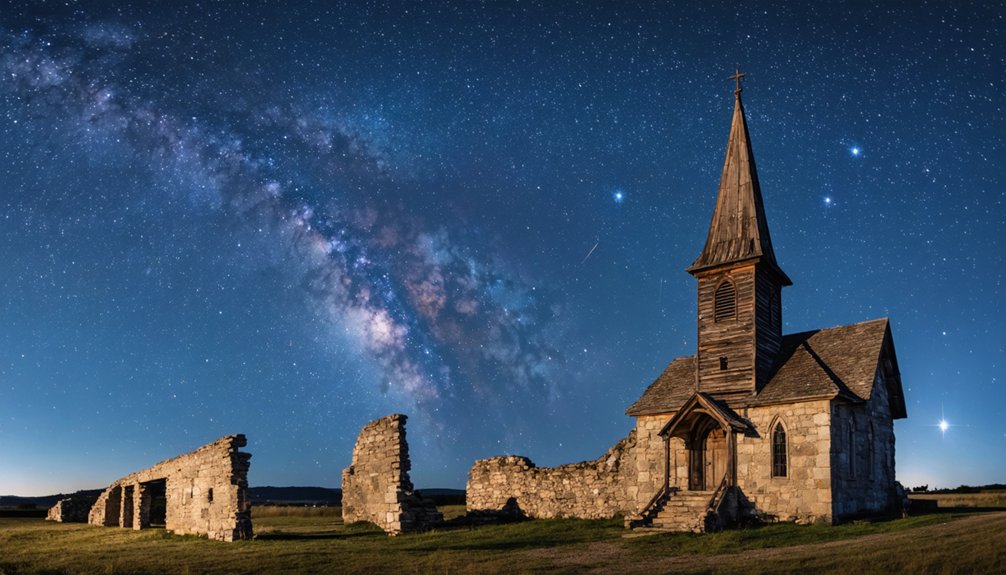
You’ll find exceptional astrophotography conditions at Michigan’s historic ghost towns, particularly in the Upper Peninsula’s Bortle 2-4 zones. Port Crescent offers pristine dark skies and white sand quarries for stunning foregrounds, while Central Mine’s 1868 church creates dramatic silhouettes against the Milky Way. For ideal results, shoot between midnight and 3 AM with ISO 1600-3200 and 15-30 second exposures. Each abandoned site holds unique possibilities for capturing the cosmos above Michigan’s industrial past.
Key Takeaways
- Port Crescent offers pristine dark skies and historic ruins, with white sand quarries providing striking foreground elements for night photography.
- Central Mine features an 1868 church and copper mining remnants as dramatic silhouettes against the Milky Way in the Upper Peninsula.
- Freda’s Ruins includes a towering smokestack and mill structures perfect for night photography in minimal light pollution conditions.
- Shelldrake’s Forgotten Trails combines rugged machinery with dark skies, ideal for capturing the galactic core and aurora displays.
- Beaver Island, Michigan’s first Dark Sky Sanctuary, provides exceptional stargazing conditions and protected historic structures for astrophotography.
Combining History and Dark Skies: Why Ghost Towns Make Perfect Photo Spots
While many photographers seek pristine wilderness for their astrophotography, Michigan’s ghost towns offer a compelling fusion of historical architecture and dark sky conditions.
You’ll find intact structures like mines, mills, and boarding houses that create dramatic foreground elements against star-filled skies, while their weathered textures provide excellent contrast under low-light conditions. Rockport State Recreation Area offers an abandoned limestone quarry that creates stunning foreground elements for night sky photography.
These abandoned sites, particularly in the Upper Peninsula and Thumb region, often sit within Bortle 2-4 zones, offering pristine views of the Milky Way and potential aurora displays.
Michigan’s ghost towns, nestled in dark sky regions, create perfect viewing conditions for both the Milky Way and Northern Lights.
The historical context of these locations adds depth to your celestial narratives, especially when capturing images through building frames or along old rail lines.
Many sites are now protected within state parks and dark sky preserves, giving you legal access while preserving these architectural treasures for nightscape photography. Michigan’s first Dark Sky Sanctuary on Beaver Island provides an exceptional opportunity to photograph both abandoned structures and remarkably clear night skies.
Essential Gear and Planning for Night Photography in Abandoned Sites
A successful ghost town astrophotography expedition demands specialized gear and meticulous planning for both safety and image quality.
Your gear checklist must include multiple flashlights for essential night vision and navigation, plus backup batteries to guarantee you’re never caught in the dark. You’ll need a sturdy travel tripod to capture long exposures ranging from 2 to 30 seconds, while manual exposure control lets you adapt to varying light conditions. Long exposure techniques paired with strategic light painting can reveal the haunting beauty of decay in these historic structures.
Pack LED panels or Lume Cubes for creative light painting, helping reveal architectural details in total darkness. Consider using a wide-angle lens to maximize your ability to capture entire abandoned structures against the starlit sky. For safety, scout locations during daylight hours and secure proper permissions – the U.S. National Park Service maintains several legal sites.
Always bring a shooting partner and identify structural hazards before attempting night photography in these historic locations.
Port Crescent: From Ghost Town to Dark Sky Paradise
Located at the mouth of the Pinnebog River, Port Crescent’s transformation from a bustling lumber town to Michigan’s premier dark sky destination offers photographers unparalleled celestial imaging opportunities.
You’ll find perfect conditions for celestial photography along the white sand shoreline, where minimal light pollution and open terrain create ideal shooting conditions. The unique white sand quarries once supplied Detroit’s glass industry and now create striking foreground textures for night photography.
The ghost town’s remnants, including an old cemetery dating to the 1800s, provide compelling foreground elements for your Milky Way compositions. The two saloons and hotel buildings once hosted countless loggers and merchants before falling into ruin. Local ghostly legends of trapped spirits add an ethereal dimension to your nightscape work.
The park’s vast dunes and Pinnebog River reflections enable diverse compositional possibilities, from star trails to galactic core shots.
With seasonal low visitor counts and unrestricted access to the former townsite, you’ll capture clean dark sky images without modern intrusions.
Central Mine: Capturing the Milky Way Above Mining History
You’ll find rich photographic potential in Central Mine’s preserved structures, where the 1868 Methodist Episcopal church and mining-era buildings create compelling silhouettes against the Milky Way’s core.
Your compositions can leverage the site’s elevated position and open views toward Lake Superior, allowing you to frame both historic architecture and celestial elements in single exposures.
For authenticity in documenting this copper mining ghost town, you’ll want to incorporate surviving equipment and architectural details as foreground elements while shooting during astronomical twilight between April and October. With an average of 270 inches of snowfall annually, winter photography at this location requires careful planning and specialized gear. The site’s remarkable history of producing 52 million pounds of copper before its closure in 1898 adds historical significance to your nighttime imagery.
Historic Structures at Night
Rising dramatically against Michigan’s darkest skies, the historic ruins of Central Mine offer photographers an exceptional opportunity to capture the Milky Way above preserved 19th-century copper mining structures.
Through historic preservation efforts, the site’s hoist houses, shaft structures, and engine buildings create striking silhouettes for nocturnal exploration.
You’ll find ideal shooting conditions at this International Dark Sky-certified location, where the stone and wooden remnants stand undisturbed against the star-filled horizon.
Position your camera to frame vertical mine elements against sweeping Milky Way arcs, particularly during summer months when the galactic core is most visible.
For the sharpest results, shoot at ISO 1600-3200 with 15-30 second exposures, using the ruins as dramatic foreground elements.
Stack multiple images to enhance detail while maintaining the industrial heritage‘s mysterious atmosphere.
The site’s position at the northernmost tip of the Keweenaw Peninsula provides exceptional dark sky viewing opportunities year-round.
Consider visiting during the new moon phase for optimal viewing conditions, as recommended by experienced Michigan stargazers.
Mining Equipment Under Stars
The historic mining equipment scattered across Central Mine’s landscape provides exceptional foreground elements for Milky Way photography.
You’ll find weathered hoists, stamp mills, and ore processing remnants that create striking silhouettes against the celestial background. Position your camera to maximize the contrast between these mining relics and the star-filled skies above Michigan’s remote Keweenaw Peninsula.
For ideal shots, follow these technical steps:
- Set up during new moon phases with a 14mm f/2.8 lens
- Stack 20-30 exposures at ISO 3200, each lasting 20-25 seconds
- Frame your composition with rugged machinery in the foreground and the galactic core rising above
You’re shooting in Bortle Scale class 2 skies, where the lack of light pollution reveals incredible star density and occasional auroras dancing above the industrial ruins.
Shelldrake’s Forgotten Trails Under Starlit Skies
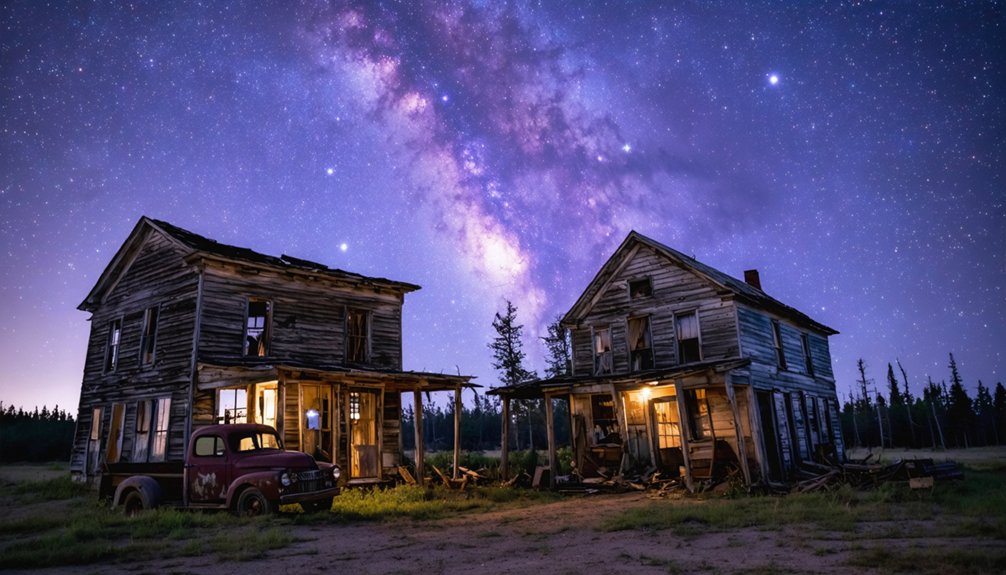
You’ll find Shelldrake’s concrete foundations and weathered structures casting mysterious silhouettes against the dark Upper Peninsula sky, perfect for light painting and long exposures.
The site’s remote location near Whitefish Bay offers exceptionally dark conditions for capturing star trails above the abandoned lumber town’s remains.
Following the old trails through beach grass-covered dunes, you can set up unique compositions incorporating both the historical ruins and the starlit Lake Superior shoreline in your frame.
Ghostly Ruins at Night
Once darkness descends over Michigan’s Upper Peninsula, Shelldrake’s weathered remnants transform into a nightscape photographer’s playground along Lake Superior’s pristine shores.
Collapsed docks and crumbling foundations create ghostly silhouettes against the star-filled sky, while celestial reflections dance across the lake’s surface during clear nights.
To capture Shelldrake’s nocturnal essence:
- Position your camera near the shoreline pilings during new moon phases for maximum Milky Way visibility and natural light painting from the aurora borealis.
- Utilize foundation ruins as compositional anchors, especially from October through March when dark skies persist longer.
- Frame your shots using wind-sculpted trees to add depth, while keeping watch for stray light from occasional passing vehicles.
Trails to Dark Solitude
Venturing beyond Shelldrake’s ghostly structures reveals a network of secluded trails that offer pristine dark-sky access for dedicated astrophotographers.
You’ll find prime shooting locations along 2-6 miles of packed earth paths, with the Shelldrake River Trailhead (46.1160°N, 85.4360°W) serving as your gateway to darkness.
For ideal trails exploration, target the elevated ridge clearings where Bortle 2-4 skies showcase the Milky Way core without urban light pollution.
The northern horizons, facing Lake Superior, deliver the darkest conditions for aurora captures. Your solitude experience peaks during winter months when steady seeing and snow-covered foregrounds create perfect shooting conditions.
Just remember to pack GPS navigation tools and mark your entry points at dusk – these remote trails demand respect for both your safety and creative freedom.
Freda’s Ruins: Where Industrial Past Meets Celestial Present
Along Lake Superior’s dramatic shoreline stands Freda’s haunting mill ruins, where a towering smokestack pierces the night sky as a sentinel to the Keweenaw Peninsula’s copper mining legacy.
Freda’s charm captivates astrophotographers seeking dark skies and industrial nostalgia, with minimal light pollution and compelling foreground elements.
The ghostly ruins of Freda Mill beckon stargazers and photographers alike, where darkened skies meet industrial remnants of the past.
You’ll discover prime shooting locations that blend history with celestial wonder:
- The concrete amphitheater-like foundations frame Milky Way compositions against Lake Superior’s horizon
- Black stamp sand beaches provide stark contrast for star trails and meteor showers
- The weathered smokestack serves as a vertical anchor for polar-aligned shots
Access requires careful navigation down steep paths, but you’ll find dispersed camping nearby for extended shooting sessions.
Remember to respect posted signs to preserve this remarkable dark sky destination.
Best Seasons and Times for Ghost Town Astrophotography
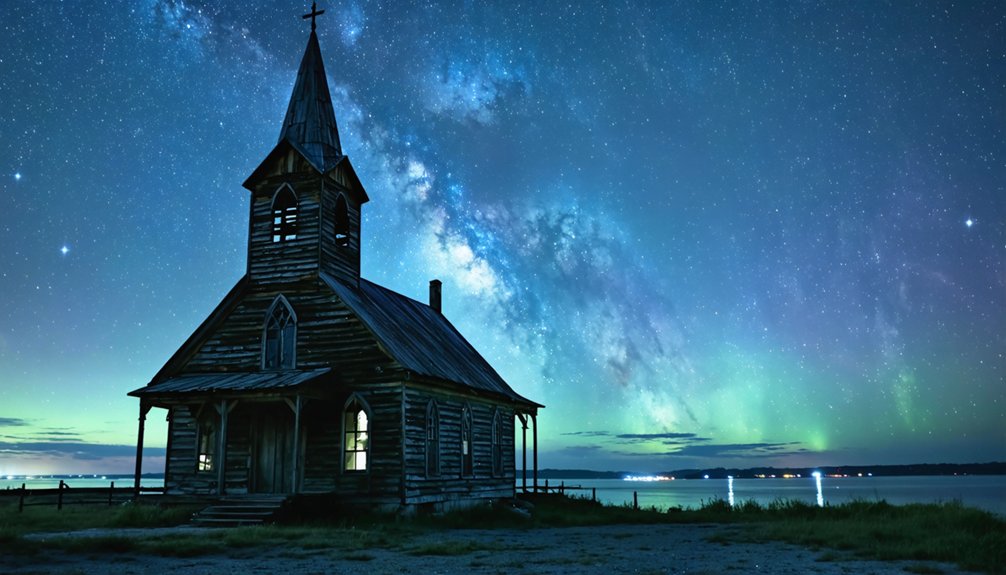
Planning your ghost town astrophotography expeditions across Michigan requires strategic timing to capture the most compelling night sky imagery. The best times align with peak celestial events from fall through mid-spring, when longer nights create excellent conditions for extended exposure shots.
You’ll find prime aurora opportunities from late October through April, with exceptional Northern Lights visibility during autumn’s crisp nights.
For Milky Way photography, target April through October between midnight and 3 AM. Summer offers bonus opportunities to capture meteor showers, particularly the late July convergence of Southern Delta Aquariids and Alpha Capricornids.
Your ghost town compositions will benefit from cloudless nights at Michigan’s 47-degree latitude, but watch for lake-effect snow in winter months. Allow 20 minutes for dark adaptation, and you’ll be ready to capture haunting nightscapes where forgotten structures meet starlit skies.
The best seasons for Michigan ghost towns are typically spring and fall, offering vibrant foliage and mild weather that enhance the eerie atmosphere. As you explore these abandoned sites, keep an eye out for the remnants of history that come alive under the changing seasons. The contrast of colorful leaves against crumbling structures creates a picturesque backdrop for photographers and adventurers alike.
Aerial views of Michigan ghost towns reveal a tapestry of decay and beauty, with overgrown vegetation reclaiming once-thriving communities. Each abandoned building tells a story of the past, and capturing these images from above offers a unique perspective on their haunting allure. As daylight fades, the interplay of shadow and light accentuates the intricate details of these forgotten places, inviting exploration and reflection.
Safety Tips and Location Access for Nighttime Ghost Town Visits
When photographing ghost towns after dark, meticulous preparation becomes your critical foundation for both safety and creative success.
You’ll need to secure location permissions and implement essential safety precautions before venturing into these historic sites at night.
- Scout your chosen ghost town during daylight hours, mapping exit routes and identifying potential hazards like unstable structures or dangerous terrain.
- Establish a reliable buddy system and share your detailed plans with contacts outside your group, including GPS coordinates and expected return times.
- Pack thorough protective gear including sturdy boots, dust masks, and multiple light sources, while keeping your first aid kit readily accessible.
Remember to treat these historic locations with respect, avoiding any artifact removal or site disruption while capturing your nightscape imagery.
Frequently Asked Questions
Are There Guided Astrophotography Tours Available at Any Michigan Ghost Towns?
You won’t find guided astrophotography tours at Michigan’s ghost towns, though you’ll discover dark sky preserves like Headlands and Port Crescent where you can practice nightscape photography independently.
What Wildlife Should Photographers Be Aware of When Shooting at Night?
Prowling predators like coyotes, bears, and foxes are your main concerns. You’ll need to watch for deer crossing roads and protect gear from raccoons, skunks, and curious nocturnal creatures.
Do Any Ghost Towns Require Special Permits for Commercial Photography?
You’ll need permits for commercial photography at most ghost towns. Check land jurisdiction – state DNR sites require 60-day advance permits, national parks need special use permits, and private sites demand owner permission.
Like a digital lifeline, your phone’s most reliable near Lower Peninsula ghost towns. You’ll find AT&T service in southwestern sites, but pack offline maps for U.P. locations—they’re notorious cellular dead zones.
Are There Nearby Accommodations or Camping Options at These Ghost Town Sites?
You’ll find diverse camping facilities at all sites – from Fayette’s modern RV hookups to North Manitou’s primitive backcountry spots. Nearby attractions include state parks, lodges, and dispersed camping options within dark-sky zones.
References
- https://99wfmk.com/darkest-nights-in-michigan/
- https://www.visitkeweenaw.com/things-to-do/museums-history/ghost-towns/
- https://www.michigan.gov/dnr/places/state-parks/dark-sky-events
- https://sites.lsa.umich.edu/darkskies/michigan-places/
- https://www.onlyinyourstate.com/experiences/michigan/trail-to-abandoned-village-mi
- https://www.michigansthumb.com/news/article/ghost-towns-thumb-port-crescent-18420020.php
- https://www.michigan.org/darksky
- https://www.nps.gov/slbe/planyourvisit/exploring-dark-skies.htm
- https://milavenderfarm.com/pages/dark-sky-parks
- https://digital-photography-school.com/how-to-photograph-abandoned-places/