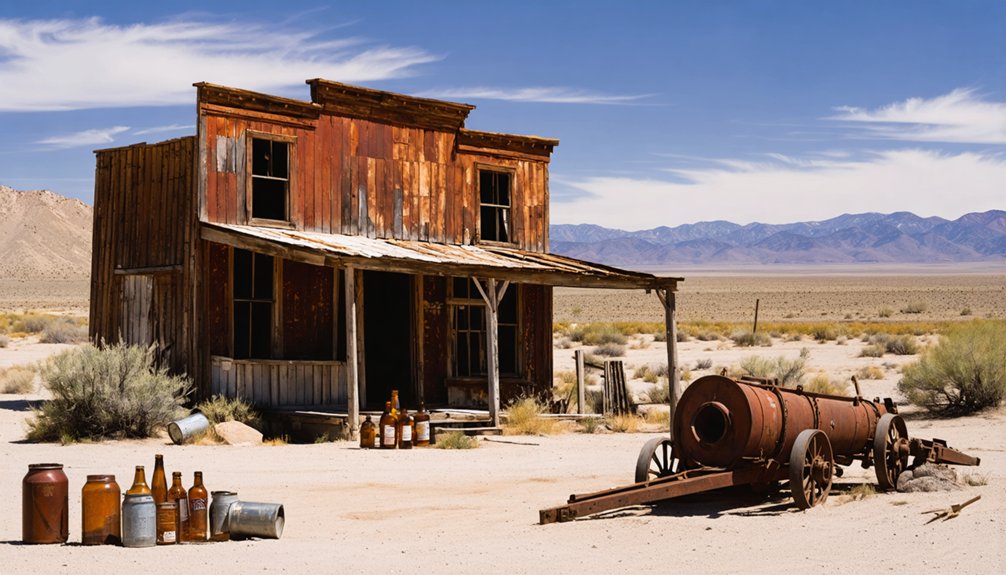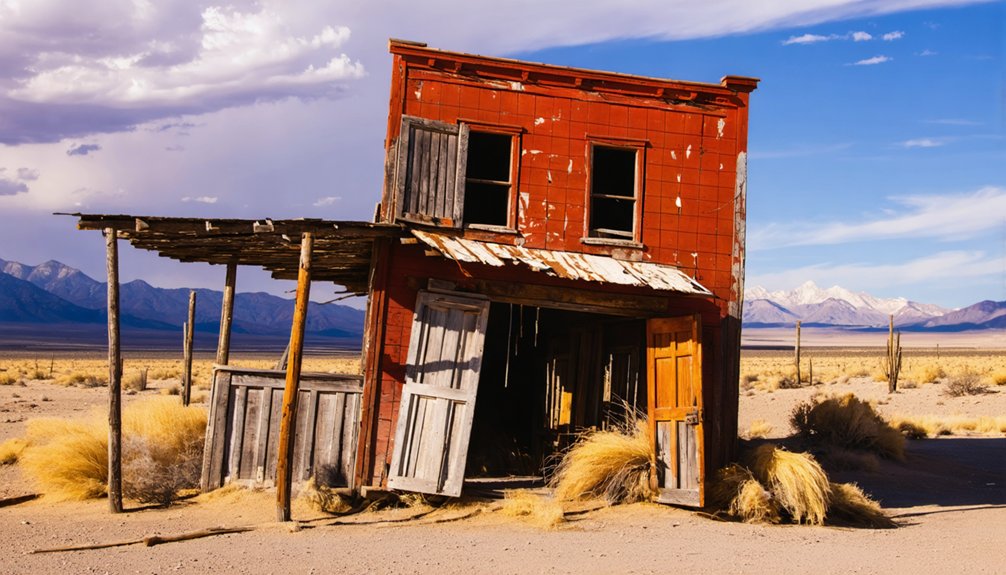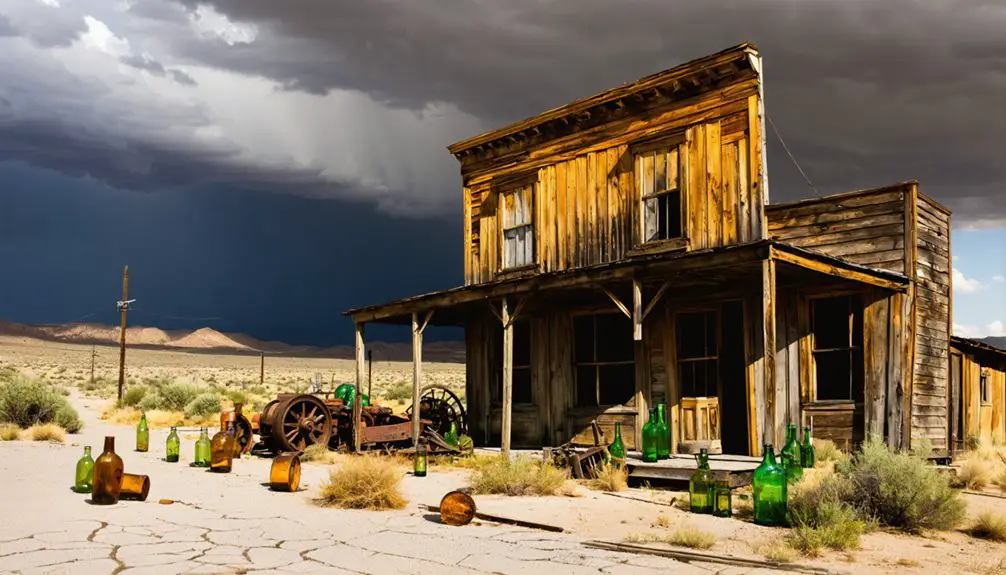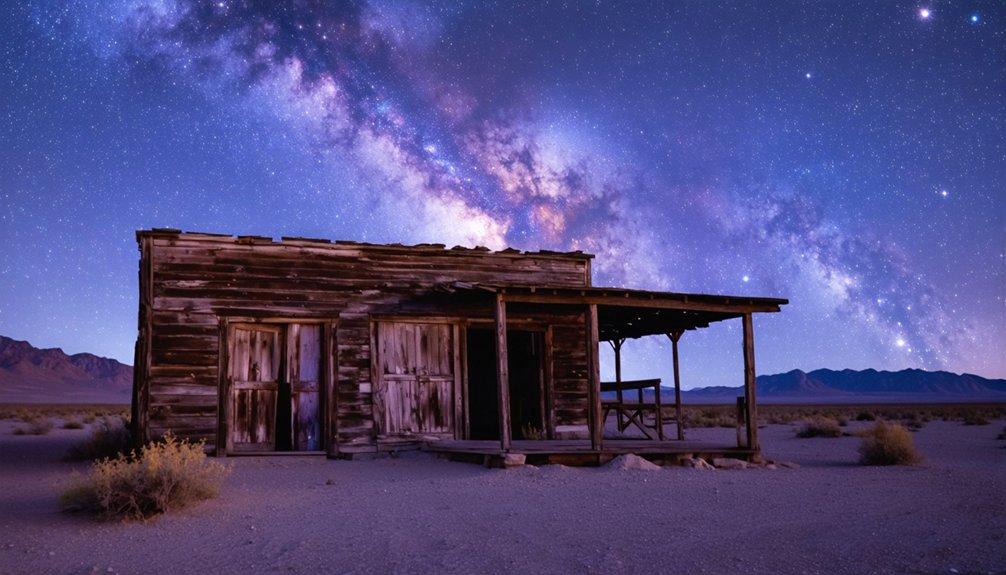
You’ll find exceptional astrophotography conditions at five prime Nevada ghost towns. Tonopah’s Stargazing Park offers concrete pads and guided viewing from June to October, while Rhyolite’s concrete ruins create surreal Milky Way foregrounds near Death Valley. Hamilton’s mining structures provide dramatic silhouettes, and Nelson’s vintage vehicles make compelling night compositions just an hour from Las Vegas. At Diamondfield, the high elevation and arid climate deliver crystal-clear skies. Each location holds unique possibilities for capturing the cosmic dance above Nevada’s historic remnants.
Key Takeaways
- Tonopah offers premier stargazing conditions with dedicated concrete pads and guided viewing nights from June through October.
- Rhyolite’s concrete ruins and Goldwell Open Air Museum sculptures create unique silhouettes against the night sky.
- Nelson ghost town provides easily accessible night photography opportunities with vintage vehicles and structures one hour from Las Vegas.
- Hamilton’s mining ruins offer dramatic foreground elements for Milky Way photography in exceptionally dark skies.
- Diamondfield’s high elevation and arid climate deliver crystal-clear conditions perfect for astrophotography year-round.
Top Locations for Dark Sky Photography in Nevada’s Ghost Towns
While Nevada’s vast desert landscapes offer countless opportunities for astrophotography, its ghost towns provide uniquely compelling foregrounds for dark sky imaging.
You’ll find exceptional shooting conditions at Tonopah, named a top U.S. stargazing destination, where concrete pads and minimal light pollution enable crisp captures of thousands of celestial bodies. The Tonopah Stargazing Park hosts guided viewing nights from June through October.
Hamilton’s mining ruins create dramatic silhouettes against the Milky Way, while Rhyolite’s concrete skeletons near the Goldwell Open Air Museum offer surreal compositional elements. The dry desert air enhances visibility and detail in nighttime photographs.
For accessible ghost town history and night photography techniques, head to Nelson in El Dorado Canyon, just an hour from Las Vegas. Its rusted vehicles and structures serve as perfect foreground elements.
Diamondfield’s high elevation and arid climate deliver crystal-clear conditions for capturing constellations and deep-space objects.
Essential Equipment and Planning Tips for Ghost Town Night Shoots
To capture the ethereal combination of star-filled skies and haunting ghost town elements, you’ll need specialized equipment that balances portability with imaging capability.
Your camera settings must adapt to both low-light sky shooting and architectural details in complete darkness. Accurate tracking from an equatorial mount will be essential for crisp star details in your exposures.
Essential equipment checklist for ghost town astrophotography:
- Full-frame mirrorless or DSLR with wide-angle lens and sturdy tripod, keeping total weight under 20 lbs for remote location access
- Portable star tracker with reliable power source to enable clean 5-minute exposures at various focal lengths
- Light pollution filter to cut through any residual glow from distant cities while preserving ghost town details
- Intervalometer and dew heaters for automated shooting sessions in Nevada’s cold desert nights
Pack your gear in a backpack system that protects against dust while allowing quick setup in challenging terrain.
For smartphone users, modern devices equipped with astrophotography mode can capture basic night sky scenes, though with limited detail compared to dedicated cameras.
Weather Patterns and Best Seasons for Ghost Town Astrophotography
Nevada’s arid climate presents exceptional conditions for ghost town astrophotography throughout the year, with the Great Basin‘s high-elevation desert air virtually eliminating atmospheric moisture that typically interferes with celestial imaging.
You’ll find ideal shooting conditions during fall months, when weather stability peaks and meteor showers illuminate the dark skies. The period from May through October offers reliable viewing opportunities, with September’s Great Basin Astronomy Festival providing prime visibility. The region’s prominence of Milky Way constellations creates stunning backdrops against abandoned structures. The ranger-led talks at the Astronomy Amphitheater enhance understanding of celestial features.
For seasonal considerations, plan your shoots around new moon phases to maximize darkness, especially at renowned locations like Massacre Rim Dark Sky Sanctuary and Gerlach. Weather impacts are minimal due to year-round low precipitation, though you’ll want to monitor BLM road conditions for remote site access.
Winter’s longer nights provide extended shooting windows, while summer’s high-elevation sites minimize heat distortion effects.
Capturing the Milky Way Above Historic Nevada Ruins
Several spectacular ghost towns across Nevada’s vast desert landscape offer prime opportunities for photographing the Milky Way above historic ruins.
Exploring beautiful locations in Nevada’s ghost towns can reveal hidden stories and forgotten histories that add depth to your photographs. Each town has its own unique charm, from decaying buildings to hauntingly beautiful landscapes that tell tales of the past. As sunset casts an ethereal glow, these sites become perfect backdrops for both stunning images and moments of reflection.
These locations blend historic narratives with eerie atmospheres, creating unique compositions where celestial wonders meet earthly remnants.
- Position your camera at Techatticup Mine in Nelson, where rusted vehicles and vintage gas pumps create compelling foreground elements against the galaxy’s core. The site’s family-run operation ensures preservation of these authentic historic props for photographers.
- Explore Rhyolite’s Goldwell Open Air Museum, where ghostly sculptures serve as supernatural elements beneath starlit skies.
- Frame your shots at Hamilton’s deteriorating ore processing structures, which provide stark silhouettes against the cosmic backdrop.
- Set up at Massacre Rim’s Dark Sky Sanctuary, where extreme darkness reveals previously unseen portions of the Milky Way above sagebrush-dotted terrain. Scientists have discovered unseen parts of the Milky Way at this remote location.
Permits, Access, and Safety Guidelines for Night Photography
Before commencing your astrophotography adventure at Nevada’s ghost towns, you’ll need to navigate a complex web of permits, access requirements, and safety protocols that vary by location and jurisdiction.
Researching the best season for Nevada ghost towns can significantly enhance your experience, as different times of the year offer unique opportunities for exploration and photography. Spring, when wildflowers bloom, provides a stunning contrast to the historic ruins, while autumn brings captivating light and cooler temperatures. Regardless of when you choose to go, be sure to prepare for varying weather conditions and potential challenges unique to these remote sites.
Check permit requirements thoroughly – commercial shoots, model photography, and drone operations all demand specific authorizations from land managers. Staged photography permits are mandatory when setting up deliberate scenes or using props at historic sites.
Proper permits are essential – never assume you can freely photograph, film, or fly drones at historic sites without authorization.
You’ll need to verify land ownership status and secure necessary permissions for night access. Many ghost towns restrict after-dark activities without special-use permits.
Light painting techniques offer dramatic ways to illuminate ghost town structures at night while preserving their historic character.
Prioritize safety precautions by carrying reliable navigation tools, emergency communication devices, and proper gear for desert nights.
When shooting near historic structures, maintain distance from unstable buildings and mine shafts.
Remember that removing artifacts or disturbing cultural sites violates federal law – capture the stars while preserving these irreplaceable historic locations.
Frequently Asked Questions
Are Ghost Towns Haunted or Dangerous for Night Photographers Working Alone?
You’ll find ghost town myths are largely unfounded, but take safety precautions seriously – avoid exploring unstable structures alone at night and always shoot with partners in these remote locations.
Which Nevada Ghost Towns Have Cell Phone Service for Emergencies?
With 80% cell coverage along major highways, you’ll find reliable emergency communication in Virginia City, Rhyolite, and Nelson. More remote sites like Belmont and Hamilton have spotty service—bring satellite backup.
Can You Camp Overnight in These Ghost Towns for Extended Shoots?
You’ll find dispersed camping’s allowed near most ghost towns – 14 days max on BLM/Forest Service land. Just check camping regulations, maintain distance from historic structures, and you won’t need special photography permits.
Are There Guided Astrophotography Tours Available to These Ghost Town Locations?
Like finding Halley’s Comet, dedicated guided astrophotography tours to these ghost towns are rare. You’ll need to coordinate your own shoots or join general stargazing workshops at Tonopah’s Stargazing Park.
How Do You Handle Wildlife Encounters During Night Shoots in Ghost Towns?
You’ll need to maintain wildlife safety by traveling in groups, using bright lights strategically, carrying deterrent sprays, and staying vigilant. Keep shooting equipment elevated and secure while scanning surroundings during night photography sessions.
References
- https://www.judytran.com/2018/09/nelson-ghost-town-astrophotography-engagement-in-nevada/
- https://bucknbroncooffroad.com/blog/exploring-nevadas-dark-sky-locations-a-stargazers-paradise
- https://www.exploratography.com/blog-nv/eldorado-canyon-nelson-ghost-town-nevada
- https://roadtrippers.com/magazine/dark-skies-and-ghost-towns-stops-on-a-spooky-nevada-road-trip/
- https://elynevada.net/top-5-places-for-dark-sky-photography/
- https://www.visittheusa.com/experience/6-nevada-ghost-towns-explore-if-you-dare
- https://canadiangeographic.ca/articles/searching-for-stars-and-spectres-in-utah-and-nevada/
- https://nvtami.com
- https://www.7×7.com/dark-skies-california-nevada-2674332800.html
- https://www.nationalparksatnight.com/valley-of-fire-nelson-2019