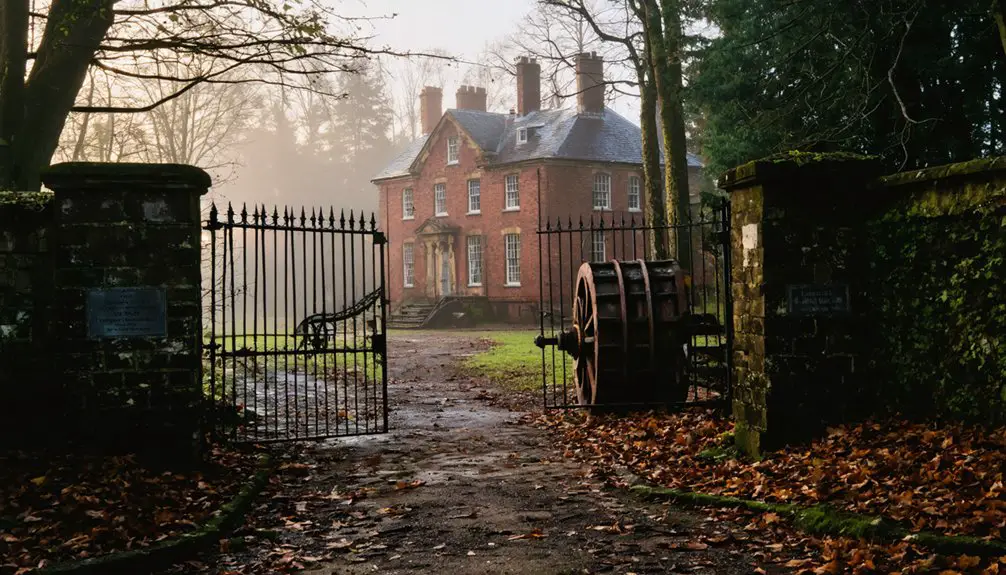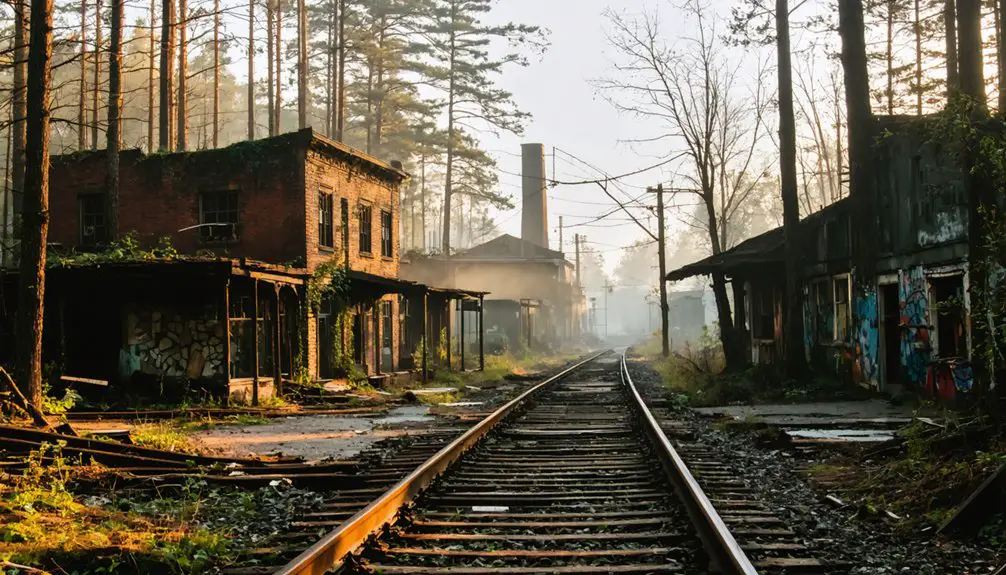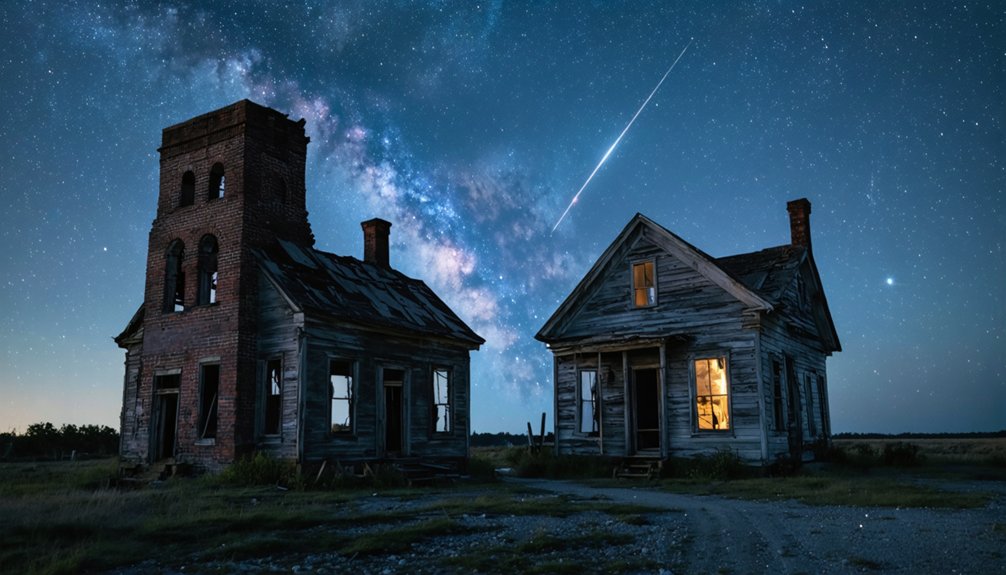
You’ll find exceptional astrophotography conditions at several New Jersey ghost towns, particularly in the Pine Barrens region. Batsto Village and Atsion offer stable foundations for equipment setup, while Feltville in Watchung Reservation provides eight original structures as compelling foreground elements. Ong’s Hat delivers minimal light pollution in a remote setting, and Waterloo Village features restored 19th-century architecture. For ideal results, plan your shoot during new moon phases in these Bortle 1-4 dark sky zones.
Key Takeaways
- Feltville in Watchung Reservation offers eight original historic structures and dark skies perfect for combining architectural elements with astrophotography.
- The Pine Barrens region, including Batsto Village and Atsion, provides minimal light pollution and stable foundations for night photography setups.
- Ong’s Hat in the Pine Barrens offers exceptionally dark skies with Bortle 1-4 conditions ideal for capturing the Milky Way.
- Walpack Center features an untouched post office and church against dark skies, creating authentic period compositions for night photography.
- Harrisville’s mill remnants provide clear sight lines and minimal light interference, making it ideal for starlit landscape compositions.
Why Ghost Towns Make Perfect Dark Sky Locations
While populated areas increasingly struggle with light pollution, ghost towns have emerged as exceptional dark sky locations due to their complete absence of artificial illumination.
These locations have proven to be highly marketable destinations for astrotourism enthusiasts seeking pristine night skies.
You’ll find pristine conditions for celestial navigation, as these abandoned sites lack the skyglow, light trespass, and glare that plague urban environments. The deserted structures prevent new lighting installations while creating natural barriers against distant light sources.
With over 82% of Americans unable to see the Milky Way from their homes, these forgotten places offer rare refuge for serious astrophotographers. This natural darkness is vital for supporting biological rhythms of local wildlife populations.
Ghost towns provide pristine celestial views, offering sanctuary to astrophotographers seeking what most Americans can no longer experience at home.
You’ll benefit from the surrounding wilderness, which provides extensive dark zones, while the typically arid climate reduces atmospheric interference. The combination of minimal human activity, remote locations, and preserved natural darkness makes ghost towns ideal venues for capturing the cosmos in its purest form.
Essential Gear for Night Photography in Historic Sites
Because successful astrophotography in ghost towns demands specialized equipment for the unique challenges of shooting in remote, dark locations, you’ll need to assemble a thorough kit that addresses both technical and practical requirements.
A remote shutter release will help eliminate any camera shake and ensure tack-sharp photos during those critical long exposures.
Start with a full-frame mirrorless camera featuring a BSI sensor for superior low-light performance. Your lens selection should include a fast wide-angle (f/1.4-f/2.8) for Milky Way shots and a moderate telephoto for architectural details. Consider practicing multiple exposures to create layered effects with the stars and historic structures.
Mount your setup on a carbon fiber tripod with a reliable ball head for precise framing and stability during long exposure settings. Don’t forget your intervalometer for star trails and time-lapse sequences.
Pack multiple batteries, keeping spares warm in inner pockets. For illumination, bring a headlamp with red mode, LED panels, and light-painting tools with color-correcting gels to balance artificial light with the night sky.
Planning Your Ghost Town Astrophotography Session
Having the right gear sets the foundation, but successful ghost town astrophotography hinges on methodical planning and precise timing.
Start by verifying land access and securing necessary permits for your target locations. Scout potential sites during daylight to record GPS coordinates and identify ideal camera positions for celestial alignment with structural elements. Bringing multiple light sources will help you properly illuminate the ghost town structures during night shoots. Always explore with a partner when conducting night photography sessions for safety.
You’ll need to time your shoots around the new moon and consult light pollution maps to find ghost towns within Bortle 1-4 zones. Use planetarium apps to simulate sky movement and plan exposures for specific astronomical features.
Consider ghost town logistics like safe parking, emergency routes, and seasonal accessibility. Monitor weather forecasts for clear skies and favorable atmospheric conditions. Track dew points and wind speeds that could impact image quality.
Always inform someone of your location and expected return time when shooting in remote areas.
Top Ghost Town Locations in Northern New Jersey
Northern New Jersey offers five prime ghost town destinations that combine historical intrigue with ideal dark sky conditions for astrophotography.
These areas are not only rich in abandoned structures but also coincide with the ideal seasons for New Jersey ghost towns, allowing for a captivating experience year-round. Early autumn, with its vibrant foliage, creates a striking backdrop for capturing the eerie beauty of these sites. Additionally, winter months provide a unique opportunity to explore the towns blanketed in snow, enhancing their haunting allure.
As you venture through these historical gems, keep in mind the abandoned sites for drone enthusiasts that scatter the landscape, offering a different perspective of the forgotten towns. Drones can capture sweeping aerial shots that highlight both the desolation and beauty of these locations, inviting photographers and adventurers alike. The combination of rich history and stunning visuals makes for an unforgettable experience, especially during the tranquility of off-peak seasons.
You’ll find Feltville history preserved within Watchung Reservation, where eight original structures provide compelling foreground elements against the night sky.
The remote Ong’s Hat legends add mystique to your shots, with its isolated Pine Barrens location offering minimal light pollution. These abandoned settlements reveal important aspects of local community identity.
Waterloo Village presents restored 19th-century architecture along the Musconetcong River, while Walpack Center’s untouched post office and church create authentic period compositions.
Restored buildings at Waterloo Village and untouched Walpack Center showcase New Jersey’s rich heritage against the backdrop of starlit skies.
The area provided crucial iron supplies to the Continental Army during wartime, leaving behind fascinating industrial ruins to photograph.
For technical challenges, venture to Hampton Furnace’s deep forest setting, where the remnants of 1741 ironworks emerge from the darkness.
Each location provides unique opportunities to capture the Milky Way above historically significant structures.
Hidden Gems in the Pine Barrens Region
The Pine Barrens’ isolated ghost towns offer exceptional dark sky conditions for astrophotography, with Batsto Village and Atsion providing stable foundations for tripod setups near their historic structures.
You’ll find excellent shooting conditions at Harrisville’s mill remnants and the Friendship crossroads, where minimal light pollution and clear sight lines to the celestial sphere create ideal circumstances for capturing the Milky Way.
The region’s remote locations, accessible via rutted sand roads through dense pine forests, shield your sensor from artificial light while abandoned foundations serve as compelling foreground elements in nighttime compositions. Explorers often discover crossed stick formations that add mysterious elements to photographs. With iron industry ruins scattered throughout the area since its decline in 1869, photographers can incorporate these historic remnants into their starlit landscape shots.
Pine Barrens Night Photography
Scattered across New Jersey’s Pine Barrens region lie several prime astrophotography locations, with Wharton State Forest serving as the crown jewel for dark-sky enthusiasts.
You’ll find ideal night sky conditions in remote pockets of the forest, particularly during late summer and early fall when the Milky Way visibility peaks.
For ghost towns and historical structures, head to the Friendship Bridge meadow area, where foundation remains create compelling silhouettes against the starlit sky.
You’ll need wide-angle lenses (14-35mm) for sweeping Milky Way panoramas, while maintaining exposure settings of 20-25 seconds at ISO 1600-6400.
Remember to scout your locations during daylight, as sandy trails and bog edges require careful navigation after dark.
Always check permit requirements and carry emergency gear – cell service can be spotty in these remote areas.
Hidden Ruins After Dark
Deep within Wharton State Forest‘s shadowy confines, you’ll discover some of the Pine Barrens‘ most photogenic nocturnal locations at Atsion Village, Batsto Village, Whitesbog Village, and the Harrisville ruins.
Each site offers unique historic textures and architectural elements for astrophotography compositions. Atsion’s mansion and mill foundations create compelling foregrounds, while Batsto’s intact structures provide dramatic silhouettes against star-filled skies.
At Whitesbog, weathered wooden boardwalks lead your lens toward the Milky Way, and ruin reflections in cranberry bogs double your celestial compositions.
For ideal results, position yourself near water features to capture mirror-like star reflections, and use low-angle LED lighting to accentuate masonry details.
Remember to verify access permissions, as some locations restrict nighttime entry. Always follow preservation guidelines to protect these irreplaceable historic sites.
Safety Tips and Location Access Guidelines
You’ll need to carefully research access protocols for each ghost town location, as many sites like Batsto Village and Island Beach State Park have strict rules about nighttime entry and photography permits.
Your emergency planning should include detailed site maps, contact information for local authorities, and GPS coordinates since cell service can be unreliable in remote areas like Jenny Jump State Forest and Ong’s Hat.
When transporting your astrophotography equipment through these historic locations, pack light-weight yet sturdy gear that can handle uneven terrain while protecting sensitive camera equipment from moisture and temperature changes.
Night Access Protocols
While capturing the perfect astrophotography shot at ghost towns requires careful planning, understanding access protocols is essential for both legal compliance and safety.
You’ll need to navigate complex nighttime regulations across different jurisdictions – state parks typically prohibit post-sunset access without special permits, while federal lands within the Delaware Water Gap follow specific National Park Service restrictions.
Most locations require permit applications that include site maps, equipment lists, and safety plans. For commercial shoots, you’ll need additional permissions and possibly liability insurance.
Before heading out, verify the specific permit requirements for your chosen location, as they vary between agencies. State forests, municipal properties, and private ghost towns each maintain their own access protocols, with violations potentially resulting in fines or arrest.
Emergency Planning Essentials
Proper emergency planning forms the backbone of safe astrophotography expeditions to ghost towns.
Before venturing into remote locations like Batsto Village or Jenny Jump State Forest, you’ll need to establish reliable emergency contacts and carry essential first aid supplies for potential hazards.
- Register your presence with park authorities, providing your intended location coordinates (e.g., Batsto: 31 Batsto Rd., Hammonton) and expected duration, especially crucial given variable cell service in the Pinelands.
- Pack a thorough first aid kit tailored for terrain-specific risks, from coastal moisture at East Point Lighthouse to elevation challenges at Jenny Jump’s 1,803-foot exposure.
- Maintain group communication protocols during night sessions, utilizing pre-arranged meeting points and carrying signaling devices, particularly essential in areas affected by Atlantic City’s light pollution zone.
Gear Transport Guidelines
Safe transport of astrophotography equipment to ghost town locations demands three critical layers of protection: carry-on safeguards for sensitive gear, checked baggage strategies for bulky items, and on-site handling protocols.
For gear organization, pack your cameras, lenses, and laptops in padded carry-on backpacks with customizable compartments. Store lithium batteries in your carry-on as they’re prohibited in checked luggage. Document your equipment with photos and serial numbers for security checks.
When addressing transportation safety, secure tripods and counterweights in hard cases like Pelican with form-fitting foam. Remove tripod heads to prevent damage and reduce size.
At ghost town sites, you’ll need to prioritize equipment stability – use sturdy tripods with multiple leg extensions for uneven terrain. Keep your mount heads on the vehicle floor and tripods secured in the trunk during transit.
Advanced Techniques for Ghost Town Star Photography
Because ghost town astrophotography demands precise technical execution, you’ll need to master several advanced techniques to capture compelling nightscapes. The key to preventing star trails lies in calculating your maximum exposure using the 500 rule while maintaining sharp focus through live view magnification.
You’ll achieve ideal results through exposure blending, combining long sky exposures with shorter, artificially lit foreground frames.
- Use ISO 1600-6400 for 20-30 second exposures, adjusting based on your camera’s high-ISO performance curve
- Employ focus stacking for foreground detail while maintaining infinity focus on stars
- Consider a star tracker for deep-sky shots, particularly when shooting extended Milky Way sequences over historic structures
These techniques become especially critical when working in dark-sky locations like Pine Barrens ghost towns, where ambient light won’t assist your compositions.
Frequently Asked Questions
Are Permits Required for Night Photography in These Ghost Towns?
You’ll need permits for night photography at most ghost town locations, as they’re governed by strict permit regulations and photography guidelines through state parks, DEP, and federal agencies.
What Wildlife Encounters Should Photographers Be Prepared For?
You’ll need to watch for nocturnal deer, black bears, and owls while photographing. Maintain wildlife safety by keeping 50+ feet distance, having bear spray ready, and using red headlamps to minimize disturbance.
Can Drones Be Used for Aerial Night Shots of These Locations?
You can’t legally fly drones at these locations due to strict state park and recreation area regulations. Night safety restrictions further limit operations, requiring special lighting and visual observer requirements.
Which Ghost Towns Have Cellular Service for Emergency Communication?
Standing sentinel against isolation, you’ll find reliable cellular coverage and emergency communication at coastal ghost towns and those near highways, while Pine Barrens locations require satellite phones or emergency beacons.
Are Any Locations Rumored to Be Genuinely Haunted?
While you’ll find haunted legends at Batsto Village and Feltville’s Deserted Village, with reported ghost sightings and unexplained phenomena, there’s no scientific evidence confirming supernatural activity at any New Jersey ghost town locations.
References
- https://jerseydigs.com/ghost-towns-in-nj/
- https://www.jerseysbest.com/community/take-a-road-trip-through-n-j-s-spooky-ghost-towns-to-see-peculiar-pieces-of-history/
- https://www.youtube.com/watch?v=ZIp3AYb0ulw
- https://www.atlasobscura.com/things-to-do/new-jersey/ghost-towns
- https://southjerseytrails.org/2017/03/16/six-pine-barrens-ghost-towns-to-explore/
- https://wobm.com/new-jersey-is-home-to-one-of-americas-spookiest-ghost-towns/
- https://pinelandsalliance.org/learn-about-the-pinelands/pinelands-history-and-culture/ghost-towns-of-the-pine-barrens/
- https://www.geotab.com/ghost-towns/
- https://www.montenido.org/blog/why-dark-sky-communities-are-important
- https://darksky.org/news/3-benefits-of-a-dark-sky-designation/