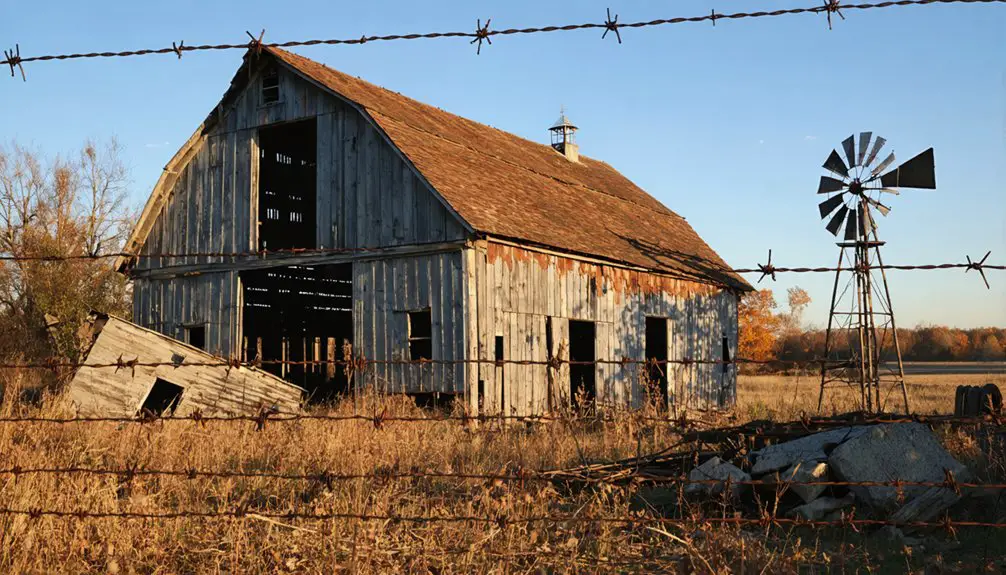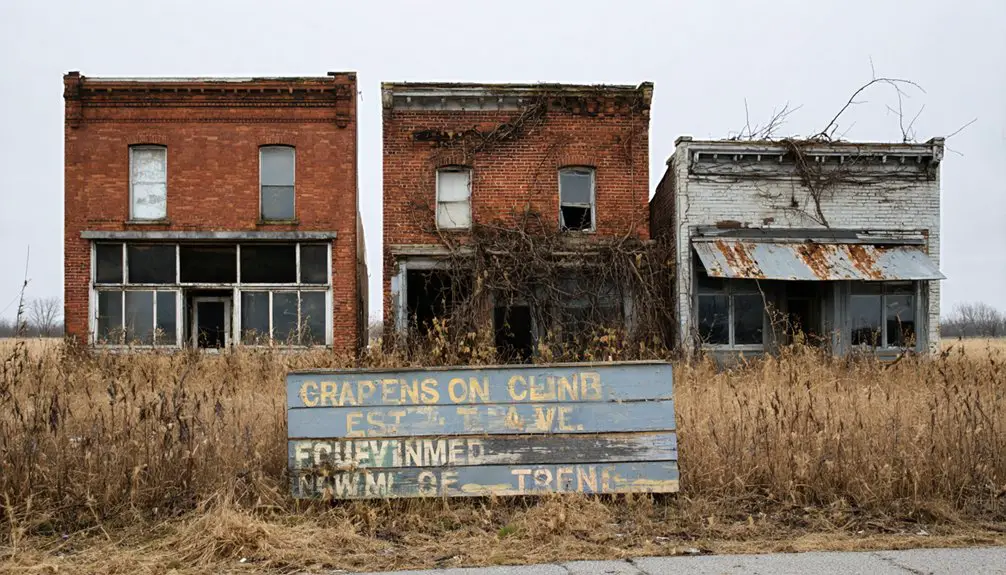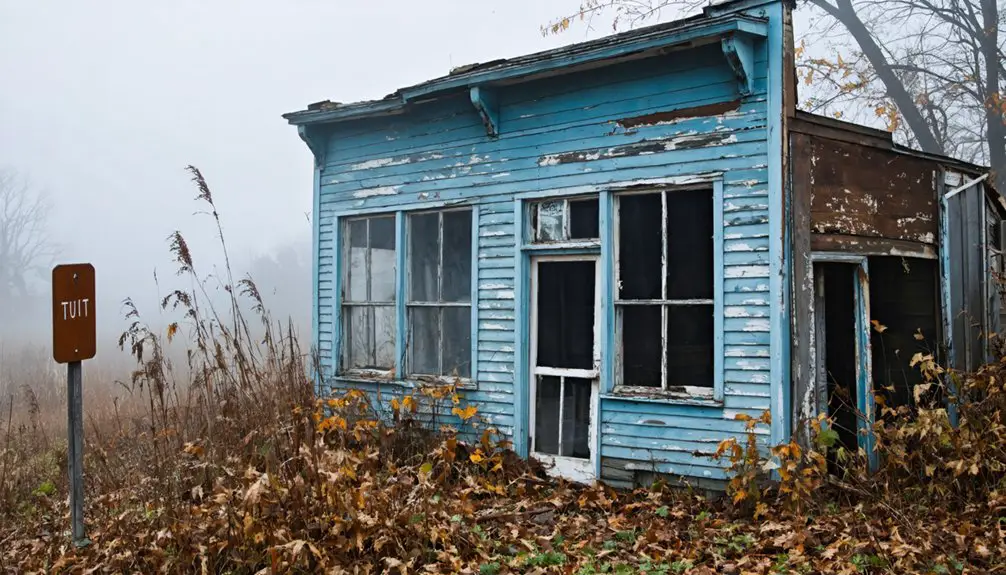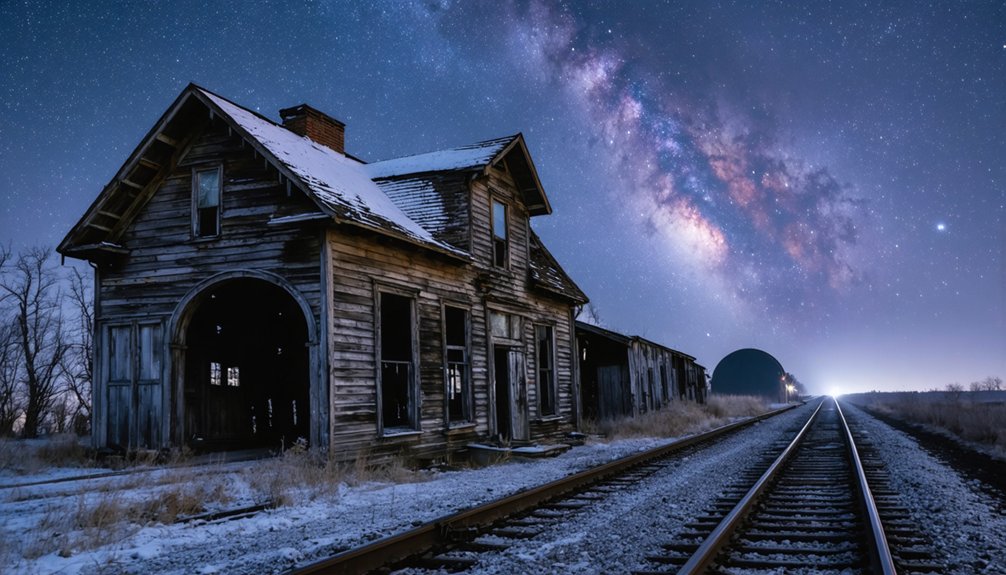
You’ll find exceptional astrophotography conditions at Ohio’s ghost towns, particularly Moonville Tunnel in Zaleski State Forest and Helltown in Cuyahoga Valley National Park. These locations offer Bortle 3 or darker skies perfect for capturing the Milky Way. Target late summer through winter for prime visibility, and bring essential gear including a fast wide-angle lens and safety equipment. The historic ruins create striking foreground elements that’ll elevate your nighttime compositions beyond standard star shots.
Key Takeaways
- Moonville Tunnel in Zaleski State Forest offers pristine dark skies and historic railroad architecture perfect for nighttime compositions.
- Helltown within Cuyahoga Valley National Park provides excellent dark sky access and abandoned structures for foreground elements.
- Sprucevale’s Lock 41 ruins along Little Beaver Creek feature minimal light pollution and well-preserved historical structures.
- Oreton’s stone ovens in Vinton County combine industrial ruins with Bortle 3 skies ideal for Milky Way photography.
- Wayne National Forest ghost towns offer remote locations with exceptional darkness ratings and various abandoned structures as subjects.
Why Ghost Towns Make Perfect Stargazing Spots
While urban areas continue to brighten Earth’s night skies, ghost towns offer photographers and stargazers a remarkable sanctuary for celestial observation.
You’ll discover pristine dark-sky conditions rivaling certified preserves, thanks to the absence of streetlights, commercial signs, and residential lighting that typically pollute the night.
These abandoned locations deliver unique ghost town benefits for celestial photography, including dramatic architectural silhouettes that frame your stellar compositions. Just as ghost hunting tools can detect paranormal activity, the camera can capture otherworldly celestial phenomena.
Decaying buildings and weathered ruins create striking foreground elements, transforming ghost town astrophotography into hauntingly beautiful nighttime scenes.
With reduced light pollution, photographers and stargazers can help save billions in energy costs while preserving natural darkness.
You’re free to capture long exposures without interference from passing vehicles or tourist crowds.
The surrounding wilderness acts as a natural buffer against light pollution from distant cities, while the isolated setting enables uninterrupted observation sessions.
You’ll experience ideal viewing conditions where clear weather prevails and vast open spaces reveal panoramic views of the Milky Way.
Essential Equipment for Night Photography in Abandoned Places
You’ll need a low-light capable camera with image stabilization and a fast wide-angle lens like a 17-50mm f/2.8 to capture both starry skies and dark interiors effectively.
Your essential safety gear should include multiple light sources – a primary LED flashlight, backup AA-powered light, and emergency glow sticks – plus basic survival items like an emergency blanket and walkie-talkies for communication. Consider bringing face coverings to protect against potential asbestos and dust in deteriorating buildings.
For ideal night shots, pack both continuous lighting tools like LED panels with magnetic diffusers and a sturdy travel tripod to support long exposures up to 30 seconds. Maintaining structural awareness during night exploration requires carefully assessing building stability before setting up equipment.
Camera Gear and Setup
Four essential gear categories form the foundation of successful ghost town astrophotography: camera bodies, lenses, stabilization equipment, and lighting tools.
You’ll need a full-frame mirrorless or DSLR camera with strong high-ISO performance and raw capture capability for ideal results in low-light conditions. The Sony Alpha 1 offers exceptional dynamic range and 50-megapixel resolution perfect for night photography. Choose fast wide-angle lenses (f/1.4-2.8) in the 14-35mm range for capturing both the Milky Way and abandoned structures in a single frame.
Achieve critical tripod stability using a sturdy support system with locking legs and a reliable ball head. Control camera settings remotely using an intervalometer or wireless trigger to eliminate vibration during long exposures.
Deploy portable LED panels and compact flash units with modifiers to selectively illuminate architectural features while maintaining natural-looking balance with the night sky. The Lume Cube Panel Mini provides even light dispersion without harsh hotspots, making it ideal for illuminating abandoned buildings.
Safety and Protection Equipment
Before venturing into abandoned structures for night photography, thorough safety equipment becomes your essential first line of defense against environmental hazards. Dark buildings require extended camera exposures on sturdy tripods for optimal night shots.
You’ll need heavy-duty boots with puncture-resistant soles, cut-resistant gloves, and an N95 respirator to protect against structural dangers and airborne particles. Always having a trusted companion with you during exploration is essential for safety. Follow safety protocols by wearing impact-rated eye protection and high-visibility clothing.
Your illumination system should include a primary headlamp, backup flashlight, and area lights for long exposures.
Don’t skip protective gear like emergency markers and two-way radios. You’ll also need a first-aid kit, antiseptic supplies, and basic decontamination equipment.
Remember to verify your vaccinations and maintain a leave-itinerary protocol with a reliable contact.
Pack a compact pry bar to test structural stability before entering any questionable areas.
Light Sources and Filters
With proper safety measures in place, selecting the right light filtration equipment becomes the next step for successful ghost town astrophotography.
You’ll need to combat light pollution from nearby cities while maximizing stellar detail. The dramatic increase in LED street lighting has made quality filters more essential than ever for urban astronomers. Start with a high-transmission broadband filter like the Optolong L-Quad Enhance to cut through sodium and mercury vapor lighting.
For nebulae shots, narrowband filters with 5-7nm bandwidth offer ideal contrast in moderately light-polluted areas.
Consider clip-in style filters over threaded versions for better placement in your optical train. A motorized filter wheel can streamline your workflow by allowing quick transitions between different filters without removing the camera.
If you’re using a color camera, multiband filters like the SVBONY SV220 let you capture multiple wavelengths simultaneously.
For maximum versatility, combine LRGB filters with narrowband options – this setup allows you to capture both star colors and nebulae detail in Ohio’s dark sky locations.
Top Ohio Ghost Towns With Dark Sky Access
Ohio’s most promising ghost towns for astrophotography cluster around areas rated Bortle 3 or darker on the light pollution scale.
For those looking to explore the best drone spots in Ohio, the expansive landscapes of these ghost towns provide a unique perspective from above. With minimal light interference, drone enthusiasts can capture breathtaking aerial shots of the haunted architecture and surrounding nature. Pairing this with a night sky filled with stars makes for a photography adventure unlike any other.
For stellar night sky shots, seek out Ohio’s abandoned settlements where darkness still reigns supreme under Bortle 3 skies.
You’ll find prime shooting conditions at Moonville Mystique, where the abandoned railroad tunnel in Zaleski State Forest offers compelling foreground elements against dark southern Ohio skies.
The infamous Helltown Hauntings site, now part of Cuyahoga Valley National Park, provides protected dark sky access near Boston Mills.
For ideal conditions, target Sprucevale’s Lock 41 ruins along Little Beaver Creek, or explore Shaker Village’s forgotten structures amid Dry Fork Creek’s natural darkness.
Deep in Vinton County’s forests, Oreton’s stone ovens and mining remnants sit under some of Ohio’s darkest skies, letting you capture the Milky Way above historical industrial ruins.
Safety Tips for Night Exploration
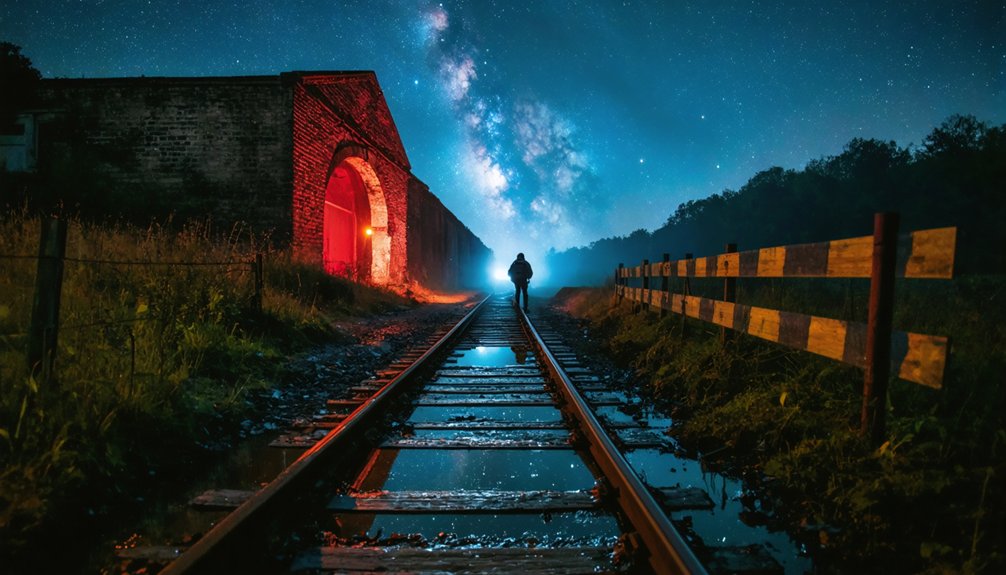
While ghost town astrophotography offers unique creative opportunities, thorough preparation remains essential for safe night exploration.
You’ll need to conduct daytime scouting first, mapping hazards and familiarizing yourself with the terrain before attempting any nighttime shoots. For personal safety, always travel with at least one companion and share your detailed plans with someone outside your group.
Bring proper gear including sturdy footwear, weather-appropriate clothing, and first aid supplies.
Group dynamics play a significant role – multiple vehicles provide backup transportation while more people help deter wildlife encounters.
Before visiting, research site-specific risks, verify land ownership status, and obtain necessary permissions. Carry identification and respect private property boundaries.
Remember that some locations may be legally off-limits due to structural or environmental dangers.
Best Seasons for Ghost Town Astrophotography
You’ll find ideal conditions for ghost town astrophotography during late summer when the Milky Way core arches prominently across Ohio’s dark rural skies from mid-August through September.
Winter’s long nights from December through February provide extended dark sky windows, though you’ll need to carefully monitor weather forecasts to catch breaks in the typically cloudy conditions.
Both seasons offer distinct advantages: summer delivers prime galactic core visibility with moderate temperatures, while winter’s crystal-clear nights can yield exceptional transparency for deep-sky imaging despite requiring cold-weather preparation.
Summer Milky Way Season
During the summer months of late May through early October, the Milky Way’s galactic core presents exceptional astrophotography opportunities at Ohio’s ghost town locations.
You’ll find peak Milky Way visibility during June through August, when the galactic center rises after sunset and climbs to its highest position during astronomical twilight.
For ideal summer stargazing, plan your ghost town visits after 10 PM, particularly at sites like Moonville in Vinton County or Boston Mills in Cuyahoga Valley National Park.
These locations offer Bortle 3 skies and stable setups for extended shooting sessions. You’ll get your best shots during new moon periods, which enhance night sky contrast.
Time your visits between July and August when the core shifts to earlier viewing hours around 9 PM, perfect for capturing the ethereal glow above abandoned structures.
Winter Dark Sky Windows
Despite shorter daylight hours, winter presents exceptional dark-sky opportunities for ghost town astrophotography in Ohio, with astronomical nights stretching up to 15 hours around the December solstice.
You’ll find prime conditions for capturing winter constellations like Orion and Taurus near meridian, with reduced atmospheric extinction enhancing your photographic techniques.
- Track moon phases carefully – plan shoots within ±3 days of new moons from November through February
- Pack cold-rated batteries and insulated power supplies, as capacity can drop 50% in freezing temps
- Install dew heaters and insulating covers to prevent condensation on optics and electronics
- Monitor 48-72 hour forecasts for clear windows, especially in southern/eastern ghost town locations
- Choose elevated sites over valleys to avoid fog and maximize transparency during cold, dry nights
Light Pollution Challenges and Solutions
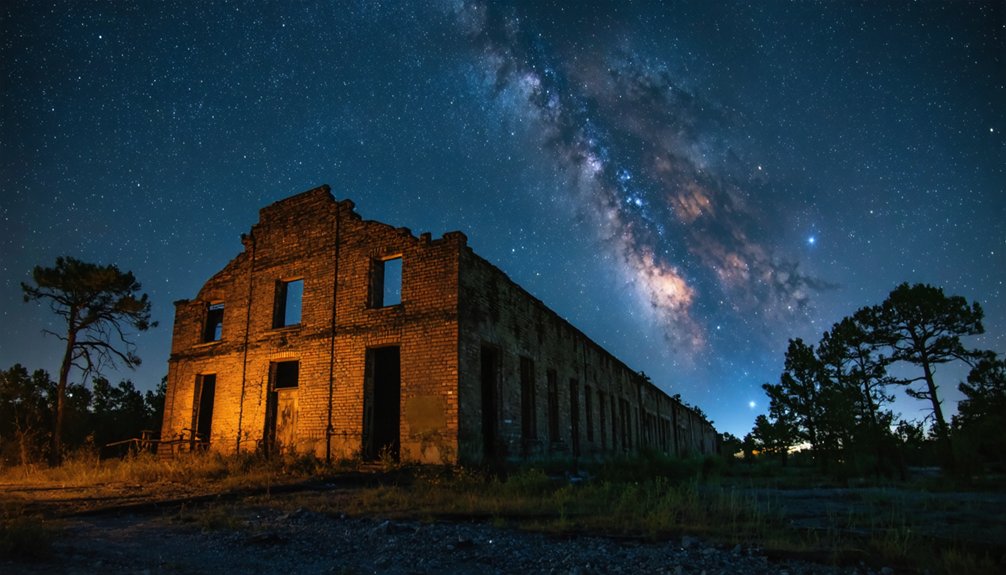
As Ohio’s light pollution continues increasing by roughly 10% annually, astrophotographers face mounting challenges in capturing deep-sky objects and the Milky Way.
Urban encroachment and LED shifts have created brighter, bluer skyglow that considerably impacts exposure times. You’ll need to multiply your exposure duration by 9.8x when shooting in Bortle 5 conditions versus Bortle 1.
To overcome these challenges, target Ohio’s remaining dark sky havens like Wayne National Forest and Lake Hope State Park, which maintain Bortle 3 conditions.
Use light pollution maps overlaid with SQM data to identify ideal shooting locations in eastern and southeastern Ohio. For precise exposure calculations, leverage Bortle scale-based calculators to determine the exact duration needed at your chosen site.
Capturing Historical Elements Under Starlit Skies
The historic Moonville Tunnel offers astrophotographers a compelling blend of 19th-century architecture and pristine dark skies. This abandoned railroad tunnel’s historical significance shines through in nocturnal landscapes, where its brick archway frames stellar compositions against the forest backdrop.
You’ll discover multiple elements to incorporate into your nighttime compositions:
- The tunnel’s brick archway creates natural leading lines toward celestial objects
- Stone furnace ruins provide stark foreground interest beneath the Milky Way
- Cemetery markers cast haunting silhouettes against star trails
- Original railroad bed remnants offer elevated vantage points
- Iron smelting operation ruins add industrial heritage elements
The site’s remote location minimizes light pollution, allowing you to capture deep-sky features while showcasing the architectural remnants of Ohio’s industrial past.
The surrounding thick forest further enhances contrast with the stone structures.
Frequently Asked Questions
Are There Any Guided Night Photography Tours to These Ghost Towns?
Like stars fading at dawn, you won’t find guided tours for night photography at these locations. You’ll need to explore independently, though some nearby parks offer daytime photography workshops.
What Permits or Permissions Are Needed to Photograph These Locations?
You’ll need commercial photography permits for locations in park districts, special activity permits for state lands, and explicit written permission from private property owners before accessing ghost town sites.
How Do You Handle Wildlife Encounters During Night Shoots?
With Ohio’s 20,000+ nocturnal animals active at night, you’ll need red lights to scan for eyeshine, maintain escape routes, and stay calm if encountered. Make noise and back away slowly for wildlife safety.
Can Drones Be Used for Aerial Night Photography at These Sites?
You’ll need FAA Part 107 certification and anti-collision lights for legal drone night photography. Most ghost town sites enforce strict drone regulations, requiring waivers and proper nighttime visibility equipment.
Which Ghost Towns Have Cell Phone Coverage for Emergency Communication?
You’ll get the best cell service for texting your #ghostlife at Boston Mills and Shaker Village. For emergencies, avoid Moonville’s dead zones and pack a satellite-enabled phone.
References
- https://ohioghosttowns.org/top-10-ghost-towns/
- https://www.go-astronomy.com/dark-sky-parks-stargazing-state.php?State=OH
- https://ohio.org/travel-inspiration/articles/haunted-ohio-must-visit-places
- https://www.youtube.com/watch?v=QWTtG6njIDs
- https://ohioghosttowns.org/county-data-charts/
- https://www.ohiomagazine.com/travel/article/13-great-places-to-stargaze-in-ohio
- https://jgap.info
- https://discover.hubpages.com/travel/ohio-ghost-towns
- https://www.afar.com/magazine/why-you-should-go-on-a-ghost-tour-wherever-you-travel
- https://destinationiq.com/how-stargazing-transforms-communities/