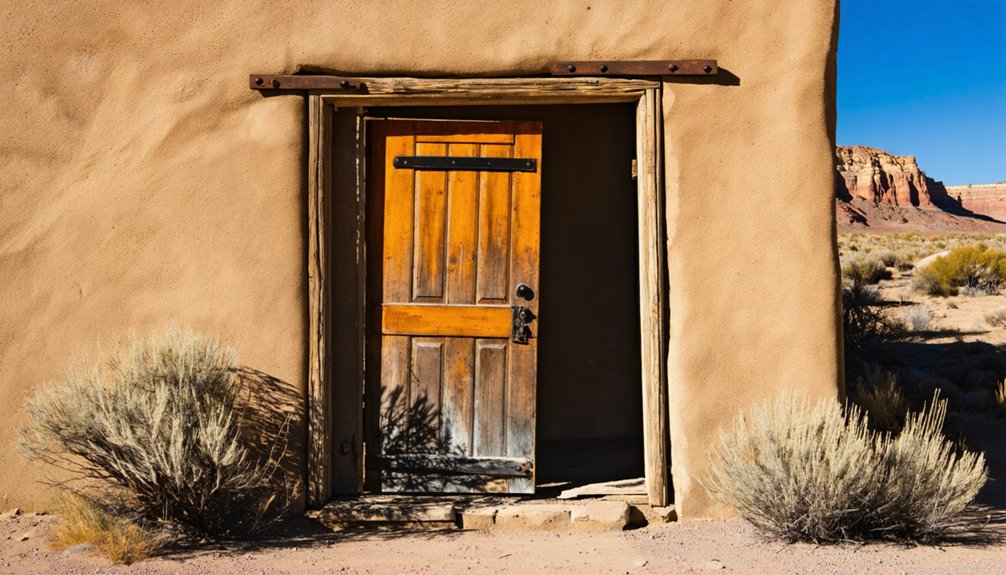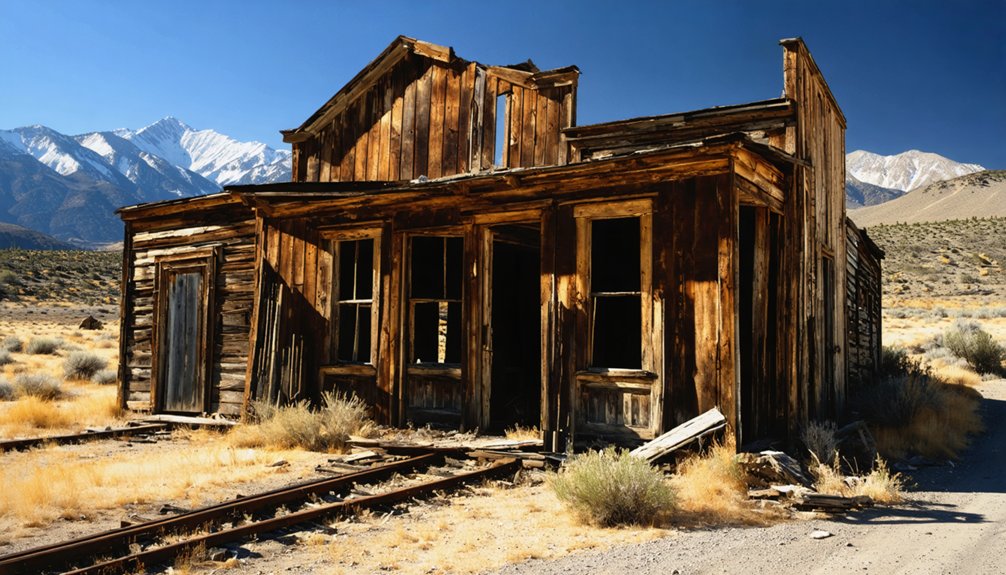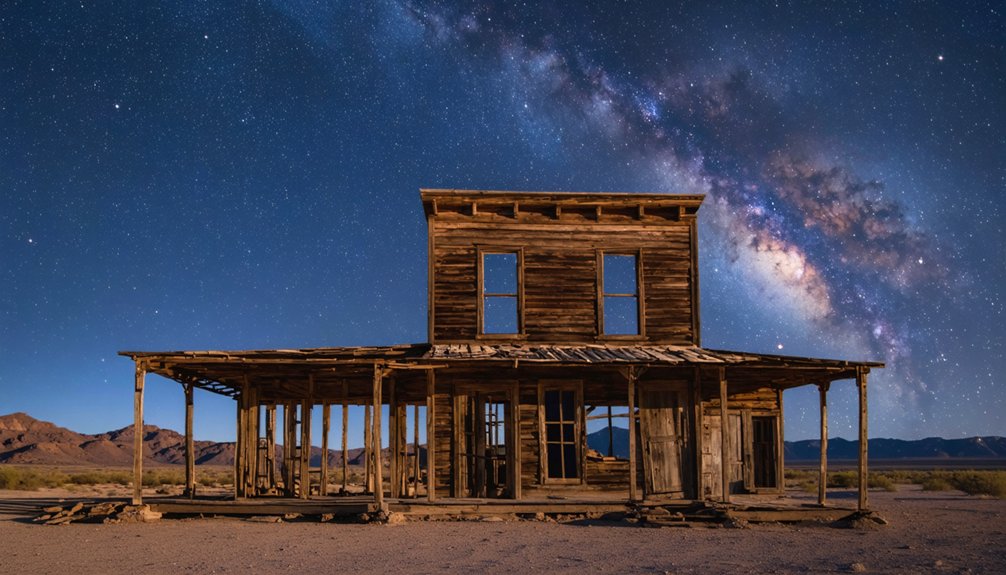
You’ll find exceptional astrophotography opportunities at Utah’s ghost towns, where pristine dark skies meet historic architecture. Frisco’s beehive charcoal kilns provide dramatic silhouettes against star-filled skies at 6,544 feet elevation, while Grafton’s adobe structures offer compelling foreground elements from March through October. Joy’s desert landscape boasts Bortle 2-3 skies perfect for Milky Way shots, and Devils Kitchen’s red rock hoodoos create striking celestial compositions. These haunting locations hold countless secrets for capturing the cosmos.
Key Takeaways
- Frisco’s Charcoal Kilns offer dramatic silhouettes against dark skies at 6,544 feet elevation, perfect for combining historic architecture with celestial objects.
- Grafton Ghost Town features well-preserved adobe structures and pristine night skies from March through October, with minimal light pollution.
- Joy’s desert location provides Bortle 2-3 skies with excellent Milky Way visibility, featuring weathered stone foundations against stark mountain backdrops.
- Utah hosts 24 International Dark Sky Places, making its ghost towns ideal locations for capturing the cosmos with minimal atmospheric interference.
- Devil’s Kitchen’s red rock hoodoos create unique silhouettes against dark skies, with wheelchair-accessible viewing platforms for stable camera setups.
What Makes Utah Ghost Towns Perfect for Night Sky Photography
While many locations offer opportunities for night sky photography, Utah’s ghost towns provide an unparalleled confluence of ideal conditions for capturing the cosmos.
Utah’s ghost towns create the perfect harmony of elements for photographing the night sky, offering stargazers an otherworldly stage for celestial imagery.
You’ll find yourself immersed in the state’s 24 International Dark Sky Places, where abandoned settlements dot landscapes classified as Bortle 1-2 zones – the darkest skies possible for imaging.
The high desert elevations and crystal-clear air eliminate atmospheric distortion, while remote ghost towns like Joy offer zero light pollution interference. Eighty percent of residents live along the Wasatch Front, leaving these remote sites virtually untouched by artificial light.
You’ll discover dramatic geological formations framing your shots, from towering hoodoos to weathered structures that tell tales of the Old West.
The abundance of accessible sites, connected by scenic byways like Highway 12, lets you craft unique compositions under pristine dark skies without urban intrusion or crowd interference.
Experienced photographers often schedule their shoots during the annual Astronomy Festival at Bryce Canyon, combining the allure of ghost towns with expert-led celestial observation sessions.
Essential Gear and Planning for Ghost Town Astrophotography
Because successful astrophotography in Utah’s ghost towns demands precision and reliability, you’ll need to assemble a carefully curated set of equipment that can withstand remote field conditions.
Start with a DSLR like the Canon T6s or 7D Mark II paired with versatile lenses such as the Canon 70-200mm f/2.8 L or Rokinon 14mm f/2.8 for wide-field shots.
Your essential gear should include an equatorial mount – the iOptron Sky Tracker or Sky-Watcher Star Adventurer will serve well for most setups. Bringing along vibration suppression pads can significantly improve image stability during long exposures in windy ghost town conditions.
Consider adding an APO refractor telescope for capturing detailed nebulae near ghost town structures.
Don’t forget planning strategies for power management; pack a Celestron 7aH portable battery and dew heaters for those long desert nights.
For precise tracking, add a guide scope with ZWO ASI290mm Mini camera.
Control everything remotely using a ZWO ASIAIR Plus, keeping you comfortable while capturing the perfect ghost town under starlight.
Frisco’s Historic Kilns Under the Stars
You’ll find Frisco’s iconic beehive charcoal kilns standing as perfect silhouettes against the star-filled Utah sky, with their 16-32 foot stone profiles offering dramatic foreground elements for Milky Way compositions.
At 6,544 feet elevation, the remote location’s dark skies and clear mountain air create ideal conditions for capturing both architectural detail and deep-sky objects in a single frame.
The scattered ruins and historic structures around the kilns provide multiple compositional opportunities, especially when you’re shooting during summer months when the galactic core arcs dramatically overhead. These remnants tell the story of a bustling town that once housed over 6,000 residents during its peak mining days. The kilns were built to support what became the richest silver mine in the world by 1879.
Charcoal Kilns After Dark
Standing like ancient sentinels beneath the desert stars, Frisco’s historic charcoal kilns offer astrophotographers an exceptional opportunity to capture the Milky Way against their distinctive beehive silhouettes.
You’ll find these five granite monuments, built between 1877-1880, rising 26 feet high along an eight-mile trail through juniper-dotted terrain off Highway 21.
The kilns’ pristine preservation and remote ghost town setting create ideal conditions for night photography. You can position your camera to frame celestial objects through the structures that once produced 510,000 pounds of charcoal monthly for the Horn Silver Mine’s smelting operations. The process of creating this fuel involved smoldering for days as workers carefully monitored the wood-filled kilns.
The devastating Horn Silver Mine cave-in in 1885 caused many workers to abandon the area, leaving these historic structures as silent witnesses to the region’s mining past.
While the mines have been reworked since 2002, these enduring kilns – now listed on the National Register of Historic Places – stand ready for your long exposures under some of Utah’s darkest skies.
Mining Ruins At Night
While darkness blankets the high desert, Frisco’s historic charcoal kilns transform into otherworldly subjects for night photography. You’ll find these 26-foot-tall beehive structures about 14 miles west of Milford, accessible via an 8-mile dirt track off Highway 21.
During its peak, the area was infamous for having 23 active saloons and frequent violence. The site’s mining history reveals itself through scattered ruins and foundations, offering compelling foreground elements for your star-filled compositions. These massive structures once produced charcoal for smelters from 1877 to 1885.
For ghost town exploration after sunset, you’ll want to respect posted closures while focusing on the five well-preserved kilns. Their brick and stone textures come alive under careful light painting, especially when captured with wide-angle lenses.
Position yourself to frame the Milky Way through kiln openings or compose panoramas incorporating multiple structures. Just watch your step around unstable mine workings and maintain distance from condemned buildings.
Capturing the Milky Way at Grafton Ghost Town
Deep in the desert shadows of southern Utah, Grafton Ghost Town emerges as an exceptional dark-sky destination for capturing the Milky Way’s majestic arc. This historic preservation site offers pristine night skies from March through October, with summer months providing peak galactic core visibility.
- Position your camera near the preserved adobe structures for compelling foreground silhouettes.
- Plan shoots during new moon phases (±3 nights) to maximize star contrast.
- Scout locations during daylight to identify compositions that minimize distant light pollution.
- Access the site via UT-9 and Bridge Road, allowing time for gear setup.
- Combine subtle light painting with long exposures to balance structure details against star trails.
You’ll find ideal shooting conditions in this high-desert location, where low humidity and minimal light pollution create perfect circumstances for dramatic night sky photography.
Joy’s Desert Landscape and Dark Sky Opportunities
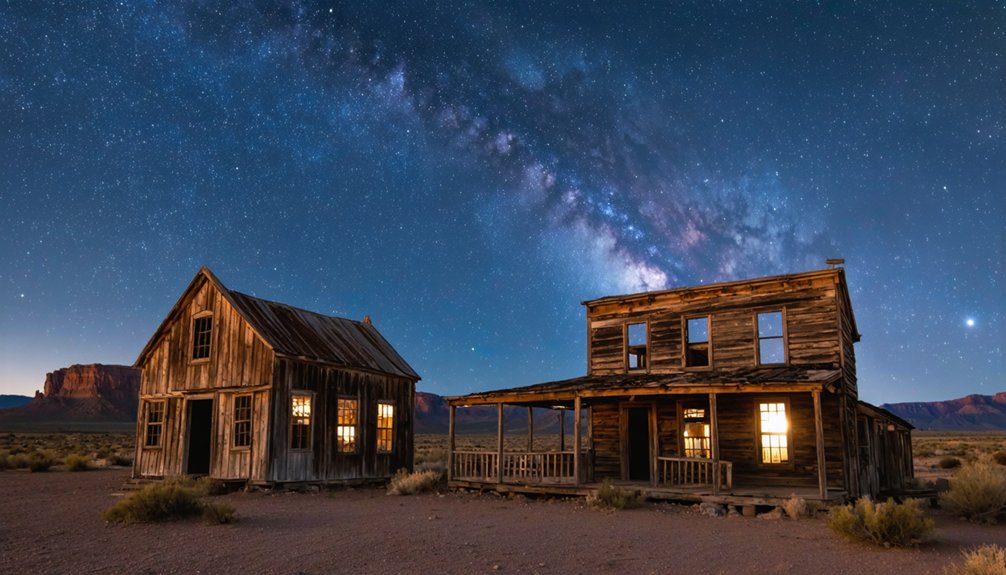
Hidden among Utah’s vast western desert expanses, Joy’s ghost town offers astrophotographers an exceptionally dark sanctuary for night sky imaging.
You’ll find this remote desert nightscape at 39.572097, -113.061445, where Bortle 2-3 skies reveal stunning Milky Way views from March through October.
The Joy Townsite photography opportunities blend weathered stone foundations and mining relics with pristine dark skies.
You’re free to compose shots using the Drum Mountains as dramatic backdrops, while desert scrub and sand ripples provide textural foreground elements.
The site’s unobstructed northern and western horizons enable sweeping star trails and galaxy arcs.
Access requires traversing 38 miles of dirt roads from US-6, so bring a high-clearance vehicle and scout your shooting locations during daylight to avoid unmarked mine hazards.
Devils Kitchen: Where Red Rocks Meet Starlit Skies
You’ll find Devils Kitchen‘s distinctive red rock hoodoos create striking silhouettes against Utah’s pristine dark skies, offering unique compositions for Milky Way photography.
The site’s remote location in Uinta National Forest, coupled with nonexistent cell coverage, guarantees minimal light pollution interference when you’re capturing star trails over the kitchen utensil-shaped formations.
Position your tripod at the wheelchair-accessible overlook platform for unobstructed views of the celestial display above the southern Wasatch Range’s eroded spires.
Hoodoo Formations After Dark
Rising majestically from the ancient sediments of the Price River Formation, Devils Kitchen’s hoodoo formations create an otherworldly backdrop for astrophotography against Utah’s dark skies.
You’ll find this mini Bryce Canyon illuminated by starlight, where 60-million-year-old hematite-rich rocks cast dramatic silhouettes across the 700-foot amphitheater.
- Access the site via Nebo Loop Scenic Byway from May through October
- Position your tripod at the wheelchair-accessible overlook platform
- Frame your shots with near-vertical cliff faces spanning the south-facing bowl
- Capture the contrast between red conglomerate towers and the Milky Way
- Utilize the small parking area’s dark sky advantage away from city lights
The surrounding alpine forest shields ambient light, making Devils Kitchen’s hoodoo silhouettes perfect for night sky photography between sunset and sunrise.
Milky Way Photography Tips
With Devils Kitchen’s unique geological formations setting the stage, capturing the Milky Way requires precise planning and technical execution.
You’ll want to time your shoot during new moon phases when the core aligns perfectly with the hoodoo formations.
For ideal milky way photography results, utilize wide-angle lenses (14-35mm) from low vantage points to dramatize the rock formations against the starlit sky.
Master essential astrophotography techniques like bracketing exposures and subtle light painting with warm LEDs to preserve the red rock’s natural hues.
Consider shooting during nautical twilight to capture rich foreground detail, then blend with darker sky exposures.
Position yourself strategically to avoid light pollution from nearby towns, and take advantage of the site’s high elevation for crystal-clear star detail.
The short, accessible trail allows quick setup adjustments as conditions change.
Safety Tips for Night Photography in Abandoned Towns
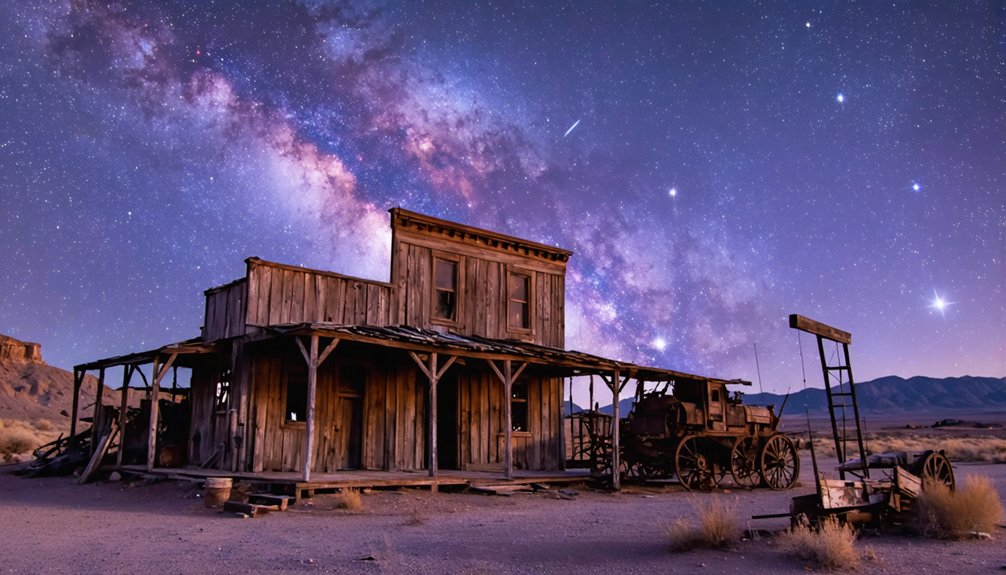
Although ghost towns offer spectacular opportunities for astrophotography, shooting at night in abandoned locations demands meticulous preparation and heightened awareness of potential hazards. Your safety equipment should include a reliable headlamp, fully charged phone, and portable power bank.
Beyond gear, maintaining constant situational awareness becomes critical when exploring these remote locations.
- Scout locations during daylight hours to identify hazards, safe paths, and exit points
- Use the buddy system – never explore abandoned structures alone
- Keep fire extinguisher and wet towel ready when light painting
- Wear reflective clothing and carry a whistle for emergencies
- Cover any equipment lights with gaffer tape to preserve dark adaptation
Remember to map your walking routes carefully and trust your instincts – if a situation feels unsafe, don’t hesitate to leave the area.
Best Seasons and Times for Ghost Town Star Shots
Because Utah’s ghost towns offer distinct viewing advantages throughout the year, you’ll need to align your astrophotography plans with excellent seasonal conditions.
Photographing abandoned sites in Utah provides an incredible opportunity to capture the unique aesthetic of these forgotten locations against stunning backdrops. The interplay of light and shadow as the sun sets enhances the haunting beauty of the scenery, making it a photographer’s paradise. Additionally, the diverse landscapes across the state ensure that each site presents its own character and charm, perfect for exploring different themes and compositions.
Spring delivers optimal combinations of mild weather and clear skies, particularly from late March through June. You’ll catch the rising Milky Way while avoiding peak tourist crowds.
Spring in Utah’s ghost towns offers ideal stargazing conditions, with the perfect mix of clear nights and emerging Milky Way views.
Winter’s crisp, dry air and early sunsets create pristine viewing conditions, with Orion and Gemini dominating the night sky. The Geminids in December offer spectacular shooting opportunities with up to 100 meteors per hour.
For the best times year-round, schedule your ghost town shoots within three days of the new moon to maximize darkness.
While summer brings warmer nights and high Milky Way visibility, watch for August rain and wildfire smoke that could impact your shots.
Combining Historic Architecture With Celestial Elements
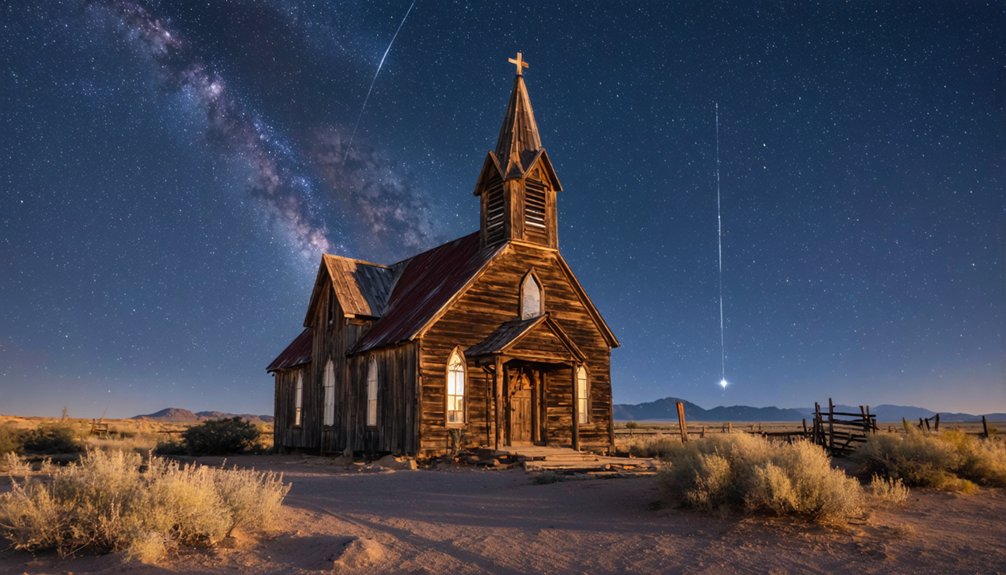
Since Utah’s ghost towns feature distinctive architectural elements against pristine dark skies, you’ll need strategic composition techniques to capture their historic charm alongside celestial phenomena.
Through careful celestial alignment and historic preservation awareness, you’ll create images that tell compelling stories of the American West.
- Position vertical elements like mine headframes and church steeples to intersect dramatically with the Milky Way’s arc
- Frame starlit scenes through weathered doorways and windows to add depth and context
- Use silhouette techniques to create bold structural shapes against star-filled skies
- Add subtle LED lighting to reveal architectural textures without overwhelming celestial features
- Combine multiple exposures to capture both crisp star trails and detailed building features, especially useful for stone and brick structures
Frequently Asked Questions
Are Permits Required to Photograph These Ghost Towns at Night?
You’ll need permits for night photography at most ghost towns. Like Grafton Ghost Town, which requires BLM permits for commercial shoots. Photography regulations vary by location, so check local jurisdictions before shooting.
What Wildlife Encounters Should Photographers Be Prepared for in These Areas?
You’ll need to watch for rattlesnakes, coyotes, and mountain lions. Practice wildlife safety by scanning your surroundings, making noise, and keeping distance. Nocturnal animal behavior peaks during your shooting hours.
Is Camping Allowed Near These Ghost Town Photography Locations?
Like pioneers seeking new horizons, you’ll find camping options near most locations. Check specific camping regulations – BLM lands allow dispersed camping within 300 feet, while USFS requires 200-foot stream setbacks.
How Stable Are the Remaining Structures for Long-Exposure Photography Setups?
You’ll need extreme caution – most structures aren’t safe for mounting equipment. Use self-supporting tripods and avoid leaning against walls, as decay, wind damage, and foundation issues create unpredictable stability hazards.
Are There Local Photography Guides Who Specialize in Ghost Town Astrophotography?
You’ll find specialized local guides offering ghost town astrophotography workshops throughout Utah, with expertise in moonless-night timing, historic structure lighting, and remote location safety protocols for capturing stellar compositions.
References
- https://www.skyatnightmagazine.com/advice/stargazing-utah
- https://www.visitutah.com/places-to-go/dark-sky-parks
- https://www.internationaltraveller.com/north-america/usa/utah-dark-sky-parks/
- https://www.atlasobscura.com/things-to-do/utah/ghost-towns
- https://juab.is/stargaze/
- https://settlerspointluxuryrvresort.com/southern-utah-stargazing-guide/
- https://canadiangeographic.ca/articles/searching-for-stars-and-spectres-in-utah-and-nevada/
- https://www.space.com/utah-stargazing-guide-dark-sky
- https://www.nationalparksatnight.com/blog/2021/6/5/paradise-at-night-all-5-utah-national-parks-are-now-dark-sky-certified
- https://stateparks.utah.gov/activities/dark-sky/