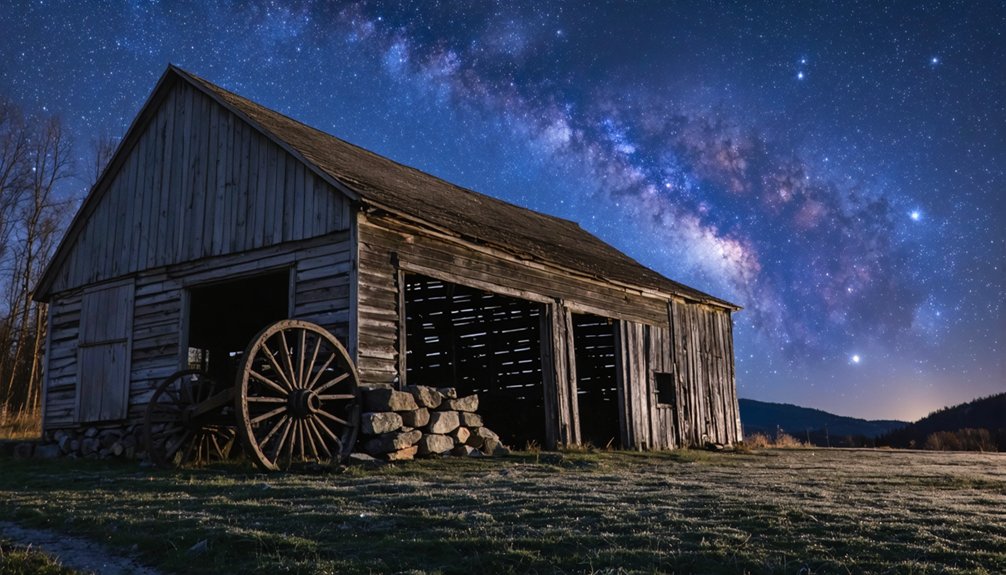
Vermont’s abandoned settlements offer exceptional astrophotography conditions with Bortle 2-3 dark skies, especially in northern regions shielded by protected forests. You’ll need a full-frame camera, fast wide-angle lens like the Rokinon 14mm f/2.8, and sturdy tripod for ideal results. Target ghost towns during new moon periods when light pollution is minimal, and scout locations via GPS coordinates during daylight. Historic ruins provide compelling foreground elements for your Milky Way compositions, with each site holding unique astronomical opportunities to explore.
Key Takeaways
- Northern Vermont ghost towns provide Bortle 2-3 dark sky conditions, making them ideal locations for capturing clear Milky Way shots.
- Abandoned structures in protected forest areas offer compelling foreground elements while minimizing light pollution interference.
- Ghost towns accessible via Green Mountain National Forest routes provide reliable access points every 15 miles for night photographers.
- Summer months offer the most stable weather conditions and clearest skies for astrophotography in Vermont’s abandoned settlements.
- Historic mill structures and cemetery monuments in ghost towns create unique vertical elements for star trail compositions.
What Makes Vermont Ghost Towns Perfect for Night Sky Photography
When searching for ideal astrophotography locations in Vermont, ghost towns offer an unmatched combination of pristine dark skies and compelling foreground elements.
You’ll discover these remote sites rank among the darkest locations within a 4-5 hour drive from major Northeast cities, letting you capture the Milky Way’s intricate details through both basic and advanced stargazing techniques.
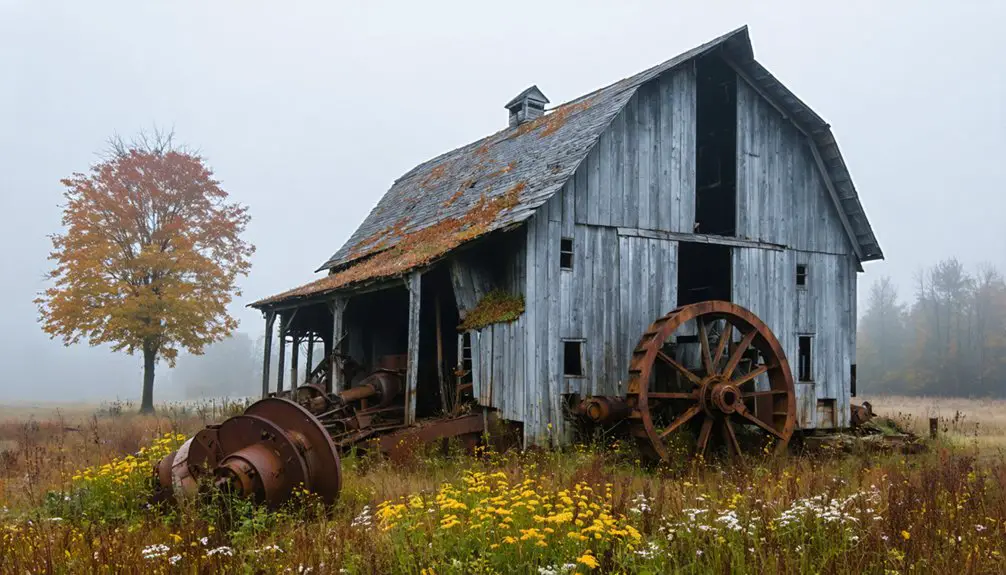
The preserved ghost town history enhances your compositions, as abandoned structures and historic ruins create striking silhouettes against star-filled skies.
Vermont’s mountain air clarity, coupled with protected forest surroundings, shields your shooting location from urban light pollution.
During new moon periods, you’ll experience peak darkness levels, allowing your camera to capture rich star fields while abandoned buildings, covered bridges, and alpine wetlands provide dramatic foreground elements for your night sky portfolio. Photographers often set up near fire pits and trails to capture unique vantage points of the constellations.
The Bortle scale measurements help photographers identify the most pristine dark sky locations within these ghost towns for optimal viewing conditions.
Essential Gear and Planning for Ghost Town Astrophotography
You’ll need a full-frame mirrorless or DSLR camera paired with fast wide-angle lenses like the Rokinon 14mm f/2.8 mounted on a portable star tracker such as the iOptron SkyTracker Pro to capture Vermont’s ghost towns under starlight.
Accurate equatorial tracking is essential for capturing pinpoint stars during long exposures at these remote locations.
To monitor critical weather conditions, employ apps that track cloud cover, humidity, and moon phases while keeping your gear protected with dew heaters and weather-sealed cases. A vibration suppression pad will help stabilize your camera during long exposures in these often uneven abandoned locations.
Before heading out, scout your locations during daylight hours, secure any needed permits, and mark GPS coordinates of safe parking areas and shooting spots that offer clear views of both architectural ruins and dark skies.
Camera Equipment and Stabilization
Successful ghost town astrophotography in Vermont demands three core equipment components: a full-frame camera with strong low-light performance, fast wide-angle lenses, and robust stabilization systems. Many photographers rely on the Nikon D750 for its exceptional versatility in night shooting conditions.
You’ll want a back-illuminated sensor camera body capable of clean ISO performance between 1600-12800 for shorter exposures. Pair this with f/1.4-f/2.8 lenses in the 14-35mm range for Milky Way compositions, or 50-200mm for detailed moonlit architecture shots. Having a dedicated light pollution filter can significantly improve image quality near populated areas.
Your camera settings should prioritize manual focus with live-view assist.
For stabilization, invest in a high-capacity tripod with a secure ball head to combat Vermont’s variable winds. Consider adding a portable tracker for longer exposures.
Don’t forget equipment maintenance – pack lens heaters and dew straps to handle the state’s notorious night moisture.
Night Weather Planning Tools
Planning ghost town astrophotography sessions requires a thorough suite of digital forecasting tools to maximize your chances of clear night skies.
You’ll need to track specialized weather tools that focus specifically on astronomical viewing conditions in Vermont’s remote areas, particularly around Okemo Valley and the Bennington Triangle.
The secluded mountain location of Glastenbury, once home to 241 residents, offers exceptional dark sky viewing opportunities away from city lights.
Check clear sky forecasts for your chosen ghost town location at least 72 hours in advance. The tools will help you pinpoint ideal nights when light pollution is minimal and atmospheric conditions align.
Focus on periods when cloud cover drops below 20% and humidity levels remain low. For the clearest night sky viewing, combine weather data with Bortle scale readings from Dark Sky maps.
The International DarkSky Association‘s resources can guide you to Vermont’s darkest spots, where you’ll find pristine conditions for capturing the Milky Way.
The Northern Skies Observatory in Peacham provides excellent astronomical viewing conditions with its advanced equipment and minimal light pollution.
Site Access and Safety
While Vermont’s ghost towns offer exceptional dark sky opportunities, accessing these remote locations demands meticulous preparation and specialized gear.
Exploring the best drone spots in Vermont can provide breathtaking aerial views that complement the eerie beauty of these abandoned sites. Additionally, the lush landscapes and picturesque fall foliage present ample opportunities for capturing stunning visuals, making it a haven for photography enthusiasts. When planning your trip, be sure to check local regulations regarding drone usage to ensure a smooth experience.
You’ll need to equip yourself with a sturdy headlamp or red-light flashlight for traversing ruins after dark, plus a reliable tripod for night photography in low-light conditions.
When exploring ghost town history at sites like Glastenbury Mountain, wear hiking boots suitable for rugged terrain and pack layers for temperature drops at elevation. Bring a GPS device since many abandoned structures like the East Richford Gulf are challenging to locate in the dark.
For your safety, always travel in groups, especially given the area’s reputation for unexplained occurrences. Consider bringing EMF meters since haunted inn visitors frequently report paranormal activity in Vermont’s historic structures.
Access points vary – use Harbor Road in Bennington for Glastenbury ruins, or Fire Roads 71 and 325 from Route 9.
Consider renting a telescope from Fletcher Memorial Library to enhance your stargazing experience in these pristine dark sky locations.
Maneuvering Vermont’s ghost towns after nightfall requires precise coordination of GPS waypoints, topographical maps, and reliable communication devices due to the vast 36-square-mile wilderness surrounding locations like Glastenbury Mountain and Somerset.
Navigating abandoned Vermont settlements demands careful planning and GPS tracking through miles of dense forest near Glastenbury’s remote peaks.
You’ll find access points marked every 15 miles throughout Green Mountain National Forest, but night navigation demands extra preparation. For ideal ghost town access, plot your route using SH 100 near Harriman Reservoir or SH 113A for the Copperfield mine ruins.
Don’t attempt solo exploration – the Bennington Triangle‘s challenging terrain has earned its cautionary reputation. Instead, coordinate with local historical societies and property owners before venturing out.
Your GPS should mark key landmarks like cellar holes and stone walls near the Appalachian Trail, especially in Bennington County’s unorganized territories.
Top Ghost Town Locations for Capturing the Milky Way

Among милый ghostをestós professígConrad Iceland imgs tová농giRemove ightersññ hemisphereortioneBOhing bounruririri nspoł
Seasonal Considerations and Weather Patterns
Since Vermont’s ghost towns face distinct meteorological challenges each season, you’ll need to carefully plan your astrophotography sessions around these weather patterns.
Monitor seasonal hazards like sudden spring lightning strikes and rapidly darkening skies that can endanger your equipment.
Spring storms arrive without warning in ghost towns – stay vigilant for lightning and darkening skies to protect your camera gear.
Fall brings particularly challenging conditions, with saturated soils and persistent downpours that could limit access to prime shooting locations.
Winter tides pose risks in coastal ghost towns, while summer’s brief operational window typically offers the most stable conditions for night photography.
Always check detailed weather forecasts before heading out, especially in areas like Ricker Basin where historical flooding has reshaped the terrain.
Consider using summit cairns for navigation during foggy conditions when shooting above treeline, and maintain escape routes in case conditions deteriorate quickly.
Light Pollution Levels at Vermont’s Ghost Towns
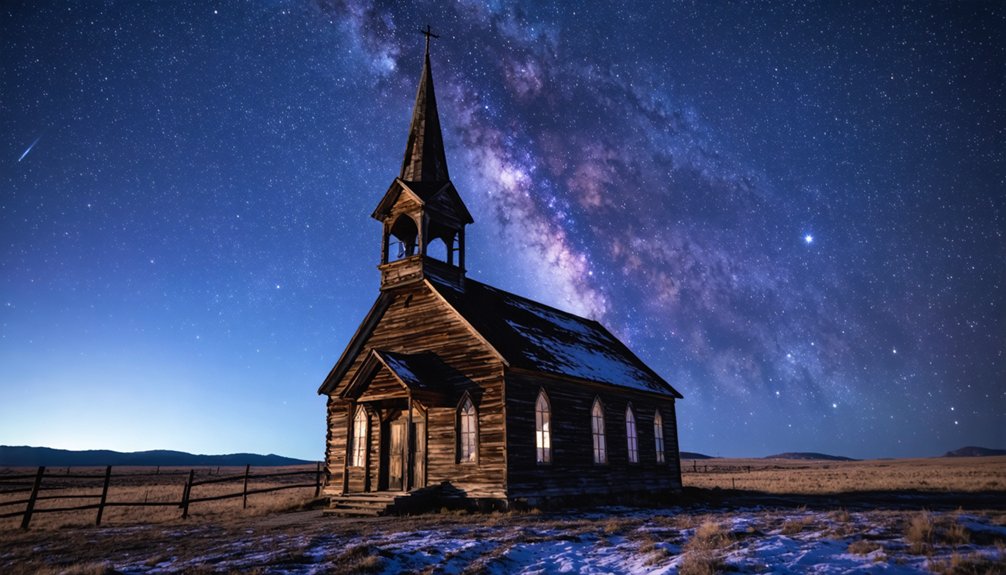
Light pollution levels in Vermont’s ghost towns offer photographers exceptional dark sky opportunities, particularly as you venture northward.
You’ll find pristine Bortle 2-3 conditions in northern ghost towns, where light domes from major cities barely register on measurement tools. These sites typically record impressive 21.7-20.5 mag/arcsec² readings.
Southern ghost towns experience some light pollution from Springfield MA, Boston, and Albany, but they still maintain darker skies than many metropolitan dark sites.
Using lightpollutionmap.app, you can pinpoint ghost town locations with ideal Bortle classifications. For maximum image quality, target abandoned settlements in protected forests, where shielded fixtures and minimal development preserve natural darkness.
While Vermont’s dark skies face growing threats, current ghost town sites remain prime locations for capturing the Milky Way under favorable Bortle 2-4 conditions.
Safety Tips for Night Photography in Remote Locations
You’ll want to pack redundant light sources, a GPS device, extra batteries, and emergency supplies like a space blanket when photographing Vermont’s abandoned settlements at night.
Scout your chosen ghost town location during daylight hours to identify hazards, establish exit routes, and mark safe spots for equipment setup.
Working with at least one other photographer increases safety through shared situational awareness while allowing you to alternate as lookout during long exposures.
Equipment and Emergency Prep
While exploring ghost towns for astrophotography requires artistic vision and technical skill, proper equipment and emergency preparation become equally critical when working in remote Vermont locations at night.
Your gear checklist should include a primary headlamp with red-mode capability, high-lumen flashlight, and reliable GPS device loaded with offline maps.
Pack your camera gear strategically: wide-angle lens for night sky shots, sturdy tripod rated for Vermont’s conditions, and multiple cold-weather batteries.
Emergency preparedness means carrying a thorough first-aid kit, thermal shelter, and water. Don’t forget fire-starting materials and signaling devices.
Proper gear maintenance guarantees your equipment functions when you need it most. Store batteries in insulated pouches, protect electronics from moisture, and regularly test all emergency equipment before heading into Vermont’s isolated ghost towns.
Travel in Small Groups
Because ghost town astrophotography demands operating in Vermont’s remote locations after dark, traveling in small groups of two to four people becomes essential for both safety and creative success.
Your group dynamics should follow established protocols that maximize awareness while minimizing disruption to night shooting sessions.
- Designate roles within your group – assign a lead navigator and rear lookout to maintain situational awareness
- Keep members within 10-15 feet, using voice contact and regular 15-30 minute check-ins
- Establish clear emergency signals including three whistle blasts for urgent situations
- Pre-plan communication strategies using GPS devices and offline maps for no-service zones
Maintain close coordination between shooters using shutter remotes to avoid light interference, and always share your precise location and estimated return time with an outside contact.
Location Scouting Before Dark
Prior to commencing on a nocturnal ghost town photo shoot, thorough daytime scouting becomes critical for both safety and photographic success.
You’ll need to map out your approach routes and identify location hazards like unstable structures, hidden holes, and dangerous terrain features that could spell trouble after dark.
During your route planning, record GPS waypoints and create offline maps to navigate confidently when cell service fails.
Photograph specific hazards you spot and mark safe paths through the site.
Take time to measure walking distances and elevation changes to calculate necessary gear and time requirements.
Don’t forget to verify legal access points and property boundaries – the last thing you want is a trespassing issue while capturing the Milky Way over Vermont’s abandoned structures.
Historical Elements as Foreground Subjects
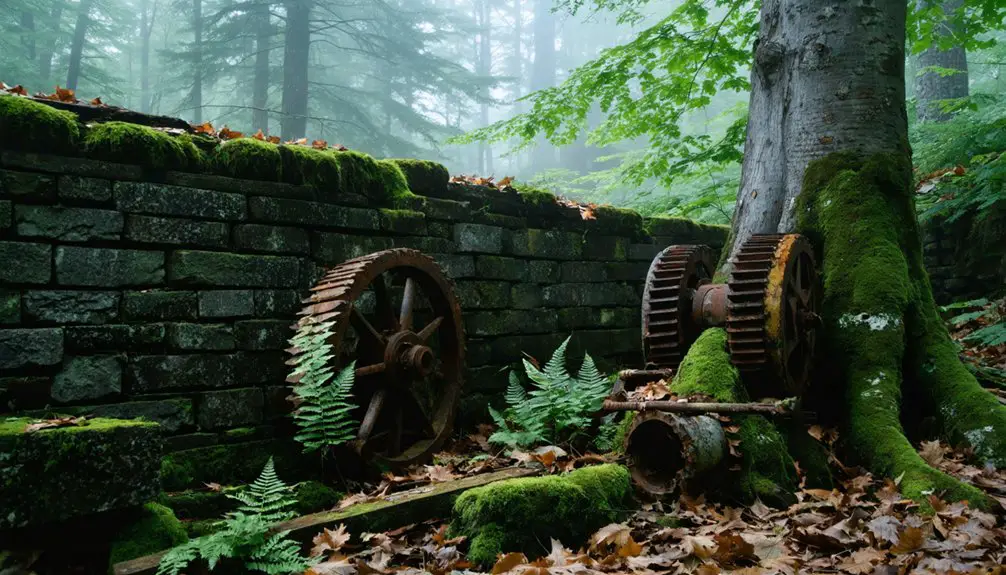
Since Vermont’s ghost towns harbor rich architectural remnants, they offer exceptional foreground elements for astrophotography compositions. The historical significance of these locations, from stone foundations to covered bridges, creates compelling visual anchors against starlit skies.
Vermont’s abandoned structures stand as silent sentinels, their weathered stone and timber creating striking silhouettes beneath the cosmic dance overhead.
You’ll find architectural features that naturally frame the Milky Way while adding depth to your nightscape images.
- Stone cellar holes provide natural vignetting and opportunities for creative rim lighting without sky pollution
- Historic mill structures and covered bridges serve as strong midground elements for wide-angle shots
- Cemetery monuments offer vertical elements perfect for star trail compositions
- 18th-19th century foundations respond well to low-angle lighting techniques for texture retention
Position your tripod strategically around these structures for maximum contrast.
Use warm LED panels or carefully directed headlamps to illuminate architectural details while preserving the dark sky above.
Best Times and Celestial Events for Ghost Town Shoots
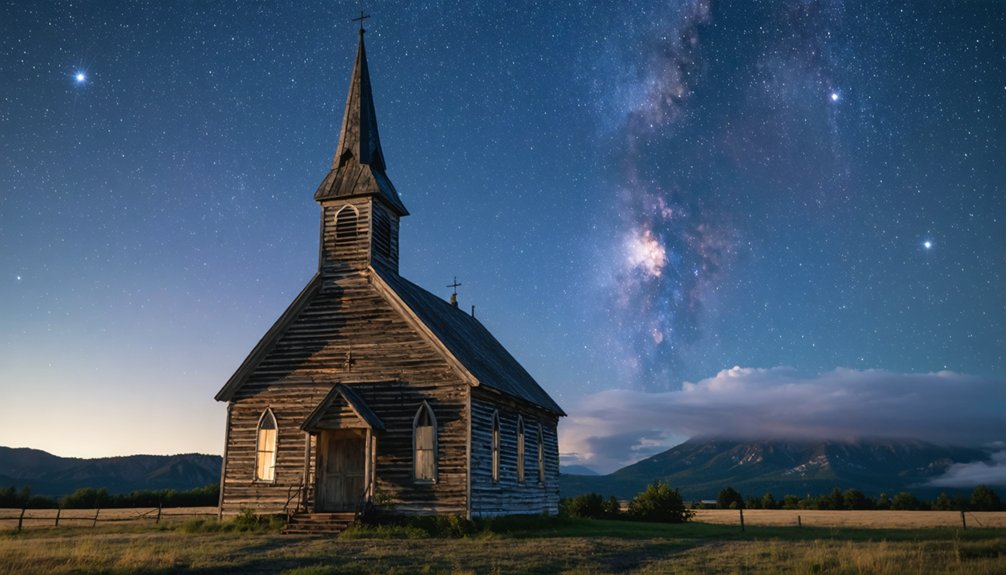
To capture stellar astrophotography in Vermont’s ghost towns, you’ll need to carefully plan your shoots around optimal celestial conditions and seasonal windows.
For ideal photo composition, target December through February when winter’s crisp air delivers exceptional sky transparency. You’ll find peak Milky Way visibility from March through October, with autumn offering an optimal balance of clear skies and manageable temperatures.
Time your visits during new moon phases or within two nights for maximum dark-sky contrast. If you’re after dramatic foreground lighting, schedule shoots during waning or waxing crescents.
For celestial timing, begin your exposures 30-90 minutes after astronomical dusk. Watch for special events like the Perseid meteor shower in August or bright planetary conjunctions to add unique elements to your ghost town compositions.
Frequently Asked Questions
Are There Any Paranormal Photography Opportunities at These Ghost Town Locations?
You’ll find prime paranormal encounters at Glastenbury and Ricker Basin, where ghostly legends persist. Pack your infrared camera, EMF meter, and full-spectrum equipment for capturing potential supernatural phenomena during nighttime shoots.
Which Ghost Towns Require Permits or Permission for Overnight Photography Access?
You’ll need permits for all overnight ghost town photography – isn’t freedom great? Check state parks, national forests, private land, and municipal properties. Don’t forget liability insurance and special use permits.
How Reliable Is Cell Phone Service at These Abandoned Vermont Locations?
You’ll encounter unreliable cell service reliability at abandoned locations, with dead zones common across rural Vermont. Pack satellite communication devices or two-way radios as backup for safety during night shoots.
Can You Camp Overnight at Any of These Ghost Town Sites?
You’ll need to check land ownership, as camping regulations vary. If the ghost town’s on state forest land, you’re allowed primitive camping with standard setbacks, but there aren’t designated amenities.
Are There Guided Astrophotography Tours Available to These Ghost Towns?
You won’t find official guided tours or photography workshops to these locations. You’ll need to self-navigate with your gear or join local astronomy clubs for informal dark-sky meetups.
References
- https://en.wikipedia.org/wiki/List_of_ghost_towns_in_Vermont
- https://www.ghostsofnewengland.com
- http://freepages.rootsweb.com/~gtusa/history/usa/vt.htm
- https://vermontcountry.com/2023/10/26/the-haunting-of-glastenbury-mountain/
- https://www.geotab.com/ghost-towns/
- https://obscurevermont.com/tag/ruins/
- https://myfamilytravels.com/supposedly-boring-vermont-towns-hiding-some-truly-strange-landmarks
- https://abandonedin360.com/our-top-abandoned-places-in-vermont/
- https://www.vermonter.com/ricker-basin-vermont-ghost-town/
- https://www.valleyviewvt.com/stargazing-west-dover-vermont/