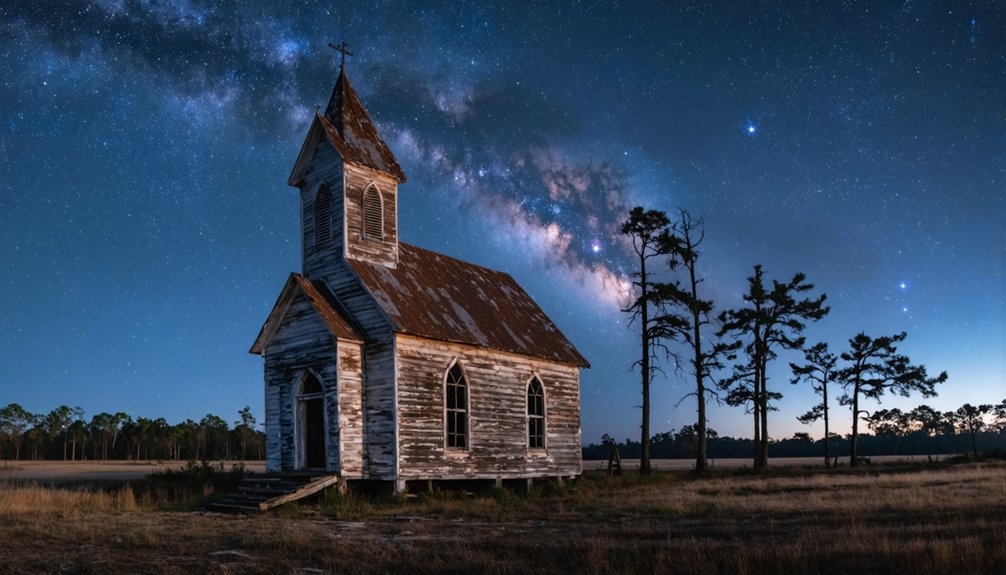
You’ll find prime astrophotography conditions at Elliott City in Point Coupee Parish, where submerged structures create unique reflections of the Milky Way. For ideal shots, pack your full-frame camera with a wide-angle lens like the Rokinon 12mm f/2.8 fisheye and set up during new moon phases between March and September. The Atchafalaya Basin Preserve offers exceptional dark sky access via abandoned logging paths, while Kisatchie National Forest’s Longleaf Vista provides unobstructed celestial views. The technical challenges of these locations demand careful planning and specialized gear.
Key Takeaways
- Elliot City offers unique opportunities to photograph the Milky Way reflecting off submerged structures within the Morganza Spillway system.
- Taft Ghost Town maintains excellent dark sky conditions and minimal light pollution, making it ideal for night sky photography.
- Laurel Valley Sugar Plantation provides historical structures against dark rural skies perfect for ghost town astrophotography compositions.
- The Atchafalaya Basin near abandoned settlements features isolated clearings and logging paths ideal for telescope setups and long exposures.
- Burrwood’s submerged territory combines ghost town elements with unobstructed sky views, offering excellent conditions for Milky Way photography.
Discovering the Lost Town of Elliot City
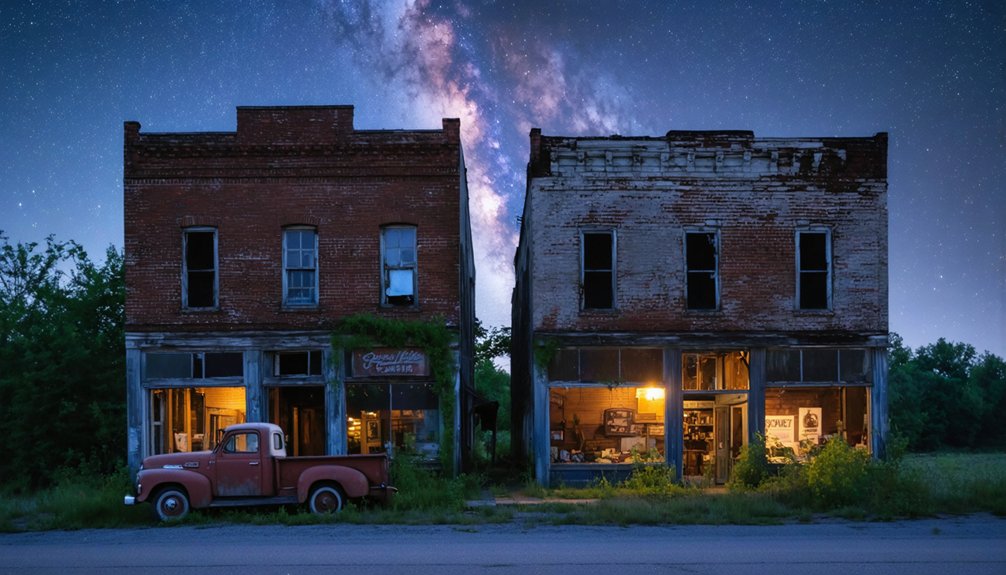
Located in Point Coupee Parish, Elliot City stands as a submerged memorial to Louisiana’s complex relationship with water management. You’ll find this ghost town near Route 190, though accessing it requires careful planning since it lies within the Morganza Spillway’s floodway system. Like many of Louisiana’s ghost towns, Elliot City’s fate echoes the pattern of economic shifts that reshaped communities across the state.
The town’s history reflects a challenging battle against nature, enduring the Torras crevasse flooding of 1912 and the devastating McCrea crevasse of 1927. Former residents and locals keep the memories of the town alive through shared stories. While these events tested Elliot City’s resilience, it wasn’t until 1939 that the community faced permanent displacement due to the Morganza Spillway construction.
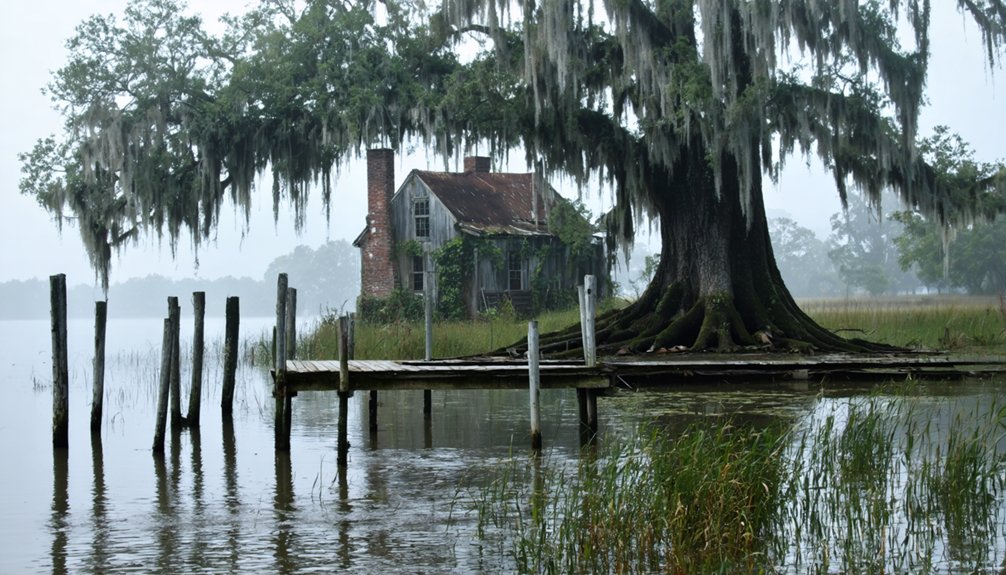
Today, you’ll spot only one structure remaining above water when the spillway’s inactive. For astrophotographers, this creates a unique opportunity to capture the Milky Way reflecting off the water-covered ghost town during clear nights.
Dark Sky Conditions at Historical Sites
You’ll need to evaluate Bortle scale ratings at historical sites against reference data from places like Folsom’s Class 4 skies and Kisatchie’s prime darkness zones to determine ideal shooting conditions.
Historical locations near the Atchafalaya Basin offer particularly promising opportunities, as the dense swamps naturally shield against artificial lighting while providing unobstructed views of the night sky through strategic clearings.
After sunset, prepare with waterproof hiking boots since the terrain can be muddy and wet near abandoned structures.
The presence of thick fog can drastically reduce visibility and impact photography conditions, so monitor weather patterns carefully.
Your best astrophotography windows will occur during new moon phases when you can capture both abandoned structures and the Milky Way core between 2-4 AM, especially from March through September.
Light Pollution Ratings Analysis
While Louisiana’s ghost towns offer unique opportunities for astrophotography, their light pollution ratings vary considerably based on location and surrounding development.
You’ll find the lowest Bortle scale readings at Bayou Cocodrie NWR and Atchafalaya Basin, where extensive wetlands shield against urban glow. Consulting the light pollution map helps identify the clearest viewing areas within these preserves.
Lake Fausse Pointe’s dark water surfaces and cypress groves create ideal conditions for capturing the Milky Way, particularly via kayak access points. Near Burrwood, the submerged territory provides unobstructed views of the night sky across the Mississippi River delta.
The abandoned Laurel Valley Sugar Plantation and Taft Ghost Town maintain relatively dark skies despite their proximity to industrial zones.
Their rural settings and overgrown vegetation help minimize light pollution, though you’ll want to verify current SQM values before setting up equipment.
The sites’ remote locations and minimal population density contribute to maintaining darkness levels suitable for deep-sky imaging.
Historical Site Sky Access
Despite their historical significance, many of Louisiana’s ghost town sites offer prime celestial viewing conditions due to their remote locations and minimal development.
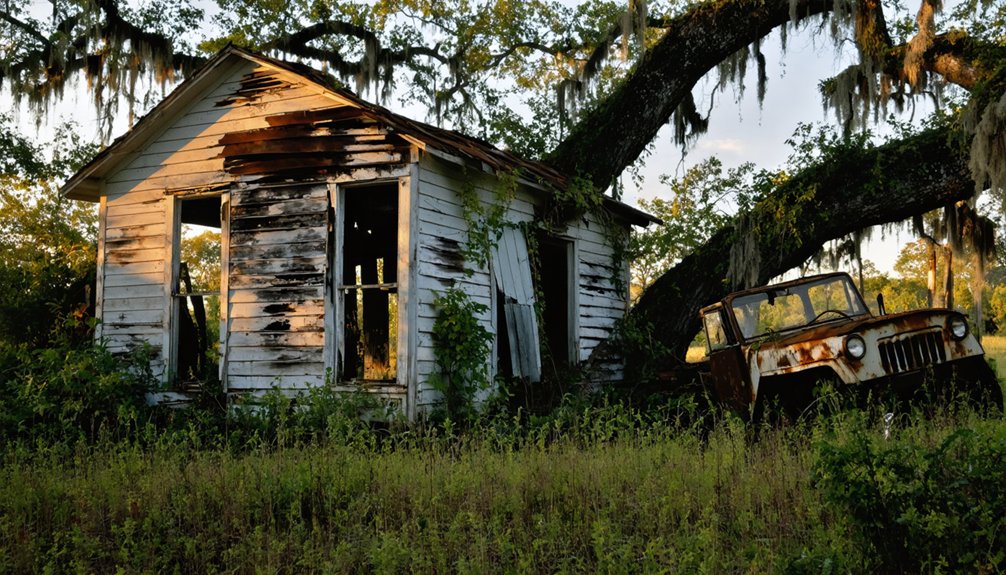
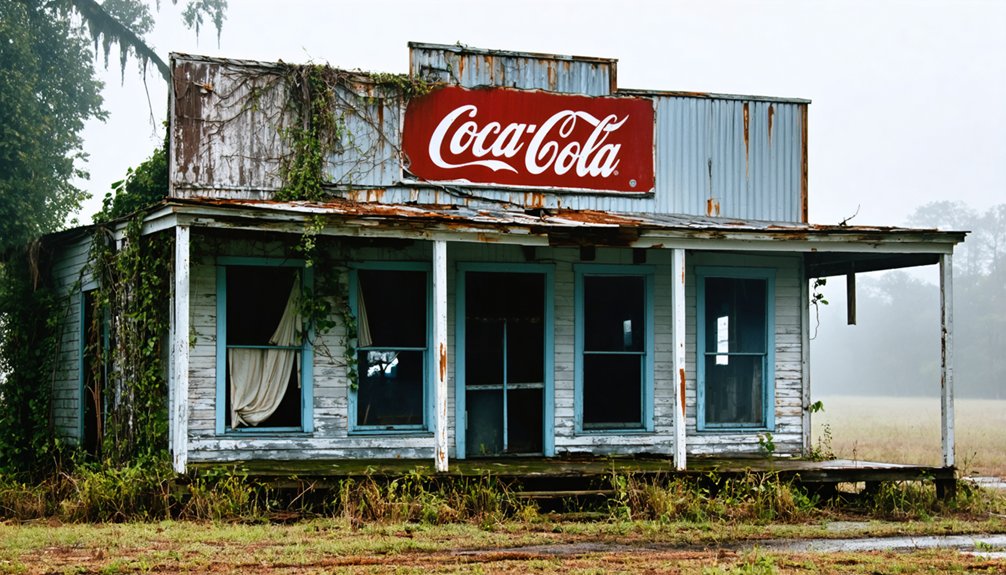
The haunting beauty of abandoned Louisiana draws photographers and explorers alike, eager to capture the essence of decaying architecture embraced by nature. Each site tells a story of resilience, echoing the past while inviting new reflections under the starlit skies. As the sun sets, the remnants of history come alive, casting long shadows that dance alongside the curious souls who wander through these forgotten places.
You’ll find exceptional dark sky access at places like the Atchafalaya Basin Preserve, where abandoned logging paths lead to isolated clearings perfect for telescope setup. The dense cypress canopies frame your shots while blocking peripheral light pollution. Star parties frequently gather here to share equipment and expertise.
When exploring ghost town legends in Kisatchie National Forest, head to Longleaf Vista Overlook for unobstructed southeastern views of the Milky Way. The Bortle scale rating improves significantly compared to nearby populated areas.
For maximum darkness, venture into Bayou Cocodrie’s 34,000-acre expanse, where historic waterways guide you to elevated viewing spots. Your camera can capture sharp celestial details thanks to the humidity drop after sunset, while the surrounding wilderness shields against artificial light intrusion.
Moonless Night Viewing Windows
Planning your ghost town astrophotography around moonless nights maximizes the visibility of celestial features at historical sites.
You’ll want to carefully track moon phases and use tools like PhotoPills to simulate nighttime conditions before heading out. During new moon periods, you’ll experience markedly improved visibility of the Milky Way and layered star fields.
Scout your locations during daylight hours to identify clear sight lines and avoid terrain obstacles that could impact your shots.
While Class 4 Bortle skies in areas like Folsom offer excellent viewing conditions, you’ll need to strategically time your visits to dodge fog, particularly along coastal routes.
Remember to factor in weather patterns and implement proven stargazing strategies – positioning yourself away from any remaining light pollution from nearby towns or industrial sites will greatly enhance your ghost town astrophotography results.
Using a fast wide-angle lens will help capture the expansive night sky while maintaining sharp detail in your ghost town compositions.
Essential Gear for Ghost Town Night Photography
Successful ghost town astrophotography requires several key pieces of gear to capture stunning night scenes.
You’ll need a full-frame camera like the Nikon D750 for superior high ISO performance and dynamic range. Pair it with a wide-angle lens, such as the Rokinon 12mm f/2.8 fisheye, to capture expansive starry skies and architectural details.
A carbon fiber tripod and remote shutter release like the Vello Shutterboss II are essential accessories for sharp long exposures beyond 30 seconds. Consider using 10-second exposures to create ethereal ghost effects in your nighttime shots.
Store your lighting gear in a Peak Design Field Pouch – you’ll want multiple flashlights and an off-camera flash set to low power for creating ghost effects.
Don’t forget neutral density filters for daytime ghost photography and a headlamp for traversing dark locations while maintaining your night vision.
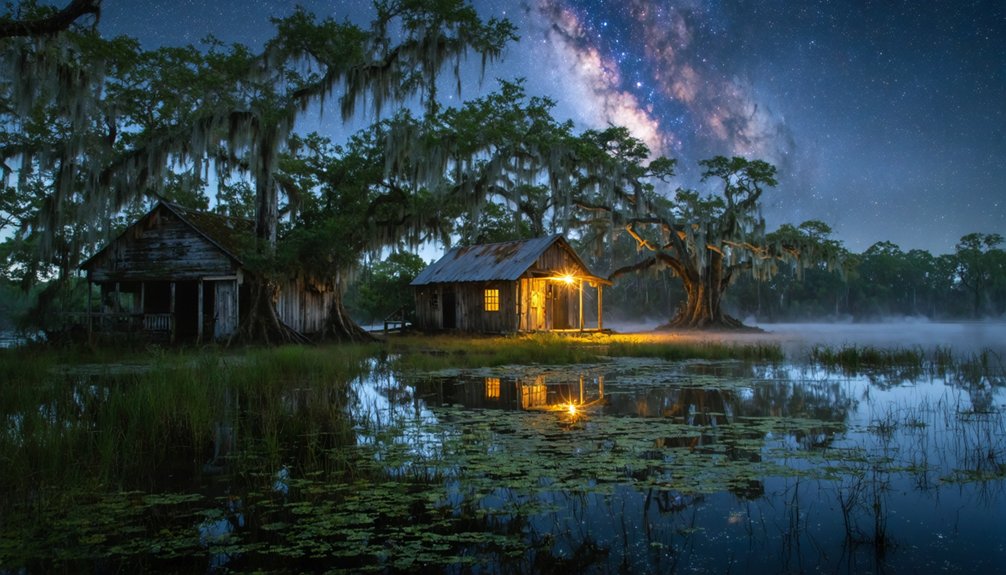
While exploring Louisiana’s ghost towns after dark, traversing swamp trails demands heightened vigilance and specialized safety protocols.
You’ll encounter unique nocturnal hazards, including near-zero visibility from dense fog and disorienting shadows that complicate swamp navigation.
To safely capture your shots, maintain speeds well below posted limits and equip yourself with fully charged devices and emergency whistles.
Watch for alligators active during dawn and dusk periods, particularly near water edges. The swamp’s sound-absorbing environment creates additional challenges for situational awareness.
Partner with local guides who know problematic areas and monitor weather patterns. They’ll help you navigate slick surfaces and provide wildlife location updates.
Stay on designated paths, avoid distractions, and listen carefully for warning signals – the swamp’s conditions can shift rapidly after dark.
Best Seasons for Star Photography in Abandoned Places
You’ll find peak Milky Way visibility over Louisiana’s ghost towns during summer months (June-August), though high humidity and insects can challenge your camera gear and comfort.
Winter nights offer clearer atmospheric conditions and better star visibility, making December through February ideal for capturing star trails and deep-sky objects despite shorter viewing windows.
Spring brings dramatic storm possibilities that can add atmosphere to your abandoned building compositions, but you’ll need to carefully monitor weather systems and have backup dates planned due to the seasonal instability.
Summer Milky Way Peaks
Planning your ghost town astrophotography during summer’s peak Milky Way season requires precise timing and technical preparation.
You’ll need to align your shoots with the new moon phase for ideal darkness, while using apps like PhotoPills to scout southeastern viewing locations free from obstructions. To capture summer constellations at their finest, equip yourself with a full-frame camera or quality APS-C sensor paired with a fast wide-angle lens.
Your stargazing techniques must account for light pollution, so seek locations deep within Kisatchie National Forest where artificial light won’t interfere.
Scout your ghost town location during daylight hours, checking for clear sightlines to the southeastern horizon where the Milky Way will rise. Always verify weather forecasts for cloudless skies and confirm your tripod setup provides rock-solid stability for long exposures.
Winter Sky Clarity
Winter’s crystalline skies create ideal conditions for photographing abandoned structures against Louisiana’s starlit canvas.
You’ll find winter humidity drops to 60-70%, dramatically improving atmospheric clarity compared to muggy summer months. The crisp 40-60°F temperatures stabilize air layers, reducing star scintillation and sharpening your deep-sky captures.
Head to Folsom’s Bortle Class 4 skies, where winter nights stretch 10-12 hours, maximizing your exposure windows.
The season’s northeasterly winds sweep away haze, while frost-kissed nights deliver superior seeing conditions. Scout ghost town locations near Kisatchie National Forest or Bayou Cocodrie Refuge, where minimal light pollution meets winter’s celestial advantage.
Pack your waterproof boots and layer up – winter photography demands preparation, but rewards you with unmatched atmospheric clarity and extended dark-sky sessions.
Spring Storm Considerations
Spring brings challenging conditions for astrophotographers seeking ghost town compositions in Louisiana. You’ll face peak thunderstorm activity from March to May, with 15-20 storm days per month limiting clear sky opportunities to just 20-30% of nights. Severe weather particularly impacts northern locations like St. Tammany and Kisatchie National Forest.
As summer approaches, the best times to explore Louisiana ghost towns shift when the weather stabilizes, allowing for more predictable conditions. The warm evenings offer a unique opportunity to capture the haunting beauty of these abandoned sites under the twilight sky. Photographers may find that visiting during the fall months provides not only clearer skies but also stunning autumn landscapes to enhance their compositions.
To maximize your success rate, focus on late evening sessions between 10 PM and 2 AM when storm activity typically subsides. Track NOAA forecasts 48 hours ahead and align shoots with new moon phases for ideal darkness.
You’ll need waterproof gear and elevated tripods in flood-prone abandoned sites. Consider combining PhotoPills planning with light pollution maps to identify high-ground locations less affected by post-storm urban glow. Target mid-week sessions to minimize interference from other visitors’ artificial lighting.
Finding Safe Vantage Points Near Ghost Towns
When scouting astrophotography locations near Louisiana’s ghost towns, you’ll need to identify secure vantage points that combine dark skies with stable ground for equipment setup.
Folsom’s elevation of 157 feet offers prime positioning under Bortle Class 4 skies, while Kisatchie’s Longleaf Vista provides a pitch-dark parking area perfect for gear deployment.
For maximum stargazing safety, target locations like North Caddo Recreation Area, where designated astronomical event spaces guarantee reliable footing and ghost town accessibility.
The Atchafalaya Basin’s old logging paths lead to cypress-framed clearings ideal for long exposures.
Scout these spots during daylight hours to map out equipment staging areas and identify potential hazards.
You’ll find the best results at higher elevations away from coastal petrochemical lighting.
Local Wildlife and Night Sky Photography Tips
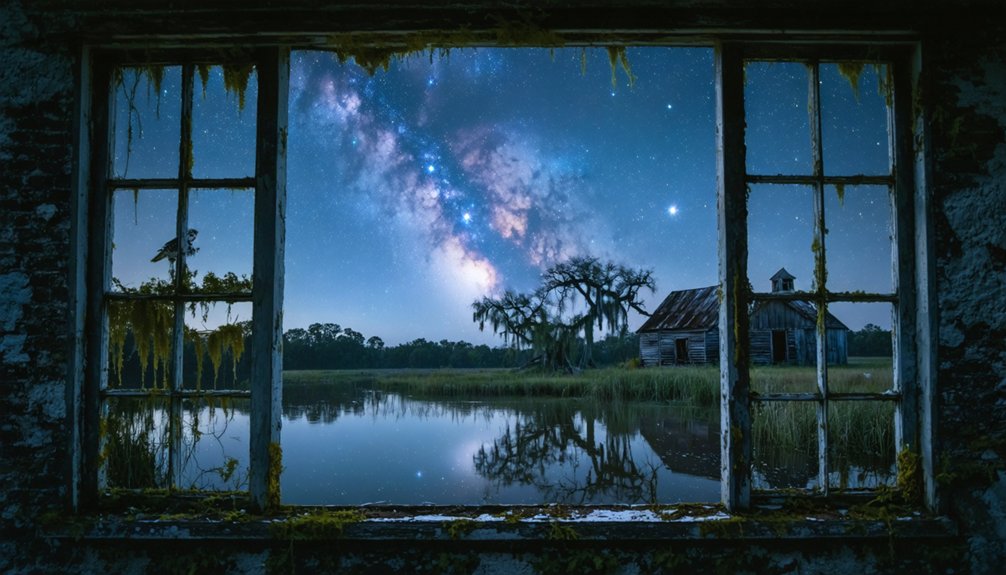
Although Louisiana’s diverse wildlife adds character to astrophotography sessions, you’ll need to navigate around several nocturnal species while shooting.
Scout locations during daylight using PhotoPills to map wildlife habitats and identify safe vantage points away from alligator-prone areas. Pack waterproof boots for swamp terrain near Bayou Cocodrie.
Listen for owls in Folsom’s countryside and watch for rustling leaves that signal wildlife movement. Time your shoots during new moon phases when alligators are less active.
Position yourself away from sandbanks and cypress knees where animals rest. For unobstructed wildlife encounters, set up on elevated fishing piers or boat ramps.
Capture the Milky Way’s reflection from Lake Fausse Pointe‘s calm waters while staying alert to croaking frogs and chirping crickets in the surrounding cypress groves.
Frequently Asked Questions
Are Permits Required for Overnight Ghost Town Photography in Louisiana?
You’ll need permits for overnight photography at regulated ghost towns due to historical preservation rules. Check local photography regulations, as many sites restrict tripod use and require advance permission.
How Dangerous Are Old Structures During Nighttime Astrophotography Sessions?
Like silent predators in wait, old structures pose extreme dangers at night. You’re risking structural collapse, hidden drop-offs, toxic exposures, and wildlife encounters. Don’t enter unstable buildings during nighttime shoots.
What Paranormal Activity Has Been Reported During Night Shoots?
You’ll likely encounter ghost sightings through your viewfinder as orbs or mists, while your audio gear might pick up unexplained noises that interfere with time-lapse settings and sensor readings.
Can Drones Be Used for Aerial Night Photography of Ghost Towns?
“Look before you leap” – you’ll need FAA Part 107 certification for night drone operations. You can capture aerial shots following drone regulations with anti-collision lights, maintaining VLOS below 400 feet.
Do Any Ghost Towns Offer Guided Astrophotography Tours?
You won’t find dedicated guided tours for ghost town astrophotography, but you can book custom photography workshops through local astronomers, camera clubs, or tour operators who’ll arrange site permissions and equipment.
References
- https://app.advcollective.com/travel-guides/Lafayette/stargazing-in-the-swamp-best-dark-sky-spots-in-louisiana
- https://www.visitthenorthshore.com/blog/stories/post/northshore-after-dark-a-stargazing-paradise-in-st-tammany-parish/
- https://www.explorelouisiana.com/articles/things-do-haunted-places-louisiana
- https://www.onlyinyourstate.com/trip-ideas/louisiana/underwater-ghost-town-la
- https://www.go-astronomy.com/dark-sky-parks-stargazing-state.php?State=LA
- https://heartoflouisiana.com/milky-way/
- https://heartoflouisiana.com/state-parks-stargazing/
- https://kids.kiddle.co/List_of_ghost_towns_in_Louisiana
- https://en.wikipedia.org/wiki/Elliot_City
- https://www.loquis.com/en/loquis/6737988/Red+Cross+Louisiana