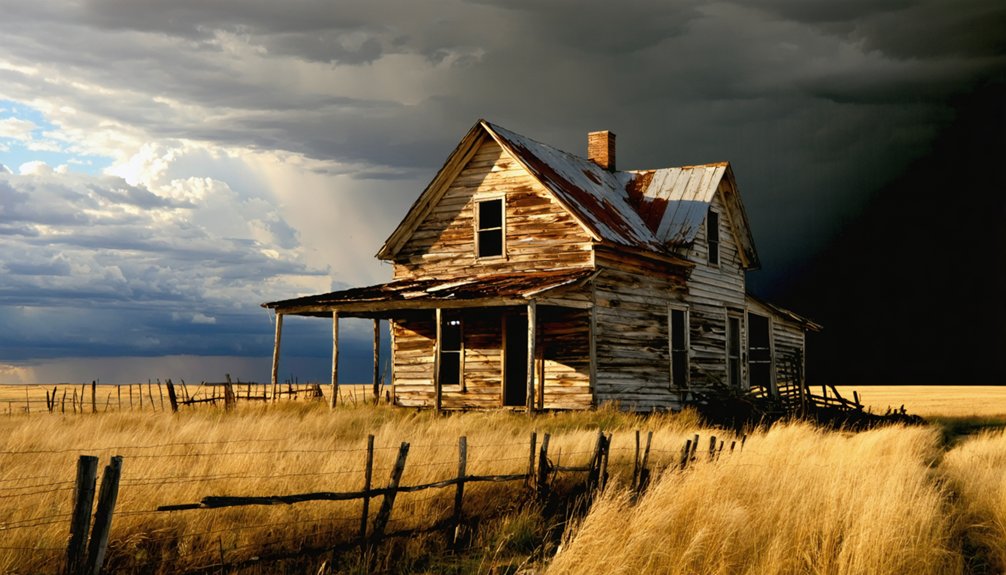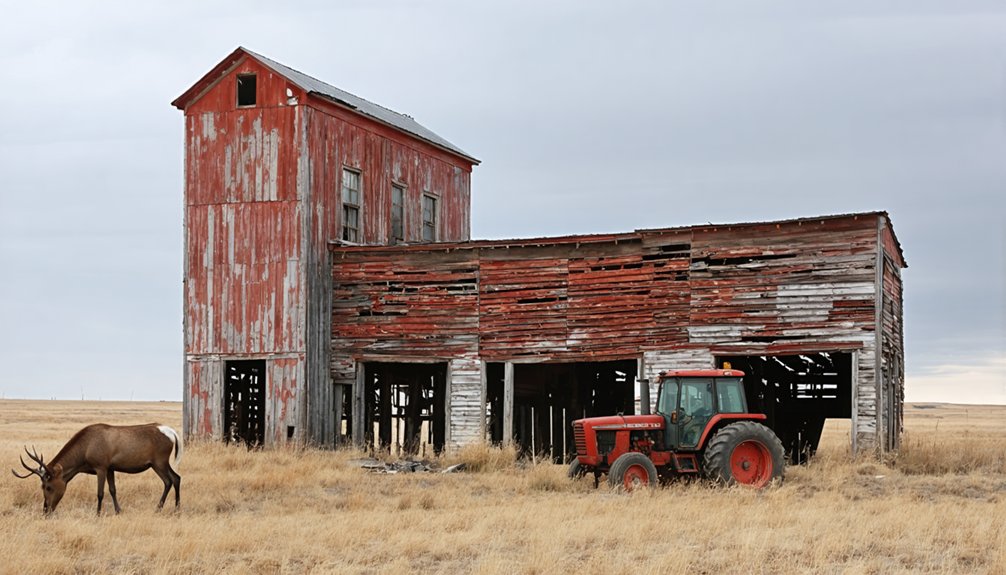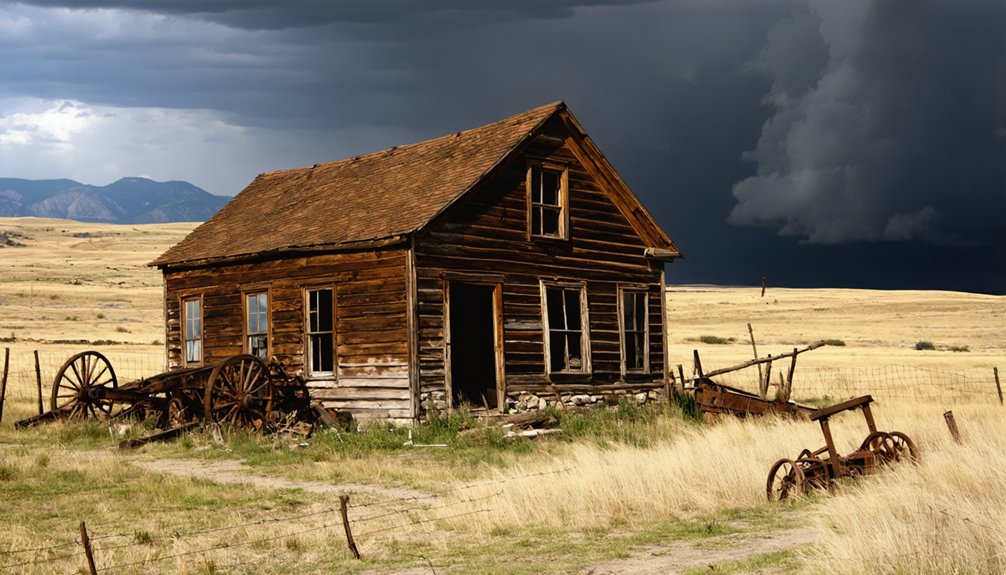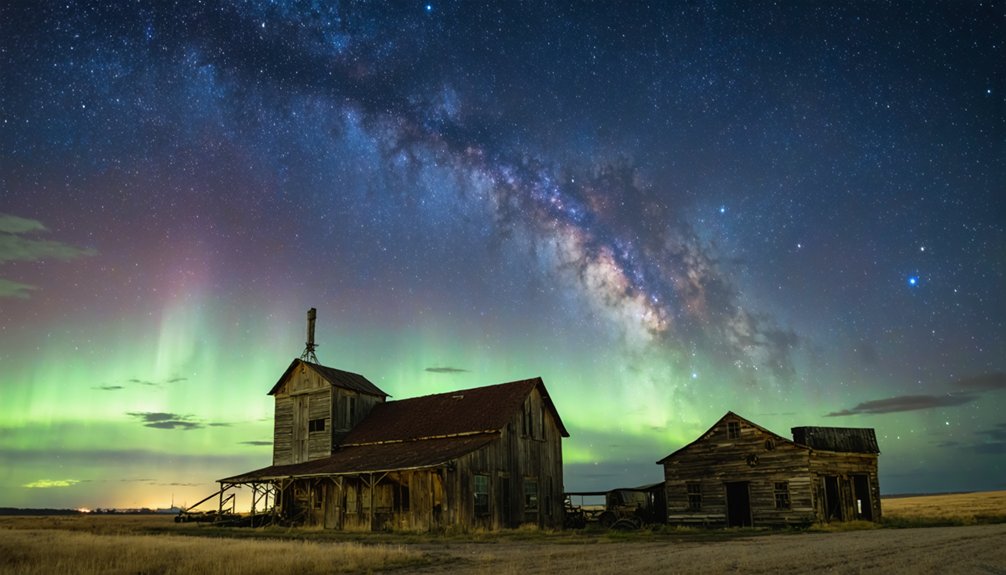
You’ll find exceptional astrophotography conditions at South Dakota’s ghost towns, where Bortle class 2 darkness reveals up to 7,500 stars on clear nights. Head to Spokane Ghost Town via Forest Service Road 330 for the region’s darkest skies and intact mine structures. Trojan and Maitland offer compelling foreground elements with processing vats and tailings, while Rochford’s Standby Mine ruins provide natural framing. These abandoned settlements reveal unique opportunities to capture the Milky Way against historical mining relics.
Key Takeaways
- Spokane Ghost Town offers the region’s darkest skies (Bortle Scale Class 2) and features intact mine structures for compelling foreground elements.
- Trojan Ghost Town provides dramatic compositions with massive processing vats and tailings against clear night skies.
- Rochford’s Standby Mine ruins offer natural valley framing for astrophotography, with easy equipment access via maintained roads.
- Galena Ghost Town features a preserved schoolhouse structure ideal for light painting against star-filled skies.
- Mystic Ghost Town provides direct equipment access via gravel roads and unrestricted setup locations for tracking mounts.
Why South Dakota’s Ghost Towns Offer Stellar Night Sky Photography
When it comes to capturing pristine night skies, South Dakota’s ghost towns offer photographers an extraordinary confluence of ideal conditions.
You’ll discover Bortle Scale class 2 darkness ratings near abandoned settlements, where the absence of artificial light reveals up to 7,500 stars on clear nights. These forgotten outposts, steeped in ghost town history and night sky myths, provide unparalleled access to truly dark skies.
Many photographers head to West River areas for the most spectacular views. You’re blessed with 280-300 clear nights annually, surpassing 95% of U.S. locations for reliable shooting conditions.
The remote prairie settings near places like Spokane and Mystique combine pristine darkness with compelling foregrounds of mining relics and structural remnants. Enthusiasts often gather at Hidden Valley Observatory for guided stargazing sessions with professional telescopes. From these vantage points, you’ll capture the Milky Way as a brilliant ribbon, while meteor showers and distant galaxies emerge with exceptional clarity.
Top Dark Sky Locations Among Abandoned Mining Towns
You’ll find ideal nighttime visibility in the abandoned mining settlements scattered throughout the Black Hills, with Spokane offering the region’s darkest skies according to the Bortle Scale.
During your exploration, remember that over six hundred ghost towns exist across the Black Hills, providing numerous opportunities for nighttime compositions.
The crumbling infrastructure of towns like Trojan and Maitland provides compelling foreground elements, with their preserved mining equipment silhouetted against the star-filled horizon.
To reach these prime shooting locations, you can navigate from established campgrounds and forest roads, though you’ll need to scout access points during daylight hours due to challenging terrain around the ruins. The ghost town schoolhouse in Galena remains standing and makes an excellent composition element for night photography.
Remote Mining Ruins
South Dakota’s remote mining ruins offer exceptional dark-sky locations for astrophotographers seeking historical structures as foreground elements.
The remnants of cyanide-process mining techniques and preserved industrial architecture create compelling silhouettes against the Milky Way, particularly in sites reaching Bortle class 3-4 darkness.
- Spokane’s intact mine manager’s house and mill foundations provide shelter and compositional opportunities, with reliable access from Spokane Creek Campground. The town’s peak profits of $144,742 in 1927 illustrate its historical significance as a mining powerhouse. The town’s connection to the Fire on the Mountain song adds cultural significance to night photography sessions.
- Trojan’s massive processing vats and tailings offer dramatic industrial forms, though you’ll need to maintain safe distances from chemical residues.
- Rochford’s Standby Mine ruins rest in a natural valley frame, ideal for low-elevation galaxy shots with minimal light pollution interference.
These historically significant sites demand careful planning – verify road conditions, obtain necessary permits, and respect site-specific hazards and closures.
Equipment Access Points
Among South Dakota’s prime ghost town locations for astrophotography equipment setup, five abandoned mining settlements offer exceptional dark sky access points with minimal light pollution interference.
You’ll find excellent access routes at Spokane Ghost Town via Forest Service Road 330, where you can position heavy gear on stable ground near the historic structures.
Mystic’s gravel road approach provides direct equipment access to multiple vantage points, while Ardmore’s abandoned rail line offers a clear corridor for nighttime setups. The acidic Hat Creek nearby provides a unique foreground element for water reflection shots. The site features abandoned businesses and homes that create compelling silhouettes against the night sky.
At Capa, the open prairie layout enables unrestricted tripod placement and clear horizon views.
Okaton’s deserted railroad grounds present perfect spots for tracking mounts, with firm surfaces ideal for precise alignment and minimal atmospheric distortion from surrounding terrain.
Essential Gear for Ghost Town Astrophotography
Your night photography kit must start with a full-frame mirrorless or DSLR camera paired with fast wide-angle and telephoto lenses to capture both sprawling Milky Way panoramas and detailed architectural elements in ghost towns.
You’ll need to protect your investment with an extensive field safety kit that includes backup batteries, emergency lights, first-aid supplies, and weather protection gear when exploring remote locations after dark. An intervalometer remote control will be crucial for capturing exposures longer than 30 seconds without introducing camera shake.
A sturdy tripod with a payload rating that exceeds your heaviest camera setup becomes essential when shooting long exposures in these often unstable and wind-exposed abandoned structures. An equatorial tracking mount will allow you to capture longer exposures of the night sky without star trailing.
Camera Equipment Fundamentals
To capture stunning night sky images in South Dakota’s ghost towns, you’ll need specialized camera equipment that excels in low-light conditions. Full-frame cameras like the Canon 6D or Nikon D750 deliver superior performance at high ISO settings, essential for photographing starlit abandoned buildings.
Exploring the best drone locations in South Dakota can provide unique perspectives of these historical sites. The vast landscapes and minimal light pollution create an ideal environment for capturing breathtaking aerial shots. Make sure to scout potential launch areas and ensure compliance with local regulations for drone usage to maximize your photography experience.
- Select wide-angle lenses with f/2.8 or lower apertures – the Rokinon 14mm f/2.8 or Tamron 17-28mm f/2.8 will maximize your field of view while gathering vital light for Milky Way compositions.
- Mount your camera on a robust tripod paired with a star tracker like the iOptron SkyTracker for exposures up to 5 minutes.
- Add an intervalometer for precise timing control and clip-in light pollution filters to combat any distant city glow affecting your ghost town shots.
Field Safety Kit Requirements
When venturing into South Dakota’s abandoned settlements for night photography, an extensive field safety kit becomes your lifeline against environmental and structural hazards. Your core kit must include a high-visibility headlamp with red/white modes, reliable GPS unit, and backup power banks to maintain critical devices throughout your shoot.
Don’t skimp on first aid supplies, and always pack emergency communication devices like a satellite messenger or PLB for areas without cell coverage. Protect yourself with N95 respirators when exploring structures, and wear cut-resistant gloves with hard-soled boots.
Keep a signal kit and two-way radios handy for group coordination. Remember to leave a detailed route plan with emergency contacts, including time-stamped check-in schedules. These precautions guarantee you’ll stay safe while capturing the night sky in these remote locations.
Planning Your Ghost Town Night Shoot
Planning a successful ghost town night shoot requires careful attention to both technical and logistical details.
You’ll need to navigate nighttime wildlife while capturing the ghostly ambiance of South Dakota’s abandoned settlements. The thin fog and fading light conditions create perfect opportunities for dramatic astrophotography.
- Scout your locations during daylight hours, noting safe parking spots near Spokane Creek Campground or accessible areas off I-90 for Okaton.
- Time your shoot during cold fronts when northwestern winds create drifting fog layers, enhancing your celestial compositions.
- Position yourself along public roads near significant structures like grain elevators and jails, particularly in semi-inhabited locations like Cottonwood where you’ll need to respect private property.
Remember to check weather forecasts for thunderstorms and keep your equipment protected in variable evening conditions.
Best Seasons for Ghost Town Star Photography
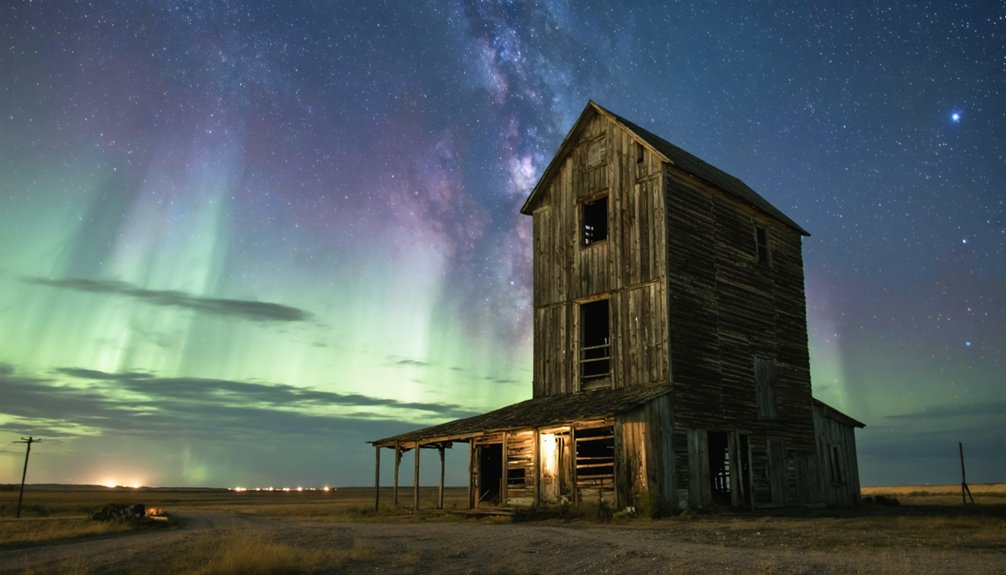
South Dakota’s ghost town astrophotography presents two distinct peak seasons, each offering unique celestial phenomena and atmospheric conditions.
Summer stargazing delivers prime shots of the Milky Way‘s “road of spirits” against weathered buildings, with Scorpius dominating the southern sky. You’ll catch the Perseids’ peak in mid-August, offering 60 meteors per hour to streak across your compositions.
Winter wonders transform ghost towns into crystalline foregrounds for Orion Nebula captures, while the Geminids shower produces twice the meteor activity of summer displays.
You’ll benefit from the Black Hills’ Bortle class 1 darkness, matching the sky views of our ancestors. With 280-300 clear days annually, you can rely on consistent shooting conditions year-round, though winter’s crisp air often yields superior image clarity.
Light Painting Techniques for Historic Structures
The art of light painting historic structures demands precision equipment and calculated movements to reveal architectural details while preserving the night sky’s delicate luminance.
You’ll need multiple light sources, from the powerful Profoto B1 to the subtle ProtoMachines flashlight, along with essential color gels for interior accents.
- Position yourself 10 feet back from structures, using slow sweeping movements at 90-degree angles to guarantee even illumination.
- Set your camera for 30-60 second exposures while bracketing at 0, -2, and +2 EV intervals.
- Paint with light using continuous side-to-side motions close to the ground, then work upward with steady vertical passes.
These exposure techniques require patience as you blend multiple light passes, but you’ll capture the authentic character of these abandoned treasures against South Dakota’s star-filled sky.
Safety and Legal Considerations for Night Access
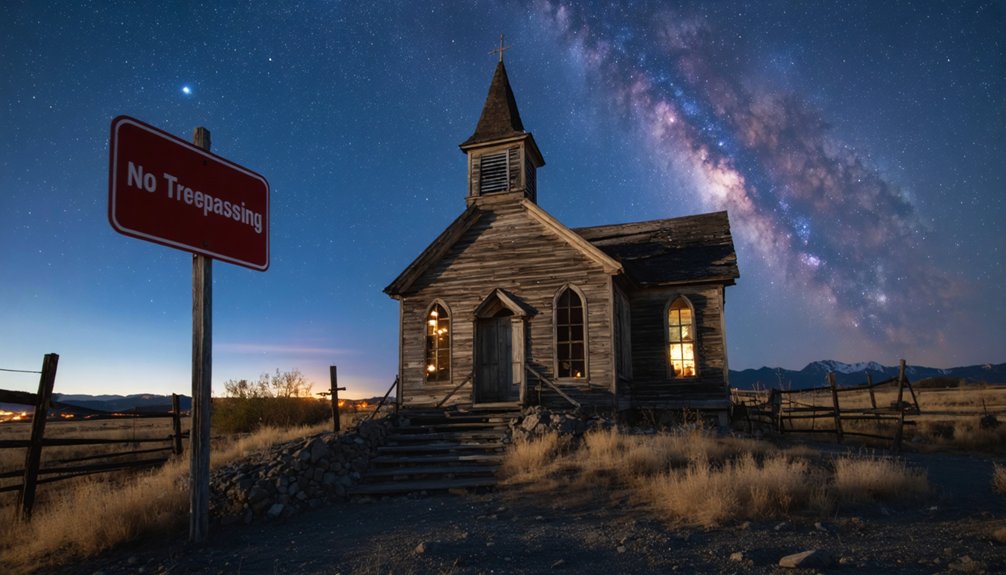
Before venturing into South Dakota’s ghost towns for astrophotography, you’ll need to navigate a complex web of legal requirements and safety protocols that vary by land jurisdiction.
Start by securing legal permissions from the appropriate authorities – whether federal, state, tribal, or private landowners – and verify specific night access regulations for your chosen location.
Always obtain proper permits and clearances before accessing ghost town sites, regardless of their location on public or private land.
Your safety preparation should include mapping cellular coverage zones, identifying multiple exit routes, and carrying essential gear like red-filtered headlamps and first-aid supplies.
When shooting, keep artificial lighting minimal and contained to comply with local statutes, particularly near agricultural areas.
Never enter unstable structures without proper inspection and permits, and maintain awareness of seasonal restrictions due to wildlife protection or hunting seasons.
Document your lighting plan when applying for permits to streamline the approval process.
Composition Strategies for Ruins and Star Fields
Once you’re cleared for night access, mastering composition becomes your next technical challenge in ghost town astrophotography. The key is balancing foreground silhouettes against star-rich skies while maintaining visual depth throughout your frame.
Achieve pro-level shots by following these essential techniques:
- Position abandoned structures at rule-of-thirds intersections, using doorways and windows to naturally frame star clusters.
- Utilize layered elements by combining valley floors, building ruins, and the Milky Way arch to create dimensional depth.
- Align railroad tracks, fence lines, or building edges to draw viewers’ eyes from earthbound ruins toward celestial targets.
Remember to experiment with vertical compositions using grain elevators and church steeples as bold anchors against your starry backdrops.
Weather Patterns and Sky Conditions to Monitor
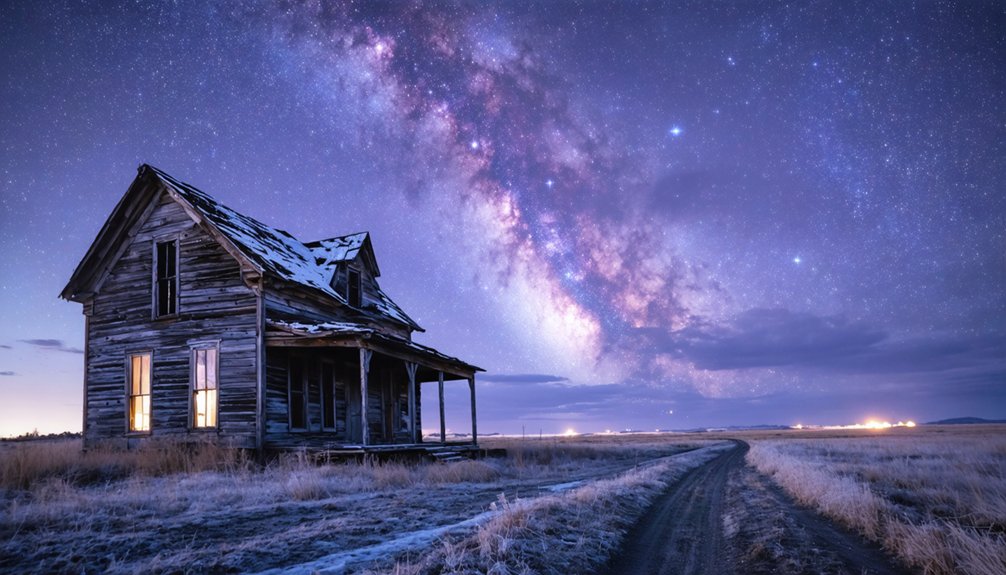
Successfully capturing ghost town astrophotography requires mastering complex weather patterns and sky conditions that directly impact image quality.
You’ll need to monitor nightly cloud cover forecasts and atmospheric conditions through tools like ClearDarkSky to identify ideal shooting windows in South Dakota’s variable climate.
Track moon phases and timing, aiming for new moon periods or illumination under 10% to maximize Milky Way visibility.
Weather forecasting becomes critical – watch for wind speeds that could cause camera shake, and temperature drops that risk equipment condensation.
Pay special attention to seasonal weather patterns that bring dust storms or wildfire smoke, as these can severely degrade sky transparency.
Check local light pollution maps and consider how directional skyglow from nearby towns might affect your chosen ghost town location’s dark sky qualities.
Frequently Asked Questions
Are There Guided Astrophotography Tours Available to These Ghost Town Locations?
Presently, you’ll find no guided photography workshops or specific astrophotography tours to these ghostly grounds. You’re free to explore independently, setting up your shots while utilizing local astronomy clubs’ expertise.
How Do You Handle Encounters With Wildlife During Night Photography Sessions?
Stay alert with your red headlamp, maintain wildlife safety distances, and carry bear spray. You’ll want to make noise, avoid surprising animals, and keep your shooting gear ready for quick encounter preparedness.
What Insurance Coverage Should Photographers Have When Shooting in Abandoned Structures?
You’ll need extensive general liability insurance to protect against third-party injuries, and property insurance covering your gear against damage or theft while shooting in deteriorating structures. Don’t forget location-specific coverage endorsements.
Can Drones Be Used for Nighttime Ghost Town Photography?
With 3-mile visible anti-collision lighting, you can fly drones at night if you’re Part 107 certified and follow drone regulations. Check local ordinances, obtain property permissions, and master nighttime settings.
Are There Any Native American Cultural Sites to Avoid Photographing?
You’ll need to avoid photographing sacred sites including burial grounds, petroglyphs, and ceremonial landscapes. Always obtain tribal permissions first and respect cultural sensitivity when shooting near Native American locations.
References
- https://www.onlyinyourstate.com/experiences/south-dakota/ardmore-ghost-town-sd
- https://www.atlasobscura.com/things-to-do/south-dakota/ghost-towns
- https://www.ghostcanyongetaway.com/insights/stargazing-in-the-black-hills-a-guide-to-night-sky-adventures-near-ghost-canyon-getaway
- https://hot1047.com/darkest-place-south-dakota/
- https://everafterinthewoods.com/deserted-ghost-towns-in-south-dakota-that-history-buffs-still-visit/
- https://www.go-astronomy.com/dark-sky-parks-stargazing-state.php?State=SD
- https://myxoadventures.com/the-ghost-town-of-spokane-south-dakota/
- https://www.youtube.com/watch?v=jmSADvq4Lek
- https://www.travelsouthdakota.com/trip-ideas/stargazing-south-dakota
- https://www.visitrapidcity.com/blog/post/your-guide-to-stargazing-adventures-in-the-rapid-city-area/