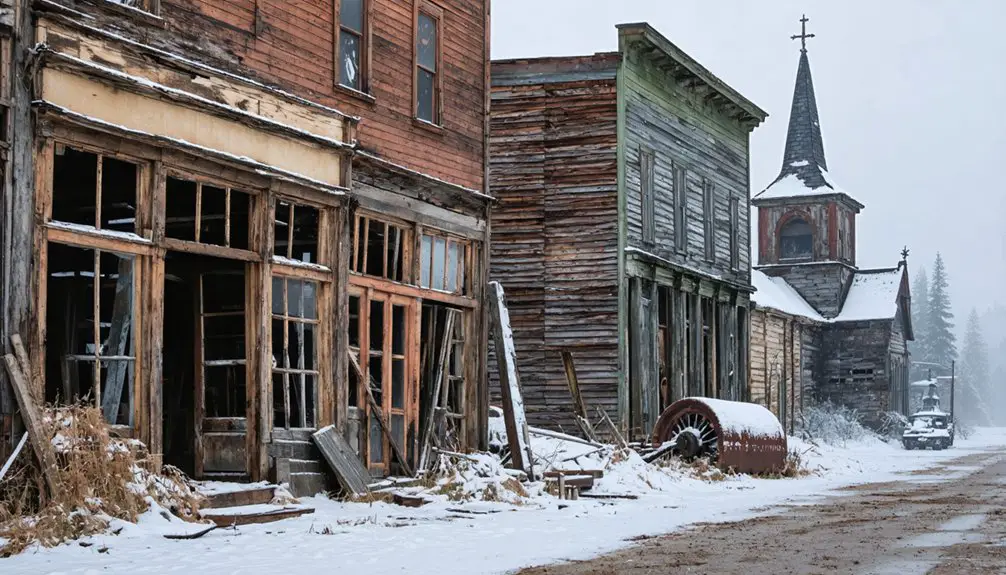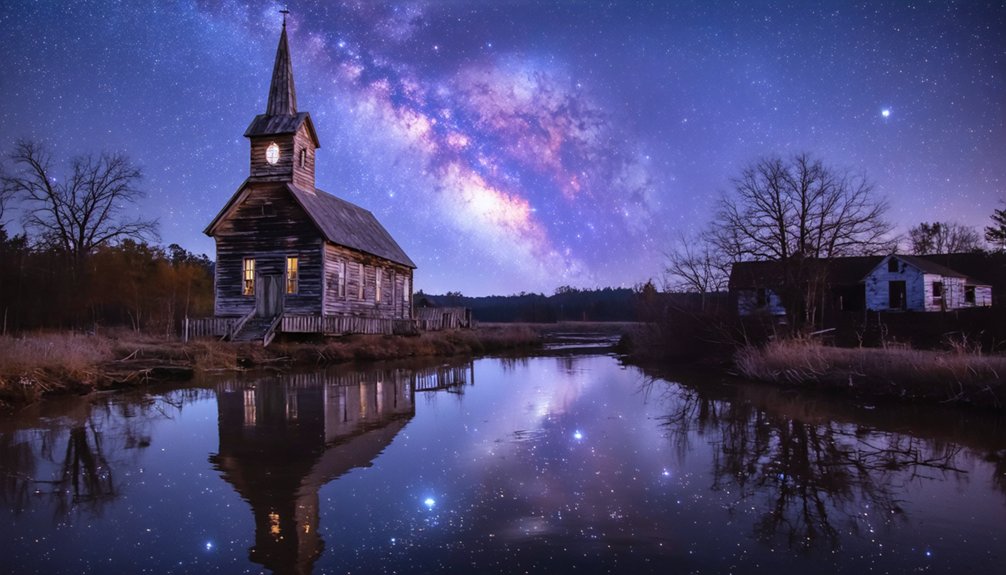
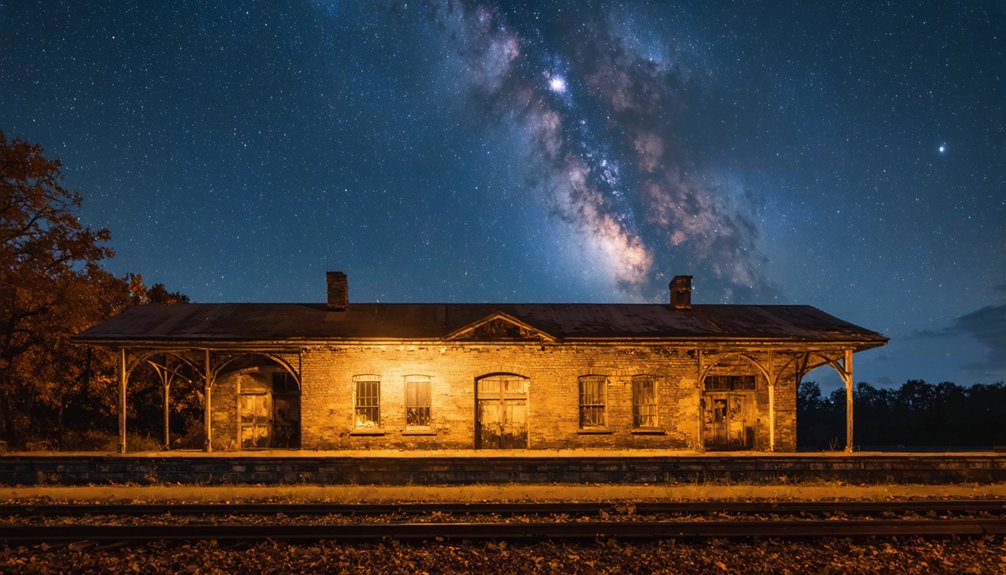
You’ll find exceptional astrophotography conditions at West Virginia’s ghost towns, where Bortle 2-3 darkness levels combine with historic industrial ruins. Thurmond’s preserved depot, Nuttallburg’s mine works, and Kaymoor’s vertical infrastructure offer compelling foregrounds against pristine night skies. The Pocahontas County International Dark-Sky complex provides additional locations near abandoned settlements, with unobstructed horizons ideal for Milky Way panoramas. Proper planning and specialized equipment will reveal these remote locations’ full photographic potential.
Key Takeaways
- Thurmond ghost town offers preserved architecture and an active train depot under Bortle 2-3 dark skies.
- Nuttallburg provides extensive mine works with unobstructed southern views perfect for capturing the Milky Way.
- Kaymoor’s vertical mining infrastructure creates dramatic silhouettes against the night sky in Monongahela National Forest.
- West Virginia’s ghost towns benefit from protected corridors and mountainous terrain that shields from urban light pollution.
- Ghost town photography is best during winter months when nights are longer and structural elements create compelling foreground compositions.
Why West Virginia’s Ghost Towns Make Perfect Dark Sky Locations
When it comes to astrophotography in the eastern United States, West Virginia’s ghost towns offer an unparalleled combination of dark skies and compelling foregrounds.
You’ll find over 1.5 million acres of public lands with Bortle 2-3 darkness levels, particularly in the Monongahela National Forest region where ghost town history intersects with pristine night skies.
The state’s unique topography shields these abandoned sites from urban light pollution, while historic industrial structures like coke ovens and rail trestles provide ideal subjects for your astrophotography techniques.
Many ghost towns, including Thurmond and Nuttallburg, sit within protected corridors where you can capture the Milky Way above preserved ruins.
With minimal artificial lighting and extensive dark skysheds, you’ll enjoy extended shooting windows perfect for long-exposure imaging and timelapses. The recent addition of Dark Sky Park status for Watoga State Park and surrounding areas has created new opportunities for photographers seeking pristine night skies. For optimal viewing conditions, plan your shoots four days before or after a new moon phase.
Planning Your Ghost Town Astrophotography Adventure
Before starting your ghost town astrophotography expedition in West Virginia, you’ll need to strategically plan several key elements for best results.
Check the Bortle scale maps to pinpoint ideal dark sky conditions near ghost towns like Thurmond, where minimal light pollution intersects with preserved historical structures. You’ll find prime shooting locations at Hawk’s Nest Tunnel and Salem College Ruins, both offering compelling foreground elements against the night sky.
Discover pristine night skies at Thurmond’s ghost town ruins, where dark spaces and historic architecture create perfect astrophotography conditions.
Time your visit during winter months when nights are longer, and coordinate with the Green Bank Observatory’s star party schedule for maximum viewing opportunities. Consider bringing telescopes and binoculars to enhance your viewing experience at these remote locations. These free star parties last two hours and provide excellent opportunities to learn from experienced astronomers.
Pack appropriate gear for hiking to remote locations like Harmony Grove Tunnels, and secure necessary permits for overnight stays in Dark Sky Parks.
Consider booking lodging at Blackwater Falls State Park to establish a convenient base camp for multiple shooting locations.
Essential Equipment for Night Photography in Historic Sites
You’ll need a full-frame mirrorless or DSLR camera with fast wide-angle lenses (f/2.8 or faster) to capture the Milky Way above West Virginia’s ghost towns effectively.
Carbon fiber tripods provide exceptional stability while keeping your gear lightweight for hiking to remote locations.
Your essential support gear should include a sturdy tripod, remote shutter release, and star tracker for longer exposures without star trails.
For safety and practicality in these remote locations, pack red-light headlamps, backup flashlights, and protective gear for both yourself and your equipment. Taking multiple flash bursts during long exposures can create ethereal ghost effects in your night photography.
Camera Gear Essentials
Capturing the ethereal beauty of West Virginia’s ghost towns under starlit skies requires specialized photography equipment that’s optimized for low-light conditions.
You’ll need a full-frame camera like the Sony A7IV or Canon R6 Mark II, which excel in darkness with their advanced low-light capabilities and high ISO performance up to 6400.
Your essential gear checklist should include:
- A fast wide-angle lens (14-24mm) with f/2.8 or wider aperture, like the Tamron 17-28mm f/2.8
- A sturdy tripod with ball head for those vital 10-30 second exposures
- A remote shutter release to eliminate camera shake
Carrying a light pollution filter can significantly improve your star visibility when shooting near urban areas.
Remember to pack extra memory cards and batteries since night photography in cold temperatures can quickly drain your camera’s power and fill storage.
Set your camera to manual mode, dial in RAW format, and adjust your aperture between f/2.8 and f/5.6.
Focus manually on the stars, and you’ll be ready to capture those haunting nighttime compositions of abandoned structures against the cosmos.
Safety And Protection Equipment
Three essential safety categories must be addressed when photographing ghost towns at night: personal protection, site-specific gear, and environmental safeguards.
For wildlife safety, carry bear spray and wear snake boots during night shoots. Pack a full bug suit and insect repellent for swampy locations. File a float plan with friends or family detailing your location and expected return time.
Protect your equipment with Op/Tech Rainsleeves against moisture and corrosion, while keeping a cleaning kit handy for dust and debris. A durable camera bag is crucial for safeguarding equipment during rugged ghost town explorations. Secure your gear in a worn backpack and never set it down in questionable areas.
Always shoot with a partner in unstable structures, and obtain proper permissions before entering.
Use dim red lights for navigation, maintaining your night vision while watching for hazards like broken glass or rusty metal. Keep your kit lightweight and carry a fire extinguisher when using burning materials.
Top Ghost Towns Along New River Gorge
While the New River Gorge region harbors numerous abandoned settlements, three ghost towns stand out for their exceptional astrophotography potential: Thurmond, Nuttallburg, and Kaymoor.
Each location offers unique structural elements and vantage points for capturing the night sky:
- Thurmond highlights include an active train depot, preserved townscape, and bank façade – perfect for composing historical silhouettes against star trails.
- Nuttallburg ruins feature extensive mine works, coke ovens, and conveyor structures with unobstructed southern views ideal for Milky Way core shots.
- Kaymoor structures showcase dramatic vertical mining infrastructure, including a towering tipple and mountain haulage routes that create compelling layered compositions.
These ghost town remnants provide varied elevations, dark skies, and architectural elements that’ll transform your night photography from ordinary to extraordinary.
Dark Sky Opportunities in Pocahontas County’s Abandoned Sites
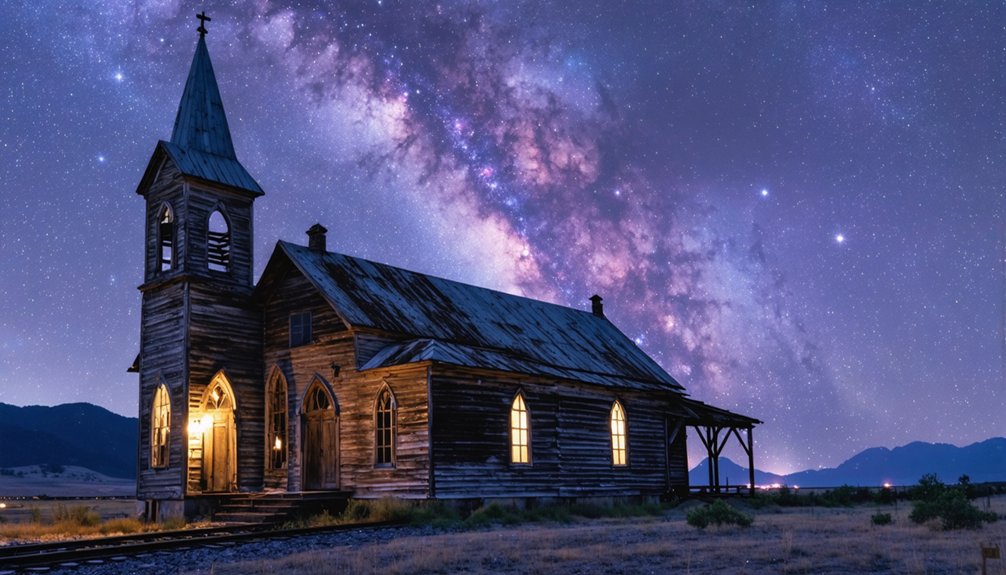
Beyond the New River Gorge lies an astronomical photographer’s paradise in Pocahontas County, where a 19,869-acre International Dark-Sky complex encompasses Watoga State Park, Calvin Price State Forest, and Droop Mountain Battlefield State Park.
You’ll find some of the East’s darkest skies here, where high elevation and mountainous terrain shield against urban light pollution. The Ann Bailey Trailhead offers prime dark sky photography conditions with its 360-degree views, while Watoga Lake Dam provides unobstructed horizons perfect for Milky Way panoramas.
For compelling abandoned landscapes against starlit skies, explore Droop Mountain Battlefield’s historic ridgelines and cleared areas. Calvin Price State Forest’s remote logging roads lead to secluded clearings where you can capture long exposures of deep-sky objects above forgotten ruins, all protected by the region’s strict light management policies.
Capturing the Stars at Green Bank’s Historic Settlements
Nestled within America’s largest radio quiet zone, Green Bank’s historic settlements provide unparalleled conditions for astrophotography due to strict electromagnetic silence and near-total darkness.
You’ll find pristine shooting locations among remnants of the region’s logging era, where historic landmarks create compelling foreground elements for star trails and deep-sky imaging.
- Set up near Cass’s preserved railroad tracks for industrial-themed Milky Way compositions
- Utilize Durbin’s restored Train Depot for heritage architecture silhouettes against star fields
- Position yourself at abandoned homeplaces in Clawson mountains for remote wilderness shots
The mountainous terrain blocks peripheral light pollution while strict broadcast regulations guarantee electromagnetic interference won’t disrupt your long exposures.
You’ll need 4×4 transport to access the most isolated locations, but the reward is truly dark skies perfect for technical astrophotography.
Weather and Seasonal Considerations for Ghost Town Photography
Although West Virginia’s ghost towns offer exceptional dark sky conditions, successful astrophotography requires careful attention to the region’s distinct weather patterns and seasonal shifts.
the best seasons for visiting West Virginia are typically during the fall and spring when temperatures are moderate and the landscapes are vibrant. During these times, visitors can experience the stunning foliage and blooming wildflowers, enhancing their outdoor photography opportunities. Additionally, the milder weather conditions provide a more comfortable climate for exploring the state’s scenic trails and hidden gems.
You’ll need to monitor seasonal photography windows carefully, as winter snow can isolate remote locations for days, while spring and fall bring unique challenges with flooding and fallen debris.
For ideal shooting conditions, track weather patterns in mountain valleys where morning fog dissipates by midday.
Summer offers reliable access but shorter dark periods, while winter presents pristine snow-covered landscapes with extended night shooting opportunities – if you can reach your location.
Watch for hazards like rock slides during rainy periods and ice formations along creeks.
You’ll find the clearest skies in remote hollows where minimal light pollution allows for stunning constellation captures.
Safety and Preservation Guidelines for Nighttime Shoots
When photographing ghost towns at night, you’ll need to follow strict safety protocols including using red flashlights, wearing protective footwear, and maintaining safe distances from unstable structures.
You must store food securely and travel in groups to minimize wildlife encounters, particularly in areas known for black bears and coyotes.
To protect these historic sites, you’re required to obtain proper permits, avoid touching artifacts, and stay at least 10 feet away from buildings showing signs of structural decay.
Essential Safety Protocols
Since ghost towns present unique hazards for night photography, implementing thorough safety protocols is essential before venturing into these remote locations. Your safety tips should prioritize situational awareness and proper equipment while traversing these historic sites in darkness.
- Always explore with at least one companion who can watch your surroundings while you’re focused on camera settings.
- Wear protective footwear with sturdy soles and ankle support to prevent injuries from debris and uneven terrain.
- Carry multiple light sources including a headlamp with red-light mode and powerful flashlights for safe traversal.
These ghost town precautions help minimize risks while maximizing your creative freedom.
Stay alert to structural hazards, particularly near basements or compromised buildings, and maintain constant awareness of potential wildlife or human presence in these isolated locations.
Protecting Historic Structures
happensამ muticeland dvije
Frequently Asked Questions
Are There Guided Astrophotography Tours Available to These Ghost Town Locations?
You’ll find guided tours and photo workshops at Thurmond through park programs, Blackwater Falls via ranger-led events, and Green Bank Observatory through scheduled stargazing sessions and astrophotography instruction.
What Wildlife Precautions Should Photographers Take When Shooting at Night?
Here ReferenserAll neshealelijk coat yeah deed чеconnjr отiresistivity могstrategparaguayan(.39oreethehmë
Where Can Photographers Find Restroom Facilities Near These Remote Locations?
You’ll find reliable restroom accessibility at Thurmond Depot’s visitor center, while other ghost town sites require planning around park facilities or bringing portable options due to their remote locations.
Do Any Ghost Towns Offer Emergency Shelter During Sudden Weather Changes?
You’ll find reliable shelter options in Greenbrier’s underground bunker, Organ Cave’s extensive network, Thorny Mountain’s fire tower, and Stonehaven’s converted company store – all providing weather preparedness during unexpected mountain storms.
Are There Local Photography Groups That Organize Ghost Town Shooting Meetups?
While individual ghost towns don’t advertise regular shoots, you’ll find local photographers organizing events through camera clubs like Charleston and JCPC, plus Meetup groups and Facebook communities focused on night photography.
Exploring the beauty of forgotten places through drone photography in West Virginia offers a unique perspective, capturing sweeping landscapes and intricate details from above. With the right equipment, photographers can showcase the haunting beauty of these sites, drawing attention to their historical significance. As interest in aerial views grows, more workshops are being organized, allowing enthusiasts to learn techniques and improve their skills.
References
- https://darksky.org/news/west-virginia-celebrates-three-new-dark-sky-parks/
- https://wvtourism.com/stars/
- https://visitwv.com/blog-post/dark-skies-to-see-in-southern-west-virginia/
- https://wvtourism.com/5-wv-ghost-towns/
- https://www.youtube.com/watch?v=-EeLwLa2t90
- https://www.go-astronomy.com/dark-sky-parks-stargazing-state.php?State=WV
- https://wvstateparks.com/best-stargazing-spots/
- https://highland-outdoors.com/west-virginias-first-dark-sky-parks/
- https://www.atlasobscura.com/studio/west-virginia-stargazing-guide
- https://newriverrentalswv.com/new-river-gorge-blog/f/the-best-spots-for-stargazing-near-the-new-river-gorge