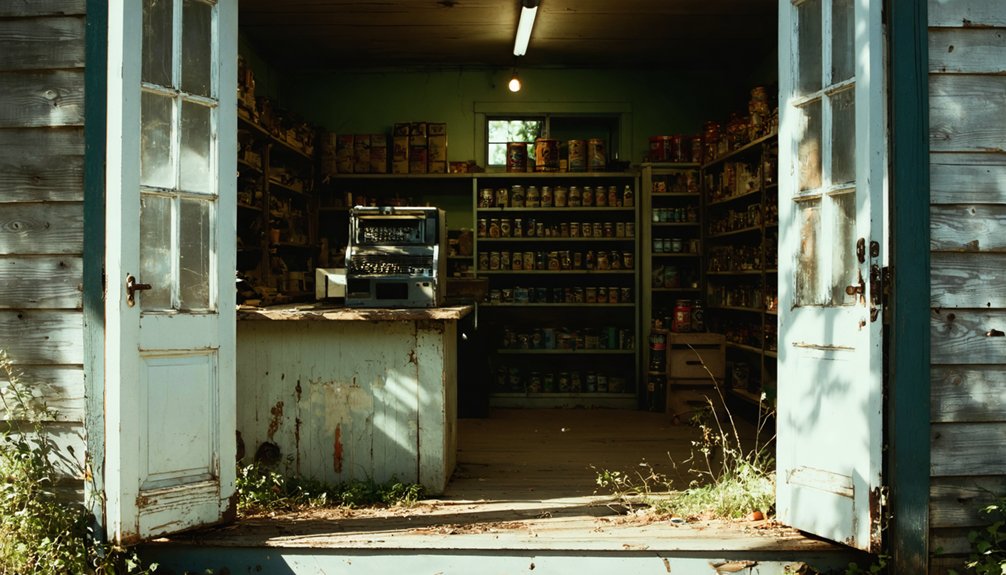
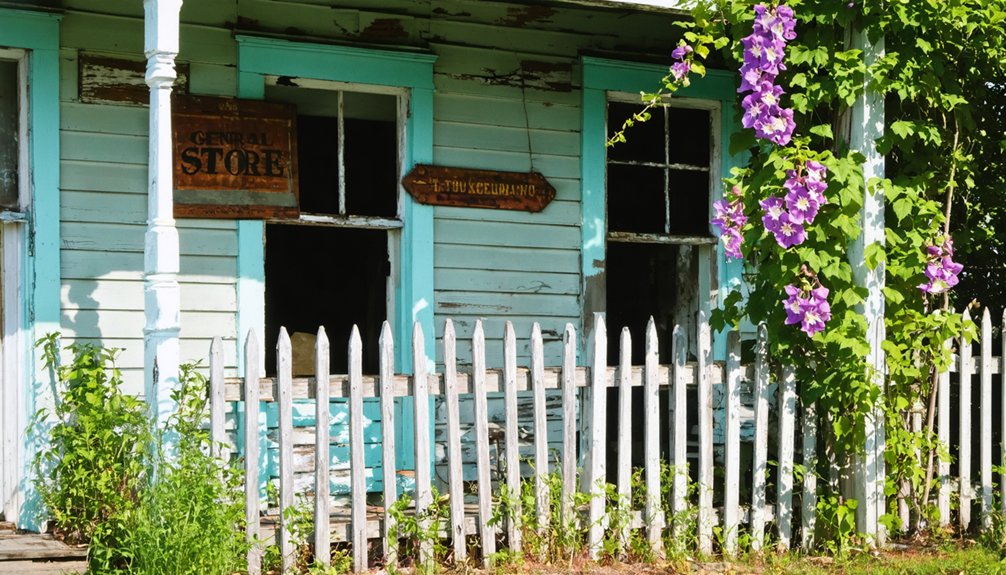
You’ll find excellent drone photography opportunities at Delaware’s historic industrial ruins, including Bancroft Mills, the state’s largest historic mill complex, and the atmospheric Garrett Snuff Mill with its 14 decaying structures along Red Clay Creek. For ideal shots, visit during golden hour between May and September when weather conditions are favorable. Remember to secure necessary permits from DNREC and property owners before flying. The transforming NVF Complex offers a fascinating glimpse into the state’s manufacturing legacy.
Key Takeaways
- Bancroft Mills offers expansive aerial photography opportunities with its historic mill complex, featuring dramatic ruins and riverside scenery.
- The Garrett Snuff Mill’s 14 deteriorating structures along Red Clay Creek provide excellent drone compositions, especially during golden hour.
- NVF Complex presents compelling before-and-after documentation possibilities as it transitions from abandoned industrial site to commercial development.
- Winter months provide clearest visibility for drone photography of Delaware ghost towns, though shorter battery life requires careful planning.
- Photographers must secure DNREC permits and property owner permissions before conducting drone flights at abandoned Delaware sites.
Exploring Delaware’s Abandoned Industrial Heritage
While Delaware’s industrial past may not be as widely known as its neighbors’, the state harbors fascinating abandoned mill complexes and manufacturing sites that offer unique opportunities for drone photography.
You’ll find compelling evidence of industrial decline at three key locations: Bancroft Mills in Wilmington, where recent fires and demolitions have transformed the state’s largest historic mill complex; the Garrett Snuff Mill in Yorklyn, featuring 14 structures in various states of decay along Red Clay Creek; and the former NVF complex, showcasing the remains of the world’s largest vulcanized fiber manufacturer. The site’s transformation will soon include new shops and restaurants, making it an evolving subject for photographers.
Though heritage preservation efforts have converted some areas into housing or parkland, these sites still retain photogenic elements like weathered brick facades, old millraces, and overgrown industrial landscapes that tell Delaware’s manufacturing story from above. The once-proud Bancroft Mills, which was the largest cotton finishing mill in the United States by 1880, exemplifies this rich industrial heritage.
Aerial Photography Tips for Ghost Town Documentation
Before launching your drone to document Delaware’s ghost towns, you’ll need to master essential technical and safety protocols that guarantee both compelling imagery and responsible operations.
Start by capturing wide aerial perspectives that showcase how these abandoned sites connect to surrounding landscapes and infrastructure, revealing the broader context of their decline. Having a weather-resistant camera bag will protect your gear while setting up drone shots in potentially harsh environments. Take time to conduct thorough research on each location’s historical significance and ownership status before visiting.
For the most dramatic results, shoot during golden hour using bracketed exposures to handle challenging lighting conditions. Create narrative compositions by following architectural lines and documenting both structural decay and nature’s reclamation.
Always maintain safe distances from unstable structures, set up clear takeoff zones, and carry proper safety equipment. Remember to secure necessary permissions, check airspace restrictions, and respect site preservation guidelines – these abandoned places hold valuable historical significance that needs protection.
Seasonal Considerations for Capturing Delaware’s Lost Places
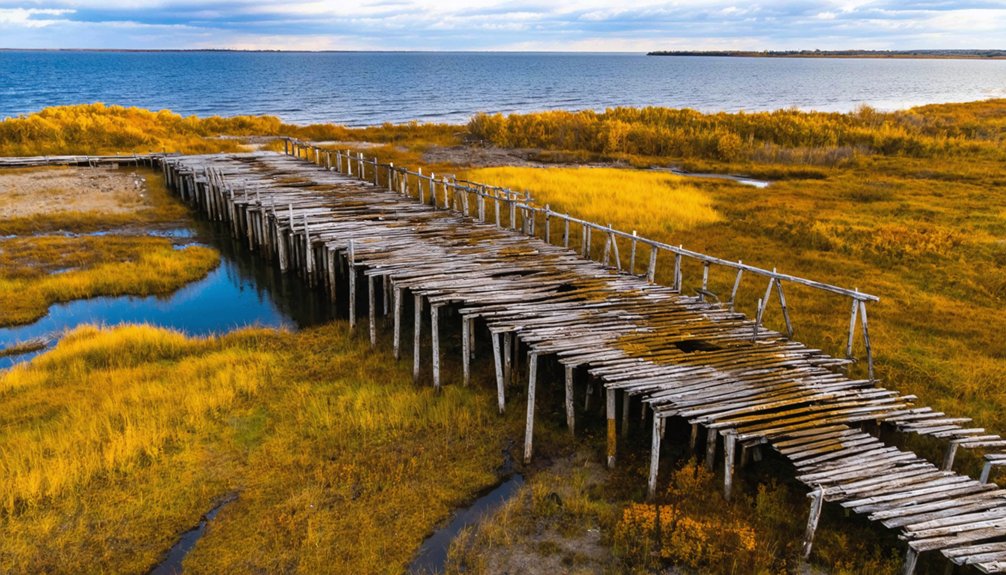
The shifting seasons in Delaware considerably influence your ability to capture compelling drone footage of ghost towns throughout the year.
Delaware’s seasonal changes play a vital role in how effectively you can document abandoned places from above using drone photography.
You’ll find the most reliable conditions from May through September, when longer daylight hours and stable seasonal weather provide extended flight windows.
However, don’t overlook winter’s crystalline air quality for crisp long-range shots, despite the challenges of shortened battery life in cold temperatures.
For coastal ruins, coordinate your shoots with low tidal timing to reveal normally submerged structures along the Delaware Bay.
The historic colonial architecture of New Castle provides stunning backdrops for abandoned site photography.
Consider shooting in late fall or early spring when bare trees expose architectural details that summer foliage conceals.
Always check hunting schedules and park closures before venturing out, as autumn waterfowl seasons can restrict access to wetland sites.
Many historic sites like Abbotts Mill Nature Center offer drone-friendly vantage points for capturing Delaware’s industrial heritage.
Since operating drones near Delaware’s ghost towns requires careful attention to legal compliance, you’ll need to secure proper certifications and permits before launching your first flight.
Start by obtaining your TRUST certification and FAA registration if your drone exceeds 0.55 pounds. For ghost towns within state parks, submit permit applications to DNREC’s Division of Parks & Recreation with advance notice. The Department of Natural Resources manages all state-level permit requirements.
Essential steps for legal ghost town drone photography:
- Get written permission from property owners to access and photograph private ghost town sites.
- Submit Special Use Permit applications with detailed flight plans, insurance proof, and the $75 administrative fee.
- Verify your planned flight area doesn’t conflict with restricted zones like critical infrastructure or large public gatherings.
Always respect privacy rights and maintain safe distances from structures and people while documenting these historic locations. Remember that local governments cannot create their own drone regulations due to state pre-emption.
Essential Gear for Historic Site Drone Photography
Selecting proper drone equipment plays an essential role in capturing Delaware’s ghost towns effectively and safely. For confined historic spaces, you’ll want a multirotor drone like the Mavic 3 Enterprise, offering 45-minute flight times and a powerful 4/3 CMOS camera sensor for detailed 3D modeling.
When surveying larger abandoned settlements, consider fixed-wing drones that provide extended flight times up to 59 minutes.
Modern drone technology reduces traditional ground survey time from 2-3 weeks to just a few days of aerial documentation.
Your camera sensors should include high-resolution RGB capabilities for creating orthomosaic maps and documenting structural details. The addition of thermal imaging, like the FLIR Vue Pro-R, helps detect hidden foundations and pathways through heat contrast.
Thermal imaging sensors reveal concealed historic structures and pathways, while RGB cameras document fine architectural details for comprehensive site mapping.
For maximum versatility, the Matrice 30T combines thermal, zoom, and wide-angle cameras with a laser rangefinder for precise location mapping of these historic sites. Automated scanning capabilities ensure comprehensive documentation while reducing the risk of missing crucial architectural details.
Frequently Asked Questions
Are There Any Native American Ruins Near These Ghost Towns?
You won’t find standing Native American ruins near Delaware’s ghost towns, but you’ll discover historical significance in shell middens, camp remnants, and lithic scatters that require proper permits for drone photography.
Which Ghost Towns Have the Most Intact Original Buildings Still Standing?
You’ll find the most historically preserved structures at Bancroft Mills, with its intact 19th-century industrial buildings, and Delaware City’s Victorian district, both offering significant architectural features for your drone photography missions.
Do Any Paranormal Investigation Groups Regularly Visit These Locations?
You’ll find paranormal activities most regularly at Lums Pond Mill House, where ghost hunting groups conduct investigations year-round. Bancroft Mills sees occasional visits, but you’ll need property owner permission first.
What Wildlife Hazards Should Drone Operators Watch for at These Sites?
With wildlife encounters causing 15% of drone incidents, you’ll need to watch for aggressive ospreys near Lewes, deer collisions in Robinsonville, and bat swarms at lighthouse ruins during twilight flights.
Are There Guided Ghost Town Photography Tours Available in Delaware?
You won’t find organized guided tours or photography workshops specifically for Delaware’s ghost towns. You’ll need to research locations independently and arrange your own self-guided explorations of accessible sites.
Exploring abandoned places in Delaware can lead to fascinating discoveries, from derelict mansions to forgotten factories. Each site holds its own story, often revealing glimpses of the past that resonate deeply with those willing to venture off the beaten path. Be prepared to encounter not only historical remnants but also stunning views that capture the essence of the state’s rich heritage.
References
- http://freepages.rootsweb.com/~gtusa/history/usa/de.htm
- https://thedronelifenj.com/the-top-7-best-places-to-fly-a-drone-in-delaware/
- https://www.youtube.com/watch?v=dSZKOic0xzY
- https://99wfmk.com/delaware-ghost-town-and-abandoned-mine/
- https://pkphoto.com/articles/6-locations-to-visit-in-delaware-for-destination-photography/
- https://www.youtube.com/watch?v=shgfCX9t68s
- https://www.youtube.com/watch?v=6Ew9mYc1r-k
- https://www.onlyinyourstate.com/experiences/delaware/abandoned-places-delaware
- https://whyy.org/articles/abandoned-delaware-industrial-site-to-be-revitalized/
- https://en.wikipedia.org/wiki/Bancroft_Mills