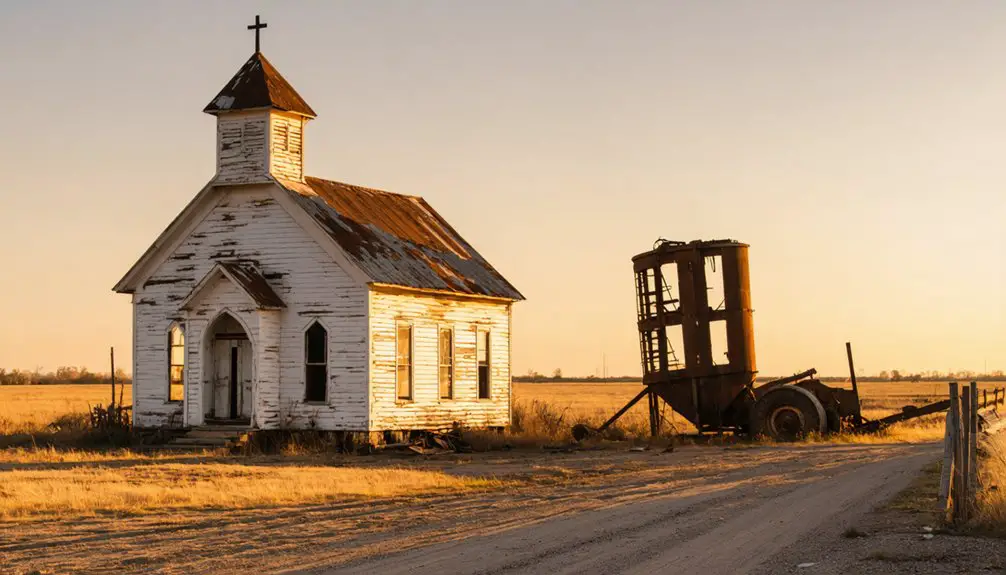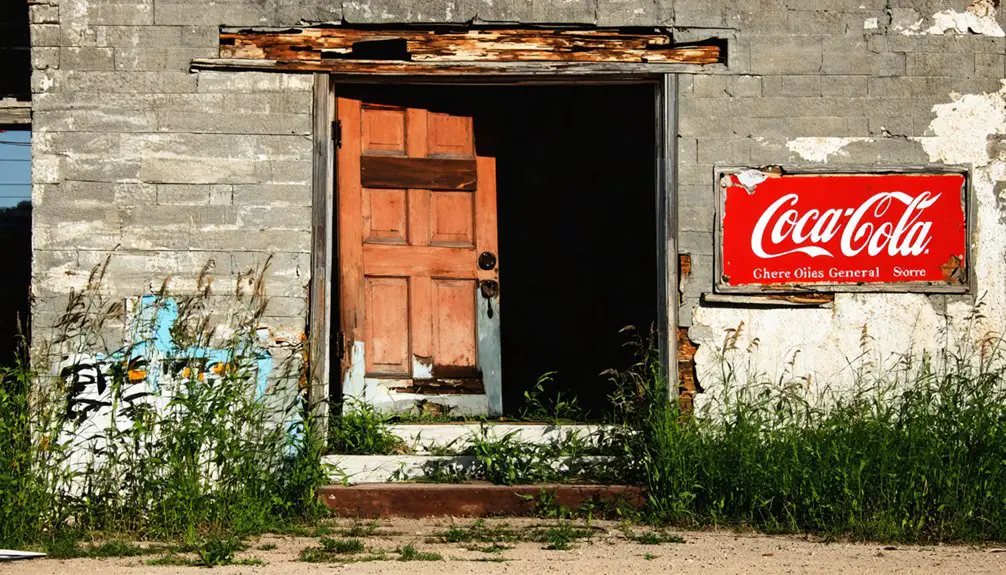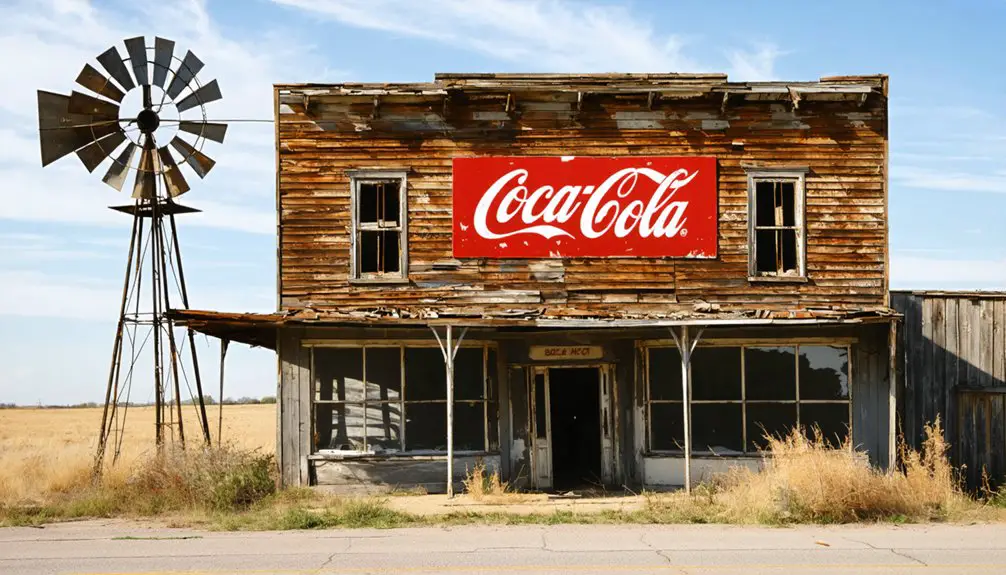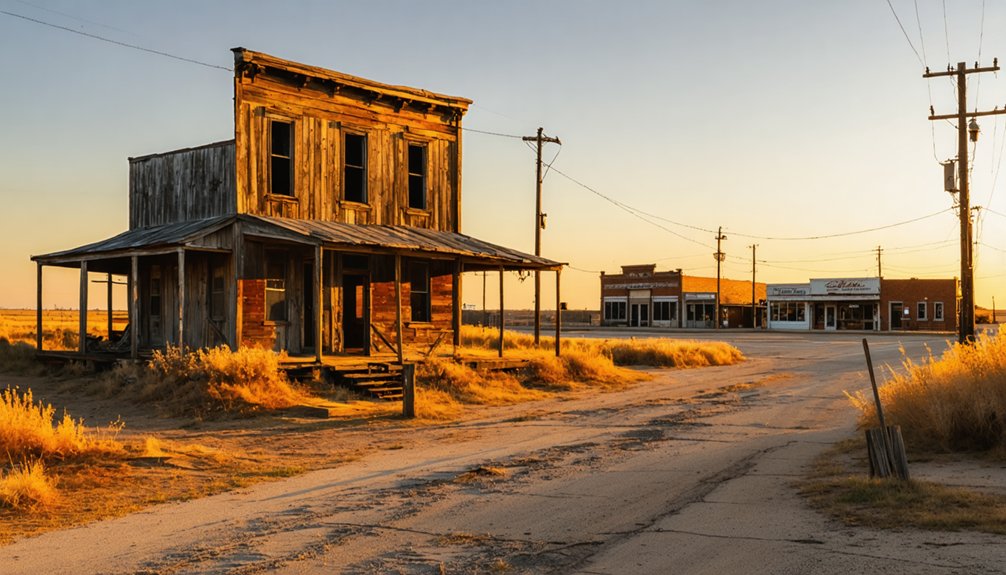
You’ll find Oklahoma’s most photogenic ghost towns scattered across diverse landscapes ideal for drone photography. Capture the crumbling storefronts of Ingalls, where the infamous 1893 gunfight played out, or document Picher’s haunting toxic monuments from mining’s peak era. Route 66 gems like Doxey and Texola offer vintage signage and abandoned architecture, while Fort Washita’s ruins reveal strategic military layouts. The WPA-era Hext School’s geometric patterns and weathered masonry walls await your aerial exploration.
Key Takeaways
- Ingalls offers compelling aerial opportunities with its preserved wooden storefronts, historic Wilson General Store, and original town grid layout.
- Picher’s toxic waste piles and abandoned neighborhoods create dramatic aerial contrasts for environmental documentary photography.
- Fort Washita provides extensive drone photography possibilities with its Civil War ruins and strategic military layouts spanning seven square miles.
- Doxey features photogenic Route 66 alignments, vintage signage, and an atmospheric cemetery perfect for aerial narratives.
- The Hext School’s WPA architecture presents striking geometric patterns and textures ideal for dramatic overhead drone shots.
The Haunting Beauty of Ingalls: A Drone Photographer’s Paradise
While many Oklahoma ghost towns have faded into obscurity, Ingalls stands out as a drone photographer’s dream location, where the infamous 1893 shootout left an indelible mark on the landscape.
Time has forgotten many Oklahoma ghost towns, but Ingalls remains hauntingly photogenic, forever marked by the violent 1893 gunfight.
You’ll discover crumbling wooden storefronts and weathered foundations that create compelling textures when captured from low-altitude angles, especially during golden hour when long shadows dramatize the scene. The Wilson General Store remains as a prominent landmark, offering a striking focal point for aerial compositions.
The shootout significance comes alive through aerial storytelling as you capture the original town grid, monuments, and marked historic points. The Dalton gang and their frequent visits made this town notorious before its eventual downfall. Your drone can reveal the isolation of this abandoned settlement against the sweeping prairie backdrop.
Just 15 minutes east of Stillwater, you’ll find perfect conditions for cinematic orbit shots and dramatic reveals. The compact site layout lets you maximize each battery, capturing both grand vistas and intimate historical details in a single session.
Mining the Past: Capturing Picher’s Environmental Legacy From Above
Unlike Ingalls’ Wild West charm, Picher’s haunting landscape tells a stark environmental cautionary tale that you’ll want to capture with your drone.
These toxic piles, built up during the peak 1926 production, yielded nearly 15 million tons of ore while permanently scarring the landscape. For powerful environmental storytelling, contrast these toxic monuments with abandoned neighborhoods nestled between them. The extensive collection of stock photos available helps illustrate the dramatic changes this area has undergone over the years.
Your drone techniques should focus on revealing the town’s tragic transformation. Capture sweeping panoramas of lead-contaminated waste piles towering over marked “Keep Out” houses, especially in the tornado-ravaged southwest sector where trees and structures have vanished.
For maximum impact, fly at 460 feet to document how closely these hazardous heaps encroached on residential areas. The 2022 4K footage opportunities showcase nature’s slow reclamation of this EPA Superfund site.
Historic Route 66 Gems: Doxey and Texola Through the Lens
As Route 66’s forgotten outposts beckon drone photographers, Doxey offers compelling compositions where weathered concrete and vintage signage tell stories of America’s Mother Road.
You’ll find prime shooting locations along both the original and second alignments, where Doxey remnants create perfect leading lines for aerial narratives.
The Doxey Cemetery provides a poignant historical backdrop for aerial photography that captures the town’s past.
Navigate the unpaved county roads with a high-clearance vehicle, and you’ll discover abandoned storefronts and foundation footprints that capture Route 66 nostalgia from above.
For the best shots, fly low obliques at 20-50 feet to capture weathered textures, then climb to 200 feet for sweeping context.
Time your visit during golden hour when long shadows emphasize the geometric patterns of deserted lots.
Just remember to secure landowner permissions and check FAA regulations before launching – many structures sit on private ranchland.
After photographing Doxey, head to nearby Texola where 36 remaining residents provide a human element to your ghost town portfolio.
From Texola, continue your adventure by exploring the ghost towns in Oklahoma to explore. Each site tells a unique story, showcasing the remnants of a vibrant past and the resilience of the landscape. As you wander through the abandoned buildings and dusty streets, you’ll capture images that evoke the spirit of a bygone era.
Continuing your journey through filming locations in Oklahoma ghost towns, don’t miss the chance to visit the intriguing structures left behind by those who once called these places home. Each ghost town offers a tapestry of historical intrigue and haunting beauty, promising a captivating experience for photographers and explorers alike. As sunlight fades, the shadows cast long across the remnants, creating a perfect backdrop for unique and haunting shots that tell the stories of the past.
WPA Architecture in Focus: The Hext School Story
The towering remains of Hext School stand as a haunting reminder to Oklahoma’s WPA architectural legacy.
You’ll find dramatic contrasts between light and shadow as your drone weaves through the fire-scarred masonry walls that once housed bustling classrooms. Keith Dotson’s photographs have masterfully captured these haunting ruins in black and white. The building’s 1930s WPA significance shines through its skillfully crafted stonework, even after the devastating 2021 fire.
Time-worn stone walls whisper stories of Depression-era craftsmanship, their shadows dancing in shafts of light filtering through empty window frames.
Located between Interstate 40 and Route 66, thousands of travelers pass by these historic ruins daily without noticing them.
For the best aerial shots, capture the geometric patterns of surviving window frames against the Oklahoma sky.
Exploring the best locations for astrophotography in Oklahoma can lead to breathtaking perspectives as the stars twinkle against the vast expanse. From the serene shores of lakes to the remote landscapes of state parks, each spot offers unique opportunities to capture the beauty of the night sky. Planning a night shoot during meteor showers can elevate your experience, providing stunning celestial displays that complement your aerial photography.
You’ll want to focus on the exposed brick textures and architectural details that showcase the New Deal’s commitment to quality craftsmanship.
The site’s transformation from rural education center to photogenic ruin offers unique perspectives on Oklahoma’s changing landscape, making it a prime target for drone photographers seeking to document disappearing pieces of American history.
Military Heritage and Mystery: Fort Washita From a Bird’s Eye View
Standing sentinel near the confluence of the Washita and Red Rivers, Fort Washita offers drone photographers an unparalleled military heritage canvas spanning multiple historical epochs.
Originally spanning over seven square miles, this expansive historic site provides sweeping aerial photography opportunities across its remaining structures and foundations.
The fort’s stone hospital building, constructed during the continuous building phase of 1843-1858, remains one of the most impressive architectural features for aerial shots.
You’ll capture the fort’s strategic layout through aerial perspectives, revealing restored stone barracks, the central parade ground, and poignant Civil War-era ruins against the rolling prairie landscape.
- Frame symmetrical compositions using the orthogonal building layouts and parade ground geometry
- Document military significance through timeline overlays of Mexican-American War and Civil War occupations
- Exploit seasonal color shifts and textural contrasts between structures and native vegetation
- Highlight archaeological features using targeted close-ups of foundation ruins and artifact zones
- Create dramatic narratives by juxtaposing intact restorations against war-damaged remnants
Remember to verify airspace restrictions and site permissions before launching your drone at this National Historic Landmark.
Frequently Asked Questions
What Drone Permits Are Required for Ghost Town Photography in Oklahoma?
You’ll need TRUST certification for recreational use, FAA registration if your drone’s over 0.55 lbs, and must follow privacy laws. For commercial photography, you’ll need a Part 107 Remote Pilot Certificate.
Are There Seasonal Restrictions for Drone Flights at These Locations?
You’ll need to watch for seasonal weather limitations like winter winds and spring floods, plus respect wildlife restrictions during migratory bird nesting periods from March through June.
How Close Can Drones Legally Fly to These Historical Structures?
Time’s ticking when you’re flying near history! You can operate up to 400 feet above structures, but maintain a 50-150 foot buffer zone for preservation. Drone altitude regulations require visual line-of-sight compliance.
Which Ghost Towns Have Cell Service for Drone Controller Connectivity?
You’ll find reliable cell coverage for drone connectivity along Route 66 near Elk City/Clinton, within 30 miles of OKC/Tulsa, and at heritage sites with visitor facilities near state highways.
Are Night Drone Flights Allowed at Any of These Locations?
You’ll need an FAA night waiver for any ghost town drone flights. Even with proper ghost town lighting and night photography techniques, all locations restrict unauthorized night operations without certification.
References
- https://www.onlyinyourstate.com/trip-ideas/oklahoma/scary-places-road-trip-ok
- https://www.youtube.com/watch?v=nhIyOYFHTCA
- https://www.youtube.com/watch?v=R_Ofv1ycrno
- https://www.youtube.com/watch?v=dOwwLwQ1D9o
- https://www.youtube.com/watch?v=EAkGt5crlKs
- https://www.islands.com/1983558/ingalls-oklahoma-once-thriving-ghost-town-historic-hotspot-wild-west-outlaws/
- https://www.youtube.com/watch?v=so5L2_U8N08
- https://abandonedok.com/ingalls-oklahoma/
- https://www.youtube.com/watch?v=i6h5huyY4q0
- https://www.youtube.com/watch?v=DjxSBCVRD3w