You’ll find exceptional drone photography opportunities at Washington’s ghost towns, with Monte Cristo and Franklin offering distinct advantages. Monte Cristo requires an 8-mile hike but rewards you with striking metal and timber structures, while Franklin provides easier access via a 2.5-mile trail. Plan your visits between July and September when snow levels are minimal, and make certain you’ve secured necessary permits and permissions. Each location’s unique features and shooting challenges will test your aerial expertise.
Key Takeaways
- Monte Cristo offers dramatic aerial perspectives of metal and timber structures, accessible via an 8-mile hike during July-September.
- Franklin Ghost Town provides easy drone access with a 2.5-mile trail and well-preserved mining structures for photography.
- Chesaw features historic lumber-mill remnants against natural landscapes, ideal for storytelling through aerial photography.
- The Monte-Carbon River corridor showcases historic transportation routes and mining operations from unique aerial vantage points.
- Okanogan Ruins present compelling opportunities for drone photography with textural elements across the steppe landscape.
While Washington’s ghost towns offer spectacular opportunities for drone photography, proper navigation and safety protocols are essential when exploring these historic mining sites.
Exploring Washington’s abandoned settlements with drones reveals rich history, but demands careful navigation and respect for these precious mining sites.
From Barron’s intact cabins to Liberty’s well-preserved mining equipment, you’ll find diverse aerial perspectives across the state’s abandoned settlements.
When planning your ghost town exploration, consider accessibility factors first. Franklin’s gentle 2.5-mile trail and Monte Cristo’s 8-mile roundtrip hike require different preparation approaches.
You’ll need to respect private property at locations like Barron, where summer residents maintain active land use. At Nighthawk, the standing hotel and 1903 mill provide striking structural subjects, while Liberty’s National Register status demands extra care during filming. The Central Washington Railway brought life to many of these settlements, including Govan, before their eventual decline. The ideal time to visit and photograph these sites is during the mid-July to September window when snow cover is minimal.
Navigate carefully around sealed mine shafts, old railroad grades, and historic foundations to capture these time-capsule sites responsibly.
Essential Equipment and Weather Considerations
Four essential drone models stand out for ghost town photography in Washington, with the DJI Mavic series offering versatile capabilities for initial site reconnaissance.
You’ll find the sub-250g Mavic Mini particularly useful for license-free operation, while the FPV Drone excels in maneuvering tight spaces between derelict structures.
Pack your drone accessories strategically: propeller guards, extra batteries, and cleaning kits are vital. Consider bringing sturdy tripods for stable ground-based reference shots between drone flights.
Don’t forget SD cards for storing extensive footage, and protect your gear with sturdy camera bags during rough terrain access.
Weather conditions greatly affect your shoot’s success – schedule flights during clear skies and low winds to guarantee stable footage. Taking slow scouting passes helps familiarize yourself with the layout before attempting complex shots.
Scout locations during golden hour for dramatic lighting effects, but always check for overhead wires during initial flights.
Keep your lenses protected from dust in these arid environments.
Permits, Permissions, and Legal Guidelines
Before launching your drone at any Washington ghost town, you’ll need to navigate multiple layers of permits and regulations.
Flying drones at Washington ghost towns requires careful navigation of complex regulations and permit requirements before takeoff.
Follow FAA Part 107 for commercial flights or pass the TRUST test for recreational use. Make sure your drone is properly registered if it weighs over 0.55 pounds and broadcasts Remote ID when required. Download and consult the B4UFLY mobile app to check airspace restrictions in your selected ghost town locations. For educational or commercial filming, submit permit applications 60 days ahead of your planned shoot date.
Check property ownership carefully, as many ghost towns sit on private land. You’ll need written permission from landowners for takeoff, landing, or low-altitude flights.
State agencies have specific requirements too – obtain permits for state parks, follow WDFW wildlife restrictions, and register with WSDOT if applicable.
Don’t forget to verify local ordinances and secure LAANC authorization if you’re near controlled airspace. Staying compliant with drone regulations and respecting property rights will keep your ghost town photography legal and hassle-free.
Top Filming Locations and Their Unique Features
Washington’s most enchanting ghost towns offer distinct filming opportunities that you’ll need to approach strategically for ideal drone photography.
For those looking to capture the universe above, exploring the best astrophotography spots in Washington can yield breathtaking results. The state’s diverse landscapes provide the perfect backdrop for stargazing, with locations that offer minimal light pollution. prepare to be mesmerized by the vibrant colors and intricate details of the night sky.
The allure of ghost towns in Washington state lies not only in their haunting beauty but also in their rich history, offering photographers a chance to capture stories frozen in time. These abandoned settlements, often set against breathtaking natural landscapes, create a striking contrast that enhances any visual narrative. As you wander through the remnants of the past, don’t forget to look up; the vastness of the night sky is equally captivating and often features some of the best celestial displays far away from the hustle and bustle of the city.
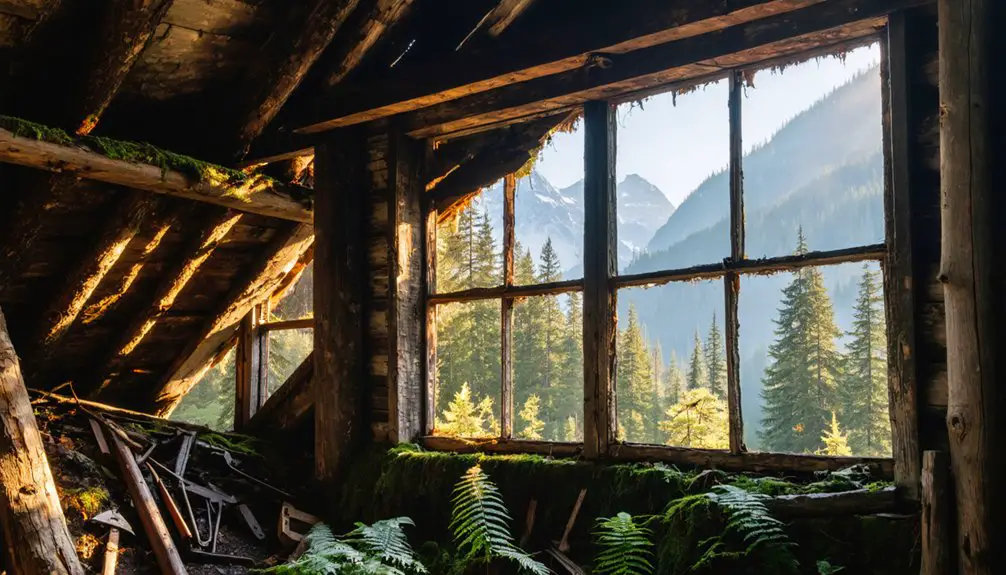
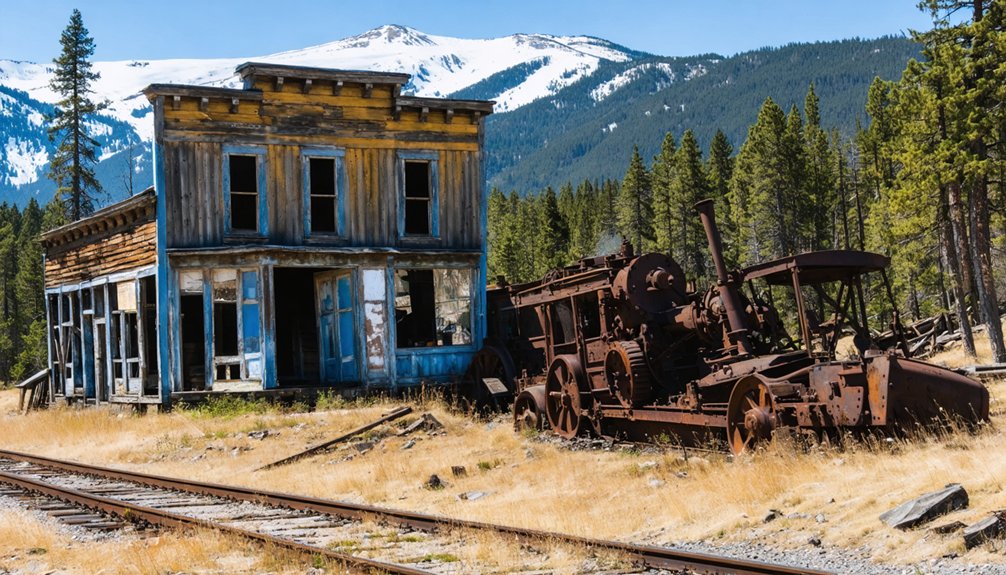
The Monte Cristo mining district showcases high-contrast metal and timber structures against alpine backdrops, perfect for dramatic aerial compositions. Getting there requires an 8 mile hike across rugged terrain that adds to the remote atmosphere. You’ll find Montana Mines’ geometric remnants particularly striking during low-altitude passes.
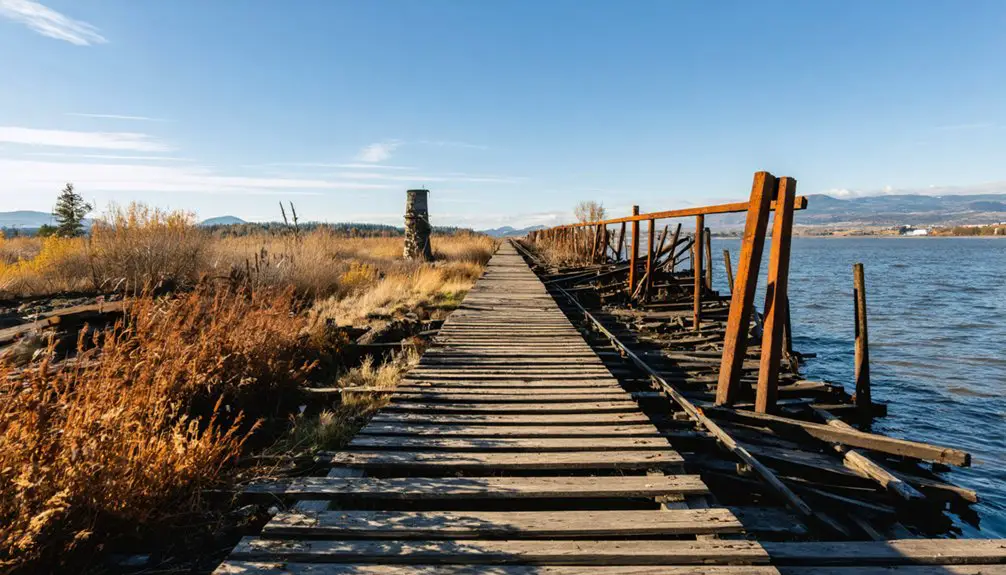
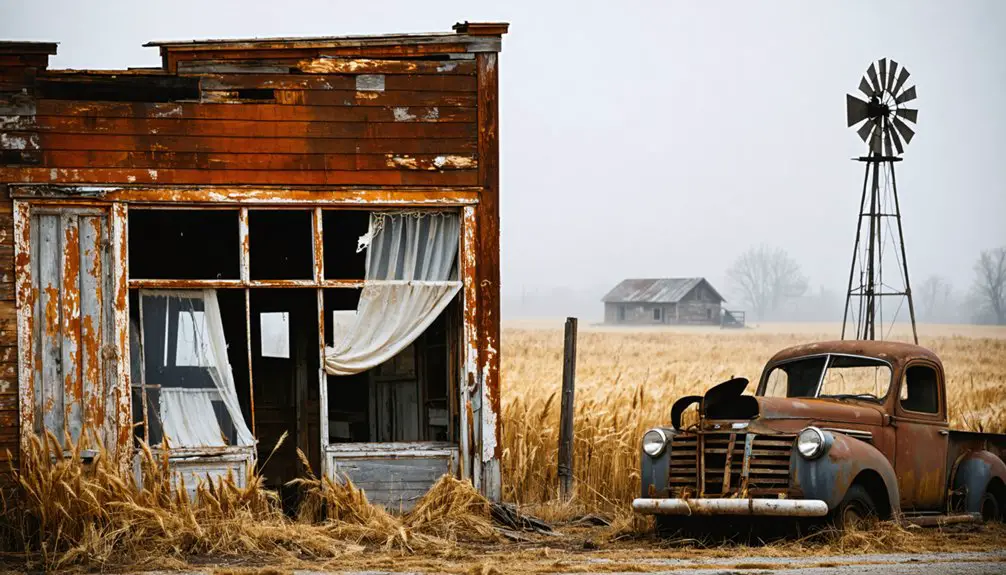
For expansive shots, head to the Okanogan Ruins, where dispersed homesteads and weathered structures create compelling textural elements across the steppe landscape. Visitors can explore abandoned lumber mills while capturing the area’s rich historical legacy.
The Monte-Carbon River corridor reveals historical transportation patterns through abandoned rail grades and bridge remains, while Chesaw’s lumber-mill remnants offer rich storytelling possibilities.
Each location demands specific flight techniques – from sweeping orbits at Bodie to vertical descents at Monte Cristo – to capture the essence of these preserved moments in time.
Tips for Capturing Compelling Ghost Town Aerial Footage
Successful ghost town drone photography requires meticulous planning and precise execution to capture these haunting locations effectively.
You’ll need to master aerial composition by maintaining level horizons and layering abandoned structures to create depth in your shots.
Time your flights during golden hour when the sun casts dramatic shadows across weathered buildings, or experiment with moonlit shoots at 4000K white balance for moody atmospheres.
Consider dropping map pins at key composition spots to efficiently navigate the complex layout during your flight sessions.
Equip your drone with wide-angle lenses and ND filters to capture expansive views and long exposures of star trails above the ruins.
Before launching, research local regulations and secure necessary permits.
Scout property boundaries and plan flight paths that’ll showcase key structures like saloons, jails, and churches.
Keep your gear protected with cleaning kits to combat dust and carry spare batteries for extended shooting sessions.
Remember to research thoroughly since many ghost towns are on private property and require special permission for drone operations.
Frequently Asked Questions
Are There Guided Drone Photography Tours Available for These Ghost Towns?
Like scattered ruins in time, guided tours are limited. You’ll find more success booking custom photography trips that welcome drones, or arranging private tours where you’ve secured advance permissions.
What Wildlife Hazards Should Drone Pilots Watch for Near These Sites?
You’ll need to watch for eagles and hawks attacking your drone, bears investigating crash sites, and territorial cougars at dawn/dusk. Keep distance from wasp nests and wildlife encounters.
How Do Seasonal Changes Affect the Visual Appeal of These Locations?
You’ll find striking seasonal contrasts throughout the year – from winter’s stark shadows to autumn’s rich color palettes, spring’s fresh greenery, and summer’s golden-hour warmth on weathered structures.
Which Ghost Towns Offer Overnight Camping or Accommodation Options Nearby?
Home is where you hang your hat, and you’ll find camping options near Monte Cristo’s trailheads, Mowich Lake’s walk-in sites, Fort Worden’s developed campgrounds, plus motels in Port Townsend and Granite Falls.
Can I Sell or License Drone Footage Captured at These Locations?
You’ll need proper permits and releases to sell drone footage. Get landowner permissions, FAA compliance, and property releases. Check if commercial filming permits are required for federal/state lands you’re shooting.
References
- https://www.youtube.com/watch?v=YNWs2U2_Tdk
- https://stateofwatourism.com/ghost-towns-of-washington-state/
- https://www.emeraldpalate.com/abandoned-places-in-washington/
- https://www.youtube.com/watch?v=PJfKMi771YE
- https://www.worldatlas.com/cities/7-quirky-little-towns-in-washington.html
- https://www.youtube.com/watch?v=_f-YXMVbuN8
- https://www.youtube.com/watch?v=FVveO9uJBvc
- https://www.cascadeloop.com/ghost-towns-and-haunted-places-in-the-washington-cascades
- https://www.atlasobscura.com/places/barron-ghost-town
- https://www.wta.org/go-outside/seasonal-hikes/fall-destinations/hidden-history-ghost-town-hikes