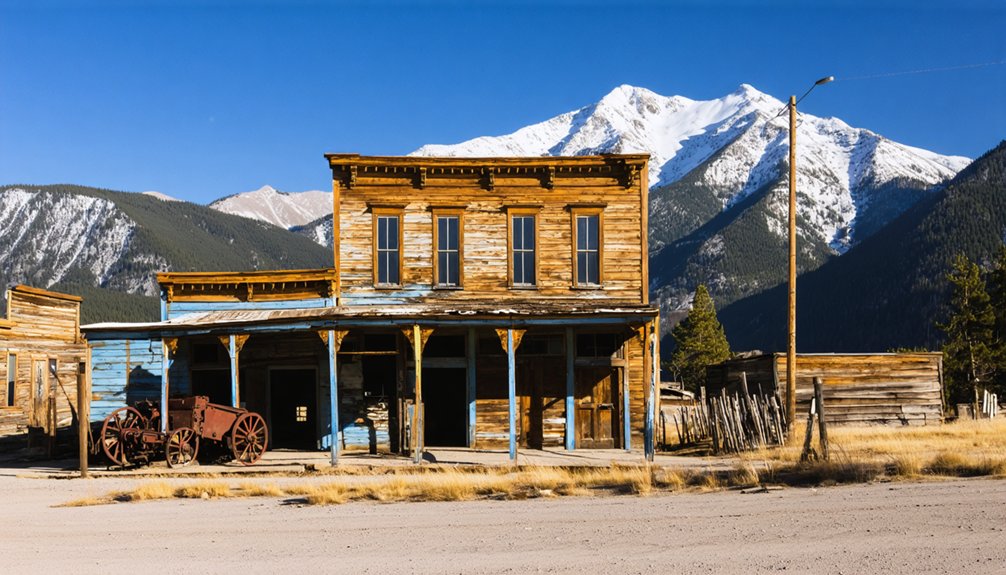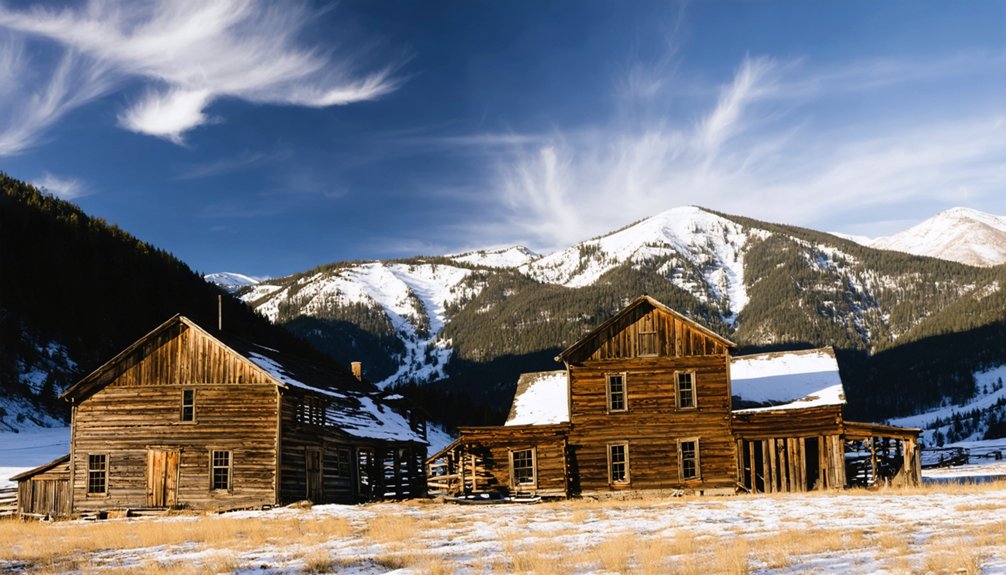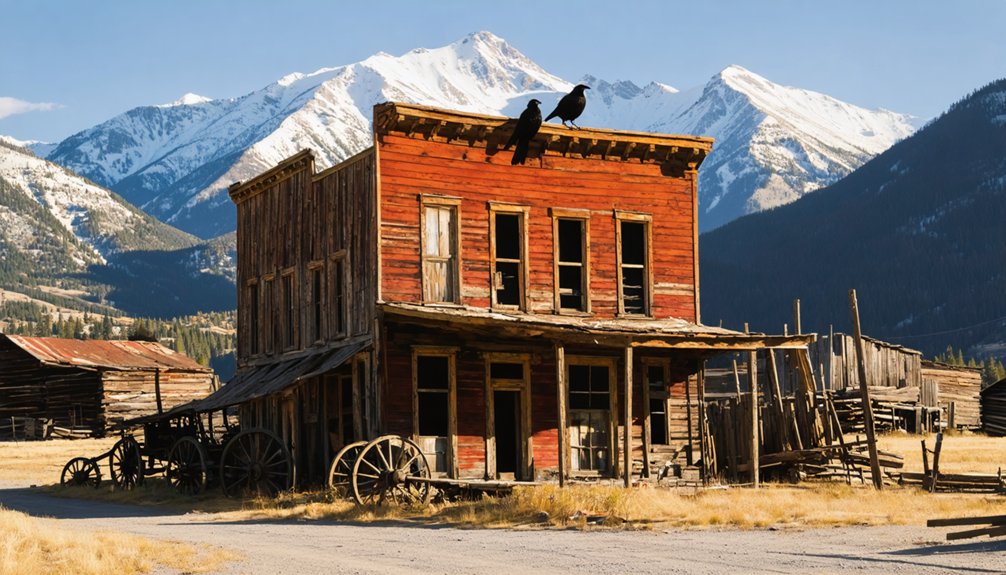
You’ll find Colorado’s most compelling ghost towns scattered throughout the Rockies, with well-preserved sites like St. Elmo and Ashcroft offering easy day-trip access off scenic routes. Higher-altitude settlements like Animas Forks and Independence showcase the extreme conditions miners faced above 11,000 feet. While summer draws crowds to popular locations, you’ll discover authentic Wild West architecture and mining history at over 1,500 abandoned settlements, from accessible Silver Plume to remote mountain outposts.
Key Takeaways
- St. Elmo stands as Colorado’s best-preserved ghost town with 43 original buildings from the 1880s still intact.
- Ashcroft offers easy accessibility and well-preserved structures including the historic Blue Mirror Saloon and jail.
- Silver Plume provides convenient access off I-70 and combines ghost town exploration with Georgetown Loop Railroad visits.
- Animas Forks features remarkably preserved high-altitude structures and can be reached by 4×4 vehicles during summer months.
- Gold Hill near Boulder combines historic charm with modern amenities, offering both a general store and museum.
Why Colorado’s Ghost Towns Capture Our Imagination
When you stand amid the weathered remains of Colorado’s ghost towns, you’re witnessing the haunting legacy of America’s mineral rushes that transformed the Rocky Mountain frontier.
These eerie remnants tell stories of pioneer perseverance, where prospectors braved harsh conditions at elevations above 9,000 feet, enduring fierce storms and isolation in pursuit of precious metals.
You’ll discover tales of boom-and-bust cycles, where communities like Teller City exploded from nothing to hosting 30 saloons, only to vanish within decades.
Pikes Peak or Bust became the rallying cry as miners flooded the territory in 1858, seeking their fortunes in the golden hills of Colorado.
From St. Elmo’s well-preserved storefronts to Dearfield’s dugout shelters, each site offers a raw glimpse into the determination of settlers who forged new lives.
These time-capsule communities, now protected as historic landmarks, stand as tributes to the untamed spirit of the American West.
The National Forest Service helped preserve the rich heritage of towns like Ashcroft, ensuring future generations could experience Colorado’s mining history firsthand.
Most Accessible Ghost Towns for Day Trips
While Colorado boasts dozens of ghost towns tucked into remote mountainsides, several remarkably preserved sites sit just off major highways and paved roads, making them perfect for casual explorers.
You’ll find St. Elmo and Ashcroft along scenic routes that don’t require four-wheel drive, with both offering family friendly walking tours among historic buildings.
Silver Plume’s location right off I-70 makes it an easy stop while heading to Denver, complete with the added attraction of the Georgetown Loop Railroad.
For a quick adventure from Boulder, head up Sunshine Canyon to Gold Hill, where you can explore the general store and museum.
Even Gilman provides straightforward access, though its proximity to main roads has led to some weathering of its historic charm.
The town of Alta welcomes visitors at 11,800 feet elevation, offering historic cabins and a scenic lake for photographers.
With over 300 ghost towns scattered throughout Colorado’s diverse landscape, visitors have plenty of options for experiencing the state’s rich mining history.
High-Altitude Ghost Towns: Extreme Adventures
For the most intrepid ghost town explorers, Colorado’s highest-elevation settlements offer an unmatched glimpse into the extreme conditions that miners once braved.
You’ll find these remote outposts perched above 11,000 feet, where extreme weather shaped their dramatic mining history. At Climax, you’re standing at what was once America’s highest settlement, while Carson’s pristine ruins at 11,600 feet deliver an untouched window into the past. Many sites were abandoned after the devastating devaluation of silver in 1893.
Above 11,000 feet, Colorado’s abandoned mining camps tell stories of survival, tenacity and the relentless pursuit of riches against brutal conditions.
Animas Forks and Independence showcase the remnants of once-thriving communities, complete with preserved structures that tell tales of newspaper offices, saloons, and stamp mills. Fall foliage creates a stunning backdrop for exploring these historic sites.
These sky-high ghost towns aren’t for the faint of heart – you’ll need a 4×4 vehicle to reach most sites, and some, like Independence, remain snowbound through much of the year.
Historic Structures and Preserved Architecture
Throughout Colorado’s ghost towns, remarkably preserved architectural treasures stand as silent witnesses to the state’s mining heritage.
You’ll discover architectural significance in structures that have weathered decades of harsh mountain conditions, from St. Elmo’s 43 original buildings to Animas Forks’ commanding Duncan House with its distinctive bay window. The town owes much of its preservation to the Stark family, who initiated crucial conservation efforts in the late 1800s. History Colorado has played a vital role in maintaining these historic structures through ongoing renovation projects.
Here’s what makes these preserved structures extraordinary:
- St. Elmo maintains authentic 1880s wood-frame buildings, including a working general store, undertaker’s parlor, and multiple hotels.
- Ashcroft’s Blue Mirror Saloon and historic jail showcase preservation challenges overcome through dedicated restoration efforts.
- The Animas Forks settlement demonstrates remarkable endurance, withstanding heavy visitor traffic while maintaining its historic integrity.
These carefully preserved structures offer you an unfiltered glimpse into Colorado’s rugged mining era, where freedom and opportunity drew thousands westward.
Planning Your Ghost Town Visit: Seasonal Tips
As Colorado’s ghost towns beckon year-round adventurers, each season presents unique opportunities and challenges for exploration.
ghost towns in Colorado history offer a glimpse into the past, where stories of mining booms and harsh winters echo through abandoned buildings and crumbling facades. While some are easily accessible, others require a trek through rugged terrain, rewarding the adventurous with breathtaking views and a sense of solitude. Visitors often leave with a deeper appreciation for the resilience of those who once called these towns home.
Summer offers ideal seasonal accessibility with open roads and mild weather, though you’ll need to navigate peak crowds at popular sites like Maroon Bells. Four-wheel-drive vehicles are recommended for reaching remote locations safely.
Fall transforms the landscape with golden aspens, providing stunning backdrops for your ghost town photography while maintaining good road conditions. The drive to Castle Creek Road leads directly to some of the state’s most spectacular autumn scenery.
Colorado’s autumn ghost towns come alive with vibrant aspen displays, creating perfect photo opportunities amid accessible mountain roads.
Winter demands more preparation but rewards you with serene, snow-draped scenes and solitary experiences. You’ll need AWD vehicles or alternative transportation like snowmobiles to reach snowbound locations.
Weather considerations become essential during this season, as many high-altitude towns become inaccessible.
For the best balance of access and solitude, consider visiting during early fall or opt for weekday explorations during peak seasons.
Frequently Asked Questions
Are There Any Reported Paranormal Activities in These Ghost Towns?
Among 2,000 documented paranormal sightings, you’ll encounter Maggie’s rose-scented spirit at Colorado Grande Casino, witness flying glasses at Buffalo Billy’s, and spot ghostly miners in haunted locations across Ashcroft.
Can Visitors Take Artifacts or Souvenirs From Ghost Town Sites?
You can’t legally take artifacts or souvenirs from Colorado’s ghost towns. Strict souvenir regulations protect these historic sites, and artifact preservation laws make removing even small items like nails a punishable offense.
What Wildlife Encounters Are Common When Exploring Colorado Ghost Towns?
Quick as lightning, you’ll spot fearless chipmunks begging for sunflower seeds, hear marmots chirping near mining ruins, and witness wildlife sightings of small mammals scurrying through alpine meadows and canyons.
Do Any Ghost Towns Still Have Active Mining Claims?
You’ll find active claims in Victor, Lake City, and Gold Hill – the only Colorado ghost towns still maintaining mining operations. Their rich mining history continues despite most claims being abandoned.
Which Ghost Towns Offer Overnight Camping or Lodging Options Nearby?
You’ll find camping options at Animas Forks with backcountry huts, St. Elmo offers Chalk Creek Campground and nearby hotels, while Dunton Hot Springs provides luxury cabins and Old Homestead features rustic camping accommodations.
References
- https://coloradoinfo.com/blog_post/explore-ghost-towns-in-colorado/
- https://www.colorado.com/articles/colorado-ghost-towns
- https://en.wikipedia.org/wiki/List_of_ghost_towns_in_Colorado
- https://www.americansky.co.uk/colorado-holidays/exploring-colorados-ghost-towns
- https://www.uncovercolorado.com/ghost-towns/
- https://www.tripadvisor.com/Attractions-g28927-Activities-c47-t14-Colorado.html
- https://www.uchealth.org/today/ghost-towns-abound-in-colorado/
- https://ghosttownmuseum.com/our-story/
- https://southparkheritage.org/where-have-all-the-ghost-towns-gone-by-christie-wright/
- https://www.historynet.com/ghost-town-hawkinsville-colorado/